Admin

Financing Hope: Waqf Sukuk for Northern Nigeria’s Displaced Communities

Dr Auwal Adam Sa’ad

Northern Nigeria stands at a defining moment in its humanitarian and development history. Years of insurgency, armed conflict, banditry, communal violence, and environmental shocks have displaced millions of people from their homes. Women and children bear the greatest burden of this crisis. Many now live in internally displaced persons (IDP) camps or host communities where access to education, healthcare, housing, livelihoods, and economic opportunities remains severely constrained.

For years, humanitarian agencies, governments, charitable organisations, and development partners have provided emergency assistance that has undoubtedly saved lives. Food distribution, temporary shelter, healthcare interventions, and emergency education programmes have prevented an even greater catastrophe.

Yet an uncomfortable reality remains: emergency aid cannot become a permanent development strategy.

Humanitarian assistance addresses immediate needs but seldom creates enduring economic resilience. Once donor funding ends, many beneficiaries remain trapped in poverty and dependence. The cycle of vulnerability simply begins again.

Northern Nigeria therefore requires a financing model that moves beyond relief towards sustainable empowerment. One promising solution lies within the rich heritage of Islamic social finance: the integration of Waqf and Sukuk into a single development instrument known as Waqf Sukuk.

For centuries, Waqf has served as one of Islam’s most powerful institutions for public welfare. Across the Muslim world, endowed assets financed universities, hospitals, roads, water systems, orphanages, and social services that continued serving communities long after their founders had passed away. Waqf created permanent social infrastructure because its assets remained intact while only their benefits were utilised.

Sukuk, meanwhile, have become one of the fastest-growing segments of global Islamic finance. Unlike conventional bonds, Sukuk represent ownership interests in tangible assets or productive ventures that comply with Shariah principles. Today, governments and corporations worldwide use Sukuk to finance infrastructure, transportation, renewable energy, housing, healthcare, and industrial development.

Sukuk, meanwhile, have become one of the fastest-growing segments of global Islamic finance. Unlike conventional bonds, Sukuk represent ownership interests in tangible assets or productive ventures that comply with Shariah principles. Today, governments and corporations worldwide use Sukuk to finance infrastructure, transportation, renewable energy, housing, healthcare, and industrial development. Nigeria’s own experience demonstrates the remarkable market confidence in this ethical financing instrument.

The Federal Government’s Series VII Sovereign Sukuk recorded an unprecedented subscription of over ₦2.205 trillion—an oversubscription of approximately 735 per cent—underscoring the enormous investor appetite for transparent, asset-backed, and socially impactful investments. The combination of this strong investor demand with the enduring social mission of Waqf creates an extraordinary opportunity. The combination of these two institutions creates an extraordinary opportunity.

A Waqf Sukuk mobilises investment capital to establish productive assets that are permanently dedicated to charitable purposes. Instead of distributing donated funds until they are exhausted, the proceeds finance income-generating projects whose revenues continuously support vulnerable populations.For Northern Nigeria, this could fundamentally reshape humanitarian financing.

Rather than repeatedly financing food distribution, Waqf Sukuk could establish agricultural processing facilities owned by Waqf institutions that employ displaced women while generating revenues for education and healthcare programmes.

Instead of constructing temporary shelters that require constant maintenance funding, Waqf Sukuk could finance affordable housing developments whose rental income supports social services.

Vocational training centres, healthcare clinics, women-owned cooperatives, renewable energy projects, irrigation schemes, commercial markets, educational institutions, and microfinance programmes could all become endowed assets whose earnings are perpetually reinvested into community development.This is not charity that ends with consumption.It is charity that continuously reproduces itself.And the economic implications are profound.

Every naira invested through Waqf Sukuk becomes a productive asset capable of generating recurring benefits for decades. Beneficiaries are no longer viewed merely as recipients of aid but as active participants in economic production. Skills development replaces dependency. Enterprise replaces vulnerability. Opportunity replaces uncertainty.

This model also reflects the higher objectives of Islamic law (Maqasid al-Shariah). It protects life by improving healthcare and food security. It preserves intellect through education and vocational training. It safeguards wealth by creating sustainable livelihoods. It protects families through decent housing and social welfare. Above all, it restores human dignity by enabling displaced persons to rebuild their own futures.

The relevance of Waqf Sukuk extends beyond religious ideals. It strongly complements the United Nations Sustainable Development Goals, particularly those relating to poverty eradication, quality education, gender equality, decent work, reduced inequalities, sustainable communities, and partnerships for development.Its appeal therefore reaches multiple stakeholders.

For Northern Nigerian society, Waqf Sukuk revives a deeply respected Islamic tradition of community solidarity while adapting it to contemporary development challenges. It demonstrates that Islamic finance is not merely a commercial enterprise but also a powerful instrument for inclusive social transformation.

For wealthy individuals and philanthropists, Waqf Sukuk offers an opportunity to create perpetual charitable impact rather than one-time donations. Their contributions become lasting investments in human development that continue generating rewards both socially and spiritually.

For corporations, participation strengthens corporate social responsibility and environmental, social, and governance (ESG) commitments. Supporting Waqf Sukuk enables businesses to contribute directly to regional stability, workforce development, poverty reduction, and economic inclusion while enhancing their public reputation as responsible corporate citizens.

For investors, Waqf Sukuk represents an ethical investment vehicle backed by tangible assets and measurable social outcomes. The growing global demand for impact investing suggests considerable interest among investors seeking opportunities that combine financial discipline with meaningful developmental impact.

International development partners should likewise recognise the strategic importance of this model. Around the world, humanitarian agencies increasingly acknowledge that aid dependency cannot continue indefinitely. Innovative financing mechanisms are becoming central to sustainable development policy.

Waqf Sukuk offers exactly such an innovation. It complements humanitarian programmes rather than replacing them. Emergency assistance remains indispensable during crises, but Waqf Sukuk creates the permanent institutions that reduce dependence on future aid by building local economic capacity.

Countries such as Malaysia, Indonesia, Türkiye, and several Gulf states have already demonstrated the growing potential of integrating Islamic social finance with national development priorities. Nigeria possesses every ingredient necessary to become Africa’s leading centre for socially oriented Islamic finance.

However, successful implementation requires robust policy support. Federal and state governments should establish comprehensive legal frameworks governing Waqf assets, Sukuk issuance, governance standards, transparency, beneficiary protection, auditing, and performance reporting. Regulatory certainty will significantly improve investor confidence.

Tax incentives can encourage private participation. Public-private partnerships can leverage government support with private investment. Islamic financial institutions should develop specialised Waqf Sukuk products tailored to humanitarian and development objectives. Universities and research institutions should contribute through policy research, professional training, and impact assessment. Traditional institutions, religious leaders, and civil society organisations should mobilise public awareness to build trust and acceptance.

Development finance institutions and multilateral organisations can further strengthen the ecosystem through technical assistance, credit enhancement mechanisms, capacity building, and co-financing arrangements.The humanitarian crisis in Northern Nigeria demands solutions that are as enduring as the challenges themselves.

Emergency aid will always have an important place during periods of crisis. But rebuilding societies requires more than relief. It requires institutions that continuously generate hope, opportunity, and economic independence.

Waqf Sukuk represents precisely such an institution. It transforms generosity into productive capital, compassion into sustainable investment, and charity into perpetual empowerment. It reflects both the ethical foundations of Islamic finance and the practical realities of modern development economics.

The displaced women and children of Northern Nigeria deserve more than temporary survival. They deserve access to education, productive employment, dignified housing, quality healthcare, entrepreneurship, and the opportunity to shape their own futures.

Waqf Sukuk offers a pathway towards that future. Its widespread adoption by governments, corporations, investors, philanthropic organisations, Islamic financial institutions, and international development partners could redefine humanitarian financing in Nigeria and establish a model worthy of replication across Africa.

The question is no longer whether we can afford to innovate.It is whether we can afford not to.

Auwal is an associate professor at the Institute of Islamic Banking and Finance, IIUM. He can be reached via: auwal@iium.edu.my.

Military Air Strikes Kill 23 Suspected ISWAP Fighters in Borno

By Sabiu Abdullahi


At least 23 suspected fighters of the Islamic State West Africa Province (ISWAP) have reportedly been killed in separate military air operations carried out in Borno State.

According to Zagazola Makama, a publication that reports on counter-insurgency activities in the Lake Chad region, the first operation took place at about 5:35 a.m. on Tuesday in the KLA Balia area of Marte Local Government Area after intelligence indicated the presence of suspected terrorists.

The publication reported that an intelligence, surveillance and reconnaissance (ISR) platform, codenamed “Guardian,” detected three vehicles concealed at different locations before identifying five suspected insurgents taking cover beneath a tree.

It stated that after the targets were positively identified, the drone launched a precision strike that killed the five visible suspects. The strike also triggered secondary explosions, which increased the estimated death toll to 15.

Zagazola Makama added that another strike intended to destroy the concealed vehicles did not succeed after a malfunction in the laser targeting system prevented accurate target designation.

Despite the technical setback, military sources quoted by the publication described the mission as successful. They said the operation inflicted significant casualties on the insurgents and disrupted their activities.

The publication also reported that surveillance of the area is continuing, while additional operations are expected to target surviving fighters and destroy the remaining vehicles.

In another operation, the publication said the air component of Operation HADIN KAI killed eight suspected ISWAP fighters during a night combat mission along the Bama-Maiduguri main supply route on July 22.

According to the report, the helicopter crew noticed muzzle flashes from a location that had previously been identified as an insurgent training ground. The crew then fired probing shots to confirm the presence of the suspected terrorists.

The report stated that the insurgents responded by opening fire on the aircraft. The military then carried out sustained aerial strikes that reportedly killed eight suspected fighters, while others escaped into nearby bushes.

The publication said the operation formed part of ongoing air offensives aimed at disrupting insurgent movements, dismantling training camps and improving security along strategic supply routes across the North-East.

Tinubu Accuses Atiku of Leaving Pension Burden on Government

By Sabiu Abdullahi

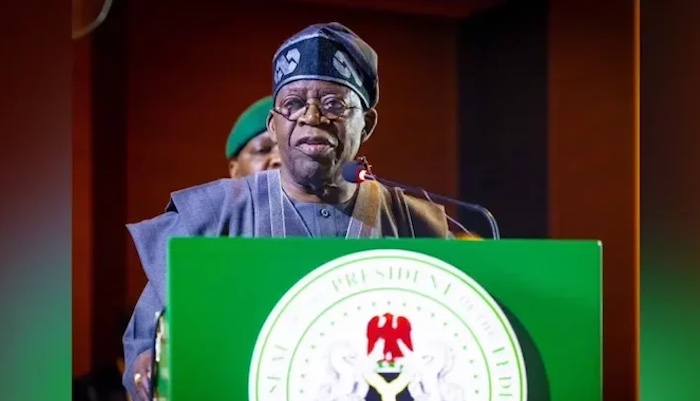
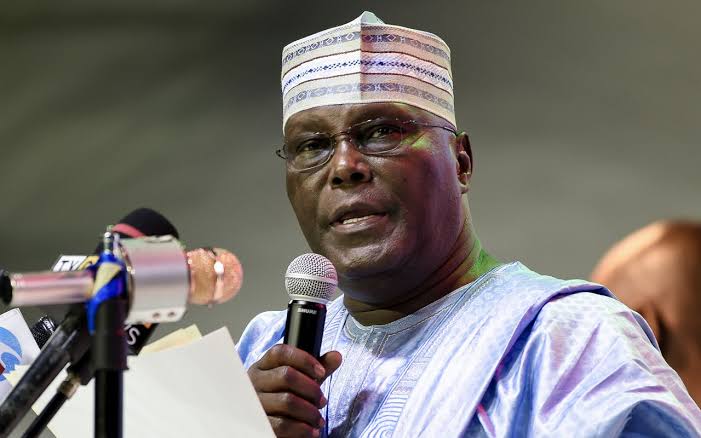
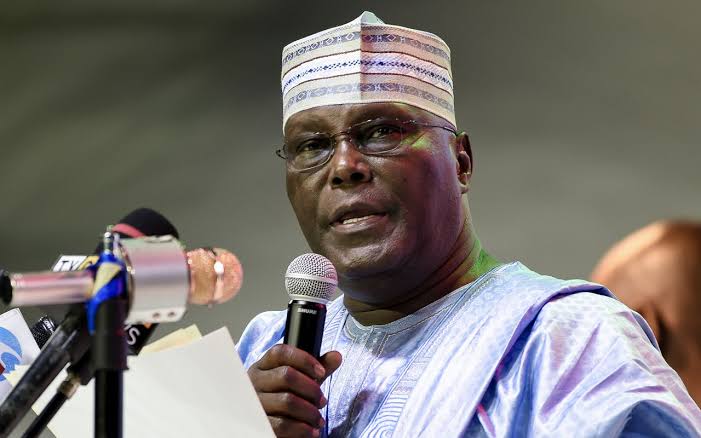
President Bola Tinubu has accused the presidential candidate of the African Democratic Congress (ADC), Atiku Abubakar, of leaving behind unresolved pension liabilities after serving as Nigeria’s vice president.

Tinubu made the remarks during a meeting with members of the Nigerian Diaspora Medical Association and North-East stakeholders who gathered to support the renomination of Vice President Kashim Shettima as his running mate.

The president alleged that Atiku oversaw the privatisation of government investments during his time in office but failed to ensure that pension obligations were settled.

Speaking at the event, Tinubu reflected on his professional experience in the United States before addressing Nigeria’s current challenges.

“There is nowhere like home. I have experienced being in America and have taken the best of America in my chosen profession, accountancy and finance. Where can I apply it best after initial training with Deloitte & Touche, I can’t forget the standard oil building in Chicago and my first week there.

“The leadership of the Northeast is challenged because of terrorism and banditry, I could see a collaboration that would work together. Only we stick together, work together, and face the challenges the best way possible as a united country.

“The olden age is here now if you can stabilize the economy, Nigerians are not asking for too much, simple stability and social welfare, if I can go political, somebody among my prospective opponents privatized government investment in public entities but forgot to pay the pension. I’m clearing the pensioners now, so clearing the mess they created.”

Tinubu’s comments add to the growing exchange of political attacks between the president and Atiku ahead of the 2027 general election. Neither Atiku nor the ADC had issued an immediate response to the latest remarks at the time of filing this report.

Trump Warns Russia, China Against Arming Iran

By Sabiu Abdullahi

United States President Donald Trump has warned Russia and China against providing military assistance to Iran, saying such a move would not be in the interests of either country.

Trump said Russian President Vladimir Putin and Chinese President Xi Jinping had assured him that their governments were neither supplying weapons to Tehran nor taking part in the conflict involving the United States and Israel.

According to the U.S. president, it would be “certainly not in their best interests” for either Russia or China to arm Iran.

His comments followed earlier Western intelligence reports that alleged Russia had supplied Iran with drones, food and medical supplies. China was also reported to have been considering the delivery of air defence systems to Tehran.

In a post on social media, Trump said Xi had given him assurances during their recent meeting in Beijing that China would not provide military equipment to Iran.

He said the Chinese leader told him that Beijing would not sell or transfer weapons to the Islamic Republic under any circumstances.

Trump also said Putin made a similar commitment despite Russia’s ongoing war in Ukraine. According to him, the Russian president stated that Moscow would not sell weapons to Iran.

The U.S. leader expressed confidence that neither country was currently providing military support to Tehran. He, however, cautioned that any reversal of that position would have serious consequences.

Trump added that although Russia and China are often linked to discussions about Iran, he did not believe either country was backing Tehran militarily because doing so would not serve their interests.

Meanwhile, reports indicate that Iran has executed more than 100 people over the past month, including three women. The development has drawn fresh concern from human rights organisations, which said repression in the country has intensified.

The reports said Iranian authorities resumed executions several weeks after hostilities with the United States and Israel began in March. The executions were reportedly part of efforts to suppress anti-government protests.

More than 50 people have also reportedly lost their lives over their participation in the demonstrations, which observers described as the largest wave of unrest since Iran’s Islamic leadership assumed power in 1979.

Analysts have warned that the number of executions could increase further following the collapse of efforts to secure a ceasefire.

One Killed, Two Injured in Suspected Bandit Attack on Community in Kano


By Sabiu Abdullahi

A suspected bandit attack on Makoda town in Makoda Local Government Area of Kano State has left one person dead and two others injured, according to security sources.

Security analyst Bakatsine disclosed the incident in a post on X on Friday. He said the attack took place on Thursday night after more than 30 armed men stormed the community on motorcycles.

The attackers reportedly fired repeatedly, which forced residents to flee for safety. They also escaped with an undisclosed amount of cash after carrying out the assault.

Bakatsine said residents described the assailants as heavily armed. The attack caused panic across the community before the gunmen fled.

He wrote: “Last night, suspected bandits launched an attack on Makoda town, Makoda LGA in Kano State, killing one person, injuring two others and reportedly fleeing with an undisclosed amount of cash.

“Residents said more than 30 heavily armed men arrived on motorcycles, opened fire indiscriminately and left the community in panic before escaping. If armed groups can now strike communities in Kano with such ease, what does that say about the country’s ability to prevent insecurity from spreading even further?”

Real Madrid Revives Interest in Rodri After Perez Changes Position

By Sabiu Abdullahi

Real Madrid president Florentino Perez has reportedly reversed his earlier decision against pursuing Manchester City midfielder Rodri, as the Spanish giants intensify efforts to strengthen their squad ahead of the new season.

According to Spanish outlet Marca, the La Liga club has not opened formal talks with Manchester City over a potential transfer. Despite that, confidence is growing within the club that Rodri could emerge as its headline signing during the current transfer window.

Real Madrid considers the Spain international a key candidate to take charge of its midfield. Club officials believe reinforcing that area of the team remains one of their top priorities this summer.

Perez had previously been reluctant to approve a move for the midfielder. However, recent reports suggest the club’s position has changed.

Manchester City, however, is not expected to make negotiations easy, as the Premier League champions remain determined to keep one of their most influential players.

The Everyday Lessons Kannywood Owes Society

By Ibrahim Aliyu Gurin 

The Kannywood film industry is more than an entertainment industry. It has become one of the most powerful cultural influences in Northern Nigeria. The stories it tells shape how people think, speak, and sometimes even behave. Characters become role models, and the habits they display often find their way into everyday life.

That is why this is a respectful appeal to directors, producers, and scriptwriters: as you entertain millions, also seize the opportunity to promote simple habits that make our society safer, healthier, and more compassionate.

One of the simplest ways to save lives is also one of the most overlooked. Wearing a seat belt should not depend on the distance being travelled. Whether someone is driving to the market, taking children to school, or travelling across states, everyone in the vehicle, including those in the back seat, should buckle up before the journey begins.

Unfortunately, films often show characters jumping into cars and driving away without fastening their seat belts. This unintentionally sends the message that seat belts are optional. Imagine the opposite: respected characters calmly fastening their seat belts before starting the engine, reminding passengers to do the same. Such scenes require only a few seconds but can influence millions of viewers.

Also, modern driving is increasingly threatened by distracted driving. Many people believe it is harmless to answer a quick call, read a message, or reply to a text while driving. Others assume it is safe to use their phones while waiting at a traffic light.

In reality, distraction can be deadly. Safe driving means the phone stays out of the driver’s hands until the vehicle has been parked safely. Showing heroes who ignore incoming calls while driving or politely tell callers, “I’ll call you back when I’ve stopped,” promotes a powerful message without interrupting the story.

Additionally, food is central to many Kannywood stories. Family meals, celebrations, and traditional gatherings are common scenes. Yet one simple habit is often overlooked: washing hands properly before eating or preparing food.

Handwashing properly remains one of the most effective ways to prevent many infectious diseases. A brief scene showing a family washing their hands before sharing a meal can quietly reinforce a healthy practice that protects entire households.

Mental health is another area where Kannywood can make a real difference. Too often, emotional struggles are portrayed only as spiritual attacks. Faith is important, but so are counselling, medical care, and family support. Showing them together would reflect real life and encourage more understanding.

Furthermore, people living with disabilities deserve to be represented with dignity and authenticity. Too often, disability is used merely as comic relief, a symbol of helplessness, or a tool to evoke pity.

Real life tells a different story. Across Nigeria, people with disabilities are teachers, entrepreneurs, professionals, artists, students, parents, and community leaders. They contribute meaningfully to society and deserve to see themselves represented fairly on screen.

Inclusive storytelling means giving characters with disabilities meaningful roles, realistic ambitions, and complete personalities—not defining them solely by their disabilities.

Social change does not always begin with government policies or public campaigns. Sometimes it begins with everyday habits becoming normal. This is why I hope Kannywood filmmakers become more intentional about the habits they put on screen. The greatest impact may not come from dramatic speeches or moral lectures, but from ordinary characters consistently doing the right thing.

After all, audiences often imitate what they repeatedly see. Sometimes, the lessons we never intended to teach become the ones the world remembers the most.

Ibrahim Aliyu Gurin is a graduate of mass communication from Bayero University, Kano, and can be reached at ibrahimaliyu5023@gmail.com.

Women Increasingly Used for Terrorist Logistics, Intelligence in Northern Nigeria — Security Expert

By Sabiu Abdullahi

A former commander of the Joint Task Force (JTF), Dr. Isma’il Tanko Wudilawa, has raised concerns over what he described as the growing involvement of women in terrorist operations across northern Nigeria. He said insurgent groups now rely on women for logistics, intelligence gathering, and other forms of support.

Wudilawa said sustained military operations have pushed many terrorists into remote hideouts. As a result, he explained, the groups now depend heavily on civilian networks, particularly women, to maintain communication channels and transport supplies.

According to him, some women convey food, clothing, medicines, weapons, and, in certain cases, other women to terrorists hiding in forested areas.

His remarks followed recent arrests of women allegedly linked to terrorist logistics in Borno State.

One of the suspects, Hauwa Abulazeez, 65, was reportedly arrested in Askira Uba Local Government Area with 14 compressed blocks of cannabis allegedly destined for terrorists.

In another case, security operatives arrested Kellu Abba, 50, in Kukawa Local Government Area. She was allegedly transporting food items and personal belongings to her son, who has been identified as a suspected member of the Islamic State West Africa Province (ISWAP).

Commenting on the trend, Wudilawa said women have long played different roles within terrorist networks, especially in intelligence gathering.

> “All these atrocities are committed with the support of women from the very beginning.

“All the things we do, we do with women. They know our routines.

“Till today, women are used as informants. They provide information about the movements of targeted individuals within and outside communities.”


He said terrorist groups exploit the trust communities place in women. He noted that the groups often use them as couriers and intelligence sources.

The security expert attributed the involvement of some women to poverty, illiteracy, greed, and the pursuit of financial gain. However, he stressed that not all of them participate willingly.

According to him, some women are threatened or compelled to assist terrorist groups. He said he witnessed such situations during his years of fighting the Boko Haram insurgency.

Wudilawa also expressed concern that some members of the public interfere with security operations. He said some people confront or even attack security personnel while they carry out lawful arrests and investigations.

He urged Nigerians to support security agencies with timely and credible information to strengthen the fight against terrorism and other violent crimes.

The former JTF commander also called on the government to improve economic opportunities and address the social conditions that make criminal activities attractive. He said better livelihoods would help reduce recruitment into banditry, kidnapping, and terrorism.

INEC Chairman Seeks Direct Funding From Federation Account

By Sabiu Abdullahi

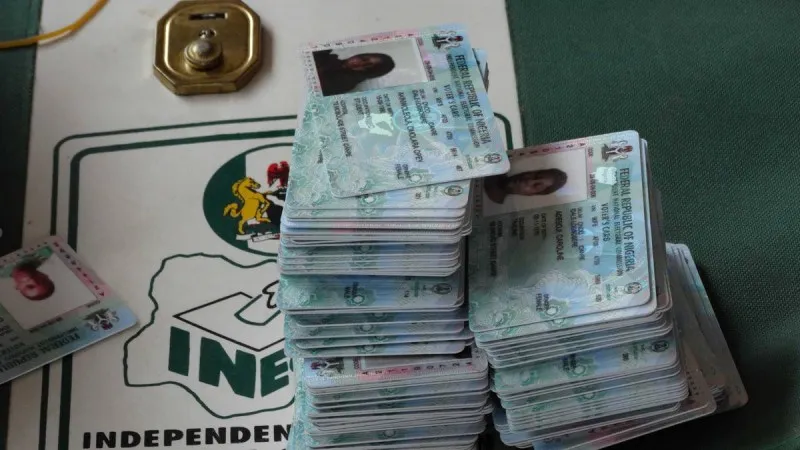
The Chairman of the Independent National Electoral Commission (INEC), Joash Amupitan, has called for a review of the commission’s funding structure. He said direct funding from the federation account would strengthen INEC’s independence and improve the credibility of elections in Nigeria.

Amupitan made the call on Thursday in Abuja during the public presentation of Shadows: Protest Essays on Africa’s Most Consequential Country (1999–2023), a two-volume book written by THISDAY Managing Director, Eniola Bello.

He argued that although the Constitution places INEC on the first-line charge, the existing funding arrangement does not provide the commission with genuine financial autonomy because it still depends on the annual budget and appropriation process.

> “Experience over the years has shown that as long as INEC is still subject to the normal envelope system and the processes of appropriation, having to go to the national assembly, it is very difficult to operate in such a situation without wasting your time,” Amupitan said.


The INEC chairman explained that the commission’s responsibilities go beyond conducting presidential and National Assembly elections. He noted that it also conducts governorship and state assembly elections, registers and regulates political parties, and maintains the national register of voters.

According to him, governorship and state assembly elections are more expensive to conduct than presidential and National Assembly polls. He said this makes the current funding model inadequate.

> “It is for this reason we feel that although the Constitution tried to place INEC on the first-line charge, it is not strong enough,” the INEC chairman said.


> “INEC should come as part of the federation account so that we can have seamless operations and what we call operational efficiency.”


Amupitan also called for further amendments to the Electoral Act to strengthen INEC’s supervisory powers over political parties. He said greater authority would help ensure parties comply with their constitutions, the Nigerian Constitution, and the Electoral Act. He added that such reforms could reduce the number of pre-election court cases.

He disclosed that the commission is considering a mediation mechanism that would resolve internal party disputes within 3 months instead of lengthy litigation.

The INEC chairman further proposed that all disputes involving political parties should be concluded at least 1 year before a general election to prevent last-minute legal battles from affecting the electoral process.

The call comes months after President Bola Tinubu signed the Electoral Act 2026 (Amendment) Bill into law and amid ongoing legal and legislative developments aimed at reforming Nigeria’s electoral system.

Presidency Unveils Expanded Military Footprint Covering All Six Geopolitical Zones

By Abdullahi Mukhtar Algasgaini

The Nigerian Army is set for its largest peacetime expansion in decades, with President Bola Tinubu approving the creation of four additional divisions and the recruitment of 28,000 personnel, according to a presidential statement issued Thursday.

The restructuring, which will take the army’s divisional strength from eight to twelve, is designed to deepen military presence across Nigeria’s six geopolitical zones and shorten response times to security emergencies. The new divisions will be established in Makurdi, Ilorin, Jalingo and Benin City, bringing the total number of command headquarters to twelve.

The phased implementation, which runs until December 2026, reflects what officials describe as a calculated approach to force modernisation. Phase one, due by September 2026, will activate the 5th Division in Makurdi, 9th Division in Ilorin, and 10th Division in Jalingo, alongside the reorganisation of existing formations. Phase two will see the establishment of the 83rd Division in Benin City by December 2026.

Each division will cover between two and five states, with the 82nd Division in Enugu responsible for five South-Eastern states—the largest territorial coverage. The 7th Division in Maiduguri will continue to anchor counter-insurgency operations in Borno and Yobe, while the new 10th Division in Jalingo will oversee Taraba and Adamawa, strengthening the military’s grip on the North-East corridor.

Beyond troop numbers, the President has also approved the acquisition of critical military platforms and equipment, alongside enhanced welfare packages for service members. Officials say these investments are intended to address long-standing gaps in operational readiness and morale.

Presidential spokesman Bayo Onanuga emphasised that the expansion would “significantly improve command and control” and “decentralise operational decision-making,” allowing field commanders greater autonomy to respond to local threats. The move is also expected to bolster border security and protect critical national infrastructure, including oil and gas facilities in the South-South, which will now fall under the newly established 83rd Division in Benin City.

Chief of Army Staff, Lieutenant General Waidi Ibrahim Shuaibu, has been lauded by the President for the army’s professionalism, with Tinubu pledging continued support to ensure the force remains “fully capable of protecting the nation.”

Security analysts view the expansion as a clear signal of the administration’s intent to adopt a more proactive, geographically distributed approach to national defence, moving away from the over-centralised command structure that has historically hampered rapid response to crises.

The announcement comes amid ongoing operations against insurgents, bandits, and separatist agitators, with the new divisions expected to ease the burden on overstretched units and improve intelligence gathering at the grassroots level.