Admin

Samsung Electronics executive Han Jong-hee dies at 63

By Hadiza Abdulkadir

Han Jong-hee, the joint chief executive officer of Samsung Electronics, has died of a heart attack at the age of 63, the company announced.

Han had led Samsung’s consumer electronics and mobile devices division since 2021, navigating the tech giant through an increasingly competitive market dominated by Chinese rivals.

His sudden passing leaves Jun Young Hyun, who oversees Samsung’s semiconductor business, in sole charge of the company until a successor is appointed.

Samsung, the world’s largest producer of memory chips, smartphones, and displays, is yet to announce details of Han’s funeral or succession plans.

EFCC arrests 133 suspects in Abuja over alleged ponzi scheme

By Uzair Adam

The Economic and Financial Crimes Commission (EFCC) has arrested no fewer than 133 individuals in connection with an alleged Ponzi scheme operating under the name Q University, also known as Q-Net, in Gwagwalada, Abuja.

According to the anti-graft agency, the institution was running a scheme that recruited young Nigerians, promising them unrealistic financial gains.

The suspects were reportedly enrolled in a program dubbed “Special Training for New Generation Billionaires,” where they were allegedly brainwashed into believing they would become wealthy by recruiting others into the system.

EFCC spokesperson Dele Oyewale stated that the suspects were required to obtain an “Independent Representative Application Form” with motivational slogans such as “I’m a Champion,” “I’m Unstoppable,” and “I’m Infinity.”

The operation was conducted in collaboration with the 176 Guards Battalion of the Nigerian Army. Items recovered from the suspects include mobile phones, computers, and other electronic devices.

The EFCC confirmed that investigations are ongoing and that the suspects will be charged in court upon completion of inquiries.

Oscar winner Yuval Abraham says Israeli settlers attacked co-director Hamdan Ballal

By Maryam Ahmad

Oscar-winning filmmaker Yuval Abraham has revealed that his co-director, Hamdan Ballal, was beaten and attacked by Israeli settlers. Abraham, who co-directed No Other Land with Ballal, shared the news following their recent Academy Award win.

According to Abraham, Ballal was assaulted by a group of Israeli settlers amid escalating violence in the region. The attack has sparked outrage, with calls for accountability and protection for journalists and filmmakers working in conflict zones.

No Other Land, which won Best Documentary at the 2024 Oscars, highlights the impact of Israel’s occupation through a deeply personal perspective. The film’s success has drawn global attention to the Palestinian struggle, but its creators now face increasing threats.

Ballal’s condition remains unclear, and further details about the attack are yet to be confirmed. Human rights groups have condemned the incident and demanded an independent investigation.

Not all that glitters is gold

By Isyaka Laminu Badamasi

As the wave of politicians leaving various political parties, especially the ruling party, to join the SDP gains momentum, remember that not everything that glitters is gold.

During the buildup to the 2015 general elections, some politicians capitalized on the failures of the PDP administration at that time. They formed what is now known as the All Progressives Congress (APC), a decision we all regret in unison. 

As observers, and considering the caliber and number of individuals joining the Social Democratic Party (SDP), I must confess that the county’s political landscape leading up to 2027 will be fascinating in the days, months, and years ahead. 

Before then, we should not fold our arms while watching the gullibility of our people and how it has led us to where theAPC administration has brought us today. It is crucial that we examine the actors involved in this process of decamping, reminding ourselves not to be swept away by the razzmatazz of this drama and to avoid making another unforgivable mistake, as not all that glitters is gold. 

We should be very observant of who joined SDP from our states and from which political party. What are their contributions to the development of the state? Are they relevant to the party they left? Are they capable of changing the narratives in the scheme of things, or is it just to make headlines? 

While they have the right to make whatever political decisions regarding 2027, we shouldn’t be naive enough to believe that the ongoing alignments and realignments are unrelated to us. Remember the pervasive nature of politics.

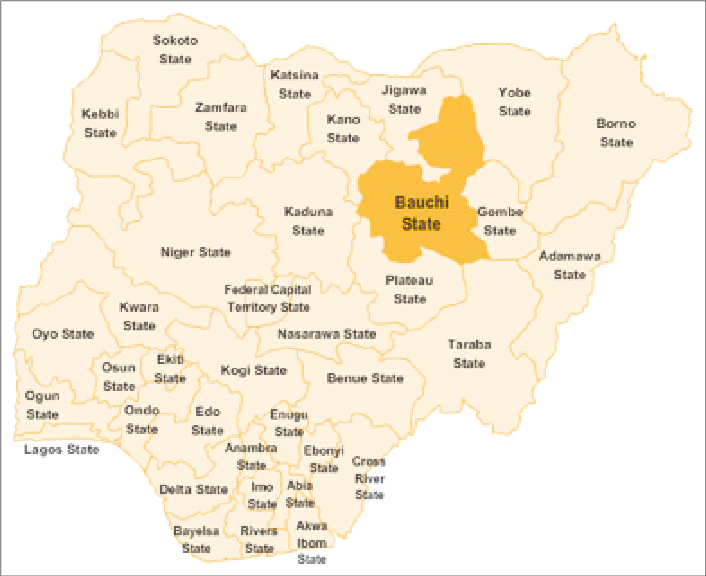
Isyaka Laminu Badamasi wrote from Bauchi State via makwalla82@gmail.com.

United States’ withdrawal from WHO and Africa’s looming health crisis

By Lawal Dahiru Mamman

Some Nigerians with the wrong intention to mock believe that sick individuals, particularly those living with Human Immunodeficiency Virus (HIV) in Africa, especially Nigeria, are now an “endangered species” due to the United States’ withdrawal from the World Health Organization (WHO).

On January 20, 2025, Donald Trump was sworn in as the 47th President of the United States, marking his return to the White House after defeating the Democratic candidate in a fierce election battle. As the world looked on to see how he would start fulfilling his promise to make “America great again,” he wasted no time signing executive orders that sent shockwaves around the globe.

One of his most controversial directives came just days into his presidency: the announcement of the U.S. withdrawal from the WHO, an organization of which it had been a founding member since 1948. This move was not entirely unexpected, as Trump had previously attempted to exit the WHO in 2020 before his decision was overturned by President Joe Biden in 2021.

To the delight of his supporters and the disappointment of his critics, Trump successfully achieved the withdrawal in early 2025. In February, he made further decisions, including cutting funding to certain organizations such as the United States Agency for International Development (USAID).

WHO leadership bemoaned the decision for obvious reasons. According to financing data, the U.S. contributed an estimated $988 million between January and November 2024, marking approximately 14% of WHO’s $6.9 billion budget. The organization further noted that U.S. funding provides the backbone for many large-scale emergency operations to combat diseases globally.

Citing an example, the WHO stated, “U.S. funding covers 95% of the WHO’s tuberculosis program in Europe, along with 60% of the agency’s TB efforts in Africa, the Western Pacific, and headquarters in Geneva.”

The African Union (AU) also expressed deep concern over the development as events continued to unfold. In a statement, AU Commission Chairperson Moussa Faki Mahamat emphasized the crucial role the U.S. has played in shaping global health standards over the past seven decades. He noted that the U.S. was a key supporter in establishing the Africa Centers for Disease Control and Prevention (Africa CDC), which works closely with WHO to tackle global health challenges, including those on the African continent.

This concern, coupled with comments such as those in the opening paragraph of this piece, should not be taken at face value or dismissed as mere press statements. It warrants careful consideration. Although the latter’s comment may be seen as a reaction to unfolding events or an attempt to mock Nigeria and Africa jokingly, more is at stake if the lives of millions of Africans solely depend on that funding.

Dead Aid: Why Aid Is Not Working and How There Is a Better Way for Africa, a 2009 book written by Zambian economist Dambisa Moyo, comes to mind. It earnestly challenged the traditional approach to foreign aid in Africa.

Moyo argues that foreign aid has failed to lift Africa out of poverty and has instead fostered a culture of dependency, corruption, and stagnation. She claims that aid has weakened Africa’s incentive to develop its own economic and political systems. Consequently, it has hindered the growth of Africa’s health sector.

It is a universal truth that no nation can survive in isolation; however, countries should be able to provide for their basic survival needs. The concern raised by the AU may validate Moyo’s hypothesis, as Africa remains dependent on aid from foreign entities like the WHO, despite having a continent-wide centre for disease control.

In 2001, African leaders signed the Abuja Declaration, promising to increase budgetary allocation for health, eradicate HIV/AIDS, and strengthen the health sector through improved infrastructure, human resources, and access to essential medicines.

Two decades later, we are lamenting a single nation’s withdrawal from the WHO because we have failed to uphold the promises we made to ourselves. What will happen if other “powerful” countries choose to leave? Will our already poor health metrics deteriorate? This should serve as a wake-up call.

All hope is not lost, as some progress has been made. In Nigeria, there was a breakthrough in November 2024. Doctors at Lagos University Teaching Hospital (LUTH), in collaboration with the Sickle Cell Foundation, successfully carried out a bone marrow transplant on two patients. This procedure once thought impossible in Nigeria, was described as “a significant step forward in the treatment of sickle cell disease—the first of its kind in West Africa.”

Also, in February 2025, Usmanu Danfodiyo University Teaching Hospital (UDUTH) joined the ranks of medical facilities that have successfully performed kidney transplants.

Nigeria can build upon and enhance these developments, attracting patients from other regions for treatment. This influx will generate revenue and may elevate us to a point where we no longer depend on funding from external organizations.

Nigeria and other African nations can leverage their existing resources to generate revenue while investing further in research to discover cures or treatments for diseases for which we have traditionally relied on palliatives.

Lawal Dahiru Mamman writes from Abuja and can be reached at dahirulawal90@gmail.com.

Al Jazeera journalist Hossam Shabat killed in Israeli airstrike in Gaza

By Muhammad Sulaiman

Al Jazeera journalist Hossam Shabat was killed in an Israeli airstrike in northern Gaza shortly after reporting on the death of his colleague, Mohammed Mansour.

Shabat’s car was bombed on Sunday, marking yet another fatal attack on media workers in the besieged Palestinian territory.

Shabat had just posted about Mansour’s killing when he himself became a victim of Israeli bombardment. His death adds to the growing toll on journalists in Gaza, where at least 208 media workers have been killed since Israel launched its military offensive on October 7, 2023.

The targeting of journalists has drawn widespread condemnation, with press freedom organizations calling for accountability and urgent protection for reporters covering the war.

Al Jazeera has repeatedly accused Israel of deliberately targeting its journalists, a charge Israel denies.

The ongoing war in Gaza has led to unprecedented casualties among civilians and media professionals, raising concerns over press freedom and the safety of journalists in conflict zones.

Youths loot Seyi Tinubu’s Ramadan aid in Gombe amid controversy

By Abdullahi Mukhtar Algasgaini

Angry youths in Gombe State have looted Ramadan palliative supplies reportedly meant for distribution by Seyi Tinubu, son of President Bola Ahmed Tinubu.

The incident occurred as part of a Ramadan feeding program launched by Seyi Tinubu during his visits to northern states for Iftar celebrations with residents and political leaders.

Seyi’s initiative, aimed at assisting the less privileged during the holy month, has sparked a wave of mixed reactions on social media.

While some welcomed the gesture, others criticized it, arguing that the north deserved more sustainable support than temporary palliative aid.Shamsuddeen Bala Mohammed, son of Bauchi State Governor, voiced his displeasure on Facebook, urging Seyi to implement long-term empowerment programs.

He suggested that the youths in Bauchi needed job opportunities, business startups, and digital skills training rather than food parcels.

“Teach our youths how to fish rather than feed them for one day,” he said.

In Gombe, the distribution of palliative items, including rice, sugar, oil, salt, and pasta, quickly turned chaotic.

Video footage showed youths unloading and carting away cartons of food from a truck, with some throwing the items to others on the ground.

Two trucks containing 3,500 cartons of food had been allocated to the state, but while one was reportedly distributed, the other was intercepted by the angry youths.

Observers have suggested that the distribution might have been sabotaged by those left out of the initial handout event, which took place at the state’s APC Secretariat.

Seyi’s outreach initiative, while framed as part of the Renewed Hope Youth Engagement program, is also seen by some as a strategic political move to strengthen his father’s political foothold in the northern region, where there is still some resistance to his re-election.

No-Show: Nigerian professor expresses frustration over students’ absence in his class

By Hadiza Abdulkadir

A postgraduate class at Bayero University faced an unexpected turnout issue during a recent lecture on social media’s role in popular culture. 

Professor Abdalla Uba Adamu, from the Faculty of Communication, scheduled his M.Sc. Popular Culture lecture for 2:00 p.m. on Monday, March 24, 2025. However, when he arrived, he was met with an empty classroom.

In a candid post on his Facebook page, Professor Adamu described the situation, expressing disappointment at the absence of his students, many of whom are mature individuals committed to their education. 

“I will wait one more hour, all by myself,” he wrote, revealing the gravity of the situation as he sat alone in the lecture hall.

The incident raises concerns about student engagement and commitment in higher education, particularly among postgraduate students who are expected to take their studies seriously. 

Professor Adamu’s experience reflects a growing trend of attendance issues in classrooms, prompting discussions among his social media followers about students’ attitudes to learning in Nigerian universities.

As the academic community reacts to this situation, it remains to be seen how institutions will address these challenges in the future.

El-Rufai’s defection and APC’s growing fractures

By Abdulhamid Abdullahi Aliyu

In a move that has sent shockwaves through Nigeria’s political landscape, former Kaduna State Governor Nasir El-Rufai has officially parted ways with the All Progressives Congress (APC) and pitched his tent with the Social Democratic Party (SDP).

While party defections are common in Nigerian politics, El-Rufai’s departure from the ruling party carries significant political implications that could alter the dynamics leading up to the 2027 elections.

For a man instrumental in the formation of the APC and a staunch ally of former President Muhammadu Buhari, El-Rufai’s departure raises critical questions. Is this a strategic move to remain politically relevant? A protest against President Bola Tinubu’s leadership? Or does it signal widening cracks within the APC that could deepen in the coming years?

El-Rufai’s political journey within the APC has been marked by loyalty, controversy, and influence. As a key figure in the party’s 2015 victory over the PDP, he was regarded as one of the strongest voices in Buhari’s inner circle.

His tenure as Kaduna governor further solidified his image as a reformist, albeit one who often courted controversy. From restructuring Kaduna’s civil service to his hardline stance on security issues, El-Rufai commanded attention. Under Buhari, he wielded significant influence, not just within Kaduna but on the national stage.

Many expected him to secure a prominent role in Tinubu’s government. However, cracks began to show when he was dropped from the ministerial list, allegedly over security concerns flagged by the National Security Adviser.

El-Rufai’s departure from the APC is not a hasty decision; it represents the culmination of increasing frustration. His rejection as a minister was perceived by many as a calculated marginalization, signaling the start of his estrangement from the ruling party’s core decision-making processes. 

Reports suggest he became increasingly disillusioned with Tinubu’s governance style, particularly in handling economic and security challenges. The former governor is known for his bluntness, and sources indicate that his inability to influence policies within the APC played a significant role in his decision.

While his supporters argue that his move to the SDP is based on principle, critics suggest it is driven by personal ambition—positioning himself for a possible political comeback in 2027.

El-Rufai’s choice of the SDP, rather than the PDP or a new political movement, is intriguing. The SDP remains a relatively small force compared to the APC and PDP, raising questions about whether he genuinely believes in the party’s ideology or sees it as a convenient platform to negotiate his future.

Some analysts believe El-Rufai is playing the long game—joining a smaller party now to avoid confrontations with APC heavyweights while testing the waters for potential alliances with other opposition figures ahead of 2027. Others argue that he has limited options, given his strained relationship with Tinubu’s camp and his unlikelihood of returning to the PDP, a party he once fiercely opposed.

Expectedly, the APC has brushed off El-Rufai’s departure, with the Presidency dismissing it as driven by “inordinate ambition.” Kaduna’s APC leadership has also claimed they are unbothered, arguing that his influence has waned significantly since leaving office. 

However, political observers note that El-Rufai’s defection could have ripple effects. While he may not command a nationwide political structure, his ability to shape narratives, especially in northern politics, should not be underestimated. Some opposition figures, including former Senator Shehu Sani, have downplayed his move, arguing that El-Rufai’s political relevance has diminished.

El-Rufai’s defection is not just about one man leaving a party—it reflects deeper tensions within the APC. Since taking power in 2023, Tinubu has had to balance competing interests within the ruling party, from former Buhari loyalists to his own political allies. The cracks within the party are becoming more visible, and if not managed properly, they could deepen before 2027.

For El-Rufai, the road ahead is uncertain. Aligning with the SDP may be a strategic step, but it remains to be seen whether it will translate into real political leverage. Is this the beginning of a broader coalition to challenge APC dominance, or will it end up as another failed defection story in Nigeria’s political history?

One thing is clear—El-Rufai’s move has reignited conversations about Nigeria’s shifting political landscape. Whether it leads to a major realignment or fizzles out as an individual protest remains to be seen.

Abdulhamid Abdullahi Aliyu, an NYSC serving corps member, writes from the Center for Crisis Communication (CCC) in Abuja.

Information and Media Studies students host Iftar to promote unity

By Isma’il Gambo Muhammad (IGMB)

Students from the Information and Media Studies department organized a one-day Iftar gathering at the Faculty of Communication, Bayero University, Kano, to promote unity among themselves, their teachers, and the broader university community.

The event took place one day after the last exam of the second semester, aimed at fostering cordial and lasting academic relationships within IMS as one family while celebrating the month of Ramadan, seen as a time of kindness and all forms of goodness and mercy.

The occasion has graciously received the honor of inviting five competent and indigenous lecturers from the department, including the Head of the Department (HOD), Prof. Nura Ibrahim; Level Three Coordinator, Dr. Muhammad Ɗanja;Faculty Examination Officer, Dr. Aliyu Isa Agaye; Level Four Coordinator (IMS), Dr. Saminu Umar; and above all, Dr. Ibrahim Muhammad from the University of Abuja.

Many representatives from various university departments attended, including the Faculty of Computing, Software Engineering, Cyber Security, and some SUG officials from the BUK chapter.

Students voluntarily offered various contributions, including comfort foods, delicious dishes, meats, fruits, and a wide selection of drinks, ensuring that each attendee was sufficiently served.

In his opening remarks, Dr. Muhammad Ɗanja warmly welcomed everyone to the grand occasion. 

In his comments, Prof. Nura Ibrahim stated that IMS is more than just a studentship; it is a family. He mentioned, “As long as all the IMS levels come together to observe the IFTAR next year, I will certainly invite the Vice Chancellor (VC) to the occasion.”

However, in their keynote speeches, all the invited lecturers expressed their heartfelt happiness and gratitude to all the attendees, and they mentioned their ongoing commitment to supporting such a significant gesture in the future.

The lecturers encouraged and inspired the students to apply their acquired knowledge and skills in real-life situations. They concluded by drawing the attention of potential Level Four (SIWES) students to maximize their efforts, broaden their horizons, and seize opportunities for skill acquisition at their respective organizations where they are posted for service. They prayed for the ongoing progress of the Department and its students.

Ultimately, in his closing remarks, Coordinator Muazu Salihu expressed a heartfelt thank you to all the lecturers and fellow students for honoring the invitation and wished everyone a safe journey back to their respective destinations.