Admin

Panic in Kano communities as two children murdered in separate incidents

By Anas Abbas

Fear has enveloped residents of Zango Biyu in Rimin Gado Local Government Area of Kano State following the gruesome killing of two children in separate incidents over the weekend.

The daily post gathered that the first victim, five-year-old Muhammad Gambo, was found dead on Sunday morning.

Eyewitnesses said his mother had sent him to a nearby shop to buy powder worth ₦50, but the shopkeeper turned him away because the money was insufficient.

Instead of returning home, Muhammad reportedly set out for his grandparents’ house but was ambushed on the way.

A community member, Laminu Ahmad, described the shocking discovery.

“His mother sent him to buy powder, but the shopkeeper rejected the money. On his way to his grandparents’ house, some wicked people stopped him and slaughtered him like a ram,” Ahmad said.

He added that many residents suspect the killing was ritual-related.

“We suspect ritualists because there was no blood on the ground. They must have collected it in a bowl and even cleaned the knife before fleeing,” he lamented.

While the community was still mourning Muhammad, tragedy struck again.

A 13-year-old girl, Fatima Sule, was found dead in her family’s residence at Dandinshe Quarters, Dala Local Government Area.

Witnesses said she was strangled, her neck broken, and her body hanged on a window.

Her distraught mother told reporters that she had left her children at home and asked them to join their elder sister later.

“Before I returned, I received a call that Fatima had been killed,” she said in tears.

The back-to-back killings, which occurred between Saturday and Sunday, have left residents in shock and fear, as such incidents are unprecedented in the area.

The Kano State Police Command reportedly allowed the immediate burial of the victims after preliminary investigations.

Security operatives have since launched a manhunt for the culprits.

Efforts to reach the command’s spokesperson, SP Abdullahi Haruna Kiyawa, were unsuccessful, as his phone was switched off at the time of filing this report.

Gombe government establishes 13 new LCDAs

By Sabiu Abdullahi

Gombe State Governor, Muhammadu Inuwa Yahaya, has signed a bill into law creating 13 new Local Council Development Areas (LCDAs).

Speaking during the signing ceremony at the Government House on Monday, Governor Yahaya explained that the initiative aligns with the 1999 Constitution and was designed to address the growing population while promoting grassroots development.

The new LCDAs and their administrative headquarters are: Akko North (Amada), Akko West (Pindiga), Balanga South (Bambam), Billiri West (Taal), Dukku North (Malala), Funakaye South (Tongo), Gombe South (Bolari), Kaltungo East (Wange), Kwami West (Bojude), Nafada South (Birin-Fulani), Pero-Chonge (Filiya), Yamaltu East (Dadinkowa), and Yamaltu West (Zambuk).

Governor Yahaya stressed that the long-term advantages of creating the new councils outweigh the costs involved.

He said, “Like the creation of Gombe State in 1996, these LCDAs will usher in a new era of progress for our communities and the state at large.”

An interim management committee and a transition technical team led by the deputy governor will oversee the establishment of the councils.

DG Protocol: Kano gov’t refutes N6.5bn diversion claim, accuses opposition of blackmail

By Uzair Adam

The Kano State Government has refuted reports alleging the diversion of N6.5 billion from the state treasury, dismissing them as “false narratives orchestrated by the opposition to tarnish the image of the administration.”

The rebuttal follows a report by Daily Nigerian on August 22, 2025, which claimed that the Director-General of the Government House Protocol Directorate, Alhaji Abdullahi Ibrahim Rogo, was linked to an alleged diversion of public funds already before the High Court.

In a statement issued on Monday, Sanusi Bature Dawakin Tofa, Director General of Media and Publicity at the Government House, maintained that all financial dealings of Ministries, Departments, and Agencies (MDAs) strictly adhere to budgetary guidelines and established financial regulations.

“Every cash outflow into MDAs is duly budgeted with clear codes in the state’s fiscal policy. No government official accesses public funds without a defined purpose,” Bature stated.

He noted that the Protocol Directorate is responsible for logistics, welfare, and official engagements of the governor and visiting dignitaries, explaining that about 95 per cent of its functions involve financial transactions conducted with government approval.

The statement stressed that Governor Abba Kabir Yusuf’s administration would not allow the integrity of its officials to be undermined by political propaganda.

“The Yusuf administration remains committed to financial prudence, transparency, accountability, and zero tolerance for corruption. We will not allow our aides’ reputations to be destroyed by deliberate blackmail from unpatriotic elements,” it said.

The government reaffirmed confidence in Rogo’s credibility, describing the allegations as unfounded. It added that all officials, including the Director-General of Protocol, are open to scrutiny by anti-graft agencies when required.

It further accused political opponents of sponsoring the allegations as part of a smear campaign ahead of the 2027 elections.

“These claims are nothing but fiction designed by desperate politicians relying on propaganda to remain relevant,” the statement noted.

The government also pointed to alleged financial mismanagement under former governor Abdullahi Umar Ganduje’s administration, citing withdrawals of over N20 billion between February and May 2023. It referenced the dollar-video scandal as evidence of what it called “eight years marred by corruption.”

While pledging transparency, the government warned it may pursue legal action against those spreading misinformation.

“No propaganda, fabricated claims, or media trials will derail our determination to serve the people with honesty and accountability,” the statement added.

It concluded by noting that it would not comment further on the matter since it is already before a competent court.

PDP confirms Damagum as substantive national chair

By Anwar Usman

The Peoples Democratic Party has officially confirmed Umar Damagum as its substantive National Chairman.

At the party’s 102nd National Executive Committee meeting on Monday, the party agreed that Damagum, who has served as Acting National Chairman for over a year, be elevated to substantive Chairman ahead of the National Elective Convention scheduled for November 15 and 16 in Ibadan, Oyo State.

The National Legal Adviser of the PDP, Kamaldeen Ajibade, administered the oath of office to him.

Details shortly…

Court jails four for illegal tree felling in Sharada

By Anas Abbas

A Magistrate Court sitting in Normansland, Kano, has convicted four men for engaging in illegal tree felling at Sharada Municipal.

The convicts, Jibril Adamu and three others were prosecuted by the Kano State Ministry of Environment and Climate Change under the provisions of the Kano State Forestry Law, which prohibits cutting down trees without official authorization.

The case was heard by His Worship Auwalu Yusuf, who found the defendants guilty after reviewing the evidence presented by the prosecution counsel, Barrister Bahijjah H. Aliyu.

The court sentenced the four men to three months imprisonment each, with an option of a ₦40,000 fine.

They were also ordered to pay ₦50,000 in compensation for the damage caused.Reacting to the judgment, the Commissioner for Environment and Climate Change, Dr. Dahiru M. Hashim, welcomed the ruling, describing it as a victory for environmental protection in the state.

“Every tree cut down illegally robs our city of clean air, shade, and climate resilience,” Dr. Hashim said.

“This ruling sends a strong message that Kano will not tolerate environmental vandalism.”

The Ministry further urged residents to report cases of illegal logging and other environmental offences through its official channels, assuring that it remains committed to preserving a greener and healthier Kano State.

Son of Boko Haram founder arrested in Chad

By Hadiza Abdulkadir

Chadian authorities have arrested Muslim Muhammad Yusuf, identified as the son of Boko Haram’s late founder, Muhammad Yusuf. Muslim, believed to be 18 or 19 years old, was captured along with five others while leading an Islamic State West Africa Province (ISWAP) cell.

Analyst Bulama Bukarti confirmed Muslim’s identity after speaking with family friends and relatives, who said he is the son of Bintu, Muhammad Yusuf’s first wife. His arrest reportedly followed a tip-off from Nigerian intelligence.

The development comes in the same week Nigeria announced the capture of two top leaders of Ansaru, a Boko Haram offshoot, and the head of the Mahmuda Group, active in parts of North Central Nigeria.

Security experts describe the arrest as a turning point, marking the first time a major faction leader has been taken alive. They warn, however, that Nigerian authorities must now focus on dismantling bandit groups wreaking havoc in the North West and North Central regions.

NDLEA arrests drug kingpin at Kano airport, moves to free Nigerians detained in Saudi Arabia

By Uzair Adam

The National Drug Law Enforcement Agency (NDLEA) has arrested a 55-year-old drug kingpin, Mohammed Ali Abubakar, popularly known as Bello Karama, along with five members of his syndicate operating at the Mallam Aminu Kano International Airport (MAKIA), Kano.

The arrest followed investigations that linked the group to the shipment of illicit substances that led to the detention of three unsuspecting Nigerian pilgrims in Saudi Arabia on drug trafficking allegations.

The Agency disclosed this at a press briefing in Abuja on Monday, addressed by its Director of Media and Advocacy, Femi Babafemi, alongside Dr. Abdul Ibrahim, Director of Assets and Financial Investigation, and Theresa Asuquo, Director of Prosecution and Legal Services.

NDLEA explained that the development came after its Chairman, Brig Gen Mohamed Buba Marwa (Rtd), received complaints from three families whose relatives—Mrs. Maryam Hussain Abdullahi, Mrs. Abdullahi Bahijja Aminu, and Mr. Abdulhamid Saddiq—were detained in Jeddah following their lesser hajj pilgrimage.

The detainees were accused of trafficking drugs after being linked to six additional bags not belonging to them, three of which contained illicit substances.

Investigations traced the bags to the syndicate led by Abubakar, who checked them into an Ethiopian Airline flight ET940 on August 6, 2025, the same flight boarded by the three innocent pilgrims.

Members of the group, including staff of Skyway Aviation Handling Company, were said to have illegally tagged the bags against the names of the pilgrims without their knowledge.

Six suspects are currently in NDLEA custody, with four already charged to court. Confessional statements revealed that the bags were checked in for monetary rewards, with transfers of N200,000 linked to the operation.

The NDLEA said it has initiated discussions with Saudi Arabia’s General Directorate of Narcotics Control (GDNC) to secure the release of the detained Nigerians.

Marwa is also expected to personally meet with Saudi authorities during an international drug conference to press for their exoneration.

The Agency assured that while it remains committed to fighting drug trafficking, it will not allow innocent Nigerians to suffer for crimes they did not commit.

Ulama Forum rejects Nigeria-Israel security pact

By Muhammad Sulaiman

The Ulama Forum in Nigeria has condemned the reported Memorandum of Understanding (MoU) between the Federal Government and the State of Israel on security cooperation, describing it as “a dangerous and insensitive diplomatic move.”

In a statement signed by its Convener, Aminu Inuwa Muhammad, and Secretary, Engr. Basheer Adamu Aliyu, the Forum accused the Minister of State for Foreign Affairs, Mrs. Bianca Ojukwu, of unilaterally engaging Israel despite global outrage over its alleged genocide against Palestinians.

“At a time when the world of conscience is against Israel, Nigeria should be at the forefront of supporting South Africa’s genocide case at the International Court of Justice, not courting a state increasingly isolated for human rights violations,” the statement read.

The Forum warned that involving Israel in Nigeria’s internal security would erode national sovereignty, risk human rights abuses, and entrench dependence on foreign powers. It argued that “internal security issues require homegrown solutions that prioritise community engagement, social cohesion, and inclusive governance.”

Instead of seeking external assistance, the group urged the government to strengthen security institutions, address poverty and corruption, and ensure justice for offenders. It further called on President Bola Ahmed Tinubu to “call the erring minister to order” in the interest of national unity and public sensitivity.

The Forum reaffirmed its confidence in Nigeria’s security personnel and pledged continued prayers for “Allah’s guidance and support to our gallant forces.”

NCCE shuts 22 illegal tertiary institutions qcross Nigeria

By Uzair Adam

The National Commission for Colleges of Education has discovered and closed 22 unapproved tertiary institutions operating in different parts of the country.

The move followed a nationwide crackdown on illegal institutions, according to details contained in the commission’s achievement report obtained by Punch Newspaper.

“The NCCE identified and shut down 22 illegal Colleges of Education operating across the country. The commission also conducted personnel audits and financial monitoring in all 21 federal colleges of education,” the report stated.

President Bola Tinubu had recently directed regulatory bodies, including the National Universities Commission, the National Board for Technical Education, and the NCCE, to intensify efforts in eliminating illegal higher institutions undermining the integrity of Nigeria’s education system.

Speaking at the 14th convocation of the National Open University of Nigeria in Abuja, Tinubu, represented by the Director of University Education at the Federal Ministry of Education, Rakiya Ilyasu, warned against compromising academic standards.

He reiterated his administration’s commitment to strengthening the synergy among educational agencies, including the NYSC, JAMB, NUC, NBTE, and NCCE, to ensure the quality of education and eliminate certificate forgery and unrecognised institutions within and outside the country.

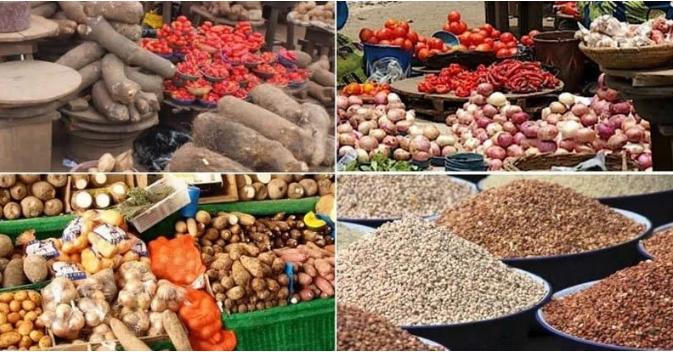
NEMA and the battle for Nigeria’s food security

By Abdulhamid Abdullahi Aliyu

The fight against hunger in Nigeria has entered a critical phase. With rising food prices, climate-induced disasters, and conflicts crippling agricultural production, food security is no longer a distant policy concern but an everyday reality for millions of households. What was once viewed as a seasonal challenge has now become a national emergency, demanding a shift from reactive relief to proactive preparedness.

At the forefront of this shift is the National Emergency Management Agency (NEMA), which is redefining its role beyond post-disaster interventions. Through the newly unveiled Food and Nutrition Security Crisis Preparedness Plan (FNSCPP), NEMA is laying the groundwork for a coordinated, data-driven framework designed to detect and respond to food security threats before they spiral into full-blown crises.

For NEMA’s Director-General, Mrs. Zubaida Umar, the stakes could not be higher. “Nigeria is at a critical juncture in its food security landscape,” she observed during a recent consultative session. “We must transition from reactive to anticipatory response models. This collaboration presents a pathway toward a more structured, timely, and impactful system of intervention.”

The new preparedness plan signals a significant departure from the traditional cycle of emergency relief. It recognises that food insecurity is not an isolated problem but a complex challenge worsened by flooding, drought, armed conflicts, and economic shocks. Seasonal floods, for example, continue to devastate farmlands in states like Anambra, Benue, and Niger, erasing months of hard work and leaving rural communities vulnerable to hunger.

The FNSCPP seeks to address this challenge by integrating early warning systems with national emergency operations, setting up clear crisis escalation protocols, and ensuring that federal, state, and community-level agencies respond in unison. This aligns with NEMA’s broader strategy, which has included launching the 2025 National Preparedness and Response Campaign (NPRC) and conducting large-scale flood simulation exercises in high-risk zones such as the South East.

Experts agree that timely action is the difference between a manageable disruption and a nationwide crisis. Dr. Ritgak Tilley-Gyado, Senior Health Specialist at the World Bank and one of the key technical leads behind the FNSCPP, highlighted this during a consultative visit to NEMA’s headquarters. “This is more than just an emergency response plan,” she explained. “It is a long-term preparedness blueprint. Once indicators are triggered, every institution must understand its role and act without delay.”

The stakes are particularly high for vulnerable populations, where food crises often translate into chronic malnutrition, displacement, and loss of livelihoods. Nigeria’s recent qualification for crisis response financing underlines the urgency of establishing a clear and unified response framework. Without it, resources risk being delayed, duplicated, or mismanaged — leaving those most affected to bear the brunt of avoidable suffering.

To counter this, NEMA is also championing community-level sensitisation, ensuring that disaster preparedness is not merely a top-down directive but a collective effort. By engaging local leaders, grassroots organisations, and youth groups, the agency aims to bridge the gap between policy design and on-the-ground realities.

Yet, significant challenges remain. Adequate funding, political will, and inter-agency coordination will determine whether this bold plan succeeds or falters. Beyond the federal effort, state and local governments must embrace their roles in creating food-resilient communities. Environmentalist Mayokun Iyaomolere captured this sentiment aptly when he remarked, “Preparedness is not just about government plans. Communities must also take ownership of the process, particularly in areas where local action can prevent disasters from escalating.”

As Nigeria faces a future marked by unpredictable weather patterns and growing food demands, the real question is not whether crises will occur but how effectively the country can respond. With the FNSCPP, anchored by NEMA’s leadership and supported by multi-sector partnerships, Nigeria has an opportunity to shift from a culture of reaction to one of anticipation and prevention.

The blueprint has been laid out. What comes next is the test of execution, coordination, and the political courage to ensure that no Nigerian is left to go hungry simply because the warning signs were ignored.

Abdulhamid Abdullahi Aliyu writes on disaster management, humanitarian response, and national development.