Month: November 2026

EFCC Investigates 774 Local Government Chairmen Over Spending

By Sabiu Abdullahi

The Economic and Financial Crimes Commission (EFCC) has commenced a discreet investigation into the spending and management of public funds by chairmen of Nigeria’s 774 local government areas.

The investigation, which is being conducted through the commission’s zonal directorates across the 36 states and the Federal Capital Territory, seeks to determine whether the councils have demonstrated accountability since gaining financial autonomy.

Sources within the anti-graft agency told The PUNCH that the exercise would examine how the chairmen manage their allocations, their capacity to administer public resources and the impact of financial autonomy on service delivery at the grassroots.

One of the sources said the commission wanted to assess whether the councils had improved their performance and accountability since the Supreme Court granted them financial autonomy.

“We want to see their definite impact on the economy as a result of the financial autonomy that has been granted them. We want to see whether they have the necessary managerial skills, and whether their integrity quotient is high.

“We want to see comparatively what was existing before the autonomy and what is existing now and whether there has been development. It is not about the state you mentioned alone; it is across the country. All the EFCC zonal offices are handling the investigation secretly.”

The investigation comes more than two years after the Supreme Court affirmed the financial autonomy of the 774 local government areas and barred state governors from controlling or withholding their allocations.

In May 2024, the Federal Government, through the Attorney-General of the Federation and Minister of Justice, Lateef Fagbemi, approached the Supreme Court to challenge governors’ control of local government funds.

The suit also sought to stop governors from dissolving elected councils and replacing them with caretaker committees.

On July 11, 2024, a seven-member panel of the Supreme Court, led by Justice Garba Lawal, ruled in favour of local government financial autonomy. The court directed the Accountant-General of the Federation to pay allocations directly into local government accounts.

The ruling was expected to strengthen grassroots governance by allowing elected council officials to independently manage their finances and execute development projects.

However, concerns over the management of the funds led the EFCC to announce plans to monitor local government expenditure.

In October 2024, EFCC Chairman, Ola Olukoyede, said the commission would track the budget performance of local governments to ensure that allocations were used for their approved purposes.

He also pledged to work with relevant stakeholders to monitor expenditure and prosecute officials found to have violated the law.

Olukoyede said, “We are fully prepared to ensure accountability in the use of local government funds. One of the reasons that informed the decision to establish additional zonal directorates by the commission is the need to improve the commission’s presence and coverage of the country.

“We’ll work closely with stakeholders in tracking the budget performance of the councils, to ensure that funds appropriated are used for specified purposes and those who violate the law will be brought to justice.”

The EFCC’s latest investigation is expected to provide a broader assessment of how local government councils have managed public funds since the implementation of the autonomy ruling.

Efforts to obtain a response from the commission’s spokesperson, Dele Oyewale, were unsuccessful as of Monday night.
INEC Removes 1.6 Million Invalid Voter Records, Identifies 54 Officials

By Sabiu Abdullahi

The Independent National Electoral Commission (INEC) says it has removed 1,609,553 records from the preliminary voters’ register following a nationwide screening exercise ahead of the 2027 general elections.

The commission also disclosed that 54 individuals across 10 states had been identified for their alleged involvement in irregularities linked to voter registration. It warned that those found responsible would face disciplinary action, including possible prosecution.

INEC Chairman, Prof. Joash Amupitan, announced the findings on Monday during a press conference in Abuja on the review of the preliminary voters’ register.

He explained that the commission removed 1,608,660 confirmed invalid registrations from the 2025/2026 Continuous Voter Registration exercise. An additional 873 records belonging to verified deceased persons were also expunged.

Amupitan said the review followed complaints and objections submitted by members of the public after the preliminary register was displayed between October 9 and 15, 2026.

He said, “The commission confirms that the current register-cleaning exercise for the 2025/2026 Continuous Voters Registration (CVR) has been concluded. All 1,608,660 confirmed invalid registrations have been removed.

“In addition, 873 records belonging to verified deceased persons have also been removed as a separate category. The combined total of records removed under these two categories is 1,609,553.”

According to the chairman, the exercise uncovered suspected duplicate registrations, manipulated photographs, unusual names and registration patterns, as well as records of deceased persons.

INEC initially harvested 11,088,238 registration records from the three phases of the 2025/2026 CVR exercise. Its Automated Biometric Identification System flagged 1,545,052 records for further examination.

However, Amupitan cautioned that a record flagged by the system was not automatically invalid, as each case required further assessment by authorised officials.

He said, “A flagged record is not necessarily an invalid registration: automated screening identifies matters requiring review, while authorised adjudication determines the outcome.”

Before the preliminary register was published, the commission had confirmed and excluded 1,277,052 invalid registrations.

Following public complaints, another 268,000 cases were examined. Of these, 217,722 were found to be invalid and removed, while 50,278 were cleared and retained.

Further screening identified an additional 113,886 invalid registrations, bringing the total number of invalid records removed during the exercise to 1,608,660.

54 Officials Face Investigation

Beyond removing the affected records, INEC said its investigations uncovered deliberate violations of registration procedures by some personnel.

Amupitan explained that the technical assessment examined suspected multiple registrations, unusual registration patterns, substituted photographs and irregularities in registration transactions.

He said some personnel deliberately bypassed established procedures and abused provisions designed to accommodate exceptional circumstances, including registration arrangements for persons with disabilities.

The commission identified 54 individuals across 10 states in connection with the irregularities.

Amupitan said, “Fifty-four persons across 10 states have been identified as complicit and necessary disciplinary action will be taken against them, including possible prosecution.”

He added that INEC was strengthening its registration processes through improved biometric capture, authentication and verification measures.

Historical Duplications Remain a Concern

The commission warned that the latest clean-up would not resolve all integrity concerns surrounding the national voters’ register, particularly duplicate records inherited from previous registration exercises between 2011 and 2023.

Amupitan said some of the names and photographs circulated on social media as evidence of irregularities related to older registration records rather than the 2025/2026 exercise.

He explained that the national register had evolved through successive registration exercises that used different technologies and operational procedures.

He said, “Cleaning the register of only the 2025/2026 Continuous Voter Registration (CVR) exercise alone will not solve the problem identified.

“Even with the removal of 331,608 who were found to be irregular in the Preliminary Voter Register for 2025/2026 displayed and published, the final list will still carry over the duplications of 2011-2023.”

The chairman also addressed complaints from voters who claimed that their names had disappeared from the preliminary register.

He said investigations showed that many of those affected had registered between 2011 and 2023 before relocating and registering afresh at their new places of residence without formally transferring their original registrations.

According to him, the biometric system identified the newer registrations as duplicates and voided them, while the original records remained valid at the voters’ former registration locations.

He advised affected voters to verify their details and check their previous polling units where necessary.

INEC had earlier proposed a nationwide voter revalidation exercise to address inconsistencies in historical records. However, the commission postponed the plan following concerns from stakeholders about its proximity to the 2027 elections and the possibility of disenfranchising eligible voters.

Amupitan maintained that the postponement did not affect the commission’s existing mechanisms for identifying and correcting irregularities.

PVC Distribution To Continue

The INEC chairman also provided an update on the distribution of Permanent Voter Cards (PVCs).

He said distribution of cards from the first and second phases of the CVR exercise, including transferred PVCs, was ongoing at local government area offices nationwide.

He added that cards produced for the third and final phase were being delivered and would be dispatched to states the following week.

According to him, distribution would return to registration areas across the country from December 1, 2026.

He said, “The distribution of Phases 1 and 2 of the PVC and transferred PVCs is ongoing at the various LGAs in Nigeria. Some of the PVCs for the third and final Phase are being delivered, and they will be dispatched to the states by next week.

“Meanwhile, as from 1st December 2026, distribution will go back to the Registration Areas all over Nigeria,” he said.

Amupitan appealed to voters who participated in the third phase to remain patient, noting that the cards were being produced outside Nigeria.

He further assured Nigerians that the Bimodal Voter Accreditation System (BVAS) and established election procedures would prevent multiple voting.

He explained that voters must appear physically at their designated polling units for biometric verification through fingerprints or facial recognition. The system also has controls to prevent a voter from being accredited more than once.

The chairman said INEC had concluded the current clean-up exercise and was conducting final reconciliation, quality assurance and publication checks ahead of the release of the final voters’ register on December 15, 2026.

He stressed that the commission’s responsibility included removing invalid records while ensuring that eligible Nigerians were not wrongly excluded from exercising their right to vote.

Republican Lawmaker Seeks Impeachment of Trump’s Defence Secretary Over Iran War

By Sabiu Abdullahi

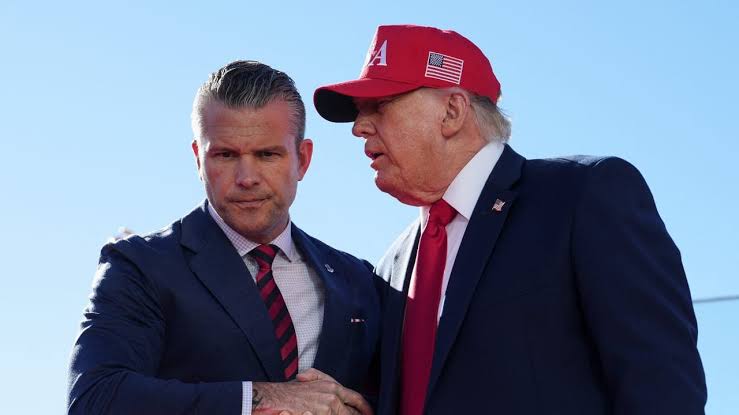
A Republican member of the United States House of Representatives, Thomas Massie, has initiated impeachment proceedings against Defence Secretary Pete Hegseth over his role in the US military campaign against Iran.

Massie, who represents Kentucky, introduced articles of impeachment on the House floor on Monday, accusing Hegseth of abusing his office and carrying out unlawful orders to launch a war against a foreign country.

CNN reported that lawmakers would have to vote on the impeachment motion by Wednesday.

Presenting the articles, Massie accused the defence secretary of knowingly implementing illegal directives to initiate military action against another nation.

He argued that Hegseth had become a threat to the US Constitution and had acted in a manner inconsistent with his official responsibilities and the rule of law.

Hegseth has remained firm in his position, while President Donald Trump has publicly defended him against calls for his removal. The Pentagon chief is also expected to address the controversy at a news conference on Tuesday.

The impeachment effort comes amid mounting criticism of Hegseth following the Republican Party’s poor performance in the 2026 midterm elections.

According to CNN, some Republican lawmakers and allies have blamed the party’s electoral losses partly on the war with Iran.

Critics have accused Hegseth of playing a key role in persuading Trump to launch the military campaign without a clearly defined exit strategy. They have also questioned his assessment of how quickly the United States could achieve its military objectives.

US Vice President JD Vance reportedly attributed the Republican setbacks to the conflict, while Trump acknowledged that the war had contributed to rising petrol prices. The president, however, maintained that the decision to attack Iran was justified.

Although impeachment requires only a simple majority in the House of Representatives, removing Hegseth from office would require a two-thirds majority vote in the Senate.

CNN reported that Massie’s proposal could attract sufficient support in the House if Democrats, the lawmaker himself and a small number of Republicans back it. However, securing the required votes in the Senate would be considerably more difficult.

Hegseth, 46, is a former Fox News presenter and US Army National Guard officer who served in Iraq, Afghanistan and Guantanamo Bay.

He graduated from Princeton University in 2003 before obtaining a master’s degree in public policy from Harvard University.

Nigerian Military Reports Over 50 Terrorists Killed, Dozens of Kidnap Victims Rescued

By Sabiu Abdullahi

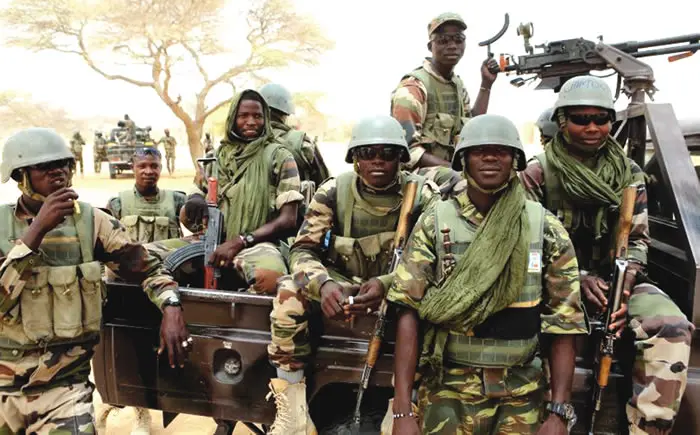
The Nigerian Armed Forces have reportedly killed more than 50 suspected terrorists, apprehended several criminal suspects and rescued dozens of kidnapped persons during coordinated security operations across the country’s six geopolitical zones.

The operations, conducted between October 30 and November 5, 2026, targeted terrorist groups, bandits, kidnappers, gunrunners and individuals suspected of providing support to criminal networks.

The Defence Headquarters disclosed this in a statement issued on November 6 and signed by the Director of Defence Media Operations, Major General Michael Onoja.

According to the statement, troops sustained offensives across various theatres of operation to weaken armed groups, disrupt their sources of supplies and improve security.

North-East: Troops repel attacks, recover weapons

In the North-East, troops of Operation HADIN KAI repelled attacks on Buni Yadi in Gujba Local Government Area of Yobe State and Bitta in Gwoza Local Government Area of Borno State.

The military said troops launched a counteroffensive following an attempted terrorist attack on Buni Yadi from the Timbuktu Triangle axis on October 29.

Clearance operations carried out the following day reportedly resulted in the recovery of 48 bodies of suspected terrorists, 42 AK-47 rifles, five PKT machine guns, four general-purpose machine guns, one 60mm mortar, 105 magazines and two video cameras.

Further operations around Apama and Jauro Bashir on October 31 led to the recovery of three additional bodies, an AK-47 rifle and 188 rounds of ammunition.

At Bitta, troops also thwarted an attempt by terrorists to infiltrate their position. They recovered seven bodies, four AK-47 rifles, an RPG tube, four RPG bombs, three RPG chargers, a PKM machine gun and a radio.

The Defence Headquarters also reported that 12 terrorists and members of their families surrendered at different locations in Borno and Yobe states between November 2 and 4. The locations included New Abaram Resettlement Village and Banki Junction in Bama Local Government Area.

Some of those who surrendered reportedly cited sustained military pressure and disagreements between rival Jama’atu Ahlis Sunna Lidda’awati wal-Jihad (JAS) and Islamic State West Africa Province (ISWAP) factions.

Troops also rescued a female abductee who escaped from the Mandara Mountains.

North-West: Several abductees regain freedom

In the North-West, Operation FANSAN YAMMA personnel recorded a number of successes in rescue and arrest operations.

In Kebbi State, troops responding to a distress call near Ribah in Danko/Wasagu Local Government Area forced kidnappers to abandon seven captives.

Four other persons abducted from their farms were rescued after troops repelled an ambush along the Wasagu-Falfala Road.

Search-and-rescue operations conducted on November 3 also led to the freedom of seven kidnapped persons from Sabon Tunga and Binoni communities in Kebbi State.

In Kaduna State, troops arrested two suspects allegedly connected to kidnapping and cattle rustling at Sabon Gida in Chikun Local Government Area.

Another suspected terrorist was arrested at a clinic in Kagarko Local Government Area while reportedly seeking medical attention for gunshot injuries. The operation was conducted with support from the Department of State Services.

Meanwhile, troops of Operation ENDURING PEACE intercepted a suspected terrorist during a stop-and-search operation at Kukawa Village in Kanam Local Government Area of Plateau State on November 4.

The suspect was allegedly found carrying an AK-47 magazine and one round of 7.62mm special ammunition. Preliminary investigations reportedly connected him to a criminal syndicate allegedly headed by an individual known as Kaura.

North-Central: Forest raids yield weapons and ammunition

Troops of Operation WHIRL STROKE intensified operations against armed groups and kidnapping networks in Benue, Kogi and Taraba states.

During a raid on a suspected criminal hideout in Edimogbo Forest on November 2, troops recovered 1,000 rounds of 7.62mm special ammunition, seven bandoliers, six motorcycles and a mobile phone.

Two suspected kidnappers were later killed in a separate encounter, with troops recovering two AK-47 rifles, seven magazines and more than 5,000 rounds of ammunition.

On November 4, another operation at Obele Forest resulted in the killing of three suspected kidnappers. The military said troops recovered four AK-47 rifles, 12 magazines, 336 rounds of 7.62mm special ammunition and three bandoliers.

In Taraba State, six civilians, including a baby, were rescued after troops responded to a kidnapping incident at Jeb Jeb Village in Karim Lamido Local Government Area.

The military also announced the arrest of a suspected member of the Konyo Boys bandit group in Takum Local Government Area on November 1.

In Kogi State, a suspected terrorist surrendered alongside his wife and two children at Atsawa in Lokoja Local Government Area. He reportedly handed over an AK-47 rifle, four rounds of ammunition and a radio.

Troops also apprehended a suspected logistics supplier accused of providing materials to terrorists operating in Agbaja Forest. In a separate operation, a suspected gunrunner was arrested in Gboko Local Government Area of Benue State.

In Kwara State, troops working with the Vigilante Group of Nigeria ambushed suspected Ansaru terrorists at Nanu Village in Kaiama Local Government Area on November 4, killing two of them.

An injured suspected kidnapper was also arrested at Dusai Village in Mariga Local Government Area of Niger State.

Additionally, three persons who escaped from captivity in Lema-Ndeji Forest, Edu Local Government Area of Kwara State, were rescued by troops.

South-East: Kidnap victim rescued, weapons recovered

In the South-East, troops operating under Operation UDO KA recorded security breakthroughs in Abia and Anambra states.

In Abia, troops rescued a kidnapping victim following a gunmen’s attack on a compound at Okwe Ubahu Nneato in Umunneochi Local Government Area on November 4.

In Anambra State, a search conducted at a shop near the Marine Outpost in Otuocha, Anambra East Local Government Area, led to the discovery of a pump-action rifle, a damaged hunting rifle and 13 cartridges suspected to have been hidden for criminal purposes.

Defence chief urges public cooperation

The Defence Headquarters said the operations formed part of the military’s broader efforts to dismantle criminal networks, cut off their supply routes and protect communities across Nigeria.

The Chief of Defence Staff, General Olufemi Olatunbosun Oluyede, commended the troops for their commitment and sacrifices in the ongoing operations.

He also paid tribute to an officer, a soldier and a civilian hunter who died in the line of duty, while wishing injured personnel a speedy recovery.

Oluyede called for closer collaboration among security agencies, traditional rulers, community leaders and residents to sustain the progress recorded.

He urged members of the public to report credible information about suspicious activities to the nearest military formation or through the toll-free emergency number 193.

The Defence Chief cautioned Nigerians against providing logistical support to criminal groups, resorting to mob action or circulating misinformation capable of undermining security efforts.

He further directed military personnel to maintain discipline, vigilance and combat readiness, assuring that the Armed Forces would sustain their operations until peace and stability were restored across the country.

Four Feared Dead, Several Injured as Trailer Overturns in Kano

By Sabiu Abdullahi

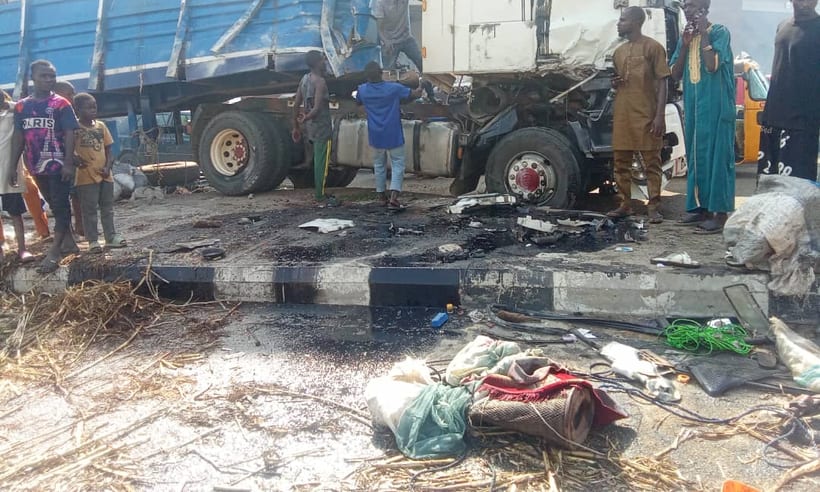
At least four people are feared dead, while several others sustained injuries after a trailer conveying goods overturned at Hotoro Junction in Kano State in the early hours of Monday.

The accident, which occurred at about 2 a.m. on November 9, also left properties damaged, livestock dead and goods scattered across the scene.

The trailer was reportedly travelling from Potiskum in Yobe State to Port Harcourt, Rivers State, when the incident happened.

Some eyewitnesses said the driver, who was unfamiliar with the route, lost control of the vehicle, allegedly following a brake failure.

One of the witnesses told reporters that the trailer veered out of control at the junction because the driver did not know the road.

The incident has renewed calls for the installation of visible road signs and warning signals at major junctions to alert motorists to potential dangers and help prevent avoidable accidents.

NEMA and the Push to Prepare Nigeria for the El Niño Challenge

By Abdulhamid Abdullahi Aliyu

Nigeria’s preparedness for climate-related emergencies faces another important test as a strong El Niño event gathers momentum, with the potential to influence weather patterns, livelihoods, and public safety in the months ahead. For a country already grappling with recurring floods, dry spells, rising temperatures and other climate-related challenges, the development is a reminder that the consequences of a disaster are often determined long before it occurs.

El Niño is a naturally occurring climate phenomenon associated with the warming of sea surface temperatures in the central and eastern equatorial Pacific Ocean. This warming affects atmospheric circulation and can alter rainfall and temperature patterns across different parts of the world. The World Meteorological Organisation (WMO), in its September 2026 update, confirmed that the event was firmly established and expected to strengthen, with a near-certain likelihood of persisting through February 2027. The Nigerian Meteorological Agency (NiMet) had also confirmed the onset of a strong El Niño event in its August climate update.

However, Nigeria’s implications require careful attention. El Niño does not produce identical weather conditions everywhere, and its effects in any country depend on other regional climate systems. Its influence can contribute to unusual temperature and rainfall patterns, increasing the risks of heat stress, water shortages, pressure on agriculture and, in some locations, weather-related emergencies. These possibilities make reliable forecasts, timely public information and practical preparedness particularly important.

The challenge is not simply to understand the phenomenon but to ensure that government institutions and communities are ready to respond to the risks it may create. This is where the work of the National Emergency Management Agency (NEMA) becomes particularly relevant.

Under the leadership of its Director General, Mrs Zubaida Umar, the Agency has continued to strengthen its approach to disaster management, with greater emphasis on early warning, coordination and anticipatory action. The objective is to move beyond responding after an emergency has occurred and build systems that enable relevant authorities to identify threats, prepare communities and take necessary steps before situations deteriorate.

A significant development was Vice President Kashim Shettima’s directive in June 2026 to activate the Fusion and Trigger Room concept within NEMA. Following a meeting of the Anticipatory Action Task Force, the initiative was designed to strengthen information coordination, identify emerging risks, and support timely decisions on early action against flooding and other climate-related hazards. NEMA also disclosed that it had prioritised high-risk areas and issued flood early-warning advisories to support preparedness.

The Agency has also strengthened its operational information system. On August 4, 2026, Mrs Umar activated the National Emergency Operations Centre to improve the monitoring, collation and analysis of information on the flood situation across the country. The Centre is expected to provide a central platform for harmonising information from relevant sources and supporting coordinated decisions during emergencies.

Beyond its internal structures, effective disaster preparedness depends on cooperation among institutions with different but complementary responsibilities. This importance was reflected in the inter-agency meeting hosted by NiMet on August 21, 2026, ahead of implementing the Early Warnings for All initiative in Nigeria. NEMA, NiMet, the Nigeria Hydrological Services Agency, the National Space Research and Development Agency, the Nigerian Communications Commission and other partners participated in discussions around the country’s 2026–2029 implementation roadmap for a coordinated, people-centred early-warning system.

These efforts are important, but their success must ultimately be measured by what happens beyond government offices and emergency coordination centres. A forecast does not protect a household simply because it has been issued. It becomes useful when the information reaches people in a language they understand and prompts them to take appropriate action.

The scale of Nigeria’s exposure to flooding illustrates the importance of this responsibility. The Nigeria Hydrological Services Agency identified 14,118 communities in 266 local government areas across 33 states and the Federal Capital Territory as being at high risk of flooding in 2026. Such figures underline the need for local authorities to strengthen drainage systems, enforce appropriate land-use regulations, prevent construction on waterways and ensure that evacuation arrangements are in place where necessary.

Citizens also have a responsibility to take warnings seriously. During periods of intense heat, people should drink sufficient clean water, reduce unnecessary exposure to direct sunlight, wear light clothing and pay particular attention to children, older persons and people who may be more vulnerable to heat-related illness. Households should use water carefully, maintain clean surroundings and follow reliable weather updates from NiMet and NEMA.

For farmers, access to timely climate information can help guide decisions on planting, crop selection, water use and other farming practices. Communities in flood-prone areas should keep drainage channels clear, avoid dumping refuse in waterways and never attempt to cross flooded roads or moving water. Where evacuation advice is issued, residents should act promptly rather than wait until the situation becomes dangerous.

State and local governments must also translate national warnings into practical interventions. This includes investing in drainage and water-management infrastructure, strengthening local emergency committees, supporting public awareness campaigns and ensuring that vulnerable communities are not left out of preparedness plans. Traditional rulers, community leaders, civil society organisations and the media have equally important roles in ensuring that safety information reaches the people who need it.

Ultimately, no single agency can prevent every climate-related emergency. NEMA’s responsibility to coordinate disaster management must be matched by the commitment of other government institutions and the willingness of citizens to act on credible information. The current El Niño event should therefore be treated not merely as a weather development but as an opportunity to strengthen the country’s preparedness culture.

The true measure of disaster management is not only how quickly emergency teams respond after tragedy strikes, but how many lives, homes and livelihoods are protected because action was taken early. As Nigeria navigates the months ahead, the message is clear: preparedness cannot begin when disaster arrives. It must begin before the storm.

Abdulhamid Abdullahi Aliyu is a journalist and syndicate writer based in Abuja.

Okowa Defends Defection To APC, Says Tinubu Is Putting Nigeria On Right Path

By Sabiu Abdullahi

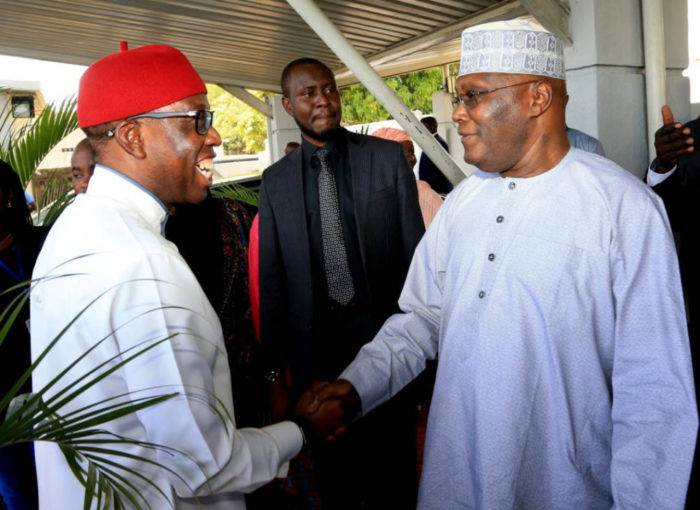
Former Delta State Governor Ifeanyi Okowa has defended his decision to leave the Peoples Democratic Party (PDP) and support President Bola Tinubu, saying the current administration is taking necessary steps to address Nigeria’s longstanding economic problems.

Okowa, who served as the running mate to former Vice-President Atiku Abubakar in the 2023 presidential election, made the remarks on Saturday at the All Progressives Congress (APC) campaign rally in Port Harcourt, Rivers State.

The former governor said his assessment of Tinubu’s policies convinced him to abandon his previous political alliance and join the ruling party.

“You all know that in 2023 I was on another ticket, but I have seen the light, and I have seen what Mr president is doing for Nigeria,” Okowa said.

He described the President’s economic decisions as necessary for rebuilding the country, arguing that previous administrations had weakened Nigeria’s economic foundations.

“It is the right thing to be done, and I have long ago crossed to the APC to join hands with Mr president because he is truly building a new Nigeria.

“When the foundation is broken, you cannot do anything. Mr president realises that successive administrations have broken the foundations of Nigeria. And today, we are on the right course because that foundation is being put right.”

Okowa also credited the Federal Government’s fiscal reforms with improving the financial position of state and local governments, particularly through increased allocations.

“Today, our states and local governments are doing so well because Mr president has continued to mobilise resources for various states and our local governments,” Okowa said.

“We no longer talk about people owing salaries; we no longer talk about people owing pensioners. Our local governments are doing projects, our states are doing projects, and we can pay salaries.

“Only a man who understands a nation’s economy can do this. The wonders that were done in Lagos are already being done in our country, Nigeria.”

Okowa’s political shift marks a major departure from his alliance with Atiku during the 2023 presidential election.

Atiku selected him as his running mate in 2022, a decision that generated divisions within the PDP, particularly among members who favoured former Rivers State Governor Nyesom Wike, now Minister of the Federal Capital Territory, for the position.

The Atiku-Okowa ticket eventually lost the presidential election to Tinubu and the APC.

In April 2025, Okowa publicly expressed regret over accepting the vice-presidential nomination, arguing that the PDP’s decision to field a northern presidential candidate despite expectations in the South contributed to the party’s poor performance in Delta State during the election.

Army Rescues 119 Abducted Travellers After Terrorists’ Attack On Borno Highway

By Sabiu Abdullahi

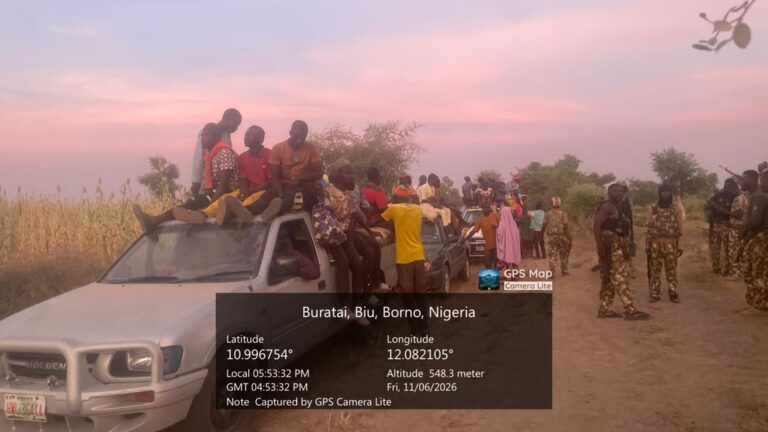
At least 119 people, including women and children, have been rescued by Nigerian Army troops after terrorists reportedly intercepted travellers and seized their vehicles along a road in Borno State.

The operation, which also led to the recovery of 8 vehicles, was carried out on Friday by troops of the 135 Special Forces Battalion under the 27 Task Force Brigade, Sector 2.

According to security publication Zagazola Makama, the soldiers were conducting surveillance along the Dutsen Kura–Bulazarma–Kamuya route when they discovered that armed men had blocked the road and were abducting civilians.

The military personnel subsequently mobilised a special forces quick reaction team, alongside another response unit from the 27 Task Force Brigade headquarters, to pursue the attackers.

The troops reportedly advanced through the Mangari–Dora route and engaged the terrorists, forcing them to flee and abandon their captives and vehicles.

A breakdown of the rescued victims showed that 69 were men, 35 were women and 15 were children. They were later reunited with their families.

However, the operation also uncovered a potential explosive threat in the area.

During their withdrawal, the troops reportedly discovered an improvised explosive device around the Bam Buratai junction–Bula Zarma general area.

An Explosive Ordnance Disposal team subsequently secured and marked the location to enable the safe removal of the device.

The development comes amid continuing security operations against armed groups in parts of Borno State.

FG Plans $500m World Bank Loan For New Infrastructure Financing Platform

By Sabiu Abdullahi

The Federal Government is seeking a $500 million loan from the World Bank to establish a financing platform aimed at attracting private investment into Nigeria’s infrastructure sector.

The proposed facility, known as the Nigeria Infrastructure Financing and De-Risking Platform for Growth and Jobs (INFRAGROW), is part of a broader $3.85 billion initiative designed to address the country’s infrastructure funding deficit.

According to an initial project information document published by the World Bank and updated on November 4, 2026, the proposed loan is expected to be considered for approval on May 25, 2027, four days before the scheduled inauguration of Nigeria’s next president on May 29.

The financing has not yet received approval, and the proposed timetable could change. Approval would also not automatically translate into immediate disbursement or implementation.

The Federal Ministry of Finance is listed as the borrower, while the Nigeria Sovereign Investment Authority (NSIA) will oversee implementation. The World Bank has scheduled a technical design review for January 21, 2027.

The proposed $500 million facility comprises $400 million from the International Bank for Reconstruction and Development and $100 million from the International Development Association.

The wider financing package is expected to combine public and private investments, commercial lending and guarantees to mobilise additional capital for infrastructure development.

Under the proposed arrangement, the NSIA will contribute $200 million in equity as a founding shareholder, while private investors are expected to provide another $200 million. Commercial debt financing is projected at $600 million.

The structure also includes $100 million in payment guarantees from the IDA and $2.25 billion in guarantees from other international financial institutions.

How The Platform Will Operate

The proposed platform will operate through 4 independently governed subsidiaries, each assigned a specific responsibility in addressing obstacles to infrastructure investment.

The first is a Project Preparation Facility, which will finance feasibility studies, transaction arrangements, risk assessments and procurement support. Its purpose is to help turn infrastructure proposals into investment-ready projects.

The second is a Viability Gap Fund, designed to support economically important projects that may not generate enough revenue to attract commercial investors while keeping services affordable.

The World Bank explained the proposed funding arrangement for the facility, stating: “Under the proposed endowment model, the VGF would preserve its capital base and finance viability-gap support primarily from investment returns.”

The third component, the Risk Capital Facility, will provide equity and long-term investment capital to projects that are commercially viable but face difficulties attracting investors because of their risk profiles.

The fourth, known as the Credit Guarantee Vehicle, will provide protection against specified credit defaults, failures in public-sector payments and political risks affecting eligible foreign investments.

The bank expects the arrangement to encourage participation from commercial banks, pension funds, insurance companies and other institutional investors.

Beyond financing, the initiative will support reforms aimed at improving the capacity of public institutions to identify, prepare, procure and supervise infrastructure projects executed through public-private partnerships.

Its implementation will cover 4 areas: institutional development, project preparation, mobilisation of financing and improvements to the regulatory environment.

The institutional development component will support staffing, professional advisory services, statutory charges and operational infrastructure, with funding tied to measurable performance milestones.

Other components will focus on preparing viable projects, activating the risk capital and credit guarantee facilities, and strengthening government capacity to manage infrastructure partnerships and their financial risks.

Describing the initiative, the World Bank said: “The proposed Nigeria INFRAGROW project is an institution-building and private capital mobilisation operation intended to expand sustainable infrastructure in Nigeria.”

The International Finance Corporation is expected to participate as a prospective co-investor, while the Multilateral Investment Guarantee Agency may provide political risk insurance.

Infrastructure Funding Gap

The World Bank document estimates Nigeria’s annual infrastructure financing deficit at approximately $100 billion, identifying inadequate investment and poor project preparation as major constraints on economic growth, competitiveness and employment.

It stated, “Nigeria’s infrastructure financing gap, estimated at approx. $100bn annually, remains a binding constraint on growth, fiscal sustainability, competitiveness, and job creation.”

The bank noted that addressing the deficit would require more than additional funding, stressing the importance of preparing viable projects, managing investment risks and implementing reforms that improve the business environment.

It added, “Closing the financing gap therefore requires an integrated approach that combines rigorous project preparation, appropriately calibrated de-risking instruments tailored to each project’s residual risk profile, and targeted sectoral reforms to strengthen the operating environment.”

However, the proposed project has been classified as having high environmental and social risks, particularly because investments could extend into energy, transport and water infrastructure.

Potential concerns identified by the bank include land acquisition, displacement of communities, environmental damage, workplace hazards and other social consequences associated with large infrastructure developments.

The proposed loan, if approved, would therefore form part of a wider effort to attract private capital into Nigeria’s infrastructure sector while strengthening the institutions responsible for delivering major projects.

NDLEA Arrests Ugandan Woman With 87 Cocaine Wraps At Lagos Airport

By Sabiu Abdullahi

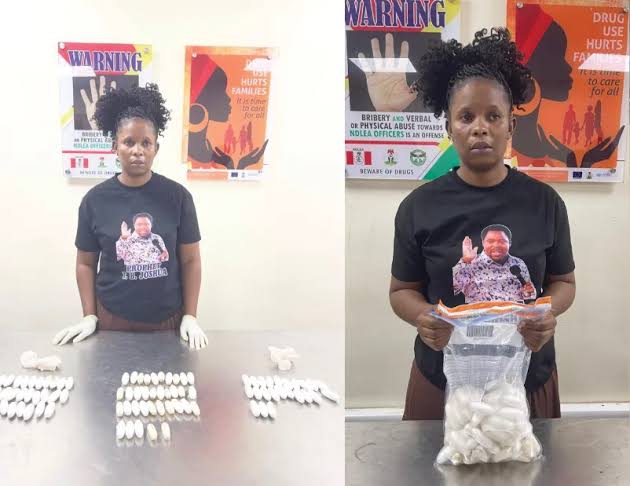
Operatives of the National Drug Law Enforcement Agency (NDLEA) have arrested a 34-year-old Ugandan national, Farida Nansubuga, over an alleged attempt to smuggle 1.15 kilogrammes of cocaine from Nigeria to Uganda.

Nansubuga was intercepted on Tuesday, November 3, at the Murtala Muhammed International Airport, Lagos, while preparing to board a flight to her home country.

The agency said 87 wraps of cocaine were discovered concealed around her pelvic region beneath 2 layers of underwear.

According to a statement issued on Sunday by NDLEA’s Director of Media and Advocacy, Femi Babafemi, the suspect arrived in Nigeria on October 29 with members of her church for a prayer programme at the Synagogue Church of All Nations in the Ikotun-Egbe area of Lagos.

While the other members of her delegation returned to Uganda after the programme, Nansubuga allegedly remained behind to collect a drug consignment for a friend identified as Joy, who lives in Uganda.

Babafemi said she was arrested during a joint passenger screening operation involving NDLEA operatives and aviation security personnel at Terminal 2 of the airport.

“She came to Nigeria with members of her church for spiritual renewal at a prayer session in Lagos. But when it was time to go home, 34-year-old Ugandan, Ms Farida Nansubuga, chose a different path.

“While the rest of her delegation flew back to Uganda, she stayed behind, not to pray some more, but to pick up a consignment of cocaine, which she hid in her private part in a bid to smuggle it into her country.

“Her plan, however, came crashing down at the MMIA, Ikeja, Lagos, on Tuesday, 3rd November 2026, when operatives of the NDLEA intercepted her at the screening point of Terminal 2 during a joint passenger screening exercise with aviation security personnel. She was due to board a Ugandan airline flight to her home country,” the statement partly read.

The agency said preliminary investigations indicated that a contact in Nigeria arranged transportation for the suspect to a hotel on the day of her departure, where an unidentified man allegedly handed over the drugs to her.

Nansubuga reportedly told investigators that she was instructed to hide the cocaine beneath her clothes to avoid detection at the airport.

Babafemi further quoted her as saying that she had travelled to Nigeria with her church members but stayed behind after their departure to collect the consignment for her Ugandan contact.

“During a preliminary interview, the suspect said she arrived in Nigeria on 29th October 2026 with members of her church for a prayer session at The Synagogue Church of All Nations, Ikotun-Egbe area of Lagos.

“She claimed that after the prayer session, the other members of her delegation returned to Uganda while she stayed back to collect the illicit consignment on behalf of a friend, simply identified as Joy, who resides in Uganda.”

The suspect reportedly said she expected to receive at least $1,000 for delivering the drugs, although no specific payment arrangement had been finalised.

NDLEA Chairman, Brig-Gen. Mohamed Buba Marwa (retd.), described the arrest as evidence of the tactics employed by drug trafficking networks to recruit couriers through religious and other forms of travel.

“The case of the Ugandan woman is a sad reminder that drug cartels will stop at nothing, including exploiting faith and religious travel, to recruit couriers for their deadly trade. I urge officers across all commands to sustain the tempo of their supply and demand reduction efforts,” he said.

Marwa also commended the officers involved in the operation and urged personnel across the agency’s commands to maintain their efforts against drug trafficking.

In a separate operation at the Lagos airport, NDLEA operatives intercepted 750,000 tablets of Tapentadol 250mg, weighing 526 kilogrammes and estimated to be worth ₦900 million.

The consignment, which arrived from Ahmedabad, India, aboard an Ethiopian Airlines flight, was allegedly declared as Paracetamol 500mg tablets.

“In another interception at the Lagos airport, NDLEA operatives on Friday, 6th November, uncovered 750,000 tablets of Tapentadol 250mg, weighing 526 kilograms with a street value of N900 million, in a consignment from India declared as Paracetamol Tablets 500mg.

“The consignment, made up of eleven cartons packed in two wooden structures, arrived at the import shed of the airport on Tuesday, 3rd November, aboard an Ethiopian Airlines flight from Ahmedabad, India,” he said.

The agency also intercepted 32 parcels of a cannabis strain known as Loud, weighing 16.15 kilogrammes, concealed inside 2 wooden sofas in a cargo shipment from Houston, United States.

In another seizure, officers recovered 600 tablets of Tramadol 225mg hidden in female headwear in a shipment destined for the United Kingdom. They also intercepted 46 blocks of cannabis weighing 22.2 kilogrammes in 2 cartons being sent to the same country.