Month: August 2026

Malam Yayi Rawa and the New Politics of Praise Singing

By Ibrahim Aliyu Gurin 

In Northern Nigeria’s political battlegrounds, the loudest attacks don’t always come from campaign podiums. Long before Facebook, TikTok and WhatsApp turned everyone into a publisher, Hausaland already had its own version of political messaging.

The maroƙi (praise-singer) was more than a singer. He was a storyteller, historian and public commentator. When a leader did well, he sang yabo, verses filled with praise and the same performer could just as easily turn that skill toward humiliation by mocking a rival’s failures, appearance, or character in verses crafted to stick in public memory, which is referred to as zambo. 

Zambo is a sharp, witty poetry designed to mock, embarrass or expose. It wasn’t always pleasant, but it was part of the culture; the difference today is that zambo has become a political business.

Instead of entertaining a local crowd, one song can now reach millions of people before sunset. A chorus recorded in Kano can be playing in Kaduna, Sokoto, Abuja and even among Hausa communities abroad within hours.

No one illustrates this better than Dauda Kahutu Rarara. Over the years, he has released songs like Hannun Karɓa, Masu Gudu Su Gudu, Baba Buhari Dodar, Jagaba Shi Ne Gaba and recently Malam Ya Yi Rawa. To his supporters, these are campaign anthems. To his critics, they are political attacks wrapped in catchy melodies. Whatever side you take, one thing is difficult to deny: people remember the songs long after they have forgotten the campaign speeches, and this alone says something about the power of music.

What makes today’s political songs different from the poetry of men like Sa’adu Zungur, Mudi Sipikin or Garba Affa is intention. Earlier political poetry was designed to awaken society, challenge injustice and educate the people. Much of today’s political music is driven by patronage. A politician hires a musician, the musician praises one side, ridicules the other, and the song becomes another campaign strategy.

Perhaps that is why political music now feels less like public service and more like political advertising. There is nothing wrong with musicians supporting politicians. Every artist has the right to hold political views. The concern begins when entertainment replaces truth, becomes more influential than verified facts, and insults travel farther than ideas.

Maybe the bigger question is not why politicians pay musicians. Maybe it is why we, the listeners, remember the insults more easily than the policies.

As another election season approaches, perhaps the challenge is to enjoy the music without allowing the chorus to become our ballot paper. After all, a hit song lasts only a few minutes, but the consequences of the leaders we choose can last for years.

Ibrahim Aliyu Gurin is a graduate of mass communication from Bayero University, Kano, and can be reached at ibrahimaliyu5023@gmail.com.

Fagge Community Hails Tinubu Over Dr Salisu’s Appointment As FCAPT Provost

By Uzair Adam

Members of the Fagge Local Government Area in Kano State have welcomed the appointment of Dr. Salisu Salisu as Provost of the Federal College of Agricultural Produce and Technology (FCAPT), describing the development as a well-deserved recognition of his academic excellence, professional competence and years of dedicated service.

The community members also commended President Bola Ahmed Tinubu for approving the appointment, expressing confidence that Dr. Salisu’s wealth of experience would contribute to the growth and development of the institution.

The Daily Reality reports that Dr. Salisu is a senior academic in the Department of Science Laboratory Technology with expertise in Analytical Chemistry, Environmental Toxicology and agricultural research.

He obtained his PhD in Analytical and Environmental Chemistry from Benue State University during the 2023/2024 academic session after earning a Master’s degree in Analytical Chemistry from Bayero University Kano.

He has also authored several scholarly publications on heavy metals, food safety and spectroscopic analysis.

Reacting to the appointment, Aisar Fagge, a lecturer in the Department of Mass Communication at Kano State Polytechnic, described it as a testament to Dr. Fagge’s resilience, dedication and commitment to the institution.

“As one of the old comrades of the school, this appointment is a testimony to his resilience, dedication, commitment and cordial relationship with the staff and the management,” he said.

Aisar expressed optimism that Dr. Salisu’s wealth of experience would help move the institution to greater heights.

He also prayed that Allah would grant the new provost wisdom and guidance in the discharge of his responsibilities while appreciating everyone who contributed to making the appointment possible.

Also speaking, another community member, Hussaini Ibrahim Kote, congratulated the new provost and thanked President Tinubu for what he described as appointing the right person for the job.

The community members prayed for Allah to grant Dr. Salisu success in his new assignment and guide him in steering the Federal College of Agricultural Produce and Technology to greater achievements.

Iran Accuses US of Mixed Signals Over Military Threats, Nuclear Talks

By Sabiu Abdullahi

Senior Iranian officials have accused the United States of issuing public military threats while privately seeking negotiations, amid heightened tensions between the two countries.

Hassan Ghashghavi, a senior Iranian lawmaker and spokesman for the Parliament’s Commission on National Security and Foreign Policy, said Tehran would retain control over traffic through the Strait of Hormuz regardless of developments in the conflict. His remarks came before US President Donald Trump reportedly cancelled planned military strikes.

“In the media, they speak of escalation, while through existing channels they demand negotiations,” Ghashghavi said. “They cannot deceive the Islamic Republic of Iran. Whether by escalating or by negotiating, Iranian arrangement for passage through the SoH [Strait of Hormuz] is the only option on the table.”

The Strait of Hormuz remains one of the world’s most strategic maritime routes because a significant share of global oil shipments passes through it.

Meanwhile, Majidreza Hariri, President of the Iran-China Chamber of Commerce and Industry, argued that Washington would not risk attacking Iran’s energy infrastructure.

“They don’t have the courage to carry it out because Iran’s resilience is far greater than that of the countries in the region against the destruction of infrastructure,” Hariri said in a post on X.

Reports indicate that Iran operates one of the world’s most decentralised electricity networks, with about 150 power plants spread across the country. Analysts say the wide distribution of the facilities makes it more difficult for an aerial attack to trigger a nationwide power outage.

Trump Cancels Planned Iran Strikes, Says Deal Is Within Reach

By Sabiu Abdullahi

US President Donald Trump has announced that he has cancelled planned military strikes against Iran, saying the decision depends on the swift conclusion of an agreement.

In a statement, Trump said he called off the attacks “subject to being able to rapidly make a deal”.

He also claimed that Iran and other Middle Eastern countries had urged him to suspend the planned operation because “the perimeters of a deal has been agreed to”, including the reopening of the Strait of Hormuz.

Trump’s announcement followed fresh warnings from Iran over the possibility of military action.

Iranian Foreign Minister Abbas Araghchi told the foreign ministers of Turkiye, Pakistan and Saudi Arabia in separate telephone conversations that any “aggression” by the United States and Israel would be met with a “decisive ⁠and proportionate response”.

Meanwhile, the conflict in Gaza continued as Israeli forces reportedly killed at least eight Palestinians across the territory.

Reports also said Israeli attacks destroyed a medical warehouse in Deir el-Balah. The strike left a crater measuring about 20 metres (66 feet) wide and 10 metres (33 feet) deep.

Several Americans Reportedly Killed After Gunman Opened Fire At Idaho Fast-Food Restaurant

By Sabiu Abdullahi

Several people have been killed and others injured after a gunman opened fire at a fast-food restaurant in Twin Falls, Idaho, authorities said.

Police confirmed that the suspected attacker was among those who died during the incident.

Law enforcement officials also said they believe there is no longer any threat to the community, indicating that the situation has been brought under control.

Authorities have not yet released the identities of the victims or disclosed the motive behind the attack. An investigation into the shooting is ongoing.

Kano Govt Allocates Land To 2,500 Political Appointees, Polling Agents

By Uzair Adam

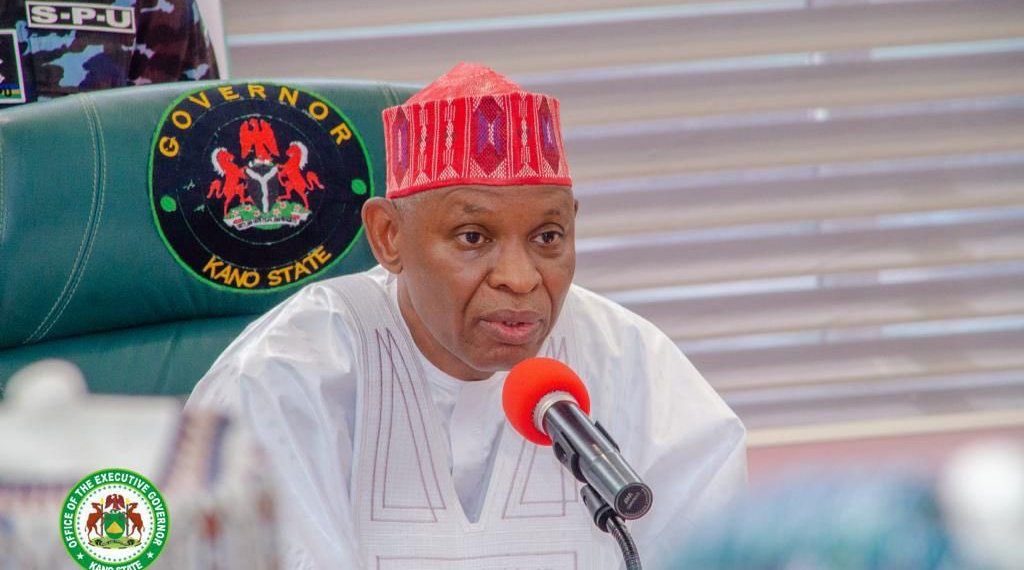
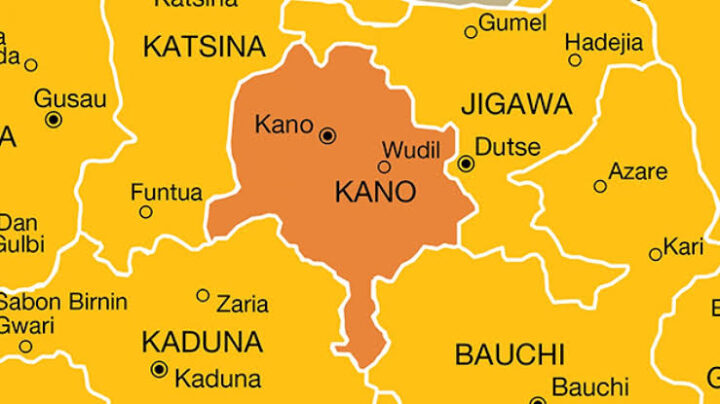
The Kano State Government on Saturday commenced the distribution of land allocation documents to political appointees, with polling agents scheduled to receive theirs on Sunday, as part of an exercise that will benefit about 2,500 beneficiaries.

The official ceremony, held in Kano, saw land allocation documents presented to Senior Special Assistants (SSAs), Senior Special Reporters, Special Assistants (SAs), Special Reporters and Personal Assistants (PAs) serving under the administration of Governor Abba Kabir Yusuf.

Governor Yusuf, whose address was delivered by the Secretary to the State Government, Alhaji Umar Farouk Ibrahim, said the distribution underscored his administration’s commitment to fulfilling promises made to those who served the government.

“Today is not merely about presenting land allocation documents; it is about keeping a promise,” the governor said in the message read on his behalf.

He recalled that he had assured the political appointees during an engagement last month that they would receive land allocations, noting that Saturday’s presentation fulfilled that pledge.

The governor said Saturday’s exercise covered political appointees, while polling agents would receive their allocation documents on Sunday, bringing the total number of beneficiaries to about 2,500.

He described the initiative as part of the administration’s broader effort to reduce the state’s housing deficit, promote home ownership, create wealth for families and reward loyalty, commitment and hard work.

Yusuf urged beneficiaries to regard the allocations as the beginning of their journey towards property ownership rather than simply pieces of paper.

He also highlighted his administration’s achievements in education, healthcare, infrastructure, agriculture, water supply, social intervention and land administration, including the digitalisation of land records, reforms aimed at improving transparency, and preparations for a new Kano Metropolitan Master Plan.

The governor called on the beneficiaries to continue engaging with residents by explaining government policies and programmes while providing feedback that would strengthen governance.

“The greatest campaign any government can undertake is the visible impact of its work on the lives of the people,” he said.

Earlier, the Commissioner for Land and Physical Planning, Abduljabbar Muhammad Umar, said the exercise reflected the administration’s commitment to rewarding loyalty and fulfilling its promises.

“This programme reflects the character of this administration—a government that keeps its promises and rewards loyalty, commitment and hard work,” Umar said.

He noted that records available to the ministry showed that no previous administration in Kano had undertaken land allocations on such a scale within such a short period.

According to him, the initiative forms part of the government’s broader plan to reduce the housing deficit, expand access to land ownership, empower young people, women and vulnerable groups, and create lasting wealth through secure property ownership.

He urged beneficiaries to regard the allocations as a lifetime opportunity and continue supporting the administration by sensitising residents to its programmes and achievements across various sectors.

Speaking on behalf of the beneficiaries, Sani Tukur described the gesture as a demonstration of the government’s appreciation for their service.

“We receive this generous gesture with gratitude and humility. It is more than just an allocation of land; it is a clear reflection that our service is valued,” he said.

Tukur pledged the continued loyalty and commitment of the beneficiaries to the administration and prayed for Allah to grant the governor good health, wisdom and strength to continue leading Kano State.

Possible Successors To Infantino Emerge Amid FIFA Leadership Crisis

By Sabiu Abdullahi

Fresh speculation has emerged over who could succeed Gianni Infantino as FIFA president, as reports suggest efforts to remove the football governing body’s long-serving leader are gathering momentum.

Sky News reported that moves against Infantino are “accelerating” and that there is “a determined effort” to oust him from office after a sharp decline in support following his failed attempt to sell a stake in the FIFA World Cup to private investors.

According to the report, possible successors include CONCACAF president Victor Montagliani and Paris Saint-Germain president Nasser Al-Khelaifi.

The report also stated that UEFA has intensified consultations with several football associations, including the English Football Association, as it seeks support for a new candidate to replace Infantino.

Infantino’s proposal to bring private investors into the World Cup project reportedly met stiff resistance from UEFA, CONCACAF and the Asian Football Confederation (AFC). The opposition eventually brought the plan to an end.

Following that setback, UEFA has reportedly taken the lead in efforts to challenge Infantino’s leadership. The campaign, which was initially expected to strengthen his position ahead of a possible fourth term in office, is now said to have weakened his standing.

Sky News reiterated that the campaign against the FIFA president is “accelerating” and described it as “a determined effort” to remove him from office. The report further claimed that it is no longer a question of whether Infantino will leave office, but when it will happen.

One option under consideration is persuading Infantino to resign from the position he has occupied for 10 years. If that fails, supporters of the move could seek an emergency FIFA congress. Under FIFA rules, 43 of the organisation’s 211 member associations would have to request such a meeting before a vote of no confidence could be initiated.

Another strategy involves backing a rival candidate in the next FIFA presidential election. TalkSPORT reported that UEFA president Aleksander Ceferin has appealed to football federations that previously endorsed Infantino for a fourth term, including the English FA, asking them to withdraw their support.

Atiku Defends Opposition To Obasanjo’s Third-Term Bid, Says He Has No Regrets

By Sabiu Abdullahi


Former Vice-President Atiku Abubakar has dismissed former President Olusegun Obasanjo’s criticism of him, insisting that he remains proud of opposing what he described as the former president’s third-term agenda.

Atiku’s response followed remarks made by Obasanjo during a fireside chat with activist Charles Oputa, popularly known as Charly Boy, in Lagos on Friday. During the event, the former president said he regretted choosing Atiku as his deputy while they served together from 1999 to 2007.

Obasanjo said: “The man I picked as my running mate, my number two, if I had known as I came to know him later, I would not have picked him.

“I mean my vice-president. What I know about him later makes me… thank God because God did not allow his actions and reactions to overwhelm me or to divert my focus from Nigeria or to harm Nigeria.”

In a statement released on Saturday through his Senior Special Assistant on Public Communication, Phrank Shaibu, Atiku said he received Obasanjo’s comments with sadness rather than anger. He argued that the remarks reflected “the disposition of a man who has allowed personal resentment to cloud historical truth.”

The former vice-president maintained that his opposition to the proposed constitutional amendment was based on his commitment to Nigeria’s democracy.

“I am proud that I stood against the third-term agenda. I am proud that I stood by the Constitution of the Federal Republic of Nigeria,” Atiku said.

“I have no apology whatsoever for frustrating every attempt to subvert our democracy for personal ambition.”

He added that no individual is greater than Nigeria. He said if Obasanjo’s resentment arose from his opposition to what he described as the “unconstitutional third-term” bid, he would accept it with pride.

The controversy over the third-term agenda dates back to the 2005–2006 constitutional amendment process, when lawmakers considered a proposal that would have allowed presidents and governors to serve three four-year terms instead of the existing two-term limit. The Senate eventually rejected the amendment bill on May 16, 2006.

Atiku was widely reported to have played a key role in mobilising opposition to the proposal through engagements with lawmakers and other political stakeholders.

Reflecting on the episode, Atiku said the battle was about protecting democratic principles rather than settling personal scores.

“The Nigerian people won that battle. Democracy won that battle. History has already delivered its verdict,” he said.

The former vice-president also referred to comments credited to former Finance Minister Ngozi Okonjo-Iweala, who recently praised the economic management team that operated during the Obasanjo administration.

“Chief Obasanjo may choose not to appreciate my role in building one of Nigeria’s most prosperous economic eras, but history has been far kinder,” he said.

“The record speaks for itself, and so do the testimonies of those who worked closely with that administration.”

Atiku also recalled the role he claimed to have played during Obasanjo’s imprisonment and political return.

“History records that while Chief Obasanjo was in prison, I stood firmly by him,” the former vice-president recalled.

“I supported his family, worked tirelessly with other patriots for his release and never wavered in my belief that he deserved his freedom.

“When he eventually regained his freedom, he had little to his name. I received him, clothed him, ensured he was properly cared for and extended every support necessary to help him regain his footing.”

He further stated that he “mobilised political structures, built alliances and made enormous personal and political sacrifices that culminated” in Obasanjo’s emergence as president after his release from prison.

“Do I regret helping Chief Obasanjo? Absolutely not. When God gives you the opportunity to lift another human being, you do so without expecting repayment. Acts of kindness are matters of conscience, not commercial transactions,” he said.

“If the true history of Chief Obasanjo’s political journey is ever written—free from selective recollection and personal bitterness—Atiku Abubakar will feature prominently as one of those whom God used to change the course of his life and political career,” Atiku said.

The former vice-president also expressed disappointment that the former president had chosen to revisit past political disagreements at a time when Nigeria faces economic hardship, unemployment and insecurity.

“The 2027 election should be about rebuilding Nigeria, restoring security, reviving the economy and giving hope to the next generation—not reopening old political wounds,” he added.

He concluded by saying that although Obasanjo has the right to hold personal opinions, “he is not entitled to his own facts”.

The latest exchange adds to a long-running public feud between the two leaders. Since leaving office, both men have repeatedly accused each other of corruption, abuse of office and political betrayal. Their dispute intensified recently after Obasanjo alleged that Atiku gave the late former Speaker of the House of Representatives, Ghali Umar Na’Abba, N5 million to initiate impeachment proceedings against him during his first term. Atiku denied the allegation and accused the former president of making false claims to advance political interests ahead of the 2027 general election.

Israeli Settler Defends Killings in Gaza, Claims One Israeli Is Worth More Than 10 Million Palestinians

By Sabiu Abdullahi

An Israeli settler has defended recent attacks on Palestinian communities in the occupied West Bank, describing them as justified retaliation after the killing of a security guard from the Havat Gilad outpost.

The remarks came during an interview with the BBC, which gained rare access to Havat Gilad, an Israeli settler outpost located deep inside the occupied West Bank.

Violence escalated in the area last weekend after an Israeli security guard from Havat Gilad died during a confrontation between Israelis and Palestinians in the nearby village of Tal. Four Palestinians and one Israeli soldier also lost their lives in the incident, although reports said the circumstances that triggered the clash remain disputed.

During the interview, Yehuda Shimon, a lawyer who represents Israelis accused of attacking Palestinians, defended the reprisals against nearby Palestinian villages.

“I think now, after they killed one Israeli, we need to kill all the people in Tal and Sarra, even Jit and Farata,” he said, referring to neighbouring Palestinian communities.

When questioned about equating the death of one Israeli with the lives of hundreds or thousands of Palestinians, Shimon replied: “No, millions. One Jewish life, it’s 10 million [Palestinians].”

Asked whether his comments were racist, he did not deny the accusation.

“Yes, I know,” he replied. “But this is the truth, because God chose us [and] because of this you are jealous.”

The BBC noted that such views are rejected by many Israelis. However, it said they help explain the growing tensions in the West Bank, where Israeli settlements and unauthorised outposts continue to expand amid rising violence against Palestinians.

Many settlers in outposts such as Havat Gilad believe the West Bank was divinely promised to the Jewish people. International law considers both authorised Israeli settlements and unauthorised outposts in the occupied territory illegal.

Shimon dismissed international legal objections. He argued that biblical claims supersede international law. He also criticised the Israeli government and military, claiming they have not done enough to support Jewish claims to the land.

“The Israeli government and the Israeli army, they like the United Nations – if Palestinians come and Jewish people come, [they] don’t kill the Palestinians, [they] just separate the people,” he said. “Afterwards, because they don’t kill Palestinians, the Palestinians kill us.”

However, figures from the United Nations Office for the Coordination of Humanitarian Affairs (OCHA) present a different picture. According to the agency, 64 Palestinians were killed in the West Bank between the beginning of the year and July 20. It said 18 of those deaths occurred during settler attacks. At least 12 victims were reportedly killed by settlers, while three died at the hands of Israeli forces. Responsibility for three other deaths remains under investigation. OCHA also recorded one Israeli death during the same period.

The UN agency further reported that injuries caused by settler attacks have increased sharply this year, with more than three Palestinians injured each day on average.

Shimon also alleged that international media had accepted what he called the Palestinian narrative. He claimed, without presenting evidence, that Palestinians in the area were heavily armed and intended to repeat the Hamas-led attacks of October 7, 2023.

“If we don’t wake up and drop them all from this area, from all areas of Israel, even Gaza too, they will come back, and come back [again],” he said.

The report noted that Israeli settlers in the West Bank are protected by the Israeli military and local armed security units. Palestinians, on the other hand, remain under Israeli military occupation and face movement restrictions through checkpoints and road closures. Some international human rights organisations have described the system as “apartheid,” a characterisation Israel has rejected as “absurd and distorted.”

When asked about the future of Palestinians in the West Bank, Shimon outlined three options.

He said they could remain under Israeli rule, relocate voluntarily to Arab or Muslim countries, or face deadly consequences if they continued to resist.

“if you don’t want to make peace with us, and you don’t want to get out, I don’t have a choice: I must kill you, and I kill you all,” he said.

The BBC also highlighted similarities between Shimon’s views and proposals previously advanced by Israeli Finance Minister Bezalel Smotrich. Before joining the government, Smotrich proposed that Palestinians either abandon demands for statehood and live under Israeli rule, leave the territory voluntarily, or face military action if they continued armed resistance.

Meanwhile, many Palestinians living near Havat Gilad told the BBC they feel abandoned and vulnerable. They accused Israeli forces of prioritising the protection of settlers while leaving Palestinian communities exposed to repeated attacks.

“It’s a very bad situation,” one resident said. “Europe is busy, America is occupied with Iran, China doesn’t care, Russia is fighting Ukraine, the UN are finished and the Arabs have internal problems. We don’t know what we can do.”

2027: The Pantami Question

By Zayyad I. Muhammad 

One of the gubernatorial ambitions generating the most intense debate and public interest ahead of the Gombe State 2027 governorship race is that of Professor Isa Ali Ibrahim Pantami.

From the outset, Professor Pantami’s reported interest in contesting for the governorship attracted attention far beyond the borders of Gombe State. This is largely because he is not regarded as a conventional politician. Rather, he is an accomplished academic, Islamic scholar, technocrat, and former Minister of Communications and Digital Economy whose tenure earned him national recognition for driving Nigeria’s digital transformation.

Pantami’s potential candidacy appears to enjoy support from three distinct constituencies.

The first consists of those who genuinely believe he has something significant to offer the state. They draw inspiration from his performance as minister, citing his reforms in the digital economy, the expansion of broadband infrastructure, the growth of digital identity enrolment, and his emphasis on innovation, transparency, and public sector efficiency. To this group, his administrative record demonstrates that he possesses the competence and vision required to govern Gombe State.

The second group is found within the opposition in Gombe state, particularly elements of the PDP, who view Pantami as one of the few personalities with the political profile, credibility, and public appeal capable of mounting a serious challenge against the APC’s candidate-Dr. Jamilu Isiyaku Gwamna. Whether they support him or not, many acknowledge that his entry into the race would significantly alter the political equation.

The third constituency comprises sections of the religious community who see his ambition as an opportunity for one of their own to demonstrate how religious scholarship, intellectual depth, and public service can translate into effective democratic governance. For many within this group, his candidacy represents more than a political contest; it is an opportunity to test whether the values he has consistently preached can be successfully applied in elective office.

Like every major political figure, Pantami also faces opposition from different quarters.

The first group consists mainly of career politicians who believe he is entering a political space traditionally occupied by established political actors. To them, he is an outsider attempting to disrupt existing political calculations, alliances, and structures that have been built over many years.

Perhaps more surprisingly, the second group of opponents comes from within sections of his immediate religious constituency. Some clerics and religious associates reportedly believe that during his tenure as minister, he did not sufficiently carry them along or extend the expected level of inclusion and patronage. Consequently, while they may respect his scholarly credentials, they remain reluctant to support his political ambition.

Another dimension that has attracted considerable attention is the political dexterity with which Pantami secured the PDP gubernatorial ticket. The manner in which he navigated the party’s internal dynamics and emerged as its flagbearer suggests careful planning and strategic preparation rather than mere political ambition. His decision to align with the Nyesom Wike-led faction of the PDP, a bloc widely perceived in political circles as maintaining a cooperative relationship with the APC-led Federal Government, has further strengthened his political positioning. The goodwill and support he reportedly enjoys within that tendency of the PDP could prove to be a significant advantage as the campaign unfolds.

In addition, Pantami could benefit from protest votes originating from within the APC. Some influential APC stakeholders and their supporters who believe Governor Muhammadu Inuwa Yahaya has not done sufficient justice to their political aspirations or interests may choose to channel their dissatisfaction by supporting Pantami. While it remains to be seen how substantial such a shift could be, the possibility of cross-party protest votes is a factor that political observers cannot ignore.

Whichever way one chooses to examine it, Professor Isa Ali Ibrahim Pantami’s potential governorship candidacy is in a class of its own. What initially appeared to be little more than speculation or a distant aspiration has steadily evolved into one of the defining conversations in Gombe State politics. official campaign has yet to commence, but the discussions surrounding Pantami’s governorship ambition have already reshaped Gombe State’s political landscape, making him a force that political stakeholders can no longer afford to ignore.

The ultimate test, however, will not simply be the enthusiasm surrounding his candidacy but his ability to convert goodwill into an effective political structure, sustain broad-based alliances, and persuade the electorate that his administrative achievements at the federal level can be replicated in Gombe State. Regardless of the eventual outcome, Pantami has already ensured that the Gombe 2027 governorship contest will be one of the most closely watched political battles in the state’s history.

Zayyad I. Muhammad writes from Abuja via zaymohd@yahoo.com.