Month: April 2026

When They Claim the North Never Criticised Buhari While in Office, is it Ignorance or Hypocrisy? Let the Facts Speak

By Mohammed Bello Doka 

History is a stubborn thing. It does not bend to the whims of revisionists, nor does it dissolve under the weight of repeated falsehoods. For some time now, a particular narrative has been carefully cultivated and spread across social media platforms and traditional dinner tables. This narrative suggests that during the eight years of Muhammadu Buhari’s presidency, the North maintained a conspiratorial silence, shielding itself while the country drifted. It paints an entire region as a monolith of blind loyalty. But as the saying goes, a lie can travel halfway around the world while the truth is still putting on its shoes. Today, the truth is fully dressed and ready to walk.

If the people making these claims are truly ignorant of the facts, this record will serve as a much-needed education. If they are speaking from a place of hypocrisy, then this record will serve as a mirror to their own intellectual dishonesty. To suggest the North was silent is to erase some of the most daring, scathing, and consequential political and intellectual battles fought against the Buhari administration from within its own base.

Let us begin with the most intimate of critics. On October 14, 2016, through the BBC Hausa Service, the First Lady of Nigeria, Aisha Buhari, stunned the world. She did not just offer a mild critique; she declared that her husband’s government had been hijacked by a few people who did not even know the party’s vision. She stated plainly that out of fifty people the President had appointed, he probably didn’t know forty-five of them. 

This was not a Southern critic or an opposition politician speaking; this was the President’s own wife. She followed up on December 4, 2018, as reported by Punch and Premium Times, during a leadership summit in Abuja, where she challenged Nigerian men to stand up to two or three people dominating the government. On May 25, 2019, as reported by Channels TV and Daily Trust, she attacked the administration’s Social Investment Programme, labelling it a failure in the North and questioning the procurement of mosquito nets. If the North was silent, was the First Lady’s voice not Northern enough?

The intellectual and traditional pushback was equally fierce. As the Emir of Kano, Sanusi Lamido Sanusi used his platform to deliver economic lectures that the presidency found deeply uncomfortable. On August 24, 2016, during the 15th meeting of the Joint Planning Board in Kano, as reported by Punch Newspapers, he warned that the Buhari administration was on the path of the Jonathan government if it did not end its flawed foreign exchange policies. Years later, as reported by Vanguard on August 20, 2023, he provided a post-mortem, stating that the administration had decimated the economy and left a thirty trillion naira debt through illegal central bank borrowing.

Then there is the Northern Elders Forum. For years, this group acted as a stern watchdog. On June 14, 2020, as reported by The Guardian and The Cable, the Chairman of the forum, Professor Ango Abdullahi, issued a statement titled Life has lost its value under Buhari. He described the administration as a total failure in the face of escalating banditry and insurgency. He noted that the North was completely at the mercy of armed gangs. 

This sentiment was echoed repeatedly by the forum’s spokesperson, Doctor Hakeem Baba Ahmed. In April 2022, following the Zabarmari massacre, Baba Ahmed appeared on Channels TV and was quoted in Daily Trust stating that in any civilised nation, a leader who failed so spectacularly to provide security would have resigned. He was one of the most consistent voices debunking the myth that the North was satisfied with the status quo.

Even the clergy did not stay silent. Sheikh Ahmad Gumi, once considered a supporter of the President’s integrity, became a vocal opponent. In an interview with Punch on July 7, 2018, Gumi stated that he knew Buhari would make Nigeria worse than it was when Jonathan left. He accused the administration of being worse than its predecessor and criticised what he called the deification of the President.

When we turn to the political theatre, the evidence of Northern opposition is even more undeniable. Consider Buba Galadima, one of the original signatories to the formation of the APC. On July 4, 2018, as reported by Punch and Premium Times, Galadima led a faction to form the Reformed APC. He held a press conference in Abuja where he described the party’s leadership as a charade and the government as a disappointment. In an exclusive interview with Premium Times on July 22, 2018, he accused Buhari of betraying the loyalists who built his political career to empower a clannish inner circle.

Rabiu Musa Kwankwaso, the former Governor of Kano, also broke ranks early. On July 24, 2018, he was among the senators whose defection was reported by Punch and Premium Times as part of a mass exodus from the APC to the PDP. Throughout 2018 and into the 2023 election cycle, Kwankwaso was a relentless critic. 

On August 27, 2018, as reported by Punch, he stated in Owerri that Buhari lacked the capacity to improve the economy. Later, on April 15, 2022, as reported by Channels TV, he expressed deep worry that a retired General could allow insecurity to reach such levels, calling the administration’s second term a missed opportunity.

The most dramatic phase of Northern criticism occurred in the build-up to the 2023 general elections. 

This was not just rhetoric; it was a legal and constitutional war. Nasir El-Rufai, the then Governor of Kaduna State, became the face of internal resistance. Long before the currency crisis, El-Rufai’s critical stance was documented in a 30-page memo dated September 22, 2016, which was eventually leaked by Sahara Reporters on March 16, 2017. In that memo, he warned the President that the APC was losing its supporters’ trust and that the government was adrift. 

By 2023, the tension culminated in a Supreme Court lawsuit. On February 3, 2023, as reported by Channels TV and The Punch, El-Rufai, along with Governors Yahaya Bello and Bello Matawalle, sued the Federal Government over the naira redesign policy. On February 16, 2023, after Buhari’s national broadcast, El-Rufai issued a counter-broadcast in Kaduna, which was transcribed by Vanguard and The Cable, where he told his citizens to continue using the old notes, effectively challenging the President’s authority in a way no Southern governor dared at the time.

Abdullahi Umar Ganduje, the then Governor of Kano, was equally confrontational. On January 28, 2023, as reported by The Niche and Daily Post, Ganduje officially asked the President to postpone a visit to Kano because the people were too angry over the currency policy to guarantee a peaceful reception. 

In early February 2023, a viral video reported by Daily Trust and Sahara Reporters showed Ganduje mocking the President’s political history, noting that Buhari only won after a merger was formed for him and was now trying to destroy the party on his way out. On February 14, 2023, as reported by The Cable, Ganduje threatened to demolish any bank in Kano that refused to accept the old notes, promising to replace such banks with schools.

How then can any honest person say the North was silent? We have the names, the dates, and the publications. From the First Lady’s BBC interview in 2016 to the Supreme Court case in 2023, from the intellectual rebukes of Sanusi Lamido Sanusi to the scathing memos of Nasir El-Rufai, and the open defiance of Abdullahi Ganduje, the North was a hotbed of criticism. Those who claim otherwise are either victims of a deep ignorance or are intentionally peddling a hypocritical double standard.

The North is not a monolithic political entity that blindly follows a leader. It is a region with a rich tradition of debate, dissent, and internal correction. When the Buhari administration faltered, it was the Northern elders who first called for his resignation. When the economy drifted, it was Northern intellectuals who provided the most data-driven critiques. When the currency policy threatened to trigger a social crisis, it was Northern governors who took the President to the Supreme Court.

To repeat the lie that the North never criticised Buhari is an insult to the courage of those who risked their political standing to speak truth to power. It is an attempt to rewrite history to fuel division and promote a false narrative of regional complicity. But the records are in the archives of Daily Trust, Punch, Vanguard, Premium Times, and Sahara Reporters. 

The records are in the transcripts of the BBC and Channels TV.

Let this be a final answer to those who peddle this falsehood. The facts do not just speak; they shout. The North did not just criticise Buhari; it provided some of the most formidable and effective opposition his administration ever faced. Whether it was on the pages of newspapers, in the chambers of the Supreme Court, or from the pulpits and palaces of its traditional leaders, the North spoke up. To ignore this is to choose a lie over the truth, and to repeat it after reading these facts is to move from the camp of the ignorant to the camp of the hypocritical. The truth has been told, the evidence has been presented, and the myth of Northern silence is hereby destroyed.

Mohammed Bello Doka can be reached via bellodoka82@gmail.com.

Tragedy in Bauchi: Federal Polytechnic Lecturer Dies in Motorbike Accident

By Muhammad Abubakar

The Federal Polytechnic Bauchi has announced the death of one of its staff members, Malam Ahmadu Maidorawa, following a motorbike accident along the ATBU Gubi campus road in Bauchi.

According to the institution, Maidorawa died on Monday afternoon as a result of injuries sustained in the accident. His sudden passing has been described as a profound loss to the Polytechnic community, where he served in several key academic and administrative roles.

Maidorawa was a former Head of the Department of Computer Science and the immediate past Dean of the School of Science and Technology. Until his death, he was the Deputy Director of the ICT Geospatial Centre of the Polytechnic.

Family members have announced that his janaza (funeral prayer) will take place later today at his family residence in Unguwar Bauchi, Bauchi.

Colleagues, students, and well-wishers have expressed grief over his death, praying for Allah’s forgiveness and eternal rest for the deceased, and for strength and comfort for those he left behind.

Bandits Raid Orphanage, Abduct Pupils in Kogi

By Sabiu Abdullahi

Suspected bandits have kidnapped several pupils and a school proprietor’s wife after attacking a school that also operates as an orphanage in Kogi State.

The incident took place late Sunday night at Dahallukitab Group of School in Zariagi, a community near Kabba Junction along the Lokoja–Okene road in Adavi Local Government Area. According to reports, the attackers entered the premises and opened fire before taking their victims to an unknown location.

Residents said the attack started at about 10:30 p.m. and caused panic across the area.

“It was shocking. We started hearing gunshots from that area late in the night,” a resident of a nearby village, who spoke on condition of anonymity, said.

“This morning, we heard that the gunmen attacked the orphanage and school, abducting pupils, the proprietor’s wife, and some staff.”

Authorities confirmed that 23 pupils and the proprietor’s wife were taken during the raid. The Kogi State Government, however, said security operatives have rescued 15 of the victims.

In a statement released on Monday, the Commissioner for Information and Communications, Kingsley Fanwo, described the attack as regrettable and preventable.

“The incident occurred late on April 26, 2026, when unknown gunmen invaded the premises and abducted 23 pupils alongside the wife of the proprietor,” the statement said.

Fanwo explained that security agencies, led by the Nigeria Police Force with support from other units, responded quickly to the situation. He noted that their efforts led to the rescue of some victims, while operations continue to secure the release of those still held.

He praised the security personnel for their swift response and coordination, which he said reduced the extent of the damage.

The state government also raised concern about the growing number of unregistered schools and orphanages located in remote areas. It warned that such facilities are exposed to security risks.

“Operating orphanages and schools in remote areas without proper registration and notification to authorities poses serious risks, especially in the current security climate,” the statement added.

“Such practices not only undermine safety standards but also expose innocent children to avoidable dangers.”

The government urged operators of similar institutions to comply with regulations and work closely with authorities to improve security.

As of the time this report was filed, the Kogi State Police Command had not issued an official statement on the attack. Attempts to contact the Police Public Relations Officer, ASP Saliu Oyiza Afusat, were unsuccessful, as calls and messages were not answered.

Gov Yusuf Summons Girls Over Street Underwear Display In Kano

By Sabiu Abdullahi

Governor Abba Kabir Yusuf of Kano State has reacted to a recent incident in which some young women displayed underwear in public, an act he described as inconsistent with the cultural and religious values of the state.

The governor addressed the matter at the Government House during a monthly prayer session, where the girls involved were invited following widespread reactions on social media.

“We heard what happened. We were going about our normal activities when some group of young women went to the street to display something. The governor was not aware of that at the time,” Yusuf said.

He explained that he became aware of the situation after he was briefed, adding that he does not actively follow developments on social media.

The governor criticised the act and said it does not align with the teachings of Islam or the moral expectations of Kano society.

“We must condemn this act because it is not in our teachings. It is not Islamic,” he said.

Yusuf appealed to individuals who may be encouraging such behaviour to stop, stressing the need to maintain peace and unity in the state.

“Those teaching them, I am begging them to stop. Allow Kano to be in peace and allow the people to continue to live in harmony,” he added.

He also disclosed that he directed authorities to bring the girls to him after learning about the incident, noting that they have expressed regret.

“When I heard about it, I directed that wherever the girls were, they should be brought to me. They are here now, and as you can see, they are praying,” he said.

According to the governor, the girls have been warned and advised to change their conduct, with an expectation that such behaviour will not occur again.

“We have warned them and they have shown remorse. We should not hear anything like this again,” he stated.

Yusuf further called on parents, teachers and community leaders to take responsibility for guiding young people and preventing actions that could undermine societal values.

“We want our teachers to advise those instigating young people into wrongdoing to fear God and stop such actions,” he said.

The incident has generated mixed reactions among residents, with many calling for stronger moral guidance and increased engagement with youths across the state.

Flights Disrupted As Jet Fuel Shortage Worsens Across Nigeria

By Sabiu Abdullahi

Air travel in Nigeria is facing serious disruption as the shortage of aviation fuel, known as Jet A1, continues to affect flight operations nationwide. Passengers across major airports are experiencing delays, rescheduling, and, in some cases, last-minute cancellations.

Airlines say the persistent scarcity of fuel has made it difficult to keep to planned schedules. The situation has intensified in recent days, leaving many travellers stranded and forcing others to change their travel arrangements.

Industry operators revealed that the cost of Jet A1 has risen sharply by more than 300 per cent since the onset of the US-Israel conflict involving Iran and the closure of the Strait of Hormuz, a key global fuel supply route.

The Airline Operators of Nigeria (AON) had earlier planned to suspend operations over the crisis. However, the federal government intervened and urged them to hold off while discussions with stakeholders took place. Meetings were held with aviation authorities and oil marketers last week, but no immediate solution has been reached.

One outcome from the talks was a 30 per cent discount on debts owed by airlines to service providers. Airlines, however, are pushing for a full waiver of their debts to agencies such as the Federal Airports Authority of Nigeria (FAAN), the Nigeria Civil Aviation Authority (NCAA), and the Nigerian Airspace Management Agency (NAMA).

Despite these efforts, the rising cost and scarcity of fuel continue to strain airline operations. At airports in Lagos, Abuja, and other major routes, passengers now face long waiting hours with little information about departure times. Some travellers report that their flights were rescheduled multiple times within a single day.

There are also claims on social media that at least one airline issued boarding passes despite being aware of fuel shortages. Meanwhile, some carriers have begun reducing the number of flights on certain routes to manage limited resources. Air Peace, for example, has cut its London-Heathrow service to three weekly flights.

Concerns are growing that the aviation sector may face deeper challenges if urgent steps are not taken to stabilise fuel supply.

In a related development, flight operations by local airlines may face further disruption as ground handling companies threaten to withdraw their services over unpaid debts exceeding N9 billion.

The Aviation Ground Handlers Association of Nigeria (AGHAN) issued a seven-day ultimatum to airlines. The group warned that its members could suspend operations from Tuesday, April 28, 2026, if the debts remain unsettled.

Ground handling firms provide essential services such as passenger check-in, baggage handling, and ramp operations. Key companies include Skyway Handling Company (SAHCO) Plc, Nigerian Aviation Handling Company (NAHCO) Plc, and others.

In a letter dated April 21, 2026, and addressed to the AON, AGHAN stated: “This situation has continued to exert significant pressure on the operational capacity of our members, adversely affecting their ability to deliver sustainable, efficient and safe services. It has also created considerable financial strain on the management and workforce of the affected organizations.

“Despite repeated engagements and efforts made in good faith by our members to secure settlement of these obligations, the responses received thus far have not yielded the desired outcomes, with payment commitments largely unmet.

“In light of the foregoing, and to safeguard the continued viability of our members’ operations, we wish to respectfully notify you that our members may be constrained to withdraw services should these outstanding debts remain unresolved within seven days from the date of this letter.”

The association also apologised to passengers for any inconvenience and expressed hope for an amicable resolution.

Xenophobia: Nigerians Seek Urgent FG Intervention Amidst Persecution of African Nationals in South Africa

By Sabiu Abdullahi

Nigerians residing in South Africa have urged the Federal Government to take firm measures to safeguard their lives and businesses amid rising xenophobic tensions in the country.

The call was made by the President of the Nigerian Citizens Association in South Africa (NICASA), Rev. Frank Onyekwelu, in a statement issued on Sunday. His appeal comes as anti-foreigner protests intensify across several South African cities, with demonstrators reportedly targeting businesses owned by foreign nationals and demanding their expulsion.

The Nigerians in Diaspora Commission (NiDCOM) had earlier advised citizens in South Africa to temporarily shut down their businesses and remain indoors for safety. The commission’s spokesperson, Abdur-Rahman Balogun, said the directive followed a notice from the Nigerian Consulate-General in Johannesburg.

NiDCOM disclosed that protests in areas such as East London, Cape Town, Durban, and KwaZulu-Natal have turned violent. Incidents of looting, property damage, and injuries have been reported. The commission also warned of planned demonstrations in Gauteng province between April 27 and 29. It noted that foreign-owned businesses are often the main targets during such unrest. Nigerians were therefore advised to close their shops on April 27, which marks South Africa’s Freedom Day, and possibly remain closed until April 29.

According to Daily Trust, despite the advisory, many Nigerians have criticised the Federal Government on social media. They argued that asking citizens to stay indoors does not address the root of the problem or guarantee their safety.

Meanwhile, Ghana has taken diplomatic steps over a related incident involving one of its citizens. Authorities in Accra summoned South Africa’s acting High Commissioner, Thando Dalamba, after a viral video showed a Ghanaian being harassed. Ghana’s Ministry of Foreign Affairs confirmed that the victim was a legal resident and condemned the act. The country’s Foreign Affairs Minister, Samuel Ablakwa, also announced plans to relocate the victim, Emmanuel Asamoa, at government expense. The move followed direct engagement with South African authorities, which led to official apologies and diplomatic discussions.

In its statement, NICASA expressed strong concern over what it described as a growing pattern of hostility against Nigerians and other African nationals in South Africa.

Onyekwelu said, “We are alarmed by the increasing normalisation of hostility, manifested through inflammatory rhetoric by certain political actors, unlawful intimidation, and discriminatory enforcement practices by some law enforcement personnel.

“These actions not only undermine human dignity but also threaten the long-standing bonds of African solidarity.”

The association called for immediate high-level diplomatic engagement between Nigeria and South Africa. It also demanded a clear system for reporting and addressing cases of harassment, abuse, and xenophobic attacks. NICASA further requested accountability for security personnel found guilty of misconduct and urged the Nigerian government to reassure its citizens of their protection abroad.

The group warned that xenophobia contradicts the vision of African unity and called for a coordinated response through the African Union and regional bodies.

Reacting to the situation, the spokesperson for Nigeria’s Ministry of Foreign Affairs, Kimiebi Imomotimi Ebienfa, said the government is awaiting updates from its missions in Pretoria and Johannesburg. He stated, “[We are] waiting for updates from our Missions in Pretoria and Johannesburg”.

Diplomatic experts have also weighed in on the development. A former President of the United Nations Human Rights Council, Ambassador Martin Ihoeghian Uhomoibhi, condemned the attacks and urged Nigeria to respond decisively.

He said, “The Federal Government should take strict action.

“You cannot go to sleep when you are being publicly attacked. Nigeria should act and act very simply and promptly.”

Uhomoibhi dismissed suggestions that Nigerians should leave South Africa, adding, “That is not the solution. You [Nigeria] should take diplomatic action.”

“The game of diplomacy is reciprocity. You slap me, I slap you back. In diplomacy. If you keep quiet, you portray yourself as a sleepy dog or something or a nobody.”

On his part, former Nigerian ambassador to Sudan, Côte d’Ivoire, and Angola, Suleiman Dahiru, said Nigeria’s options are largely limited to diplomatic engagement.

He explained that while the attacks are “totally misplaced,” addressing them remains the responsibility of South African authorities.

“Nigeria has engaged South Africa on so many occasions. This is a diplomatic issue, and it is being handled diplomatically,” he said.

Dahiru also rejected claims that Nigerians are responsible for job losses in South Africa, describing such arguments as baseless.

“They are not working for any state government in South Africa. They are not working for any local government. So, to blame them for taking away jobs that should normally go to them is totally wrong,” he said.

He added that most African migrants operate private businesses and should not be blamed unfairly. “Nobody has stopped South African blacks from doing what other Africans are doing. Let them set up their own businesses and get their own people to patronise them,” he said.

However, Dahiru advised migrants to be mindful of how they are perceived. He noted that displays of unexplained wealth could create suspicion among locals.

Gumi Urges Inclusion of Hijab, Long Trousers in ‘Immodest’ Nigeria Police Dress Code For Muslim Women

By Sabiu Abdullahi


Islamic cleric, Dr. Ahmad Mahmood Gumi, has called on relevant authorities to review the Nigeria Police Force dress code to accommodate Muslim women.

In a Facebook post shared on Sunday, Gumi directed his appeal to the Federation of Muslim Women’s Associations in Nigeria (FOMWAN), the Muslim Rights Concern (MURIC), the Police Service Commission (PSC), and the National Assembly.

He stressed the need for individuals of strong moral standing to be part of the police, which he described as a key institution responsible for internal security. He, however, argued that the current dress code excludes Muslim women because it does not provide for religiously compliant attire.

“It is important that people of character and chastity should join the police as a very vital institution of internal security. The present dress code is exclusive of Muslim women since it has no provision for the Hijab and long trousers to cover her body as stipulated by the Quran and Sunnah.”

Gumi also drew comparisons with practices in other countries, noting that Muslim women are permitted to wear the hijab in official roles.

“Even in the UK and many countries, Muslim women enjoy the privilege of the HIJAB, Nigeria should not be different.”

He urged the Police Service Commission and the National Assembly to take immediate steps to address the issue.

“Please act through the Police Service Commission and the National Assembly to rectify this anomaly immediately.”

Troops Crack Down On Oil Theft, Seize ₦250m Worth Of Stolen Products In Niger Delta


By Abdullahi Mukhtar Algasgaini

Military operations in the Niger Delta have dealt a major blow to economic saboteurs, with troops arresting nine suspected oil thieves and confiscating products worth over ₦250 million between April 1 and 26, 2026.

The crackdown, led by the 6 Division of the Nigerian Army in coordination with other security agencies, resulted in the deactivation of ten illegal refining sites. Security forces seized more than 130,000 litres of stolen crude oil and over 26,000 litres of Automotive Gas Oil (AGO) across the region.

In Rivers State, troops acting on intelligence intercepted an abandoned truck loaded with 45,000 litres of stolen products at Ukpeye Community along the East-West Road. At Orashi National Forest, a massive reservoir containing over 35,000 litres of stolen crude was uncovered, while another reservoir yielded 26,000 litres of illegally refined AGO.

Additional discoveries in Rivers included 266 sacks with 17,760 litres of stolen products at Ebocha, Omoku, and four drum ovens with 50 sacks holding over 3,000 litres of crude at Abessa Forest.

In Delta State, troops found a tapping point with a dugout storage pit containing over 2,700 litres of stolen products near Obazogbe Community. In Akwa Ibom State, 45 bags holding 1,350 litres of illegally refined AGO were uncovered at Ikot Ekpene LGA, though suspects fled the scene.

Major General Emmanuel Eric Emekah, General Officer Commanding the 6 Division, praised troops for their resilience and urged them to maintain the operational tempo against economic saboteurs across the Niger Delta Region.

Kano’s Red Pants Controversy and the Cost of Political Spectacle

By Abdulhamid Abdullahi Aliyu

Politics often produces strange moments, but every now and then a controversy emerges that says more about a society than it first appears. The recent uproar in Kano over viral images of women displaying red underwear allegedly linked to supporters of the state government is one such moment. What began as social media comedy quickly evolved into a serious conversation about political culture, digital misinformation, public dignity and the growing danger of supporter excesses in Nigeria’s democracy.

At the centre of the controversy are competing narratives. One version claims the act was staged by enthusiastic supporters seeking to mock the red symbolism associated with Senator Rabiu Musa Kwankwaso and the Kwankwasiyya movement. Another insists no government official procured or distributed such items, and that the women involved purchased them independently as a form of protest. A third line of argument points to manipulated or AI-generated images, especially those showing Governor Abba Kabir Yusuf’s photograph printed on the underwear.

Whichever version one believes, the broader lesson lies elsewhere. In the age of instant virality, perception often outruns fact. Once provocative visuals hit the internet, they begin to live independent lives. By the time clarifications arrive, opinions are already formed, jokes already shared, and reputations already bruised. That is the brutal logic of modern information warfare.

This is why the Kano episode should not be dismissed as mere comedy. It highlights how politics in Nigeria is increasingly shifting from policy contests to symbolic warfare. Rather than debates over education, healthcare, water supply, youth unemployment or urban planning, public attention is hijacked by spectacles designed to humiliate opponents and energise online loyalists. The result is a shrinking space for serious governance discourse.

Kano is especially vulnerable to this kind of politics because of its unique political history. The state is one of Nigeria’s most politically conscious arenas, where colours, slogans, movements and personalities carry deep emotional weight. The red cap is not merely fashion; it represents a political identity. Any attempt to ridicule that identity will naturally provoke backlash. Supporters may consider such mockery clever mobilisation, but politics rooted in humiliation often boomerangs.

There is also an uncomfortable gender dimension to the saga. Across Nigeria, women are too often reduced to props in political performances—assembled for rallies, tokenised for optics, or used to dramatise partisan messages. Whether voluntary or orchestrated, any political theatre that places women at the centre of ridicule or sensationalism raises ethical questions. Political communication should elevate citizens, not use them as instruments of mockery.

For the Kano State Government, the greater challenge may not be the incident itself but how it is managed. Governments today do not only govern roads and budgets; they govern narratives. Silence can sometimes be wise, but in a digital environment, prolonged silence can also create a vacuum into which falsehood rushes. A vacuum of credible information often becomes fertile ground for stereotypes.

That is why communication experts increasingly advise a strategy of rapid clarification and narrative replacement. Rather than angrily chasing every rumour, a government can calmly provide facts, support independent fact-checking, and then redirect public attention to measurable achievements. If the public conversation is trapped on underwear for days, then governance has already lost valuable oxygen.

There is wisdom in the suggestion that the state should flood the public space with verifiable stories of schools rehabilitated, hospitals improved, roads completed, youth programmes launched, and social interventions delivered. This is not propaganda when the facts are genuine. It is simply the discipline of agenda-setting: ensuring governance performance is louder than viral nonsense.

Equally important is internal message control among supporters. Many governments underestimate the damage their unofficial defenders can cause. Overzealous loyalists often believe they are helping, while in reality, they create liabilities. Mockery, coded insults and reckless satire may thrill partisan circles, but they alienate undecided citizens and embarrass the leaders they claim to defend.

This is not a Kano problem alone. Across Nigeria, politicians increasingly face a paradox: their strongest online supporters can also become their biggest reputational risk. In a hyperconnected society, one foolish stunt can overshadow months of policy work. That reality demands more disciplined political engagement from parties and movements nationwide.

The final lesson is simple. Leadership should be measured by competence, compassion and delivery—not by who wins the latest viral skirmish. Kano deserves national attention for industrial revival, educational progress, urban reform and social development, not for underwear controversies. If this episode prompts a rethink of political conduct, media literacy and supporter behaviour, then an embarrassing moment may yet produce a useful correction.

Democracy is serious business. When politics becomes a permanent performance, everyone eventually loses.

Abdulhamid Abdullahi Aliyu is a journalist and syndicate writer based in Abuja.

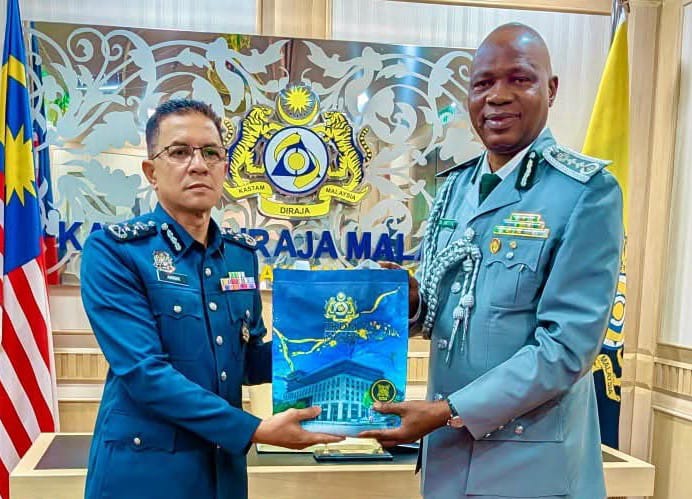
Nigeria Customs, Stakeholders Push Strategic Communication On Food Security At NPRW 2026

By Sabiu Abdullahi

The Nigeria Customs Service (NCS), in collaboration with other stakeholders, has sustained discussions on food security, policy communication, and stakeholder engagement during the 2026 Nigerian Public Relations Week (NPRW) in Kaduna.

The programme, which carried the theme “Policy making to Public plate”, began on April 19, 2026, at the Brigadier General Abba Kyari Banquet Hall. It drew the presence of Vice President Senator Kashim Shettima and Kaduna State Governor Senator Uba Sanni. Communication experts, policymakers, and media professionals from across Nigeria also attended to examine issues linked to food inflation and food security.

Customs maintained a notable presence throughout the event. More than 29 Public Relations Officers from the Service took part in the week-long activities. Their participation reflects efforts by the agency to improve communication systems, deepen engagement with stakeholders, and uphold high standards in public relations practice.

One of the key moments at the event was a panel discussion that examined how strategic communication can help address food inflation and improve public awareness of government actions on food security.

During the session, the National Public Relations Officer of the Service, Deputy Comptroller Abdullahi Maiwada, stressed the importance of communication in both policy design and execution, especially in areas such as trade facilitation and border control.

Maiwada asserted that “Even at the implementation stage of any policy, communication is critical,” he said. “Without clearly communicating these policies to the public, they may not achieve the desired impact. When people understand how policies affect them, they are more likely to align with them.”

He added that clear communication helps to build trust, shape public opinion, and secure support for government initiatives, particularly when dealing with challenges like food inflation and supply chain disruptions.

Other speakers at the session, including Pan-African Parliament Ambassador for Food Security, Ambassador Bryiyne Chitsunge, and communication specialist Agnes Bassey, pointed to climate change and insecurity as key factors driving food inflation. They warned that poor communication around these issues often leads to misunderstanding and the spread of false information.

Participants also called for responsible, data-driven reporting by the media and urged stronger cooperation between government agencies and journalists to ensure balanced coverage of food security and national development matters.

As part of activities lined up for the event, the National Public Relations Officer hosted a dinner for Public Relations Officers at the B.A. Adeniyi Officers’ Mess in Kaduna. The gathering offered an informal setting for officers to interact and strengthen professional ties.

The dinner had in attendance the Assistant Comptroller-General of Customs in charge of Zone B, Nsika Umoh, and the Comptroller of Kaduna Area Command, Sa’ad Hassan, along with other officers present at the conference.

Speaking at the event, ACG Umoh praised the strong sense of unity among officers in the Public Relations Unit, noting that the environment reflected a spirit of teamwork and mutual support.