Month: January 2024

Kano State marriage act of 1988: what went wrong?

By Salihi Adamu Takai

It has been almost a month that – the discussion on the issue of the discovered “existing law”, Marriage Practice Control (CAP 26) in Kano State has become the topic of the discussion on the media. The existing law that regulated the marriage practices among the respective Kano State community on how to get married in harmony, has been discovered by the notorious lawyer in Kano, Barrister Abba Hikima. The existing law, in section 5, has listed some practices that are not allowed in the marriage – and doing so – shall put the offender into a danger of imprisonment – or its likes as it’s mentioned in section 8 of the Act.

Notwithstanding of the fact that, the 1999 Constitution of the Federal Republic of Nigeria, unequivocally, recognises the existing law in section 315, the Marriage Practice Control (CAP 26) 1988 in Kano is not effective. The law is, as it’s recognised by the Constitution, valid – but it seems useless or not in existence. The essence of any law is to control the existence of the people. It gives the right of doing something and at the same time stops people from doing something.

As I heard about “the existing law” in question, I got confused pondering on it that how could this be possible? – it seems like it’s not for Kano – or it’s just in my dreams! The law is in contrary with the people of Kano State.

The 1999 Constitution of the Federal Republic of Nigeria gives room for the State House of Assembly to make law in accordance with the culture and customs of the people living in any state. Therefore, the then government of Kano State, in 1988, made that law (Marriage Practice Control) to control the marriage practices in those days. Unfortunately, the law they made for the marriage practices, is still not in conformity with the people in the State. The people of Kano are very serious about their culture and religion. They don’t leave their culture for anything other than religion. I believe that – the law that can be so effective to them – can be that one in conformity with their cultural norms and values. You can’t control something practicable and recognisable in one’s culture and make it effective to him/her easily.

In conclusion, I am with the opinion that – the issues of marriage practices can only be controlled when they’re not in conformity with the religion, but when they remain discretionary on the people practicing them can still remain classical. Marriage is being practiced in accordance with culture and religion – or culture of the people. This is the reason why the existing law of the Marriage Practice Control (Supra) is not effective. It’s beyond the perspective of the people living in its jurisdiction.

They Called Me A Lioness: Tamimi’s rise and fame

By Bilyaminu Abdulmumini

One of the four books I read in 2023 was They Called Me A Lioness, which I read courtesy of Dr Muhsin Ibrahim, who shared the soft copy. The book’s true-life storytelling and the author’s command of the English language captivated me, keeping me glued to its pages.

Ahed Tamimi, the book’s narrator (written by Dena Takruri), was born and raised in the village of Nabi Saleh, northwest of Ramallah, a city known for its flashes in the Israel-Palestine conflict in the West Bank. Nabi Saleh gained notoriety for its resistance system, characterised by coordinated processions that garnered local and international attention every Friday. Journalists, sympathisers, and NGOs witness these Friday processions. Nabi Saleh vehemently opposed the Israeli occupation (I reserved the history and Israeli occupation saga to another article).

While the protests in Nabi Saleh were generally considered peaceful, occasional outbreaks of violence were not unheard of, though they were one-sided. While Palestinians employed stones, the Israeli soldiers were armed with superior weapons such as water cannons, tear gas, rubber-coated steel bullets, and sometimes even live ammunition.

Amid these sporadic instances of violence, Ahed would witness her mother being shot in the leg by a soldier, her younger brother pinned to the ground by another soldier, her favourite uncle bleeding to death, night raids, and the repeated arrest and imprisonment of her father.

To say that this series of events paved the way for Ahed’s transformation into a brave individual, as her nickname implies, would be an understatement. Ahed’s courageous resistance and fearless confrontations with Israeli soldiers earned her both local and international acclaim.

Tamimi first gained international recognition when she was just a child, under the age of 10, for confronting Israeli soldiers who had abducted her brother. This confrontation, captured on film, went viral, captivating people worldwide. She was seen as a symbol of the bravery of Palestinian children and the spirit of their resistance against the Israeli occupation. Early during the Ukraine-Russia war, the video resurfaced, and the usual social media misinformation circulated it to be a Ukraine child protesting against Russian inversion.

Tamimi’s next international spotlight was intriguing. She engaged in a confrontation with soldiers to prevent them from arresting an Israeli, Miko Peled. Few expected this turn of events. Miko is the son of the famous Israeli general Mattityahu Peled, a celebrated hero who fought in the 1967 war on the side of Israel. However, he later retired from the army and became a tireless peace activist, advocating for Israel’s withdrawal from the occupied territories. 

The last straw that broke the camel’s back was when Tamimi lost her temper and slapped a uniformed, armed Israeli soldier. As expected, this action went viral, leading the Israeli authorities to imprison her for eight months. A prison, even run by one’s country of citizens, might be full of provocations, rights abuses, and infringement, let alone a prison run by an arch-rival. Tamimi and many Palestinians who got under the net of Israel had to endure a series of incarcerations. 

Ironically, imprisonment is one of the most successful ways to achieve fame and knowledge. While someone may be imprisoned as a deterrent, it can inadvertently lead to greater recognition and public sympathy, drawing attention to their cause. The same happened to Tamimi; her imprisonment further elevated her fame and the cause she advocated for. In Nigeria, imprisonment got sympathy from both former presidents Muhammadu Buhari and Olusegun Obasanjo; the former Ghanaian president, Jerry Rawlings, would change the course of history from a death sentence to being a president; and in this regard, no one remained fresh in the memory like Nelson Mandela.

Beyond fame, Tamimi, alongside her mother, who was also incarcerated, completed her high school education. This accomplishment was particularly telling in the mother’s case because she had been unable to complete her education since her marriage. This fact resonates well with Nigerian correctional service centres where many inmates complete online degrees, which, of course, like Tamimi’s Mother, might not achieve the feat without imprisonment. 

Last month, a Turkey legislator slumped in a chamber (and died later in hospital), challenging the president’s seeming “accomplices”. Excerpt from the opposition legislator to Tayyip Erdogan: “You allow ships to go to Israel, and you shamelessly call it trade. … You are Israel’s accomplice”. This reminded me of the Tamimi encounter with Erdogan. 

While Tamimi was visiting Turkey to receive the Handala Courage Award, Erdogan sought an audience with her. In their meeting, he would express how much he loved Palestine, indicating that Turkey would always support the Palestinian people. In response, the iron lady, who never minced words, threw a hammer directly in the face, “How can you say you love us when we have to enter your country with a visa, but Israelis can travel here with no visa?” Erdogan became speechless.

Bilyamin Abdulmumin is a doctoral researcher in chemical engineering at ABU Zaria.

AFCON 2023: Senegal sent packing 

By Aliyu Yakubu Yusuf

The reigning champions and the best national team in the continent, Senegal, had met its waterloo at the hands of the host, Ivory Coast, who must be buoyant, having qualified to the Round of 16 by the skin of their teeth when all around them was doom and gloom. 

The Teranga Lions entered the tournament as the undisputed favourites to record a back-to-back triumph. They justified their billing by becoming the only country to win all three group games, often at a canter. The stage was set for Mane and Co. to dominate the knockout stages. However, the Ivorians read a different script.

The Elephants came into the tournament as the host country with little expectations. Gone are the days of Drogba, Yaya and Kolo Toure, Kalou and Zokora. So, one expected the host to mount a serious title challenge. But no one expected them to lose embarrassingly to Equatorial Guinea either. Ultimately, they qualified into the knockouts as the worst of all the 16 entrants. Few people gave them a chance to overcome the swaggering Senegal. And that’s what they just did.

Such is the cruel nature of winner-takes-all international football. The Ivorians must now be cautiously optimistic about their chances, having surmounted the most difficult of obstacles. Senegal must be ruing what might have been while they lick their wounds.

Abductors insist on N100m of ransom for Kaduna doctor, family

 By Sabiu Abdullahi 

The abduction of Kaduna-based ophthalmologist Ganiya Olawale-Popoola, her husband Nurudeen Popola, and their 16-year-old guest AbdulMugniy Folaranmi has taken a grim twist as reports indicate the abductors are unyielding in their demand for a N100 million ransom, one month after the initial kidnapping. 

Despite the family’s earnest attempts to negotiate a reduction in the ransom, the kidnappers have held their ground, insisting on the hefty sum.

The kidnappers, who allegedly broke into the ophthalmologist’s residence on December 27, 2023, at 1 a.m., took the doctor, her husband, and their teenage guest. 

Communication from the kidnappers only commenced on the fourth day, with a demand for N100 million for the release of the victims.

The family source revealed that the kidnappers threatened to harm the couple if the ransom wasn’t paid by January 18, reasserting their demand on Friday. 

Despite the family’s plea to consider a reduced amount, such as the N20 million they were able to raise, the kidnappers remained unyielding.

The family is now grappling with the situation, expressing confusion about the way forward. Efforts by the family to seek assistance from the Air Force and police authorities yielded assurances of ongoing endeavours to secure the victims’ release without harm.

However, the family, facing exhaustion, has called on the Nigerian government to intervene, as they find it impossible to meet the demanded ransom. 

In response to inquiries, Kaduna State Police Public Relations Officer Mansir Hassan affirmed that the police are actively working to secure the release of the abductees without casualties.

He underscored the commitment to rescuing victims from abductors and emphasised efforts to prevent harm during the rescue operation.

Tinubu turns over a new leaf on anti-corruption stand

By Tajuddeen Ahmad Tijjani

It’s a new down in the history of the new administration of President Bola Ahmed Tinubu, who took over barely six months from May 29, 2023, till date. However, his administration has been awash with many debacles, ranging from bruises in the economic turbulence and pervasive insecurity to dividing citizens along religious and cultural differences. However, the latest is the alleged misappropriation of N585 million in the Ministry of Humanitarian Affairs and Poverty Alleviation, led by the former National Woman Leader of his party, the All Progressive Congress (APC).

It is in the public domain that the ministry and the NSIP have been mired in a controversy as the President recently suspended Halima Shehu as National Coordinator and CEO of the National Social Investment Programme Agency over an alleged financial misappropriation to the tune of N44 billion.

However, concerned Nigerians with an ear to the ground alleged a rivalry between the former minister’s camp and the suspended minister’s camp, who vows that “I won’t go alone; you exposed me; I will expose your conspiracy too”. However, in my perspective, if that’s the case, then it’s, after all, a welcome development for the general populace and for the system to be, of course, cleaned up.

In light of the recent events, the President’s and his administration’s integrity have been tested to see what action or inaction the President would take to send a strong message to his cabinet members and all other appointees that it is not business as usual. Would his avowed commitment to uphold the highest standards of integrity, transparency and accountability in the management of the Commonwealth of Nigerians be protected?

On the other hand, would every appointee be treated equally, no matter how close that person is to the corridors of power? Of course, the President, who has the mandate of all Nigerians, has not yet disappointed the general populace by suspending those involved in the allegations and ordering a thorough investigation into all aspects of the financial transactions of the ministry.

The President’s directives have raised hope in Nigerians that it won’t be business as usual, where looters’ cases are swept under the rug. We can boldly say that the last administration’s anti-corruption campaign was ineffective. For instance, in the case of the suspended CBN governor, whose committee was constituted by the former President, its findings fell on deaf ears as if nothing had happened; however, revelations afterwards shocked everyone interested in the well-being of the country’s socio-economic development.

If you look at governance in general, we need to change our approach. The simple fact is that corruption has stagnated the well-being and progress of this country. I feel the only viable way to address these corruption issues is to have a revolutionary transformation of society and improve the context of governance within the framework in which our governance system is predicated. We have to call a spade by its name. Until communities stop celebrating looters and negate the notion that our tribesmen or kinsmen are being witch-hunted, then we wholeheartedly support the government in its bid to eradicate corruption in the system, to which, of course, we will be the major beneficiaries.

Nigerians have a keen interest in every decision the President takes or intends to make regarding the overall interest of the lives of the general population. Certainly, the success of the fight against corruption is intricately tied to the actions of the key actors, not solely reliant on the outpouring of condemnation. The public is the major stockholder in holding the government accountable.

Suppose Tinubu turns over a new leaf in his efforts to stamp out corruption. In that case, Nigerians will stand tall to support his action and term him a foremost man fighting the menace confronting humanity, which retards Nigeria’s development. Despite his stand on the issue, Nigerians must never relent until the fight goes off to a spectacular success.

Honestly, anything short of that can’t be tolerated or accepted, even though it’s early in the day of the new government; there is no excuse. Since they swore to protect the lives and properties of Nigerians, turn our misfortune into fortune, transform our dilapidated infrastructure, and revive our economy, we can put them on the radar to see how they disengage us from all logjam.

I invite all Nigerians to join the challenge of fighting corruption in all its ramifications. After all, the war against corruption can only be decisively won if we all come on board to shun away and expose all corruption within our worldview. I commend his efforts in the recent events, and it’s indeed a patriotic call to support his move for the benefit and betterment of our country.

Tajuddeen Ahmad Tijjani writes from Galadima Mahmoud Street, Kasuwar Kaji Azare, Bauchi State.

Transforming small and medium enterprises (SMEs) with cutting-edge AI tools

By Haruna Chiroma, PhD

Internationally, nations across the globe are actively exploring the potential of artificial intelligence (AI) to address real-world societal challenges spanning diverse sectors of their economies. Nigeria, too, is actively addressing its economic challenges by seeking solutions from various perspectives. In light of the significant role played by Small and Medium Enterprises (SMEs) in propelling the real sector of the economy, a dedicated agency, the SMEs Development Agency of Nigeria (SMEDAN), was established. SMEDAN aims to promote, regulate, and implement measures to sustain and enhance the performance of SMEs. In today’s dynamic business landscape, integrating AI tools has become essential for SMEs looking to achieve sustainable growth and gain a competitive edge.

This article provides a guide exploring how strategically employing AI tools can enhance various aspects of SME operations, considering the specific economic context and challenges SMEs face in Nigeria. The success and growth of SMEs have been demonstrated to hinge significantly on the innovations they introduce to enhance their products, services, or marketing strategies.

Research has consistently revealed that SMEs incorporating new innovations tend to achieve higher success levels than those that do not. SMEs can use cutting-edge AI tools to infuse innovation into their products, services, and marketing approaches. AI is replacing traditional roles and transforming the conventional methods of performing tasks, thereby creating novel opportunities within the economic landscape.

From a marketing perspective, entrepreneurs now have access to AI tools that streamline the process of creating compelling jingles for advertising products or services. This innovative AI tool simplifies the user experience by prompting them to input the text of the advertisement. Once initiated, the tool automatically generates a captivating and engaging video. Users can choose from various ready-made templates, voices, and gestures to customize the video to their preferences.

Additionally, the tool comes equipped with video editing features, enabling users to fine-tune the video to match their requirements precisely. To overcome language barriers and reach a broader audience, another valuable AI tool for video translation is available. This tool allows users to translate their videos into different languages, expanding their reach to a larger and more diverse pool of potential customers. Together, these AI tools empower entrepreneurs in the marketing realm, providing them with efficient solutions for creating and translating engaging promotional content.

Seamless, an AI-powered platform, caters to the sales and marketing needs of both business-to-business and business-to-customer interactions, facilitating a broader reach for businesses. This innovative platform ensures the acquisition of precise customer email addresses, phone numbers, and direct dials, thereby enhancing the promotion of products and services for SMEs. By enabling businesses to connect with a diverse customer base, Seamless contributes to increased sales and fosters collaborations among various entities in the business landscape. 

In product design, AI brings innovation by offering tools that streamline the design process, enhance creativity, and optimize product performance. From the perspective of design, a new design of a product or packaging can be generated using an AI tool. An AI tool for generating design from the textual description is available; a user will write the text description of the design and prompt the AI tool, and a new design based on the description will automatically be generated. On the other hand, an existing design can be uploaded to the AI tool, and then, automatically, it will be redesigned.

Users can generate as many designs as possible for the best-redesigned item or product. Generative design AI aids in product design by generating multiple iterations based on specified parameters. This enables SMEs to explore diverse design possibilities, optimizing for factors such as cost, materials, and performance. A business logo is significant in business as it gives the first impression to the customers when interacting with the products or services of the SMEs. An appealing business logo can be designed with the AI tool for generating design.    

Many excellent products and services offered by SMEs and startups in Nigeria often lack online visibility, relying primarily on WhatsApp status updates to reach their contacts. This limited visibility poses a challenge, with many SMEs hesitating to invest in costly website or e-commerce development because of restricted funds. Fortunately, a solution has emerged for such SME owners in the form of an AI tool that automatically generates e-commerce sites. This tool provides a variety of pre-designed templates for e-commerce sites, simplifying the process for users. By selecting a desired template and filling in essential information such as product details, business location, and payment methods, users can proceed through the steps until the final page.

Upon clicking “generate,” the e-commerce site is automatically created. Following this, users can download and host the site, making it live online. This straightforward process allows SMEs to easily establish an online presence, overcoming the challenges associated with traditional website development costs.

Chatbots like Generative Pre-trained Transformers (GPT) can seamlessly integrate into SMEs’ e-commerce websites or social media platforms specifically designed for business promotion. The incorporation of GPT enhances interaction with potential customers by providing virtual assistance.

SMEs can implement virtual assistants on their websites or social media platforms to actively engage customers, respond to product or service inquiries, guide customers through the sales process, provide support, and ultimately enhance overall customer satisfaction. By embedding chatbots within SMEs’ e-commerce sites, these tools can efficiently process orders and offer real-time assistance. This integration ensures a seamless and responsive e-commerce experience for customers, contributing to the overall effectiveness of SMEs’ online presence.

I trust that this article serves as a source of inspiration for many SMEs and startup owners. I hope that it encourages them to explore these strategies to enhance their business ventures and, in turn, expand their operations. By doing so, these entrepreneurs can create additional employment opportunities, fostering increased business activity within the real sector of Nigeria’s economy.   

Haruna Chiroma is a professor of artificial intelligence at the University of Hafr Al Batin, Saudi Arabia. He can be reached via freedonchi@yahoo.com.

Customs CG outlines strategies for achieving 2024 revenue target

By Sabiu Abdullahi 

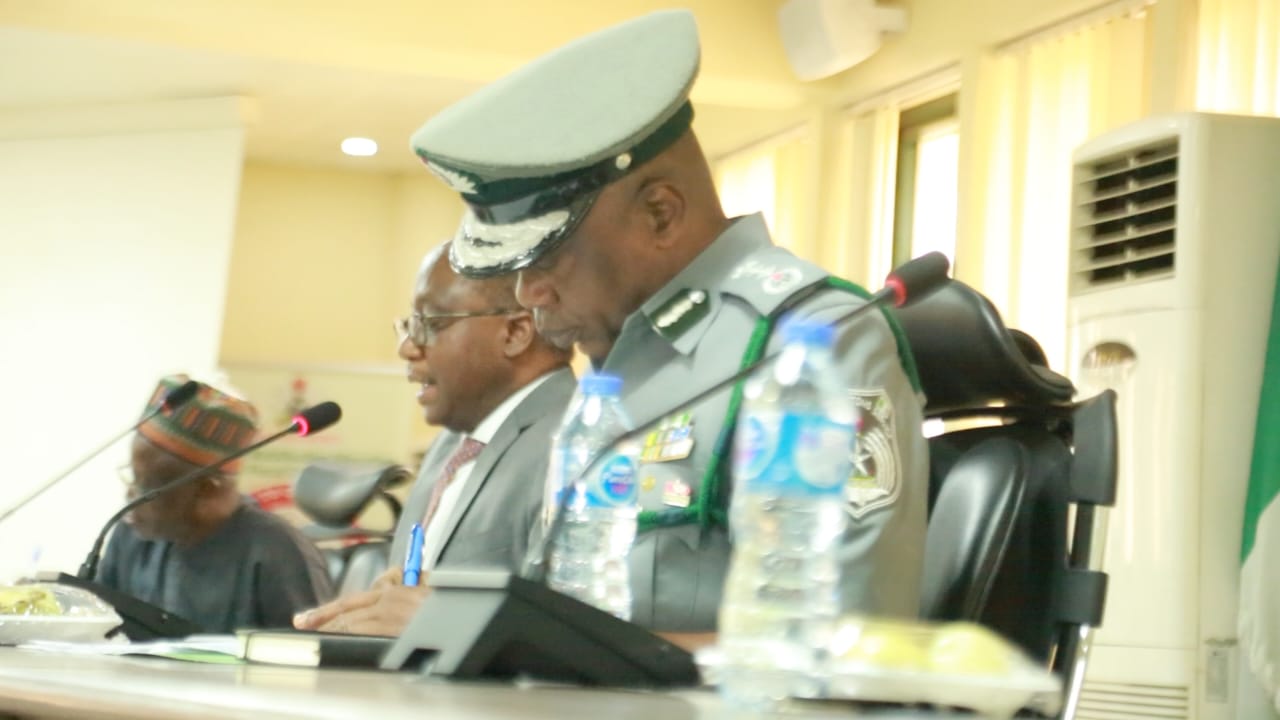
Comptroller-General of Customs (CGC) Bashir Adewale Adeniyi MFR, in a comprehensive presentation at the Revenue Mobilisation and Fiscal Commission (RMFC) office in Abuja on Wednesday, January 24, 2024, shed light on the Nigeria Customs Service’s initiatives to boost revenue generation and fiscal efficiency. 

CGC Adeniyi stressed the importance of collaboration and trust-building with government agencies to meet shared objectives.

Seeking support from the commission and other entities, he highlighted the strides made since his 2023 appointment in revenue recovery and combating potential leakages. 

Acknowledging legal provisions for certain agencies at the port, CGC Adeniyi assured that the NCS is actively collaborating to streamline processes without impeding trade facilitation. 

He affirmed the collective responsibility to achieve the ambitious 5.1 trillion naira revenue target. 

The CGC also announced a Time Release Study in collaboration with the World Customs Organization (WCO) to scientifically evaluate cargo clearing processes at the port. 

Moreover, he unveiled plans for a revenue recovery exercise initiated in 2023, which successfully retrieved over 17 billion naira within four months. He assured the implementation of lessons learned in 2024, particularly strengthening the Post Clearance Audit (PCA) Unit. 

Assistant Comptroller-General of Customs in charge of Tariff and Trade, Caroline Niagwan, addressed challenges contributing to the 2023 shortfall.

Chief Superintendent of Customs (CSC) Ekanem Asuquo detailed NCS’s core functions, legal frameworks, and the necessity for accurate import duty calculations. 

Alhaji Bello Shehu, Chairman of the Revenue Mobilization Allocation and Fiscal Commission, underlined the Commission’s monitoring role and sought NCS support to recover funds, improve revenue mobilization, and advise on measures for increased revenue generation.

Ignorance is not bliss

By Jamila Yunusa Sulieman

They say ignorance is bliss, but only to the ignorant. Over the years, I have read articles on Sickle Cell Disease and witnessed some close associates deal with the unending crisis. Little did I know it would be a first-hand experience for me.

I got married without a genotype investigation, though my spouse was very sincere with his as I carelessly assumed I was of the AA genotype because my siblings all had the AA genotype except for my immediate elder brother. Careless, right? My genotype Status dawned on me during the routine medical test for antenatal. Naturally, I broke down, and full of disappointment, I prayed and cried. I had my first child and two more, which were all declared healthy and free of Sickle Cell Disease. 

It was bliss; family members would congratulate me and help me praise Allah; the feeling was more like hitting the jackpot. Four years passed by after the birth of my third child, and just then, pain and fear decided to take a seat in the kingdom of bliss. I had taken myself for an ultrasound in one of the prestigious Ultrasound service providers, where I was declared eight weeks gone. I took one of the fastest routes to my place. I walked slowly but could feel my heart beating faster; I didn’t have the excitement of pregnancy because all I felt were premonitions.

I would cry myself to sleep, and some nights, I would think deep into the night. I sparked out of melancholy. I started my antenatal clinics at 12 weeks of gestation. I became even more prayerful even though I knew I had very slim chances of having a child who wouldn’t have the SS genotype as scientifically proven. Time passed so fast, and it was 40 weeks already. I welcomed my bundle of joy with much happiness and prayers but with so much fear and guilt. 

The tension in me grew as the days passed by. He was one sickly child with a huge appetite. It was about six months when I finally summoned the courage to take him for genotype testing; after samples had been taken, I waited patiently for the test results; the wait seemed like forever. After waiting three hours, I had to enter the lab and demand the results. The microbiologist would give excuses, and so I knew something was up. 

A few minutes later, the most senior microbiologist in the lab walked up to me. Before he could complete what he was saying, I asked, “It’s SS, right?”. The affirmation on his face broke me. I walked home crying with my baby strapped to my back, and I kept repeating to myself, “I am a bad mother. I have failed my child. What have I done? How can I subject my own child to this?” I wept, I became sobber, I didn’t feel happiness or joy around me. It affected my work, my family life and my social life. 

Although I was down, I immediately registered him for the SCD clinics, I took precautions, I improved his diet, I began researching Sickle Cell Disease, I connected with mothers with Sickle Cell Disease, and we shared observations and suggestions. The nurses and doctors were always welcoming and readily available. Unfortunately, we come across people who do not understand our situation and make us feel we are just blowing things out of proportion. If only they knew the weight we carry in our hearts and the hopelessness we sometimes feel.

Sometimes, I forget his medical condition, but whenever he breaks down, it feels like the end of happiness; the whole feeling of guilt and carelessness becomes a rebirth in my life. Those days and nights of sleeplessness, the pain of watching him go through the pain and all I can do is pray and give him the best care I can. My heart gets shattered into bits and pieces. This I have brought upon my child. 

I question myself whether he would grow up to have a normal childhood like every child. What will be my answer when he begins to question his medical state in future? Would he forgive me? Would he see me as a good mother? Will there come a time when I will stop biting myself so hard?

Indeed, ignorance is not bliss but a silent time bomb waiting to explode. Love and attraction should not be the only basis for marriage; genotype plays a key role. It is time we stopped only reading about Sickle Cell Disease and began to give genotype investigation its due.

Jamila Yunusa Sulieman is an Abuja-based mother of 4 and a graduate of Ahmadu Bello University. She has a passion for enlightening others and imparting knowledge. She can be reached via suleimanjamila21@gmail.com.

Skills acquisition and the rise of Arewa female entrepreneurs

By Aminu Mohammed

The article was inspired by a video on Nelly Agbogu’s Facebook page, also known as Naijabrandchick. In the video Aisha Falke of Northern Hibiscus created, she urged female vendors in the Northern region to take advantage of the NBC Trade Fair, scheduled to be held in Kano on February 4, to showcase their products to potential buyers.

This caught my attention, and I scrolled through Nelly’s Facebook page to learn more about the programme. I was impressed by the quality of content and creativity displayed by different female vendors from the North. They were soliciting for patronage of their products during the forthcoming trade fair. I was pleased to see that many young female entrepreneurs from the North are now engaged in small businesses and have embraced the spirit of self-reliance.

I also observed the activities of many northern female vendors on Instagram, TikTok, and Facebook, such as Maryam Gatawa and Aisha Abubakar. These vendors sell items ranging from well-packaged local food to products consumed by people every day.

Growth of Female Entrepreneurs

I am impressed by Maryam Gatawa’s sale of many of our local food items, such as beef jerky, powdered garlic and date, garin kunun tsamiya made from powdered millet, and garin dan wake (bean dumplings), all of which are well-packaged. This surge in the number of young women engaged in various businesses gladdens my heart and is an indication that things are changing in the north, unlike before. I am still using the bean dumplings I bought during my visit to Nigeria last year.

Some northern female entrepreneurs, such as Aisha Falke and others, have encouraged Arewa women to start small businesses by organising workshops, seminars, and training in Abuja, Kaduna, and Kano. However, more needs to be done to encourage our women to imbibe the spirit of self-reliance.

I have always encouraged my younger sisters to engage in small businesses. They are all engaged in small businesses and other activities that earn them money. There is nothing like financial independence and the ability to take responsibility for one’s life by involving oneself in a productive venture.

Small-scale and medium businesses are critical for the growth of any economy, as they employ one or more people and create jobs. Encouraging many young people to pursue entrepreneurship for their economic emancipation is vital. Any activity that generates income and enables one to earn a livelihood should not be looked down upon. You cannot escape poverty when you are not willing to do the so-called “dirty jobs”.

Need for Change in Mindset

It is essential to note that the North is currently facing a dire situation due to the mindset of its people. The youth must change their mindset about salaried jobs and embrace entrepreneurship. Over-reliance on government jobs has made things worse for us and led to the region’s retrogression. We cannot move forward as a society when most youths do not want to engage in small businesses or trade to earn a livelihood. Most of our graduates look down upon people doing vocational skills while roaming the streets looking for jobs. They prefer to remain idle rather than engage in a vocational skill.

The progress and development of the North depend on a productive population skilled in various aspects of human endeavour. We cannot make meaningful progress when most youths who graduate from university brandish their certificates without any skills to help them survive. It is vital to acquire both education and skills to survive in the new economy. I have spent money to acquire digital marketing skills despite my academic qualifications.

I still reiterate that the Northern youth should focus on acquiring digital skills, and those not interested should learn vocational skills. Stop dwelling in the past and embrace change. The era of looking for public sector jobs is over. The economic situation in Nigeria, which has been worsened by inflation and stagnant income, warrants the need for young men to engage in small businesses to earn a livelihood.

I have a nephew, Kabiru, who graduated from Bayero University Kano a few years ago. He decided to take the bull by the horns after the service year to learn furniture making rather than roam around looking for a job. Kabiru is now fully engaged in furniture making and has four employees who support him in his shop. I gave him a job to do for me during my visit to Nigeria last year, and he executed it to my satisfaction. Today, Kabiru is doing very well in his vocation, while some of his friends are still searching the streets for jobs.

Of course, not everyone can be an entrepreneur or run a small business, but we cannot continue to cling to the past and expect any progress in our region. Our young men should stop wasting time chasing certificates without commensurate skill. They should stop waiting for their relatives to help them secure government jobs as they are no longer tenable.

Necessity of Skill Development 

There are several free resources available on platforms such as YouTube, Google, Coursera, Udemy, Simplilearn and others, which can be used to learn a variety of skills like digital marketing, data science, web development and more. Those not interested in acquiring such skills must focus on vocational skills like fashion designing, furniture making, baking, plumbing, etc. Those who have the financial resources can also consider small-scale businesses or farming.

We must encourage our women to engage in entrepreneurship and strive to acquire education and critical skills that can help them manage their businesses better. We cannot afford to have many ignorant and unproductive people in our society. It is important to promote girl-child education and discourage the Almajiri system. We cannot have millions of children roaming the streets without proper education that will enable them to live a productive life.

As January 2024 draws close, our youth should wake up and become more productive. Instead of wasting their time sitting under trees with friends in their neighbourhood during productive hours, they should go and learn a skill or trade that can enable them to contribute to the economy of their community. I wish you the best of luck as you strive to improve your life.

Aminu Mohammed wrote this article from Ingolstadt-Bayern, Germany. He can be reached at gravity23n@gmail.com.

Nigeria Customs pledges enhanced stakeholder relations in 2024

By Sabiu Abdullahi 

The Nigeria Customs Service (NCS), in its effort to strengthen partnerships with compliant stakeholders, has declared its dedication to fostering substantially improved relationships in 2024. 

This is contained in a statement made available to journalists on Saturday by the public relations officer of the Nigeria Customs Service, Abdullahi Aliyu Maiwadah. 

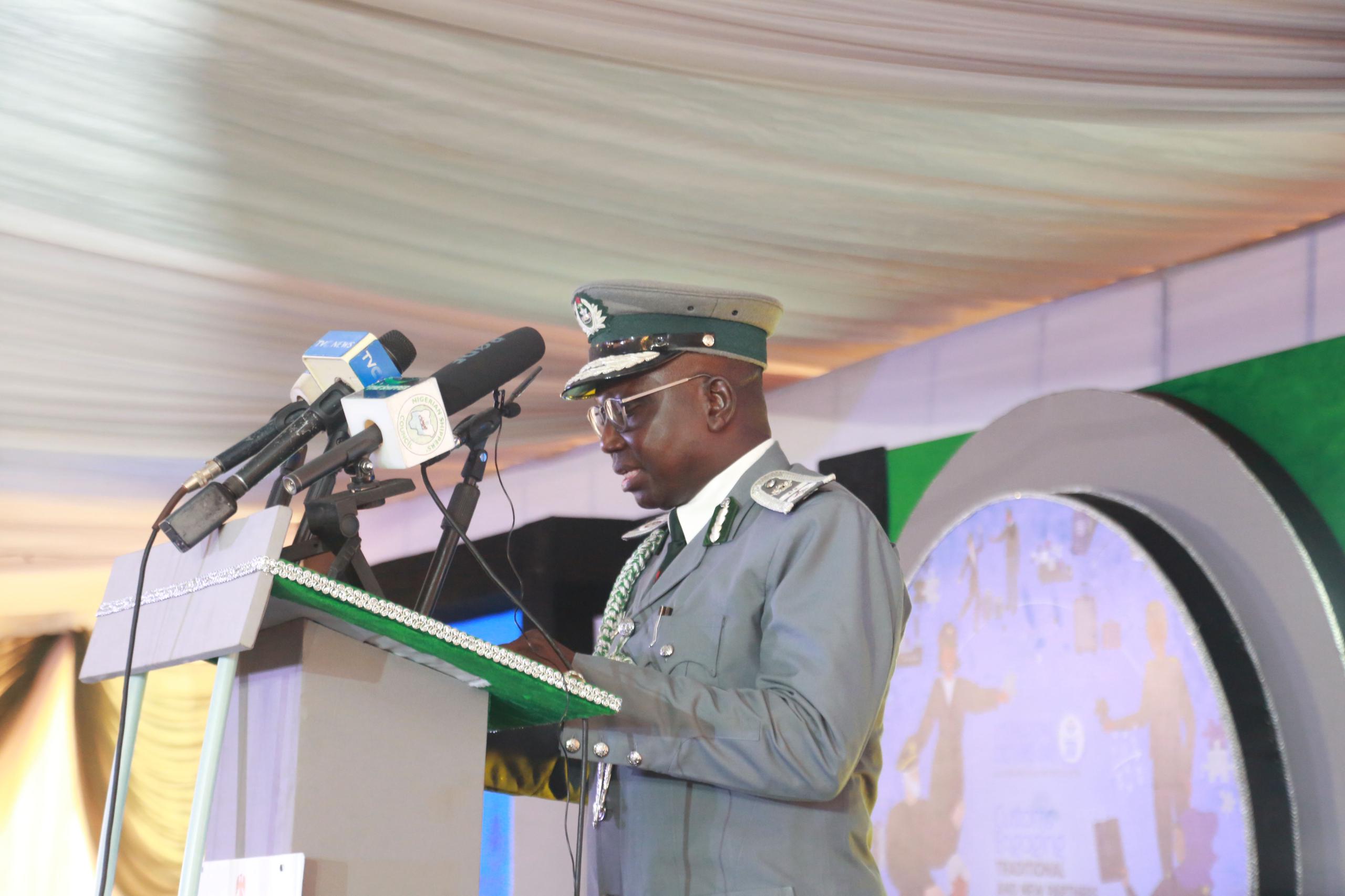
According to Maiwadah, the announcement was made by Comptroller General of Customs, Bashir Adewale Adeniyi MFR, during the International Customs Day Celebration held on Friday, January 26, 2024, at the Customs Training College in Ikeja, Lagos. 

The event, which was said to have been attended by prominent figures including the Honourable Minister of Marine and Blue Economy, Adegboyega Oyetola, and representatives from various government agencies and industry bodies, witnessed the recognition of the NCBN Caretaker Group with a Special Recognition Award. 

Addressing the audience, CGC Adeniyi stated the service’s commitment to the theme of the celebration, ‘Customs, Engaging Traditional and New Partners with a Purpose,’ aligning with the core objectives of consolidation, innovation, and collaboration. 

His words read, “This year, we commit to fostering a substantially improved relationship with all of you, our stakeholders, especially those who respect our rules. We recognize that authentic partnerships are constructed on mutual respect and understanding.” 

Highlighting the significance of collaboration, Adeniyi announced the launch of a Time Release Study in February 2024.

This comprehensive exercise aims to optimize processes and reduce the time for goods to be released at ports and border stations, with a call for active participation from all partners. 

The Minister of Marine and Blue Economy, Adegboyega Oyetola, also affirmed the importance of customs and stakeholders working collaboratively to unlock the potential of collaboration and increase revenue generation. 

He commended the Customs leadership for prioritizing the use of scanners over physical examination, adding that it has a positive impact on revenue, efficiency, and competitiveness at ports.