Month: June 2022

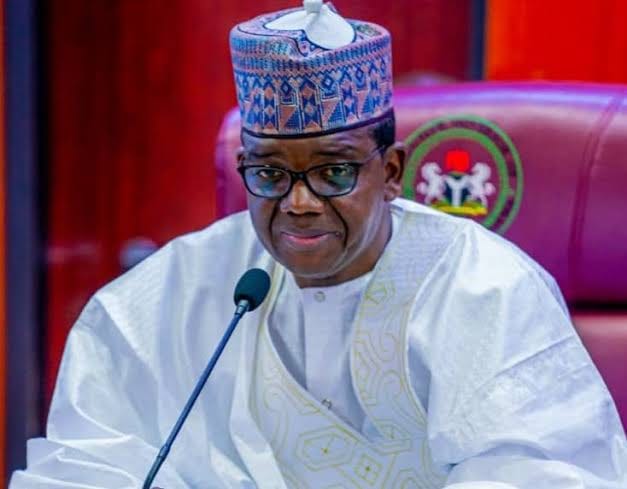
Matawalle raises concern over escalating banditry, warns against opportunism

By Uzair Adam Imam

Governor Bello Mohammed of Zamfara state has raised concerns over the rising banditry activities and criminal informants in the state.

The governor said his government has noted the rise of informants’ activities leading to many unfortunate banditry attacks on soft targets.

This was disclosed in a statement signed Wednesday, June 15th, 2022, by Zailani Bappa, Special Adviser Public Enlightenment, Media and Communications.

The governor said they should take more stringent steps in addressing the current situation, including possible communication shutdown once again.

He, however, also commiserated with the families and loved ones of the recent unfortunate abduction of promising young entrepreneurs of Bebeji Plaza.

He reiterated that his administration is not oblivious to the situation at hand and has since taken more security steps in arresting its escalation.

The statement reads, “this singular incident marks another sad moment in the fight against the security challenges we are facing in our dear state. I appeal to the families of all abducted persons to have confidence in our ability to do all that is needed to be done in rescuing their dear ones.

“I have directed all security agencies for the speedy location of the abducted persons and will, in sha Allah, be rescued”, Governor Matawalle announced.

“Of very important concern is our determination to ensure that rural areas are free to go about their activities this farming season”, Governor Matawalle added.

The Governor also warned that his administration will not tolerate any act of indiscipline from unscrupulous persons who want to manipulate the present situation to score cheap political goals.

The Government, he said, will no longer fold its arms and allow heartless people to go on manipulating the misfortune of innocent citizens for their selfish political ends.

“We are a responsible Government and we shall not relent in ensuring the safety of all our citizens at all times. However, we shall not condone calculated political sabotage or vagaries and indiscriminate abuse of privileges to jeopardize our fragile security situation in the state” Governor Matawalle warned.

Governor Matawalle further advised all stakeholders to be alert and counter the activities of informants in their midst by assisting security operatives with intelligence in order to effectively address the security challenges threatening our communities at the moment.

Kano assembly approves fresh N10 billion loan for Ganduje

By Muhammad Aminu

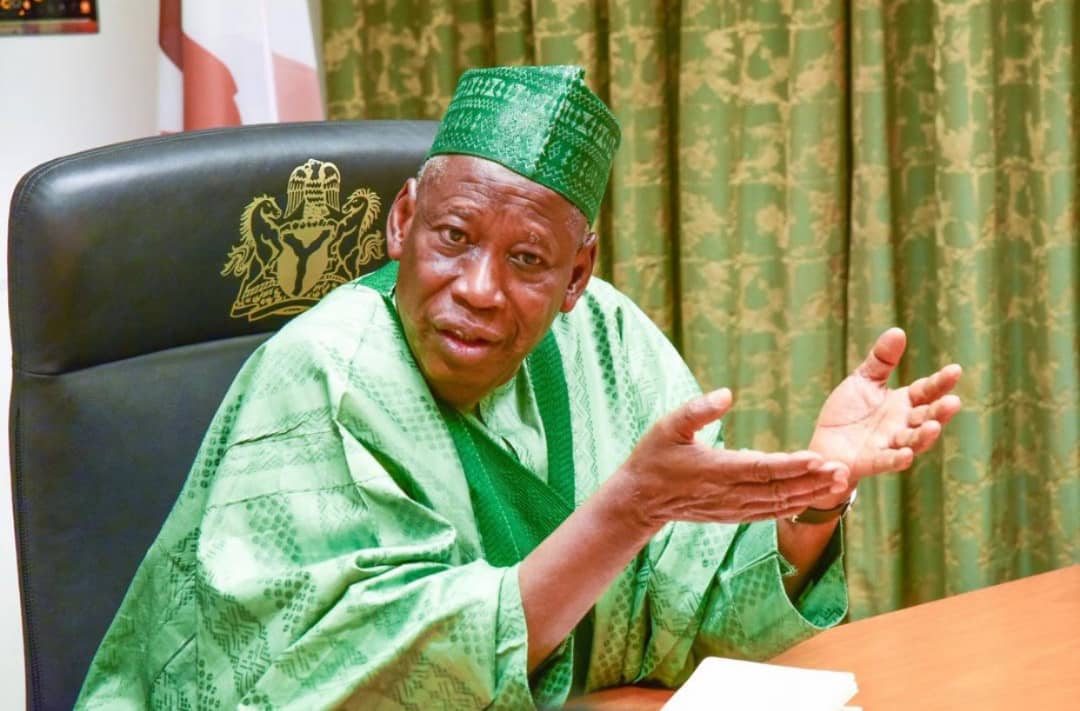
The Kano State House of Assembly has approved a loan request of ten billion naira (N10,000,000,000.00) by Governor Abdullahi Ganduje. The request was contained in a letter forwarded to the Assembly by Governor Ganduje and read by the Speaker, Hamisu Chidari.

According to the letter, the loan will be used for security infrastructure development in Kano. The Daily Reality gathered that part of the security infrastructure to be developed includes an installation of CCTV cameras in Kano to improve the security architecture.

In the letter, Gov. Ganduje said the development became necessary considering the recent security challenges facing the State.

In another development, the Kano State House of Assembly has appointed Magaji Zarewa as its deputy majority leader, following the resignation of Alhaji Abdullahi Iliyasu Yaryasa.

Yaryasa resigned his appointment after dumping the All Progressives Congress (APC) for the New Nigeria People’s Party (NNPP).

The speaker, Hamisu Chidari, who read Yaryasa’s resignation letter at a plenary, wished him well in his new party and thanked him for his numerous contributions to the house.

Zarewa, who represents the Rogo constituency, appreciated the house for finding him worthy of the new appointment.

Rising food prices in northern Nigeria

By Sumayyah Auwal Ishaq

Nigeria seems to be plunging into a new dimension of economic crisis as food inflation reached a new high in most of the northern region, hitherto considered the country’s food basket.

The prices of essential food items are rising astronomically, preventing many Nigerians from feeding adequately. The rising cost affects domestic and imported foods like rice, beans, tomatoes, pepper, onion, flour, egg, oils, bread, plantain, fruits, frozen foods, and yam. These staple foods that Nigerians consume daily. This coincides with a season of national economic downturn, high inflation, and depreciation of the national currency. 

A random survey conducted across major markets in Kaduna and other parts of the country by The Daily Reality this week has shown that a 50 kilogram (kg) of foreign rice sold for N27, 000 earlier in the year, sells for N34000 today. The same size of local rice sold for N19, 000 between January and April now sells between N25,000 and 28,000, depending on the brand.

The cost of beans, regarded as a meal for the lower class, is anything but disheartening. Presently, a bag of 50kg beans that previously sold for N27,000 rose to N37,000 and now sells for N47,000.

In the Bakin Dogo market, the prices of tomatoes, sweet potato, Irish potato, and onions have all doubled, making it difficult for many Nigerians. In February this year, one litre (or bottle) of palm oil was N400, while five litters was N2,000. But now, 1 litre of palm oil went up to N900; 5ltrs was N2,000. And as of September, 1ltr and five litres of palm oil had gone up to N700 and N3,500. A bottle of palm oil sold for between N250 and N300 is N800. A bag of onions is N24, 000, as against N12, 500 it sold in March this year.

Items whose prices have shot up are endless. Beyond food items, groceries, transport fare, school fees, house rent, cooking gas, and everything that concerns a man’s livelihood has seen their prices skyrocket, much to the chagrin of Nigerians, particularly low- and fixed-income earners.

Nigerian military find another Chibok girl

By Muhammadu Sabiu

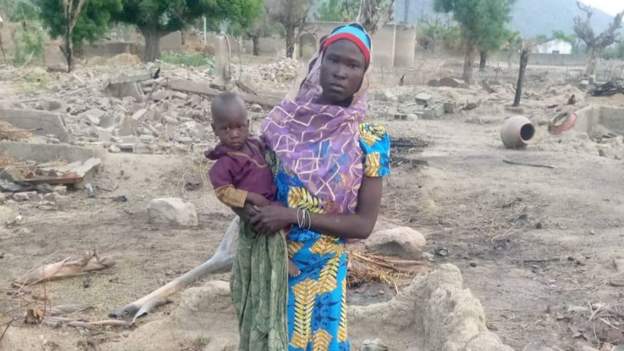
Nigerian soldiers operating in the northeastern part of Nigeria have rescued a lady believed to be one of the secondary school students abducted by Boko Haram in 2014 in Chibok, Borno State.

In a short statement posted on its Facebook page, the Army said, “Troops of 26 Task Force Brigade on patrol around Ngoshe in Borno State on 14 June 2022 intercepted one Mrs Mary Ngoshe and her son. 

“She is believed to be one of the abducted girls from GGSS Chibok in 2014,” the statement added.

 It also reiterated that “further exploitation [was]ongoing” as of the time of filing this report.

Though they are currently not in their heyday, the Boko Haram insurgents have wreaked havoc on the Northeast, inflicting hardship on residents, abducting travellers, and killing innocent individuals.

The fall of a giant: A tribute to Professor Olofin

By Murtala Uba Mohammed, PhD

“The source of concern is not in losing an erudite but getting his replacement”, Hausa adage.

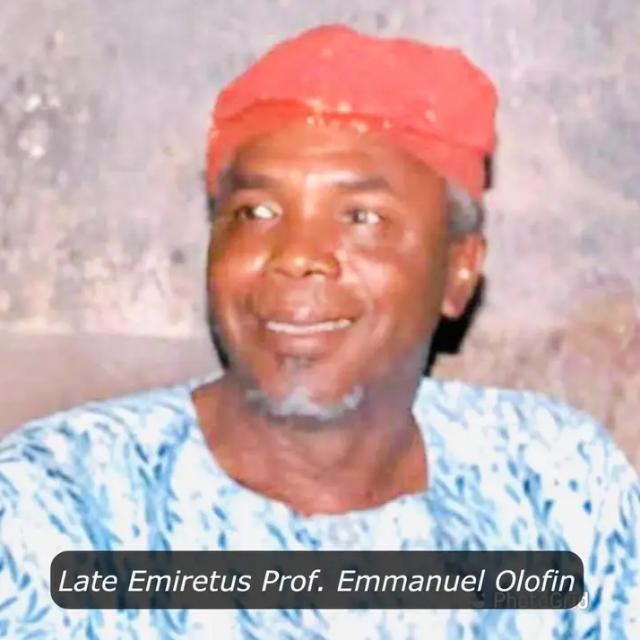
It was around 1:54 pm on Tuesday 14th June 2022 that I learned about the death of the Emeritus Professor Emanuel Ajayi Olofin, popularly known as EAO among the staff of the Department of Geography, Bayero University, Kano (BUK). The sad news was first broken to us on the departmental WhatApps platform by his colleague and our respected teacher, Professor J. Afolabi Falola. Although already octogenarian, the death came to many with a shock because we were unaware our professor was sick. 

Born in 1941, Olofin started his Bachelor of Geography at the University of Nigeria Nsukka, but due to the outbreak of the Nigerian Civil War in 1967, he and his coursemates were transferred to the University of Ife, where he graduated. He was also the first Nigerian to attend the Malaysian Premier University of Malaya for his master’s degree. He joined the services of Bayero University, Kano (BUK), immediately after his return to Nigeria. He later went to Ahmadu Bello University (ABU) Zaria for his PhD, specialising in Fluvial Geomorphology.

Professor Emanuel Ajayi Olofin was not only a teacher of teachers of Geography, his name was synonymous with Geography at BUK. Until his retirement from the services of Bayero University in 2015 and his subsequent demise, Olofin remained the first name to know and remember in the Department of Geography. Until he left BUK, Olofin had been one of the most respected names in the defunct Faculty of Social and Management Science (SMS) and the University at large.

While many a time, a scholar is respected for the depth of their knowledge or soundness of their character, Olofin was respected for his exquisite mastery of Geography, and those who came across him would testify to that. Here was a man who crossed the proverbial seven oceans, came to settle in a foreign land, and not only made a name but secured a good position, having been nicknamed “mutumin kirki” by the university community, which is located in a predominantly Muslim society. The Ekiti-born Professor of Geography remained the longest-serving staff in BUK, and he served the University for forty-one years (1974 to 2015).

I first heard the name Olofin in 2001 when I was still an IJMB student at the Kano State College of Arts, Science and Remedial Studies (CAS, Kano). The name was mentioned several times by one of his students and my teacher, Malam Adamu Mustapha (now a Professor of Hydrology), during Landforms classes. When I was admitted to study B.Sc. Geography at BUK in the year 2003, my hope then was only to meet this man we were told that he was a reservoir and encyclopedia of geographical knowledge. Interestingly, he was the only person described in the Departmental Handbook as a Professor of Geography (others were either Professors of Rural, Water Resource or Soil Geography).

Throughout my level 200, I always yearned to meet him, thinking that he would teach us Kano Region (GEO2201), for which he authored a book titled Some Aspect of Physical Geography of Kano Region together with Human Response, which remains, until now, the most authoritative guide for teaching the course. But, unfortunately, that very year, the course was assigned to, and taught by, another veteran geographer and his only contemporary then, the late Mr Oyeniyi.

The first course that connected me with Olofin was Introductory Geographical Hydrology (GEO3214). Honestly speaking, I never came across any person teaching hydrology in a simple and innovative way as Olofin. In addition, I also attended his lectures of 400-level courses, namely, Environment and Development (GEO4302) and System Approach to Geomorphology (GEO4325). For all his courses, Olofin did not only lecture us, as the tradition was in those days but also recommended good teaching materials in addition to the books he had authored, which he gave as guides to students to xerox.

The beauty of Olofin’s class was in its good illustration, lucid language, deployment of humour and riddles, and imparting good morals. In addition, Olofin had carved a name for himself as an embodiment of good character, whose courses one hardly fails unless they were not either attending lectures or failed to sit for exams. It is well known that Olofin informed his students as to when he would take attendance.

I recalled that in one of his classes, Professor Olofin complained, with a gloomy face, that some students would fail a course no matter how much he or any other teacher tried. When we asked for his reason, he narrated what transpired between him and one of our coursemates.

The story was that the student missed his test, which was announced weeks before it was conducted. The student did not complain to the Professor, rather, it was Olofin that came to the class and looked for the student; he asked the student to see him after the class. When the student went to his office, he queried if the student was ready to take the test, and he responded that he was not ready. Instead, an assignment was given to the student to write before the closing hours. The student submitted the assignment to the Professor in time, but when he checked the assignment, he suspected that the writing looked so good to be ascribed to that student. Therefore, he passed a paper asking the student to write his name and registration number. Unfortunately, his handwriting was conspicuously different from the one on the assignment. Olofin asked the student, “who wrote the assignment for you?” After insisting, the student informed him that his friend, a lady, wrote it for him! He counselled the student to be committed to his studies and always be honest and upright!

Professor Olofin had retired from active service and only taught as a contract staff when I joined the services of the Department in 2012. I could not recall a time when he missed his lecture, refused to attend staff meetings, or submitted his marked sheets/scripts late. In fact, Olofin always submitted his marked sheet earlier than any staff of the Department despite his age and the fact that all the staff of the Department, except late A.D. Maiwada and Prof. J.A. Falola, were his students at either their undergraduate or postgraduate levels.

Olofin can be described as jovial and accommodating in terms of interpersonal relationships. I recall his famous joke and parable on Nigeria that when the Almighty was creating nations of the earth, he gave each country a resource or two. But when it came to Nigeria, he put so many resources under its land. People, out of inquisitiveness, asked why did He do so? The Almighty replied: “Wait and see the kind of humans I will populate it with”. This parable describes the real situation of the so-called “African Giant” that is paradoxically rich and poor. Nigeria has all it takes to blossom as an Iroko but remains a low dwarf shrub due to its corrupt leadership and docile followership.

Olofin was not only an epitome of good character and knowledge, he was faithfully dedicated to his job. I can testify to this though not to the extent that his old students can do.

From the little I learned when we were neighbours (his office was next to mine), he used his office hours mainly for writing, teaching and research. He rarely engaged in frivolous discussions outside classrooms or meetings. Instead, he was constantly working with his computer, reading different genres, and reviewing students’ dissertations/theses. For this, he was not only a geographer but a consummate poet and essayist. His anthology of poetry titled Lifeless Line is eloquent testimony.

By a way of conclusion, I wish to say that the death of Olofin is one of the greatest losses to Geography as a discipline and Nigerian academia. It is not only because he was the first Professor of Geography in BUK and the first in the Faculty of Social and Management Science; it is not because he was the longest-serving member of the faculty; it is not also because he was among the first five to be awarded Emeritus Professors in BUK; but because he was an amalgam of a sound knowledge of his discipline, dedication to duty and moral uprightness.

In the realm of geographers, Olofin’s name can only be written with those of other giants such as Akin Mabogunje Nurudden Aloa and RK Udo. For these reasons, I write to extend my condolences to his family, colleagues, students, Bayero University, the Association of Nigerian Geographers and academia at large. May the Almighty Allah give his family the fortitude to bear the loss, amen!

Murtala teaches Geography at the Department of Geography, Bayero University Kano and can be reached via murtalamuhammadu@gmail.com.
Nigerian Army fixes June 28 to July 11 for recruitment screening

By MMuhammad Sabiu

The Nigerian Army has released the dates for the 83 Regular Intake 2022 screening process for non-tradesmen and women applicants.

“The state recruitment screening exercise is scheduled to commence from 28 June – 11 July 2022 in all the 36 states and Federal Capital Territory Abuja,” the Army says in a tweeted public statement on Tuesday.

“A high standard of discipline is expected from all candidates. Candidates who violate any instruction during the Recruitment Screening Exercise would be disqualified,” the tweet added.

Applicants have also been advised to visit the recruitment portal at https://recruitment.army.mil.ng for the online application form.

Mama Boko Haram to spend 5 years in jail over fraud

By Ahmad Deedat Zakari

Aisha Wakil, popularly known as Mama Boko Haram, has been convicted for fraud alongside two others.

The Economic Financial Crimes Commission, EFCC, disclosed this on their verified Facebook page on Tuesday, June 14, 2022.

According to the EFCC, Wakil and her co-defendants, Tahiru Saidu Daura and Prince Lawal Shoyode, were standing trial on a two count charge of conspiracy and obtaining by false pretense to the tune of 71, 400, 000 (Seventy-One Million, Four Hundred Thousand Naira)

The judgement, which was delivered by Justice Aisha Kumaliya of the Borno State High Court, marks the end of the trial commenced in September, 2020.

“The Maiduguri Zonal Command of the EFCC on Tuesday, June 14, 2022 secured the conviction and sentencing of Aisha Alkali Wakil, (aka Mama Boko Haram) alongside Tahiru Saidu Daura and Prince Lawal Shoyode before Justice Aisha Kumaliya of the Borno State High Court, Maiduguri. The defendants were sentenced to five years imprisonment without option of fine,” the EFCC statement reads in part.

Letter to Bauchi State electorate

By Tajuddeen Ahmad Tijjani

All political parties’ primary elections have come and gone, leaving a slew of gladiators in the political arena plotting to sway the electorate into their camp to win the general elections.

From the return of democracy after a long military rule, Bauchi State had Adamu Mu’azu from 1999 to 2007. There was massive infrastructure in every nook and cranny of the state with little human development. However, many of these capital projects were concentrated in Bauchi, the state capital. When Isa Yuguda came on board from 2007 to 2015, he shifted to human development. Nevertheless, there was some infrastructure that would stand the test of time, like the Bauchi State University Gadau and the Abubakar Tafawa Balewa International Airport.

Indeed, there appears to be no better time when the good people of Bauchi State seek a governor who will serve them all than now. Certainly, there is a leadership vacuum regarding equal opportunities and the distribution of meagre resources. Not only that, I bet you, anything that leadership entails is comatose.

Nonetheless, there is still time for the current administration to make amends, and it is up to the people to decide their fate on who will take the mantle of leadership. As the election of 2023 approaches, who is the best candidate for the job?

What’s at stake is the ambiguity surrounding the payment of civil servants’ salaries. Unfortunately, no one on the state government payroll can be guaranteed that they will not be “deliberately omitted”. As a result, people have families under their control, and their only source of income is routinely squandered.

For instance, a credible report was that a particular ministry lodged their complaints to the state Accountant General. He bluntly told them it was beyond his power to make amends for the simple fact that the number one citizen is the architect of the lingering crisis. Shall we continue this way? It is left for the civil servants to seal their signatures if they are comfortable with the recent developments.

We’re not calling for people to vote based on primordial sentiments but rather to look for a competent hand who will never joke with workers and pensioners that have expended their energy on the development of Bauchi State. Yet, ironically, the end of their reward is to deny them their entitlements while the leadership is living flamboyantly with taxpayers’ money.

However, we will consider changing the narrative. The state is more significant than any individual to have a mindset of doing as he so wishes to the detriment of the larger society. Indeed, our people are waiting for the appropriate time to give him a dose of his own medicine.

Recall that Governor Muhammad Abdullahi Abubakar was unceremoniously voted out for the same offence that the current administration deliberately neglects or refuses to tackle.

There are insinuations that some power blocks or powerful forces are fighting the government of PDP in Bauchi. This fictitious or imaginary claim is far from the truth and can’t hold water. When a leader does the right thing, no one can stop or sabotage him. Therefore, I can boldly affirm that we are good at speaking the “language they understand”.

We hope that the good people of Bauchi will resolve to vote for a candidate who will treat all segments of the states as his constituency rather than focus on working for a single local government as if it were the only one that gave him votes. Even other sectors such as health and commerce are not receiving the attention they deserve. Thus, the internally generated revenue is not healthy, and our industries are left unattended. We need a governor who has the competence to address these issues head-on. The ball is in our court to take us out of the wounds or retrogress in the party of failure.

Tajuddeen Ahmad Tijjani writes from Galadima Mahmoud, Kasuwar Kaji, Azare, Bauchi state.

El-Rufa’i appoints Ashafa KASU acting VC

By Sumayyah Auwal Ishaq

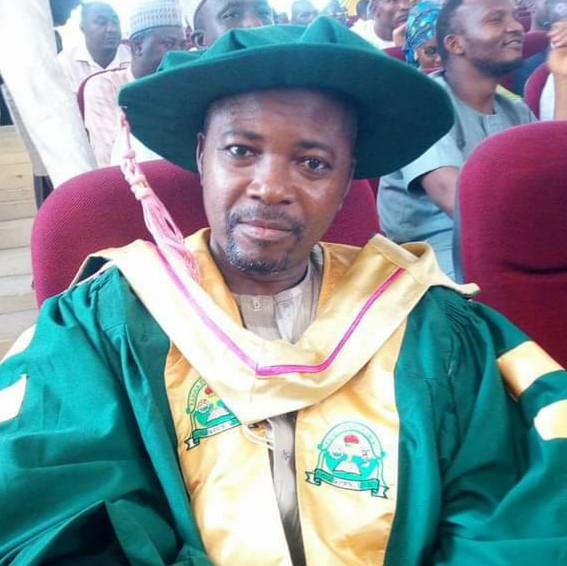
Governor Nasir Ahmad El-Rufa’i has approved the appointment of Professor Abdullahi Musa Ashafa as the new acting Vice-Chancellor, Kaduna State University.

Ashafa, a professor of diplomatic history and the immediate past Deputy Vice-Chancellor (Academic), was announced by the Kaduna State Commissioner for Education, Halima Lawal.

Before his appointment, Prof. Ashafa was Head of History Department, Dean, Faculty of Arts, Dean of the School of Postgraduate Studies and the immediate past Deputy Vice-Chancellor, Academic, Kaduna State University.

Ashafa served as Vice President, Historical Society of Nigeria, North West Zone. He is also a Research Fellow at the Nigerian Institute of International Affairs (NIIA).

Drug abuse and the future of Nigerian youth

By Usman Muhammad Salihu

The menace of drug abuse, spreading like a wildfire in our contemporary society, is gradually or has already become rampant among many members of our society, ranging from old, young and adult and at the same time men and women, rich and the poor.

Drug abuse is in essence, the misuse of drugs or taking them without doctor’s, physician’s or pharmacy’s directives for the purpose of pleasurable effects on the brain, especially by the youths.

The problem keeps on escalating to the extent that you hardly see a group of ten to fifteen youths without finding a member or two that engage themselves in drug abuse.

Nowadays, many people tend to misunderstand why or how some people become drug abusers to the extent that some people look at those addicts as people who lack proper upbringing and thereby ridiculing them instead of counselling them.

According to the National Institute of Health Espanol, as a person continues to use drugs, the brain adapts by reducing the ability of cells in the reward circuit to respond to it. This reduces the high nature which the person feels compared to the high mood they felt when first taking the drug — an effect known as tolerance. They might take more of the drug to try and achieve the same high mood. These brain adaptations often lead to the person becoming less and less able to derive pleasure from other things they once enjoyed, like food, sex or other social activities. These changes are what lead to drug addiction.

As an addict continues taking drugs improperly, the brain adapts by reducing the number of ability cells in the brain circuit that responds. This reduces the high one enjoys when taking the drugs for the first time and thereby increases the dosage for the enjoyment of the first high. Long-term drug usage causes changes in the brain circuit as well as affects its functions.

Despite that, no one may be able to predict the exact causes of drug abuse and addiction in our society, especially among the youth but rather common factors such as the environment, which includes friends, family, peer pressure, and economic status among others.

Other contributing factors are parental guidance, early exposure to drugs, physical abuse, stress, age, gender inequality, ethnicity, genes and mental disorder, all of these contribute immensely to the phenomenon.

The consequences of drug abuse on Nigerian youth, if not properly curtailed, may result in so many social vices as we witness today. These include; poor academic performance, mental disorder,  increasing number of out of school, financial instability, sexual abuse, diseases, difficulties in decision making, depression, anxiety and rampant deaths. Others are troubled relationships, increased crime rate in society, hopeless feelings, etc.

Despite the above-mentioned effects, many youths continue engaging themselves in drug abuse how would one measure the future of our youths in Nigeria? Doom indeed!

Drug abuse is a disease whose quitting takes more than good intentions. It changes the thinking capacity of humans and as such makes quitting it very hard even for those intending to.

But the good news is that drug abuse can be prevented and the best way of resisting and preventing the drug abuse phenomenon in our society is through the creation of awareness of the dangers of the menace. By informing the public about the effects of drug abuse, especially among our youths who are the leaders of tomorrow, the problem will be drastically reduced if not eradicated entirely when teachers, parents, health care providers, media personnel and community leaders join hands together in educating the populace.

Making goodwill intention of resisting drug abuse by an addict, and also seeking God’s intervention is indeed a greater move of bringing an end to the problem.

Usman Muhammad Salihu is an HND 1 student of Mass Communication, Abubakar Tatari Ali Polytechnic Bauchi State. He can be reached via muhammadu5363@gmail.com.