Month: April 2022

What’s the fate of the Almajiri?

By Abdulsalam Alkali

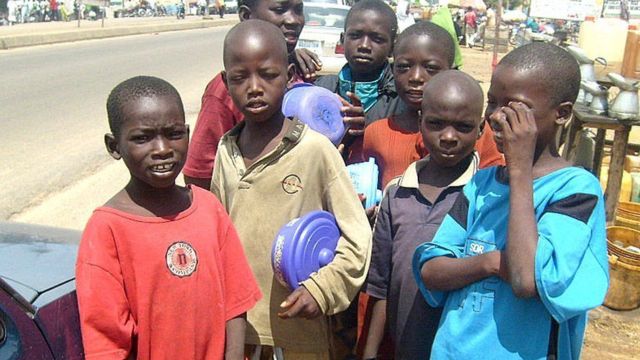
Almajiranci is an informal educational system that is predominantly practised in Northern Nigeria. Almajirai are teenagers ages 4-17 who are sent away from their dwelling by their respective parents to seek Islamic knowledge, a source for sustenance and clothe themselves by begging for alms from people.

The Almajiri system has produced prime leading Islamic intellectuals in Northern Nigeria. Still, along the cord, the system has been altered with the rise in population, making it a system that makes children of tender age susceptible to danger.

It’s awful how Almajirai are abandoned to cater for themselves even though parents should be responsible for their children’s needs and provide them with education. Sadly, parents choose to neglect their responsibility towards their children and abandon them at the early phase of their lives. This is unfair and should be tackled; else, it will erode our societal values.

Numerous discussions and symposia have been held on the predicaments of the Almajirai and how to reform the system. But it is all an exercise in futility because there has been practically no action to stem the tide.

The government, civil society organisations and traditional leaders have a role to play. First, the government should enact legislation prohibiting parents from taking their children to the Almajiri school. In addition, the government should make primary and secondary school free and compulsory so that poor and vulnerable parents can send their children to both formal and informal schools for our society’s good.

Abdulsalam Alkali writes in Maiduguri, Borno State, via abdulsalamyusufalkali71@gmail.com.

Publicizing privacy: How our personal information hunts us

By Sulaiman Badamasi (Mahir)

Social engineering (also known as human hacking) is the art of psychological manipulation of human beings to trick them into making privacy blunders to giving out delicate confidential information. The perpetrator (social engineer) digs background information of the potential victim to identify key necessary weak points and possibly gain the victim’s trust to use the information against them. Before the emergence of social media, it took social engineers a long, frustrating time to acquire as much information as possible about their targets.

However, the dawn of technology saw the 21st century as the swiftest ever in terms of information circulation. The world has appeared at a height where a single tweet (for example) reaches a billion people in seconds. Thus, information runs fast, businesses nurture, distances diminish, causes foster, coverage enlarges, relationships are created/strengthened, thus making us and our lifestyles more publicized and learned about.

Despite its tremendous impact on making life more relaxed, social media compels us to unconsciously reveal vital personal information about ourselves, families, friends, etc., which could be easily used against us. In other words, what you need to know about people to trigger any havoc on them and their close ones is almost certainly on social media. People’s personal info has become so plentiful that they have a copy of their voter card, national ID card, and driver’s license posted on social media.

Moreover, people reveal their workplaces, positions, type and colour of their vehicles, wives and children (by number, names & faces), schools where their children attend (including class, level, course, location), the colour of their children’s uniforms, favourite food, the interior of their rooms, the kind of electronic devices they own/use, current location, movement plans and means of transportation (motorcycle, car, truck, train, plane) with picture evidence. You know when they sleep/wake, to mention a few.

The recent #KanuTrain attack is a decent scenario of how our personal information can be used against us. The intruders appeared to have readily gathered background details of some of the passengers, including their sitting positions on the train and their social profiles. In a video interview, the killer of Hanifa, the primary school pupil who was allegedly abducted and murdered by her teacher, explained how he took his time, gathered adequate information, and built up his fraternity before executing the unfortunate assault.

The fact is, no ill group/individual strategizes and carries out a successful attack devoid of having sufficient information, which of course, we give generously. Without data, plans go wrong, and they (perpetrators) hardly take these risks nowadays. Repeated evidence has struck our screens on how ill-doers use human informants, drones, and social media accounts to gather information about target victims before carrying out attacks on them, including military bases.

Ethical hackers do not just attack or penetrate internet environments or webservers. Instead, they do footprinting and reconnaissance to know the strengths and identify weaknesses in the system they plan to attack and then exploit them.

Have you ever wondered how your profile pictures can be grilled to reveal more information about you? We often change profile pictures on several occasions. Let us assume you have been on Facebook for ten years and have changed your profile picture ten times (once each year). These ten naturally varying images can be processed using deep learning and natural language processing to understand, for instance, the rate at which you are ageing, how happy/angry/suspicious/innocent you are looking, how healthy or otherwise, to mention a few.

A 30-minute walkthrough of the pictures you have uploaded in the last five years reveals what calibre of people you do mingle with, the state of structure your house is in, the number of countries, states, or towns you have visited, conferences you have attended, how beautiful your wife looks like, which of your siblings/parents/children you love the most, and more. Do you know that a data scientist who knows where you have been going for one year or less can use that data to predict where you will possibly be going next?

All these can be used to perpetrate evils against you/us, thus, informing a possible abductor/kidnapper whether you look like someone who/whose family can afford a ransom payment. Knowing a lot about your family tells them of the softer target amongst them. Of course, they would find it easier to abduct that daughter of yours whose school name, picture, name, age, the colour of the uniform, time to and from school you have made available than you.

Unless we have underlying valid reasons to do so, making our private information and our families public could make them more vulnerable to unnecessary access. Life now looks as if the more your sensitive information is made private, the less you are prone to some unfortunate events.

So, beware!

Sulaiman Badamasi (Mahir) can be reached via sulaimanmahir@gmail.com.
Accident: Buhari commiserates with Jonathan over personal staff’s death

By Uzair Adam Imam 

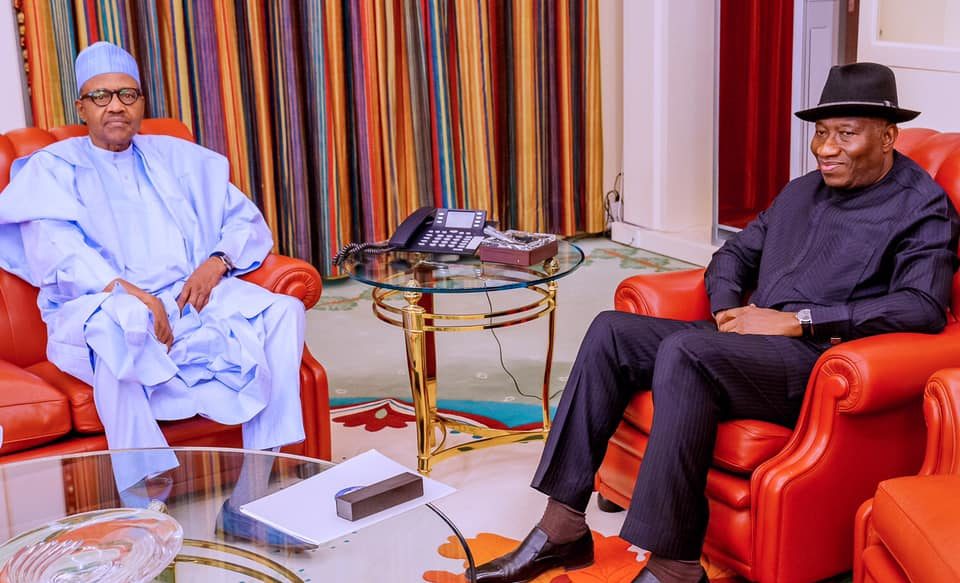
President Muhammadu Buhari has commiserated with former President Goodluck Ebele Jonathan over the death of his two personal staff in a road accident.

A statement signed Friday by the presidential media aide, Garba Shehu, contained the commiseration. 

The President expressed gratitude to Almighty God for having the former president escape unhurt from the accident.

However, he also advised Jonathan not to be distracted from his frequent local and international travels. 

Reports disclosed how the former president’s convoy was involved in an accident in the vicinity of Nnamdi Azikiwe International Airport, Abuja.

The accident that took place Wednesday had claimed the lives of two orderlies.

On Sheikh Nuru Khalid’s dismissal

By Usama Abdullahi

Two things are so sure in life. The first is we are all going to die someday. The second is a person is most likely to suffer for being honest at all times. However, in this recent case of Sheikh Nuru Khalid, we can attest to the second fact.

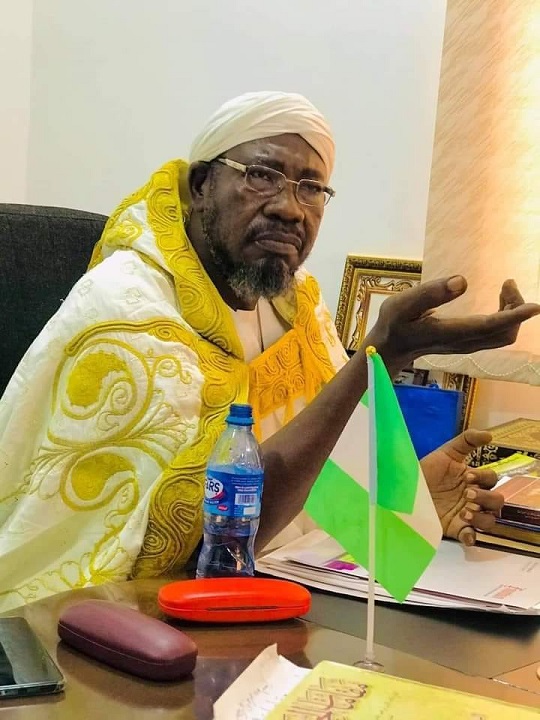
You don’t expect anything good from people who hate hearing and being told the truth. It doesn’t surprise me to see Sheikh Nuru Khalid being unfairly relieved of his role as the Chief Imam of the Apo Legislative Mosque by the Mosque Committee under the chairmanship of Senator Dan Sadau.

For that’s what you get when you decide to stick with the truth. My fear is not him being fired for speaking against the cruelty of this present government but how politicians manipulate our religious leaders. They use them as baits to help tame or silence the veracious clerics who speak truth to power. This has been the norm for many years now. What makes it look appalling is that those easily manipulated clerics reduce themselves to mere sycophants.

Aside from getting lured into misquoting the Holy Books and preaching only what best suits the hearing of their political godfathers, they try to persuade their followers to believe all the rubbishes they preach. So, to be sincere, I wasn’t surprised when I learnt of the dismissal of the “Digital Imam” over his true statement about the government. It’s not like what the media paints. His sermons weren’t anti-government. 

Yes, his Friday sermon was just a simple reminder and awareness of how to call our hardened and irresponsible government to task. Sheikh Nuru Khalid doesn’t speak for himself alone. He represents the voice of the oppressed masses who brought this government to power through their votes. Only the patriotic and religious ones will fully understand what he preaches. They are the only ones who will realise that this government doesn’t care about the plight of the poor citizens who voted them to power.

It’s so disappointing that he got sacked because of his intestinal fortitude and truthfulness. I saw this coming, considering how fierce he’s lately been in criticising this government for their failure to secure the lives of the people they had sworn to defend. I see his calculated dismissal as more of a  politically advised plan to compel him to complete silence so that they will continue to suppress us by being neglectful regarding safeguarding our vulnerable lives without him chastising them for their ugly sins.

What frustrates me more is knowing that his dismissal letter was full of grammatical inaccuracies and negotiated by people who are said to be genuine Muslims. Yet, their actions betray their faith and academic standings. Islam neither promotes nor tolerates such despicable acts. It’s the religion of peace. Hence, there’s no room for what they did in Islam.

We should be happy that he still breathes because we have seen how some of his likes were slain for saying the same thing. In case you forget, truth-telling cost Sheikh Jaafar and Albany Zaria their noble lives. So, it’s little wonder that the Digital Imam was just sacked. We’ll never get it better by hiding under the pretence of religion to promote and cover up the faults and interests of those usually self-seeking politicians. Accordingly, it’s unfair to deny our clerics the podium to speak truth to power simply because of political gains. 

Usama Abdullahi wrote from Abuja, Nigeria. He can be reached via usamagayyi@gmail.com

What next after NYSC?

By Fatima Usman

During their compulsory National Youths Service Corps (NYSC) scheme, many people don’t usually ask themselves, “What next after the service year”? Many people know what they want and what to do, but they don’t have any concrete idea of what they want or even what they want to do.

But now, the service year is over. For many, the reality will face them right in the face, NO MORE ALLAWEE (33,000 stipends). As small as this money is, it will become gold to many who could not find a job after some months of completing service.

The scheme’s purpose is primarily to inculcate in Nigerian youths the spirit of selfless service to the community and emphasize the spirit of oneness and brotherhood of all Nigerians, irrespective of cultural or social background. This is because the history of our country since independence has indicated the need for unity amongst all our people and demonstrated the fact that no cultural or geographical entity can exist in isolation.

The Joy of every student is to see that they graduate and serve their father’s land without minding the stress they passed through while in the school, but then what next after the one year of NYSC? This is the question many people ask themselves while still on camp, but when you know the answer to it, you are good to go, and vice versa.

After the service year, you are faced with the next phase of life. Some very lucky ones will get a well-paying job or will further their education, while others may have to start all over again after the 33k allowance must have stopped coming.

Back in the day, when a person graduated from tertiary institutions, there was a high tendency that such a person would get a well-paying job without any stress of going to look for a job, but now the case is different. Many students are scared of even leaving the NYSC because they know that there’s no job.

Millions of graduates with outstanding results out there are looking for white-collar jobs, but the country doesn’t have jobs to give everybody. Thus, you should try as much as possible to acquire one or two skills that can be of help after your service year. Don’t wait to finish NYSC before you start thinking of what to do next. Before you even go into NYSC, ask yourself these questions:

What is life after NYSC?

What am I going to do after NYSC?

How am I going to start with life?

When you know the answers to these questions, you are 50% on the track. Today’s world requires us to do more than going to school or graduate with good grades.

Don’t be carried away by the title “graduate”; get yourself something doing. If you have a skill already, develop it; start from small. Yes, it’s pretty stressful, but you will reach that goal with determination and hard work.

Many people who are now successful today passed through a lot, but today they are doing fine. So if those people can do it, there’s no excuse for you.

Fatima Usman is a 300 level student of mass communication at IBB University, Lapai. She can be reached via usmanfatima499@gmail.com.

Quest for Jigawa: zoning, unity and 2023 elections

By Umar Farouk 

Power brokers and political gladiators begin to fracture the peace and unity of Jigawa State and polarise its youths for their personal interests and idiosyncrasies. This challenge is further compounded by a misguided view of amalgamation by some segments of Jigawa as more of a historicized occurrence without any barefaced or hidden advantage to the state; a mindset that further promoted deliberate demonstration of impunity, as well as superiority by one group or zone against the other.

But to dramatize this superiority complex, the point people did forget is that never should one be so foolish to believe that you are stirring admiration by flaunting the qualities that raised you above others. By making them aware of their inferior positions, you are only sowing the seed of bitterness and envy that will hunt you back in ways you might not imagine.

Regardless of what others may say, it has plundered the socio-economic affairs of the nation to a sorry state; an occurrence that stems from an unknown leadership style described by analysts as neither ‘system nor method based’ without anything exemplary or impressive. While this appalling situation unfolds in our political space, the global leadership stage is littered with telling evidence about leaders that have demonstrated leadership sagacity and professional ingenuity that our leaders have refused to replicate their resourcefulness on our shores.

Having discovered the challenge threatening the continued existence of Jigawa State, it becomes imperative to say that whatever might be the failure, we must as a state begin to return to where we came from and what we were known for. But whatever measure we may want to use in tackling this challenge can only succeed if it probably puts in place steps that will guarantee leadership restructuring.

Catalyzing the process of building the Jigawa of our dreams that is laced with good leadership will among other demands require sincere and selfless leadership, a politically and economically restructured polity brought by the consciousness that can unleash the social, economic and political transformation of the state while rejecting the present system that has bred, inefficiency, a primitive capital accumulation that socially excluded the vast majority of our people.

Above all, to completely put things right, the state government must recognize our position, for Jigawa to be a society of equal citizens where opportunities are equal, a personal contribution is recognized and rewarded on merit regardless of town, zone or political affiliations.
The best hope we have is to use the 2023 general elections to stop politicians that cannot draw a distinction between politics and leadership. And in its place, enthrone leaders that will align their aspirations with the people and compel leaders to stick to their campaign mandates, preventing them from reneging when elected into power. 

Yes, politics and politicking are about the quest for power. Indeed, one of the major attributes of politics is the acquisition and devolution of power. In a democracy, one of the recognized processes of getting representation and power is through an election. The purpose of an election is to get power. Thus, any person or party desirous of electoral victory must carry the electorates along by effective stakeholders’ engagement which includes consultations, program exposition; interest aggregation and consensus building which among other things is for the purpose of ensuring equity and allaying fears of oppression and domination.

No doubt, the issue of power devolution has been a very knotty issue in Jigawa state politics. Similarly, zoning as a tool for power-sharing has been a very contentious one. The major advocates of zoning or rotational leadership are the people from Hedejia Emirate Zone. Thus, the canvassing for power shift should demonstrate and implement it in their zone.

For me, the concept of zoning or power rotation may sound mossy, and it may not be ideal for our situation fraught with fear of domination, distrust, apathy and immaturity.

Democracy is about people, their representation and not power-sharing. It may have many variants depending on the people, their culture, history and political ideology.

Clearly, adopting zoning practice may not eliminate the monolithic over-centralized system that brings tyranny, mediocrity, impunity and a winner-takes-all mentality among other things. Carrying everybody along will reduce apathy – something that has been identified as the bane of our local politics. I must advise that as a matter of necessity, we should eschew the if-not-my-zone-nobody-else-should-lead mentality and work for the success of Jigawa State.

Our people must shun disunity, disorganization, sentiment and politicians who once they get into office would bring unprecedented hardship, chaos and hopelessness. As I believe, we all want, hope and pray for one thing – a state where peace, stability, fairness, equity and love shall reign supreme.

May Almighty Allah Bless Jigawa state, ameen.

Umar writes from Jigawa, he can be reached via 08081058283.

Nigeria lost $1.5bn to oil theft in 3 months – NNPC GMD

By Farid Suleiman

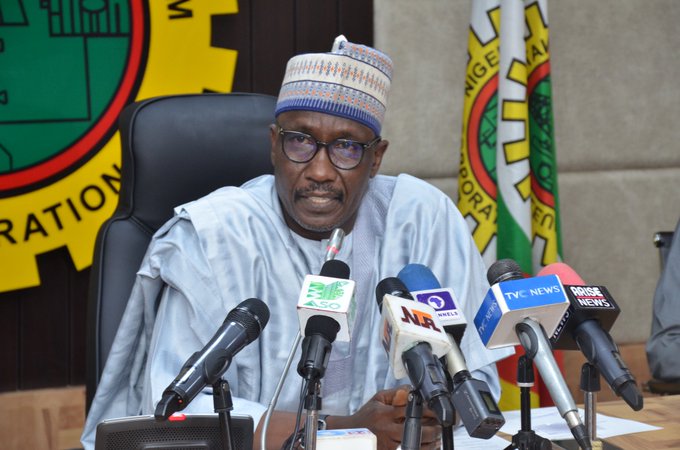
The Group Managing Director of the Nigerian National Petroleum Corporation (NNPC), Mele Kyari, has revealed that from January to date, Nigeria has lost a total of N623BN worth of crude oil to the activities of oil vandals and operators of illegal refineries.

Reports indicate that the GMD  made the revelation when he appeared before the House of Representative committee on petroleum (upstream) that invited him to ascertain the cause of Nigeria’s low crude oil output.

Kyari said oil thieves steal an average of 250,000 barrels per day. This situation has limited Nigeria’s crude oil output to only 1.49 million barrels per day, against its OPEC quota of 1.753 million barrels per day.

“What is going on has nothing to do with the PIA. It is purely an act of thieves; acts of vandals which have rendered the industry unworkable and taken us to the level where today, our production is around 1.49 million barrels per day.”

“When you lose about 200,000 barrels per day, even at an average price of 65 dollars per barrel, we lost close to 1 billion dollars between January and March. 

“From January to date, we lost an average of 250,000 barrels per day, and at the current price of about 100 dollars to the barrel, even within this short period, we have lost close to 1.5 billion dollars.

“This situation deteriorated to the extent that by March 7, 2022, it came to zero, and so, we shut down the line and declared force majeure. Even on our most reliable pipeline, which is the Forcados pipeline, we still lose about 7000 barrels per day. Needless to say that this is all coming as a result of the acts of vandals and oil thieves,” he said.

However, the GMB assured the lawmakers that massive joint security operations among agencies were ongoing to address the situation.

NYSC cautions corps members against nighttime travel, involvement in social vices

By Muhammadu Sabiu

Brig.-Gen. Shuaibu Ibrahim, Director-General of the National Youth Service Corps (NYSC), has advised corps members to try and stop nighttime travel to minimize the risk of being involved in car accidents.

In their Places of Primary Assignment, PPA, corps members should avoid social vices such as drug misuse, human trafficking, cybercrime, and advanced fee fraud, he noted.

During the closing ceremony of the 2022 Batch “A” Stream 2 Corps Members at NYSC Orientation Camp, Ikot Itie Udung in Nsit Atai on Thursday, Ibrahim, who was represented by the Akwa Ibom Coordinator, Mrs Chinyere Ekwe, issued the charge.

The DG advised corps members to spend the night at military barracks or any other officially protected site if their journey lasted longer than 6 pm.

He was quoted as saying, “to greatly minimize the risk of road traffic accidents, you are expected to always cut short your trips from 6 pm in the evening and pass the night at military barracks and other locations officially designated as safe.”

Nation-building involves the combined efforts of everyone

By Aliyu Muhammad Aliyu

Nation-building and community development require the involvement of all stakeholders from all walks of life. The fairs of knowledge and experience from the elderly and zeal and energy from the youth are necessary to achieve any goal. The two categories of patriotic citizens have one thing in common: their and dear ones’ future.

The elderly used to be like the youth with all sorts of dreams, but through experience, they experimented in life to differentiate between what worked from unrealistic emotions. They belong to and master the second industrial revolution powered by crude oil, which replaced the first industrial revolution powered by coal, and is still relevant although in its twilight. Their presence is necessary for effective policy implementation since we did not yet change much. Their generation is still relevant, especially for guiding and checking the excesses of what their youth counterpart would bring with the hope to be realized.

Likewise, the youths’ presence is necessary because of their eagerness to see their world as a better place to enjoy as it used to be for the elderly, having had enough stories of the good old days they never witnessed and long for. Moreover, they are the masters of the third industrial revolution of renewable energy and data the world is turning towards. Therefore, they should be mainly involved in the legislation of all policies because they generally see the future more vividly and better.

To think of getting rid of the elderly and replacing them with the youth is very dangerous. Youth never made it alone in history. An example of young leaders like Alexander the Great shouldn’t delude anyone. At his time, life expectancy was about thirty-five years. Leading at around thirty years of age meant that he was in the category of elderly persons with the required experience of his time to govern.

Unpatriotic elderly leaders, despite what the nation did for them, were ungrateful. They destroyed its future leaders by denying them the basics of what it takes to be productive citizens by looting and amassing wealth allocated for their descendants that could not exhaust under regular human consumption. Despite that, they act like parasites, harming the nation in a way it will remain in existence for them to continue milking, probably due to their tactical foresight and limited exposure to globalization.

On the other hand, young people have great energy, hopes and dreams, exposure and highest order hedonists and showy. Power in the hand of those with such potentiality without orientation will undoubtedly be catastrophic that will probably bring an end to the great home of black man, just like how virulent pathogens destroy. Moreover, they might squander the whole treasury on exorbitant trademarks of designer clothes, cars, mobile phones, hotels and girls for their pleasure. Therefore, we must avoid both for the betterment of the country.

Division of labour is as necessary for success as the involvement of the two categories of patriotic citizens in good leadership. Of course, a certain amount of all the categories should be present everywhere. Still, more youth should be in designing policies that will tie the present for the future prospects while more elderly should be in supervision of their feasibility and regulation and ensure their effective implementation.                  

Aliyu Muhammad Aliyu wrote from Kano via amabaffa@yahoo.com.

Pantami and the bitter taste of politics (II)

By Aminu Nuru

As a man of God in power, Pantami has been anticipated to promote justice and fairness to all, doggedness in executing the rule of law and consistent due process while amicably working to advance his ministry. Unfortunately, however, some of his decisions, actions and inactions shatter this goodwill, clearly undermining what he should – or was expected to – represent.

Given the above, it is fair to say that Pantami’s reputation as an ambassador of the faithful and clergies in the corridor of power is being tarnished and marred with shameful inadequacies that are not worthy of emulation. From the onset, it is important to state that some of those rumpuses may not be disassociated with Pantami’s status of being the first Imam of Jumma’a cum notable Islamic cleric to be a member of Nigerian’s apex council of power execution. However, some of them are avoidable if he had approached and dealt with specific issues differently and wisely.

Barely a few weeks after his appointment as Minister, Pantami’s name began to trend in what seemed to be his first scandal in office. Pictures of some luxurious apartments were shared on social media with the allegation that he owns them. Perhaps, other Ministers occupied better, polished and more luxury apartments, but nobody cared to nail them down for their exotic preferences despite being in the same shoes as him. This should tell Pantami that his colleagues may be excused and get away with so many other things while he would not. This is obviously because of his antecedents as an Islamic cleric.

One would think this politically-driven furore would be an eye-opener to Pantami and should guide his future decisions and endeavours henceforth; it should dawn on him that things will never be the same for him again; that certain things about his life and that of his family, relatives and even close friends would be twisted and become a source of gossip on the cyberspace from now. Therefore, he should thread carefully

But Pantami appears not to appreciate the complexities of his new reality. If not, why would someone as blessed as Pantami allow his name to linger in a scandal of dubious professorship appointment (promotion) by the Federal University of Technology, Owerri? Let’s assume that the fuss generated by the position is a work of his foes and mischief-makers, and there’s nothing wrong with it. Still, the ensuing controversies are not suitable for his image as an Islamic cleric.

It is such a shame that a man of his calibre would allow his love for title to overshadow his conscience. If I were Sheikh Pantami, I would get rid of this appointment to save what remains of my image. And after my tenure as minister, I will go back to university to become a legit professor, proving my capability to be one. But because of what seems to be an untamed ego, Pantami will not succumb to the voice of ethical and moral principles and do that. On the contrary, he remains adamant and shows no sign of withdrawing the appointment sooner or later.

The Academic Staff Union of Universities (ASUU) opposes the appointment vehemently. But, in what seems to be a reprisal move to frustrate its struggle, NITDA, an agency under Pantami’s ministry, discredited ASUU’s proposal of UTAS. This came after NITDA’s earlier proceedings showed that UTAS passed the integrity test with 93% aggregate.

In another twist, Pantami’s Ministry of Communication and Digital Economy fails to complete its initiation of NIN-SIM enrolment and verification, which should curtail digital-related crimes in the country. This single policy, if fully executed, will be one of the most significant legacies of Pantami’s stewardship. Yet, just this morning, several media outlets reported that the exercise, which deadline was earlier scheduled to be January 2021, has been extended yet again for the tenth time. Again, this shows weakness and a lack of political will and patriotism.

Before coming to office, nobody would believe that Pantami would be engaged in an unfortunate political twist like this. It is now clear that Pantami is becoming more partisan and a career politician; his status as a strict technocrat in the corridor of power has noticeably changed now. In fact, political moles carrying his posters which bear the inscription “Digital 2023”, were sighted at the just concluded national convention of the All Progress Congress (APC). It will not be a surprise if Pantami contests in the forthcoming general election.

While it is within his constitutional right to do so, he should bear in mind the embodiment of the institution he represents and the challenges ahead. He should know that he is in politics and public service to set, among other things, precedence for others to follow. I hope that he will face, manage and swallow the bitter taste of politics with wisdom, courage and ethical and moral principles. I hope that his decision and indecision will not further generate unfortunate controversies. I hope that he will remain steadfast to his religion while promoting the rule of law, due process and good governance for Nigerians.

Aminu Nuru wrote from Bauchi. He can be contacted via aminuahmednuru@gmail.com.