Month: February 2022

Hushpuppi: Abba Kyari has a case to answer, says Malami

By Ahmad Deedat Zakari

The Minister of Justice and Attorney General of the Federation, Abubakar Malami (SAN), said reasonable grounds for suspicion had been established against the embattled Deputy Police Commissioner, Abba Kyari.

Malami disclosed this while featuring on Channels Television’s ‘Politics Today’ programme on Monday, February 7.

According to Malami, “Reasonable grounds for suspicion have been established, and that will eventually translate to the possibility of prosecution and conviction if indeed one is adjudged guilty by the law.”

The discussion became necessary due to Kyari’s alleged involvement in a $1 million scam allegedly involving the international internet fraudster, Ramon Abbas, alias Hushpuppi and five others. 

Malami also noted that justice would be done, “It is an issue that has international and national dimensions. Actions have been taken, it is a work-in-process locally and internationally, and we are doing what it takes to ensure justice is done within the context of law regardless of the personalities that are involved,” He said.

Leading with power and influence: The role of a teacher in a changing world

By Aminu Rabiu Kano

If there is one vexing question that has continuously engaged the attention of stakeholders worldwide, it is certainly about the future of a classroom teacher in the ever-changing global world. No doubt, the role of a teacher is critical in building and sustaining a healthy and responsible society. Indeed, the future of any thriving community rests in the teacher’s pivotal role to progressively impart valuable lessons and skills to children. But then the world is fast evolving, from one era to another, thereby altering the modus operandi of several human activities, teaching and learning inclusive.

In the 21st century, the world has witnessed so much transformation in virtually every aspect of human life, with technology leading the way into a more digital world. The change brought upon by the technological revolution has had a tremendous impact on every facet of human interaction. Recently, the Covid-19 pandemic has shocked the entire world as physical human interactions were curtailed, thereby bringing a paradigm shift in man’s understanding of his environment.

Specifically, the education sector is affected by the changes constantly happening in and around the world. Naturally, this raises serious questions about the role of a teacher. As globally recognized, a teacher everywhere possesses some latitude of power and influence, which earns him respect in society. But since the world is witnessing tremendous changes that have never been seen before, some urgent questions arise that are pertinent to a teacher’s continued relevance.

On the one hand, a teacher is expected to help students learn by imparting knowledge and setting up a situation in which students can and will learn effectively. While on the other hand, he (teacher) is faced with the daunting task of introducing a novel, pragmatic approach to learning to be at par with changes in the world. While the task is enormous, it is still humanly possible for a teacher to deliver his primary functions while at the same time leading with power and influence.

Research by Kappa Delta Pi (2015) discovered that little value occurs in any classroom without excellent teacher preparation to lead students. This implies that the leadership skills possessed by a particular teacher have a tremendous impact on learning outcomes. A teacher, in this context, is equated with a senior policymaker whose ability to lead the way for progressive policies and handle complex issues has a direct impact on the happiness of a vast number of people.

A teacher is thus not seen as a leader with limited influence and power but a leader of all students, of people large and small. Therefore, teacher leadership is an inescapable reality. In essence, I am saying that in a bid to maintain and even augment their relevance in a changing world, teachers must possess some leadership skills to meet students’ demands.

Secondly, for teachers to remain relevant and influential in a fast-changing world, they must be an agent of change. But in order not to misunderstand change with fashion, a teacher must do some research to be able to glean the source, nature, character, prospects, and challenges of any change mantra. This means understanding the politics of change and collaborating with like minds in pushing for a progressive change in all aspects of human life. By so doing, the teacher extends the reach of his leadership empire beyond the four walls of a classroom.

Thirdly, for a teacher to continue wielding enormous power and influence, he must do all he can to produce students who not only keenly observe but clearly understand what is happening around them. Therefore, the onus is on the teacher to train his students and imbue them with the mindset of identifying problems in their immediate society and investing their efforts towards solving them. In this light, skills such as critical thinking and problem-solving are pivotal.

Finally,  a teacher can only lead with power and influence in a changing world if he is adaptable. Adaptability in this context implies the readiness and ability of the teacher to receive, internalize, support, and promote positive changes. Therefore, as the world moves to a digital era, the teacher must embrace technology to deliver lessons. For instance, the Covid-19 pandemic has resulted in the closure of schools and other institutions of learning, thereby disrupting academic activities. This notwithstanding, in some climes, teachers resorted to using technology for lessons delivery. By way of advice, a teacher must leverage technological gadgets to produce students with a digital mindset.

Aminu Rabiu Kano is a political and public affairs commentator. He can be reached via arabiukano@gmail.com.

Nigerian women and the national security discourse

By Mukhtar Ya’u Madobi

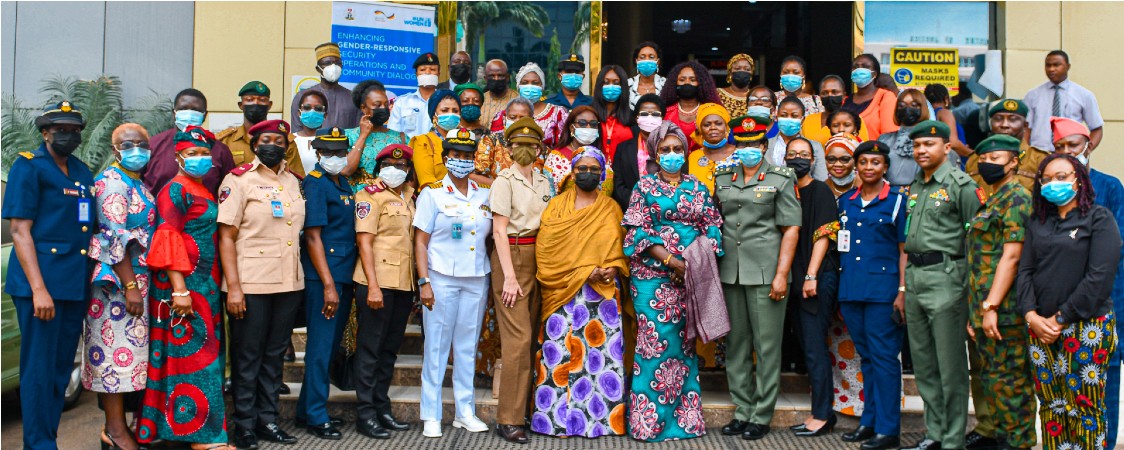
In a heterogeneous society like Nigeria, where security threats are rising daily, the vital role of women in contributing to peace and security ought to be recognised and harnessed effectively.

Women are often viewed as victims of conflict. But this view masks the essential roles women play as leaders, especially in helping end conflict, developing post-conflict reintegration efforts and economic life, and even in leading the organisation of camps for internally displaced persons.

Recognising that sustainable security is not possible without the involvement of women, the United Nations in October 2000 passed Security Council Resolution 1325. The resolution calls for increased representation of women at peace negotiations and all levels of decision making regarding security. It also calls for women inclusion in post-conflict reconstruction efforts and disarmament, demobilisation, reintegration efforts; increased protection from sexual violence; and an end to impunity for crimes affecting women.

Additionally, in his words, Lene Espersen, Denmark’s minister of foreign affairs, “We are fortunate that the unique role of women as key contributors to peace and security is growing, and we already possess substantial knowledge about the critical importance of women in the prevention and resolution of conflicts and in post-conflict reconciliation and reintegration.”

That UN resolution was the first to recognise the disproportionate and unique impact of armed conflict on women and girls, acknowledge their contributions to conflict prevention, peacekeeping, conflict resolution, and peacebuilding, and highlight the importance of their equal and full participation as active agents in peace and security.

Security pundits noted that the key areas in which women could foster security include: peace decision making and peacekeeping, reconciliation, reintegration, the rule of law, and economic development. Therefore, the government of every country should recognise them with these roles and create an enabling environment for them to participate.

A report by the UN Secretary-General shows that there are a growing number of inspiring examples of women, peace and security in action across regions, but overall progress remains slow and uneven.

Meanwhile, in Nigeria, history revealed that many women had made remarkable security impacts in their desire to provide stability to their respective societies. Notable among include; Inkpi, the Princess of Igala royal family who buried herself alive to save the Igalas from the stronghold of the Junkuns, Moremi of Ile Ife, who allowed herself to be captured by the Igbos during a clash with the Yorubas. In addition, Queen Amina became the Queen of Zazzau in 1576 not because there were no strong contenders, but she emerged as the most suitable successor to the office. She proved herself a capable leader both on the home front and on the battlefield.

Under gender sensitivity and security, the National Security Strategy (NSS, 2019), a policy document designed by the Office of the National Security Adviser (ONSA), says, “Nigeria recognises that development is endangered if it is not engendered. Therefore, gender sensitivity and security will be mainstreamed into public policy to create opportunities for the advancement of women and children’s rights as well as gender equality.

“It is imperative to engage women as agents of development to ensure social inclusion, sustainable peace and the security of all segments of the society.”

Given the above, the country has already made a plan of action towards incorporating women into participation in preventing and resolving conflicts, peace negotiations, and humanitarian response, among others.

“Nigeria developed a National Action Plan (NAP) built on five important pillars; prevention, participation, protection, promotion and prosecution. These are important pillars that would strengthen gender-responsive conflict management and prevention frameworks in Nigeria,” the NSS stated.

However, the reality is that women are largely excluded from many formal peace processes. In the terrorism affected states, women and children constitute the largest internally displaced persons and refugees across the border.

Also, it is noted that women are not just victims of war; they are also agents of peace. Thus, it was stated in the NSS 2019 that appropriate legislation would be adopted to enhance gender security to promote inclusiveness across various sectors of the economy.

On its part, the United Nations has identified priority areas to “accelerate progress” on the Women, Peace and Security (“WPS”) Agenda. These include “increasing the number of women in uniformed services in peacekeeping missions and national security services.” The inclusion of these priority areas signals an important shift towards recognising that advancing women in national security services, in addition to peacekeeping operations, is critical to the broader WPS mission. To accomplish the goal of closing the women’s participation gap in uniformed and non-uniformed national security efforts, new policy planning must begin with a conversation with girls as to how they understand, define and interpret security.

It is a fact that women are the bedrock of every society, as they are involved actively in food security, economic security and political security. Thus, there should be a change in attitudes and behaviour. Individuals should learn that women are effective and should be incorporated fully and equally into participation at every decision-making level in positions having to do with peace and security issues. Furthermore, mainstreaming should be integrated into a whole-of-government approach to reform justice and security.

Mukhtar Ya’u Madobi wrote from Kano via ymukhtar944@gmail.com.

Seven kidnap victims rescued in Kaduna

By Muhammad Sabiu

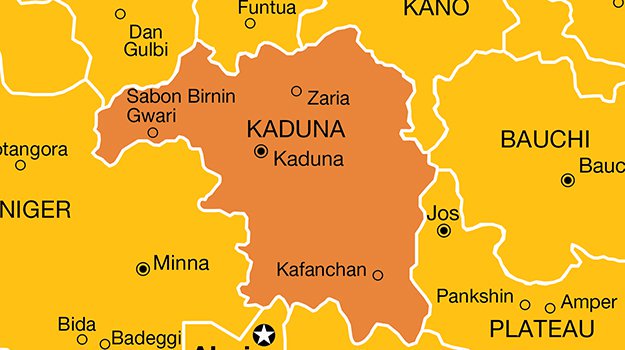
On Monday, February 7, 2022, the Kaduna State Government said that troops had rescued seven people in the state who had been kidnapped.

Security forces revealed to the government that the troops rescued seven persons from bandits who attacked Ungwan Garama in the Maraban Rido General Area of Chikun Local Government, Kaduna State, according to Samuel Aruwan, the state’s Commissioner for Internal Security and Home Affairs.

The troops, he claimed, got distress calls alerting them of a bandit raid and swiftly engaged the attackers.

The criminals were forced to flee due to the soldiers’ superior firepower, he continued.

Security authorities, according to him, were able to exploit the criminals’ escape path and recover seven abducted people, adding that all of the rescued victims have been reunited with their relatives.

English Tenses (concluded)

PAST PERFECT CONTINUOUS TENSE

 Subject+ had been + verb in progressive

Past perfect continuous tense represents an ongoing action that started and continued for some time in the past.

Example:

1. Yar’adua had been seeing his doctor for two years before he died in 2009.

2. The students had been waiting for two hours when their lecturer arrived.

3. Muhammad had been teaching for four years when he resigned and joined politics

SIMPLE FUTURE TENSE

subject+ will/shall + verb (base form)

Functions of the simple future tense

The simple future refers to a time later than now and expresses facts or certainty. In this case, there is no ‘attitude’.

The simple future is used:

  • To predict a future event:
    It will rain tomorrow.
  • With I or We, to express a spontaneous decision:
    I will pay for the tickets by credit card.
  • To express willingness:
    I will do the washing-up.
    He will carry your bag for you.
  • In the negative form, to express unwillingness:
    The baby won’t eat his soup.
    won’t leave until I’ve seen the manager!
  • With I in the interrogative form using “shall” to make an offer:
    Shall I open the window?
  • With We in the interrogative form using “shall”, to make a suggestion:
    Shall we go to the cinema tonight?
  • With I in the interrogative form using “shall” to ask for advice or instructions:
    What shall I tell the boss about this money?
  •  
  • FUTURE CONTINUOUS TENSE

subject+ will be + verb in -ing

The Future Continuous tense is a verb tense that indicates that something will occur in the future and continue for an expected length of time.

Example

1. I will be travelling to Kano tomorrow this time 

2. We will be watching the football match 

3. The students will be sitting for their final exams in June.

FUTURE PERFECT

subject+ will have + verb in past participle

Example

1. I will have returned from Kano tomorrow by this time

2. I will have finished my project by next week.

3. I will have written the letter by breakfast time.

FUTURE PERFECT CONTINUOUS

subject+ will have been + verb in – ing 

– To show that something will continue up until a particular event or time in the future

Example:

1. I will have been teaching for six years by September 2022

2. The students will have been waiting for two hours by 10.00 am

3. We will have been playing for one hour by 10:30

In summary

1. simple present: I drive.

2. present cont: I’m driving.

3. present perfect: I have driven.

4. Present perfect continuous I have been driving.

5. simple past: I drove.

6. past cont: I was driving.

7. past perfect: I had driven.

8. past perfect cont: I had been driving.

9. simple future: I will drive.

10. future cont: I will be driving.

11. future perfect: I will have driven.

12. future perfect continuous: I will have been driving.

Concluded

Nuru Aliyu Bauchi wrote from Bauchi via nurubh2015@gmail.com.

Parents, students plead to FG as ASUU mulls over fresh strike

By Uzair Adam Imam

Students and their parents are worried as the Academic Staff Union of Universities (ASUU) threatens to embark on a fresh indefinite strike.

Recall that ASUU suspended its nine-month-long strike in 2020 after reaching an agreement with the Federal Government. Still, after a year, the government is yet to fulfil its promises to the union.

The ASUU’s strike has been described as one of the most lingering issues that has been paralysing Nigerian universities, leading to the delay in students’ graduation and the deterioration of the education system in the country.

Not only that, many people argue that the strike has destroyed the future of many promising youths.

In a statement on Thursday, the Chairperson of ASUU Kano State Branch, Comrade Haruna Musa, and the Union’s Secretary, Comrade Yusuf U. Madugu, declared Monday, February 7, 2022, as a lecture-free day.

Its essence is for ASUU to use the day to sensitise university students, parents and other stakeholders on the brewing crisis arising from the Federal Government’s failure to implement the existing agreements with the union judiciously.

Educational sector at the receiving end

A lecturer at the Department of Nigerian Languages, Bayero University, Kano, Dr Muhammad Sulaiman Abdullahi, said that the strike was killing the country’s educational sector and the economy.

Dr Abdullahi cried: “It is a sad development. It looks childish and an endless menace, especially to the Nigerian educational system. Strike has become a thorn in the flesh of Nigeria’s general development. No nation can prosper morally in such a nasty situation. It is, indeed, unfortunate.”

He added that the situation “generally makes people, teachers, students and their parents to become very dull and uncertain of their future. You can take it to the banks that crime rate will somersault, and new bad things will manifest within the wider community”.

Students at risk

The president of the Mass Communication Students Association (MACOSA), Bayero University, Kano chapter, Comrade Sadisu Sada, decried that industrial action in Nigerian universities had been there for quite a long time.

He said, “It is worrying. The issue affects students directly. And for me, the government is to blame.

“ASUU is doing her best to give the educational system all that it requires. If not, education would have died.”

Umar Isah Dandago, an undergraduate of the Department of Mass Communication in the university, also voiced his grievance, saying this would delay his graduation.

Dandago said: “We would have graduated if not for the 2020 strike. This is a serious problem. A lot of people want to do something, like setting up a new business after university, but because of the strike, it’s becoming almost impossible.”

He, therefore, urged the Federal Government to give ASUU what it demanded, saying, “I believe it’s not even half of what’s being squandered in some things that are not important to us. So let’s get the education we deserve as Nigerians so that we’ll be proud of our leaders and our country.”

Also speaking, Comrade Ibrahim Mukhtar Sulaiman, a level 300 student, said: “Sadly, students taking a four-year course will graduate in five, six or seven years. And this affects not only their academic careers but also their personal life.”

Parents raise alarm

As the strike looks imminent, some parents lamented that the brewing crisis between the government and ASUU jeopardises their children’s future.

A parent, Malam Adamu Kolo, who looked disturbed by the imminent strike, said that his son would have graduated if not for ASUU incessant strike.

Malam Adamu Kolo said, “My son would have graduated this year if not because of ASUU incessant strike. You can see that I am poor. I am hopeless. Our hope is on this boy.”

The need to sanitise the Nigerian entertainment industry

By Usama Abdullahi

It’s highly frustrating that music is swiftly dominating Nigeria. So many people, especially teenagers, consider and consume music much more than anything. Despite their indecency and vulgarity in most videos, the youths see the musicians and actors as role models. 

One hardly watches a music video that’s free of impurity or indecency. Unfortunately, this is not seen only in the music industry, but it has become the norm in the entertainment industry. Take, for instance, Nollywood. Unsurprisingly, the movies they release every year are mostly not good for the sanity of Nigerian adults, let alone children.

Yet children sit comfortably to watch this with their parents – their so-called responsible parents. The comedy skits are much worse. Women who get featured in those comedy skits are usually inelegant vixens. They derive joy in flashing their nudities before the audience. And the audiences are often vulnerable kids. They are kids who barely think independently, so they learn whatsoever they see. 

What’s more disgusting is the vulgar languages in these skits and movies are not being filtered or edited by the supposed editors. This is proof of willful neglect of the future of young adults. But who do we blame for this? The blame lies with the supposed editors, reckless actors, irresponsible parents, vulnerable children, or the entertainment industry for its fatal disregard for prevailing indecency. I won’t fault anyone for this because society at large is undoubtedly blamable.

I’m writing this because I’m also a victim. I watch some comedy shows when I feel bored sometimes. But what I used to watch in the past few years is quite different from what I watch today. There’s an unfortunate compromise in our entertainment industry. Some contents are not merely nasty, but they are rather invective. The actors use swearwords and vulgar language excessively. For this reason, watching it diminishes the good morals that parents have infused in their children. 

We can see that moral decadence in children’s increasing disrespect and utter preferences for filthy films other than films with educative content. They imitate what they see in these movies, hence the overwhelming rate of juvenile crimes. And they are too quick to download newly released songs or films, but they fail to install PDFs for free books. Moreover, they can mime words from multiple songs, yet they barely memorise a single line from their books. This is why there’s a continuous decline in the education sector.

It didn’t surprise me when I heard a seven-year-old lad miming “Coming”, a song by Naira Marley featuring Busiswa. I can’t deny his talent for miming, but, given his age, the thing is, the song is grossly inappropriate for his hearing. That is it! Arguably, there are a lot of children who have mastered numerous songs. But, you know what, this mere mobile phone has flawed the reputation of many children and corrupted their behaviours.

Do you find it hard to believe me? Please, do create a time of your own and glimpse through TikTok. I bet you can’t believe what your eyes would see. The most important question is, how do we build a better future for the upcoming or unborn generations? With all these “unavoidable” indecencies, can we actualise this vision? 

Although the damages seem too much, still we can lessen it through the help of the National Film and Video Censor Board (NFVCB). Therefore, let’s appeal to the NFVCB to double their effort in seeing that songs with foul lyrics, X-rated movies, video clips and comedies are filtered or banned entirely from cinemas or social media.

Usama Abdullahi wrote from Abuja, Nigeria. He can be reached via usamagayyi@gmail.com

I don’t have ties to Boko Haram — ex-Borno governor Modu Sherrif

By Muhammad Sabiu

Ali-Modu Sheriff, the former governor of Borno State, has refuted charges that he has ties to Boko Haram terrorists, claiming that security services have been probing him since leaving office in 2011.

In an interview with the News Agency of Nigeria (NAN) on Sunday in Abuja, Victor Lar, the Ali-Modu Sheriff Campaign Organisation director, refuted the charges.

Mr Sheriff, a frontline All Progressives Congress (APC) national chairmanship aspirant, a two-term former governor of Borno, and a former senator had no ties to Boko Haram, according to him.

“Sheriff’s name is not on the list of sponsors of Boko Haram released by the United Arab Emirates (UAE). Security agencies have been investigating him since he left office in 2011 and had not found him guilty of the allegations.

“If he was involved, he would have been arrested, or his involvement made public. In any case, I challenge anyone with information proving his involvement to come forth with such,” he added.

Tinubu returns from London in ‘youthful appearance’

By Ahmad Deedat Zakari

The chieftain of the All Progressives Congress (APC), Bola Ahmad Tinubu, arrived at Murtala Muhammad International Airport in Lagos on Sunday, February 6, 2022, with a new look.

The 69-year-old presidential aspirant was unconventionally dressed in what many Nigerians called “youthful apparel.”

He was seen on a flat cap, black t-shirt underneath an unbuttoned blazer, scuba trousers and sneakers.

Tinubu was rumoured to be attending hospital for an undisclosed sickness in the United Kingdom. But his media aide, Tunde Rahman, has dismissed the rumour, stating that his principal was in the UK for consultations and meetings.

Tinubu’s ambition to lead Nigeria has stirred different reactions from people on social media considering his age and health status.

On transitioning to a four-day working week of teachers in Kaduna

By Safiyanu Ladan

The Kaduna state government has directed teachers in public schools to transit to four days working in a week, which the state adopted last year.

In line with the new arrangement, the teachers will now work from Monday to Thursday instead of Monday to Friday regular routine.

This development has generated a lot of condemnation across the state, as many people fear that it will further cripple the already fragile education system.

According to these critics, Governor El-Rufai had come up with stringent education policies ranging from competency tests for primary school teachers, which saw the sacking of thousands of primary school teachers, to the closure of schools due to the covid-19 pandemic and insecurity.

These aforementioned measures have invariably affected the impartation of knowledge and created a considerable gap that requires concerted effort to fill.

Staying at home during this period created an overwhelming experience for children and parents. It has also affected the way they learn. Having learnt that the future of their children’s education is at stake, parents were left with no other option than to hire private tutors for their wards, as the resumption date was still sketchy.

Noted for being a hub of intellectual activities in Northern Nigeria, the state has recently grappled with reduced access to classroom education due to those challenges.

And now, with this government’s directives of transiting the teacher’s working days to four in a week in place of the regular working days is tantamount to reducing the access to classrooms that has a far reached negative impacts on students.

Given the foregoing, the decision of the government to make teachers in public schools resort to four days working is ill-fated.

Safiyanu Ibrahim wrote from Kaduna via uncledoctor24@gmail.com.