Month: December 2021

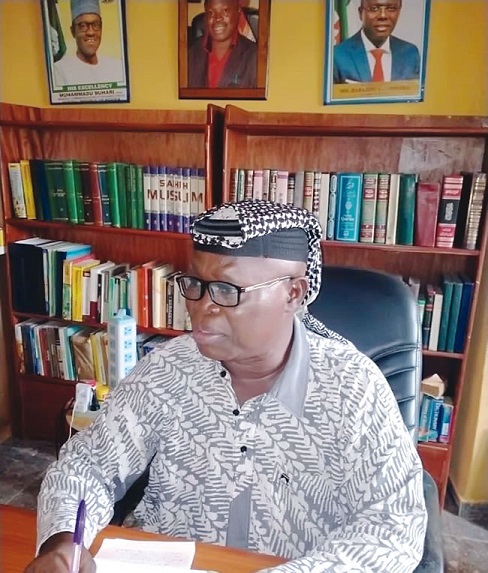
Prof. Mansur Sokoto tells truth to power, tackles Buhari over insecurity

By Auwal Umar

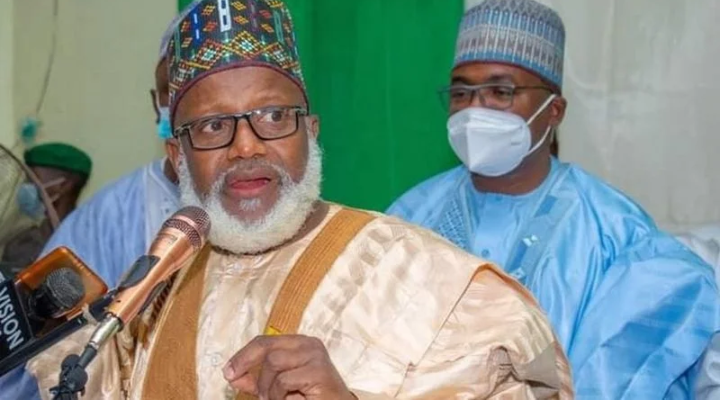
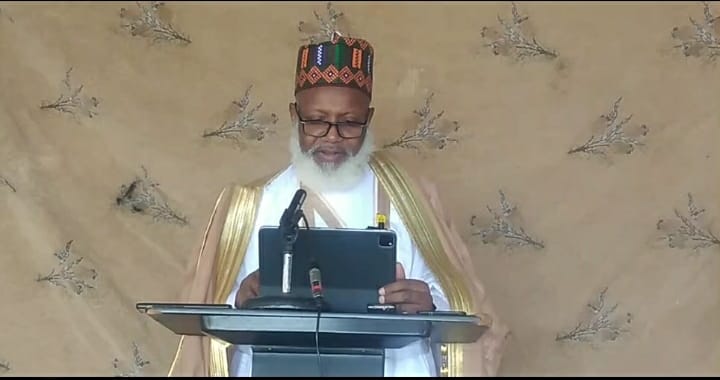
The books of history and religion are replete with facts of many apostles of Allah, their companions, their followers, other great personalities, as well as some pious predecessors who audaciously confronted the most brutally imposing rulers of their times. Prophet Moses’ Pharaoh is the most prominent example from the time immemorial to date. Two days ago, an erudite Sokoto-based Islamic scholar, Prof. Mansur Sokoto, chose that path of honour that commensurates with the position of Islamic scholarship regarding the tear-shedding condition of insecurity and unprecedented carefree attitude about the general plight of the masses.

In the lecture, the Islamic cleric gave an overview of the multifaceted ways the occupant of the number one seat, the assumed Messiah, betrayed the mandate entrusted to him by the Nigerian masses. You may recall how President Buhari shed tears each time he was on the losing side at the polls and showed sympathy with our plight during the previous dispensations. Due to his long-standing and seemingly unfading popularity, people from every nook and cranny in the North supported him.

Prof. Sokoto recounted how an old woman of 100 years or thereabouts was optatively praying: “O God never take away my soul, lest I die without voting for Buhari to the presidential seat.” Some in the North died due to wild celebrations for his success. He commented on the support he enjoyed from some Islamic clerics, with some of them publicly invoking the wrath of Allah upon those that refused to vote for him. These bespoke the unalloyed love President Buhari enjoyed.

During the lecture, Prof. Sokoto brought to the fore some of the campaign promises Buhari used to make. He always assured the northerners and Nigerians in general that he would equate the value of Naira to a Dollar, improve the quality of education at all levels, reduce the pump price, among many other sugarcoated promises. Before Prof. Sokoto went on squarely to shed light on the height of insensitivity of President Buhari, he commended his efforts for restoring peace in the North in his first tenure before the worst came to worst. Specifically, the following are some key takeaways from Prof. Sokoto’s lecture.

Discriminatory and lopsided treatment against the North

As highlighted in the lecture, despite all the support president Buhari received before and after getting elected, he scrapped the pilgrimage subsidy. On every predicament that befalls the South, the President and his aides will quickly make a press release and take necessary actions but act quite differently when there is a similar occurrence in the North. Recently, 42 passengers were ruthlessly burnt down to ashes by bandits, but their lives were not worth a word of sympathy from the President. On the following day, ignominiously, the President headed to Lagos for a book launch by Bisi Akande. Ironically, there in the book, many blows of satire were landed on his face, which he might be unaware of. Again, bandits launched a series of attacks for four consecutive days, killing an APC gubernatorial candidate. A Kaduna state law-maker and a Katsina State Science and Technology Commissioner also fell victim to the same fate. Additionally, the former President, Shehu Shagari, lost his life, but President chose to go to the funeral of late Abiola’s wife. Even Prof. Ayo Banjo, treated with reverence, was quick to disown some facts credited to him in the book that seemed to be more important than the lives of charred passengers.

Misplacement of priorities

Buhari’s government is very good at misplacing its priorities. He borrowed a large sum of billions to share with some ghosts and nonexistent beneficiaries. Such funds can be used appropriately to address many problems bedevilling the nation.  Had the amount, vainly shared with less visible economic impact, been channelled for the general fixing of the power sector, the impacts from all its veins would have been visibly seen. Resident doctors’ lingering problem of strikes can be a thing of the past if just four billion naira would be dedicated to their cause. That is without talking about the flashy presidential weddings that gulped many billions in a day.

Failure of the government to address cattle rustling dilemma

The cleric hints at a crucial point that needs special attention. He lamented that many Fulanis’ cattle were stolen with no action taken against the theft, and the entrepreneurs of doom and downfall might have capitalized this. In other words, the problem of banditry is probably the result of retaliation by the aggrieved Fulani youth whose cattle were rustled, and the government failed to call the culprits to book. Such instances of “I don’t-care attitudes” by Buhari’s government can’t be numbered. If the government were seriously proactive on the issue, the chances are that we would not be in the present situation.

Wrong advisors and mediocrity

Despite the inexplicable delay of six months to appoint ministers, President Buhari picked one of the worst sets of cabinets, some of whom are unheard of even in the mass media. The President neither gave room for workable advice nor appointed competent hands to handle the job. Moreover, he does not listen to the voices of the experts, journalists, activists and Islamic clerics.

The cabinet goes unchecked

Once you are appointed to serve in Buhari’s government, you can do whatever you like because no one would hold you responsible for your actions or inactions. Buhari hardly gets his cabinet reshuffled because he does not care for accountability. If you were to assess his cabinet by any reasonable standard, the result would surely be awful. As a result, his cabinet members are often unruffled and well aware that they would be sacked only if they clash with some untouchable cabals.

Corruption, impunity and an unworkable justice system

Prof. lamented the high level of corruption in the government, with government officials routinely stealing public funds, with no fear of facing the consequences. He labelled the justice system under this administration as unworkable. Unfortunately, the arrests of kidnappers, bandits and insurgents always resurface on social media, but you never hear of them being sentenced. More often than not, some criminals confess their crimes not under duress but because of frailty in the justice system. And yet, they still go scot-free.

Yawuri students still in captivity

A responsible government can never be in peace when just one of its citizens is in danger.  One cannot begin to imagine the unspeakable horror of being held captive by those filthiest beasts, rapists and defilers. The worst thing now is that government does not even talk about them, much less of their potential release from their captors. These innocently helpless students have been in captivity for five months in this horrific condition. There are other similar scenarios in Niger and many other northern states.

Powerful task force on security

The cleric recommended that the government set up a team of presidential task force similar or even more robust than the Covid-19 task force to tackle insecurity head-on. The team should include experts, intellectuals, journalists, traditional rulers, elder statesmen and politicians to provide strategic advice and technical know-how.

State governors should be granted the power to act on the security of their states

Although state governors nominally bear the ceremonial titles of “Chief Security”, their power to act on security issues is limited. Thus, Prof. Sokoto advised that laws should be enacted to enable governors to act and direct the security agencies at their disposal. However, it is a bitter truth that no matter how willing a governor of a crisis-ridden state is, he is not much different from his poor citizens. 

The need to be more pious

Finally, the Islamic cleric emphasized the need for the President and the rest of us to be more God-fearing in all our doings. May Allah reward Prof. Mansur Sokoto for his invaluable words concerning the reality and the sorry state of the nation, amin.

Auwal Umar wrote from Kano. He is a graduate student at the Department of English and Literary Studies, Bayero University, Kano.

NUC University ranking and the looming 2021 ASUU strike

By Abdelghaffar Abdelmalik Amoka

There was this piece of trending news over the last week on a certain ranking from the National University Commission (NUC) where the University of Ibadan was the best, and Abubakar Tafawa Balewa University came last. The ranking received a lot of reactions. While there were jubilations from the graduates and students of the relatively younger universities (TETFund Universities as they are popularly called) as they were highly rated on the ranking, the students of some old universities (allegedly living on past glory) were not pleased with the ranking, especially those that were ranked very low despite their gigantic structures. On the other hand, some new universities without research infrastructures were reported to have high per capital google scholar index. Not sure how that was achieved, though.

While the argument was going on among the students about the ranking, ASUU members were having meetings across the universities on another looming strike. The ASUU NEC was reported to be in a meeting this weekend to decide on the looming 2021 strike. While we are awaiting the outcome of the meeting, the students seem to be more concerned with the ranking than the state of the universities and the ASUU strike.

I have been trying to imagine the merits and demerits of the NUC ranking but still trying to figure out one. All the public universities are in terrible shape. Is the ranking based on the best among the chronic underfunded public universities? The 2013 NEEDS Assessment committee of the former president, Goodluck Jonathan, chaired by Prof Mahmood Yakubu, the then TETFund Boss and currently the INEC Boss, revealed the terrible state of public universities and their lecture halls/rooms, and students’ hostels. Some of the hostels occupied by the students were reported not fit for humans.

Has all that changed in 2021? What are we ranking? FG is still dragging the revitalisation of public universities and releasing crumbs to the universities whenever ASUU barks. What are we ranking? Research is not adequately funded in public universities, younger universities have no research structure, and most of us are publishing papers just for promotion’s sake. What are we ranking? We can’t address several challenges from the university, a supposed hub for solution development. We can’t even develop solutions to solve our own challenges within the university. So, what are we ranking?

Who is NUC ranking the universities for? The government, with their deep poverty of sincerity on education, political class so that they can start patronising the universities rather than taking their kids abroad? The parents/students who care not about the quality but certificate, the few committed lecturers or the meal “ticketers”, or the International communities? If we have a structure to rank, there won’t be anxiety over another ASUU strike just a year after the suspension of a nine months strike.

Rather than expending resources on a ranking that changes nothing, the commission should have rather diverted the resources towards putting up a structure that will make the universities rank-able. We must develop strategies to fight both external and internal aggression.

The owners terribly underfund the Universities (Federal and state governments), and the academics are dreadfully paid with an Assistant Lecturer earning a net salary of about N115,000 per month and a Professor on the last step earning a net salary of N416,000. The quest for proper funding and better welfare has resulted in uncountable strike actions. However, I still maintain that if we define our priorities well, there is the fund to provide quality education for Nigerians.

Meanwhile, we also have internal issues to sort to improve the system. For example, we have Civil Engineering, Building, and Architecture departments in the universities where we train Civil Engineers, Builders, and Architects. Yet, we have awfully built new buildings and poorly maintained old buildings. We are training leaders in the universities but have terrible leaders in the universities who behave more like local politicians. We are training business and financial experts, but we can’t help the universities manage their resources and can’t help the universities to make money from the resources within the universities. We are training researchers to develop solutions for the world, but we can’t develop solutions for our challenges within the universities.

While the universities need proper funding, we have a lot to do internally to make the university work. Else, no matter how much money is injected into public universities, without responsible leadership to properly utilise the available resources for optimum impact, without academics (not meal ticketers) that are prepared to make things work and will objectively perform NUC accreditation, the funds will never produce the desired result.

Let’s do the cleanup, and everyone will be eager to see the ranking of our universities. You will see healthy competition where universities and departments compete to outperform each other.

Abdelghaffar Amoka Abdelmalik writes from Zaria and can be reached through aaabdelmalik@gmail.com.

Yuletide: GYB Awareness Project supports 1500 less-privileged

By: Sumayyah Auwal Ishaq

The Governor Yahaya Bello Awareness Project (GYB Awareness Project) has supported 1500 less-privileged and vulnerable people across the seven (7) north-west states of Nigeria with various cash and gift items ahead of the Christmas and New Year celebrations.

The National Coordinator, GYB Awareness Project, Saifu Bawa Kajuru, said the goal is to reach out to Nigerians who can’t afford to feed themselves this festive period. He further stated that churches and communities are the major target earmarked by the group.

Apart from the 20, 000 cash disbursed to the beneficiaries, other items distributed by the group included clothes, rice, oil, spaghetti, and cash gifts. Many beneficiaries in Kaduna, Kano, Katsina, Jigawa, Sokoto, Kebbi and Zamfara States thanked GYB Awareness Project for their magnanimity.

GYB Awareness Project

Customs intercept guns packaged in TV container in Lagos

By Uzair Adam Imam

Officials of the Nigeria Customs Service attached to Tin Can Island Command have on Friday confirmed the interception of a 1x40ft container carrying guns and other deadly weapons.

Reports have discovered that the container owner had allegedly declared its content as plasma televisions, but the customs officers discovered it was a carton of guns.

Mr Uche Ejesieme, the Public Relations Officer of the Tin Can Customs, confirmed the incident.

“The officers intercepted a container loaded with weapons, but as we speak, what we have done as a command is that we have written to the terminal to evacuate the container immediately to enforcement unit for 100 per cent examination so that we can actually ascertain the quantity and other relevant information.

“So, as we speak, we expect the terminal to evacuate the container to the enforcement unit where we intend to strip it, and the quantity, names of people involved, and other further information would be available,” he said.

He added that, in line with service protocol, the command would inform the Customs high command in Abuja after the container had been thoroughly examined at the enforcement unit of the command.

“This is why we have not issued an official statement regarding the seizure.

“As we speak, we do not have full details of who is behind the import, country of import and the model of guns.

“All these will be made known at the end of investigations,” he added.

The customs, however, vowed to thoroughly look into the matter to its very roots and apprehend those in connection.

“Most times, the suspect you see is those freight forwarders and agents coming for examination, but we are more interested in getting to the importer and everyone involved in that criminal importation to nip it in the bud,” he assured.

A peaceful, secure and prosperous Kano is everyone’s desire

By Ibrahim Siraj, PhD

One must start by giving thanks and praises to Allah the Almighty for the peace being enjoyed in Kano. Like the Prophet time Quraysh, Allah has made our city a peaceful sanctuary while people are “being snatched all around us”. Known proverbially as tumbin giwa, Kano is not only northern Nigeria’s commercial hub. It’s also a bastion of manufacturing and industrialization, notwithstanding efforts to cripple it by successive governments.

For several decades, Kano has maintained its cosmopolitan status, housing Nigerians from all across the country. Kano is also home to many expatriate communities, many of whom have come to accept it as their first if not the only home. Analysts and historians have attributed Kano’s development to this welcoming and all-embracing posture. In trade and business, education and scholarship, politics and governance, media and entertainment, Kano has provided a level playing field for everyone (indigenes and non-indigenes alike) to prosper, with non-indigenes often making it at the expense of the indigenes.

In Kano, you do your things without fear of discrimination. Once your contribution is adjudged to be positive, you are as good as any bonafide Bakano. Unless, of course, it is realized that you are going to bring a bad name to the state, that’s when you risk being quickly disowned. There and then, you will be reminded that you are not “a son of the soil”. “Ba ɗan Kano ba ne” will now be the chorus around town.

The security situation in the country is so bad and pervasive that many think no place is safe. Innocent people are killed in towns and villages by marauding and murderous gangs of merciless armed men. Kidnapping for ransom has become a daily occurrence. Travellers take the roads not sure of reaching their destinations as many have had their journeys cut or diverted to bushes where they were subjected to the highest form of human humiliation for no sin committed. Such is the sad reality of the North-Western states with the only possible exception, apart from Kano, being Jigawa.

Amidst this terrible state of affairs, Allah has protected Kano from those assailants and made it largely peaceful. Not only is Kano peaceful, but it is also bustling. New businesses are springing up in various corners of the city. So are small and medium scale industries. Rice mills (big and small) are being established in almost all the industrial areas leveraging the Federal Government’s policy of encouraging local food production.

Many new millionaires and a handful of billionaires have been produced among the business class, don’t mind the much-touted poverty and widespread hardship in the country. In Kano, it is a case of “mutuwar wani tashin wani”, i.e. one man’s poison is another man’s meat, so to say. Or, as the Arabs would say, “masa’ibu qaumin inda qaumin fawa’idu” meaning what’s a bad situation for some is a good situation for others. While the poor masses are crying, this new super-wealthy are either smiling to the banks or busy spending lavishly on big houses or malls.

Indications have emerged recently that people from the troubled states in the North, especially Northeast and Northwest, are taking refuge in Kano with reports of several secret relocations. Politically exposed people from those states are alleged to have engaged in buying or building houses in the state with the intention of moving their families if they hadn’t done that already.

Alhamdulillah, Kano is now the place to be by everyone in search of peace and prosperity. Even the so-called bandits are believed to be relishing the peace in Kano. They are alleged to be sneaking into the commercial city to do business and return to their enclaves undetected. Although not confirmed by the intelligence community, this cannot be quickly ruled out given the large number of people coming to Kano daily from that part of the country.

Recently, someone suggested that one of the biggest mistakes of Boko Haram was attacking Kano. He reasoned that a safe and peaceful Kano would have been in their own nefarious interest as they could have exploited its vastness and used it as a cover from where they coordinate their insurgency activities. This may not be entirely correct, though, as we have seen recently, Kano has become the end-of-the-road for many high-profile criminals who wanted to make it their haven. Wadume readily comes to mind here.

The peace enjoyed in Kano is by no means absolute. The state has a myriad of sundry security challenges it is grappling with. Incidents of phone-snatching often with deadly consequences, thuggery fuelled by political actors, pockets of poorly organized abductions, and drug abuse are becoming a major security threat. Kano still has unresolved cases of kidnapped and sold out children, with many more still being reported missing. Yet, the absence of any large-scale acts of insecurity, the kind of which was witnessed during the dark and inglorious years of Boko Haram bombings or the sort happening in our neighbouring states, is giving us a cause to be thankful.

Many people have been wondering what could be responsible for Kano’s relative peace. Is Kano the so-called “God’s own” state? What are the people here doing that others are not? Or what are they not doing that others do? To whom goes the credit? How could the peace be maintained? For me, it’s only the wish of Allah and His mercy for Kano to enjoy this level of stability. As far as I can see, Kano is no less a sinful society than others facing security challenges. Of course, we have good people here, but we have our share of bad and notoriously evil ones too. Apparently, neither is it due to any conscious effort by security agencies – though not belittling their contribution – nor is it the making of government for some unscrupulous politicians to claim the credit.

But as it is often said, Kano is fortified by the blessings and prayers for peace and prosperity courtesy of those pious, sincere, devout, God-fearing and saintly scholars. They either resided in or visited the city several decades ago. It is believed that their remnants are still available, praying fervently though quietly for peace to reign in Kano and for the state to achieve economic prosperity. Their sacrifices and devotions – and not the deceptive shenanigans of those money-mongering, spiritually empty, morally bankrupt, ostentatious prayer merchants parading the corridors of power today – that are keeping Kano safe and secure.

Whatever it may be, maintaining the peace in Kano is in our own collective interest. We must, therefore, play our own roles. We must sustain prayers and shun sinful behaviour as much as we can. Let us all contribute in whatever way we can to preserve the peace. Let us cooperate with security agencies by providing them with the support they need to discharge their responsibility. Let us continue to pray for the quick return of peace and security to all troubled zones in the country and the world.

May Allah continue to make Kano more peaceful and safer. May He continue to protect it and make it more prosperous!

Dr Siraj writes from the Department of Mass Communication, Bayero University, Kano and is also a reporter for The Daily Reality.

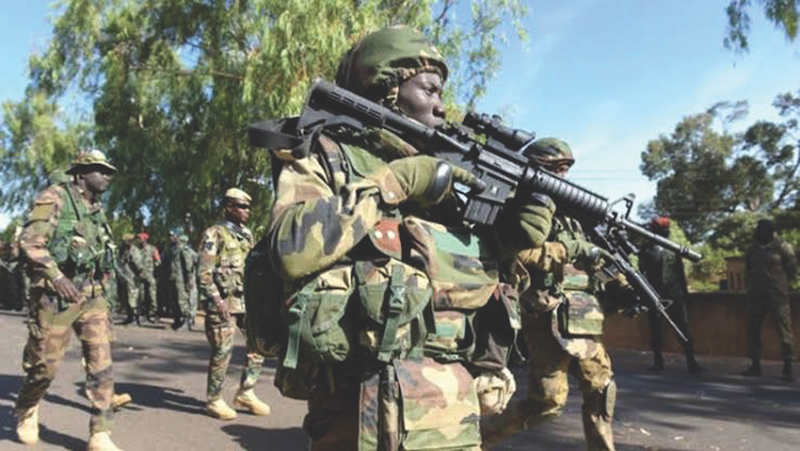
Troops raid terrorist bandits’ den in Sokoto, scores killed

By Muhammad Sabiu

Reports from Sokoto State in the northwestern part of Nigeria have indicated that the Nigerian military has launched a series of attacks on the enclave of the terrorist bandits who operate in the region, ChannelsTV reports.

A number of the terrorists were said to have been killed, while many others were injured in the wake of the military attacks.

Recall that Satiru and Katanga, two villages in Isa LGA, were recently attacked by bandits, resulting in the deaths of numerous inhabitants.

On the other hand, the military claimed to have raided the marauders’ hideouts on Thursday and Friday, killing many of the gunmen.

According to sources, several of the bandits who escaped the raid were spotted attempting to leave around the fringes of Bafarawa hamlet, some on motorcycles.

All attempts to contact the division’s army spokesman in the division were fruitless as of the time of reporting this article. More information on the situation is expected in the coming hours.

MURIC dissociates Sultan’s JNI from supporting terrorism

Press Release:

An Islamic human rights organization, the Muslim Rights Concern (MURIC), has dissociated the Jama’atu Nasril Islam (JNI) from the list of groups supporting terrorist activities in Nigeria. The NSA spoke on Tuesday, 14th December, 2021, at the 14th Workshop of the League of Ulamas, Preachers and Imams of Sahel countries held in Abuja.

MURIC’s clarification came on the heels of a statement widely credited to the National Security Adviser (NSA), Babagana Monguno, in which he named three groups backing terrorist organizations.

According to the director of MURIC, Professor Ishaq Akintola, in a statement issued on Thursday, 16th December, 2021, “It is definitely not the well known Jama’atu Nasril Islam (JNI) which is headed by the Sultan of Sokoto and President-General of the Nigerian Supreme Council for Islamic Affairs (NSCIA), Alhaji Muhammad Sa’ad Abubakar.

“JNI is known for promoting peace and mutual understanding among the different faiths and people in the country. It is known for collaborating with both the federal and state governments as well as national and international agencies to organise seminars, workshops and conferences aimed at enlightening Muslims nationwide on programmes like polio vaccination, good governance and responsible citizenry. It will be a huge disservice to mistake such an organisation for a group which is supporting terrorist activities.

“Such a mistake may arise from glaring similarities in nomenclatures as depicted in the allegation made by the National Security Adviser (NSA), Babagana Monguno. The NSA named three groups backing terrorist organizations. To quote him verbatim, ‘…It is bolstered (i.e. terrorism) by activities of groups such as Jama’at Nasr al-Islam Wal Muslimin (JNIM), the Islamic and Muslim Support Group (GSIM) and ISGS, which have continued to pose an imminent threat to the stability of the region.’

“The NSA’s list may cause confusion as a lot of people, including the press, are likely to assume that the organisation mentioned by him is the same as the JNI. We hereby assert clearly, unequivocally and categorically that JNI is not on that terror-promoting list.

“The name of our JNI is shorter and it stops at ‘al-Islam’ whereas the name on the terror-promoting list is longer and it ends with ‘Muslimin’. Our JNI is Jama’at Nasr al-Islam (JNI) while the name of the group which has been accused of supporting terrorist activities is Jama’at Nasr al-Islam Wal Muslimin (JNIM). The acronyms are also different. The letter ‘M’ makes the difference between the peaceful and law-abiding JNI and JNIM which has been accused of promoting terror.

“We suspect mischief on the part of the JNIM for choosing a nomenclature that can be easily confused with JNI’s name. The choice of that name by the alleged promoters of terrorism was deliberate. It was designed to deceive gullible Nigerians, to unwittingly attract their support, to escape early detection by security agencies and to cheat on the original and popular JNI.

“We advise the NSA to always make a clear distinction whenever names of organisations and individuals are likely to cause confusion in the minds of the public. The NSA’s list has undoubtedly created unintended tension among the populace while some members of the media have sought clarification from Muslim leaders.

“It was this situation that actually informed our clarification. JNI is a peace-loving and law-abiding organisation. It collaborates with federal and state governments as well as national and international agencies for national development. It does not support or promote terrorist activities. Never, not our JNI.”

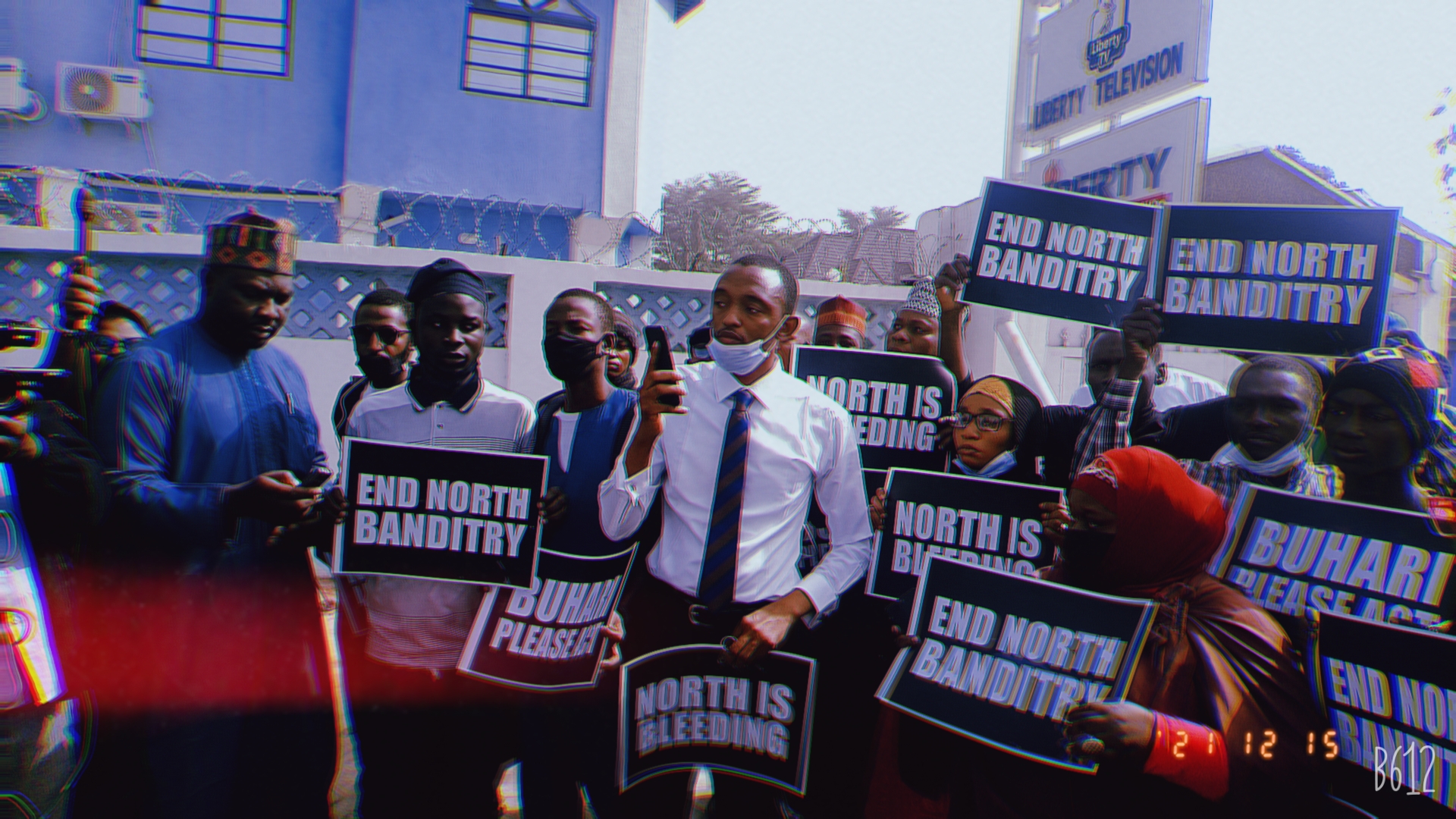
We want security agents to protect us, not arrest and intimidation – #SecureNorth protesters lament

Muhammad Sabi’u and Aisar Fagge

The peaceful protests currently being held in many Northern Nigerian states as a result of the rising rate of killings and kidnappings have been hampered by men of the Nigera Police Force and the Department of State Service.

In Kano State, on Wednesday, 15th December, 2021 a group of protesters converged at NUJ Secretariat (Press Centre) to address members of the press and march on Kano streets to call on Federal Government to #SecureNorth and #EndBanditry particularly in Kaduna, Sokoto, Zamfara, Katsina, Niger among others but security agents thwarted their plans.

A leading convener of #SecureNorth protest in Kano, barrister Abba Hikima while addressing the press stated:

“People are being killed on a daily basis in these states and therefore, there is a need for our leaders to act. Let me ask this question: What are the service chiefs doing in Abuja? They should be deployed to these areas affected by security problems. Let them rescue all the victims. They know where they are. These terrorists are not unknown. Security know them and their families. They should all be arrested. Let something be done. That’s all we are saying.”

“Look at how security cordoned off the meeting point of our peaceful protests. They intimidated and threatened members of NUJ. They [security] are not willing to give way for the protest to take place. Section 39 says we have the right to express ourselves and section 40 says we have the right to assemble. We’re professionals. We know what the law says. What we expect from the security agents is to protect us as we’re expressing ourselves. Not to arrest and intimidate us,” he lamented.

“One of our demands is that security agents should be empowered with sophisticated weapons and everything they needed to face these terrorists head on,” barrister Hikima concluded.

During the briefing, some protesters lamented how the police are being used to stop the peaceful protests that was being held despite the fact that it’s for the benefit of all—irrespective of one being a civilian or otherwise.

Imam Azzubair spoke to The Daily Reality saying: “We are here making a peaceful protest. People are being killed all over 19 Northern states and nothing is being done. We want to call the attention of the state governments, the local governments and also the federal government, which is the most important part of the government, to take action to bring end of this banditry and killing of people. It’s obvious that you cannot safely travel from one state to another. Businesses are dying; people are dying.”

Noting that security personnel are also victims of the present situation, he added, “The security personnel are also here to stop us from protesting. A message to them is that they should know that we are together [with them] in this situation. They are also being killed… So we are protesting for ourselves including them.”

Another protestant, Sada Sulaiman berated the security personnel for being reluctant in thwarting the activities of terrorists but are always quick to crack down on peaceful protesters.

He said: “They were stationed [to stop the protest] at a time when people are being killed and burnt on a daily basis on the way to Kaduna and Zamfara, but you would never see them taking action against that. And the perpetrators are terrorists. That means terrorists have overpowered the government and, on the other hand, the government has overpowered the people.”

“A village would be stormed; people would be killed; women would be raped; some would be kidnapped; and people’s property would be carted away.

“We really need government intervention. Nowhere is now safe in Nigeria.”

Recall that there has been a spike of activities of bandit terrorists in the northwestern part of Nigeria, who, besides all their terrorist activities, a few days ago set ablaze a vehicle conveying no less than 42 passengers and left all the passengers completely burnt to ashes in Sokoto.

Tawfiq al-Hakim’s satire and contemporary Nigeria

By Salisu Yusuf

Have you read Tewfiq Al-Hakim’s play Fate of a Cockroach? If yes, the Egyptian playwright has aptly satirized Nigeria’s current socio-political mood and reality. Though the play is deliberately written allegorically as the characters are cockroaches, they have fully depicted the inconsistency with obvious truth, the absurdity and folly of man in the 21st century when reasoning ought to replace emotion. From the King Cockroach, the Queen, Minister, Savant to the poor cockroaches, they have reflected and caricatured the careless attitudes of the leaders, the cronies, the upper class, and ordinary Nigerians.

The play opens with a problem bedevilling the majority of cockroach populations. If a cockroach slips on its back, an army of ants will round up the cockroach and take it to their house as food. And the cockroaches can’t have the gut to overcome the tiny ants. The ants are insignificant in the cockroaches’ world, yet, they prove to be integral in deciding the fate of the cockroaches. Hence, the title of the play: Fate of a Cockroach.

In Nigeria, the same scenario unfolds itself; a tiny group of bandits terrorizes the majority, kills and robs them of their possessions. The small armed group controls the fate of the majority.

From the beginning, King Cockroach blames the Queen for seeking to undervalue his authority and worth. While the King says that he tolerates the Queen because she’s of the weaker sex, the Queen argues that she’s more knowledgeable and reasonable than him. In addition, she complains that an existential threat posed by the ants is in the offing. However, the King can’t solve them because he’s weak and surrounds himself with wrong cronies.

In Nigeria, the same drama unfolds itself. The wife of Mr President, until recently, was at loggerheads with her husband. Can you remember when the president criticized his wife during a trip to Germany? The (in)famous “she belongs to the kitchen, my living room and the other room” is still fresh in the minds of Nigerians. The heated argument reached a boiling point when the wife said she might not back her husband at the then approaching elections. The president’s remark centres on his wife being the weaker sex (as declared by King Cockroach). Therefore, her role is limited to mothering, cooking and ‘the other room’ function.

Moreover, King Cockroach and the Queen quarrel over each other’s appearances. The King incessantly looks into a mirror and admires his long whiskers (the whiskers are the symbols of authority). He numerously says that his whiskers are longer than any other cockroach’s. This obsession with whiskers reflects the attitude of our president with power and the presidency (remember that he doesn’t go to funerals or ceremonies for fear of Corona that can wrench the presidency from him if he dies). In addition, he’s also obsessed with elegance and posing for pictures.

The Queen also looks at the mirror, admiring her beauty, and she tells the King that her whiskers are more beautiful than his. The Queen’s obsession is similar to that of our First Lady. Can you remember her long robe that was said to have cost some huge amount of money, which also generated social media arguments?

“Kitchen Cabinet” is also portrayed in Fate of a Cockroach. The trio of Minister, Savant and the Priest suitably reflect Nigerian cronyism. Minister Cockroach is suitable for his job because he proposes ‘disconcerting problems and producing unpleasant news.’ Can you also remember the allegation that some people shield Mr President from knowing the scorching Nigerian reality?

According to King Cockroach, the Priest is there as his priest because of the incomprehensible things he says. In Nigeria, some Northern Islamic clerics play the same role Mr Priest plays in Al-Hakim’s satire, of depending the morally undependable. They play the Public Relation role to the government.

The Savant in the play, on the other hand, is talented because he brings ‘strange information that have no existence.’ In Nigeria, he plays the same role as the president’s media team.

When the ants kill Minister’s son, he calls his death a ‘national catastrophe’, and King Cockroach declares a ‘public mourning.’ Since the infiltration of BH and banditry in Nigeria, many a death is greeted with silence. But when a relative of the upper class is affected, the power swiftly sends a federal delegate, or the president goes in person to mourn the bereaved. The King Cockroach is full of rhetoric, so is our Mr President.

When Queen Cockroach presses her husband for solutions to ants’ attacks, King Cockroach says he can’t be single-handed for a long-time problem. This can be equated with the ruling party’s reference to the previous government as the architect of BH and corruption. In other words, Nigerian leaders are always looking for a scapegoat.

In the play, the cockroaches look at themselves as superiors in knowledge to ants. So they reason that ants only know how to source and eat food, yet despite their superiority in knowledge, their collective fate rests with the tiny and minority ants.

In Nigeria, this is the same expressed mood; while the Fulani bandits are considered inferior, uncivilized and unknowledgeable, they hold the others’ fate. Where’s the knowledge then if you’re under the grip of the minority?

Those BH and bandits are in our midst; we know them, know their families, know their place of domicile, yet we can’t do anything against them.

As in “Fate of Cockroach,” where the cockroaches can’t come together and fight a common enemy, the ants, so are Nigerians who are divided by tribal, religious and sectional loyalty, giving way (like the cockroaches) to an armed minority group (like the ants) to destroy us. As in Al-Hakim’s satire, the ball is in the court of the bandits because they hold our collective fate.
Salisu Yusuf writes from Katsina.

Salisu Yusuf wrote from Katsina. He can be reached via salisuyusuf111@gmail.com.

FG must stop these senseless killings in the North – Ulama Forum

By Aisar Fagge

The Ulama Forum in Nigeria is greatly concerned and saddened over the perpetual killings of innocent lives going on unabated in Nigeria, especially in the North West of the country in recent times.

The forum disclosed this in its press release signed by its secretary, Engr. Basheer Adamu Aliyu, on Monday, December 13, 2021, and sent to The Daily Reality today, Thursday, December 16, 2021.

The statement reads: “Our hearts bleed over the dastardly and inhuman act of burning alive of 23 passengers in Sokoto state. Other equally sad losses of lives that were witnessed in Niger, Kaduna, Zamfara and Katsina states over the last one week are heart touching, frustrating and to say the least unpardonable. It is highly inconceivable how bandits and terrorists move about freely in the land, committing heinous acts and atrocities unchecked by the power of government and its security agencies.”

“The terrorists have desecrated all religious, human and universal values and indeed, they have lost their faith and humanity; they must be confronted head-on with might and power. We most strongly urge the Federal Government of Nigeria (FGN) to sit up to its responsibility of protecting the lives of Nigerian citizens. It would be recalled that in the year 2020, out of similar concern over the deteriorating trend of insecurity, the Ulama Forum had advanced nearly a dozen suggestions to the governments at all levels so as to curb the Boko Haram menace, banditry and other security challenges facing the Northern region.”

“It is sad to note that most of our suggestions were ignored and security situation in the country has been moving from bad to worse,” the Forum lamented.

“Based on the foregoing, we would like to once more urge the FGN to re-assess its security strategies and spending with a view to unfolding a more holistic and all-inclusive approach. We believe that divine intervention is a most potent weapon against the bandits, insurgents and their collaborators.”

“To this end, members of the Forum have resolved to devote themselves to alqunut (special prayer in times of turmoil) during each prayer session. Similarly, special prayers should be observed in Madaaris (Islamiyyah Schools) and other places of gathering.”

“We pray to Allah to give our leaders the listening ears to hear the cries of its weak, terrorised and terrified citizens, particularly in the North. May they have the wisdom, will, determination and ability to do the needful and ensure peace and security in the land. There is no power or strength save in Allah,” it concluded.

The release was endorsed by its members such as:

Prof. Mansur Ibrahim (mni), Sokoto; Dr. Bashir Aliyu Umar, Kano; Dr. Abubakar Muhamad Sani B/Kudu, Jigawa; Dr. Khalid Abubakar Aliyu, Kaduna; Prof. Muhammad Babangida Muhammad, Kano; Dr. Said Ahmad Dukawa, Kano; Prof. Salisu Shehu, Bauchi; Prof. Ahmad Bello Dogarawa, Kaduna; Amir Abdullahi Abubakar Lamido, Gombe; Dr. Ibrahim Adam Omar Disina, Bauchi; Prof. Ahmad Murtala, Kano; Sheikh Tijjani Bala Kalarawi, Kano;