Month: December 2021

Have we not reverted to the ugly old days?

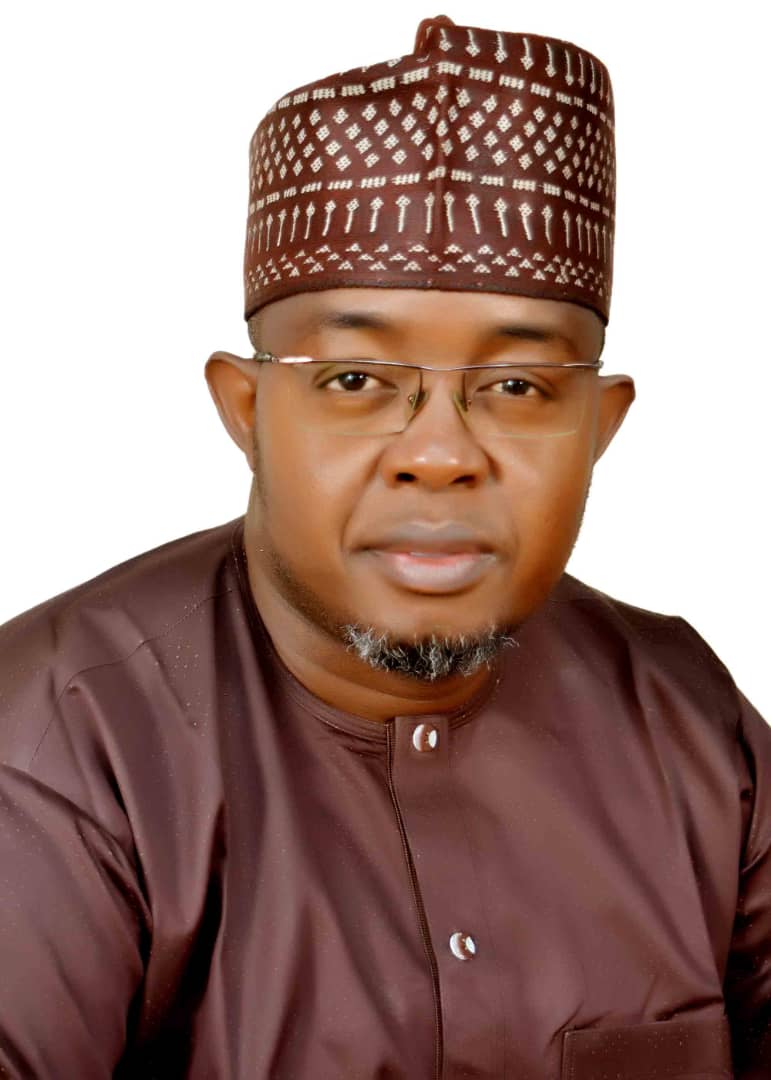
By Abba Muhammad Tawfik

The prime priority of every government is always to ensure the safety of its people by providing adequate food and security and other necessities of life to make a pleasant bustling of it (life). However, the inability to reach that satisfactorily had made Nigerians call it an anathema on President Goodluck Jonathan’s stewardship and pinned him with the harsh tags of incompetence and murderer in northern Nigeria. For that, we prayed consistently and did everything practically possible within the sphere of our human influence until we had him ejected from power.


General Muhammadu Buhari is very well acquainted with his antique military stature of rational thoughts. And, of course, zero tolerance to nonsense and his political confederates in APC wooed us by the “change” cliche. They strategized their political expedition by accentuating majorly on Jonathan’s incompetence to ensure the security of life and property in the Northeastern states of the nation.


As hapless and helpless as we were with our lives at the grabs and pangs of insurgents, we put our complete trust in Buhari and APC, with the expectation and hope of fulfilling their promises of strengthening security setbacks and restoring peace in the nation. As a result, APC attained the peak of our love and succeeded with the power of our lives and thumbs.


Early in their (APC) administration, as they vowed before God and the good people of Nigeria of addressing the security challenges, we can honestly say that the waterloo of Nigerian enemies was celebrated. Normalcy was restored in most Northeastern states like Adamawa, Gombe, Bauchi, Yobe, and Borno, which were then wrecked by detonations and eruptions of improvised explosive devices.


Expectations often fail, and most often, most of their promises fail. The accomplishment of the war being waged furiously against insurgents turned out to be a mirage. It was short-lived, and insurgence spread its tentacles ubiquitously across the nation.


Up to now, a two hour thirty minutes drive from Damaturu to the once known “Home of peace” is like penetrating through the boundaries of the “Bermuda triangle” despite having an airforce base that is well equipped with military fighter jets in Maiduguri. The road will be barricaded for hours, and people would be wantonly slaughtered like animals in abattoir by insensate humanlike beasts without any intervention.

Sadly, the enormity of the matter is that even those who have taken the solemn oath and are saddled with the heavy responsibility of protecting the lives of innocent Nigerians are not spared.


Moreover, the country’s Northwest and the Northcentral segments have also responded to the topsy-turvydom of insecurity and have become a furnace hell on earth. The Kaduna–Abuja road remains a highway of death where people are daily being mercilessly forced to breathe in death and exhale life and stripped of their chattels by kidnappers. 


One of the worst tribulations that betide one in today’s Nigeria is being a resident of Zamfara, Sokoto, or Katsina. The daily news reaching us from the region is that of kidnappings. Bandit terrorists bathe in the bloodstream of innocent souls, turning wives into widows and children into orphans.

Despite the economic hardship in the country,  one has to struggle to fulfil Darwin’s law of survival. But, unfortunately, only our vital forces dearly pay the cost of so doing. May Allah, in His infinite mercy, restore peace to our dear nation. Amen. 


Abba Muhammad Tawfiq is a 500L Medical Rehabilitation student at the University of Maiduguri. He can be reached via abbamuhammadtawfiq@gmail.com.

Police caution religious leaders against making false prophecies for 2022

By Muhammad Sabiu

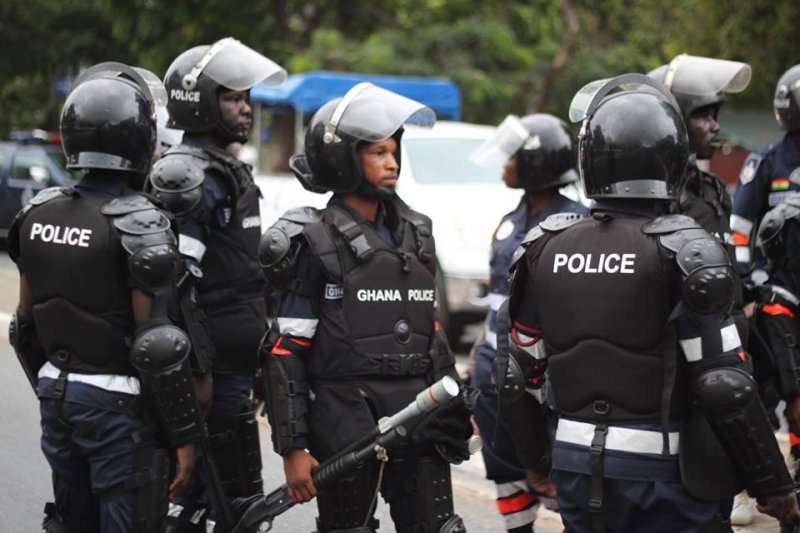
Police in Ghana have on Monday issued a warning to religious leaders against giving false prophecies for the year 2022.


The security service warned clerics against inciting dread in people’s minds in a statement titled “Communication of Prophecies and Their Legal Implications.”


The police say, “We, therefore, wish to caution all Ghanaians, especially religious groups and leaders, to treasures in their utterance, especially how they communicate prophecies, which may injure the right of other and the public interest.”


According to the police, false prophecies have caused public tensions, anxiety, and terror among citizens.


Religious organizations have the freedom to worship and communicate, but they must also respect others’ rights and freedoms.


The cops reflected on how forecasts of harm and death have put many people’s lives at peril throughout the years.


According to the press release, it is prohibited in Ghana to publish or repeat a statement, rumour, or report that is likely to cause fear and anxiety.


It’s also illegal to disseminate incorrect or misleading information that could jeopardize the effectiveness of life-saving services or jeopardize the safety of anyone.


The Ghana Police Service wishes to unequivocally state that it is not opposed to predictions. “We understand that we Ghanaians are religious people who recognize and believe in the centrality of God in our lives,” the police added.

From Proliferating Worship Places to Empowering Worshippers: A Reflection on Philanthropic Reprioritization in Nigeria (II)

By Abdullahi Abubakar Lamido

A person who sponsors and takes good care of a single orphan is assured of a mansion in the choicest quarters of Firdaus at the centre of the Prophet’s Estate, enjoying their eternal life as a neighbour to the Infallible Master (sallalahu alaihi wa sallam). In the Hadith of Bukhari, the Prophet says, “The caretaker of the orphan and I will enter paradise like this, raising (by way of illustration) his forefinger and middle finger jointly, leaving no space in-between.”

A community flooded with orphans and vulnerable children with no access to food, clothing, shelter, education, and medicare; orphans whose neglect aggravate their vulnerability to all sorts of socio-economic dangers; should prioritise taking care of them. If competing in building mosques even where there is less need is to get paradise, why not also invest in this sure way to Heaven?

And, why not consider endowments for fighting hunger also? When a person asked the Prophet, what is the best act in Islam, the Prophet mentioned two actions: “To feed (others) and to greet those whom you know and those whom you do not know” (Bukhari). And the Prophet also counted “feeding others” among the surest ways to paradise, alongside spreading salam, strengthening kinship ties and night prayers. Why not, then also emphasise in our society, making endowments for feeding the needy and the millions of the malnourished and unnourished children as a guaranteed path to paradise? 

My honest opinion is that rather than rebuilding or redecorating some mosques, we need to invest more in empowering our imams and their followers. We can all see how the “imamdom” is gradually being saturated with incapable scholars leading ignorant followers in prayers within well-decorated mosques. As if we have forgotten that giving quality education and “beneficial knowledge” to people is itself a sustainable afterlife investment, one that may even often have more multiplier effects and trickle-down effects in terms of fetching rewards perpetually and building the Muslim community progressively.

If one sponsors a young man to become an Islamic scholar and imam, anytime this trained scholar preaches and teaches, the sponsor has a reward commission. And when the students of the imam teach or use the knowledge, the sponsor is assured of a commission. It continues in that way till “the end of history”! So, if the search for reward is what makes us race in building worship places, then so should building qualitative worshipers. We should, in fact, see the creation of generations of qualitative Muslims as a “blue ocean”; a virgin and highly underexplored otherworldly investment opportunity.  

Some may remind us that the Prophet’s first thing after hijra was to build a mosque. True. But that was first because there was none. And secondly, this mosque, as a primary symbol of Islam, was built for companions who were well educated in Makkah before migration, plus the Medinan community that was also educated by no other scholar than the great Mus’ab bin ‘Umayr.

In any case, the Prophet built the mosque because it was a priority by all standards; there was a need. And so immediately after that, he also paid attention to other developmental matters, including socio-economic priorities like establishing the Medinan Market (Suq al-Madinah). He also immediately began calling companions to “purchase” homes in Jannah through addressing human needs. That was how Uthman got an edifice in Jannah by purchasing the well of Ruma and dedicating it as waqf. That was how Abu Talha got Paradise by committing a waqf of his garden to benefit the needy and his poor relatives.

In fact, as recorded, most rich companions got their direct entry admission to Jannah through spending on human needs; Uthman bought and did waqf of the Ruma well, Umar dedicated the Thamqh garden for the poor, wayfarers and the rest, and the list goes. Little did we remember that in addition to doing a waqf of his mosque, virtually all the other waqfs of the Prophet were for welfare and socio-economic empowerment. 

We need to discuss whether building the Muslims and making them self-sufficient should continue to receive our philanthropic priorities or building mansions in the name of mosques – even where there is less need – which would mostly be populated by undedicated, hungry, dirty and largely ill worshippers. Building worship places is undoubtedly required, guaranteed key to paradise, ceteris paribus. It is, however, one of many means to getting admission to paradise. Why, then, should we not start to amplify other keys to paradise, especially those in some contexts such as ours that may appear weightier on the scale of Muslim priorities?

It is not in the interest of Islam to have dirty looking Muslims attending multimillion naira mosques. Islam wants educated, neat, tranquil, self-sufficient, qualitative Muslims whose worship is knowledge-based. So, when some philanthropists focus on building worship places, others need to invest in other equally rewarding endeavours. Wherever we have no worship place, it is a collective duty upon the community members to initiate one. However, where we already have one, we must prioritise other joint obligations; taking care of the orphans, the poor and widows being one of them. We can do it through building revenue-generating waqfs that can perpetually help the poor and everlasting generate rewards to the donor.

Abdullahi Abubakar Lamido is the Chairman Zakah and Waqf Foundation Gombe, Nigeria. He can be reached via lamidomabudi@gmail.com.

Bauchi State and politics of deforestation

By Abdul Ahmad Burra

Recently, a committee was inaugurated by the Bauchi State Governor, Dr. Bala Abdulkadir Mohammad to implement the Government’s White Paper on the report of administrative committee on land use abuse, illegal allocation and farmers and herders clashes in local government areas of the state.

This news, to some extent, soothed our hearts that have been burning helplessly for several months because of the impunity and lawlessness being perpetrated by government officials and politicians in our local governments which endangered everybody’s life in the State.

The scandalous sale and allocation of the historic Lame-Burra Game Reserve and Burra-Tamba Grazing Reserve by a group secretly formed by local government officials and local politicians is the heaviest blow we have ever suffered as community and environmental activists.

About two decades ago when we started our activism to protect our forests and reserves against deforestation and other harmful activities so as to avoid environmental disasters and other negative effects, we thought by now, the problem of deforestation in our area would have been reduced or eliminated completely.

Unknown to us that the menace would not only grow beyond our capacity but would reach the level that even the forests and its components would be put to sale by people who have the mandate of protecting them.

The Lame/Burra Game Reserve, which covers about 2,351.92 km2, is situated in Toro and Ningi Local Governments Area and the second largest after Yankari Game Reserve. The area was designated for nature reserve and maintenance of a natural habitats.

One will never expect that this Game Reserve being one of the greatest treasures and tourism attraction sites of the State will be carelessly managed and left to the hands of local politicians who subsequently decided to sell it to the highest bidders.

The intensive atrocity against our environment started after the local government election last year. The new local government officials and some local politicians set up the so called anti deforestation committees that masqueraded as tax collection outfit to collect monies from loggers.

Motivated by greed and the huge amount money they generated without hitches, the local government officials, local politicians and a certain bureaucracy of our traditional institution decided that more money would come if they allocate some of the forest reserves in the local government to themselves, cronies and any interested buyer. They immediately commenced their grand plan with unbundling and allocation of farmlands in the famous Burra-Tamba Grazing Reserve which is under the control of Ningi Local Government Council. The Reserve is located along Burra-Ningi road and used to be the beautiful forest with beautiful landscape and topography that welcome and attract travellers to Burra. Trees and other plantations were cleared, loggers and charcoal producers dominated the Reserve.

Their next grand plan was to sell out the Ningi Local Government’s portion of Lame-Burra Game Reserve to people but unlike the grazing reserve, it is under the control of the State Government, thus they don’t have its absolute control, but they hatched a plan. They formed a herders and farmers peace forum and made some religious and PDP leaders, Fulani leaders, farmers and politicians as members. The Forum voted some millions of naira and visited a certain Director in the ministry supervising the Game Reserve. They presented a request for allocation of the Reserve to farmers because it became hideout of criminals. They also claimed that the Toro Local Government’s portion of the Reserve has already been allocated to farmers and the Ningi portion is being encroached by the people of Toro.

The Director reportedly gave them approval to sell out the Reserve. Allocation commenced in which they started with collection of two hundred thousand naira and one hundred and fifty naira from farmers for allocation of farmlands. They also allocated hundreds of hectres of farmlands to themselves, politicians, traditional institutions and some notable individuals. When the news of the allocation spread, people from far and near trooped to the Forum for allocation. The price skyrocketed to one and two millions for allocation because Fulani herders from Zamfara, Sokoto, Katsina, Kaduna, Kano, Plateau and many states saw opportunity in acquiring the Reserve. In a short period of time the Forum generated millions of Naira. Loggers from all parts of the country trooped to the former former Game Reserve and up to today, the Reserve is the new mecca for charcoal, timber and firewood.

What is more dangerous in the activities of this Forum is that they don’t care about the profile of these herders coming from far and near to buy land in the Reserve. All they care was the money. It is alleged that many fleeing bandits and kidnappers from Zamfara and Katsina used proxies and relatives to buy farmlands in the Reserve.

Environmental activists and community leaders alarmed the government on the scandal and dangerous trend in the local government which is capable of plunging the State into serious security and environmental disaster. These local politicians would politicize any move to stop these activities and this slowed down any reasonable action from the Government.

Whenever an attempt is made to stop the atrocities, they would take bags of money and see the people at the top. It reached a level that these people have bribed almost every individual or institution we think we could get help. Also all attempts by some officials from the State to visit Burra and see the situation would be blocked in Ningi by the local government officials and certain bureaucracy of the traditional institution.

The District Head of Burra Alhaji Ya’u Shehu Abubakar has been the greatest force in the fight against deforestation but he is lone in the fight thus he watched them helplessly. Knowing that he was the major threat in their deforestation and farmlands allocation business, the local government officials connived and got him suspended from office. They used politics and other administrative tactics to hang him. The suspension of Sarkin Burra aided the smooth running of their atrocities up to today because the fear of Sarkin Burra has been one of the major factors that protected our forests from being destroyed for many years.

Later the State Government cancelled all the allocations in the reserves and set up a committee to investigate. But this didn’t stop the atrocities. They paused on the allocation and concentrate on logging and massive production of charcoal from the Reserve. Logging is now business of the day in all forests of Burra. This continue to fetch them money in which they use to carryout out some personal and political activities.

It’s obvious that local politicians see our forests as political bounties. Whenever an election is held, the target of the members of the winning party is to take control of forests and reserves in their communities. This twist of politics started more than a decade ago but worsened from 2020 to date.

The 2020 local government election in Bauchi State has produced set of leaders and officials who have strong desire to accumulate wealth by hook or by crook, to live a flamboyant life and to prepare for 2023 election in which many of them are nursing ambition. Because there is little money to steal from the local government treasury, the officials and local politicians with connivance of traditional institutions resorted to logging, illegal allocation of lands and forest reserves and other sharp practices. The legacies that stood the test of time are being destroyed by these local politicians.

Nobody will think that after many actions taken by Governor Bala Mohammad against the then caretaker chairmen of Ningi, Darazo and Misau as well as some traditional rulers on their involvement in deforestation and farmers and herders clashes, there will be any local government official or traditional ruler that will support or take part in these nefarious activities. But the crop of leaders and politicians we have at the local governments are doing more atrocities to the reserves and the environment and fueling more ill feeling and chaos among farmers and herders.

Most government officials and local politicians don’t share the vision of the present administration in protecting the environment and preventing farmers and herders clashes and it is clear that the warnings and policy pronouncements by Governor Bala Mohammad are falling into their deaf ears.

When I heard the Chairman of the State Independent Electoral Commission saying another local government election will take place in Bauchi State next year, my heart sank. With the massive urge for corruption and desire to destroy legacies bequeathed to local governments including forest reserves, lands and properties with impunity and audacity by local government officials, local politicians and bureaucracies of traditional institutions in Ningi and other local governments, I have the opinion that we don’t need any local government election in Bauchi State. Local politics in many local governments is about allocation of land and deforestation. This trend if left unchecked, will worsen security, social and environmental problems in the State.

The DIG Sani Muhammad led White Paper implementation Committee has a lot of work to do in investigating the institutionalized destruction of forest reserves in the State. Many big names in local governments are involved. The magnitude of the negative effects of these activities should be great thing of concern for any patriotic son of the State. Thus they should spare no one in their task.

I am also of the view that after punishing all people found wanting in these atrocities against the State, Government should come up with workable policy about all forest reserves in the State with a view to protecting and strengthening them for the optimal benefits of the State.

Burra is a farmer and teaches Mass Communication at Bauchi State Polytechnic

Abdul Ahmad Burra teaches Mass Communication at Bauchi State Polytechnic.

From Proliferating Worship Places to Empowering Worshippers: A Reflection on Philanthropic Reprioritization in Nigeria (I)

By Abdullahi Abubakar Lamido

Alhaji Halilu is a popular, wealthy businessman. Famous for his continuous investment in constructing mosques, people in his town, surrounding villages and neighbouring states came to know him as Alhaji Mai-Masallatai (roughly, the Mosques Builder). His main motivation is the authentic hadith that promises a house in paradise for anyone who builds a mosque for Allah.

Thus, whenever Mai-Masallatai is approached with a request for mosque construction, he gives an automatic positive response. Alhaji dedicated all his philanthropic budget to building mosques, with virtually zero allocation to any other act of charity. He never says no to a mosque request. Within some time, he had constructed mosques for almost all the communities within his town and neighbouring villages. His ultimate goal is to own wonderful castles in heaven, and, Alhamdulillah, he has got a guarantee for that in constructing mosques from an infallible mouth. 

Now, three things happened. One, as there are not many communities lacking mosques, people started requesting him to repair the mosques he built for them last five, ten or seven years; to rebuild their mosque, repair it, or buy them new sound system, new carpet for the mosque, electricity generator, or “solar” and so on. Mai-Masallatai gradually transformed into Mai gyaran Masallatai, from building mosques to redecorating and making existing mosques “befitting” and ultramodern.

The second trend then followed. Since Mai-Masallatai is not the only aspirant for paradise, other wealthy persons joined the mosque construction endeavour. As a result, the number of mosques increases – two or more mosques in an unnecessarily close distance. A  community that needs one mosque would request a second one for flimsy reasons; we have Sheikh XYZ, who should be an imam and has no mosque; why not get one for him so the society would benefit from his imamship! And any rich man who builds a new house would ensure that a mosque is embedded from the inception of the architectural design. So, each neighbourhood or street, and almost each “big” house, has a mosque attachment built by a person who wants paradise. Soon the third issue began to arise; imams scarcity.

It is noteworthy that Mai-Masallatai and all his emulators live and do business within a Muslim community that has thousands of orphans who live in hunger, disease, illness and squalor. They coexist with hundreds of widows who survive in shabbiness, battling the spiritual ills, psychological traumas and socio-economic vulnerabilities associated with poverty, ignorance and starvation. They reside in neighbourhoods bedevilled with noise, air and dirt population, with zero consciousness of environmental challenges; where people often urinate and defecate in the open, at public passages and places as crucial as mosques and marketplaces and stadia. They live in communities that use firewood as an energy source but with near-zero interest in planting trees.

Mai-Masallatai builds mosques for communities where well above 80% of the people cannot correctly recite the Fatiha and are mostly ignorant of the basics of purification, ablution and prayer. The worship places are beautiful, “befitting”, and “ultra-modern”. But the worshippers are ultra-ignorant, extra-hungry and super-poor. While the mosques are decorated, the mosque attendants are neglected.

The community severely lacks qualified imams and doesn’t have a plan to train religious scholars or imams. Nearly all are accidental scholars and imams. Most imams are less qualified, semi-qualified, or simply unqualified. Those with minimum requirements have no access to any “on the job training” and retraining. They have no grounding in jurisprudence nor appreciation of the complexities of their time and place. They might know a little of actually elementary Islamic texts, but not of their context. They continue to recycle their khutbas, reading for their congregation – often with a lot of mistakes – imported sermons presented for the 20th-century audience in Egypt or Morocco or Saudi Arabia or Algeria (depending upon the inclination of the imams), which are compiled in a collection of sermons or al-khutab al-minbariyya. The sermons are in Arabic, reread for an audience dominated by over 90% of people who do not understand Arabic except, perhaps, “Allahu Akbar”!  

Dear reader, to what extent is your community better than Mai-Masallatai’s? Should building worship places take priority over building the worshippers? Should we continue to construct “befitting”, “ultramodern”, and “world-class” mosques for largely poor, ignorant and confused Muslim communities? Should we, while, of course, building mosques where they are truly needed, not also prioritize producing a Muslim population that is religiously educated, morally upright, intellectually sound, socio-economic dignified and religiously conscious. What better serves the essence of the mosque as an Islamic institution: a beautiful building or an educated congregation? Should building mosques be the only priority in a village where there is not even a single person learned in the Qur’an and the jurisprudence of purification, ablution, prayer, fasting, and other rituals?

More questions are begging for answers. For example, what will be more critical between saving people’s faith through addressing their basic needs of life, thereby shielding them from the onslaughts of evangelism and other anti-Islamic missions on the one hand, and mere building a mosque where there are no qualified imams and scholars to teach them creed and worship on the other? Should we continue to have “comfortable places” for ignorant and hungry worshippers rather than building conscious and educated worshippers? 

Given the current religious and socio-economic realities of Muslims in Nigeria, what should be the focus and priority areas of intervention in terms of philanthropy? Please don’t mistake my position. No Muslims will disagree regarding the centrality of mosques as Islamic symbol numero uno. Where there is no mosque, it is a collective responsibility upon the Muslims to build one to the best of their ability. What, however, may need reflection is the question of when, where and why building a mosque should take primacy vis-à-vis other Muslim priorities and when not. Is it not imperative, for instance, for us to begin to remind ourselves that much as we can get a shortcut to paradise through building mosques, there are other philanthropic acts that not only guarantee paradise but even assure of a choice area and unmatchable edifice in Jannah?

Abdullahi Abubakar Lamido is the Chairman Zakah and Waqf Foundation Gombe, Nigeria. He can be reached lamidomabudi@gmail.com.

Boko Haram: How hunger converts children orphaned by insurgency to Christianity

By Uzair Adam Imam

The 12-year-old Boko Haram insurgency in North-Eastern Nigeria, especially Borno State, has led to a vast humanitarian disaster as it claimed more than 35,000 lives and displaced millions of people, according to local and international reports.

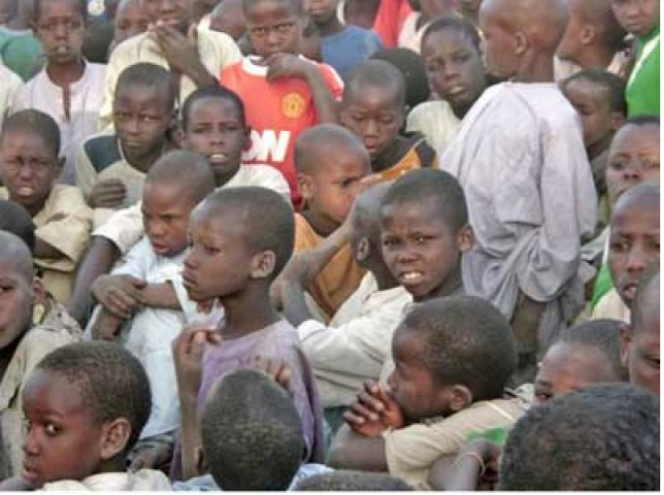
But one side of this catastrophe that is neglected is how hunger forced children orphaned by the insurgency and neglected by the Muslim community to be converted to Christianity.

Some of those children had witnessed how insurgents gruesomely killed their parents, leaving in them the hands of the helpless mothers.

The victims roam the silent streets of the suburb of Maiduguri bare-footed and are poorly and raggedly dressed, with nobody to even voice their frustration to. A large percentage of them have nowhere to call home or someone to brother or sister.

Such children were abandoned or taken to IDP camps to face other forms of abuse, torture, including sexual harassment for girlchild.

Giving an eyewitness account of this tragedy, a Borno-based scholar, Sheikh Muhammad Mustapha, narrated that after the mass killing of people by Boko Haram in Maiduguri, some Christian organizations came and took some of these orphans to their respective states.

Sheikh Muhammad Mustapha, who spoke on Sunday, December 26, 2021, during the graduation of 20 orphans trained and empowered by Khairat Islamic Trust (KIT), said the situation is unimaginable.

The foundation brought the orphans to Kano from Borno to help them open a new chapter in their lives.

He said if Muslim communities fail to take care of their [orphans] responsibilities, they will wake up and see all these orphans converted to Christianity one day.

He said, “Some of these orphans witnessed how their parents were merciless being killed by Boko Haram militant. As a result, they are left with no family – no one to call a brother or sister.

“After the mass killing by Boko Haram in Maiduguri, some Christian organizations came and took some of these orphans to their respective states.”

“Their aim is to convert them to Christianity and send them back to destabilize us in future because they look like us and speak our language. So we should try to stop this from happening.

Speaking also, the former Vice-Chancellor of Bayero University, Kano, who commended the foundation, decried how the orphans were.

Prof. Yahuza Bello lamented that many people do not consider helping orphans as something important.

“That is why Khairat Islamic Trust came up with this idea of supporting these orphans financially and also worked hard to ensure that they acquire moral, spiritual, skilful and academic training which would enable them to progress further,” he said.

Orphans recount ordeal

“I was growing up as an orphan. There was a time I came to my mother crying that I didn’t have new clothes to wear on a Sallah [Eid] day.”

“Pity was my mother who also burst into tears saying had it been my father was alive; I will not have cried for Sallah clothes.”

Many of them recalled how their life became hard after the demise of their parents and how they roamed streets endlessly until the foundation decided to give them a helping hand.

Foundation empowers 20 children orphaned by Boko Haram

By Uzair Adam Imam

The Kano based non-governmental organization, Khairat Islamic Trust (KIT), has trained and empowered 20 children who lost their parents to the insurgency in the North East, Nigeria.

At the event titled: “Graduation, Empowerment and Re-integration of Orphans” held at Bayero University, Kano, on Sunday, December 26, 2021, the foundation donated a sewing machine worth N70,000 to each of the orphans.

Also, the foundation offered the students, who have completed their Qur’anic education, admission into western schools to complete their secondary schools.

Speaking at the event, the Emir of Kano, His Highness, Alh. Aminu Ado Bayero, represented by Alh. Aliyu Harazimi, Dan Amal, called on the general public to put hands together in helping orphans.

Bayero said that the reward for those who help orphans is Paradise.

Speaking also, the former Vice-Chancellor of Bayero University, Kano, and Chairman KIT Board of Trustees, Prof. Yahuza Bello, said the foundation is a safe haven for orphans.

He added that KIT’s activities are purely humanitarian and has brought many orphans whose parents were killed by Boko Haram insurgents from Borno to Kano.

Prof. Yahuza Bello lamented that many people do not consider helping orphans important.

He added that many Christian organizations went to Borno and took these orphans to their respective states, converting them to Christianity.

“That is why Khairat Islamic Trust came up with this idea of supporting these orphans financially and also worked hard to ensure that they acquire moral, spiritual, skilful and academic training which would enable them to progress further,” he said.

Orphans voice out their excitement

The orphans who looked very excited said that they could not thank Khairat Islamic Trust enough.

“To be honest, I am very much happy today. I couldn’t have expected more than this even if my parents were alive,” one of the orphans Isma’il Salisu, said.

He added, “I call upon Muslim Ummah to join such a foundation in helping those who lost their parents. If good education is not provided for us, our thought [for a better future] might be lost.

“But now, what most of us wish to be are doctors, engineers, lawyers and the like. We think differently.”

While expressing his gratitude, Mustapha Muhammad Ibrahim said, “Not only me, all of us are extremely excited today.”

“We cannot actually thank this foundation enough. People should, en masse, join programs of this kind.”

On her part, Fatima Usman Hassan expressed how happy she was, saying that: “I pray that we will also do the same to other orphans in the future.”

US-based northern Nigerian group, Dangi, condemns bandits’ atrocities

By Uzair Adam Imam


The Dangi USA Association of Northern Nigerians has lambasted the atrocities of bandits in Nigeria, voicing a clarion call on the government to remember its cardinal responsibility of protecting lives and properties.


The association reiterated that since bandits had transgressed all common senses, they should therefore be treated as an existential threat that must be eliminated.


The call which was in a release signed Sunday by the Director Public Relations of the association, Kabir lsa Jikamshi, disclosed the grievance over the incessant killings of innocent souls.


They said that it is disheartening to witness the ongoing despicable acts of kidnapping, ransom collection and gruesome killing of innocent men, women and children especially in the North-Western part of the country.


The statement reads: “This banditry, presently constitutes a transgression that does not allow room for any negotiation. No previous grievances can justify the wanton destruction of lives and property. 


“Therefore, no one, neither the government nor private parties should negotiate in any form with the bandits.


“We call on the government to remember its cardinal responsibility of protecting life and property. Insecurity is persistent only in an ungovernable situation; Please do not abdicate your responsibilities. 


“The government should do more by taking the war to the bandits and enact the necessary legislation that will allow individuals to defend themselves without any reservation.


“This is a collective responsibility and all hands should be on deck. Thus, the general public must also remember that they have a very important role to play by supporting the efforts of the security agencies. “if you see something suspicious, say something”.


“Informants and any other individual or group enabling the activities of the bandits should be treated as one them.


“The catch and release of some of these criminals without trial is totally wrong and must stop,” the statement added.
Dangi Association also commiserated with the families of the victims of these atrocities.


“We pray the Almighty Allah will offer solace to the victims and their families. We feel the frustrations and anger of the Nigerian citizens.”


“We empathize with you for enduring these harsh conditions of insecurity and constrictions in the liberty of movement and performance of other daily activities,” they added.

Army launches ‘Operation Crocodile Smile’ in Ondo to combat kidnapping, other crimes

By Muhammad Sabiu

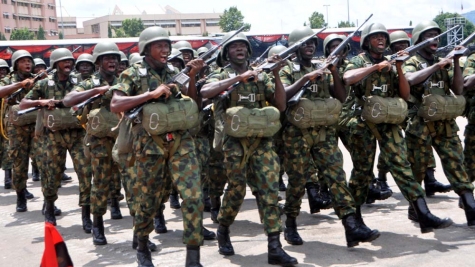
The Nigerian Army’s 32 Artillery Brigade said on Tuesday that it had begun a field training exercise in Ondo State to address any security concerns.


The “Exercise Crocodile Smile IV” training was also part of the Nigerian Army’s response to security concerns and civil disobedience in the state, Major Victor Olukoya, Assistant Director of Army Public Relations, said in a statement.


The drill, according to Olukoya, was also in line with the army’s constitutional mandate of assisting civil authorities.


He stated that the exercise, which began on November 8 and will end on December 23, 2019, would be completed.


He said, “The exercise will be conducted in conjunction with other security agencies to further sustain the existing synergy between the Nigerian Army and other sister agencies in the state.


“This is a military exercise aimed at curbing various security threats such as kidnapping, armed robbery, cultism, pipeline vandalism, hooliganism, and banditry.


“The exercise which is people-oriented shall be conducted in line with the Nigerian Army rules of engagement and code of conduct, guiding exercises of this nature.”

Restraining the illegal circulation of firearms in Nigeria

By Mukhtar Ya’u Madobi

The proliferation of Small Arms and Light Weapons (SALWs), occasioned by illegal and porous national borders and a booming business of gun-running, are the main factors fuelling Nigeria’s security challenges, giving rise to criminal activities across the country.

The proliferation of SALWs is a global phenomenon arising from global conflicts. According to a study conducted by the Geneva-based Small Arms Survey (SBM), it is estimated that more than 857 million SALWs are currently in circulation aside from twelve billion rounds of ammunition produced annually. An estimated ten million SALWs are in Africa, with one million in Nigeria.

This is connected with previous and ongoing conflicts in West and North African countries such as Liberia, Sierra Leone, Cote d’Ivoire, Chad, Niger, Mali and Libya. The proliferation of SALWs aid non-state actors, including Boko Haram/ISWAP terrorists, bandits, militants etc., while undermining the state monopoly of instruments of coercion. The threats posed by the proliferation of SALWs are of such magnitude that a security strategy that contemplates monitoring their flow and use is required.

Another report by SBM Intelligence noted that about 6145000 SALWs are illegally circulating among civilian non-state actors and criminals in Nigeria. Meanwhile, the country’s security institutions have a paltry 586600 firearms in their possession.  Indeed, the proliferation of arms across borders along with human trafficking and drug trafficking, especially in the Sahel region, ranks high on the chart of criminal activities constituting threats to national and regional stability in Africa.

Experts had identified a lack of effective legislation and enforcement mechanisms as a major reason SALW proliferation has a significant impact on crises both within and across many national borders.

To stem the rising tide of illegal weapons circulation, the federal government has established the National Centre for the Control of the Small Arms and Light Weapons (NCCSALW). The centre is under the Office of the National Security Adviser (ONSA), Major General Babagana Monguno, with retired Major General AM Dikko as the Pioneer Coordinator. The National Security Adviser said the centre would operate similarly to the counter-terrorism and cybersecurity centres, both under his office.

The NCCSALW was established to replace the defunct Presidential Committee on Small Arms and Light Weapons and is expected to serve as the institutional mechanism for policy guidance, research, and monitoring of all aspects of SALWs in Nigeria. Apparently, the federal government believes that the transition from PRESCOM to NCCSALW would provide more effective coordination and monitoring of progress regarding the proliferation of small arms and light weapons. When fully operational, the NCCSALW would have six regional offices that will work closely with security and intelligence agencies to prevent and control proliferated arms and track weapons in the hands of non-state actors.

Among several functions, the National Centre will be responsible for controlling the proliferation of SALWs in Nigeria, implementing strategies, plans, and policies for eradicating SALWs, and supervising the implementation of same by relevant government bodies. It will also create and maintain small arms and light weapons register and a national database, receive reports on firearms registration from the Nigeria Police, and update the database with such information.

In addition, it will also register, store and destroy firearms and ammunition possessed illegally by security agencies, criminals and other non-state actors, maintain a database of registered firearms dealers in Nigeria, among others. Furthermore, the centre will be responsible for updating and transmitting the national database to the United Nations (UN), the African Union (AU) and the Economic Community of West African States (ECOWAS).

In its relations with these inter-governmental bodies, the National Centre will identify legitimate national defence and security needs and obtain the required exemptions from specific international protocols to meet these needs. The National Centre is also empowered to carry out public education and awareness at national, state and local levels, to involve Nigerians in the efforts to control the proliferation of small arms and light weapons.

No doubt, the establishment of the NCCSALW is a move in the right direction. Still, to achieve maximum impact, it is expected to open up new regional and international cooperation and strengthen existing efforts.

In 2001, UN countries adopted the Programme of Action to Prevent, Combat and Eradicate the Illicit Trade in Small Arms and Light Weapons in All Its Aspects.

In the instrument, member states agreed to, among others, improve national small arms regulations, strengthen stockpile management, ensure that weapons are properly and reliably marked, improve cooperation in weapons tracing and engage in regional and international cooperation and assistance.

According to the UN, one of the most critical components in the fight against SALWs proliferation is weapons tracing. Hopefully, when the centre discharges its mandate fully, it will undoubtedly lead to a drastic reduction in national, sub-regional and regional illegal possession of SALWs, which will be crucial in mitigating the rising level of armed violence.

The NSA has recently declared that the government is preparing to constitute a security outfit responsible for safeguarding the nation’s porous borders. The move is very apt because it will curb transnational organized crimes, thereby reducing the level of security challenges currently facing the country.

Mukhtar wrote from Kano via ymukhtar944@gmail.com.