The marital union between a 64-year-old man, Amos Akinlolu, and his wife has been dissolved by an Ibadan customary court.
This is coming after Mr Amos had threatened to commit suicide if the marriage was not brought to an end because, according to him, his wife was an “unrepentant adulterer.”
“My lord, peace is now a thing of the past in my family since Funmilayo started making herself a public tap where all men fetch water.
“I can no longer bear living under the same roof with an adulterous wife because she poses a threat to me,” Mr Amos was quoted as saying.
His wife, Funmilayo, however, described her husband’s claim as unsubstantiated.
She told the court that “Akinlolu has never caught any man in bed with me.”
Kano politics is unique, unmatched and unparalleled in all its ramifications. The uniqueness begins from its genres of political communication. The encapsulation of comedy, funny utterances and other rhetorics in the body politic define Kano politics since the First Republic. One can authoritatively posit that the Kano political propaganda through name-calling and other techniques cannot be found anywhere in the world.
The other philosophy and unequalled precept that distinguish its politics is radicalism and politics of ideology. It is the home of Malam Aminu Kano, the renowned masses emancipator and the leader of Nigeria’s democracy of doctrine and dogmas. The ideology taught by the past generation of Kano politicians is always passed from generation to generation. This will explain why, no matter the circumstances, our governors must work harder than other governors of Nigeria to win the electorate’s support. Every governor is struggling to wipe the history of their predecessor in projects executions even when the politics of corruption and deception take centre stage nationwide. Many didn’t know this secret of Kano distinct way of politics. It is our talisman.
However, you can’t superimpose a candidate in Kano politics no matter who you think can control and influence public opinions. There are easy swings in loyalty; therefore, it is the electorate that decides their fate. The maxim of collecting any candidate’s money and vote your choice on election days is attributed to Malam Aminu Kano. It is still very relevant in Kano politics.
Looking at the two camps of Kano political heavyweights today will be an interesting analysis. APC, as a ruling party, is a powerful force to reckon with. It has encompassed renowned politicians like Malam Ibrahim Shekarau, Senator Kabiru Gaya and what have you. The party has become an escaping ground of many seasoned politicians who cannot stand Engr. Rabiu Kwankwaso’s kind of power grip in the PDP.
Although these sets of politicians are not relevant to the APC’s camp, they’re not happy with the way, and manner Governor Abdullahi Ganduje’s government is run, especially the land matters and prioritization of projects that only serve the interest of the governor to earn his mighty 10 per cent. Let alone how the APC chairman and his cronies run the party as if they’re military dictators. There is nothing like internal democracy. And the chairman’s utterances have become a source of worry and grief to those party followers who want to see the sustenance of the party’s success come 2023.
Now that the struggle for 2023 has started and the politicians have already beat the drum, APC faces a threat and an uphill task on who will take after Ganduje. One can easily fathom and decipher from the hottest exchange of politicians how tough the politics will be.
So far, the top contenders are the deputy governor, Nasiru Gawuna, who remains mute, and the commissioner for local government affairs, who’s considered to be Ganduje, and his wife’s anointed son, who is doing all the talks for the deputy governor. The seconder is Kano North senator and chairman senate committee of appropriations, Barau I. Jibril.
However, the recent outburst by Dr Hafsa Ganduje alias Goggo, the governor’s wife, who let the cat out of the bag, bluntly showed the governor’s support. So it lies with the deputy governor’s camp even though the commissioner of the information spun her statements where he said: she wasn’t understood, her utterances were twisted. The other contenders are AA Zaura and Barrister Inuwa Waya.
It seems the governor is caught between the devil and the deep blue sea. It is an undeniable fact that Senator Barau is the man of the moment. His political machinery is increasingly gathering momentum, and he’s believed to be the man who can challenge PDP Kwankwasiyya political movement in popularity and funds wise. But the governor seems not to be with him. And Gawuna has no political and economic wherewithal to fight for the Kano seat. Nobody will argue this. So, if the governor mistakes the gubernatorial candidate, it is at his own risk, for his sworn enemies may likely grip on to power, and he knows the consequences.
However, the meeting of Shekarau, Gaya, Barau and some reps like Shaaban Sharada and Abdulkadir Jobe says a lot. They all felt that they were relegated and marginalized to mere party members during the recently conducted local government party executives positions elections and the upcoming Saturday state executive party positions contest. It is a clear pointer that the party is facing severe intraparty wranglings. And such tussles can quickly become an undertaker of the ruling party.
As the opposition party, PDP is facing its kind of internal disputes between the Kwankwasiyya political movement and the Aminu Wali’s camp, former minister of foreign affairs, one of the remaining PDP founding fathers and member of the PDP board of trustees. There have intense struggles with who will control the party at the state level. Wali’s camp is accusing Kwankwaso of total domination of the party and blaming him of anti-party activity during the 2019 general elections when Atiku Abubakar contested for presidency. On the other hand, Kwankwasiyya is equally boasting their number of supporters, the popularity of their grand leader, Rabiu Kwankwaso, the former Kano state governor.
As things keep on twisting by day, we wait to see how far the gum will be shot into the air.
Salisu Uba Kofar-Wambai wrote from Kano. He can be contacted via salisunews@gmail.com.
The debate that the presidency moves to the South in 2023 has gained momentum. Also, presidential hopefuls from the North, like Atiku Abukar, Sule Lamido, Senator Bala Mohammed, Senator Rabiu Musa Kwankwaso, are also effectively playing their games.
The calls for power to shift to the South have further triggered permutations and realignments in the polity. Both the Peoples Democratic Party (PDP) and the All Progressive Congress (APC) have strong candidates from the South. But these candidates have their respective baggage, and the parties have internal squabbles that must be resolved.
The APC has its stronghold in the Northwest, Southwest, Northeast and Northcentral – four of the nation’s six geopolitical zones. The PDP has strong structures in the six zones with a stronghold in the Southeast and Southsouth. However, the APC has moved into the Southeast in full force. Before the 2015 elections, nobody had ever thought that the APC would someday have even a ward councillor in the Southeast. But, today, the party has two state governors, senators, House of Representatives members, state house of assembly members, local council chairmen, councillors and formidable party structures in all the five southeastern states.
Come 2023, the APC has no reasons to retain power in the North, but there is strong politicking by some governors and other bigwigs to maintain power. This will mean the APC contravening the unwritten agreement between the North and the South on power rotation. In any case, the APC does not have a strong presidential candidate from the North. This is a big plus to the presidential hopefuls from the South, or Southeast, in particular. Furthermore, the Southeast has a strong case to present based on a plank that the Southeast is the only geopolitical zone in the South that has not produced a President or vice president on any political party platform since 1999.
If APC picks its presidential candidate from the South, especially Southwest, the PDP may attempt to outwit this by looking to the North for its presidential candidate. This, as well, will put the PDP in a catch-22 situation on how to explain this to the South, especially the Southeast and the South-South, why the North again, after eight years of the North being in power.
PDP has good candidates in their own ‘rights’ from the Southeast and South-South. Enugu State Governor Ifeanyi Ugwuanyi, Peter Obi from Southeast and Governor Nyesom Wike from the South-South. Obi does not have friends in the North and has never tried to pull an appeal from the region, directly or by proxy. His deportation of other Nigerians to their states when he was governor of Anambra state was used against him in the North during the 2019 campaign, and it worked.
For Wike, his words, ‘Rivers is a Christian state’ will be used against him in the North like Governor El-Rufai’s Muslim-Muslim ticket in Kaduna can be used against him (El-Rufai). This is how local politics impact a candidate’s wider political opportunities. Some young people in the north are also campaigning for Enugu State Governor Ifeanyi Ugwuanyi. Still, the IPOB issue will be a significant hindrance in the North, but it is not insurmountable. Advocates of secession appear not to understand Nigeria. There are massive inter-marriage, friendships, business links and political alliances, among other ties, between many northerners and many Igbos.
Some nationalistic politicians from the Southeast have started to convince other Nigerians to support the region to produce the Nigeria president of Southeast extraction in 2023. The bigwigs’ forefront presidential hopefuls are Governor David Umahi, Orji Uzor Kalu, Governor Ifeanyi Ugwuanyi, Rochas Okorocha, Chris Baywood Ibe, Ken Nnamani, Minister of State for Education, Dr Chinedu Nwajiuba, Sen Osita Izunaso and many others. Of course, these politicians have their political baggage and controversies. However, people like Chris Baywood Ibe are new faces without any political baggage and controversy-free.
A thorough understanding of how Nigerian politics works is paramount in achieving the political goals of a group, a region, or individuals. There are so many conflicting interests in Nigeria. Still, there are always windows for alliances, give-and-take, a hand of friendship, and convincing others to support a particular political cause or an individual’s.
For the 2023 presidency, the Southeast should present a candidate with a new face, no controversies, no political baggage and who has friends and is well-known across the Niger. For both the APC and the PDP, it will be an opportunity to reunite Nigeria and rekindle the historical political alliance between the north and the southeast while maintaining the partys’ current national. The Igbo presidency is possible through the spirit of one Nigeria.
Zayyad I. Muhammad writes from Abuja. He can be reached via zaymohd@yahoo.com.
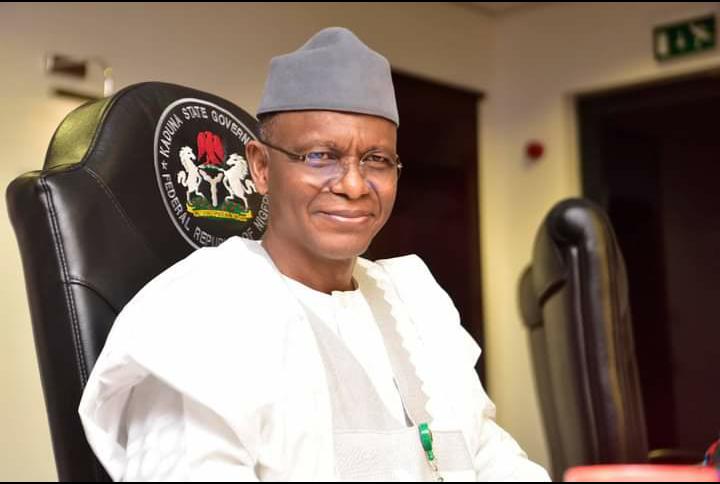
Governor Nasir El-Rufai of Kaduna State has unveiled a draft budget of 233 billion for the 2022 fiscal year that reflects the government’s commitment to sustainable growth, promoting equal opportunity, accelerate human capital development, and attain fiscal viability.
The governor noted that “when approved, is projected to have the capital to recurrent ratio of 63%:37%. The 2022 estimates are slightly smaller than the proposed 2021 budget estimates of N237.52bn, of which N157.56bn was capital and N79.96bn recurrent expenditure, a 66% to 34% capital to recurrent ratio,” he said.
Reports coming from Kaduna State in north-western Nigeria have indicated that, due to hunger, bandits now collect cooked food as a ransom for kidnapped victims instead of money.
“It has been reported that bandits operating in the Birnin Gwari Local Government Area of Kaduna State are demanding cooked food as a ransom for kidnapped victims,” Punch Newspapers tweeted.
This is coming after an order banning some commercial activities in the state was imposed in order to curb the activities of the bandits.
A youth leader from Birnin Gwari communities confirmed to Daily Trust that they had seen changes since after the imposition of the state government’s order.
He said, “There is relative peace around Damari, Kuyello, and Kutemashi because the bandits have stopped attacking our communities. They usually stay in the forest and seize food items mostly cooked ones from vendors.”
The violent activities of bandits in Kaduna State had been so rampant despite authorities’ repeated vow to curb the menace.
Kaduna State Governor, Mallam Nasir Ahmad El-Rufa’i, on Thursday carried out a major cabinet reshuffle in the state executive council.
A statement issued by the Special Adviser to the Governor on Media and Communication, Mr. Muyiwa Adekeye, said that “the reshuffle is designed to help harness fresh energy for the government’s final lap, bring new insights and enable the commissioners to have more rounded experience of the government.”
The affected ministries include Environment, Public Works and Infrastructure, Education, Agriculture, Local Government, Budget and Planning, Business, Innovation & Technology, and Sports Development.
The Governor, according to Mr. Adekeye, added that “following the passage of the law creating metropolitan authorities to manage Kaduna, Kafanchan and Zaria as organic cities, Governor El-Rufai has nominated the following cabinet-rank administrators: Balaraba Aliyu-Inuwa Administrator, Zaria Metropolitan Authority, Muhammad Hafiz Bayero Administrator, Kaduna Capital Territory and Phoebe Sukai Yayi Administrator, Kafanchan Municipal Authority”.
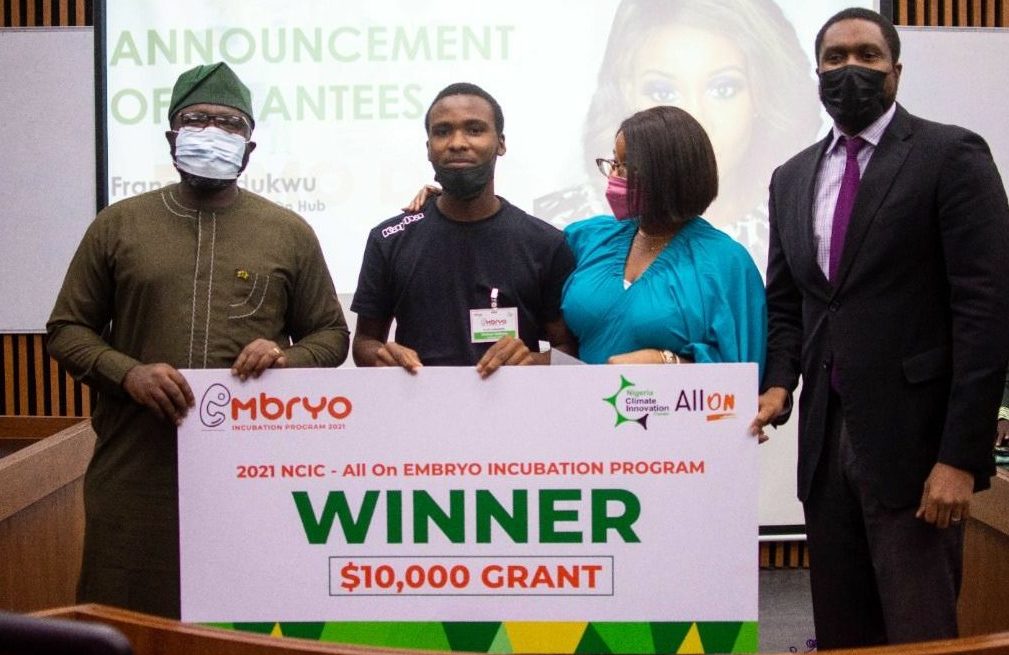
In February 2021, Juliet Ehimuan, the Director of Google West Africa discovered Usman Dalhatu, a university student and the CEO of Dalsman Tech who had developed an innovative solar-powered maishayi kiosk.
After a successful application, Usman Dalhatu was accepted into the All On and The Rockefeller Foundation funded Nigeria Climate Innovation Center’s 2021 off grid energy incubation programme.
During the Nigeria Climate Innovation Center pitch session for the twenty finalists in the 2021 cohort earlier this week, Dalsman Tech was selected as one of the eight winners of the $10,000 start-up grant. The funds will be used to scale up the production of the solar-powered kiosks for distribution to kiosk franchise owners in Kaduna, Kano, FCT, and Abuja.
This brilliant innovation is highly scalable and can lead to a much cleaner energy source for tens of thousands of maishayi stands across Nigeria.
This is one of many examples of clean energy innovations developed by young Nigerian entrepreneurs that will help drive the country’s energy transition from within.
“The most dangerous untruths are truths moderately distorted”. – George Lichtenberg
It is not uncommon that some public commentators and analysts could be mischievously deceptive in their narratives and analyses of history to accomplish an end. They could quote historical facts, mix them with fiction, and frame narratives to promote a single story. In some cases, they deliberately relegate and ignore some significant events or points to suit the writer’s bias. Recent writings on the origin and rise of Boko Haram demonstrate how some writers distort facts to frame narrative and promote bigotry.
For instance, if one can closely study the framing of Boko Haram and how it is brazenly becoming one-sided, then one can say that the whole history is rewritten to massage and satisfy the ego of some group’s bigotry. It is not farfetched to say that some of these bigots will soon claim that the generality of the Muslim North endorsed and supported Boko Haram and Nigerian Christians were the only targets and victims of the group’s deadly attacks. Why would I make such a sweeping projection with every sense of finality? To respond to this question, let’s go back to 2013.
While speaking at the 14th meeting of the Honorary International Investor Council (HIIC) held at the Banquet Hall of the Presidential Villa on June 22, 2013, former Nigeria’s President, Goodluck Jonathan, a Christian, disclosed that the Boko Haram sect had killed more Muslims than Christians in Nigeria. This is not just hearsay but a verifiable fact that is naked in vision to people that are not be-clothed with hatred, ethnic and religious jingoism.
However, the Christian Association of Nigeria (CAN) couldn’t swallow this fact and, therefore, issued a statement to disagree with him vehemently. In a press statement credited to the Northern chapter spokesperson, Elder Sunday Oibe, CAN said that Jonathan’s assertion was “misleading and unacceptable”. They further stated that,
“We want to believe that the president was misquoted; we don’t want to believe that with the security apparatus and report from security intelligence network at his disposal, he made this assertion. If it is true that Mr President actually made this assertion, then, we are highly disappointed and sad at this veiled attempt to distort the fact as it concerns the activities of the Boko Haram sect. The purported statement by the President is highly disappointing considering the facts that Christians, churches and their businesses have been the major targets of Boko Haram” (Sahara Reporters, June 23, 2013. http://saharareporters.com/2013/06/23/northern-can-disagrees-jonathan-says-boko-haram-has-killed-more-christians-muslims)
For CAN, the Boko Haram crisis was/is “religious by nature” – the familiar we-versus-them religious clashes and conflicts in Nigeria, although in different outlooks and techniques; it is a plot by some Muslims to reduce the populations of Christians in Nigeria and crackdown their businesses. Since then, CAN sympathisers subsequently frame their narrative of Boko Haram from this angle. An article titled “Cornflakes for Jihad: The Boko Haram Origin Story” by David Hundeyin, widely shared on social media in the last few days, aimed to promote this kind of narrative. Unfortunately, the author skillfully filled the article with half-truths and a mixture of facts and fiction to push the CAN’s sentiment. Hundeyin is practically siding with his former religion.
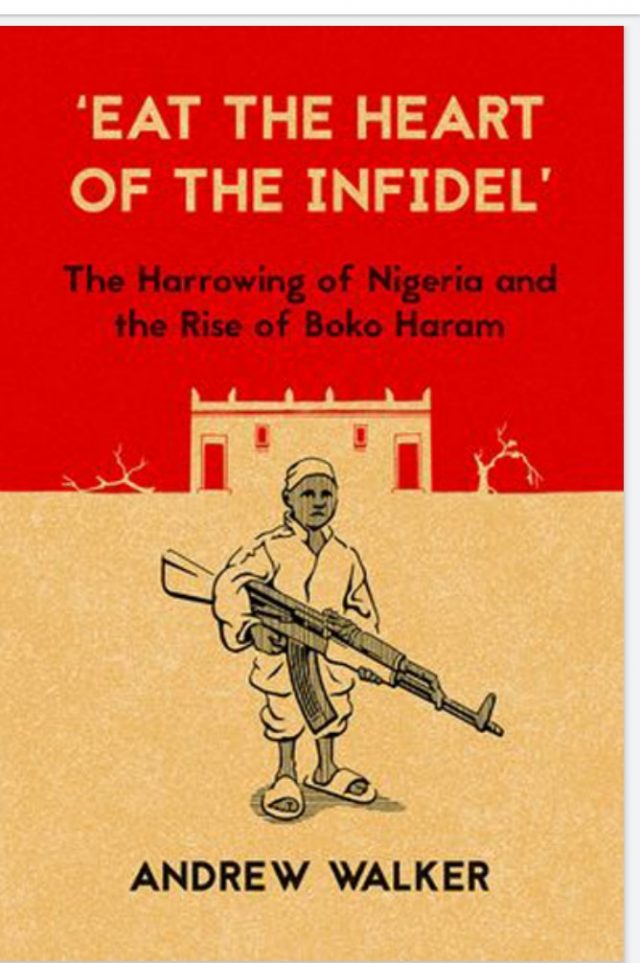
Firstly, Hundeyin makes an effort to link Sheikh Abubakar Mahmoud Gumi with the origin of Boko Haram. Many people think that Hundeyin’s “Cornflakes for Jihad” is the first futile effort by an “investigative” journalist, analyst, historian or whatever to make this manipulative effort. However, Andrew Walker’s thesis, “Eat the Heart of the Infidels: The Harrowing of Nigeria and the Rise of Boko Haram” (Oxford University Press, 2016), preceded it in that exercise. Therefore, it is not likely to be a false accusation if it is argued that Hundeyin copied the idea of featuring Gumi in discussing Boko Haram, almost verbatim, from Walker. From the arguments of Sheikh Gumi’s “influence” in the “political” realm of Nigeria to his “friendship with Ahmadu Bello”, to pioneering the “propagation of Wahabism” in post-independent Nigeria, to his contribution in the creation of Izala and his “Saudi connection” are equally and loudly echoed in Walker’s thesis.
For both Walker and Hundeyin, Sheikh Abubakar Mahmoud Gumi championed the Sunni/Salafi/Izala movement in Nigeria. Therefore, any account of the origin and rise of Boko Haram – a so-called Sunni/Salafi-fundamentalist terrorist group – must be traced back to him. Albeit impliedly, their submissions suggest that there would be no Boko Haram if Gumi did not “disrupt” the Sufi order and influence of Qadiriyya and Tijjaniya in Northern Nigeria. They claim that Gumi’s campaign of a corrupt-free practice of Islam inevitably gave birth to the radical movements in Northern Nigeria. This is to say, although without explicitly stating it in their works, every Sunni/Salafi-based movement in Nigeria, whether moderate or violent, must have had their inspirational source from Gumi. On the link between Boko Haram founder, Muhammed Yusuf, and Sheikh Gumi, Walker writes: “The title of Yusuf’s book deliberately echoes the titles of similar treatises by Sunni preachers, like Sheikh Gumi’s “The Right Faith According to the Sharia”, perhaps in order to lend his ideas credence…the two clerics share a revulsion for secularism..” (Walker, 2016:144).
This line of argument is even less faulty in logic and spirit of “balanced story” than what Hundeyin further orchestrated in his article. According to Hundeyin, Sheikh Gumi admonished Muslims, particularly his Sunni/Salafi followers, to reject a non-Muslim as a leader and advocated “for insurrection against a Christian Nigerian President” and, of course, his Christian followers. In the successive paragraphs that supported this claim, Hundeyin apprises his readers on the “consequence” of Gumi’s propagation; he states that after Gumi’s death, a Sunni/Salafi-indoctrinated group, which bears the name “Boko Haram”, toed to the path of his admonishment to carry weapons against Nigerian Christians, killing and bombing them in their churches. He wittingly makes reference to the bomb blast at “St. Theresa Catholic Church”, Madalla that “killed 37 people”, and other subsequent “killings of Christians” in Jos and Damaturu.
The implication of this narrative on an outsider, who does not know the context of Boko Haram terrorism in Nigeria, is that s/he would begin to see Sheikh Gumi as “problematic” and a source of Boko Haram’s inspiration and violent extremism. Secondly, a non-pragmatic reader may also assume that the group only targets Nigerian Christians in their series of attacks in the country. Hundeyin’s article aims to peddle that twisted narrative for no reason other than the writer’s hatred for the Muslim North (Arewa) and their Islamic culture. In one of his previous tweets, he heedlessly says that: “The world will be a significantly better place when Arewa culture completely dies off and is replaced with something fit for human civilisation” (David Hundeyin/Twitter, November 29, 2020).
In the spirit of fair analysis, it is expected that an impartial analyst would compare the socio-religious ideas Gumi propagated in his lifetime and the ideologies of Boko Haram. But this would not sell out Hundeyin’s bigotry, and so he ignored that vital aspect. The core centre of Boko Haram dogmatic tenets is a war against “western-styled” education, democracy and civil service. On the other hand, Sheikh Gumi was both a product and proponent of western-styled education; he worked with the government as a civil servant and received salaries from the state resources. As he proudly opined in his autobiography, “among [his] children were army officers, civil servants, medical doctors, an engineer…lawyers, teachers and workers in finance houses and private businesses. There was hardly any profession in which [he] did not have representation from [his] family” (Gumi with Tsiga, 1991:202).
Gumi was also pro-democrat, as evidence from his recorded preaching suggested so. He is famously quoted to have said, “siyasa tafi sallah”, which could loosely mean “politics is more significant than prayers”. This was the extent Gumi had gone to support democracy in Nigeria, and believe me, Shekau would not hesitate to call him “taghut” – an idolatrous tyrant. He had also worked closely with the Christian Head of States. They had a cordial relationship and respect for each other: Ironsi invited him to lead a delegation to North Africa and the Middle East to carry goodwill messages of his new regime; Gowon appointed him Chairman of the Nigerian Pilgrims Board and gave him “all the necessary support, although he himself was a Christian”; with Obasanjo, he could “freely talk” and express his mind on relevant socio-political issues (Gumi with Tsiga, 1991:203). However, Hundeyin willfully refuses to draw this analogy to give a sense of what Achebe called “a balanced story”. Instead, he purposely portrays Sheikh Gumi on the wrong page in the book of terrorist origin in Nigeria.
Contrary to the insinuation of Hundeyin moreover, the truth of the story is that Boko Haram did/do not target Christians only. In fact. Nigerian Muslims suffer(ed) more causalities than Christians in the Boko Haram conflict. Hundeyin refuses to mention the main enclaves of Boko Haram activities and the population ratio of Muslims and Christians there. Stating this factual data will indeed not favour his intended, warped story. The reality is that Muslims have the predominant population in Borno, Yobe and Adamawa States. Arguably, the cumulative of all Boko Haram killings of innocent people would show nothing less than 70% of Muslim casualties.
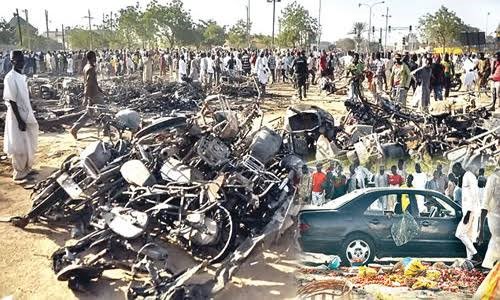
On a specific, direct attack on religions, Hundeyin only mentions the bomb blast at St. Theresa Catholic Church, ignoring similar incidents on August 11, 2013, at a mosque in Konduga where 44 people were killed and on November 28, 2014, at the central mosque in Kano where 120 people were killed (BBC Hausa, 2013, 2014). It is understandable if Hundeyin re-echoes the bomb blast at St. Theresa Catholic Church in his article; it is a show of solidarity to his ex-religion. However, what is faulty and even worrisome is the selective exemplification of the direct attacks on religions by the Boko Haram insurgents. A reader who is unacquainted with the details of Boko Haram attacks on places of public worship would feel that churches and Christians were the only victims.
Scenes from Kano Central Mosque Bomb Blast. Source: The Eagle Online
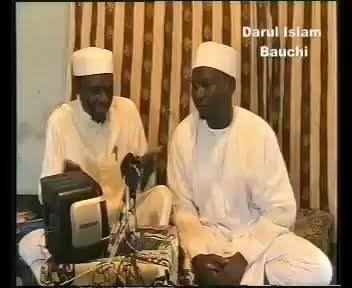
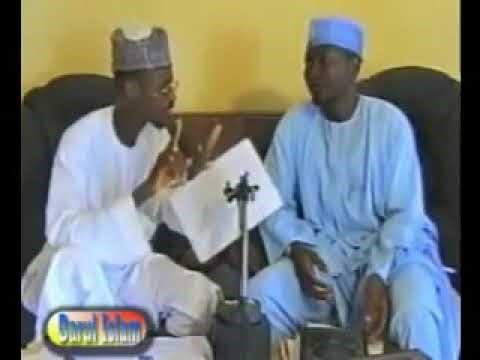
To further promote this half-truth, Hundeyin moves on to tell us how a Salafi/Sunni preacher was directly linked with the funding of Boko Haram. I will neither attempt to exonerate Sheikh Yakubu Musa nor believe those serious allegations in toto without reading or hearing the Sheikh’s version of the story. However, my problem here is with Hundeyin’s failure, which is intentional, to mention the Salafi/Sunni preachers that fought Boko Haram vehemently and even paid the ultimate price with their lives. It is on record that at the early stage of the Boko Haram crusade, Salafi scholars debated Mohammed Yusuf. In Bauchi, for instance, Ustaz Idris Abdulaziz Dutsen-Tanshi, a Salafist to the core, invited and challenged Muhammed Yusuf at his mosque and in the presence of his followers; so also a young Isa Ali Pantami – the then Imam of ATBU Juma’at mosque.
Imam Idris Abdulaziz debating Muhammed YusufImam Isa Ali Pantami Debating Muhammed Yusuf
These Salafists continued to be critical of Muhammed Yusuf and his sect. They consistently delivered lectures to denounce his fatwa. Sheikh Ja’afar Mahmoud Adam, an unapologetic Salafist, was particularly vocal in his public censure and condemnation of Boko Haram. Unlike Hundeyin, Walker states this fact in his book:
“In 2007, Yusuf ’s former teacher, Sheikh Ja’afar Mahmud Adam, himself an ardent Salafist, had gone on record to denounce the group and warn that these ideologues were heading for a violent confrontation with the state” (Walker, 2016:148).
For many, Sheikh Ja’afar was the spiritual successor of Sheikh Abubakar Mahmoud Gumi. Some influential people requested and later attempted to transfer his annual Ramadan Tafseer to Gumi’s preaching base, Sultan Bello Mosque, Kaduna. He conducted his annual Ramadan Tafseer in Maiduguri, the early and central territory of Boko Haram terrorism. During his Tafseer sessions, Sheikh Ja’afar was not reluctant to criticise Yusuf and his new sect. On April 13, 2007, a day to general elections in Nigeria, and barely 48 hours after delivering a talk in Bauchi on Islamic views on thuggery, violence and widespread killing of innocent souls, Sheikh Ja’afar was murdered in Kano while observing Subh prayer and “it is thought to be members of Yusuf’s sect” (Walker, 2016:148).
Another prominent voice among Salafists in the fight against Boko Haram was Sheikh Muhammad Auwal Albani, Zaria. But, unfortunately, he was also killed in cold blood. In a video released to the public, Muhammed Yusuf successor, Abubakar Shekau, took responsibility for the assassination (Sahara Reporters, February 20, 2014, http://saharareporters.com/2014/02/20/bo-haram-leader-claims-responsibity-killing-kaduna-cleric-sheikh-albani-threatens).
Hundeyin has ignored all these facts about Salafi preachers in Northern Nigeria but brought a single dubious claim to frame a narrative that would deceive an uncritical, vulnerable audience. His motive is clear: he wants to rebrand the entire population of Salaaf and the Muslim North as pro-terrorist, supporting the killings of Christians in Nigeria. It is rather unfortunate that this is where the discussion is heading, and it is a wake-up call to those of us that witnessed and had a first-hand experience of the Boko Haram crisis to begin to write our counter-narrative. If we don’t write it, others will write for us. And before we retrieve our consciousness, we will be afloat in a sea of half-truths and stereotypes on Boko Haram, Islam and the North.
Aminu Nuru wrote from Bauchi. He can be contacted via aminuahmednuru@gmail.com.
It has been reported that the officers of the Economic and Financial Crimes Commission (EFCC) have stormed the headquarters of Kaduna State Urban Planning Development Agency (KASUPDA) and whisked away the Director-General, Malam Ismail Umaru Dikko.
KASUPDA has for long earned the reputation as the most feared agency in Kaduna from the records of its properties demolition across the state.
Dikko, KASUPDA boss, was a Special Assistant to Governor Nasir El-Rufai, before becoming the agency’s head in 2019.
The DG was reported to be in a meeting with his staff when officials of the EFCC took over the office premises a few minutes after 10 am.
Some eyewitnesses said there was a commotion during the arrest.
Some sources say that two EFCC officials in suits, with two police officers holding rifles, accompanied the KASUPDA boss into the EFCC, black Hilux Toyota vehicle.
The DG has been taken to the Kaduna zonal office of the EFCC.
It has been more than a couple of months since the leader of the Islamic Movement in Nigeria (IMN), Sheikh Ibraheem Zakzaky (H) and his wife, Malama Zeenah, were acquitted and discharged of all charges filed against them, after spending almost six years in illegal detention.
The couple who were arrested in December 2015 had been languishing in the custody of the State Security Service before later being transferred to Kaduna Correctional facility in early December 2019, with inadequately treated life-threatening gunshot injuries and numerous health complications.
It could be recalled that in July 2019, the couple had to be granted bail to urgently travel to India to attend to their failing health that kept deteriorating as days went by, an effort which was, unfortunately, deliberately frustrated by security agents which resulted in the couple prematurely aborting the trip without receiving medical attention.
Now that the couple is acquitted of all charges filed against them by the Kaduna State government, justice demands that they be allowed to attend to their health wherever they choose to go, without undue frustrations whatsoever. But on the contrary, since their aborted medical trip, the couple’s passport and other documents that will allow them to travel are reportedly withheld by agents of the State Security Services and are nowhere to be found.
In an exclusive interview with Press TV on 29th September, the Sheikh pointed out that an attempt to procure new ones proved abortive as the couple were told ‘passport flagging order’ was placed on them, meaning they could not leave the country, for no reason.
It is public knowledge that Nigeria’s health care is criminally under-equipped, debilitated, with an inadequate workforce. As a result, after carefully reviewing the couple’s health condition, many doctors have advised that they best be treated outside the country where health care facilities will be available.
The deterioration in the couple’s health condition is so glaring as the Sheikh could be seen limping and his wife confined to a wheelchair as they exited the court premises last couple of months. This is due to a lack of access to proper medical attention in their years in illegal detention.
The Sheikh and his wife have suffered enough already: six of their children were extrajudicially killed in the pace of fewer than two years, over a thousand of his followers were killed and buried in mass graves and hundreds of others killed while peacefully protesting against his illegal detention. Therefore not allowing them to travel at the moment is tantamount to rubbing salt in their wounds.
Injustice to one is an injustice to all. And, for peace to reign, clergymen, well-meaning individuals, and all people of conscience should please urge the government to allow the ailing Sheikh (H) and his wife attend to their health, especially as the Sheikh has in the face of unnecessary provocations, demonstrated an immeasurably disagreeable height of self-restraint and peacefulness.
The Sheikh and his wife are now free; they have not committed any crime as the Kaduna State High court ruled. Therefore, the right to be allowed to attend to their health outside the country is inalienable as enshrined in the constitution; it is a flagrant violation of their fundamental rights as citizens of the country.
If anything, the government should, for the good of the nation, try to maintain the fresh breath of air in the streets of Abuja and other cities considering the existential security crisis ravaging the country; it’s therefore unwise of the government to create yet another. One thing is sure: if Sheikh Zakzaky (H) is not allowed to attend to his health, those streets will soon be littered with the Sheikh’s unrelenting, indefatigable followers.
Najeeb Maigatari wrote from Jigawa State and can be reached via maigatari313@gmail.com.