Month: October 2021

TETFund should abolish foreign scholarships

By Abdelghaffar Abdelmalik Amoka

The presence of ETF and later TETFund became more visible after the suspension of the 2009 ASUU strike in October 2009, thanks to the ASUU strike. You enter the campus of some universities, especially the state government-owned universities and it appears as if TETFund is the only funder of the infrastructures in the universities. No wonder Professor Mahmood Yakubu’s NEEDS Assessment committee referred to them as “TETFund universities”.

The intervention from TETFund did not end on infrastructures and other physical projects but also on training. Quite a number of University academic staff obtained their PhD abroad, thanks to the TETFund Academic Staff Training and Development Intervention and ASUU. That ASUU’s achievement has increased the number of quality PhDs across the departments in our universities. About 6 colleagues in my department are beneficiaries of the TETFund PhD grant.

It did not stop at that. TETFund has also established research grants. The TETFund Institutional Based Research (IBR) grant for basic research and the TETFund National Research Fund for developmental research.

When TETFund announced the call for the 2016 National Research Fund (NRF) grant proposal submission, I got it forwarded to me by several people that knew I was passionately looking for research grants to set up my lab since my return from Europe to ABU in September 2015. I was excited with the call for proposals and I prepared my proposal and submitted it with others. It was well coordinated by the university, thanks to the efforts of Prof. Husseina Makun and the Directorate of Academic Planning and Monitoring of my university.

Not long after then, there was a change in the leadership of the agency and I never get to hear anything about that submission to date. My guess was that the usual Nigerian factor may have played a role and you possibly need to know somebody that knows another body that knows someone that can help facilitate it.

The call for the submission of a “concept note” for the 2019 NRF grant after your return did not excite me. I was informed by several people but I ignored it. I was like this is a repeat of what I called the “2016 call for grant proposal scam”. But few days to the expiration of the call, I decided to make a submission, after all the application doesn’t cost anything. It will only cost my time and effort. I was actually not expecting a response like it happened in 2016, but a few weeks later, you “shocked” me as I received an email requesting to submit the full proposal. I did, and a few weeks later I got an invitation to Abuja to defend the proposal. In January 2020, the grant award letter was issued.

That was the first very transparent exercise I have participated in in Nigeria in recent times. No personal contact. All correspondence was through email and you don’t have to wet anybody’s palm. Unbelievable! That exercise gave me a renewed hope that with responsible leadership, we can make every unit work as it should and the sum will make Nigeria work. Sir, you renewed my hope that Nigeria is going to work and we can regain the lost glory in academia.

TETFund is making a lot of impact in public universities even though some universities may not get the true value of the allocated funds due to several reasons including the possible manipulation of the procurement process. TETFund is also doing a lot to build research capacity in our universities and over the last 10 years, the number of quality PhDs has increased. But my worry is that these researchers may end up being more frustrated if they get back without the necessary research facilities and incentives to give back to the system.

The TETFund PhD training scheme is a train-the-trainers program but there seems to be no preparation to utilize the knowledge acquired by these scholars on their return. We seem to be just training without any provision for their return. The scholars were sent for training as researchers but returned to meet little or no improvement on research facilities. So, how do we intend to utilize these well-trained scholars that have returned?

Their research work seems not to be well coordinated, unlike the NRF grants. They are mostly not towards the critical needs of the country. Some of the scholars who have got no idea of what to work on may sometimes end up using our fund to implement the supervisor’s idea. The idea may not be something that is of very importance to our country. Going abroad for quality research in that state-of-the-art laboratory but on research that does not tend towards our national need and without adequate provision for their return will make them more frustrated on their return.

Quite a number of PhDs in our universities, colleges of education, and polytechnics trained over the last 10 years are TETFund Scholars. Thanks to the overseas training scheme. The question then is; What is the strategic plan for the scheme? How long is the scheme meant to last? When is it going to end? What are the exit plans?

A lesson from other countries.

During my PhD, I met a number of Malaysians doing PhD at the University of Southampton. One of those Malaysians was on 3 months research visit to the lab I did my PhD. They were all on a Malaysian government scholarship. They have all returned to their respective universities in Malaysia with well-established laboratories and access to funds for research. Most of the funds for PhD training are in Malaysian universities.

Malaysia now earn foreign exchange from international students, especially Nigeria students. These my colleagues and contemporaries in the UK universities are among the researchers/Lecturers training my Nigerian university colleagues that have gone to Malaysia to study. What is the difference between us and them? They return to a functional lab but we returned to an empty space and we are struggling to build a lab. Our situations are different because their training and return were well planned out. What are the plans for our trained colleagues?

It is possibly time to re-channel the funds for overseas scholarships to funded PhDs in our universities.

South Africa has National Research Foundation (NRF) that gives grants for research PhD training in South African universities. NRF is so well established that they are collaborating with DAAD in Germany for a funded PhD in South Africa. There is also the TWAS-NRF funded PhD but in South African university. We can take a lesson from that

The Research Council of Norway usually contributes 50% of research project funds while the other 50% is from industrial partners, but the condition on the government 50% is to train a PhD or postdoc in Norwegian university. Norwegian universities are tuition-free like Nigerian universities. The grant covers living costs, travel, conference attendance anywhere in the world, etc.

There is the UK Research and Innovation (UKRI), Engineering and Physical Sciences Research Council (EPSRC), that provides UK universities with grants – awarded through a competitive process – to cover the fees and living costs of postgraduate students. Each place a university offers as a result of this funding is called a studentship. Application for the studentship is done through the university you want to study.

These countries would not have being able to comfortably execute research and training without capacity building. We surely need capacity building scheme and TETFund and PTDF have done great in that respect. But the scheme should have a well-defined timeline. At the expiration of the timeline, the overseas scholarship should be converted to full national scholarships for the trained scholars to train PhDs in funded laboratories in our universities. Forex is already becoming a big challenge. The funds are then domicile here rather than shipping the fund out.

TETFund may need to produce a database of their scholars in the various tertiary institutions in Nigeria and even the ones that have refused to return to the country. There should also be a database for successfully completed TETFund NRF projects and their Principal Investigators. The TETFund Academic staff training and development intervention can then be converted to Nigeria’s university-based training. Scholars are only sent abroad for subjects that we lack expertise in Nigeria.

So what do we do?

We can adopt the German model. To get a DAAD-funded PhD training in Germany, you must first get a supervisor in a German university that is willing to work with you. With the consent of the supervisor, you can then apply and the application is endorsed by the supervisor.

In our case, the prospective TETFund PhD scholar will first get a supervisor from TETFund recognized researchers/Professors. Application is then made through the university and endorsed by the prospective supervisor. If the scholarship grant is like 20 million naira, for example, up to 10 million naira can be mandated for laboratory equipment, the rest will be used for living expenses for the scholar, International conference participation, purchase of consumables, etc.

You can imagine the value Dr. Mansurah Abdulazeez will add to the existing facilities for Cancer research in their Biotech lab in BUK if they are awarded the 20 million naira by TETFund to train 1 TETFund scholar each year for the next 10 years. That will be another investment of about 200 million naira in our university that would have being taking out.

Just a little effort and we got the Materials Physics Research lab. Imagine getting 10 TETfund scholars to train over the next 10 years in high voltage materials engineering and 50% (about 100 million naira) of the PhD grant is approved for research facilities. Unlike the PhD done abroad, the facilities procured during the PhD will remain in the Nigerian university for others to use after the PhD. Just imagine how the lab will be in the next few years.

I was at the Biotech lab at IAR, ABU Zaria last year, I saw the IAEA-funded research facilities, and I was like wow! Just imagine the steady growth of the lab, research output, and visibility if Prof Husseina Makun for example, gets the funded PhD scholars to work with instead of taking the money to universities abroad. We have quite a number of serious-minded researchers among senior colleagues across our university and a large number of bright and exposed early career researchers.

We have trained enough PhDs abroad over the last 15 years through PTDF, TETFund, NITDA, etc that are back and capable. Some of them are not doing badly even with all the challenges as they have been able to publish quality papers in indexed journals. I want to believe that we can give quality training to PhD scholars in Nigeria.

We have several challenges in Nigeria that the universities can develop solutions for. But personally funded PhDs cannot give that quality PhD research to achieve that. I advertised 2 research topics on my Facebook page recently and I got responses from prospective research students. But the question they were asking was; is it funded? Some of the people that responded are students that received their MSc abroad.

A timeline should be rolled out on when to end the overseas scholarships and focus on using the fund meant for that to further develop the research capacity of our universities to make them attractive to foreign students. It is time to keep the money at home to develop our research and development capacity and use PhD programs to find solutions to our numerous problems.

Abdelghaffar Abdelmalik Amoka
The Almajiri system should be reformed not banned – Independence Northern Youth Talk

At the conclusion of the Independence Youth Talk on the theme “Fathering the Orphaned Arewa Towards Nigeria’s Development”, a communiqué was issued, which contains the following resolutions:
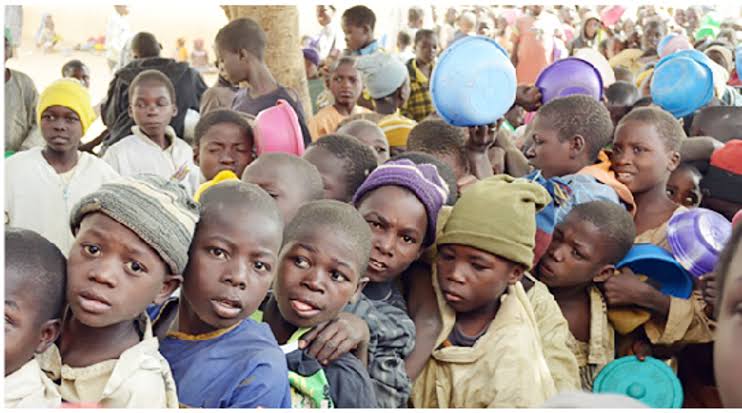
1. That Northern Nigeria is urged to live up to its responsibility by mobilizing and harnessing the precious resources at its proposal, which include internally generated revenue and foreign exchange earnings to provide physical and social infrastructure, education for about 9 million out of school children, etc.

2. That Northern Nigeria should be directly involved in the development of agriculture through a mechanized system of farming, industrialization and import substitution programmes so as to discourage its over reliance on oil, which forms the fulcrum of the national economy, as well as importation.

3. Northern Nigeria should take its constitutional responsibilities to ensure maximum security for citizens and their properties through the legitimate use of the instruments of law enforcement against insurgency, banditry and kidnapping, which bedevil the region.

4. Northern Nigeria is urged to take a leading role through social engineering and the implementation of viable economic policies to ensure an enabling environment for businesses to thrive.

5. The Almajiri system of education, which has raised a number of issues to the governments of Northern Nigeria must be reformed instead of being banned.

6. It is resolved that a special conference should be convened in the North on its economy and security so as to address the challenges of Neo-liberal democracy and the crises of development in the region.

Name and Signature of Chairman, Society for Arewa Development and the convener, Independence Youth Talk.
Sahabi Sufiyan

…………………………


Breaking News: Shootings near Maiduguri

By Hussaina Sufyan Ahmad

Reports of sporadic gunshots and explosions behind 777 Housing Estate at the outskirts of Maiduguri metropolis, the Borno State capital, late Saturday night have gone viral.

The incident was said to have started at about 10:15pm. The residents of Pompomari, 778 and 1000 housing estates confirmed the heavy blasts and gunshots as they were put on alert to be safe and secured for any eventuality.

According to Vanguard news, Nigeria Airforce helicopters hovered after deployed to the vicinity in order to repel the attack suspected to have been masterminded by terrorists group of ISWAP.

2020 Nigerian police recruitment exercise to continue

By Muhammad Sabiu

The 2020 police constables recruitment exercise that was suspended in 2020 is expected to continue on Monday.

This is contained in a statement released by police spokesperson, Frank Mba.

He added that candidates who applied should go to the recruitment portalwww.policerecruitment.gov.ng which will be opened from Monday, 18th through to Tuesday, October 26, 2021.

Read the police full statement below:

PRESS RELEASE
 
NPF, PSC SET TO CONCLUDE 2020 RECRUITMENT EXERCISE

The Nigeria Police Force in collaboration with the Police Service Commission will be concluding the ongoing 2020 recruitment exercise of Ten Thousand (10,000) Police Constables into the service of the Nigeria Police Force.

Consequently, candidates are required to check their recruitment status on the recruitment portal, www.policerecruitment.gov.ng which will be opened from Monday, 18th through to Tuesday, 26th October, 2021.

Candidates who are qualified for the next stage of the recruitment exercise are to print out their examination slip which must be presented on the Examination Date scheduled for Friday, 29th and Saturday, 30th October, 2021 at designated centres across the country. Candidates are equally advised to check their email and phone numbers for notifications.

The Force, while reiterating that the recruitment exercise is absolutely free of charge and without any pecuniary obligation, enjoins candidates to call 08100004507 for further enquiries about the recruitment exercise.

CP FRANK MBA
FORCE PUBLIC RELATIONS OFFICER
FORCE HEADQUARTERS
ABUJA

2023: North-West youths urge Governor Yahaya Bello to run for president

By Sumayyah Auwal Ishaq

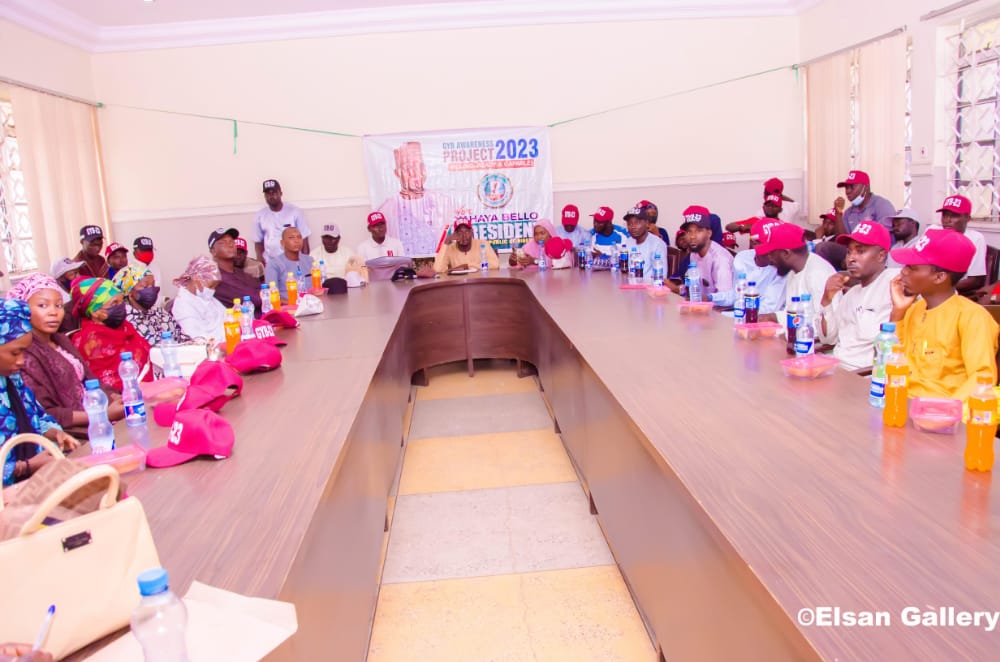
Nigerian youths under the auspices of GYB Awareness Project 2023 across the North-West geopolitical zone have urged Governor Yahaya Bello of Kogi to run for the office of president in 2023.

The youths on Saturday declared their support for Governor Bello during a press conference in Kaduna. Mr Saifullahi Bawa Kajuru, leader of the group said “the objective of the meeting is to conscientise Nigerians, especially the youths in the north-west on the need to support youth presidency come 2023”. He said a young person of Mr Bello’s calibre in 21st century Nigeria could change the narratives of the country through effective leadership and governance.

Mr Bawa added that “after wide consultation with stakeholders, youth groups, student unions, market unions, religious and traditional bodies from the North-West geopolitical zone, we the Northwest Youth under the umbrella of GYB Awareness Project 2023, hereby call on Governor Yahaya Bello to contest for the office of the President, the Federal Republic of Nigeria come 2023. Nigeria must continue to move on the right path in 2023”

“GYB Awareness Project 2023 will continue support, propagate, promote and project the ideals of Governor Yahaya Bello. It also wishes to confidently state that the entire youths of the north-west region comprising of Kaduna, Kano, Katsina, Kebbi, Sokoto, Jigawa and Zamfara States are solidly behind Governor Yahaya Bello candidacy comes 2023” the statement added.

Some of the state coordinators of GYB Awareness Project 2023 from Kano, Katsina, Kebbi, Sokoto, Jigawa, Zamfara and others urged Nigerians and the leadership of the ruling party to present Governor Bello as the candidate of the party in the next general elections.

The Southeast is no less a burden

Ahmadu Shehu, PhD.

As we continue the inconvenient conversation on Biafra and what it portends for the Southeast and our country, I find the need to clarify some insinuations raised in the troupes of comments and rejoinders that trailed my previous articles. But, before proceeding, I must commend many southeasterners for their dispassionate contributions and insightful perspectives.

However, although critical, some of the comments have missed salient truths that need further explanation. This will help our generation avoid past mistakes committed mostly by overzealous politicians, leading to avoidable wars and near-disintegration of our dear country.

There is this illusion that conflates southern Nigeria, particularly the Niger Delta, with the Southeast or “Biafra”. The truth is that the people of the Niger Delta region (let alone the southwest) do not align with the Southeast in politics and administration. For the information of our youth, the first secessionist war in Nigeria was fought between Niger Delta activists under the leadership of Isaac Adaka Boro and the Nigerian forces led by Chumeka Ojukwu, who later became a secessionist himself.

The three phases of Ojukwu’s career: from a defender of Nigeria’s unity at the battlefield to a rebel against his own country and later a senator and presidential candidate for the very country he fought to disintegrate should tell discerning minds that there are many faces to the idea of Biafra, none of which is the common interest of the Igbo people.

Please permit me to be blunter here. As far as our contemporary political and economic realities are concerned, the Southeast is only hiding behind the shadows of other regions in the south to claim prosperity. In other words, when our Igbo brothers call the northerners parasites, lazy or Abuja-dependent, they are actually borrowing the glory of the Niger Delta, and probably Lagos State, to abuse others. Because in reality, the contributions of the Southeast in the so-called feeding the nation is not as significant as they may like us to believe.

If you doubt this, let’s ask a few questions on the most critical sectors of the Nigerian economy. Since 90% of Nigeria’s foreign income depends on crude oil, what is the contribution of the Southeast in the two million barrels Nigeria makes per day? Very little is the answer. For, out of the nine oil-bearing states in Nigeria, Imo and Abia are the only southeastern states, accounting for an abysmal 1.6% and 0.68% of the total crude oil produced in the country. This is very negligible, as far as the numbers in this sector are concerned.

The Nigerian GDP, which is the bedrock of the economy and the source of non-oil revenue, primarily comes from agriculture. What is the contribution of the Southeast to agricultural production? The numbers are even more insignificant here. It is unfortunate that except for the oil-spilt Ogoni land, the Southeast is Nigeria’s least agriculturally viable region. Most states and local councils in the Southeast are not food sufficient.

By the nature of its geography, the Southeast sits on one of the country’s most infertile, erosion-prone lands. It is also the smallest and most overpopulated region leading to congestion and resource scarcity. It is no coincidence, therefore, that no one buys farm produce from there. Conversely, we see tons of raw food and livestock being transported daily to feed the region.

Some people may argue that the economic strength of the Southeast lies in its profoundly robust revenue base generated from industries and MSEs. They further postulate that the region contributes the most to the Nigerian revenue basket, albeit without evidence. Well, all the regions of the federation contribute their fair share to the federation tax revenue. However, the evidence available proves that the Southeast is neither the highest contributor nor is it self-reliant.

According to the National Bureau of Statistics, Southwest and South-South have the highest IGR per capita, and the Southeast is at par with North-Central, followed by Northwest and Northeast. None of the five southeastern states appears close to the top ten high revenue-generating states. Like any other northern state, none of the southeastern states – despite the 12% derivation funds – is wealthy enough to pay salaries without the federation account. Thus, one may ask: what kind of entrepreneurship and economic prosperity we are talking about here?

The fallacy behind the overestimated economic contribution of the Southeast is just one of the many problems. For instance, more than once, our country’s unity and cohesion are put on dangerous edges, thanks to the secessionist tendencies of the Southeast. Instead of forging ahead and pursuing alliances and friendships countrywide, the region and some of its people have continued on the path of division and segregation. The hatred propagated against anything and anyone perceived to be anti-Biafra has been phenomenal.

Furthermore, the Southeast is the main culprit in destroying Nigeria’s image and dignity in the international community. The Nigerian passport, which commanded respect a few decades ago, has become a suspect document worldwide. This unfortunate degradation of national identity and pride is the handwork of Nigerian drug pushers, physical and internet scammers, illegal migrants and human traffickers, most of whom are known to be southeasterners.

The same people are dealers and distributors of fake, contraband medications and drugs in all the nooks and crannies of this country, particularly in the North. This has always been an open secret and has been made even more vividly evident by the recent successes of the Nigerian Drug Law Enforcement Agency (NDLEA). The dangers these portend to our national development and global recognition is unquantifiable.

Therefore, if the above is true, claiming that the North is a mere burden on the Nigerian federation is absurd. For some, this might be based on ignorance, while for others, it is a deliberate attempt to malign and stereotype the region for reasons best known to the perpetrators of these dangerous narratives. But, whatever the motive is, we must recognize that all the federating units cause shared burdens to our national growth and development.

Since the North’s limitations and other regions have been overstretched in our national discourse, I believe it is equally important to remind our brothers in the Southeast that they are no less a burden than the other regions. As Nigerians, we should prepare to share both the positive and negative consequences of the actions and inactions of our fellow citizens. But, this is only possible when all parties acknowledge their limitations and are ready to embrace one another. Nigerians are siblings of a single family that are more alike than different. The earlier we accept this truth, the better.

Dr Ahmadu Shehu is a nomad cum herdsman, an Assistant Professor at the American University of Nigeria, Yola, and is passionate about the Nigerian project.

Maulud: Tuesday is public holiday—FG

By Muhammad Sabiu

Tuesday, October 19, has been declared by the Federal Government of Nigeria as a public holiday in commemoration of the Maulud celebration.

According to a statement signed by the Permanent Secretary, Ministry of Interior, Shuaib Belgore, on Friday, the Minister of Interior, Rauf Aregbesola, congratulated all Nigerian Muslims on the occasion of Eid-ul-Maulud.

Mr Aregbesola was quoted as saying, “As the indisputable leader of our race, we (Nigerians) must show responsible leadership in Africa.

“Irrespective of faith, ideology, social class and ethnicity, I urge you to cooperate with President Muhammadu Buhari’s administration in its effort to build a progressive and enviable nation that all citizens would be proud of.”

If your children cannot study here, don’t take gov’t appointments – ASUU President

By Uzair Adam Imam

ASUU President, Prof Emmanuel Osodeke, urged the National Assembly to formulate a law that will ban government officials from taking their children to study abroad. He added that if one knows his children cannot study here, one should not take government appointments.

Osodeke made the disclosure in Abuja at the reconvene meeting with the federal government, chaired by the Minister of Labour and Employment, Dr Chris Ngige.

Daily Trust reported that ASSU also called on the National Assembly to formulate a law that makes it compulsory for the public office holders to send their children to public schools in the country, saying such a step would let the officials know the decay in the public universities.

Speaking, Osodeke stated that, “We hope that the government will make it mandatory that if you accept a government appointment, your children must attend universities in the country.

“The National Assembly must formulate a law that if you take an appointment, your children must study here. If you know that your children cannot be here, don’t take government appointments.

“When you hear those in the government who send their children to schools abroad say that ASUU goes on strike, they should know that strike is not the problem. The problem is the issues afflicting the universities; nobody is interested in tackling them.

“Look at the budget we have seen recently, it is exactly the same thing we have been seeing. Nothing has changed. And this country is paying the high price for neglecting education – the banditry you see, the kidnapping and what have you, is because people are not being taken care of.

“That is why ASUU has been struggling so that Nigerian universities will be revamped so that as our children go outside for learning, other children from other countries will come here too and pay to this country in hard currency.”

Bomb blast hits Afghan Friday mosque again

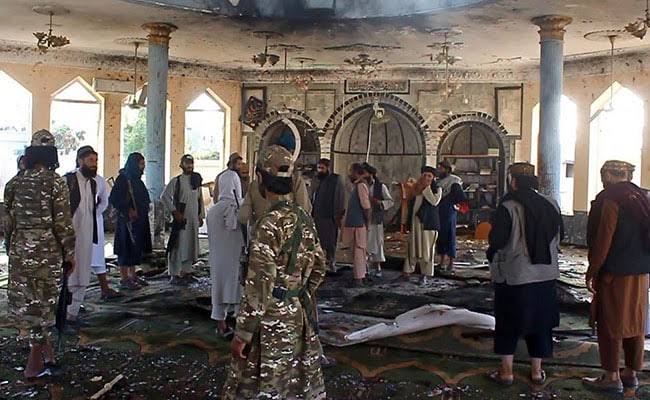
According to a BBC report, “at least 16 people are dead and 32 injured after an explosion hit a Shia mosque during Friday prayers in the Afghan city of Kandahar.”

This act of terrorism has continued to pester among the Muslim communities in Afghanistan and elsewhere in various Muslim nations, with no clear cause and motive behind it. Such killings are perpetrated in order to tarnish the image of Islam and continue to ridicule the religion in the sight of others.

The recent “blast occurred at the Iman Bargah mosque. Pictures from the scene show shattered windows and bodies lying on the ground while others try to help.

The explosion’s cause is not yet clear but a suicide bombing is suspected.

A local doctor told our source that the injured worshippers were being taken to the Mirwais hospital.

BBC Afghanistan correspondent Secunder Kermani says that IS-K, a local branch of the Islamic State Group, was expected to say it was behind the attack.

Last Friday, a suicide attack on a Shia mosque during Friday prayers in the northern city of Kunduz killed at least 50 people. IS-K said it carried out the attack, which was the deadliest since US forces left at the end of August.

IS-K is violently opposed to the governing Taliban, has carried out several bombings recently.

The Taliban took control of Afghanistan after foreign forces withdrew from the country at the end of August following a deal agreed with the US.

It came two decades after US forces had removed the militants from power in 2001.

CIFCFEN appoints Fatima Buhari as board member

By Uzair Adam Imam
Daughter of the Nigerian president, Fatima Buhari, has been appointed as a member of the board of trustees of the Chartered Institute of Forensic and Certified Fraud Examiners of Nigeria (CIFCFEN) recently.
The event took place at ANAN House in Abuja.
The Cable reported that speaking at the ceremony, Iliyasu Gashinbaki, CIFCFEN’s president, said Buhari joins the board with a wealth of experience garnered from the public sector and international organisations.
“She has been engaged in working in the development space and extensive experience with development partners,” he said.
“With the wisdom of the board, we found it necessary for more women to be admitted to the board. This is in tandem with international best practices of having gender balance on every board and we want to lead by example.”
Speaking during the occasion, Buhari expressed her gratitude to the Institute for considering her worthy of the appointment.