Month: October 2021

Why Not Just Make a Waqf Now?

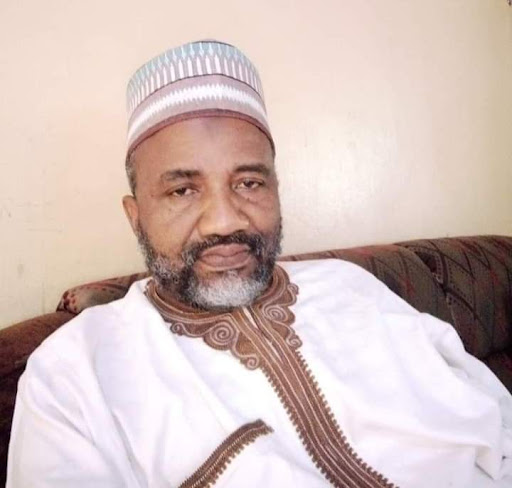
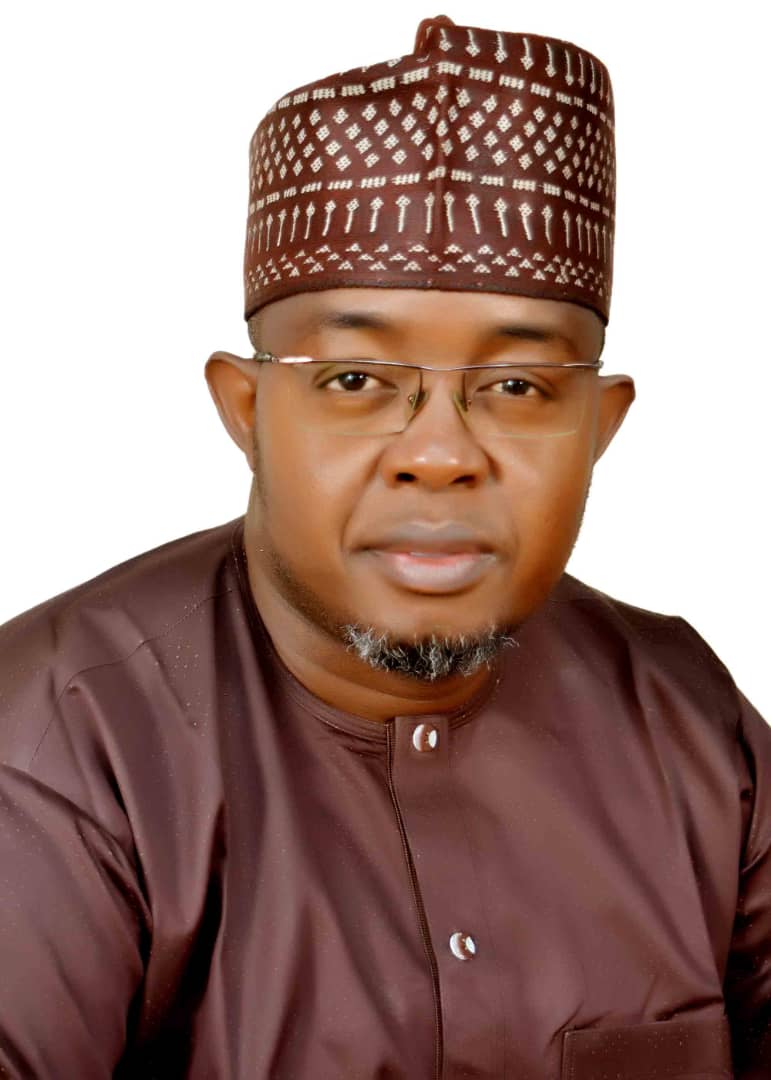
By Abdullahi Abubakar Lamido

I begin, after praising Allah and sending blessings to the beloved Prophet peace be upon him, with three stories from Nigeria. They are all real. The first is of a rich man who died and was survived by a wife and her two children. His estate included mansions in choice areas, high worth investments, company shares, farmlands, etc. This “beloved” wife was advised to make a waqf (perpetual charity) of just a mosque as a source of everlasting reward for the late husband from the hard-earned wealth he spent his life gathering. She was reminded that less than one per cent of his wealth could do it.  The wife answered in one word: “Impossible”! Rather, she offered to cook rice and beans every Friday and give to the begging Almajiris around as sadaqah. To be fair to her, she did so for some months until she met a new darling husband with whom she now enjoys her inherited, halal fortune! End of story!

The second story is that of a religious and highly influential personality who died and left behind several sons and daughters, all of whom had already grown wealthy and influential. The deceased’s bosom friend, who was the custodian of many of his possessions, approached the heirs. He pinpointed a plot of land in a choice area in one of the largest Nigerian cities and offered that if they would designate it as a perpetual charity, he would build an ultramodern Islamic centre there as a waqf for their late father. This, he said, was to create a ceaseless flow of rewards to their late father. Alas! To his face, they simply said no! And the rest is history.

The third is the story of a woman philanthropist who was the wife of an influential person. She was known for her dedication to building mosques, schools, among other charitable interventions. After her demise, the husband learned of several uncompleted mosques and schools that were part of her charitable initiatives. He called her children to a conference and suggested that from her inheritable wealth, they should dedicate what would be enough to complete such ongoing projects. And what a small portion of her wealth was that! They unanimously rejected his offer, departing in a “just give us our money” mood. It was the father who used his resources to finance the completion of the projects. I gather that he was lucky to have learned some lessons here and begin to emulate his late philanthropist wife. He actually increased his budget for Islamic philanthropy as he was already known for charity also. May Allah accept it for him, and for her.

I am sure by now you, my dear reader, have started to recollect several similar stories you have heard on several occasions or which might have even happened close to you. I also have many to share. But these ones suffice as examples. At least for now. What lesson, then, have you learned from this?

Now, remember the Prophetic hadith in which he explains that the moment a person dies, his reward fetching deeds terminate except three; waqf or perpetual charity being the first of them. The other two reward sources are the prayer of a pious child and beneficial knowledge. Interestingly, in the hadith is an equitable distribution of reward sources of some sort. The wealthy folks no doubt have access to the “lion share” in terms of perpetual charity. Beneficial knowledge is the share of the scholars essentially. For the non-rich, non-scholar believer, giving a good upbringing to his/her children guarantees them prayers from pious children and a continuous flow of reward.

Many owners of surplus resources miss the opportunity of making a waqf due to procrastination and other flimsy considerations. By doing so, they deny themselves the most important investment of their lifetime. How can Allah give you the opportunity of making an investment that may pass a millennium fetching you rewards only for you to refuse to do so? Daniel Crecelius explains to us that several waqfs, created for the provision of various social, religious, educational, economic and welfare services free of charge to the public, have survived for five centuries, and some for over a millennium. Now! Imagine yourself, in your grave, receiving “alerts” of rewards daily while charting with the Angels! Can you imagine the amount of reward you would earn by continuously creating benefits, solving problems, drawing happiness to thousands or millions of needy and poor lives for decades, centuries or even a millennium after your departure from this deceptive world? Consider the following stories.

You already know the third caliph of the Prophet, Uthman bin Affan (may Allah be pleased with him). After the migration to Medina, access to water became a great challenge for the believer. They had to buy from a Jew who owned a well called Ruma. The Jew was so wicked, charging exorbitant prices, and making life difficult for the believers. The solution was for the Muslim community to own it. The Prophet peace be upon him announced a guaranteed direct entry certificate to Jannah for whoever purchased it. Uthman did. He surrendered it as a waqf. People now could get water at zero cost. This charity became blessed and continued to expand. During the Umayyad period, it began to grow date palm trees in its surroundings. Many grew. The Ottoman Empire paid particular attention to developing the trees generating income from them. The returns would then be shared into two; a portion distributed as charity and the other saved. Later, the Saudi Arabian authorities opened a bank account in the name of Uthman Bin Affan. They save half of the returns and distribute half in charity. As the savings grew, a hotel was built in Medina, still in the name of Caliph Uthman. Half of the returns is reinvested while the other half, amounting to about 500 million Riyals annually (equivalent to about USD14 million) is distributed in charity. 1400 years of ceaseless reward, thanks to waqf!

Then the story of the great philanthropist, lady Zubaiyda, daughter of Ja’far al-Mansūr, granddaughter of the second Abbasid Caliph Abū Ja’far al-Mansūr; wife of the 5th Abbasid Caliph Hārūn al-Rashīd and mother to the 6th Abbasid Caliph, al-Amīn. Although she died in 216 AH (832 CE) in Baghdad, her source of reward is still yet to! In 186 AH (802 CE), she visited the Holy land as a pilgrim. She then noticed the serious difficulty people experienced in Mecca vis-à-vis accessing water. There were no reliable wells and springs from where to fetch portable water. The people rather relied on rainfall or poor wells that were irregular in providing water. She then ordered her treasurer to look for “world-class” engineers and professionals from different cities to embark on the work of constructing a befitting well. Having observed how difficult the project would be due to the nature of the soil which was rocky and hard, she declared her readiness to pay a dinar for every single digging, until they reached water level. Soon, highly professional engineers and experts flooded Mecca and started work, surveying between hard rocks until they were able to sink the well. In the end, they parted with the dinars and she parted with the never-ceasing reward! She dedicated the well as a waqf for the residents and visitors of Mecca. Water became abundantly available. Water scarcity became history.

But not only this. Zubayda also did a waqf for the waqf; waqf of rentable houses and landed properties for the maintenance of the water wells.  The ‘Ayn Zubaydah has been described as the largest waqf known in history in terms of the cost of its capital, the magnificence of its design, as well as its contributions to welfare in a sustainable manner. Importantly, the Well of Zubaydah, as it came to be known, has remained functional and productive to date. About 1200 years? It is being utilized by the people of the city as well as visiting pilgrims to the Holy land.

Dear reader! Make a waqf. Look around you. Investigate; what is the greatest problem of the poor around you? Food? Water? Lack of a clinic? Lack of a school for their children? Lack of capital for the poor widows who need money-generating ventures? Make a waqf to provide a sustainable solution for them. Build a plaza, a shopping complex, a rentable house, a garden or buy shares and dedicate as waqf for funding such charitable courses. Do not wait for your wife to make sadaqah of rice and beans for you on Fridays! If you want to enjoy your wealth perpetually, why not just make a waqf NOW?


Abdullahi Abubakar Lamido is the Chairman, Zakah & Waqf Foundation, Gombe, Nigeria. He can be contacted via lamidomabudi@gmail.com.
 

Kebbi gov’t confirms release of 30 abducted students

By Muhammad Sabiu

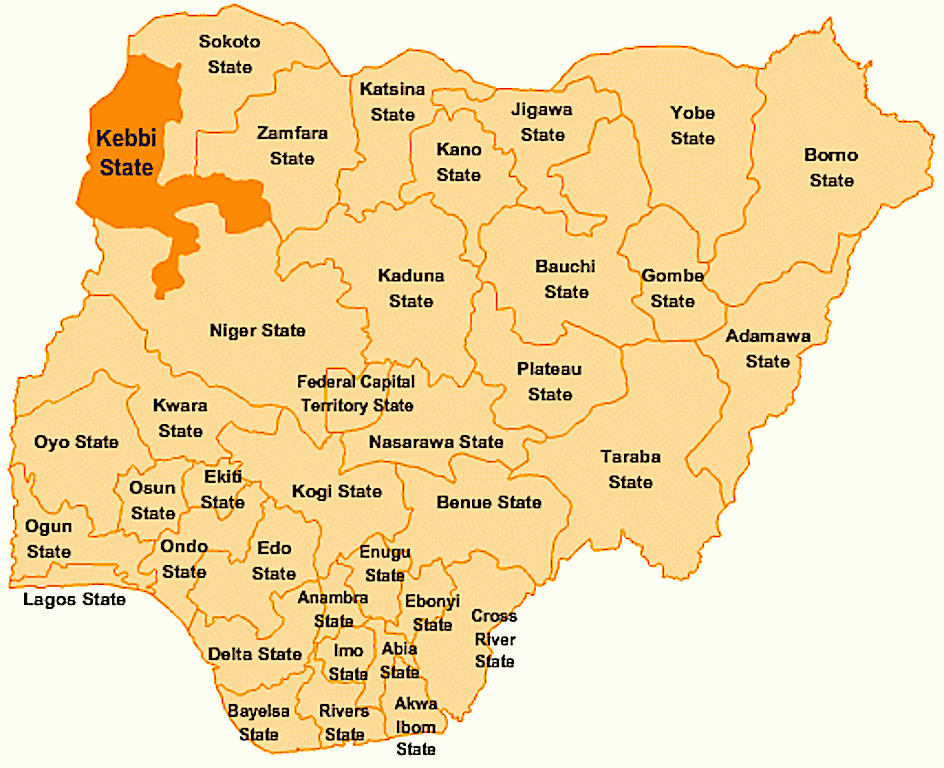
The Kebbi State Government has on Thursday confirmed the release of about 30 students of the Federal Government College, Yauri, who were in June abducted by the terrorists operating in northwest Nigeria.

The confirmation came in a statement made available to journalists by Yahaya Sarki, the spokesperson to Governor Atiku Bagudu of Kebbi State.

Recall that even as of the time of the abduction, the exact number of the kidnapped students was unknown. This makes it impossible for the government to confirm the number of students still in captivity after the release of the said 30.

Confirming the release, Mr Sarki wrote, “Today Thursday, the 21st of October, 2021 thirty (30) students of the Federal Government College, Birnin Yauri have arrived Birnin Kebbi, the Kebbi State capital following their release, while efforts are still continuing to secure the release of the remaining.”

He added that the students would “undergo medical screening and support while being reunited with their families.”

Although, unlike other northwestern states that have perpetually been suffering from kidnappings and killings by terrorists, Kebbi State also faces the same menace.

Tertiary institutions students to be supported as CBN donates N500 grant


By Uzair Adam Imam

The Central Bank of Nigeria (CBN) has earmarked N500 million grant to the universities and polytechnics in Nigeria.

CBN said that the effort is to help the teeming youths in tertiary institutions to promote entrepreneurship and also reduce unemployment.

In the report titled: “Guidelines for the implementation of tertiary institutions entrepreneurship scheme”, CBN made this known on Wednesday

“Five top Nigerian polytechnics and universities with the best entrepreneurial pitches/ideas shall be awarded as follows: first place – N150m; second place – N120m; third place – N100m; fourth place – N80m; and fifth place – N50m,” it said.

According to the guideline, the aim of the scheme is to promote access to finance by undergraduates and graduates of universities and polytechnics in Nigeria.

Students will be help with innovative Entrepreneurial and technological ideas to enable them build their future.

The guidline added that Individuals will be entitled to a loan limit of N5.0 million to be paid within the maximum period of 5 years at an interest rate of 5 percent for each year.

Sa’adatu Rimi college to be upgraded to university status – Ganduje

By Uzair Adam Imam

Following the lingering request by Sa’adatu Rimi College of Education (SRCE) management, Governor Abdullahi Umar Ganduje has revealed that the institution would be upgraded to the university status with the National Universities Commission (NUC).

Ganduje stated this when the management team of the institution led by Prof. Yahaya Isa Bunkure, the Provost of the College, paid him a courtesy visit.

In a release issued by the Chief Press Secretary to the Governor, Abba Anwar, Ganduje said: “I am happy that the College is now a degree awarding institution. Therefore, the call for the upgrading of this College to university, is without much financial commitment.

“Because most of the facilities needed are already there. Even lecturers we need to employ Professors.

“We can see how we can pursue this, so that we can actualize it. The only thing is, it will not continue awarding Certificate of Education. But we can still move all NCE Courses to other institutions. Just as some of our institutions have already started awarding NCEs,” Ganduje said.

Baffa Bichi celebrates Kwankwaso’s birthday

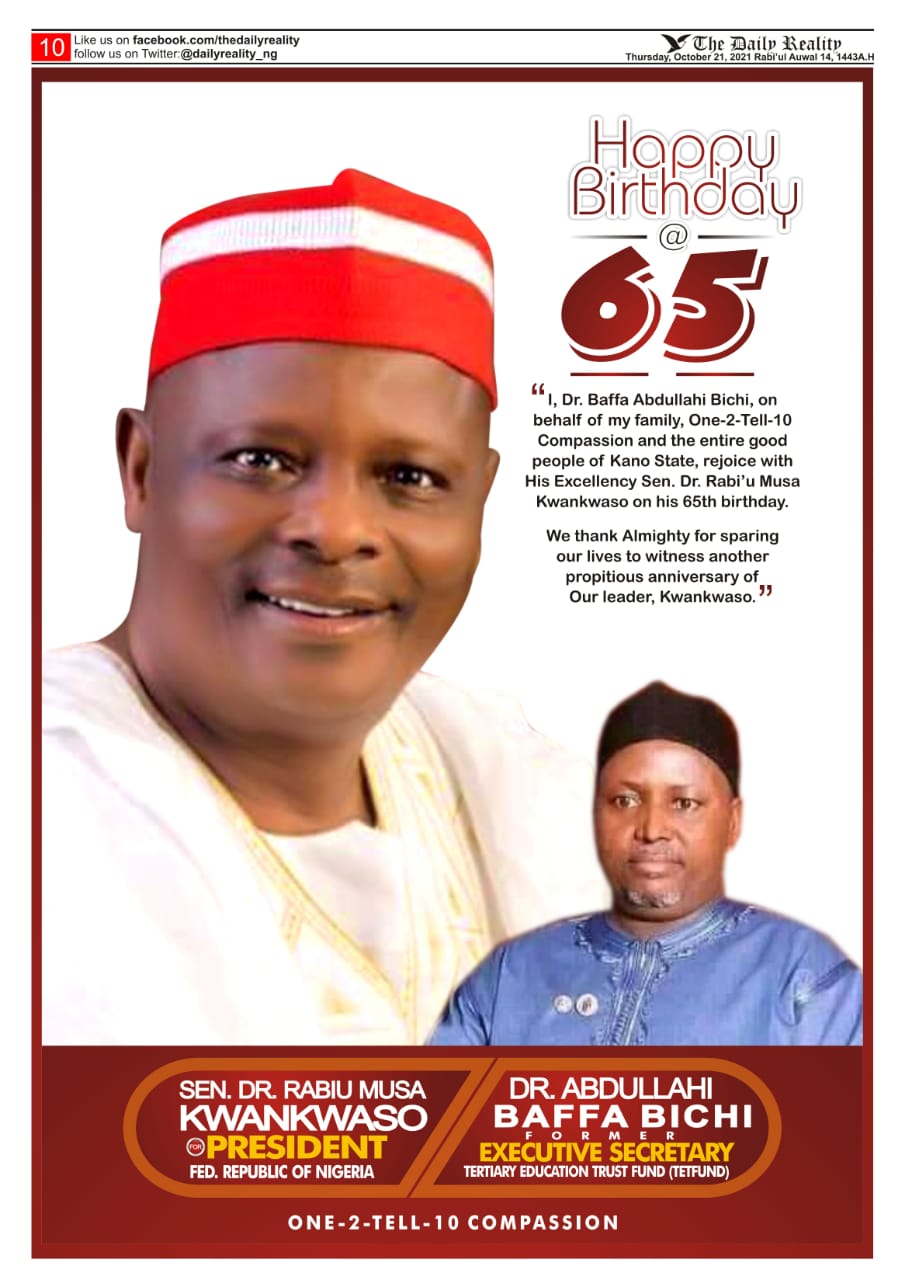
I, Dr Baffa Abdullahi Bichi, on behalf of my family, One-2-Tell-10 Compassion and the entire good people of Kano State, rejoice with His Excellency Sen. Dr Rabi’u Musa Kwankwaso on his 65th birthday.

We thank Almighty for sparing our lives to witness another propitious anniversary of our leader, Kwankwaso.

The achievements of your first and, especially, your second tenures as Kano State Governor, in both human and capital development, are unprecedented. The revival of education, leadership by example and touching the lives of millions of people, among many things, will always make me proud to associate myself with you.

As I join millions of Nigerians in felicitating with you on this joyous occasion of your 65th birthday anniversary, I wish you Allah’s guidance, good health, prosperity and many happy returns.

Happy birthday, sir!

Baffa Bichi donates food items to over 500 households in Kano State

By Abdurraman Muhammad

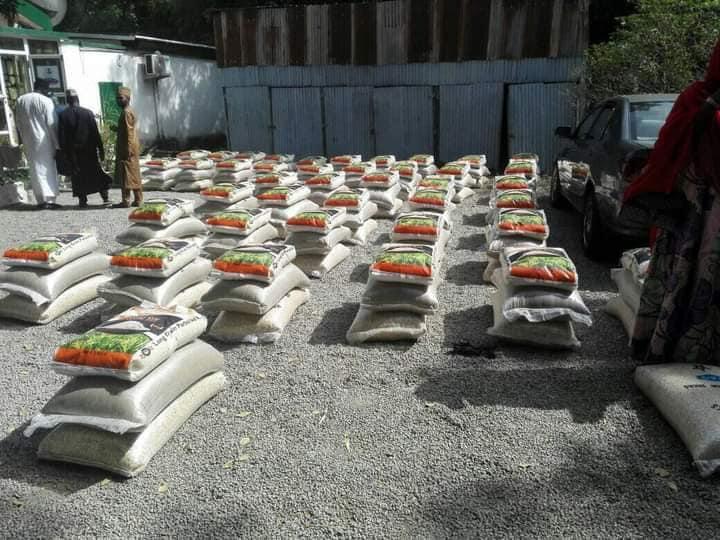
As many Muslims around the world are celebrating the birthday of Prophet Muhammad (Peace be unto him), the former Executive Secretary of Tertiary Education Trust Fund (TETFUND), Dr Abdullahi Baffa Bichi has distributed food items to over 500 households as a philanthropic gesture to commemorate the 1443 Maulud Celebration.

Speaking during the distribution exercise, that took place in his residence at Bayero University Kano, Old Campus, Dr Bichi said the essence was to put smile on the faces of people by cushioning the effect of harsh economic situation in the country.

He noted that many people are finding it difficult to feed their families and therefore, his action was to make them happy on this festive period.

The donated items included a bundle of cloth, bag of rice, millet and maize each and a portion of meet.

“As we are today celebrating the birth of our Noble Prophet SAW, we feel obliged to put smiles on the faces of our brothers who could not afford a good food for their families”.

Many people who benefitted from the gesture expressed their appreciations by describing him as the rising politician who has the interest of a common man at heart.

After collecting his items, Malam Abubakar Idris said, “the items came handy as he had no single grain in his house with a family of five.

Another woman busted into tears of joy, lamenting that it has been over a week since last they cooked a solid food in the house. They just rely on other difficult means.

“We were surviving on crunches for the last few weeks, as we have nothing in the house, my husband died last year during the Covid-19 pandemic, he left me with five children and no one to feed us. The selling of akra I was doing did not last long due to lack of capital. In addition to the food items, he equally supported us with a  by to take-off money to start a business. We really appreciate him and may Allah continue to guide him. Alhamdulillah.”

A director in the One 2 Tell 10 campaign organisation of Baffa Bichi, Honourable Ghali while explaining the concept of human empowerment, noted that the desire was to bail out the needy especially widows, orphans and other needy persons in the society.

Honourable Ghali disclosed that the only way out of the economic crunch is for all the wealthy and public sprites individuals to come up with program that would have a positive pact on the lives of the less privilege by providing them with capital money so as to be independent and self reliant.

“Our desire is to empower people to be self-reliant so that they can as well be productive to the society. No nation can grow and prosper if the teeming populace are in abject poverty and economic dependency. Ours is to teach a person how to fish so that he can be productive in the society,” he declared.

M.D. Aminu: A transition from academia to consultancy

By Ahmadu Shehu, PhD.

Recently, my friend Dr Mohammed Dahiru Aminu took a step further in realizing his promised greatness. He joins PricewaterhouseCoopers (PwC) as Manager in Sustainability and Climate Change consulting. PwC is one of the ‘big four’ accounting/management consulting firms and the world’s second-largest professional services networks, operating in 157 countries with over 742 locations. The annual revenue generation of the company is around $42.4 billion, which is greater than Nigeria’s annual budget.

Dahiru, as he is known and called by persons close to him, was born in Yola to Dr Aminu Raji’s family, a descendant of Modibbo Raji—one of the most prominent 19th-century Islamic scholars in northern Nigeria and the most important scholar in the Fombina emirate. Dahiru earned a bachelor’s degree in geology from the University of Maiduguri and a master’s degree in petroleum engineering from London South Bank University. In addition, he holds a PhD in carbon capture and storage from Cranfield University.

Upon completing his master’s degree, Dahiru launched a career in academia as an Assistant Lecturer at the Modibbo Adamawa University of Technology before moving to the American University of Nigeria as an Assistant Professor of Petroleum Chemistry. Brief as it may seem, Dahiru’s academic career is a story of success. He is amongst the world’s first generation of PhDs in the emerging carbon capture and storage area and has produced consequential papers in the leading journals in that discipline. One of his papers, entitled “A review of developments in carbon dioxide storage”, published in Applied Energy—a leading journal within Energy and Environmental Science—is arguably the broadest published paper in the open literature on any aspect of carbon dioxide storage. Other contributors to the article were Professor Vasilije Manovic and Dr Syed Ali Nabavi of Cranfield University, and Dr Christopher A. Rochelle of the British Geological Survey, Keyworth, Nottingham, UK.

Because of the paper’s relevance within the field, it won an award as one of the most cited papers ever published in Applied Energy since the journal’s inception in 1975. The award was announced at the International Conference on Applied Energy (ICAE) in 2020, which was scheduled to hold in Bangkok (Thailand), but due to the Covid-19 pandemic, the event was held in a virtual conference in December 2020.

Similarly, all chapters of Dahiru’s thesis, completed under a research program entitled “Carbon Dioxide Storage in the UK Southern North Sea: Experimental and Numerical Analysis”, were published in leading scientific journals as the International Journal of Greenhouse Gas Control and Heliyon.

Dahiru has also been actively involved in community service and is a member of several advisory boards, councils, and committees. He is a member of the Roster of Experts of the United Nations Framework Convention on Climate Change (UNFCCC), Bonn, Germany; and serves as member and secretary of the Working Group on Solid Waste Management for implementation of the Nigeria Climate Change Response Programme (NCCRP), Federal Ministry of Environment, Abuja; amongst others.

Although Dahiru’s scholarly achievements in academia were remarkable, nonetheless, those of us who know him have always felt that the academic career path was a transitional phase. His expertise would be better harnessed for the more public good in the private or policy sectors, where he could apply his training and knowledge in a more instrumental setting. This move should also offer him greater visibility and voice in meaningful African conversations around sustainability and climate change.

Beyond academia, Dahiru’s profile reaches into the arena of public commentary and public service. He is one of Nigeria’s prolific and influential young public intellectuals. His writings and talks on national issues and sharp analyses and prognoses of Nigeria’s economic and developmental challenges are as informed as they are illuminating. He publishes opinion pieces in Nigeria’s leading online and traditional newspapers. He is also a visible and strident voice in Nigeria’s vibrant cyberspace. As Dahiru joins the world of consulting, where he will work on finding solutions to the problems posed by climate change as one of humanity’s greatest challenges, he will undoubtedly deploy his expertise and experience in a more hands-on approach, now more than ever.

Dr Ahmadu Shehu holds a PhD in Linguistics and writes from Yola, the Adamawa state capital. He can be reached on ahmadsheehu@gmail.com

Where do we go from here?

By MA Iliasu

This one is a personal experience about our society’s current state of affairs and the ills they may be carrying instead of any brainstorming discourse. It started a little more than two years ago when a young man, pressed by the excessive frugality of his godfather, looted his quarterly savings and ran away to Cote d’Ivoire. Fortunately, the godfather didn’t get mad at him on the belief that the boy ran away with what was worthy of his long years of servitude. Months later, he came back, maybe after receiving assurance about his immunity. Most people developed an interest in the bold-albeit-stupid young man, mostly about why he would betray his godfather cum cousin’s trust. But knowing people’s tendency for moral hazard, I thought it shouldn’t surprise anyone why he did it. Quite differently, I am more interested in why he chose Cote d’Ivoire above all the places to run within Nigeria and nearby. To me, the choice seemed very odd, which surely can’t be a coincidence. I shall explain why.

Firstly, the place is very far from here, and in my experience, our people aren’t very fond of distance. Secondly, the excessive cultural and linguistic variation would shake the thoughts of any young man of such age and education, who are primarily monolingual and inept on homogeneity. Thirdly because of the infamous homesickness and risk aversion. Thus, what warrants the overlooking of such defining factors should rationally be investigated beyond the naivety of a scared young man. But it may also be wondered why would I be so interested in something that doesn’t directly concern me.

As a rule, a wise guardian tasked with the responsibility of an immature youth that can’t be within his sight all the time is only right to extend surveillance on the developments surrounding new trends, norms, habits and idiosyncrasies that inform the conduct of the respective age bracket. The young man belongs in the age bracket that must interest any guardian.

He said, “a kola nut trader who used to stop at Mariri (a kola nut market in Kano) arrived in Ujile (another kola nut market in the metropolis) once told us about the opportunities that await in the kola nut farms and industries in Cote d’Ivoire. He portrayed that as far better than any job we do here”. I smiled because I predicted that. “And what did you discover when you arrived? Was he telling the truth?” I asked him. “He was, but partially,” the boy replied. “The opportunities aren’t better than the ones here. But the environment in Ivory Coast is far more liberating and nourishing. You can’t separate the rich from the poor based on food. They’re not very sensitive to what happens between a man and a woman, even if she’s not his wife. And that alone is a reason for me to stay,” he added.

“Holy God,” I sighed. The boy’s account was revealing and taking an exciting dimension, so I asked him again, “How many of you went there (Ivory Coast)?” He replied: “We were seven. But many others were aiming to reach Libya and Algeria to work in the goldmines or become professional footballers. Other groups were set to follow also.”

I became dumbfounded that many young men have taken the risk of fleeing to the far West and North Africa for different reasons and confessed my concern to a friend who lives in a neighbourhood away. To my utmost surprise, he told me that his younger brother too had, four weeks ago, led a group of young men and ran away to work in the goldmines in Libya. More unfortunate is that it’s against their mother’s wishes. I lamented at how a tragedy of such magnitude could occur without myself being informed. And he laughed it off with the claim: “it is nothing serious. Such has been the norm for a while down here”.

A month later, he informed me that the boy had made it to Libya. They started working but later got apprehended and sold into slavery. I couldn’t believe it. Slavery in the 21st century? But he erased my doubts when he outlined the financial plan they were putting in place to buy the boy’s freedom. “Merciful God,” I said, “man has turned into a commodity”. In a short while, the boy made it back alone to meet the troubles of other boy’s parents, who blamed him for their children’s departure.

The depth of my grief grew big; emigration as a function of trade and brain drain isn’t particularly worrying. After all, the young men have attained the age of choice. What they do within the boundaries of the reason is even welcoming. But the unique circumstances surrounding the decisions of those youths must worry any sane person.

I pondered how the young men came from a society where the emerging youths are characterised by risk aversion, phobia to distance, homesickness, monolingualism and relative poverty of world-class skills. And they’re certainly not traders; they are relatively ignorant and unskilled labourers. On the other hand, some of them are pretty talented in sports and athletics. So it’s obvious, what’s happening isn’t brain drain but a willed-slavery. Indeed the forces that rattle the youths into overcoming those fears heedlessly warrant an investigation.

Let me say the obvious: the ravaging unemployment has since become the fuel of thuggery, pick-pocketing, phone-snatching, armed burglary. The rotten state of public education has produced more cunning kids who discovered they should rather hawk sachet-water than waste their time in a place that resembles a poorly-kept third-world prison than a school. The parental nonchalance plagues the family institution is graduating malnourished, under-schooled, undisciplined, wicked, and mentally unprepared rotten eggs. Coupled with the unfortunate trend of social organisation, people no longer serve as their brother’s keepers. Immorality, especially amongst youths, is being granted a place in the code of conduct, excuse in the intelligentsia and warming reception in the mainstream opinion. While the moral police are either questioned on a far-fetched basis or upon a deliberate loyalty for cancel culture.

It wouldn’t require an expert to predict how the future looks bleak. Critically it asks the question of the accuracy of the relative size of any sample. However, it’s scary that when a menace breakout like a bushfire, a small sample only tells the story of the little that appears obvious. The reality in Kano, amidst the meagre of the sample size, is an emerging bracket of youths being radicalised into emigration-cum-slavery in North Africa. And the weak social forces can only hope to stop them.

MA Iliasu can be contacted via muhada102@gmail.com.

Matso-Matso Jibia and their unfair treatment

By Prof. Abdussamad Umar Jibia

It is now one and a half months since the Nigerian Telecommunication Commission (NCC) issued an order to all telecommunication companies to shut down their telecommunication sites in Zamfara state. According to the information released by Nigeria’s telecommunication regulator, it did so at the instance of the Zamfara State Government. The shutdown, according to the NCC boss was necessary to “enable relevant security agencies to carry out the required activities towards addressing the security challenge in the state”.

Soon after, a number of local governments in Katsina state, including mine, were shut down at the request of the Katsina State Government.

Although I had my reservations about the order, I kept my comments to myself and remained hopeful. This is for two reasons. One. I decided to believe that the decision was taken in good faith after due consultations and brainstorming among Government and security officials on the ground. In civilized societies such collective decisions are respected not necessarily because they are the best but because of the blessings associated with numbers.

My other reason was to avoid being misunderstood. Since banditry started in Jibia/Batsari area it has affected many of my near and distant relations. But despite that and the fact that all of us, including most of the direct victims, supported and voted in this Government, many people believe that we have no reason to criticize the present Government even if constructively. If you are kidnapped, killed, raped or injured the person you should blame is yourself or your Governor but not the central Government. I know the kind of negative reactions I receive from such people just for narrating that a bandits’ operation has taken place in my local government. That has not prevented me from saying my mind anyway.

It is almost two months now and so far, as far as I know, none of the known bandits’ kingpins has been killed or arrested. Is that because their locations are unknown? I don’t think so. When Government was looking for them to sign a peace accord, they were easily located. In fact, if Government sources are anything to go by, the Governors have their telephone numbers and they were always in touch.

“Since the bandits are isolated inside the forest, is it not easier to bombard them?” I am only repeating a question a journalist asked one of the Governors. The answer, please don’t laugh was, “They hide inside caves”.

Like that journalist, I also thought that the security agents had already identified the bandits’ locations and all that remained was to launch rains of attacks within the two weeks they requested. Alas! Here we are. Tens have just been killed in Sokoto state. In other states like mine, the stories are not different. However, the news does not travel quickly because of the telecommunications shutdown. I heard someone insinuate that to be the reason the Government asked for telecommunications cut.

Of course, some of the Governors like Aminu Masari are vividly helpless. We saw how he went around begging service chiefs to come and help him deal with bandits. In the end, when the kind of help he was looking for was not forthcoming, he started telling the people to acquire arms and defend themselves. Do you blame him?
Yes. I blame him for not buying the weapons and distributing them to the people. Most of the victims of banditry are villagers who are struggling to eat. Where does my Governor expect them to get the money to buy AK47 rifles?

But if I may ask, whose policy is it to burn the houses of suspected bandits but not to kill or arrest them? Again, how do you identify a bandit in order to arrest, kill or burn their houses? I wrote severally that the bandits living in communities should be identified and summarily tackled and I have no regret for saying it.

However, some of the activities of local vigilantes and security forces in the Jibia/Batsari axis leave much to be desired. Over the past month, many houses in selected villages were burnt to ashes and personal effects were taken away by local vigilantes backed by regular security forces. To my dismay, no bandit was said to be arrested or killed in the operations. In fact, as far as I know, no bandit was identified and declared wanted. This raises concern about the sincerity of those who carried out the attacks. Are they actually fighting banditry or is it banditry with another face?

I am particularly worried about one of the villages whose story I know very well. Matso-Matso is a small settlement about two kilometres from Zandam in Jibia local government. Matso-Matso villagers are some of the early victims of banditry. Their resistance to banditry is what led to the assassination of their Imam in 2016. The Imam, who doubles as my maternal uncle, had the habit of gathering people every Thursday to recite the complete Qur’an and pray against bandits’ activities. This led to his attack by a group of bandits on August 7, 2016. The following week, I led a delegation of the villagers to meet the Emir of Katsina and the Commissioner of Police. If PC Usman Abdullahi or the head of his CID are reading this they will bear witness that they promised to launch a raid to arrest the five key suspects identified by the villagers. On their part, the villagers promised to arrest Jatau (not real name) the principal suspect and hand him over to the police dead or alive whenever they set eyes on him.

Neither the police raided nor did the villagers set eyes on Jatau before the infamous peace agreement Governor Masari sealed with the criminals in November of that year. To their disappointment, Jatau came to their village with a full Police escort and they were told that they had no option but to accept him since the Governor had forgiven him and signed a peace agreement with him. After all, they were told, he was their “brother” from a neighbouring village in the Batsari Local Government Area.

With Government in it, the villagers had no choice. They were totally demoralized. They realized their limited power and had to submit. Many times the bandits would come with their cattle and devour their farm produce but they had nowhere to report. The village was attacked several times but calling the regular security forces was a waste of time. The only choice Matso-Matso villagers had was to be paying Jatau, the killer of their Imam to be protecting them against other gangs. And it has been working very well.

Matso-Matso also falls on a major bandits’ route from the forest to the eastern part of Jibia LGA. The armed bandits thus made it a habit to branch and rest in the village and the villagers had no power to repel them.
That is the village in which no less than 28 houses were burnt down by local vigilante and their military backers because “all the people there are bandits”. Meanwhile, Jatau, the leader of bandits in Jibia and Batsari LGA has not been arrested.

My call on Governor Masari, Chief of … (sorry, I don’t even know who to call upon now). Okay, whosoever is in charge should find a more scientific way of identifying bandits living in rural communities and neutralizing them. The advice given by the Chairman, Jibia People’s Forum, which I agree to, is to launch an unexpected house to house search for weapons and the like in the villages. As for the townships, I believe they have by now heeded the advice of the Governor and acquired sufficient rifles.

Anarchy….. Allah Ya kyauta!

Professor Abdussamad Jibia can be contacted via aujibia@gmail.com.