Month: September 2021

Kannywood: consumer’s or producer’s market?

Northern Nigeria’s Hausa film industry, Kannywood, has been at the centre of brainstorming discussions over the years. One of the most interesting is why film consumers are attracted to the industry and otherwise. So often, the analysis of such magnitude is drawn concerning the industry’s foreign and domestic rivals because they provide an alternative to what the industry produces, which directly affects its local market. And like in any other industrial conglomerate, the sustainable conduct and development of Kannywood as an industry thrive on the quality, affordability and viability of its products.

As the so-called king of the arrangement, it’s impossible to conquer any market without exploring the psychological drivers of consumer’s preferences. That said, the primary concern of the teeming film consumers who boycott Kannywood movies revolves around the appeal, quality and uniqueness of storylines and whether it connects with the inner cravings of a modern watcher. A film consumer demands an illusion, one that not only tells him “this is the movie he wants to watch” but also if “it’s the one he should be watching”. An illusion that challenges his status quo creates a reception for the new order and paves the way for a route to escapism. Arguably, many people watch films to escape from their core reality. This occurs either by consuming movies that aim to rediscover an old order. Such order seeks to reflect on the current order or ones that wish to rewrite the order itself in the forms of fantasy movies, futuristic science-fiction movies, historical fiction and nonfiction movies, among others.

In the case of Kannywood, it has done reasonably well in producing movies that reflect greatly on the dynamics of the current order. But then that’s an order of which its potential consumers happen to be physically part. In which case, most of the content would appear familiar and cheap, which will bore the consumers and hand them the warranty to look elsewhere. Meanwhile, Kannywood competitors have religiously developed the culture of challenging the essence of everything a watcher stands for. This makes them more viable, even if more costly than Kannywood, because they satisfy consumer’s utility.

Interestingly, Kannywood’s content has been profiled as the one that agrees with its watchers’ demand. This is indifferent to saying the industry produces only the content which its watchers want to consume. But if that’s any good, why has the industry been economically stagnating and remain vulnerable to its rivals’ invasion? To be fair, Kannywood and its competitors aren’t of the same financial muscle. This plays a vital role in the distinction of their products. However, it is equally valid to mention that all other industries rivalling Kannywood have, at some point, been where it is today. So the most crucial point is how did they move forward?

Revenue, which is the excuse of Kannywood in comparison to its rivals, in the context of production, is a bi-product of the initial measures that a producer put in place to ensure the success of his product. That’s to say, as far as the producer has the initial capital, what happens next is dependent on him. And start-up capital is hardly the problem of Kannywood producers. The actual problem is recouping the expenses and profiting from the venture.

If indeed, Kannywood produces only the films that’ll appeal to its watchers for fear of losing revenue, then it’s vivid that the industry perceives the film market as a consumer’s market rather than a producer’s market. This is perhaps why they produce movies that watchers ‘want rather than the ones the watchers’ think they want. And there’s a big difference between the two. Failure to dissect this difference creates a dilemma that’s so sensitive; it makes or breaks the possibility of any market dominance.

For instance, the romantic, singing and dancing genres that Kannywood produce at a more regular rate is what Hausa watchers want. But the more adventurous and dynamic content being delivered in other film industries are what Hausa watchers think they want – hence they rush to. And the ability to deviate the latter from the former ensures whether a consumer illusion is created or not. Illusion is vital in production because it makes people consume something believing that it’ll satisfy their utility when it won’t. But, instead, it’ll only make them crave for more. And the more is being craved, the better is the chance of getting addicted, and that’s the trap of every capitalist producer.

Hollywood and Bollywood industries come from well-equipped capitalist societies where consumer psychology is conquered. Down there, it’s a producer’s market. Hence, the curve of their revenue never stops rising. Their movies are regularly subjected to sequels and prequels, defending what the producer wants. In the build-up to the preface of his critically acclaimed novel, “The Godfather”, the great author Mario Puzo confessed that a producer’s girlfriend could demand a movie scene to be filtered out. And the consumers would watch nonetheless. In my opinion, there’s no bigger evidence of control. Which greatly unlocks creativity and unhindered filmmaking viscosity.

Kannywood, on the contrary, produces what annihilates the utility of the consumer instead of what’ll make him crave more. Capitalist experts assert that if a consumer gets what he asks for, he’ll be satisfied. And if he gets satisfied, he’ll not need the product again. That’s why a wise producer never allows consumers to ask for products. Instead, he creates the product questions for them. And in turn, answer the questions in a way that’ll make them even more curious. Kannywood does the opposite. Producers obeying the trend of narrowly imaginative consumers is why the watchers don’t find the films as unique as the foreign ones, which is also why the industry is painfully stagnating.

To clear doubts, how the dubbed versions of foreign movies are being consumed at an equal if not higher rate than Kannywood movies in its native domain should erase any iota of doubt on film market being producer’s market rather than consumer’s. For if it was consumer’s, who researched the interest of a villager in Kano before making a movie in Hyderabad, India, that enables him to watch the film with keen interest?

In the end, movie producers need to conquer the fear of losing the market. The film market is a producer’s market contrary to their belief. Agreeing with that would be a new phase for creative filmmaking. They should sharpen and unlock their imagination to produce what watchers would marvel at. Hausa-Fulani society is rich with contents that can create consumer illusion—ranging from history, culture, geography, economy, politics, anthropology, etc.

MA Iliasu writes from Kano State. He can be reached through his email: muhada102@gmail.com.

Gun duel between vigilantes, bandits leaves two dead in Niger

By Muhammad Sabiu

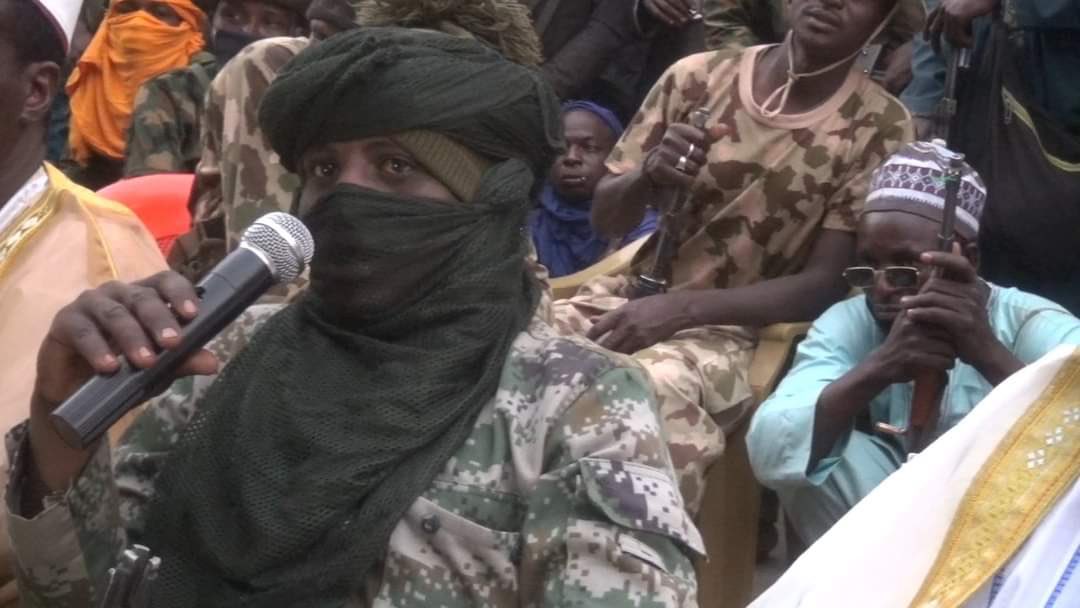
A gun duel between suspected bandits and vigilantes in the Mayaki community in Lapai Local Government Area of Niger State has led to the death of two people.

According to the Daily Trust newspaper, the two victims were on the side of the vigilantes.

Confirming the death of his members, the Lapai division commander of vigilante corps, Muhammadu Ibrahim, said, “It is true that we lost two of our men during a patrol in an ambush by the bandits around Mayaki forest.”

He added that they had deployed their men to launch a manhunt for the suspected gunmen.

El Salvador becomes first country to legalise, incentivise use of Bitcoin

By Muhsin Ibrahim

El Salvador has become the first country to make bitcoin a legal tender in the world. According to the Central American country president, Nayib Bukele, the government will give every adult citizen $30 in bitcoin, provided they download and register the government’s cryptocurrency app, known as Chivo.

The 39-year-old Bukele, who is also a right-wing populist, rose to power in 2019. Since then, he has initiated drastic changes in the small country. He announced plans to start using bitcoin in June. Late Monday (yesterday), he made another announcement via a televised speech, which was also streamed on YouTube, that the digital currency becomes legal from today (Tuesday).

El Salvador’s official currency is the U.S. dollar.

In his reaction to the fears expressed by some people and financial experts, particularly regarding the future of wages and pensions in bitcoin, President Bukele explained that Salvadorans will still have access to dollars.

Matt Novak, a Gizmodo reporter, questions whether or not El Salvador’s experiment with bitcoin will work. In response to that, he adds that “Only time will tell. But with bitcoin’s wild volatility it’s hard to see how the economy won’t get absolutely crushed when bitcoin’s price plunges.”

Insecurity and the guilt of the masses

By Ishaka Mohammed

From temporarily closing schools and markets to imposing curfews and postponing elections, from paying ransom to shutting down telecommunications, name it — Nigerian authorities have been governing based on the dictates of terrorists.

Observing their supposed protectors dance to the tune of their tormentors, many innocent Nigerians live in fear and hunger. It’s unfortunate that despite submitting their powers to the state, poor Nigerians can’t boast of adequate security. Undeniably, our leaders have failed us.

Nonetheless, can we continue to blame only the authorities? No. In fact, sometimes, I feel it’s more suitable to refer to our plights as self-harm. There are times I can’t help but agree with those who call us potential criminals. Lack of opportunities is the reason why some of us can claim to be innocent of some vices. We clamour for the rule of law, but we allow petty sentiments to set our society ablaze daily. 

Most of those who are terrorising our country have family members and friends who are law-abiding. A good citizen is expected to stand by the truth, regardless of who benefits or gets hurt. This is scarcely the case with our “law-abiding fellows”, who help their criminal children or relatives escape justice. When two men protect their respective criminal children today, each of the fathers might become a victim of the other’s child tomorrow. What goes around comes around.

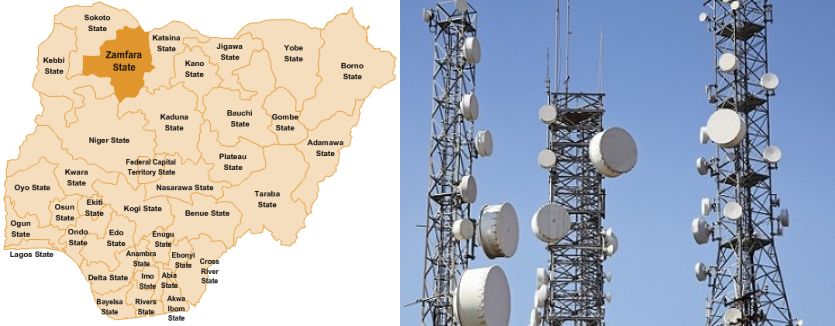
Imagine what the residents of Zamfara State are going through today! In 2013, habitants of Borno, Yobe, and Adamawa had the same bitter taste. We’re social beings; we must communicate to survive. However, we choose whom to communicate with. Since some (or most) of our target audience are physically far from us, we have developed various means to communicate with them, and one of these is telecommunications.

Our ways of life are influenced by the technologies of the moment or those at our disposal. Mobile phones have changed the way we communicate. Even if our livelihoods are entirely outside the telecoms industry, it is almost impossible for a chain of distribution to be successful without telecoms services. From the manufacturer to the middlemen to the consumer, one way or another, a phone call or text message or the Internet will be utilised. Our lives are intertwined with the telecoms sector, especially the mobile network. Despite the necessity of telecoms, residents of Zamfara will be deprived of their services for two weeks.

The above picture is just one of the countless ramifications of insecurity, yet we’re keen on maintaining these ugly consequences because of our selfishness and narrow-minded emotions. We stand with criminals based on religious affinities, regional linkages, ethnic identities or family ties. This is why Governor Simon Lalong recently ordered the arrest of those who rush to police stations to bail murder suspects. Let’s allow family members and friends to answer police questions before we discuss bail. Aside from bail, let’s refrain from blindly defending or accusing people. For instance, in the case of DCP Abba Kyari, a staggering number of northern Muslims keep praying that he be vindicated (without adding “if he’s innocent”). As for many people from the South, the suspended officer is already guilty. Aw, bigotry is undoubtedly our arch enemy.

Our craving for peace should be backed up with sincere actions, no matter how painful such could be. Our sense of optimism should never make us dwell in unrealistic expectations. Nor can we solve our problems without our involvement. Faith doesn’t mean leaving one’s door open and expecting God to close it; one has to initiate the process by using the body parts granted by God.

Sooner or later, the fire we refuse to quench in a neighbour’s compound will gut our houses, and others will look the other way. This isn’t pessimism; it’s reality. Our tribulations can only begin to ease the day we (at least the majority of us) become ready to treat everyone based on the contents of their character. Let’s report close criminals to the authorities if indeed we’re lovers of peace.

By the way, concerning the shutdown of telecoms sites in Zamfara, I think it’s better to narrow the geographic scope. Although the terrorists (euphemistically called bandits) might be everywhere, limiting the shutdown to selected areas like forests might produce the desired effects while minimising the suffering of the innocent residents at the same time.

Ishaka Mohammed writes from Kaduna. He can be contacted via ishakamohammed39@gmail.com.

Prof. Maqari formally withdraws lawsuit against Dr Abdalla Gadon-Kaya

By Muhammad Abdurrahman

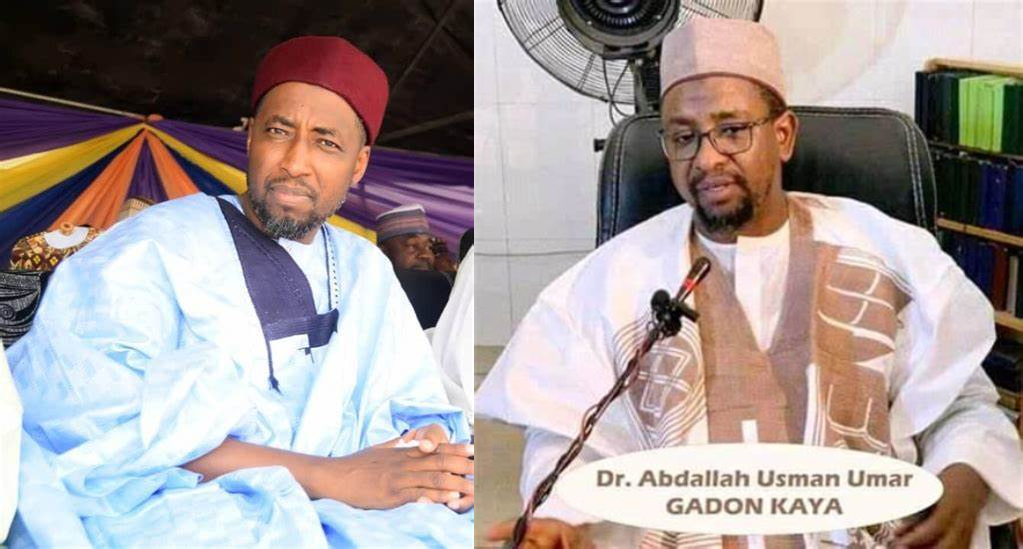
Today, the Abuja Central Mosque Imam, Prof. Ibrahim Maqari, formally withdrew his lawsuit against Dr Abdallah Usman Gadon-Kaya, seeking N20 million in damages for defamation.

The Daily Reality reported on September 1, 2021, that Dr Gadon Kaya’s lawyers had yet to receive any formal request to withdraw the lawsuit as of then. Instead, according to Barrister Ibrahim Umar Abere, all they saw was Prof. Maqari’s viral video alleging that he was compelled to withdraw it.

However, after appearing at the court today (6/9/2021) to defend their client, they got an official request from Prof. Maqari’s lawyers wherein the plaintiff withdrew the lawsuit in pursuit of peace.

Reacting to the reports that the defendant and his lawyers were preparing to file a counterclaim, Barrister Abdulrazak Kabiru Kofa said they had also shelved that plan. He cited a Quranic verse that says, “Peace is best” (4:128).

Recall that on July 23, 2021, Dr Abdallah Uthman Gadon-Kaya delivered a Friday sermon in a mosque in Kano State. That sermon did not go down well with Prof. Ibrahim Maqari. Thus, he appeared in a video warning Dr Abdallah to withdraw parts of the statement or meet him in court, which he eventually did.

The court order showed the case was due for hearing on September 6, 2021. Maqari demanded that Gadon Kaya retract the said statements, publish an apology in national dailies or pay the N20 million in damages.

Can Sheikh Pantami be a professor now?

By Idris Hamza Yana

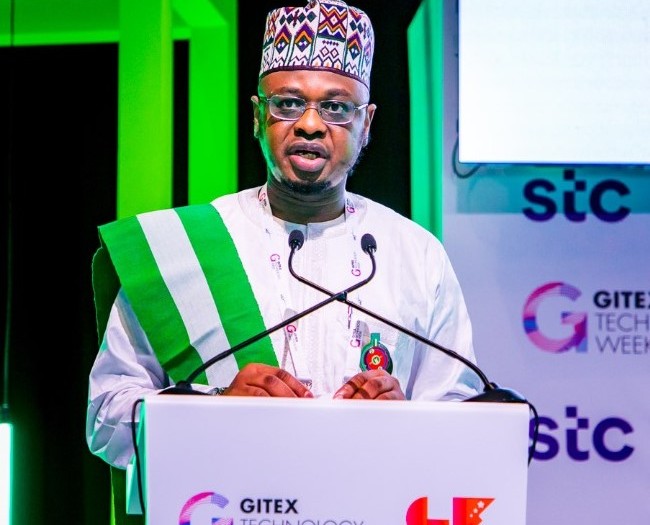
Allah knows I love and revere Shiekh Isa Ali Ibrahim Pantami – I prefer addressing him as Sheikh than Dr. I am not sure if the Sheikh can remember me or the encounter that brought our paths together. That encounter, however, left a lasting impression on me about him. Most of my friends, online and offline, know that I support and defend him in many issues, especially since he became a minister. This does not, in any way, mean I am looking for validation, acceptance or favour, from the learned Sheikh. I am also not a blind supporter.

Besides, I want to say a few words regarding the news of his promotion to the rank of professor, which has generated a lot of controversies. However, before dwelling on that, I want to unequivocally state that Sheikh Pantami’s academic excellence is beyond a reasonable doubt. He is an academic par excellence, just as he is an Islamic scholar. There is no doubt about that. Being promoted to the rank of professor, however, goes a bit beyond academic excellence. Some things (have to) complement one’s academic excellence to guarantee one’s chances of becoming a professor. I will mention the crucial ones.

Specific criteria qualify one to be a professor in Nigeria. They include obtaining a certain level of education, engagement in teaching, research and community service, and scholarship assessment. A doctorate is mostly a requirement, except for medical sciences who recognise a professional fellowship. According to each university’s Condition of Service, teaching for some years, including engagement in other academic activities such as supervision, are part of the process.

Community services refer to both academic and non-academic positions held (such as Head of Department, Dean, Director, etc.). A professorial candidate must also present his scholarly works, which relevant scholars in the field will assess. Candidate’s works are usually submitted to three people, and they can only be promoted to the professor rank if at least two out of the three recommend that.

Active service is another crucial component for promotion to the rank of professor. One must be actively teaching in a university at the time of their promotion. Another option is at the point of appointment from one university to another. If a person presents proof indicating he meets the requirement for a professorial chair in a university they are applying for a job, the committee responsible for his appointment has the prerogative to appoint him with a rank of professor even if he was not a professor in the previous institution he was working.

Therefore, looking at the above criteria, it is improbable for Sheikh Pantami to become a professor in his current circumstances. He is currently a minister of the Federal Republic of Nigeria. Part of the conditions of his appointment as the minister is that he had to take an unpaid leave from the university he was working for in KSA. This shows that he is not in “active service” with an institution of learning.

The purported reports about his promotion to the rank of professor say that it is a university in Nigeria (Owerri to be specific) that promoted him. This is very unlikely because the university cannot promote someone that is not its staff. Obviously, Sheikh Pantami is not a staff of that university. Since there is no “honourary professorship,” like a doctorate, we can conclude that the university has no power to do that. Though in Nigeria, anything is possible.

This, however, does mean Sheikh Pantami will not be a professor in the future. There are countless examples of academics who joined public service at some point in their lives and later went back to academia to become professors.

For now, we can only wish Sheikh Pantami more enviable successes as a minister, a safe landing and a prosperous academic future.

Idris Hamza Yana is a Doctoral Researcher at the University of Exeter, United Kingdom. His social media handles are:

Facebook: https://www.facebook.com/idris.yana/

Twitter: https://twitter.com/Idrisyana

Dear Nigeria: Don’t fall prey to the false promises of war

Like the mid-1960s, the early 2020s has been heated and filled with war rhetoric. This rhetoric has been well oiled by claims of nepotism, corruption and everything that has been proverbial fertilisers for conflict in post-independence Africa. From Freetown to Kinshasa, the story has always been the same. And intriguingly, the results have also been similar. Deaths and more deaths, reconciliation, then business as usual. Hardly any lessons learnt!

Let’s retake this: the science of war in Africa is essentially a story of frustration, then misinformation, then delusion, then deception, then destruction, then reconciliation and finally rehabilitation. But, except maybe for places like Rwanda, the root causes never get addressed, the warlords never die, the corrupt politicians/soldiers mostly come back wealthier and more confident to assume the mantle of leadership. And the masses who fought and killed one another are further plunged into disillusion and poverty.  

Why then does this story keep repeating itself if data tells us that the investment always ends in red and that the returns are always intertwined with regrets? Here are a few observations, supported by both learning and experience:

Violence is a Political Statement

The old saying that where gentility fails, brutality prevails holds true today as it did in Nigeria’s 1960s, Liberia and Sierra Leone’s 1980s, and Rwanda’s 1990s. Politicians have basically two tools: debate and violence. In climes where one ceases to be effective, the other is automatically activated. And because both do not really take much from politicians by way of casualties, both have been greatly valued assets in their political estates. To change this, the citizens must be enlightened enough to see beyond the rhetoric. And usually, this mass education has to be ultimately championed by concerned and more enlightened citizens outside the political class.

The War Mongers Mostly Have a Contingency Plan

Suppose the chances of death for both leaders and masses in a civil conflict are equal. In that case, the apparent possibility is that wars will hardly be fought, and misinformation will get as little funding as possible. Unfortunately, the truth is that leaders usually have collaborators outside the borders of their countries and these collaborators typically stop at nothing to rescue their friends when things get worse. So, with this in mind, leaders at both ends of the divide beguile their cannon fodders to get the job done while they await the desired if ominous outcomes.

War Promises Freedom and other “Sweet” Things

History is replete with people taking the path of violence and war to regain their freedom. And beyond freedom, war promises access to places, bodies, resources and positions that were otherwise inaccessible. In a strange turn of things, Foday Sankoh of Sierra Leone rose to a position almost as powerful as the President after his rebellion that led to the loss of reportedly 50,000 lives, including hundreds of Nigerian and other ECOMOG/UN Peacekeeping forces.  He committed the crimes, then, for the sake of peace, got rewarded with laurels! Who is going to bring back all those lives, especially those of his loyal foot soldiers? Most of these people willingly took arms because they dreamt of enjoying what only Sankoh could enjoy, while their ultimate lot was destruction. War promises a lot of prosperity, ironically, but delivers a lot of destruction in reality.

The Crux of the Matter: it’s Difficult to Find a Suitable Alternative to War

Not that people want to lose routine or the calm of home. Not that they like to see the hacked body parts of loved ones or wade through the blood of a beheaded or gunned down neighbour in search of safety, not that they like to be refugees and be treated as slaves in strange lands, just that in the heat of the burning issues, with the accusations and counter-accusations and the mutual acrimony that ensues, it’s “difficult” to find a suitable alternative. Or better put, the other options have been abused and exhausted. Elections and coup d’état are the usual alternatives to war in our postcolonial political dispensation, but the two have hardly ever provided the desired outcomes. Therefore, it is safe to say the fault is not in our enemies; the fault, rather, lies in us. People are willing to change evil until they become beneficiaries of such evils. And how quickly do their fans often forget this fact!

In the final analysis, people plan for wars, heat the polity, sponsor misinformation, make promises of victory, but then war is so creative that it hardly subjects itself to anybody’s plans. And when the gruesome scenes of death and destruction start being plastered all over the media, and mercenaries and warlords start gaining unfettered access to national resources and the treasury, when hunger subdues the strongest amongst us and ruins the future that is so dear to us, when ammunitions are in short supply, and the enemy forces are about to be in total control, that’s usually when it becomes clear that it is not really the war we wanted, but the promises it offered from a distance. Too late!

AF Sesay is a writer based in Lagos. He can be reached via amarasesay.amir@gmail.com.

Soldiers ‘reportedly’ oust President Conde of Guinea

By Muhammad Sabiu

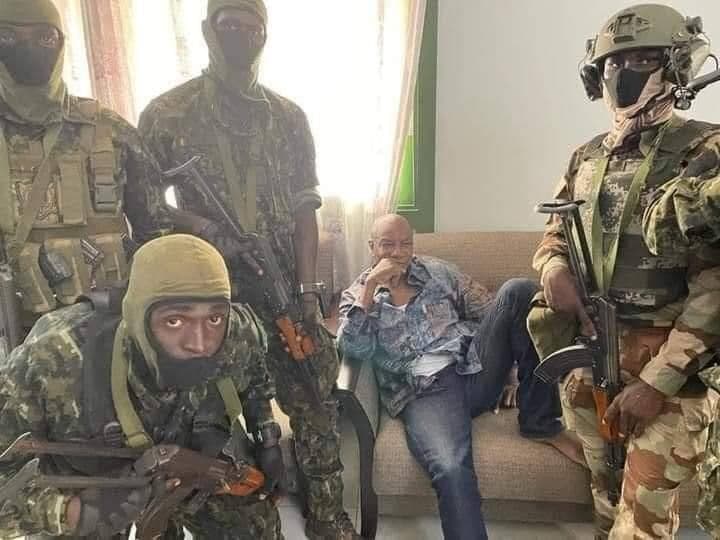
Guinea Conakry’s octogenarian president, Alpha Conde, has reportedly been overthrown by the country’s military.

The BBC has reported that an unverified video, which had gone viral, shows the president in the hands of soldiers.

Subsequent reports coming from Conakry, Guinea’s capital, have indicated that there was heavy gunfire in the city.

President Conde won a third term in a controversial election last year, which had ignited mass protest in the country.

There are still no details as to how the coup was staged.

Details follow…

Kaduna LG Polls: Why Gov. El-Rufai lost own polling unit, ward

By Mohammed Zayyad

Mallam Nasir El-Rufai is one of the best performing governors in Nigeria. So far, he is the best Governor of Kaduna State in recent times. However, Mallam lost his polling unit and ward in the local government elections conducted by the Kaduna State Independent Electoral Commission on September 04, 2023.

Governor El-Rufai voted at Unguwan Sarkin polling unit 001 in Kaduna North LGA of the state. Mohammed Sani, the presiding officer, announced the final results: Unguwan Sarki Ward 007 Kaduna North Chairmanship, the People Democratic Party (PDP) scored 1,235 votes while the ruling All Progressive Congress (APC) scored 948 votes, while for the councillorship position, PDP garnered 1,405 votes while the APC was behind with only 804 votes.

Unfortunately, though, the election witnessed low voter turnout and challenges in some polling units as the wrong machines were deployed. El-Rufai himself expressed disappointment about the low turnout of voters in the council polls. He said: “What worries me is that I noticed that people didn’t turn out much,” This could be one of the reasons the APC did poorly at Governor El-Rufai’s unit, the party may say.

The big questions are: Why should a performing governor’s party be rejected by the people at the governor’s polling unit? Why should a performing governor lose at his polling unit and ward? Are the people angry with the governor, his party, including his government? Are the people not happy with the way the beautiful Kaduna Urban Renewal is being handled? Is the current insecurity the state is witnessing a significant factor? Is it the issue of the sack of workers? Is the Kaduna state government out in touch with the real ordinary people? So many questions require answers because the result is a big political statement from the people to the governor,  his government and his party.

Some political pundits believe that Mallam Nasir El-Rufai’s major error is that his government is not doing well in balancing policies, development, and politics. The pundits further said this is a reminder that development in a poor society must and should always consider the people’s survival first. An example was the former governor of Adamawa state, Muhammadu Umaru Bindow, who did very well in constructing roads, bridges and hospitals. Still, the people denied him and his party the APC a second term because Bindow failed in workers’ salaries and human development.

Nevertheless, El-Rufa’i is still the best governor Kaduna State has had so far. APC may go on to win the majority of the local government councils as the results come it. Still, some pockets of the results have given the opposition more strength to fight more and take advantage of areas the government is lagging. One simple example is how one of the governorship hopefuls, Honourable Ahmad Tijjani Umar, is smartly mobilising the youth and building bridges while taking advantage of the government’s weak areas. It seems it is working well for him and his party to win support from the ordinary people.

Governor  El-Rufa’i should be commended for conducting a free and fair election and using modern technology to advance democracy. Furthermore, the governor’s polling unit and ward results have given the governor some clues and the need for readjustments and adjustments for future politics.

Zayyad I. Muhammad writes from Abuja, zaymohd@yahoo.com.

Zamfara and telecom disconnection

By Mallam Musbahu Magayaki

The Federal Government of Nigeria has ordered Zamfara state’s communication lines to be disconnected, ostensibly to thwart bandits’ heinous crimes, following bandit attacks in Zamfara State that resulted in the abduction of school children in the state governor’s home town on Wednesday, September 1, 2021, and similarly in Niger and Kaduna states.

Simultaneously, the governments of Zamfara, Niger and Kaduna states have ordered the closure of all weekly markets in the state as part of measures to address the state’s deteriorating situation.

However, the federal and state governments should look into the possibility of providing palliatives for state citizens, as some, if not all of them, maybe unable to put food on their tables due to the closure of their occupational practices.

Furthermore, the government must make immediate efforts to re-energize intelligence gathering regarding terrorists’ plans and use all legal channels available to prevent and prosecute terrorist activities and private sources of support.

According to reports, one kidnap kingpin has threatened towns, stating that everyone who follows the government’s strategy of closing markets and prohibiting the sale of gasoline will be assaulted at any time. As a result, more troops should be deployed to these towns if the government wants the residents to follow official policy.

According to one expert, no one will disobey terrorists he knows will kill him without the government’s help.

Nevertheless, we expect that the measures taken will provide a lasting solution to the high rate of banditry and kidnapping in these states. And the government should be cautious about its choice because these hoodlums could go on to other lanes and cause further havoc in the impacted neighbourhood.

Moreover, to overcome the country’s dreadful condition, inhabitants should completely cooperate with security. If we work together, we can eliminate the country’s threat of instability. Thus, everyone has a part to play in the situation.

In conclusion, traditional rulers in all the affected states should work closely with security forces to combat the security situation in their states because these terrorists are branching out into some of their villages. Residents wouldn’t tell security organizations about them for fear of being attacked or killed by bandits.


Mallam Musbahu Magayaki writes from Sabon Fegi, Azare, Bauchi State.