Month: August 2021

Yes-man

By Muhsin Ibrahim

Religion is one single thing Nigerians of whatever dispensations take in high esteem. Religion is often viewed as the opium of the subjugation of the masses or as their Achilles’ heel. To Rahama, the story is different; religion means nothing to her. It is simply an identifier that she’s a Muslim lady. One might think having grown up in a multi-religious house would intuitively teach her to have respect of some sort for religion, wrong. Her Imams and pastors do not use Qur’an or Bible.

A 28-year-old, stout Rahama Tsoho belongs to a disreputable family of three. Her father, an ex-serviceman, divorced their mother when she was only two. She stays with the father, and her sister with the mother. She had longed to marry since her teenage, but she couldn’t. She always attributes this to her look and family. So, she vows to live a better life in the future by hook or crook and begins to use highly effective and expensive bleaching creams to brighten her skin. She also hunts for a suitor via dubious ways such as flaunting her bosoms and derrière at the workplace and visiting the so-called Malamai, fortune-tellers and sorcerers.

After long and tedious trials and retrials, she meets a fine young man in their office, a newly transferred staff from another state. Without a doubt, she knows he’s beyond her league, but she believes it’s worth a try. But, as feared, the fine-looking new staff turned down her offer right away.

“I swear I will marry that guy by all means”, she declares. Soon after that, she starts consulting her fixers for the aid of whatever nature. “All I want”, she confesses to one of them, a mighty sorcerer who lives atop a high mountain, “is to marry him”.

“That’s easy for us as drinking water”, he assured her. “There are, however, rules, as you well know”.

“I am more than ready to abide by them. All of them, provided my wish will be granted”.

For a start, she’s instructed to visit their family house, which is far away, which is uncommon in the culture of that locality. She unhesitatingly goes. She introduces herself as his colleague. Simple. She, throughout her stay, behaves the most innocent girl-type and spreads greetings to his stepmother and siblings and everyone who cares to respond.

Oga Rabiu has been very helpful”, she warily announces. “I, therefore, felt duty-bound to visit his family as I am here for another reason, actually a relative’s wedding”.

In the evening of the same day, I saw Rabiu looking bothered and lonely. I was about to ask him what was up when he told me about Rahama. He said she was a magic-savvy lady who shamelessly told him their marriage would yield many blessings. When he asked her how she knew that, she said her Mallam told her.

I was bewildered. I quite well know that she’s neither fit for him nor his scholastic family. He halts my busy mind, which is trying hard to dissect the whole scenario: “Muhammad”, he calls my name, “marrying Rahama would be the greatest mistake in my life”. That relieved my besieged mind, for I was contemplating whether or not I should tell him not to accept her proposal. “So, rest assured; I will avoid it like the plague”.

A few days or weeks, I can’t recall exactly, passed by, and I heard nothing from my dear neighbour cum friend, Rabiu or about Rahama’s blunt, in fact, unheard-of proposal. I had just started thinking the issue was dead and buried for good when he came to me with a bombshell.

“I am getting married next week”.

Wow! I said. I know he and his younger brother have been searching for a fitting life partner for him in the neighbourhoods. I also know he’s rich enough to solemnise his marriage within a few days if both parties agree. Thus, I ask:

“Who’s the lucky girl?”

His look changed from thrilled to timidity in a split second. I wish I could retract my question. But, in this deportment, he managed to respond: “Rahama”.

After calculating the atmosphere, I feel convinced that there is no need for any further explanation on how it comes to that. Her magic, shameless pursuit and insincere insistence have ultimately worked out. Therefore, I pray for the Almighty to bless the union and call it a day.

A few years later, I began to think that we all, who earlier condemned her, were proven wrong. She seems a wife everyone would want to have: caring, loving, dutiful, and generous towards him and his family. Yet, her significant frailty remains in how she handles religion. That too, we reason that she’s from a different background. Therefore, we shouldn’t expect her to behave the way we do or as we want.

Unbeknown to us, she’s simply buying time to portray her authentic self. She’s a wolf in sheep’s cloth. She is now doing the unthinkable; Rabiu has literally been her “yes man”. He worships her; he does everything to please her and parts with everyone she doesn’t like, including his brothers and sisters. He’s, to sum it up, blanketed in her world.

Rabiu is known for much discretion, but not any longer. You dare to tell him your undisclosed secret; you would hear it spoken of in the neighbourhoods. If you ask who told them, they would say Rahama.

Uncharacteristically enough and against Islam, Rabiu has, on several instances, bequeathed his wealth to be given to her should he die, as they don’t have any children yet. He cannot even reflect or recall that his father, who should rightly get the lion’s share, is still alive.

There is a single path to get to Rabiu now, and that’s through Rahama. Rabiu is for Rahama, and Rahama is for her family and pocket. He sees, but he cannot decipher. So everyone believes that he’s conjured. And that doesn’t last forever.

Muhsin Ibrahim is a student and staff at the Institute of African Studies, University of Cologne. He can be reached via muhsin2008@gmail.com.

Governor El-Rufai condemns Kauru attack

By Sumayyah Auwal Usman

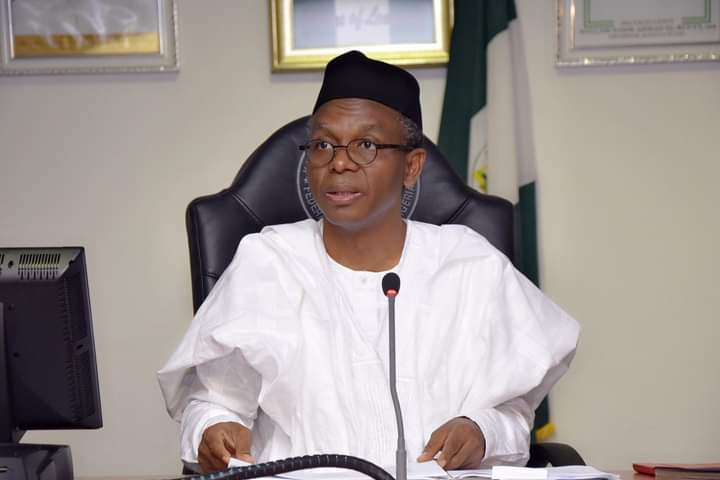
Kaduna State Governor, Mallam Nasir El-Rufa’i, has condemned the attack on Monday, which spanned Ungwan Magaji, Kigam, Kisicho and Kikoba villages in Kauru local government area.

In a statement signed by the commissioner, Ministry of Internal Security and Home Affairs, Kaduna State, Mr Samuel Aruwan, El-Rufa’i “expressed his sadness over the attack and condemned it as an action of depraved entities stripped of every shred of humanity. He prayed for the repose of the souls of the victims and sent his condolences to their families. The Governor tasked security agencies working in the area to sustain thorough investigations into the incident.”

According to the Defence Headquarters Operation Safe Haven report, armed assailants attacked the mentioned villages early on Monday morning and swiftly left six residents dead. The deceased have been identified as:

  • Joseph Maza
  • Timvan Cibi Ciwo
  • Monday Titus
  • Asabe Magani
  • Laraba Danladi
  • Yosi Danladi

In addition to the casualties, it was reported that eight houses, six huts, one motorcycle and a generator were razed during the attack. Some maize crops were also destroyed.

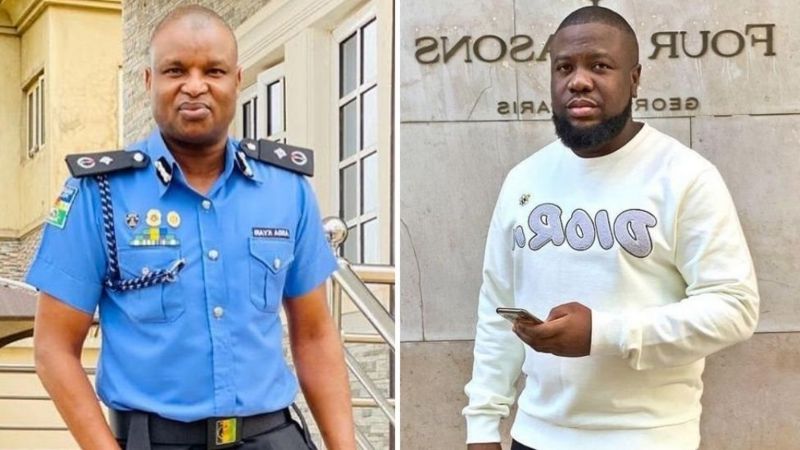
Abba Kyari vs Hushpuppi: Who is the new Mark Girland on the loose?

By Nura Jibo

 James Hadley Chase, the master thriller and fictional writing maestro of all time, described so often Mark Girland as a good-for-nothing secret agent with a distinct weakness for money and women. But Girland, unlike Hushpuppi, “finds himself in Prague for his latest adventure. Events in the Communist country prove all too much for Girland as he comes face to face with a sinister world of deception, fraud and corruption”.


That was exactly what happened to Abba Kyari and Hushpuppi! The Nigerian supercop turned American “robocop”/ Hushpuppi turned American prison “puppy”. They squarely fell in the ‘safety nets’ of an American FBI. And the result is another gripping thriller from another James Hadley Chase new fairytales.


But dear Nigerians, wait a minute!


Why should you get disturbed by this saga? It’s not something new. It’s normal within the Nigerian political, military and police spaces.

1. How could you Nigerians too often forget about IG Tafa Balogun corruption saga with Nuhu Ribadu?

2. How dare you Nigerians forget so soon the Magu Magu EFCC corruption drama with the Attorney General of the Nigerian Federation?

3. Why should you Nigerians err if at all you can take a hue in Farida Waziri, Lamorde and Co?

4. Is supercop or superheroism anything to go by in the Nigerian system? How could Nigerians so narrowly forget about the late Ali Kwara and his chivalrous pursuit of armed robbers in Nigeria? What happened afterwards?

5. Is it not the same politicians without any political hygiene that turned Kwara into a political contractor willy-nilly the way they transformed Kyari into a global celebrity on bringing to book criminals in Nigeria?

6. Why should you Nigerians continue to raise your temper on Kyari versus Hushpuppi when you already know how Diezani and Farouk Lawan ended up? What’s new? What’s so special about this case of a new Rambo on the loose?

7. Does the FBI or Nigerian police matter? If so, then catch your breath and rest your case until “THIS IS FOR REAL”!

And if it is for real, then little wonder…


“When a woman turns up in Paris with information to sell to the CIA, is it for real? It will soon become clear that it is, and the FBI, Nigerian police or the CIA aren’t the only ones to realise it. As the tale sweeps from America to Paris and Africa, combining espionage with violence and intrigue, this another drama from “James Hadley Chase” gives a new background for the Hushpuppi thriller while maintaining the highest standards of readability and watchability.


Happy reading and ranting and viewing the two Rambos on the loose!


Nura Jibo writes from Dutse, Jigawa State. He can be reached via jibonura@yahoo.com.

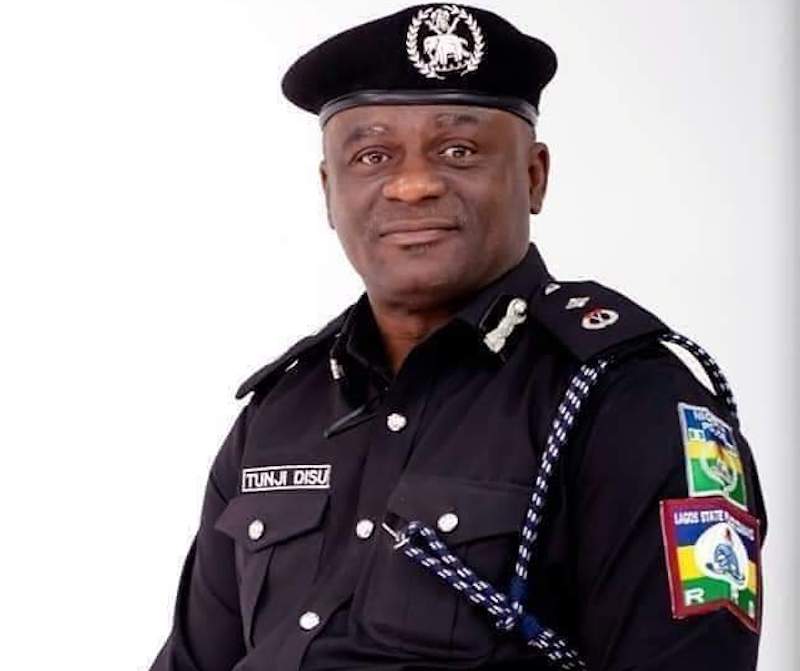
DCP Disu replaces Abba Kyari as new head of Police IRT

By Muhammad Sabiu

DCP Tunji Disu has been appointed to replace DCP Abba Kyari as the new Head of the Police Intelligence Response Team (IRT) by the Inspector-General of Police, Usman Alkali Baba, following the indictment and suspension of DCP Kyari over alleged involvement in fraud purportedly perpetrated by an infamous fraudster, Hushpuppi.

The appointment was on Monday disclosed in a statement by the Force spokesperson, Frank Mba.

Mr Mba was quoted as saying, “The Inspector-General of Police, IGP Usman Alkali Baba, psc (+), NPM, fdc has today, 2nd August, 2021 approved the posting of DCP Tunji Disu as the new Head of the Police Intelligence Response Team (IRT).

“The posting of the officer is on the heels of Management’s decision to fill the leadership gap within the IRT and refocus the Unit for better service delivery.

“The IGP has charged the new Head of the IRT to demonstrate his professional competence in his leadership of the Unit. He also assured citizens that the IRT will remain focused in the discharge of its duties in line with national statutes and international best practices.”

Shehu Sani, supporters may soon join PDP

By Sumayyah Auwal Usman


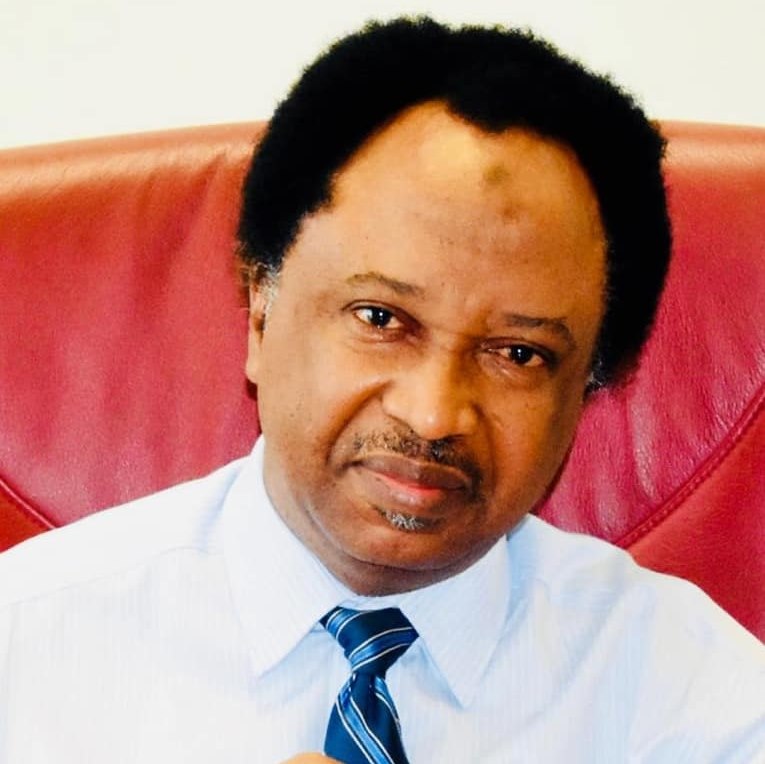
The former senator representing Kaduna Central Senatorial District, Senator Shehu Sani and his supporters are considering defecting to the People’s Democratic Party (PDP), The Daily Reality has learnt.


Following his recent resignation from the People’s Redemption Party (PRP), Senator Sani and his supporters have been conducting a series of meetings on the issue and that they would soon come up with a stand. Recently, the former lawmaker hosted the 23 PDP local government party chairmen amid PDP defection rumours. Penultimate weeks ago, Senator Sani also visited some PDP bigwigs in the state, including former governors Ahmed Mohammed Makarfi, Alhaji Mukhtar Ramalan Yero, and former gubernatorial aspirant, Isah Ashiru Kudan. 


No details were revealed about deliberations between Sani and the party chairmen and his visits to PDP stakeholders in the state. Still, sources have confirmed to The Daily Reality that the move was part of Sani’s swift consultation of power brokers in the PDP towards having a soft landing on a likely defection to the party. 
It will be recalled Senator Sani joined the PRP in October 2018 after he failed to win the primary elections of the All Progressives Congress (APC) for the 2019 Kaduna central senatorial seat. He served on the platform of the APC but was critical of President Muhammadu Buhari and Governor El-Rufai’s governments from 2015-2019.

Bauchi payroll scam: Please, name, shame and jail them

By Sulaiman Maijama’a


Reading the report of the disheartening revelation that the Bauchi state government has uncovered over 7000 ghost workers and pensioners from its payroll, which will enable it to realise over 500 Million Naira savings monthly, has given me sleepless nights this week. This is one of the terrible experiences I have had in recent times. I did not know when I was engulfed by raw, unadulterated pain, thinking about how the state’s governor, Bala Mohammed, is taking bold steps to sanitise civil service and block all leakages, other ungodly and unpatriotic people are sabotaging his efforts. If the government is to employ fresh graduates on the N50,000 salary scale, 500 million is equivalent to 10,000 employees.


 When the global economy is ravaged, and governments all over are trying to cushion the effect. Bauchi State is not an exception; these people fail to have the conscience, unleash their cruelty on the resources of the poor masses. And while these fraudulent people, whom I describe as “demons in human structure”, are benefiting illegally from this organised financial scam, the Governor is unjustifiably being criticised for being seen at fault, and the civil servants are in difficulty. This is, indeed, more than double jeopardy. However, if justice is to prevail, one cannot point an accusing finger at the citizens of the state who have been registering their discontent and throwing a barrage of questions to the State Governor, Sen. Bala Mohammed, seeking clarification on why are the salaries of some workers not paid as at when due. Those who think to seek clarification on issues of this nature is a crime know nothing about the Constitution because every citizen is entitled to ask questions on any public issue, except for classified matters, as by law established.


For a couple of months ago, there have been concerns by the Bauchi State citizens, especially civil servants, as regards the hitches that result in delay of the payment of some workers’ salaries in the State. Because Bauchi State is a civil service state, the problem appears to be the greatest concern of the people these days. The opponents of the PDP led administration take that to their advantage by crashing in, posing questions to the Government in power as to why the delay and why despite death, retirement and record of no employment, there has been an exponential rise in the wage bill?


This fraud in civil service started long before Senator Bala Mohammed came on board as the executive governor of Bauchi state. Though his approach to bringing it to a halt is extraordinary, It appears we have a long way to go as the efforts have always proven to be an exercise in futility.


To address the challenges on the issue in September 2020, Governor Bala hosted a Media Parley with civil servants, labour leaders, Government’s officials, elder statesmen, stakeholders and the Media where massive corruption in the system was exposed. A financial consulting firm, DYNATECH Solutions Limited, contracted by the State Government to sanitise its payroll and nominal roll, had revealed that ghost pensioners had been paid over N700 million within one year. While addressing the government, DYNATECH said the sum of N744,000,000 had been siphoned out of the state treasury.


I was then happy when the Governor resolved not to spare anyone found behind the organised financial crime on the Government’s payroll. Unfortunately, however, less than one year down the line, some people could be brave enough to summon the courage and orchestrate their devilish act, just a replay of last year. Something then is wrong!  For Senator Bala to find a lasting solution to this, he must begin to speak to those found to be involved in collecting undeserved salaries and pensions “in a language that they understand”. What language do they understand?


I remember a couple of months ago when some crooks found to be behind financial scams on the state’s payroll were publicised; their names published on national dailies along with pictures and their places of work. Please, your Excellency, sustain this. Whoever is found indulging in such a shameful act, regardless of his social status, should be breaking news for the day on national dailies, radio and television stations. Their names should make the banner headlines, and their pictures take the front pages of the newspaper. This is the best way to embarrass them, just like they embarrass the responsibility they are entrusted with. It will also serve as a deterrent to others.


Since these people do not mean and wish well for the society as their actions result in general affliction in the society with public institutions being grounded to a halt, please, your Excellency, we want to see them facing the fullest wrath of the law, being chased to jail, for they are nothing but calamity to our journey to promised land.


Maijama’a writes from the Faculty of Mass Communication, Bayero University, Kano. He can be contacted via sulaimanmaija@gmail.com.

Massive extortion on Nigerian highways: A travelogue

By Tordue Simon Targema

Although extortion by security agents mounting roadblocks on Nigerian highways is not a new phenomenon, the trend has assumed an alarmingly worrisome dimension recently. A foreigner plying Nigerian roads in a commercial vehicle would think Nigerian security agents are double-tasked to be collecting taxes as well from drivers! Perhaps, the confidence which the officers demonstrate while collecting the illegal money and the coercive techniques which they deploy in doing so will dispel any doubt from the foreigner that such money is illegal and extortionist in nature. Sadly, this is the situation motorists and commuters on Nigerian highways have found themselves in.

I have extensively travelled across Nigeria. As an academic staff of a university, I have the privilege of travelling across the country. For instance, after obtaining my bachelor’s degree in the northeast, I moved to the northwest and obtained a master’s degree, and am currently pursuing my doctorate degree in the south-south. This has given me extensive exposure to Nigerian roads. Also, I have attended several academic conferences in each of the six geopolitical zones. My experience on Nigerian roads is a very horrible one, made so by a multiplicity of factors such as the deplorable nature of the roads and massive extortion by security agents. These have made the thought of travelling in Nigeria by road a dreaded one even to people who are extremely adventurous by nature, to talk less of those who have a phobia for travelling.

My experience on a recent trip to one of the south-south states from the northeast spurred me to pen down this piece. In what appeared to be a painfully interesting drama series, we watched cheerfully, albeit in deep anguish as our driver bargained with our security agencies who, I learnt, have raised the charge from the normal 50 naira to 100 naira, a development that did not go down well with commercial drivers. My driver was highly agitated paying the new charge but could not help it. He devised all possible gimmicks to resist it which could not help out. First, he attempted evading as many of these checkpoints as he could- army, police, civil defence, immigration, road safety and vigilante, custom, produce tax force ….name it! But this strategy usually backfired, as each of the checkpoints he evaded would call the very next checkpoint ahead and ask them to bundle us right back.

In no time, he realized that this was not by any means a workable strategy, and with intense pressure from the equally agitated passengers, decided to cooperate. Of course, he had to, because the few experiences we had with the checkpoints he evaded were terrible, as the security agencies were utterly aggressive and would at each of such instances traumatize him, heap up charges against him and intimidate him as much as they could to coerce him into submission. Worst of all, each of those checkpoints he evaded demanded – and actually collected from him – far more than their normal 100 naira. To cap it all, he nearly had an accident in the process of evading one of such checkpoints! Obviously, evading the checkpoints was not the way to go; a different strategy was, thus, imminent.

Mind game, pleading, teasing and joking with the security agencies was the next strategy. At each of the checkpoints, he would use any of these he felt was the most appropriate. For instance, if he had discovered by virtue of experience, appearance or instinct that a certain officer was a northerner, he was sure to use emotional appeal as a way to escape the payment. Language would have been a formidable force in this regard but for the obsession of our officers with money who would still insist he tip them after the pleasantries. You would feel their whole being and soul depend squarely on the illicit money they collect from drivers! Well, on a handful of occasions, this strategy worked and he was waived the charge.

Teasing and joking with the security operatives was the next strategy, but after it, they would always ask: anything for the boys? In such cases, our driver would retort: oga, when I de return, I’ll see you. At this, some would let go, but most would remind him that that is what he said while he was coming down! In such unfortunate cases, he would have no escape but to cooperate.

Another strategy he adopted was to tell them he had no change. In such cases, he would give them a thousand naira note to prove he has no change. This was a counterproductive strategy and in no time, he had to drop it, perhaps, forced by pressure from passengers because it was time-wasting. Why? Upon receipt of the thousand naira note, the officers would not let him go with it, but reluctantly look for change from their previous collections and give him. In the event they did not get it there, they would have to wait until collections from other drivers coming behind us complete the change! This generated intense condemnations of the passengers who felt that he was wasting their time and asked him to be cooperating or if indeed he had no change as he claimed, look for change at a filling station. Of course, the driver himself was pissed off with the attitude of the officers and had no choice but to change strategy.

Next was the use of prospective NYSC members as a bargaining point. This strategy worked for him significantly- not without difficulties though. Luckily for him, he had about four prospective NYSC members from the south-south deploying to their orientation camp as his passengers. Trust our smart driver; it took him no time at all to activate this as a point of a bargain! Oga, na kopas I carry ooo, he would tell each officer that rudely returned his 50 naira. Boom! Questions from all angles would start pouring out: kopa never pay for their transport? Na for free you carry them? Blablabla. At these, he would strongly insist that the prospective corps members were government properties, that the car he was driving is a government vehicle (the car actually had SURE-P inscribed on it), and that the officers too are government agents, hence, there is no point collecting much from him for conveying the corps members to their orientation camp. This would usually weaken the officers who would never give up but instead, as a final push, return to us: where are the kopas? At this we would all chorus: na we ooo! Of course, even those of us that were not corps members would join in to add to the echo. They would then tease us, ask us some few jovial questions, collect the 50 naira and then we move.

This was one of his most effective strategies. Despite its seeming efficiency, some of the rude officers would outrightly reject his 50 naira, ask him to go and park and delay us until he gets the sense in his head to give them their rightful 100 naira. Indeed, it was their entitlement. A look at the manner in which it was being demanded and collected dispels every doubt that such collections are illicit. At some of the checkpoints, the officers would, without saying anything else, ask the driver to go and park. At such points, he would oblige, park his vehicle, come down and walk up to them to give them their due. I found this arrogant and irritating too. Why? If you are shameless enough to descend so low and extort poor commercial drivers, then you should be prepared to keep aside all silly notions of pride and dignity and take it right there on the road before the prying eyes of passengers and all onlookers. But some of our pompous officers feel they are above this, and would rather the driver park, walk back and pay them their dues. No thought of the delay such would cause the commuters, no. they simply wanted their money and nothing else!

In one of the states in the north-central region, this worrisome trend has assumed yet another funny dimension. Trucks (used for pushing water and other commodities) are used at checkpoints, perhaps, because they are easier to push and much more flexible than logs of woods. Still in the same state, the officers- almost at each checkpoint- have engaged the services of jobless young men who stand on the road and coordinate the illicit deal for them. At these points, such young men are as pitiless and brutal as the sun or heavy rain on a lone traveller in the heart of a desert. They would neither listen to any plea nor get amused by the jokes of the driver. Never would they give in to any of his antics or gimmicks, worst of all, they have scant or no regard at all for NYSC! If anything, the mention of it gets them irritated. They got our driver really hard at this. Who be kopa? Na weting kopa de give me? They would ask him. And their gallant officers were ever ready to step in should any driver underrate them. Perhaps, the driver understood that they are traps to lure the wrath of the officers. He would oblige, give them the 100 naira once all tricks fail and then they would pull away their trucks and we would move on.

As we drove deeper into the night, the due increased. Rightfully, it increased to 200 naira, then 300 naira. It got to a point where we had to go down and collectively beg the officers that we are NYSC members deploying to our orientation camp, that they should give us consideration. They first turned deaf ears at us- perhaps, out of guilt- but later allowed our driver to pass. Clearly, our infuriated driver saw that he would not continue at that pace. He had to find a town nearby, parked at a filling station and we passed the night there.

You would think the proliferation of security checkpoints on our highways is an assurance of safety! At this, I bet my last kobo that you are woefully wrong. Around 4:30 am, we hit the road again. At the first checkpoint after we took off, an officer- after collecting his due – whispered to the driver that the road was not safe. Armed robbers were on operation some miles away! Armed robbers with this heavy security presence? I asked myself. The driver had to stop again. At first, we thought it was a lie but could not take the risk of defying the caution, so we stayed there till daybreak. Around 6:00 am, we continued and, lo and behold, came to the spot of the armed robbers’ operation! Two 18-seater buses stood there, their front tires flattened with bullets and the windscreen pierced through with bullets too. No passenger was wounded, even as they stood there, traumatized. They were unlucky. They got robbed. An old woman who could not stand the trauma fainted and was rushed to the nearby hospital afterwards. We stopped by and the stranded passengers eagerly narrated their ordeals. We couldn’t help out because our vehicle had no space for more passengers, and so, we only kept them solidarity companionship of about five minutes and moved on.

No doubt, the rising tide of insecurity contributes significantly to the deployment of security operatives on the highways. This explains why their presence is most conspicuous in conflict-tone and banditry-ridden states. Little wonder too that they feel their services on the roads are indispensable and they should be handsomely appreciated or rewarded by the people they protect. Now, I am not disputing this fact, neither I’m I underrating their importance. But I feel strongly that the government whose primary prerogative is to secure the lives and property of citizens should saddle the responsibility of catering for the welfare and incentives of the security operatives they deploy on the highways squarely, and not to push it to vulnerable drivers and commuters.

Of course, commuters bear the financial burden too, indirectly through arbitrary increments and hikes of transport fares. A friend of mine boarded a commercial bus and was charged 6,050 naira as transport fare. Curiously, he asked what the 50 naira on top is meant for and was promptly told it will be used for settling security operatives at checkpoints. I do not envy Nigerian commercial drivers, I really don’t. Jalingo to Porthacourt for instance has way over a hundred security checkpoints. Imagine giving 100 naira at each of the checkpoints, that’s way over 10,000 naira. In essence, an average commercial driver uses the transport fare of about two passengers just for settling security operatives at checkpoints. This is outrageous and really unfortunate, to imagine that the cost of spare parts has skyrocketed to an unprecedented degree. I won’t talk of fuel and lubricants required to service the vehicles. I began to ponder: what do the drivers take home after giving returns to their companies, fuelling the vehicles, minor and major repairs here and there, and settling our officers on the highways? No answer came in handy. I simply shook my head and redirected my thoughts to the music in my earpiece. That made more sense and in no time, I got engrossed in my thoughts and forgot about the security men as though they never existed.

It is sad to admit that although our security operatives deserve our daily prayers due to the danger they face daily confronting bandits and terrorists here and there, this extortionist tendency has taken away the public sympathy they deserve and earn them a curse and disrespect from commuters and drivers. This is very bad. It is about time the government checked the rising trend. In the interest of our commercial drivers and commuters, all forms of extortion on the highways must be abolished. Government should be prepared to shoulder the responsibilities of our officers on the highways and when that is done, deal decisively with officers found extorting vulnerable passengers.

I must confess that this is one area president Muhammadu Buhari’s administration has dashed my expectations woefully. In 2015, just before his inauguration, I recall travelling to another part of the country. A security officer was boisterously threatening to beat up our driver for refusing to give him his due. The sharp reaction of our young driver created a scene and in no time, the officer trumped up charges that never existed on the young man- driving licence, manifest, vehicle papers, commuters’ national identification documents, bla-bla-bla. He eventually got the driver who succumbed to the pressure that was already mounting and paid the due.

After we passed, I told the elderly man seating beside me with an air of confidence: the General has come, let me see how they will do this come next month. The old man chuckled and asked me: you think so? I replied in the affirmative. He smiled again and, with a tone of indifference, told me that nothing would actually change. In fact, he charged me to expect the worst. A conversation ensured and I tried my best to explain to him that although I was not president Buhari’s fan and did not think I will ever be, I was confident that once he takes over, all forms of extortions- especially the obvious ones like those on the highways would cease with immediate effect. The old man simply dismissed my argument in a predictive tone:  well, time shall tell better. I affirmed his submission and hoped for a day when extortion on the highways would become a thing of the past in Nigeria, a day that has refused to, and seem never to arrive anytime soon.

Concerned authorities should note that while this day delays its arrival, the effects on commercial drivers and commuters are, at the moment, unbearable. The time to end extortion on our highways is now. By the way, the deplorable condition of our roads is one other thing that usually stress-out life from commuters! In my next article, I shall relieve my experience on the Jalingo-Numan and Odukpani-Uyo roads. I am sure you will find it heart touching too, for now, I leave you in peace.

Tordue Simon Targema writes from the Department of Mass Communication, Taraba State University Jalingo. Email: torduesimon@gmail.com.
Amotekun eliminates two suspected kidnappers in Oyo

By Muhammadu Sabiu

Two suspected kidnappers have been reportedly killed by men of the southwest security outfit, popularly known as Amotekun, in Iwajowa Local Government Area, Oyo State

The state Commandant of Amotekun, Olayinka Olayanju, told journalists that the kidnappers were killed during an operation by the Amotekun security outfit on Friday, July 30.

HumAngle, an online newspaper, quoted him as saying, “It is true. There was an operation yesterday afternoon.

“With the support of local vigilantes and hunters, we killed two of them,” he added

Recall that reports indicated that the kidnappers launched an attack on Iwere Ile town on Friday in a failed attempt to abduct some community residents. Officers of Amotekun engaged the assailants in a gun duel and eliminated two of them.

Killings and kidnappings are not a threat only in Northern Nigeria—the southwest is also badly hit by the menace.

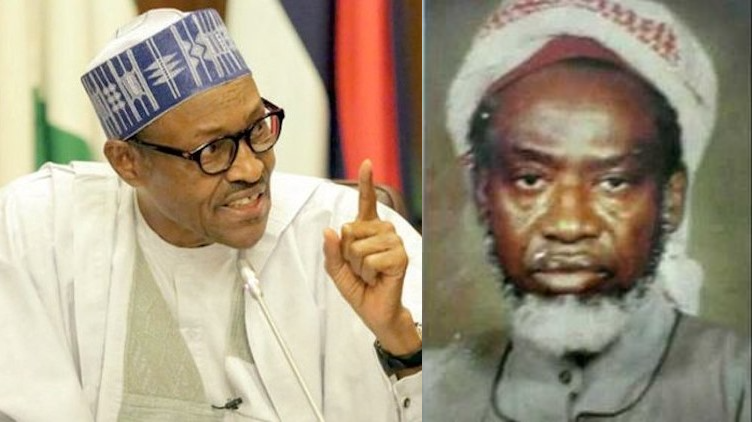
General Muhammadu Buhari as Sheikh Gumi’s Waterloo

By Abdulrahman Yunusa

Like anyone in this sinful world, one must get in touch with one unforgettable phenomenon in his life, and such experience will hunt them throughout their lives. So, Sheikh Abubakar Gumi might not be an exception because even prophets, who are the best people, get tested with many tragedies. As one Hadith entails, “Ashaddul Balaa al Anbia, thummal Amsal fal amsal”.

Gumi was a man with an impeccable personality and exceptional habits. He is the only Sunni cleric with almost all Awliya qualities: his kindness to his family and students was phenomenal. His worldly abstinence “Zuhud” is second to none, and his vision as a scholar was solid.

Perhaps of all the men of class and honour and men of power and money that late Sheikh Gumi lived and mingled with during his life, he had no open enemy. As I’m speaking to you, Gumi was the most respected cleric in the history of Nigeria, for he was blessed with many natural gifts.

He lived a well amusing as well as exciting life. His reputation cut across boundaries. None among politicians and merchants ever pointed him with an accusing finger, yet almost every responsible man befriended him. Not only politicians but even scholars did that full of humility.

Based on the intriguing accounts I have read so far in Ismaila A. Tsiga’s work, Where I Stand, even the father of the notable Islamic scholar, Isyaka Rabi’u, once eulogised Gumi and showered him with excellent remarks. Moreover, as a learned person, Sheikh Rabi’u didn’t hesitate to honour the scholarly correction issued to him by Gumi.

The same happened in his student-teacher relationship with Sheikh Malam Nasir Kabara, who taught him some books in his house. Later on, Gumi entertained his case while serving as Northern Nigerian Grand Khadi. Also, Malam Nasir kept Gumi in high regard till the day death took them apart.

However, throughout Gumi’s life journey, since the early 1920s, nobody had ever deemed it fit to belittle his personality or maltreat him as a person until when he met dictator General Muhammadu Buhari, who became his waterloo and a sign of divine test. You know, none among sincere men of God has ever lived a trial-free, tragedy-free life. So, his collision with Buhari at that moment was a blessing to him.

Although, one shouldn’t forget that Gumi had enjoyed the companionship of many past Nigerian presidents. He embarked on his advisory journey on national and religious matters before Nigerian independence.

As such, he had good contact with Sardauna. Most of his enthralling life voyage begins with Sardauna, then followed by General Yakubu Gowon. Gen. Gowon’ Christianity did not hinder him from seeing Gumi with the respectful lens as his predecessors. The same way he went with Gen. Murtala, Gen. Obasanjo and Alhaji Shehu Shagari. Nonetheless, Buhari deliberately disgraced him for not kowtowing to accept all his hogwash and twaddle policies to deal with some men.

Therefore, as Buhari failed to honour his intellectual sagacity at that moment, he went further by ditching his head by incarcerating him, holding his salary as a source of living. He even went out of focus helter-skelter to cease his visa. What a sad moment for a kind soul like Gumi’s. When did advising and cautioning leaders become an offence?

No, only those with knowledge and honour easily identify men of their calibre and confer them the burden of respect and altruism they deserve. Unfortunately, the man Gumi met around that particular junta was quite ignorant of knowledge and honour.

Lastly, Gumi endured all the persecutions and enjoyed them good fate until he bid a farewell to this wicked world. However, that never stopped him from achieving his life goals, of which receiving the King Faisal Award topped most of his achievements.

Surely history will forever remember this Buhari as rude and unfair to the most celebrated Sunni scholar in Nigeria. May Allah keep the soul of Malam Gumi in Jannah, amin.

Abdulrahman Yunusa is a political and public affairs analyst. He writes from Bauchi and can be reached through abdulrahmanyunusa10@gmail.com.