Writing

My best moments of 2024

By Hafsat Jaafar 

2024 was an amazing and memorable year that changed my life. Having my parents and siblings alive is one of the most joyous gifts of life, for they give me a positive vibe. My mother and siblings support me through every phase of life in whatever path (good) I walk. 

I got a job with a popular private primary school around September 2023, and it was one of the most challenging working environments. I was new to teaching kids, new working environments, colleagues, and different standards/sets of rules. My mother and siblings supported me with the ‘you-can-make-it’ idea when I thought about quitting for certain reasons and incidents. 

I finally persevered through every hardship, believing that challenges are part of growth and experience. This experience made me realise that not all that glitters is gold, and not everyone you meet at your workplace who smiles and laughs with you is a true friend, though I made many friends who are like family.

For all the years I have been a teacher, teaching kids has been one of my best experiences and has changed many thingsin my life. Kids tend to give you joy and hope. Seeing them happy brings a sense of satisfaction to your soul, for they have no worries and don’t even know what life is about. They only care to be given whatever they wish or request, no matter the circumstances. ‘NO’ is not an answer to them.

Technological Kids, as I call them, are always curious; they ask many questions and expect you to know all the answers and everything in the world. Being an adult, they tend to see you as their role model, parent, doctor and saviour. They are the coolest, most annoying, innocent beings you would ever meet. 

One of the most memorable moments of my life was getting an offer for a teaching job. I wasn’t expecting it to come soon, but God was so kind that my prayers were answered. When a call came in about the job, I thought it was a scam,so I ignored it. My father was called and informed, and that was when it dawned on me that the call was for real.

My relationship of three years–we have already been friends for about six years–crashed and collapsed like the national grid in Nigeria. It died a natural death. Turning a blind eye to things in a relationship matters a lot, but when it’s been toxic with many red flags, letting go of whatever and whoever you are dating matters the most for your safety and mental health. It takes a lot of courage to do that, though. It was one of the most challenging decisions I ever made in 2024.

December, the last month of the year, comes with festivities, especially weddings. We were invited to many weddings. The one that stood out was that of a family friend, who is Kanuri: paternal side Yusufari, Yobe state, Nigeria and maternal Niamey, Niger Republic. 

The coming together of two countries with diversified cultures and traditions gave a unique picture of how the two ethnic groups, though from the same country, celebrate weddings as one of the most important events in a person’s life.

Events are celebrated with lots of food, especially snacks,fura (a different kind with chunks of cheese), grilled meat garnished with lots of vegetables, and bread (French bread). Guests are considered among the most important people and are treated with the utmost respect, especially elderly people. Their attire, Laffaya (a wrap around the entire body with a colourful fabric), is one of the most unique and modest modes of dressing for which the Kanuris are known.

Incense will be burned throughout any event, indoor or outdoor; it’s like a necessity in every part of their lives, creating an aromatic environment that changes their mood from being gloomy to a vibrant person. 

Three different languages are the means of communication between the two tribes (Kanuri, French, and Zarma), though some understand English, while a few speak the Hausa language. The wedding is one of the most elegant, colourful and the most expensive of the year 2024 that I have attended.

This year, I learned three lessons: to leave people where they are, accept situations for what they are, and realise that not every action needs a reaction. 

Come 2025. In sha Allah, I look forward to success, blessings, a calm heart, a peaceful soul, and lots of love.

Hafsat Ja’afar wrote from Kano via jaafarhafsat@gmail.com.

Award-winning essayist Maimuna Abubakar graduated with a first-class from ABU Zaria

By Idris Hassan

A student of Ahmadu Bello University (ABU) Zaria, Maimuna Abubakar, who beat other contestants across the world last time to emerge 3rd in an International Essay Competition organised in the United States of America, has graduated with a first-class degree in Sociology (the third person in the department’s history to graduate with a first-class), after Muminah Musa Agaka, who first broke the 38-year record. 

Maimuna Abubakar is someone I have been mentoring since my time at ABU, Zaria. She’s from Niger State and has always been eager to listen and learn. She lost her mother a few years ago, which was a difficult period for her. 

I recall the last time she asked me if there was anything she could work on, as she often does. I mentioned an essay competition in the US that I wanted her to apply for. She responded, “Sir, that’s for people like you. I don’t think I am a good fit since I know so little.” I laughed and encouraged her to submit her entry. We discussed her ideas critically, and she wrote something she sent me for proofreading. After reviewing it, she submitted her essay and won third place.

Maimuna is a writer, poet, and much more. She graduated as the best student at her level in the Department. Maimuna is also a trained teacher with over five years of experience. During school breaks, she makes dresses, loves writing, and especially enjoys reading. 

She was Amira of the Muslim Students Society of Nigeria (MSSN) ABU, Chairperson of the NSASA Academic Committee, and Secretary of the NSASA Editorial Committee in Zaria. Maimuna aspires to be a Public Health Professional or a Social Psychologist. Given her dedication and achievements, I believe the Niger State government needs to acknowledge and reward her efforts.

Applied Worldwide is a project founded by Stephanie Wilson and Luke Hanna in the United States. It believes in a dynamic sociology in which sociological knowledge is produced and applied to enact positive changes in communities worldwide. 

Applied Worldwide organises an international essay writing competition to inspire students in the field and help foster change through a sociological lens that Applied Worldwide aims to bring. You can also try your luck.

Self-love/Self-care or capitalism in Santa Claus costume?

By Sa’adatu Aliyu

After many years, I’m regaining confidence and enthusiasm for writing. I’m rediscovering my passion for writing about international politics and exploring social issues. I’m also relearning to recognise the value of my voice, which was silenced by a relationship that eroded my self-esteem and stole my confidence.

During this time, I developed a crippling writing paralysis. I stopped writing four years ago due to the negative feedback from people I respected, who made me feel small and unworthy for holding unconventional views.

Among other things, I questioned the prevalent notion that Self-love/Self-care is a wholesome psychological practice essential for a progressive society. I’ve been sceptical, as this idea profoundly focuses on the self, and I refused to be swayed by ostracism or criticism for holding this view. Instead, I dug deeper, unwilling to be uprooted from my stance, not because it was comfortable, but because I believed, to a large extent, that the concept of self-love/self-care, or whatever name it’s given, is fundamentally flawed.

Over the past six years or so, it’s become common to scroll through social media and come across numerous ads, write-ups in the form of poetry, self-help books, blog posts and tweets promoting the idea that people should prioritise their own needs above others, essentially encouraging selfishness. While this concept isn’t harmful when practised in moderation, the self-love movement is being exploited by many today.

Originally intended to bring balance to our fast-paced world, particularly for individuals who find joy in the act of servitude or serving others and often go the extra mile in caring for them (who, in my opinion, should be the primary target of this concept if at all it must be used), self-love has been hijacked by some individuals who use it as an excuse for their irresponsibility, lack of basic manners, and refusal to take responsibility for their egregious behaviour, all under the guise of ‘protecting their mental health’.

This trend has become so pervasive that it’s flooding every media feed and being injected into our books and movies. The idea that we should prioritise our desires above others is promoted as a societal necessity for progress and individual self-satisfaction. However, I strongly disagree. I believe our existence is inherently linked to others—there is no ‘us’ without ‘them’ and no ‘me’ without ‘you’. 

There’s a saying that goes:

“Nothing in nature exists solely for itself. Rivers don’t drink their own water, trees don’t eat their own fruits, and the sun doesn’t shine just for itself. A flower’s fragrance isn’t just for itself. Living for each other is the rule of nature. And to this, I firmly subscribe. 

When I first encountered this campaign to normalise selfishness to achieve happiness and fulfilment, I found it strange, as it contradicted my values. Initially, I didn’t think much of it, but later, I realised the severity of its implications. While many agree that self-love is the key to growth and a happy, fulfilling life, I believe this idea is not only counterproductive but also leads us down a destructive path. And I’d like to explain why.

Allah says, ‘Nothing satisfies the son of Adam except dust.’ This verse highlights humans’ inherently selfish and sometimes greedy nature, suggesting that without the compulsion of religious commands to care for one another through charitable obligations—which can include both monetary and non-monetary assistance—humans would hoard everything for themselves.

Prophet Muhammed  (SAW) also said: feel the pain of the Ummah. The parable of a believer in their love, compassion, and mercy for one another is like a body – when one limb aches, the whole body reacts with sleeplessness. Whoever wants to be in Allah’s shade should help their brother in difficulty or waive a loan. (Sunan Ibn Majah 2414, Sahih Hadith according to Albani)

Similarly, Prophet Muhammad (S.A.W) said, “Allah says the people most beloved to Allah are those beneficial to people. And the most beloved deed to Allah is to make a Muslim happy, remove one of his troubles, forgive his debt, or feed his hunger.”

I know it’s easy to get caught up in the trend and challenging to stand alone in a room where everyone shares the same opinion, especially when I hold a vastly different view. However, after facing social anxiety and fear of being the sole dissenting voice, I’m proud to say that I was brave enough to resist the pressure to conform.

From the outset, I recognised capitalism, even when disguised in a radiant and well-packaged costume, as the destructive force it is to our society. Moreover, I believe that the global campaign for Self-love/ self-care has become a conduit for capitalism to spread its influence into our lives, eroding the foundation of the family unit and community. In a recent post by Joan Westernberg, writer of the article, When Does Self-care Become Narcissism? Says: 

“You can’t pour from an empty cup.”

“Put your own oxygen mask on first.”

“Self-care isn’t selfish.”

These platitudes have become the mantras of our age, repeated ad nauseam in Instagram posts, motivational posters, and countless self-help books. They sound wise, compassionate, even revolutionary. After all, who could argue against taking care of yourself?

What started as a well-intentioned movement to promote mental health and work-life balance has morphed into something far more insidious — the narcissistic pursuit of the self, a socially acceptable excuse for selfishness, wrapped in the guise of wellness.”

We’ve become so self-absorbed that rendering help to others is seen as too costly to our mental health, even when it won’t harm us. We’re extremely calculative about who we give our time and energy to an unreasonable extent. Recently, someone tweeted, “I can’t be friends with a sickle cell individual because being with them is so draining.” This is what capitalism entails – monetising everything, making us prioritise only what fetches us money in the short or long run while abandoning opportunities to be human.

Capitalism, masked as self-love/self-care, teaches us that caring for others is okay only if it comes with a paycheck. But when we render the same service for free, it’s seen as draining, misplacing our energy, and dishonest. How can one possibly care for others for free?! There must be a hidden motive. Capitalism has reduced us to mere machines, making us robots and labelling any display of humanness as fake just because it doesn’t come with a price tag:

If we must spend time with a friend, the first question is not whether they’re a good person, wise, or make us happy but what monetary value they add to our lives. If none, the relationship isn’t worth having. Capitalism is making us less compassionate under the guise of stoicism and “self-care/self-love.” We’re told we don’t need people; if people need us, they’re weak or too emotional.

Mark you, I’m not condemning psychology as entirely flawed, but I contest the aspect of modern psychology that promotes selfishness as the solution to saving the world. How can increasing selfishness create a better world? Despite my differing beliefs leading to isolation by friends who easily embraced this concept, I’ve always asked for a convincing answer. If I received one, I’d be willing to conform, but I’m reluctant because this idea contradicts my values and the fundamental principle of human creation – sacrifice, not selfishness.

I’ve struggled to reconcile this concept of selfishness with my religion, Islam. Consider the sacrifice of Prophet Jesus (AS), who faced persecution while trying to spread God’s word. Similarly, Prophet Muhammad (SAW) was insulted, spat at, and stoned for spreading Islam worldwide.

A notable account is that of Caliph Ali and his wife Fatima, who had only a date to break their fast after enduring long hours of fasting. However, when a beggar cried outside their gate, they gave up their last piece of date fruit despite their hunger. As a result, they received praise and honour from God Almighty. If this isn’t selflessness, I don’t know what is.

Dr A’id al-Qarni’s book You Can Be the Happiest Woman in the World tells the story of a woman who searched for her lost son for years. While waiting for his return, she prayed constantly. However, years passed, and her son never came back.

But one fateful day, the woman had just cut a piece of bread from a loaf when a beggar cried out. Disturbed, she quickly removed the piece from her mouth, reattached it to the loaf, and then handed it over to the beggar. Consequently, God returned her son home to her.

Another account tells of a man travelling to visit his Muslim brother in another city. Along the way, he met an angel who asked about his quest. The man explained that he was visiting his brother, and the angel asked if he owed his brother money or if his brother needed help. The man replied that he was simply visiting his brother out of love. The angel was amazed and told the man that he would be granted heaven for his selfless act.

These anecdotes illustrate selflessness. In contrast, I’ve never heard of anyone in history being praised or immortalised for being selfish, prioritising themselves at the expense of others. Selfishness has been labelled a bad trait in both my religion and historical records of human achievements. 

So, just because selfishness is part of modern psychological teachings doesn’t make it entirely wholesome. Consider how often scientific discoveries, initially hailed as breakthroughs, are later withdrawn from the market due to unforeseen risks to human life. This highlights the importance of reevaluating our values and questioning the promotion of selfishness as a virtue.

As previously stated, this is not to condemn psychology as a whole but rather to encourage self-reflection on the ideas presented to us. We should conclude instead of unquestioningly accepting everything we’re told simply because it’s labelled as “wholesome” or endorsed by a group of people or high-profile individuals like celebrities we admire.

The concept of self-love being marketed to us like Santa Claus may not be what it seems. Perhaps it’s an agenda driven by a group of people seeking to gain trillions of dollars by promoting this ideology, which aims to create a world of divided, isolated individuals on a quest for ultimate happiness. Once they’ve succeeded in cutting people off from non-monetary or transactional relationships with family and friends, they can easily sell their products to those who have bought into this ideology.

In conclusion, let’s note that the idea of Self-love, however glamorous, revolutionary, or empowering it may seem, is like Santa Claus on Christmas night – a tempting treat that can ultimately harm us. Just as too much sugar can harm our bodies, excessive Self-love can damage our relationships and society. Capitalism may appear glossy, offering wealth and material possessions.

Still, it comes at the cost of meaningful relationships, leading to severe loneliness in our societies, as seen in the West and South Korea. As author Leila Aboulela aptly says, “Loneliness is Europe’s malaria.” Thus, individualism has never brought genuine progress to society, only hurt, mass psychosis, and depression. We need a balanced approach that prioritises self-love/self-care and caring for others rather than neglecting others to satisfy our desires, which can lead to greed and narcissism.

So, as an African who rejects the alien idea of Western capitalism and favours communal living, I’ll leave you with this wisdom from Mandela: Ubuntu means that one caters to one’s own needs while striving to meet the needs of others. It’s about balance, not neglect or excess. And I hope that before we wake up to capitalism’s impact, it has not already done irreparable damage to our world.

Sa’adatu Aliyu is a writer from Zaria. She is pursuing an M.A. in Literature at Ahmadu Bello University, where she also works as a lecturer at the Distance Learning Centre. Her writing interests include prose fiction and international politics. She can be reached at Saadatualiyu36@gmail.com.

The weight of grief

By Sa’adatu Aliyu

It was in the harmattan of December 2023. My siblings and I were at home when my elder sister, the firstborn, called to update us on her husband’s current state.

He had recently undergone surgery and was back home recovering with his family. I couldn’t tell whether she spoke calmly or sounded agitated when she called my brother on the phone. But as soon as he hung up, he said she told him that her husband’s sickness had resurfaced, and they were heading to the hospital.

Aside from my faith in God that everything would be fine, I remained calm because I believed it was normal for people to fall ill from time to time. Sometimes, the illness may be severe, and other times, it may not, but eventually, everything will be fine. I held onto this thought as I continued eating my plate of boiled yam.

But shortly after, my brother called back to ask what was happening, as anxiety was starting to get the better of him. I kept eating the soft yam with a sprinkling of oil and “yaji” while my brother waited for my sister to answer the phone.

Ya rasu, he’s dead,” she said as soon as she picked up the phone. My brother then softly exclaimed, “From Allah we are and to Him is our return.”

Since I hadn’t considered the possibility of death in our family and had taken the illness lightly – I mean, I, too, have undergone surgery before – my brother’s words didn’t immediately make me think of death. But I couldn’t explain why my heart sank in terror despite my attempt to brush it off. However, I carefully got out of bed and went to the parlour to ask what was happening.

My brother told me that she said he had passed away. I said, “From Allah we are and to Him is our return,” knowing that after this, I wouldn’t return to eating my yam and that it would be a long night.

This was the only thing I had the strength to do. While I watched my younger siblings break into tears and the news spread to the rest of the world, I pretended to be strong. I wanted to be strong. I couldn’t wail like others. Despite being known as the emotional one in the house, I was unusually calm. I easily shed tears over the slightest pain, but I didn’t cry when I heard the news of my sister’s husband’s death, a man who had loved and treated us well.

Later, I realized it had been three to four months since I last saw him physically. I had been studying in my first year of master’s at university, and due to my health issues and other reasons, I couldn’t visit his house.

Afterwards, I realized I had let many memories of him slip away due to forgetfulness. When the announcement of his death came, I struggled to recall even his appearance. I don’t know if this is a form of betrayal. However, after time had somewhat eased our loss, I began to feel a little bereaved. At least I remembered that he fervently supported my writing and had confidence in my ability to succeed in the literary world.

Then, something gripped me. I felt hollow, like a bottomless abyss, suddenly doubting my ability to be the great writer he always praised. I felt like I had betrayed him. I couldn’t shed a tear, only once, and it was when I went to console my sister, and she expressed gratitude to her siblings for being there. Now, my dreams felt hollow, no longer worth pursuing. He called me “our writer” with delight in his eyes and pride in his voice.

However, perhaps I didn’t break down at his death news because I’ve learned to be a pillar for my family to lean on. Maybe I knew that showing blatant grief would break us all. But this death arrested me unexpectedly, making me exhibit a composure that felt real when it was just a mask. It stole my reason to pray consciously for him despite him being a loved one. It reinforced the reality of death as our eventuality and the need to move on, which I tried to do, perhaps too early.

However, I know the fatality of my emotions. Or perhaps I’d changed as a human being, embarrassed to be perceived as emotional, and had become so cruel and cold in this December harmattan because I’d been accused in the past by people I loved of being too emotional. Ever since maybe I’d subconsciously vowed never to show weakness in the face of adversity. Whatever it may be, now I know that I may never forgive those who have accused me of being too emotional because they’ve essentially succeeded in making me a little less compassionate and merciful.

And if this is just one of those things death does to people – causing them to evolve – then I’ve seen such change in my sister. After spending a month in her house during the mourning period, I saw her sometimes hiding her tears as she remembered her now late husband and sometimes reaching for her phone to place a call to her husband to ask for the location of something she couldn’t find in the house before she remembered he was no more. I’ve since noticed new things about her. She would hide her phone underneath the bed every night when she was about to sleep and ask if I did the same with my phone. “My husband always did that to keep away from robbers in case of a break-in,” she would look at me and say. I didn’t know what to tell her.

She cooked spaghetti differently from how we cooked in our house before she was married. She would say, “The foaming top of the ogbono soup must disappear before it’s ready to be eaten.” She did other things I’ll call strange, only because her husband did them. Sometimes, they were against my liking, but I reasoned that perhaps the death of a loved one altered us in ways I could not comprehend. Maybe she held on to those things, even though they sometimes felt strange – a museum of special memories of him that were quickly within reach.

Though I was numb for days after his death, it wasn’t until recently that I was able to pray for him consciously. I hope I’ll pay his rightful due to him, my fervent supporter. May Allah have mercy on him, amin.

Sa’adatu Aliyu is a writer from Zaria. She is currently pursuing an M.A. in Literature at Ahmadu Bello University, where she also works as a lecturer at the Distance Learning Centre. Her writing interests include Prose fiction and International politics. She can be reached at Saadatualiyu36@gmail.com.

“5Ws and H” reading formula

By Sulaiman Maijama’a

Academics and students in the mass communication field and media practitioners are conversant with this exclusive formula in news writing. But this time, the formula is not here to stand for: What happened? When did it happen? Where did it happen? To whom it happened or who are the people involved? Why it happened? And how it happened? It is here on a reading mission to guide people in cultivating the reading culture and attaining consistency. Thanks to the provision of a defence under Copyright Law that allows plagiarism to be done for teaching, But apologies to Mass Comm scholars for this smuggling!

What does the formula stand for here regarding reading? Let me be zero technical, starting with “why”?

1. WHY READING? This is the first and most important question one needs to ask themselves. What is the reason you read? Nothing is done for nothing, and reading is no exception. If you read without a purpose, you lack motivation and focus. Thus, achieving consistency becomes a mirage.  Different people may read for other reasons;  ask 99 avid readers why they read, and you will likely get 99 different answers. Have you ever wondered why students read harder to the level of spending the whole night when they have exams to take? What keeps them awake and motivated is their purpose: passing the exams. Identify your purpose and nurture your ambition. They are your propellers.

2. WHAT TO READ?  Ideally, people are encouraged to read whatever they can put their hands on — books, newspapers, journals, name them — but those who find reading boring are generally advised to start with good novels. This is because human beings, by nature, are interested in stories. Perhaps that is why our scriptures have numerous stories: the Almighty who created us knows how curious we are. We read stories with ease. Novels, therefore, will put you the foundation upon which consistent reading habits can be built.

On the other hand, what to read sometimes is informed by your interest. Just because somebody reads philosophy-related Literature does not mean everybody must read the same. Some people are more comfortable with numbers than words; some are interested in science, and some want to read anything about entertainment. Once you feel that you read with too much difficulty, it means you either have poor comprehension due to a vocabulary deficiency or lack interest in what you read. Discover your area of interest and read what gives you pleasure.

Also, what to read can be determined by your purpose. For instance, if you read to learn business skills, you already have rich literature. If you intend to learn the art of Public Speaking, you read related literature. You have reading materials on even entertainment. Know your purpose and read what will lead you to achieving them.

3. WHO TO READ? Different authors interest different readers.  Don’t be deceived into inflicting any author on yourself to earn prestige. Read authors whose works you enjoy reading or whose works serve your purpose. Whether or not they are literary giants, they should be your heroes. 

4. WHEN TO READ?  Identifying when your brain functions the best is as important as the reading itself. Is it early morning, in the afternoon, evening or in the night when people are asleep? For me, early morning reading is a blessing. I read and understand stuff easily, and my brain is photographic; I see in my eyes whatever I read during that time. Yours may be different. Discover your best time and use it to the fullest, too.

5. WHERE TO SIT AND READ? We have individual differences regarding this. While some people read more comfortably in an enclosed place like a library or room, others prefer reading in an open place like a garden. While some individuals read-only in a silent place, others comprehend stuff even in a noisy place. When I was in BUK, my reading venue was Kitchen Conversion. How rowdy and noisy the hall was/is surprised many people how I managed to understand what I read. But that had never interfered with my comprehension. That is how different we are. Know yourself.

6. HOW TO READ? Don’t be pressured by people who read 100 books or more in a year. It is possible. They might be quick readers. If you are a slow reader, take your time and maintain your method, even if it means reading a single book in a year, and it doesn’t mean you are not smart. Some people don’t read a book in a year, but you will be surprised if they tell you the volume of literature they read. Read smartly according to your best method.

Best wishes!

Maijama’a is a graduate of Mass Communication from Bayero University, Kano. He can be reached via sulaimanmaija@gmail.com.

Sharing ideas with a rising star and his brainy sister

By Kamal Alkasim

Last year, I hung out with my good friend Umar, a hotshot writer and all-around awesome guy. He proudly introduced me to his younger siblings, calling me a writer and poet. My heart did a flip-flop – being called that in front of his sisters made me a little nervous! But I took a deep breath and chatted with them, especially the super smart Maryam. 

Maryam showed me a cool book she had. I wanted to read it badly, but I didn’t want to seem rude by ignoring everyone else. You see, I’m all about cheering on women and helping them reach for the stars.

Not everyone likes the idea of strong women, which stinks. Girls should write their own stories, not have others write them for them. So, we decided to write a fun story together in our language. Maryam, her eyes shining, told me how writing was her passion and how she wished she could be like me. 

I shared my writing journey, the good and the bad, and told her, “The only way you fail is if you avoid making mistakes. Sometimes messing up is what gets you ahead.” Maryam seemed impressed, which was fantastic!

Here’s the thing: sometimes it’s better just to listen than to try and give advice. Words are powerful. They can build you up or tear you down. Think of yourself as a special gift to everyone you meet. And you never know where you might find success.

Maryam shared how her teacher had slammed her dreams. “They said I’m wasting my time on something nobody cares about. They even said girls shouldn’t be writers, especially if their boyfriend doesn’t like it!” she sighed. I told her to keep reading, even more than she wrote, like planting seeds of hope to water her dreams.

It’s crazy how often we forget to talk about dreams with our sisters like their voices don’t matter. Too many girls deal with this kind of drama at home. Our chat got a little sad when Maryam talked about her late sister, but it just made me even more determined to keep lifting women, no matter what.

So there you have it: a story about sharing ideas, encouraging dreams, and the power of friendship. Remember, everyone has a story to tell; sometimes, they need a little push to start writing it.

Kamal Alkasim is a Freelance Writer based in Kano, Nigeria. He wrote via kamalalkasim17@gmail.com.

Writing: Empowering a friend’s creative journey

By Abdurrazak Muktar Makarfi

A friend approached me, expressing his desire to write but unable to do so effectively. I promised to help him by sharing valuable tips on writing. These insights shouldn’t be kept to ourselves; they have the potential to inspire others too. Therefore, I’m eager to share them with the public, hoping to ignite creativity and passion in aspiring writers and touch hearts with the transformative power of words.

As promised, below are some tips that will help you on your writing journey.

Immerse yourself in the vast ocean of literature: Envelop your mind with the profound wisdom and eloquence of renowned authors. By delving into diverse literary works, you’ll embrace the artistry of language and discover the nuanced dance of words.

Forge a formidable foundation: Master the enchanting symphony of grammar, sentence structure, and punctuation. As the conductor of your prose, a firm grasp of these elements orchestrates a harmonious cadence that bewitches your readers.

Grace your prose with seamless transitions: Like silk threads weaving an intricate tapestry, the subtle interplay of transition words guides your readers effortlessly from one idea to the next. From “however” painting a brilliant contrast to “therefore” forging unyielding connections, your writing becomes a journey of revelation.

Dance with diversity in sentence structures: Allow the rhythm of your writing to undulate, embracing the grand waltz of varied sentence structures. From the tango of concise thoughts to the waltz of eloquent expression, each step captivates your readers’ hearts.

Paint a vivid tapestry with your words: Unleash the kaleidoscope of language, and adorn your prose with dazzling colours of description. Pluck the most resplendent words from your lexicon, imbuing each sentence with life, depth, and vividness.

Polish your masterpiece with an artisan’s eye: Like a sculptor refining a statue, meticulously chisel away any superfluous words or pedestrian phrases. Carve your prose into a masterpiece where every word finds its rightful place and the allure of elegance abounds.

Let the quill dance upon the parchment: Embrace the alchemy of creativity by transmuting thoughts into written gems. Through regular writing rituals, unleash your inner wordsmith, painting the canvas of expression with artistic zeal.

May these stylistic incantations lend wings to your writing, elevating it to new heights of artistic brilliance and captivating the hearts and minds of those who partake in the splendour of your words.

Seeking world-class writing mentor


By Abdurrazak Muktar Makarfi

As a budding writer, I have always admired Mahmud Jega as a role model. His eloquent prose, thought-provoking ideas, and ability to captivate readers with his words have inspired me to strive for excellence in my own writing. Mahmud Jega’s works have inspired me, ignited my passion for the written word and pushed me to improve my craft.

However, as I embark on this journey of self-discovery through writing, I realise that one crucial element is missing from my writing growth. This senior, world-class mentor can provide guidance, impart wisdom, and help me refine my skills. While I have studied Mahmud Jega’s works and learned from his style, nothing compares to the personalised guidance and invaluable insights that can come from a seasoned writer who has already traversed my path.

A mentor would be a guiding light, someone who could help me navigate the intricacies of the writing world, offer constructive criticism and share their own experiences, triumphs, and setbacks. A mentor would challenge me to push my boundaries, encourage me to explore new genres and provide a wealth of knowledge that only years of writing experience can bring.

With the guidance of a mentor, I could learn to develop my unique voice, polish my storytelling techniques, and sharpen my ability to convey emotions and ideas through words. A mentor’s wisdom would enable me to navigate the challenges ahead, understand the nuances of the publishing industry, and provide me with the tools to elevate my writing to new heights.

I yearn to have a mentor who can nurture my talent, critique my work honestly and compassionately, and guide me towards becoming my best writer. I believe that with the guidance of a mentor, I can hone my skills, overcome obstacles, and ultimately make my mark in the world of literature.

Until I find that mentor, I will continue to immerse myself in Mahmud Jega’s works, studying his techniques and extracting lessons from his writings. I will strive to incorporate his brilliance into my style while exploring other literary voices and expanding my horizons. Though the path may be challenging without a personal mentor, I am determined to push forward, driven by the passion and dedication that writing instils within me.

One day, I hope to find a mentor who can provide the guidance and mentorship I seek—a senior, world-class writer who can help shape me into the best version of myself as a writer. Until then, I will persevere, inspired by the words of Mahmud Jega and the countless other literary giants who have paved the way for aspiring writers like myself.

Abdurrazak Muktar Makarfi wrote via prof4true1@gmail.com.

International Writing Day Celebration

By Abdurrazak Muktar

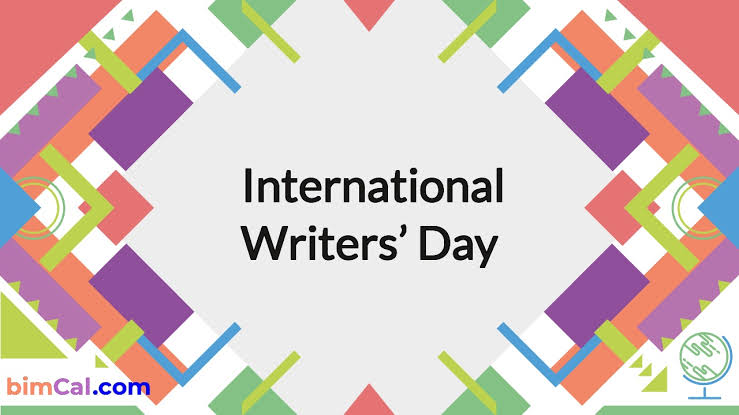
On March 3rd, the world celebrated International Writers’ Day. This special day honors the indelible mark writers have made on society, inspiring, educating, and entertaining us all through their words.

While many people may immediately think of famous novelists or poets when they think of writers, the truth is that writing is a skill that can be applied in a wide variety of contexts.

As for myself, I may not be identified as a professional writer yet, but I have personally authored over 200 articles. This in itself is quite a noteworthy accomplishment, and it demonstrates that writing is not simply a domain of a selected few, but rather, it is a skill that anyone can develop if they have something meaningful to share or communicate. Whether you’re writing for your own blog or for a company, the ability to effectively express yourself through the written words can open countless doors and lead to amazing opportunities.

In our current digital era, the demand for writers has grown exponentially. From copywriting to content creation, social media management to email marketing, etc. Today, businesses require writers to help them engage their audience effectively. As e-commerce continues to gain more prominence, companies need high-quality product descriptions and persuasive sales copy to attract customers. As such, freelance writers are increasingly on demand, making this an ideal time for anyone looking to earn an income through writing.

Writing, however, is not just limited to the professional realm. It can be an incredibly therapeutic exercise that allows you to express your thoughts and emotions in a healthy way. Journaling, in particular, is a popular practice that many people use to reflect on their experiences, thoughts, and feelings. By writing down your goals and aspirations, you can also clarify your vision and take tangible steps towards realizing your dreams.

In summary, the Writers’ Day was a day to celebrate the profound impact that writers have made on our lives. Whether you’re a professional wordsmith or someone who enjoys writing as a hobby, you can contribute to society by sharing your knowledge, insights, and experiences through the written words. Therefore, take a moment to recognize the power of writing and don’t be afraid to put a pen on a paper and see what kind of magic you can create.

Happy International Writers’ Day.

Abdurrazak Muktar Makarfi can be reached via; prof4true1@gmail.com

Writing

By Salisu Yusuf

Writing is the act of inscribing some signs, symbols and codes which a reader absorbs, encodes and interprets to act on, connect to, or change an attitude towards something. Writing is the fourth of the four basic language skills: listening, speaking, reading and writing. This, however, does not make writing the least important; in fact, writing is the most critical language skill in the current global context due to its perceived wider, heterogeneous and scattered audience and its permanence.

Speaking is also instant and irretrievable (at least before the invention of modern communication and broadcasting systems). You can only apologise after saying something. Writing can be edited and is retrievable. In other words, writing has some measure of revisability or verifiability. Every other form of communication is ephemeral. Only writing survives time because of its encryption. Moreover, the purpose of reading is defeated if there’s no writing. Writing has preserved divine scriptures.

Writing can make you happy because when you write, you instantly release a pent-up feeling. When you unburden, you feel you’ve got rid of something. Writing makes your day. It makes you great, famous and successful. Writers are known to have defied time and become immortals. Writers are immortals because their names defy times: Chinua Achebe, Khaled Hossein, Nuruddeen Farah, Newal Elsadawy, etc., are timeless names. The power of the pen has bound people and made the world better.

Good writing skills, the ability to convince, and the ability to communicate with a good command of language will likely attract a mass audience. These make public relations and propaganda tools for controlling narratives and persuasion.

One secret to writing is that writing widens your horizon and increases your critical thinking and sense of reasoning. It broadens your analytical skills. Writing makes you more sensible. It opens new vistas and can lead you to explore lands and thoughts that men have never explored. So, write, write, rewrite until you write the right.

Writing is, however, a slippery slope. Lest you forget, writing reveals you- it lets your audience know your personality, character traits, likes and dislikes, troubles, etc. This is because, when you write, you leave out gaps, aporias which the reader fills.

Though writing is a joyful venture, it can be a self-destructive escapade. So, know your subject matter well and write on what’s verifiable. Avoid defamatory, slanderous materials. You should know that laws of defamation cover writing, so don’t bring an issue that will likely injure the reputation of an innocent one. Men are dignified creatures. Don’t dare denigrate them.

Moreover, while writing, do not infringe on others’ copyright. Make your copy the right one. Copyright laws strictly bind writing; when you quote, acknowledge your source correctly.

As a writer, you should know that writing is fluid; it has no fixed shape. Therefore, it yields explications, expositions and interpretations. So, when you write, as Roland Barthes said, you’re a dead author. People rightly interpret your write-ups and derive multiple meanings. Therefore, when you write, you’re no longer in control of your text. You’re a dead author. Only the readers are alive and in control of the meaning.

As a writer, the sensibility of your audience is respected. Writing always goes with its moral appeal. I have not seen a fool as one who writes to level old scores, which hurts feelings. That’s the definition of a fool. 

For some, writing is a profession. For others, writing is a skill, while some look at writing as an escapement. Whatever it’s to you, write and rewrite until you write the right.

Salisu Yusuf wrote from Katsina via salisuyusuf111@gmail.com.