World Breastfeeding Week (WBW)

Nigeria: World Breastfeeding Week amid hunger protest

By Lawal Dahiru Mamman

Before the hunger protest under the banner of #EndBadGovernance ensued, organisers made their intentions public. Initially, they were considered “faceless groups” plotting under the cover of night. Ironically, once they revealed themselves, they were labelled “unpopular” groups, previously invisible in Nigeria’s politics.

Despite their perceived unpopularity, the call for a nationwide demonstration did not take long to gain momentum. The nation’s youth were enraged by their constant battles with hunger and their struggles to make ends meet. 

Sensing the state of the nation and the high possibility of the demonstration turning into a full-blown riot, the authorities summoned political, traditional, and religious leaders to rally their followers, giving the administration time for its tree of uncommon economic policies to bear fruit.

This move was counterproductive. Political and traditional leaders had lost their influence, and religious clerics had lost their authority. Posters flooded the streets of Nigeria, demanding better living conditions. The protest did not disappoint those who predicted opportunistic hoodlums would hijack it.

Protesters seeking to “End Bad Governance” looted and carted away various materials from both private and government-owned establishments. Tragically, some lives were lost. God rest their souls. It is worth mentioning that the exercise was peaceful in some locations with no hiccups.

To quell the protest, Mr President addressed Nigerians in a nationwide broadcast. Some accepted it as a speech of “compassion, unity, leadership, and direction.” Others dismissed it as “empty and annoying” because it did not address the pressing issues.

Interestingly, the first day of the ten-day hunger protest (August 1) coincided with World Breastfeeding Week (WBW). The first week of August (1-7) is supported by the World Health Organization (WHO), United Nations Children’s Fund (UNICEF), and many Ministries of Health, including Nigeria’s and civil society organisations such as WBW. 

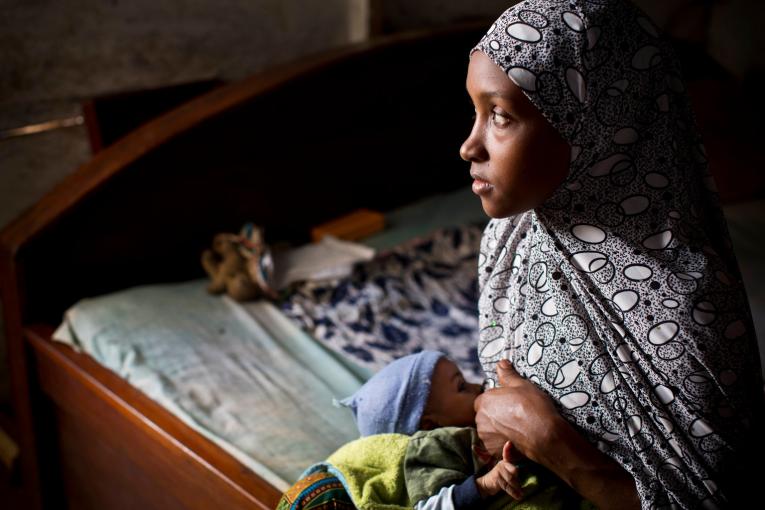
This initiative encourages breastfeeding and aims to improve the health of babies around the world. This year’s event, themed “Closing the Gap: Breastfeeding Support for All,” is a campaign that celebrates breastfeeding mothers in all their diversity throughout their breastfeeding journeys. 

It showcases how families, societies, communities, and health workers can support every breastfeeding woman. Unfortunately, in Nigeria, this important occasion to celebrate and support our mothers, sisters, and friends in raising healthy babies has been overshadowed by the ongoing protest. 

At the same time, UNICEF has scored Nigeria low in this regard, lamenting that a whopping 76 per cent of babies between 0-6 months are denied exclusive breastfeeding. Although the exclusive breastfeeding rate in Nigeria rose to 52 per cent in 2017, it dropped to 38.9 per cent in 2021 due to a decline in the sustenance of the “Hospital Exclusive Breastfeeding Initiative” introduced to fast-track the rate. 

The Federal Government says it is working with development partners to achieve a 50% rate by 2030. The government’s support for breastfeeding initiatives reminds us that breast milk is the gold standard for infant nutrition. It is safe, clean, and contains immunity-boosting antibodies that shield babies from illnesses. 

Breastfeeding is crucial to achieving the United Nations’ Sustainable Development Goals (SDGs) by 2030. Despite the economic situation, let us all take a moment to appreciate and support all nursing mothers. 

By upholding the theme “Closing the Gap: Breastfeeding Support for All” of the 2024 World Breastfeeding Week, we recognise that nursing mothers are not only giving babies the best possible start in life but also playing a vital role in building a healthier, more sustainable future for all. Remember, breastfeeding is made easier when mothers have our support.

Lawal Dahiru Mamman writes from Abuja and can be reached at dahirulawal90@gmail.com.
A clarion call to make breastfeeding and work, work!

By Tukur Hafsat Sani 

The art or science of breastfeeding can be projected to be as old as the childbirth phenomenon itself. Some historians have hypothesised that this important act became a widespread practice about 2.6 million years ago.

Inappropriate marketing of breast milk substitutes, stigmatisation, body image crisis, and public shaming, among others, have continued to undermine the efforts of medical experts and world organisations to improve breastfeeding rates and duration worldwide. With the world evolving, this is gradually changing.

In view of the importance of breastfeeding, over 30 years ago and even more precisely on February 14th, 1991, the World Alliance for Breastfeeding Action (WABA) came up with the World Breastfeeding Week (WBW), of course in partnership with World Health Organisation (WHO), United Nations Children Fund (UNICEF), government agencies and other non-governmental organisations across the globe.

The event was innovative, aiming to establish a global breastfeeding culture and provide support for breastfeeding mothers or even surrogates everywhere while promoting exclusive breastfeeding for a minimum of six months.

Therefore, World Breastfeeding Week is an annual tradition celebrated from the first and ends on the seventh of August worldwide, each year with a peculiar theme or slogan. Interestingly today, more than 100 countries globally participate in this important event.

On themes, for example, WABA, for the year 2020, chose “Support breastfeeding for a healthier planet’’ as its theme. The focus of WBW 2020 was aligned with thematic area 3 in WBW-SDG 2030 and is on the impact of infant feeding on the environment or climate change and the imperative to protect, promote and support breastfeeding for the health of the planet and its people owing to the fact that breastmilk is environmentally safe; produced and delivered without pollution.

In 2021 it was “Protect Breastfeeding: A Shared Responsibility”, which was with respect to the survival, health and well-being of women, children and nations, as well as how nursing mothers can be supported. For last year, it was “Step up for Breastfeeding – Educate and Support”. The WABA for this year set a theme – “Enabling breastfeeding: making a difference for working parents.”

Breastfeeding is the process of feeding a mother’s breast milk to her infant – newborn baby because, apart from the bond of love that is built between a mother and her child through the process, breast milk is the most important and essential food an infant should receive due to colostrum it contains, and this colostrum possess antibodies and other immunological benefits that can give babies a healthy boost.

Universally, breastfeeding is of two types, exclusive breastfeeding and partial breastfeeding, which only a few in our society are able to differentiate and know the significance of.

Exclusive breastfeeding implies availing a child only breast milk without any solid food for the first eighteen weeks of his or her life, while for partial breastfeeding, an infant receives both breast milk and solid or semi-solid food. Noteworthy of the fact that exclusive breastfeeding is highly recommended by health professionals both for the benefit of mother and child. 

Since is singular act of breastfeeding helps mothers, according to studies, reduce conditions such as depression and breast cancer while simultaneously breeding children who are physically, biologically and mentally alert, it becomes imperative to help drive the 2023 campaign of “Let’s make breastfeeding and work, work!” – a campaign which focuses on promoting practices that can help support workplace-related breastfeeding in different countries.

Hence, employers of labour should support working-class mothers in different countries across different contract types and sectors and promote action that can be taken to help ensure breastfeeding works for all working-class women.

This can be achieved through sensitisation, supporting rather than stigmatisation of this prime natural process, and providing secluded areas where working mothers can feed their babies without eyes preying on them needlessly while at work. 

While mothers across the globe are encouraged to keep up the good work of breastfeeding in other to build a healthier and smarter global population, providing them access to breastfeeding their babies while at work would mean that we are making breastfeeding and work, work!

God Bless All Mothers Across the World.

Hafsat, a 200-level Student of Ahmadu Bello University, Zaria, Kaduna State, writes via hafsasarney@gmail.com.