World Bank

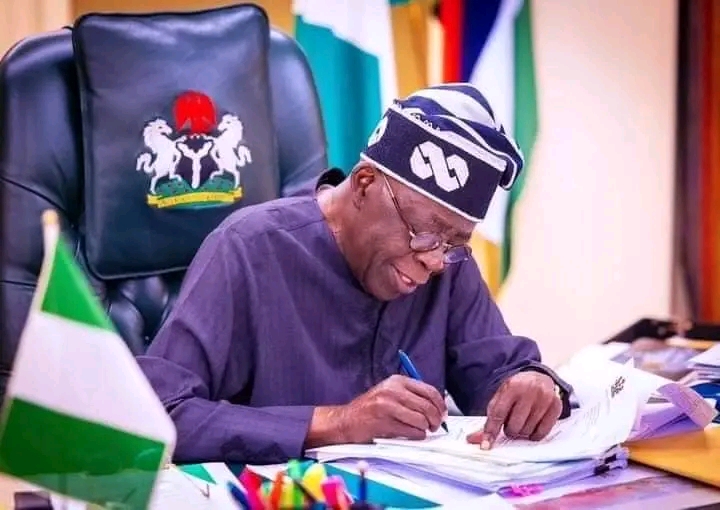
FG seeks fresh $1.75bn World Bank loan

By Muhammad Abubakar

The Federal Government of Nigeria has approached the World Bank for a fresh loan of $1.75 billion to support its economic reform agenda.

Minister of Finance and Coordinating Minister of the Economy, Wale Edun, disclosed that the facility would help cushion the impact of recent policy adjustments, including the removal of fuel subsidy and the unification of the exchange rate, which have placed significant strain on households and businesses.

He explained that the request, if approved, would provide critical budgetary support, strengthen fiscal sustainability, and help address the nation’s infrastructural and developmental challenges.

Nigeria’s President, Bola Ahmed Tinubu, has repeatedly defended his administration’s reforms, insisting they are necessary to revive the economy and attract foreign investment.

World Bank Country Director for Nigeria, Shubham Chaudhuri, confirmed that discussions are ongoing, although no official approval has been given yet.

Nigeria, Africa’s largest economy, has in recent years relied on multilateral loans to bridge financing gaps amid rising debt obligations and dwindling revenues.

World Bank urges FG to increase taxes on alcohol, tobacco, sugary drinks as loan condition

By Abdullahi Mukhtar Algasgaini

The World Bank has advised the Federal Government of Nigeria to impose higher excise duties on harmful goods, including alcohol, tobacco, and sugar-sweetened beverages, as a key condition before approving a $750 million loan.

The recommendation is part of broader measures aimed at boosting non-oil revenue and reducing Nigeria’s reliance on petroleum earnings.

The World Bank believes that increasing taxes on these products will help improve public health by discouraging excessive consumption while generating additional government income for development projects.

According to the World Bank, the proposed tax hike will:

1 Enhance public health by reducing the consumption of harmful products.

2 Increase government revenue for critical infrastructure and social programs.

3 Support economic diversification by strengthening non-oil sectors.

This suggestion comes at a time when Nigeria’s economy faces significant pressure, including rising debt, inflation, and declining oil revenues.

The move aligns with global efforts to curb health risks associated with tobacco, alcohol, and sugary drinks while ensuring sustainable economic growth.

The Federal Government is expected to issue an executive order to implement the new tax policy as part of the loan agreement.

If approved, the measure could mark a major shift in Nigeria’s fiscal strategy, balancing public health concerns with economic recovery efforts.

The misdiagnosis of a nation

By Oladoja M.O

 There is a sickness far graver than malaria, deeper than cancer, and deadlier than an undiagnosed pandemic: it is the sickness of perception. A tragic, self-inflicted malaise where men and women, intoxicated by their bitterness, misread the vital signs of a nation and call it death. 

Nigeria, that African giant, that phoenix that has refused to be buried by dust or drowned by storms, stands misdiagnosed not by its enemies, but by its sons and daughters. They call for good governance, a sacred right, yet in the same breath, they auction the dignity of their fatherland for applause from foreign balconies. Climbing the stages of international conferences not as ambassadors of hope, but as broadcasters of decay, believing that to light their ambitions, the whole house must first be burned.

Yes, there are wounds, visible scars of leadership missteps and bureaucratic fatigue. Yes, the body occasionally limps, gasping for cleaner governance, for a fresher breath of accountability. But to declare her terminally ill? To parade her on global platforms like a festering corpse before she has even sneezed her last? This is malpractice of the highest order.

And yet, even as they wail, Nigeria births victories so luminous they should blind the eyes of every doubter.

In 2024, while cynics sharpened their tongues, Nigeria quietly pulled off the Dangote Refinery miracle. The largest single-train refinery in human history roared into operation. Built on African soil, by African hands, it shattered the historic curse of crude export dependency. Now, Nigeria refines for itself, and soon, for much of Africa. That is not a dying breath. That is the heartbeat of an empire in rebirth.

Even as global markets shook and economies shrank, Nigeria executed one of the most daring economic surgeries in modern African history: unifying its foreign exchange market in 2023, consolidating multiple exchange rates into a single one. The International Monetary Fund, the World Bank, and even the Wall Street Journal stood still in reluctant applause. The Nigerian naira, which was once battered by artificial valuations, finally had its freedom to fight fair. It stumbled at first, as all warriors do. However, today, stabilisation is becoming a new reality, not a distant hope.

In health, the same nation that armchair critics mock has scored historic breakthroughs. Under the leadership of Professor Muhammad Ali Pate, Nigeria has launched one of the world’s first national rollouts of the Oxford R21 malaria vaccine, a game-changing move in a country that accounts for the highest malaria deaths globally. 

Again, Nigeria has turned pain into policy. The federal government, under this administration, declared a Health Sector Renewal Compact in late 2023 (PVAC), marshalling partnerships with global giants like the World Bank and Bill and Melinda Gates Foundation, channelling billions into revamping healthcare delivery, local vaccine production, and training health workers at an unprecedented scale. No more is health an afterthought; it is now a frontline battle Nigeria is visibly winning. While others talk, Nigeria saves lives. While others point fingers, Nigeria vaccinates its future. 

Infrastructure? While “first-world” cities debate electric railways, Nigeria’s megacity, Lagos, launched its Blue Line Rail in late 2023, the country’s first electric-powered intra-city rail system. A steel artery now pulsing through a once-choked metropolis, easing congestion, breathing new possibilities. In Kano, Rivers, Abuja, and Ebonyi States, massive roads, bridges, airports, and industrial parks rose from the dust — monuments to silent nation-building.

Policy? Courageous policies thundered through governance corridors: the subsidy removal in 2023, ending decades-old economic black hole that bled over $10 billion annually. In its place: strategic investments in health insurance for the vulnerable, transport subsidies for the poorest, and agricultural revolution initiatives. The world’s harshest critics acknowledged it, but the nation’s sons spat on it, too drunk on their self-righteous venom.

In education? Nigeria has ripped the old rulebook. In 2023, the Student Loan Act was signed into law—an audacious leap toward democratising education. For the first time, children of farmers, traders, and artisans now have a gateway into universities, polytechnics, and colleges of education without fear of crushing tuition fees. 

As of 2024, the first batch of beneficiaries has received their loans under the Nigerian Education Loan Fund (NELFUND), breathing hope into homes where education once felt like a broken dream. Now, a total of 525,936 students have registered on the loan platform, with 445,015 applicants successfully applying for financial assistance, representing an 84% success rate for student loan applications under the scheme.

Meanwhile, the accreditation of degrees has also been digitised, with Nigeria becoming the first in Africa to automate this critical gatekeeping process fully. New private universities have sprouted like fresh shoots, expanding access and excellence, whilst Nigerian universities are climbing global ranks. 

They call for “change” yet campaign on the ruins of hope itself. They drape themselves in victimhood, seeking pity instead of respect. The so-called “obedient” torch-bearers, the tribe of Peter Obi, shout of patriotism while waltzing through global forums, slandering their homeland, reducing Nigeria, a giant stirring from slumber to the caricature of a failed state, just to score a few cheap political points.

Calling out leadership is democracy; Denigrating your nation is betrayal.

One builds; the other burns.

Nigeria does not need saviours who love her only when she shines. She needs sons and daughters who hold the line when the storms rage, who sing her greatness even when she falters, who plant seeds of hope, not thorns of despair, into her soil.

To those who mistake criticism for patriotism, remember:

The world does not respect nations that cannot respect themselves.

Call out your leaders.

Demand reform.

March for justice.

But never sell your mother for the price of your pride.

Because when the dust of time settles, and history opens her immortal ledger, it will not be your complaints she remembers, it will be your loyalty.

Oladoja M.O writes from Abuja and can be reached via mayokunmark@gmail.com.

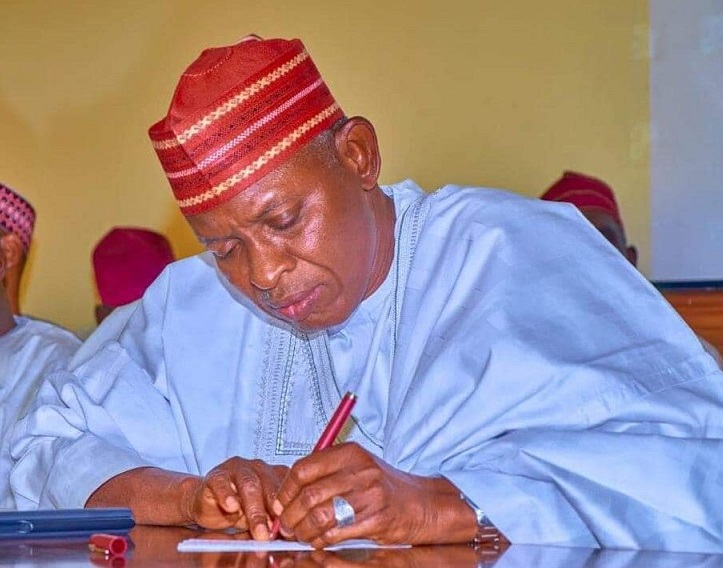
Kano to equip 200 schools with 50,000 computers

By Hadiza Abdulkadir

Governor Abba Kabir Yusuf has announced that 200 public schools in Kano State will each receive 250 computers, totalling 50,000 units, under a major digital education initiative supported by the World Bank through the AGILE Project.

The distribution, aimed at bridging the digital divide in education, was announced during the flag-off ceremony for instructional materials distribution held in Kano.

“Our goal is to bridge the digital divide and ensure our students are not left behind in this era of technological advancement,” the governor said.

According to Sunusi Bature Dawakin Tofa, the governor’s spokesperson, the initiative is expected to boost digital literacy among students and enhance the overall quality of education in the state.

“This is a transformational investment in our future. It will improve access to technology and empower thousands of students with the tools they need for academic success,” Bature said in a statement on Monday.

Governor Yusuf reaffirmed his administration’s dedication to promoting inclusive and innovative education through investments in digital tools and resources.

Kano Govt to solarise 200 public schools

By Hadiza Abdulkadir

In a bid to provide stable electricity and improve learning conditions in public schools, Governor Alhaji Abba Kabir Yusuf has announced plans to solarise 200 public schools across Kano State.

The initiative, unveiled during the official flag-off ceremony for the distribution of instructional materials to schools, is part of the World Bank-supported Adolescent Girls Initiative for Learning and Empowerment (AGILE) Project.

Governor Yusuf stated that the installation of solar power systems would ensure uninterrupted electricity supply, thereby creating a conducive environment for learning and digital education.

“This effort is part of our broader commitment to modernise education infrastructure and ensure that our students are learning in environments that support innovation and growth,” the governor said.

His spokesperson, Sunusi Bature Dawakin Tofa, noted in a statement issued Monday that the intervention aims to eliminate power-related challenges that have long hindered the use of technology in public schools.

The solar project is expected to enhance teaching and learning outcomes while supporting other digital initiatives planned by the state government.

What Nigeria can learn from global best practices in fiscal transparency and public integrity

By Muhammad Ahmad Iliyasu

Nigeria’s governance and fiscal challenges are undermined by persistent corruption, inefficiencies in public finance, and a lack of transparency, all of which have stymied economic progress, among other issues. According to the 2024 Mo Ibrahim Index on African Governance, Nigeria ranked 33rd out of 53 African nations with a score of 45.7 out of 100, reflecting a decline of 1.4 in its governance score between 2014 and 2023. 

The ranking (above) is further emphasized by low scores across critical categories such as Security & Rule of Law (39.7), Participation, Rights & Inclusion (47.9), Foundations for Economic Opportunity (48.6), and Human Development (46.4). While these challenges are substantial, examples worldwide illustrate the transformative potential of fiscal transparency and public integrity when supported by robust institutions and data-driven strategies. Nigeria can identify actionable solutions to address its governance deficits by examining how other countries have succeeded in these areas.

One of the most striking examples of fiscal transparency comes from Estonia, which has emerged as a global leader in e-government. Estonia has digitized its public financial management systems and introduced blockchain technology to monitor public procurement and spending. According to the World Bank, these innovations have resulted in a 30% increase in administrative efficiency and a 25% decrease in opportunities for corruption. 

In comparison, Nigeria’s procurement processes remain largely opaque, frequently marred by corruption scandals involving inflated contracts and the misappropriation of public funds. By 2023, procurement-related corruption cost Nigeria an estimated 30% of its annual budget. Estonia’s success showcases that technology when applied systematically, can be a game-changer in ensuring fiscal accountability.

Participatory budgeting, which originated in Porto Alegre, Brazil, is another area from which Nigeria could draw valuable lessons. By directly involving citizens in decisions regarding local government budgets, Porto Alegre has boosted investment in vital services such as healthcare and education by 20%, specifically targeting underserved communities. This participatory approach has not only enhanced public service delivery but also built trust in government institutions. 

In Nigeria, public participation in budgeting remains minimal, with the process often limited to elite stakeholders. A 2021 report by BudgIT revealed that over 70% of Nigerians feel disconnected from how public funds are allocated. A more citizen-centric budgeting process would bridge this gap, fostering trust and ensuring that budgetary decisions reflect public priorities.

Anti-corruption frameworks in countries such as Singapore and Botswana highlight the significance of institutional independence and efficiency. Singapore’s Corrupt Practices Investigation Bureau (CPIB), established in 1952, functions independently from other government agencies and has played a crucial role in reducing corruption to negligible levels. This success is evident in Singapore’s top-tier ranking on Transparency International’s Corruption Perceptions Index (CPI), where it achieved a score of 85 out of 100 in 2023. In contrast, Nigeria scored 24 out of 100, ranking 150th among 180 countries. The difference stems not only from institutional strength but also from the enforcement of laws. While Nigeria’s Economic and Financial Crimes Commission (EFCC) has made strides, its efforts are frequently compromised by political interference, inadequate resources, and inconsistent prosecution of high-profile cases.

Fiscal discipline is another area where Nigeria lags behind global standards. Sweden and Germany, for instance, have adopted fiscal rules that ensure economic stability. Sweden’s balanced budget rule requires government expenditures not to exceed revenues over an economic cycle, while Germany’s “debt brake” caps structural deficits at 0.35% of GDP. These policies have allowed both nations to maintain sustainable debt levels—38% and 60% of GDP, respectively, as of 2022. In contrast, Nigeria’s public debt has risen sharply, reaching 40% of GDP in 2023, with debt servicing consuming over 80% of government revenues. Without strict fiscal rules, Nigeria risks entering a debt trap that could hinder long-term economic growth.

Open data initiatives also illustrate the potential for transparency. The United Kingdom’s Open Data Portal provides public access to over 40,000 datasets on government operations, enabling citizens and civil society to monitor public spending effectively. This transparency has contributed to a 15% increase in public trust in government institutions, as reported in a 2020 World Bank study. Meanwhile, Nigeria’s efforts at transparency, such as the Nigeria Open Contracting Portal (NOCOPO), have yet to achieve comparable results. A lack of comprehensive data and limited public awareness have restricted its impact, with Transparency International noting that only 10% of procurement data is consistently published.

In this context, the Center for Fiscal Transparency and Public Integrity (CeFTIP) plays a crucial role in Nigeria’s quest for better governance. Through its annual Transparency and Integrity Index, CeFTIP evaluates government ministries, departments, and agencies (MDAs) on their adherence to standards of transparency and accountability. Its reports reveal systemic gaps in compliance with fiscal transparency norms and provide recommendations to bridge these gaps. Additionally, CeFTIP organizes sensitization campaigns to raise awareness about the importance of fiscal openness, while its capacity-building programs train public officials in best practices for financial management and anti-corruption measures. These efforts are vital in establishing the foundational infrastructure for a culture of accountability in Nigeria.

Whistleblower protection is another area where Nigeria falls short. In New Zealand and Canada, robust legal frameworks safeguard whistleblowers from retaliation, resulting in a significant increase in reported cases of corruption and misconduct. According to the International Whistleblower Protection Network, countries with effective protections detect 30% more corruption cases. In Nigeria, the whistleblower policy introduced in 2016 initially led to the recovery of over $500 million but has since stagnated due to weak legal protections and a lack of institutional support.

South Africa offers valuable lessons in civil society collaboration. Organizations such as the Public Service Accountability Monitor (PSAM) have successfully partnered with government entities to track public spending, resulting in a 25% improvement in service delivery outcomes, according to the World Bank. In Nigeria, civil society organizations like CeFTIP, BudgIT, and Connected Development have made strides in promoting accountability but often face resistance from government agencies. Strengthening these partnerships could amplify their impact and ensure more transparent governance.

Recommendations

For Nigeria to replicate these successes, it must prioritize institutional reforms like DOGE and adopt data-driven strategies tailored to its context. Establishing a robust digital public finance system akin to Estonia’s would enhance transparency and reduce corruption. Adopting participatory budgeting processes, starting at the local government level, would empower citizens and align public spending with community needs. Strengthening anti-corruption agencies through legal and financial autonomy is essential to combating high-level corruption.

Moreover, Nigeria should introduce enforceable fiscal rules to curb excessive borrowing and ensure sustainable debt levels. Expanding open data initiatives and increasing public awareness of platforms like NOCOPO would improve oversight and citizen engagement. Supporting organizations like CeFTIP through increased funding, open access, and government collaboration could scale their impact on promoting transparency. Finally, enacting comprehensive whistleblower protection laws and fostering partnerships with civil society organizations would create a more inclusive and accountable governance framework.

By learning from the advancements in countries such as Estonia, Singapore, and Brazil, and by utilizing the ongoing initiatives of organizations like CeFTIP, Nigeria can establish a direction toward fiscal transparency and public integrity. These reforms, although challenging, are essential for rebuilding public trust, attracting investment, and ensuring a prosperous future for all Nigerians.

Muhammad Ahmad Iliyasu is Strategic Communications Officer at the Center for Fiscal Transparency and Public Integrity. He can be reached via his email: Muhada102@gmail.com.

African debts and the myth of China’s debt-trap diplomacy

By Muhammed U. Hong

Nearly six decades ago, the practice of external borrowing for many developing countries could be linked to two major International Financial Institutions (IFIs): The World Bank and the International Monetary Fund (IMF). These institutions became the most significant source of finance for many third-world economies, particularly in Africa, where countries owe both institutions a large portion of their external debts. However, towards the end of the 1990s and the beginning of the 2000s, the IMF experienced a decline in lending activities in the region. 

The institution was becoming almost irrelevant as most countries were reluctant to borrow from it due to its policies and programs, notably the Structural Adjustment Program, which worsened economic and social conditions rather than improving them. As a result, the IMF’s reputation was severely damaged, and countries began to seek alternatives.

In the last two decades, China emerged as a major bilateral lender, gaining prominence for its infrastructure and economic development projects in African countries through three of its most prominent institutions: The China Exim Bank, China Development Bank, and China Agricultural Bank. This led to the rise of many other private sector entities that helped cater to the fiscal needs of developing countries.

Between 2013 – 2022, African countries’ total external public debt stock, as reported by the World Bank’s International Development Association (IDA), rose from US$109.63 billion in 2013 to US$223.74 billion in 2022. China disbursed loans over the same ten-year span, increasing from US$24.11 billion in 2013 to US$62.89 billion in 2022. As of March 2022, 34% of Africa’s total external debt was owed to multilateral creditors, such as the World Bank’s IDA and the International Bank for Reconstruction and Development (IBRD), while 23% was linked to bilateral creditors, including China and Germany. Private creditors, like Bondholders from the United Kingdom, accounted for the remaining 43%.[1] Only a modest portion of Africa’s total external debt stock is owed to China.

External or foreign borrowing is not inherently negative for countries, including African ones. It is widely understood that virtually no country can sufficiently fund its budget by relying solely on its yearly revenue. Thus, governments resort to public debt to fulfil fiscal obligations, especially when running a deficit or intending to spend more than their revenue. In Africa, external borrowing has served as a necessary tool to fund critical domestic infrastructure projects that aim to generate developmental and social gains.

However, the criteria for borrowing—such as the type of debt, its purpose, repayment terms, currency of repayment, and borrowing conditions—play a crucial role. One key metric that lenders assess is the Public Debt-to-GDP ratio, which indicates what a country owes in relation to what it produces and thereby reflects its ability to repay the debt. The higher the Debt-to-GDP ratio, the greater the risk of default. The World Bank established that a threshold of 64% for emerging markets (such as African countries) and 77% for developed economies is where public debt may begin to impact economic growth negatively. [2]

Interestingly, some of the world’s leading economies, including Japan, the United States, and the United Kingdom, have the highest public debt-to-GDP ratios—241%, 114%, and 79%, respectively—while African nations such as Cabo Verde, South Africa, and Nigeria have ratios of 117%, 47%, and 20%. [3] This demonstrates that African countries adhere more strictly to their public debt-to-GDP limits than their Western counterparts. Nonetheless, high public debt does not necessarily indicate weak economies, as some countries can rely on other sources of revenue to offset their liabilities.

So, why does Africa find China more attractive as a lender than IFIs? The World Bank and IMF initially offered loans with favourable terms to African countries in need but came with high interest rates and stringent conditions. African governments were often required to implement reforms designed by these institutions, and the loans were subject to strict environmental, social, and governance standards. Not all African countries were willing or able to comply with these requirements, which diminished their appetite for loans from IFIs and increased their interest in China’s concessional loans, which had fewer conditions. Their “no strings attached” model made Chinese loans more accessible and did not require adherence to governance or environmental standards while offering prospects for debt moratoriums.

For example, new data shows that China’s total lending to Zambia stands at $5.05 billion, equivalent to 30% of Zambia’s external debt. About 80% of China’s loans come from low-interest, concessional finance from China’s development banks, like the China Exim Bank, with the remaining $948 million held by commercial entities such as ICBC and Huawei.[4]  However, there are widespread reports of opacity in Chinese lending practices. African governments have been largely silent about whether loans are used for capital or recurrent expenditures, which makes it difficult for citizens to determine the health of their countries’ debt paths.

This lack of transparency raises concerns about inflated project costs, kickbacks, or the financing of white elephant projects ahead of crucial elections. The China-Africa Research Initiative (CARI), a Washington-based team of independent researchers, is one of the few reliable sources for data on Chinese loans, as it gathers information from loan contracts, interviews, and its global network.

Why do some believe Chinese loans are different from IFI loans and are designed to trap low-income countries into surrendering their natural resources? 

Public-private partnership (PPP) arrangements and the Build-Operate-Transfer (BOT) model, in which Chinese firms manage projects without fully taking over, have been common in Chinese contracts. However, African countries have begun to default on their loan commitments, leading China to adopt the more controversial resource-backed lending model. This model has been used in Africa as a fundamental way to finance many economic and social infrastructure projects like railways, telecoms, mining, construction, power, etc. 

The principle behind the resource-backed lending or resource-financed infrastructure (RFI) model, as they call it, is to allow the borrower country to commit its future revenues derived from the sale of its natural resources to pay for loans provided by the Chinese creditors. Under the RFI model, Chinese lenders have financed an average of 71 projects per year in Africa, at an average value of US$ 180 million since 2010. Between 2000 and 2019, only 26 per cent of Chinese lending in Africa has been tied to the future revenue from natural resources, with Angola taking a sizeable portion of 18 per cent alone. The remaining 8 per cent is evident in loan commitments of US$ 500 million made to Nigeria for its Abuja light rail project in 2012 and 2011 to finance new phases of its airport projects and the Lekki Port’s Free Trade Zone. Others have been used for the US$ 475 million loan in 2011 for the Addis-Ababa light rail project, and in Egypt, for a US$ 1.2 billion loan for their light rail projects.[5] The primary risk of the RFI model is that commodity prices are volatile, which could undermine debt sustainability. 

According to CARI, in 2019, Chinese borrowings to African governments began classifying the countries that were perceived as ‘less risky’ due to concerns about debt sustainability. This is because most countries borrowing heavily from China have been identified to have histories of IMF bailouts, making new such borrowings from China unsustainable. CARI examined the situation in 17 African countries that are either in debt distress or at high risk of debt distress due to the high lending volume, which has forced China to address the issue of debt sustainability. 

Countries like Ethiopia, Mozambique, the Democratic Republic of Congo and Djibouti were all denied fresh loans in 2019. Others like Kenya, Cameroon and Zambia were given relatively small loans. Angola, the continent’s largest borrower of Chinese loans, with an average of US$ 4 billion per year between 2010 – 2018, experienced a decline to about US$106 million in 2019. This is despite securitising Angola’s future revenue from its oil exports. Nigeria, which surpasses as the continent’s largest crude oil exporter with a history of debt sustainability since 2000, had only been granted a loan commitment of around US$500 million. [6]

The issue of debt sustainability gained further attention during the COVID-19 pandemic, leading to widespread calls for debt relief. China responded by offering debt relief packages (debt cancellation) and an (undisclosed) deferment of interest payments due to the pandemic. In 2020, China joined the G20 to create the Debt Service Suspension Initiative (DSSI) framework to alleviate the economic suffering imposed by the Coronavirus pandemic on African countries. By the following year, China was reported to have suspended debt worth over US$1.3 billion for 23 countries, out of which 16 are African countries.[7] In a similar vein to tackling the Coronavirus pandemic, the IMF was also reported to have approved $500 million to cancel six months of debt payments for 25 countries, with 19 of them in Africa – which is almost one-third of what China had been able to offer to African governments.[8]

According to Jubilee Debt Campaign UK, now referred to as Debt Justice, a UK campaign organisation to end exploitation of debt by more affluent countries, China remains the largest suspender of debt with a whopping $5.7 billion in debt repayment). [9] The China Development Bank – which is a major lender to African countries – had also since 2021 provided US$1.168 billion in debt relief to these countries as a way of cushioning the impact of the pandemic.[10]

What makes China engage in “debt-trap diplomacy” with its African borrowers? — An allegation that Chinese firms intentionally lend to financially irresponsible governments that will be unable to repay loans to take possession of assets.

Many unsubstantiated claims about the Chinese takeover of major state assets in developing countries exist. The most cited case for reference is the Hambantota port in Sri Lanka. The Sri Lankan government secured 2007 finance from China’s Export-Import (EXIM) Bank to develop the port. In 2015, however, Sri Lanka had to arrange a bailout from the IMF even though the Chinese loans only accounted for some 10% of the debt. The government sought to raise cash by privatising state-owned assets, including a significant stake in Hambantota port. Then, a Chinese company got wind of it and successfully bided and bought 70% of the shares. The Sri Lankan government used the proceeds to pay for Chinese loans and other debt services. [11] However, no definitive evidence suggests a similar practice is prevalent in Africa.[12]

Ultimately, it is hard to think that Chinese loans to Africa are meant to inextricably trap them for their rich oil and other natural resources. Over the past decades, Africa’s growing need for infrastructure has led China to fill the void created by Western financial institutions, offering easier access to capital with fewer stipulations. 

Although the African continent has managed its debt well, there are still significant risks and challenges associated with Chinese loans, particularly in governance and transparency. It is also true that China’s approach to lending has evolved from being more lenient to becoming more cautious, especially in response to concerns about debt sustainability. This is why it tries to mitigate the risk of defaulting by primarily resorting to the resource-backed financing model, and this has only been linked to a meagre percentage of all its loan commitments to the continent– with the exception of Angola. While resource-backed lending seems pragmatic, it is not necessarily predatory or equate to an intent to exploit or trap countries, especially given China’s history of debt relief. China’s participation in debt relief efforts is consistent with its broader strategy of maintaining long-term relationships with African countries rather than exploiting them.

Africa must halt the practice of raising money at the Eurobond markets—where a range of investors trade bonds—because these bonds come at steep commercial rates and are subject to the dictates of the international financial markets. African countries must also be discouraged from seeking bailouts from financial institutions like the IMF and World Bank to offset existing loans, which excessively pile up debts that lead to unsustainable liabilities. 

African governments must ensure prudent financial management while refraining from depleting their foreign currency reserves to pay high interest on those loans. The utilisation of these loans for their intended purposes, whether in infrastructure, social or economic, is crucial for Africa to foster sustainable development, bolster its revenue growth, and improve the quality of life for its citizens. Loans that yield commensurate economic benefits.

Muhammed U. Kong wrote via muhammedu.hong@gmail.com.
World Bank hails Gombe as model of development success, exemplary project implementation

By Abdullahi Mukhtar Algasgaini

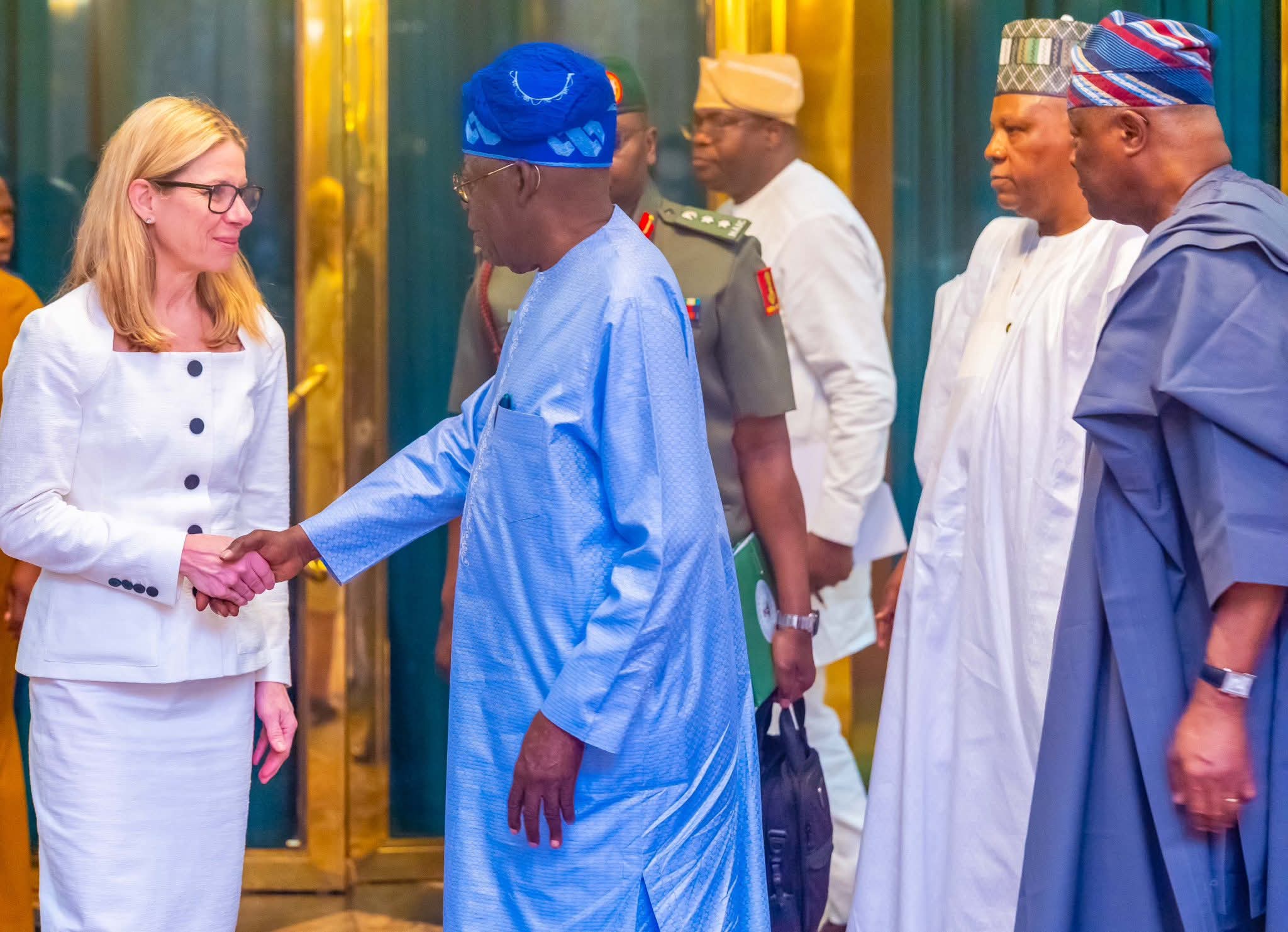
The World Bank has described Gombe State as a model for other states in Nigeria for its remarkable achievements in implementing numerous development projects and programmes. 

The World Bank Country Director for Nigeria, Dr Ndiame Diop, made the commendation during a courtesy visit to Governor Muhammadu Inuwa Yahaya at the Gombe Governor’s Lodge in Abuja.

Dr Diop, who appreciated the commitment of Gombe State to executing World Bank-supported projects across critical sectors such as education, healthcare, infrastructure, environment, agriculture, and water resources, noted that Governor Inuwa Yahaya’s approach has not only accelerated development but has also demonstrated a clear example of effective governance and accountability in the utilization of funds.

Among the standout projects mentioned by the WB country director were the Nigeria COVID-19 Action Recovery and Economic Stimulus (NG-CARES) programme, the Rural Access and Mobility Project (RAMP), the SPTAS and the Sustainable Urban and Rural Water Supply, Sanitation and Hygiene (SURWASH), which he noted have significantly improved the well-being of citizens by enhancing infrastructure, increasing access to clean water, and boosting economic opportunities.

Dr Diop emphasized that Gombe’s commitment to these projects has set a high standard for other states in Nigeria, adding that the World Bank now sees the state as a successful model of partnership that effectively addresses local challenges while fostering sustainable growth and development.

Dr. Ndiame Diop, however, also pointed out areas where the state could further strengthen its efforts, especially as some of the ongoing projects are approaching completion.

 He emphasized the need for sustained momentum and strategic planning to ensure that the impact of these projects continues to be felt even after they wind down. 

He stressed that Gombe must take proactive steps to consolidate the gains already made by institutionalizing reforms and integrating them into the state’s development agenda. This, he noted, would ensure that the benefits of these programmes are not only sustained but scaled up for greater long-term impact. 

He assured that the World Bank remains committed to supporting Gombe State in these efforts and encouraging the government to explore new avenues for collaboration that would address emerging challenges and ensure the continuity of progress in key areas.

Governor Inuwa Yahaya acknowledged these observations in his remarks and reassured Dr. Diop that his administration is fully committed to restrategizing.

He expressed optimism that with continued partnership and innovation, Gombe State would maintain its developmental trajectory and deepen the successes achieved through ongoing and future projects.

He highlighted the importance of strategic partnerships with international organizations like the World Bank in driving progress and providing much-needed services to the people of Gombe State in line with his Development Agenda. 

Governor Inuwa Yahaya emphasized that the state’s priorities are fully aligned with its development agenda, and Gombe remains committed to leveraging World Bank projects and initiatives from other development partners to achieve its goals. 

He pointed to the Network 11-100 project, which is being executed in collaboration with RAMP, the ACReSAL project and the SPTAS programme, as clear examples of the state’s success through its strong partnerships with the World Bank.

He reiterated that his government will remain focused on impactful projects that improve the quality of life for all citizens, especially in areas such as education, health, agriculture, infrastructure and human capital development.

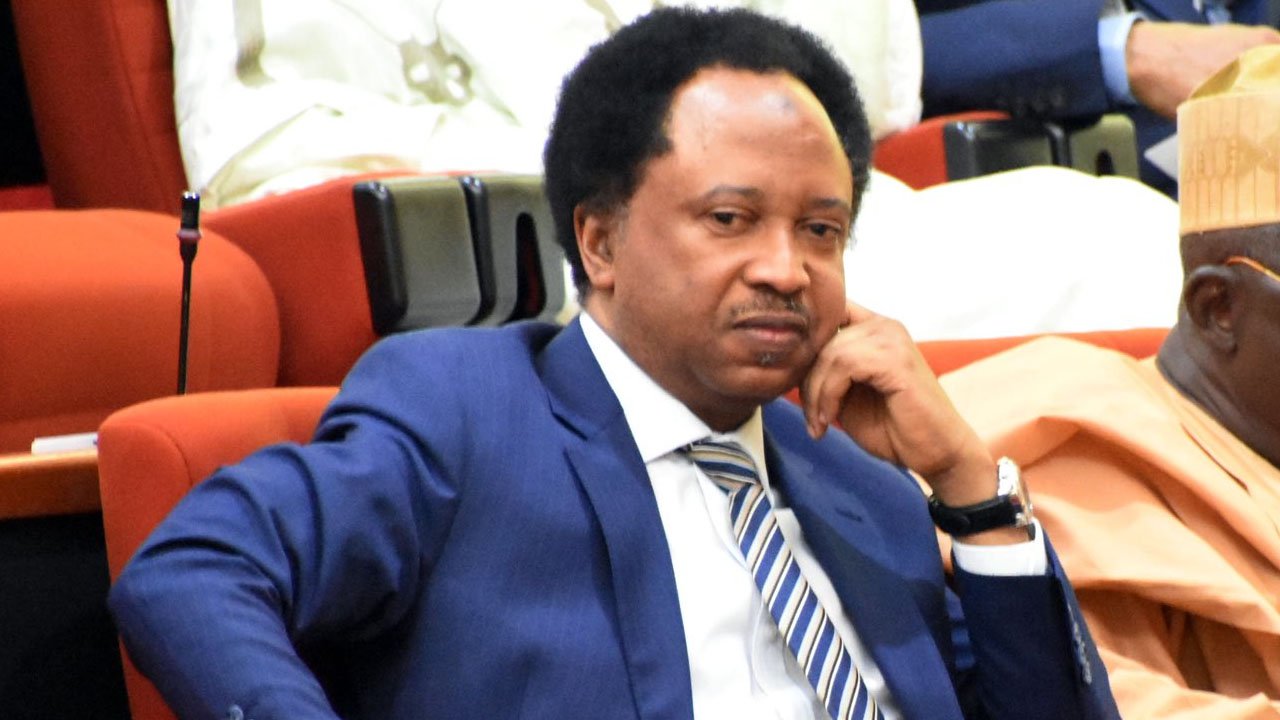
Kaduna strangulated by debt burden of El-Rufai’s administration – Shehu Sani

By Uzair Adam Imam

Shehu Sani, the former Senator representing Kaduna Central, has raised the alarm over the suffocating debt burden gripping Kaduna State under the administration of former Governor Nasir El-Rufai.

Sani expressed regret that his warnings against El-Rufai’s aggressive borrowing were ignored, leading the state into a financial crisis of significant proportions.

Speaking to reporters, Sani highlighted the dire consequences of the debt accumulation, emphasizing that if his advice had been heeded, the state would not be grappling with the current predicament.

He recalled facing criticism for opposing a $350 million World Bank loan sought by the El-Rufai administration, foreseeing the looming challenges now faced by the state.

Governor Uba Sani, in a recent town hall meeting, disclosed that the state inherited a staggering debt of $587 million, ₦85 billion, and ₦115 billion in contractual liabilities from the previous administration.

This heavy financial burden has severely hampered the state’s ability to meet its financial obligations, including salary payments.

The current administration disclosed that a substantial portion of the state’s federal allocation is being diverted toward servicing the debt, leaving insufficient funds for essential expenditures such as salary payments.

With the sharp increase in exchange rates, the amount being repaid has almost tripled, exacerbating the financial strain on the state.

Out of the N10 billion received as federal allocation in March, N7 billion was deducted to service the state’s debt, leaving only N3 billion available.

However, this amount falls short of covering the state’s monthly salary bill of N5.2 billion, further exacerbating the financial crisis.

Sani cautioned that the repercussions of the state’s debt burden are now being felt acutely, underscoring the urgent need for concerted efforts to address the financial challenges facing Kaduna State.

Nigerian economy and the Washington package

By Mohammad Qaddam Sidq Isa (Daddy)

Now that Nigeria has finally embarked on the total implementation of the Washington Consensus package of neoliberal economic policies, what becomes of the country’s economy, in the long run, remains to be seen. 

As a product of consensus among the Washington-based World Bank, the International Monetary Fund (IMF) and the United States Department of the Treasury, the package was purportedly designed to guide developing countries bedevilled by protracted economic crises to recovery and achieve sustainable economic development. 

Also, as a capitalist template with inherent and unmistakable lopsidedness in favour of the rich and those with access to public resources, the package encourages governments to literally but gradually wash their hands of the critical economic sectors in favour of profit-oriented local and foreign investors.

Under pressure from neoliberal international financial institutions, successive Nigerian governments have gone to various extents in selective and partial implementation of the package, triggering rounds of controversy. 

However, now with the country going fully and irreversibly capitalist, there is no more time to waste in criticising capitalism and romanticising some obsolete socialist and populist ideas that are no longer realistic. After all, the reform policies can still work out if the federal government pursues requisite measures, which include, among other things, total transparency in governance, governance cost-cutting and prioritisation of the strategic sectors of the economy that have a direct bearing on people’s lives. 

In other words, for the reform to be effective, governance at all levels must be too transparent to accommodate any act of corruption; and anti-corruption measures, including appropriate punishments, must be in force and deterrent enough to deter any would-be perpetrator. 

Likewise, appropriate governance cost-cutting measures must be implemented judiciously to save resources without prejudice to productivity and efficacy.   

Equally, public spending must strictly follow the public’s priorities that entail appropriate investments in strategic sectors with clear short, medium and long-term goals measured not by mere figures but by their real effect on people’s living conditions. 

With these and other requisite measures in place, the investment atmosphere in the country will be transparent and competitive enough to attract local and foreign investors with appropriate job-creating investments that would facilitate real and sustainable economic development. 

That way, and with time, the local and foreign rent-seeking opportunists and profiteers, who have dominated the business sphere in the country, making hugely disproportionate returns compared to their real investments, will have to follow suit to remain relevant or simply lose out. 

Unless the Tinubu administration pursues these measures with appropriate commitment, the reform will end up counterproductive, thus making life even more unbearable to most Nigerians. At the same time, a tiny politico-business clique continue to wallow in abundance.

Interestingly, there has been conspicuous silence on the part of our local West-admiring Washington Consensus apologists, who have advocated total capitalist reform as the only panacea to the country’s persistent underdevelopment. Ordinarily, having passionately advocated it, they should now feel morally obliged to show some understanding, or at least fake it, over the ensuing escalating hardship in the country. 

Besides, though supposedly experts in economics and other related fields, none have developed a viable alternative economic recovery package or even introduced viable inputs to the Washington Consensus package to make it relevant to our peculiar circumstances and other underlying challenges.

Mohammad Qaddam Sidq Isa (Daddy) wrote from Dubai, UAE. He can be reached via mohammadsidq@gmail.com.