Waqf

From us, by us, for us: How homegrown Waqf initiatives can shift our gaze from international donors

By Abdullahi Abubakar Lamido, PhD

It was a warm afternoon in my office at the Zakah and Waqf Foundation in Gombe, and I had cleared my schedule for what was described as a “very important meeting.” A group of nine young professionals—doctors, nurses, and medical administrators—filed in with purposeful expressions. These were respected Muslim health workers in our community, competent and resourceful in their own rights, leading their Muslim body. 

They sat down, exchanged pleasantries, and after a few minutes, one of them cleared his throat and spoke. “We were hoping you could help us reach Qatar Charity. We want to build a mosque in our hospital.”

I paused. My mind raced not with criticism but with confusion. These were not poor villagers. These were professionals, all salaried, some likely earning above average. I asked gently, “How much will the mosque cost?”

“About ten million naira.”

“And how many Muslim staff do you have?”

“Roughly 500,” they responded.

I picked up a pen and scribbled something. “That’s twenty thousand naira each,” I said. “Divided over four months, that’s 5,000 naira per month.”

There was a short silence. “You don’t need Qatar Charity,” I told them. “You need yourselves; you need Gombe Charity.”

From my limited understanding, I explained that most international charities, like Qatar Charity, raise funds from within their own people first. They identify a problem in a country, develop a proposal, return to their citizens and say: “Donate to build a mosque in Nigeria.” If they can do that for us, why can’t we do it for ourselves? I then told them to put my name as the first donor of the twenty thousand naira to kickstart the project. 

That brief meeting offered a glimpse into a deeper issue—our chronic psychological dependence on external aid, even when we can act. The problem isn’t always material poverty; often, it’s a lack of belief in our collective strength—a poverty of the mind and will.

The Turkey Phenomenon: A Lesson Misunderstood

Take, for example, the popular trend in some Northern Nigerian states where applications pour into Turkish and other organisations for Qurbani (Udhiya) distributions. Turkish charities, may Allah reward them, buy cows and distribute meat during Eid.

But here’s a crucial question: Is this a model to emulate or one to reconsider? If every year, our people look outward to receive—and never inward to learn how to organise, fund, and distribute—we risk cultivating a culture of constant reception without reciprocity.

Islam is not a religion of passivity. It teaches us to act before asking, to solve before seeking, and to build with what is already in our hands. Prophet Muhammad (peace be upon him) taught us that the upper hand is better than the lower one—the hand that gives is superior to the hand that receives.

The Al-Basar Example: From Vision to Visionary Impact

Now, let’s discuss a model worth following—Al-Basar International Foundation.

Al Basar International Foundation is a non-profit international NGO. Founded in 1989 by a group of concerned professionals. Al-Basar is a shining example of what happens when people come together to solve a problem themselves. Their focus? Combating preventable blindness across the Muslim world. No dependency. No grand donor campaigns. Just strategic self-mobilisation as well as waqf and collaborative mindset. 

It works in Yemen, Bangladesh, Sudan, Nigeria, Pakistan, etc. In Nigeria, for instance, a 2019 campaign funded by King Salman Humanitarian Aid and Relief Centre in collaboration with Al Basar International Foundation saw medical volunteers from Saudi Arabia meet 8,000 eye patients and perform 800 eye surgeries to remove cataract and glaucoma in Ibadan, Nigeria, as well as in Lafia in Nasarawa State. 

The foundation manages the Makkah Eye Specialist Hospital in Kano state, Nigeria, where 4,000 free eye surgeries were carried out in 2021. The hospital treats eye conditions, including diabetic retinopathy. In 2022, Al Basar International Foundation, in collaboration with the King Salman Relief Center, sponsored 400 free cataract surgeries for residents of Kano, which took place at Makkah Eye Specialist Hospital. 

Over the years, Al Basar has conducted over 2,000 outreach programs worldwide, performed over 700,000 cataract surgeries, and dispensed nearly 2 million glasses. With 28 hospitals across six countries, the foundation has recorded 26 million outpatient visits. It also invests in education by establishing colleges to train eye care professionals, impacting Africa and Asia. Their school screening program has reached over 1 million children, providing immediate interventions and ensuring a comprehensive approach to their eye health.

Now ask yourself: is Al-Basar a government-funded operation? No. Did it start with foreign aid? No. It was “from them, by them, for them.” And now it is for us, too—because they nurtured it to the point where it could grow beyond them.

We should not only admire such models. We should replicate them.

Historical Echoes: Islamic Proofs of Self-Driven Solutions

Uthman ibn Affan (RA) and the Well of Rumah

When water scarcity plagued Medina, and a private owner monopolised a well, the Prophet (SAW) called for someone to purchase it for the Muslims. Uthman (RA) stepped up, bought the well, and made it a public waqf. He didn’t write to Yemen. He didn’t petition the Romans. He simply used what Allah had given him to solve a problem for Allah’s sake.

So, What Can We Do? A Homegrown Waqf Blueprint

If we genuinely want to stop relying on donors and start building resilient communities, here are practical steps:

Think Within, Act Within: Begin every solution by asking what the community already has—not what it lacks. Do you have professionals? Land? Skills? Social networks? Then, start from there.

Group Economic Self-Waqfing: Encourage professional groups (doctors, teachers, engineers, traders, lawyers) to dedicate a portion of monthly income to a fund. Even a modest 5,000 naira monthly from 100 people can generate sustainable capital. At Zakah and Waqf Foundation, we enjoy that from some professionals, and it works. 

Community Challenge Waqf: Identify a local challenge—maternal health, education for orphans, access to clean water—and collectively endow a waqf around it. Let the yield solve that problem perpetually.

Transparent Management Structures: Set up trustworthy waqf boards to manage resources. Trust fuels contribution. Accountability sustains it.

Celebrate Independence: Create cultural pride around self-funded projects. Showcase schools, hospitals, orphanages, and mosques built without a single foreign dime.

It is Time to Change the Script

Imagine if each LGA in Nigeria had one waqf-funded primary health centre, one vocational training centre, and one scholarship fund—all funded by local contributions from professionals, retirees, and small traders.

We would not be beggars. We would be builders.

It’s time to write a new story. One not of helplessness and application letters to foreign NGOs but of resolve, unity, and strategic giving. One of From Us, By Us, For Us—in the truest, most impactful sense.

When that story is told to future generations, they will say: There was a people who stopped waiting and started building.

Amir Lamido wrote from Gombe via lamidomabudi@gmail.com.

Waqf and orphans: Building a future for the forgotten

By Abdullahi Abubakar Lamido, PhD 

It was after a wet Thursday Asr prayer in a quiet neighbourhood of Gombe that Mallam Isa stood up to speak. The small mosque was dimly lit, the air heavy with humidity and the scent of earth. His voice trembled slightly—not from fear, but from the weight of the message he bore.

“Brothers and sisters,” he began, “let me ask you: what would happen if today, right now, your heart stopped, and your children became orphans?”

A hush fell. Even the children at the back stopped playing. That question pierced through the hearts like an arrow.

“You pray five times a day, you give Zakah and fast Ramadan, but have you made any plan for the ones you might leave behind?” he continued.

It was not just a rhetorical question. It was a wake-up call.

The Crisis of Orphans in Our Midst

In every corner of Nigeria—especially in the north—there are orphans. They are in the streets, in distant relatives’ homes, in understaffed orphanages, and in classrooms with torn uniforms and hungry eyes. Every funeral of a husband, a father, a provider, often produces not one or two, but sometimes 10, 15 or even 20 orphans. In a society with polygamy and a high birth rate, the multiplication may be frightening.

The silent cries of orphans echo through our communities, a poignant reminder of our collective responsibility. In societies like northern Nigeria, where large families are common and the spectre of loss ever-present, the number of children left without a guiding hand is staggering. 

Losing a parent can mean losing everything: food, shelter, education, and the loving embrace of family. While various efforts exist to care for these vulnerable souls – from individual families to community and religious organisations, and a few dedicated orphanages – a critical challenge remains: the lack of sustainable, reliable funding. This is where the profound and enduring institution of Waqf emerges as a beacon of hope, offering a pathway to a robust and self-sustaining future for orphans.

What do we do with this growing population?

Islam doesn’t leave this to chance. The Prophet Muhammad (peace be upon him) said:

“I and the one who looks after an orphan will be like this in Paradise,” and he held his two fingers together. (Bukhari)

This Hadith should not be a mere quote for charity posters—it is a divine incentive for action.

The Legacy of Layth b. Sa‘d: A Model for Us

Let us take a lesson from the noble jurist and philanthropist Layth b. Sa‘d, a contemporary of the great Imam Malik. He was not only a scholar of high standing (who was often described as more grounded in fiqh than Malik -Afqah min Malik), but also a man of immense wealth. One of his investment —earning over 70,000 dinars annually (The current Naira equivalent of 70,000 Dinars, based on the pure gold content of those Dinars and today’s market price of gold, is approximately ₦51,188,742,500, ie Fifty-one billion, one hundred and eighty-eight million, seven hundred and forty-two thousand, five hundred Naira). Yet he gave away so much that he didn’t even have zakātable savings. One day, he bought a house, only to discover it had been used as a shelter for orphans. Without hesitation, he declared:

“This house is now a waqf for them. Let it remain a refuge. And I shall endow another waqf whose profits will feed and clothe them.”

Today, we admire his foresight. But more importantly, we must emulate it.

The Missing Link: Waqf as Sustainable Support

Most of our current models for orphan care, although well-meaning, are unsustainable. We rely on inconsistent donations or goodwill that may not last.

But waqf is not a charity of the moment. It is a charity of the generations.

“When a person dies, all their deeds end except three: a continuing charity (Sadaqah Jariyah), beneficial knowledge, or a righteous child who prays for them.” (Muslim)

Waqf is Sadaqah Jariyah. And every orphan fed, educated, healed, or empowered through it continues your reward in the grave.

How Do We Build a Waqf for Orphans?

1. Family-Level Waqf

Families should dedicate one house, piece of farmland, or business as a waqf for orphans. It could be residential housing, a school, or a rental property whose income supports orphan welfare.

Imagine if, in every city block, one family donated one apartment to serve as orphan housing or as an investment asset to support orphans.

2. Community-Level Waqf

Mosques, Islamic centres, and community associations should establish orphan waqf portfolios. These can include:

Schools with waqf-run canteens and hostels

Hospitals or clinics with orphan wards funded through waqf

Skills acquisition centres that train orphans for real livelihoods

3. Organisational Waqf

Existing orphanages should stop relying solely on donations. Let them build waqf farms, shops, or event halls. The Prophet (peace be upon him) said:

“The best of people are those who are most beneficial to others.” 

Let’s be beneficial in a lasting way.

You Could Be Next

One chilling truth binds us all: no one knows who will become an orphan next. We plan our lives, but we often forget how fragile life is.

A car crash, a silent heart attack, a violent raid—your child could be orphaned tomorrow. So, build the system you would want them to find.

Would you want your child to sleep under a bridge?

Would you want them to beg for school fees?

Would you want them to eat once every two days?

“None of you truly believes until he loves for his brother what he loves for himself.” (Bukhari and Muslim)

Then love orphans as you would love your child.

Every Little Bit Counts: What YOU Can Do

Contribute to a waqf share initiative. You don’t have to give millions. Start with ₦1,000. Drops make oceans.

Educate others about the orphan waqf. Deliver a Friday khutbah, launch a WhatsApp and Facebook campaign, and distribute flyers.

Talk to local Imams, community leaders, and philanthropists. Propose orphan waqf projects.

Use your wasiyyah (will) to declare a portion of your estate as waqf for orphans.

Empower your children to understand this legacy so they can continue the chain.

Let us build an ummah where no orphan is neglected, where no child grows up feeling discarded, where our waqf institutions become sanctuaries of dignity.

Let Gombe, Kano, Lagos, Borno, Zamfara, Sokoto, Osun and every Nigerian state become shining examples of Waqf-Orphan Integration. Let Nigeria offer the world a new orphan care model—rooted in Islam, powered by community, and sustained by waqf.

And let each of us rise, in our small way, to be counted among those who build for the forgotten, the voiceless, the orphaned.

For on the Day of Judgment, it might just be that orphan’s dua that grants you the mercy you seek.

“They ask you what they should spend. Say: Whatever of good you spend must be for parents and kindred and orphans…”

— Qur’an 2:215

Amir Lamido wrote from Gombe via lamidomabudi@gmail.com.

Before your next Umrah…build a Waqf

By Abdullahi Abubakar Lamido

The dusty path to Al-Ma’arif Islamiyyah School was unusually quiet that Wednesday afternoon, except for the gentle crunch of sandals on gravel and the animated voices of two young girls wrapped in flowing white hijabs.

Unknown to many passersby, the conversation between these two girls wasn’t just about school or homework. It was about something deeper—something that could transform communities: the power of Waqf. As they walked, they debated a topic that many adults still struggle with: Should we prioritise spending on annual Umrah trips or invest in sustainable Waqf projects that empower girls through education and skill-building?

“Ameena, wait for me!” called out Hafsah, adjusting the corner of her veil.

Ameena slowed down and turned with a grin. “Wallahi, you’re always dragging your legs like an old lady.”

They both laughed.

But as they turned the bend, Hafsah lowered her voice and leaned in. “By the way, my aunt and her entire family are travelling for Umrah again this Ramadan. That’s like the fifth time in a row! Imagine the reward, subhanallah!”

Ameena nodded with a smile, but her eyes said more. “Masha Allah. No doubt, Umrah is virtuous. The Prophet SAW said in Sahih al-Bukhari, ‘Umrah to Umrah is expiation for the sins committed between them.’ And in another Hadith, ‘The performance of Hajj and Umrah removes poverty and sins just as a furnace removes the impurities from iron.’ So yes, it is beautiful.”

Hafsah beamed. “Exactly! That’s why they go every year. My aunt says you can never get enough of Makkah. The barakah there is like no other.”

Ameena stopped, picked a tiny stone, and tossed it thoughtfully. “I agree. But I can’t help thinking… what if, just what if, they did something different this year? Take the entire amount they usually spend—tickets, hotel, feeding, shopping—and invest it in a Waqf. A sustainable, income-generating waqf specifically for girls’ education and skills development.”

Hafsah blinked. “A waqf? Instead of Umrah?”

“Not instead of,” Ameena corrected gently, “but perhaps before another one. Let’s say they make a solid waqf just once. From then on, the proceeds can fund multiple Umrahs and sponsor tens—maybe hundreds—of girls like us. Wouldn’t that multiply the rewards?”

Hafsah frowned slightly. “Hmm. But that’s not the same spiritual feeling as being in Makkah.”

“True. But listen to this Hadith,” Ameena said, eyes lighting up. “The Prophet SAW said: ‘Whoever goes out to seek knowledge is in the path of Allah until he returns.’ That’s in Sunan al-Tirmidhi. And in Sahih Muslim, the Prophet said that feeding the hungry, helping the poor, or removing a harm from the road are all Sadaqah. These actions have also been likened in reward to Umrah.”

She continued, “In fact, Imam Ibn Rajab said some charitable actions—because of their benefit to society—can surpass voluntary Hajj and Umrah in reward!”

Hafsah looked unconvinced. “But those are small things. Can they compare to walking between Safa and Marwa?”

Ameena smiled knowingly. “Let me share a story about our Islamic heritage, as reported by Ibn Kathir—one of the great scholars and righteous predecessors, Abdullah ibn al-Mubarak, once set out for Hajj. Along the way, he passed through a town where a young girl was seen taking a dead bird from a garbage heap. 

Curious, he followed her and learned that she and her brother had nothing to eat, surviving off scraps and carrion due to poverty and oppression. Ibn al-Mubarak was so moved that he cancelled his pilgrimage, gave her all the money he had set aside for Hajj—except a small portion for their return—and said: ‘This is better than our Hajj this year!’

Can you imagine? A scholar of his stature suspended the journey of a lifetime because he saw a greater reward in feeding the poor.”

Hafsah bit her lip, thoughtful.

“And what of the Hadith in Sahih al-Bukhari,” Ameena continued, “where the Prophet SAW said: ‘He is not a believer whose stomach is filled while his neighbour goes hungry.’ Don’t you think our people—who travel yearly for Umrah with their entire household—should ask themselves if their neighbors are fed, educated, and safe first?”

There was silence for a while. Then Hafsah asked, “But maybe they feel their own worship is more important.”

Ameena didn’t flinch. “Worship is important. But Islam is both ‘ibadah and mu’amalat—personal devotion and social responsibility. A society where girls are unskilled, uneducated, and poor is a society in crisis. Allah says in Surah Al-Balad, ‘But he has not attempted the Ascent. And what will make you know what the Ascent is? It is freeing a slave. Or feeding on a day of severe hunger, an orphan of near relationship, or a needy person in misery.’ That’s the real struggle.”

She paused, then added, “And here’s a shocking stat: According to UNICEF, more than 50% of girls in Northern Nigeria are out of school. Many of them end up as child housemaids or hawkers. Imagine if we had waqfs in every state—centres for literacy, vocational skills, business mentorship. Wouldn’t that be more pleasing to Allah than redundant luxuries?”

Hafsah exhaled slowly. “You’re making too much sense. But some people say they don’t have the time or knowledge to create a waqf.”

“They can partner with existing foundations,” said Ameena. “Or even just dedicate a part of their wealth to it. Start with a shop, a farm, or a borehole project. Let it generate income. Let it teach a girl to write, to code, to recite Qur’an beautifully, to become a teacher, to stand tall.”

By now, they were at the gate of the Islamiyyah school.

Hafsah turned and looked at her friend. “You know, Ameena, if your words were a waqf, they’d be multiplying rewards already.”

Ameena chuckled. “Then let’s start the first one—with our pens, our voices, and our footsteps.”

They both stepped in, side by side, into a class that taught not just religion, but purpose.

Inside the classroom, the discussion continued to swirl in Hafsah’s mind. That evening, as they sat under the neem tree during Qur’an revision, she whispered to Ameena, “You know what? I’m going to talk to my parents tonight. I’ll share everything you said—every Hadith, every idea. Maybe they can be the first to try this new way: build a waqf before the next Umrah.”

Ameena smiled, eyes glowing. “And I’ll talk to mine too. If they see how serious we are, and how much it could benefit the Ummah, I believe they’ll listen.”

The next day, during break time, the girls called a mini gathering under the school’s mango tree. A handful of curious classmates sat cross-legged in the dust, munching on groundnuts and zobo. Hafsah stood up and declared, “We want to tell you about something that can reward you even after you die. Something more powerful than a yearly trip to Makkah…”

She spoke. Ameena backed her up. Together, they planted a seed.

Later that afternoon, they approached their teacher, Ustaz Sani, known for his stern look but soft heart. A little nervously, they explained their idea.

To their surprise, Ustaz Sani leaned back, eyes shining. “Ameen! This is the spirit of Islam! The Prophet SAW once said, ‘The most beloved of deeds to Allah are the most consistent, even if they are small.’ 

But let me add more,” he said, reaching for a worn book on his desk. “Imam Al-Ghazali wrote that a waqf is a shield for society, a way to preserve faith, knowledge, and dignity. Some waqfs in history lasted over 700 years, sponsoring scholars, doctors, and imams! Even the famous Al-Azhar University in Egypt started as a waqf.”

The girls’ faces lit up.

“Keep spreading the message,” he urged. “You are not too young. Let your classmates know. Let your family hear. Let the whole Ummah remember:

Before your next Umrah… build a Waqf.”

Amir Lamido wrote from Gombe and can be contacted via lamidomabudi@gmail.com.

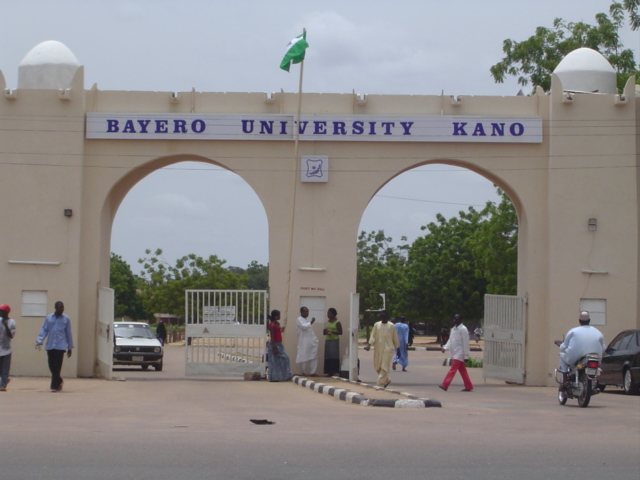
The Daily Reality offers scholarship for BUK students

The Daily Reality (TDR) online newspaper management is pleased to announce the opening of its Endowment Fund Program and invites eligible and interested applicants to apply.

In light of the recent rise in registration fees at Bayero University, Kano (BUK), TDR plans to offer a grant to students who have had their articles published on the platform as a way of support.

Thus, if you are a BUK student and have your article published by TDR, please, contact us via contact@dailyrealityng.com or thedailyrealitynews@gmail.com. Please, submit proof of your student status at BUK, such as a copy of your ID or admission letter, along with the title of your article. The application closes on July 16, 2023, at 11:59 pm.

Please, join us in supporting young people’s education. Every contribution counts.

Sincerely yours,

TDR Editorial Team

How to plan the prosperity of your family through Waqf  (II)

By Abdullahi Abubakar Lamido

Bleak Economic Future on Losing bread Winner

Think of it; the moment you die, the socioeconomic status of your children and wives changes. Your children (those young among them especially) become orphans, and your wives are called widows. While alive, you worked hard and earned for their feeding, clothing, shelter, education, healthcare and general wellbeing. The moment you die, they lose a breadwinner. If in your lifetime you have searched from the Islamic Sharī’ah, you would have learned the art and science of planning beyond your lifetime for these prospective widows and orphans. After relying on Allah, you would have built for them a prospect such that they would live a life of meaning, success, prosperity and contribution, insha Allah. And here comes the relevance of family waqf; waqf, in general, being the Islamic instrument for institutionalising philanthropy and ensuring perpetuity in giving!

Family Waqf as a superb socioeconomic institution enables one posthumously to maintain his parenthood and breadwinner status for his family, generates him reward permanently and preserves the dignity of his progeny everlastingly. In family waqf, you find one of the essential instruments for planning the future prosperity of your progeny.

Family Waqf as Solution

Family waqf, also called posterity waqf, is a kind of endowment created as a futuristic investment for the sustainable prosperity of the endower’s relatives or friends. It is often called a restricted waqf, distinct from a public waqf whose benefits go to an open class of beneficiaries. It can be for the immediate family; wives and children. It may also include parents. It can be made for the extended family, depending upon the financial capacity of the endower. One can make a family waqf for a child with a special need, say one with sickle-cell disease. The beneficiaries of a family waqf, in short, are those defined by the endower.    

Significantly, although the primary beneficiaries of this form of waqf are those pinpointed from the endower’s family, time may expand the scope of the recipients of its fruits. When, for example, the revenues generated from the waqf grow so large beyond the family’s need, or when the family gradually goes extinct after some long time, the waqf could be converted to a public waqf, expanding the coverage of those who enjoy its benefits. Therefore, what distinguishes a family waqf from a general public waqf is its scope of defined beneficiaries. Virtually all other rules of its governance are the same with public waqf. It can be made a direct waqf, one that creates direct benefits, on an investment waqf whose revenues are distributed to the designated recipients.   

Family waqf can be made for the provision of all forms of welfare and empowerment services for the family. It can be made for education, healthcare, feeding, clothing and other needs. It can also be made, specifically for the sponsorship of Hajj to family members. In this regard, instead of spending five million naira for two or three members of the family to perform Hajj this year, the same amount can be invested as a waqf, such that after its maturity, the proceeds from the investment waqf can be used to sponsor Hajj for a certain number of family members every year. With proper management and Allah’s barakah, instead of three family members, dozens of them can enjoy Hajj from the same seed money even long after the demise of the original donor. Waqf multiplies benefits and rewards manifold.

More often than not, you hear people complain over the demands of their family members overwhelming them even as they want to contribute. But little do they know they have a satisfactory answer in family waqf. For example, suppose you know you spend two million naira for the education of your children and extended family annually. Why not make an investment waqf so that the proceeds of the waqf relieve you of any spending in that direction in some years to come?

Form and Functioning of the Family Waqf

A person can build a rentable shopping complex, subscribe to Islamic bonds (Sukuk), buy shares of a halal company, and dedicate the same and profits thereof as a waqf for the education of his children and grandchildren. Likewise, one can build an orchard full of date trees, mango trees and other fruit-bearing trees, dedicating them as a waqf for the future specific or general financing of the needs of their children.

When the endower specifies in the waqf deed that it is only for the education of his children, then, as a rule, no part of the rentals shall be spent on other needs, just as the resources cannot be used to fund the education of children other than his, except when the yields grow far beyond the education of the designated siblings. If the endower dedicates it to education and healthcare, its proceeds cannot be diverted to feeding the family or other things except under absolute necessity. All this is to safeguard the sanctity of the waqf, ensure its sustainability, and guarantee the continuous flow of its yields in line with the overall goals and objectives for which it is created.

 The good thing is that, like all other waqfs, making it a family waqf makes the investment/asset inalienable. It prevents it from being counted among the inheritable wealth of the endower, as it will remain a separate entity that creates benefits perpetually to the entire qualified beneficiaries. The asset can neither be sold nor given as collateral. It remains a waqf asset. This way, even when the children need other things, they source them outside the waqf, allowing the waqf to maintain its defined purpose perpetually.  

The idea behind family waqf stems from Islam’s emphasis on ensuring the wellbeing of a person’s family and biological relations and the need to spend continuously on all aspects of their needs; spiritual, intellectual, biological, physiological, socio-cultural, and so on. Talking about spending, the Qur’an draws attention to prioritising spending on the family. When, for instance, the companions continued to ask the Prophet (SAW) how best to organise their spending, Allah intervened with a divine spending formula: that whatever you plan to spend for good or charity, direct it to your “parents, relatives, orphans, the needy and the traveller” (Qur’an 2: 215).

Your family, in short, occupies the first three spaces on your scale of spending preference. They are the primary beneficiaries of your giving, be it obligatory or voluntary. Now, if, as the Prophet declares, the most pleasing act in the sight of Allah is one that is perpetual and sustainable; then it becomes apparent that the most rewarding spending on the family is the “gift that keeps on giving”, that is a waqf that keeps bearing fruits to the family.

Start Early, Start Now!

It is important you begin the waqf plan early. Many people start their marital lives with moderate incomes, which, with little adjustments, a futuristic mindset and financial discipline, are sufficient to be divided into consumption, saving and little investments. However, financial shortsightedness often prevents them from allocating some portion of that “meagre income” to what would ease their financial burdens and create a sustainable flow of income – and reward- for themselves and their family in the future. Little do they realise that as their family grows, so do their financial burdens. If these are added to inflation and other economic unpredictables, the complexity of the situation worsens.

Many people do not also realise that the best immunisation from the negative socioeconomic consequences of shrinking disposable income is to begin early implementation of an effective financial plan. Many begin to regret when the regret cannot change anything; they would want to start to cry when the head is already cut off!  

So, plan for the future of your beloved wives, children and relatives. That is a Sunnah, a well-established one, for that matter. A viable and well-managed revenue-generating waqf can do that for you. You get double rewards; you safeguard your family’s future Islamically and earn rewards perpetually. Make an effective plan for their feeding, sheltering, education, medicine, and socioeconomic prosperity. Make a waqf for their Hajj, ‘umrah and general spiritual wellbeing. That is sunnatic. Do not miss the opportunity to practice this multidimensional Sunnah, the Sunnah of family waqf. Our dear mother and wife of the Noblest Prophet, Aisha, reports to us that the Prophet (peace be upon him) dedicated his seven gardens as waqf to benefit the clans of Banū Abd Muttalib and Banū Hāshim as recorded by Bayhaqi.

We also see emphasising family waqf in the guidance of the Prophet to his companions. After the revelation of the verse “By no means shall you attain righteousness/piety unless you spend of that which you love; and whatever good you spend, Allah knows it well” (3:92), Abu Talha met the Prophet and said, “This is what Allah has revealed, and the most treasured of all my wealth is this garden, Bayruhā’. I have set it aside as a adaqah to attract reward from Allah. Therefore, you should administer it the way you wish”. The Prophet was amazed by this gesture. And so he said, “Certainly your wealth is blessed. Having heard what you have said, I recommend that you dedicate it as a perpetual charity to your relatives”. Based on this Prophetic advice Abu Talhah made it a waqf for his close relatives and cousins (Bukhari and Muslim).

It is interesting also that most companions of the Prophet are reported to have implemented this Sunnah. For example, Caliph Abubakar dedicated a house as a waqf for his son, and Umar dedicated a waqf near Marwa to his son. Also, Zubayr endowed a house in Makkah, another in Egypt, and yet another in Medina as waqfs for his children. Amr b. ‘Āss endowed a house and another huge property in Mecca for his children, just as Hakīm b. Hizām also dedicated a house as a waqf in Mecca and another in Medina for his son. After reporting all of these, Ibn Qudamah says in al-Mughniy, “All this are intact till date”.

Family waqf is a Sunnah of the Prophet, his companions and generations of Muslims in the last fourteen centuries. It is a well-developed institution that grew as a robust instrument for family empowerment and societal development until it faced the orchestrated wrath of the colonial monsters. The colonialists saw it as an institution that gave families and societies independence against their mercilessness and hence officially abolished it in Muslim nations like Egypt, Morocco, and so on.

Sadly, there is hardly any evidence of its practice as enshrined in Islamic law and civilisation here in Nigeria. With the growing waqf awakening in Nigeria, one hopes that a new page would be opened for entrenching this all-important Islamic civilisational institution. The good news is that with each family doing it, we gradually build a new waqf generation. Through that, we give a big blow to poverty at family levels before we finally eject it out of our communities. The early we sow, the earlier we reap. The more we sow, the more we reap. May we begin this journey NOW.

Abdullahi Abubakar Lamido, Chairman, Zakah and Waqf Foundation, Gombe . He can be reached via lamidomabudi@gmail.com.

How to plan the prosperity of your family through Waqf  (I)

By Abdullahi Abubakar Lamido

Introduction

In today’s Nigeria, we experience a rapidly growing population at an average rate of 3% per annum. We currently have about 220 million citizens and still counting. Our population is projected to reach nearly 400 million in the next 28 years. It is factual also that the population growth is much higher in the Muslim communities of Northern Nigeria than in other communities in both the North and the South.

Due to many reasons, foremost among which is the widespread practice of Islamically permissible polygyny, our population grows exponentially. At the same time, little is done to plan the expansion of infrastructure and provide alternative ways of coping with the needs of the expanding population. An average Northern Nigerian man likes and practices polygyny (i.e. marries more than one wife). In addition, family planning and birth control are generally considered taboos. Families are, therefore, mostly large.

While the population is supposed to be a blessing, it can also be a curse if not well managed. It is clear also that most of the Muslim masses and a large chunk of the Muslim leaders, intellectuals and even religious scholars are oblivious of the long term consequences of an ever-growing population that is not matched with a corresponding sharī’ah-compliant solid plan for taking care of the education, health, food and other socioeconomic and religio-spiritual needs of the expanding population.

While few are partly aware of some of the projections related to population growth vis-à-vis the socioeconomic and other realities, we are largely oblivious of the need to develop Islamic oriented ways of building the society and coping with the socioeconomic challenges associated with our growing population and exponentially changing societal dynamics. Therefore, the issue can quickly become controversial during any discussion.

But a society that accepts, based on an interpretation of religious teachings and cultural beliefs, that polygamy – rather polygyny – should be widely practised and even encouraged should also be a society that always goes back to the scripture for proper guidance on how to manage polygamous families. Since, as a religious Ummah, we have accepted what Islam has provided for us of the permissibility of having many children, is it not also Islamically incumbent upon us to go back to the Qur’an and Sunnah to learn how to organise the social, educational, economic and other needs of our families? Within this context, I intend to introduce family waqf, an almost entirely unknown Islamic institution for organising and planning the prosperity of families in Nigeria.  

Unpleasant Consequences of Life without Planning

How often have you heard stories that end with statements like: “Allahu Akbar! Late Alhaji Adamu was a wealthy person, a kind, gentle, and successful businessman. But look at how his children are suffering…”; or “Can you remember Alhaji Mai-Turare: the owner of XYZ Business at Tudun Muntsira quarters? Do you know that this hopeless drug addict is his son! He dropped out of school and joined a team of hooligans…Allah ya sa mu gama da duniya lafiya (May we have a good end in this world)”. And similar stories?!

Those are recurrent stories in Northern Nigeria. You have several successful entrepreneurs or accomplished aristocrats and professionals who reached the zenith of fortune in their chosen businesses and professions and lived lives of accomplishment and contribution. However, shortly after their demise, their estates would be shared among their 30 heirs; four wives, over 20 children, etc. After a few years, those inheritors of enormous wealth would fall from the world of prosperity to that of harsh poverty.

Many people would be rich, with an ever-expanding flow of income in the booming years of their careers. Still, they would never think of making a sustainable investment for the future prosperity of their children, not even for their life after retirement. After the family has grown large, inflation has multiplied manifold, and life has become unbearably expensive against their sources of income which have rather contracted due to age and other factors; they turn from affluence to poverty, battling to settle even the most basic of their bills. They neither invested for their retirement nor made an ever-flowing investment for their second life, the eternal life after death.

They have no passive investments that generate income for them at old age, nor a waqf (endowment) that would continue to fetch them rewards even while in their graves. They have no plan for what would sustainably finance their family’s education, health, and other essential needs. And so the worst happens. And the whistle is blown for their final, inevitable transition to the next world, leaving their family in economic and financial confusion, which often spirals into other messes in the spiritual, social and mental spheres. Soon after dearth, history forgets them as they have left nothing that continues to fetch them rewards and people’s prayers, not even for their immediate family.

The Importance of Making a Financial Plan

But why is it essential to make a financial plan for your children’s and family’s future prosperity? Does that have any place in Islam? Sa’d b. Abu Waqqas was an uncle to the Prophet (peace be upon him). He was among the ten topmost companions that received glad tiding of a direct entry ticket to Paradise in one sitting. He was rich. Actually, very rich.

One day, during the farewell pilgrimage, the Prophet visited Sa’d on his sickbed. After exchanging greetings, Sa’d told the Prophet that I am seriously ill, as you can see. He apparently was doubtful of surviving that illness. He said, “And I am a very rich person, but there is no one to inherit my wealth except a single daughter.” He then asked if he could give two-thirds of his wealth to charity, leaving one-thirds for the daughter. The Prophet instantly replied with a quick “No”. “What of half?” The Prophet again said, “NO”! What of one-thirds?” Now, here is where the Prophet reluctantly approved by saying, “One-third! Even one-third is huge and too much”. Anyway, the Prophet followed this with a statement that deserves the attention of parents at all times; “It is better to die leaving your heirs in affluence than to leave them in poverty, so they continue begging people for alms”. 

Many lessons abound in the above conversation of great personalities. One, piety and affluence are never mutually exclusive; you can be profoundly pious and superlatively prosperous. Two, connected to this, enjoying worldly opulence does not preclude enjoying everlasting other earthly felicity. In fact, worldly riches are effective instruments for attaining success in the next world. This is clear in the stories of great companions like Abubakar Siddiq, Uthman Bin Affan, Abdurrahman and, of course, Sa’ad.

Significantly also, you can plan all of these for your loved ones beginning with your children and wives. Not only you can; you have to! This is Prophetic advice, if not an order. The Prophet (may peace be upon him) made it impermissible for a person, especially while bidding farewell to the world, having no chance on sight to go to the market and earn more resources from gifting out his fortunes lest he throws them into poverty after him.

In simple terms, what the Prophet wanted from us is to plan for making our children self-reliant, self-sufficient and socio-economically empowered. With this, instead of being dependent, they will be independent. We should try making them givers, not receivers, assets rather than liabilities. Ask yourself, if not for empowering the deceased person’s posterity, why would the Sharī’ah even prescribe the inheritance laws in the first place? And in the Hadith of Sa’d above, the Prophet wants us to understand that the philosophy behind inheritance itself is to plan for the sustainable prosperity and economic independence of the deceased’s heirs; leaving them with sufficient inheritable resources to make them rich (agniya’) as against poor (alah).  

Abdullahi Abubakar Lamido, Chairman, Zakah and Waqf Foundation, Gombe . He can be reached via lamidomabudi@gmail.com.

Waqf would have saved the situation!  

By Abdullahi Abubakar Lamido

Alhaji Abdullahi (not a real name) is a rich man from Northern Nigeria, famous for his multidimensional philanthropy. He was, at a time, among the three richest men in his town. He came from a polygamous family and was the 14th child of his dad. He was the only rich man. Being polygamous himself, he has close to 20 children from three wives. As the only well-to-do in his extended family, his house is like a local government secretariat, always jam-packed with visitors from among family members. This is in addition to dozens of his “sons and daughters” born by his brothers and sisters, who reside in his house, under his total care. But Alhaji takes care of them all; feeding, clothing, education, healthcare, Sallah clothes, etc. He does that with all pleasure. After all, he has the means, and of course, the heart, as a wealthy businessman.

Here is a religious, wealthy man and an influential politician cum Islamic scholar. He has built several schools and mosques, sponsored the education of many orphans, given capital to many people, sponsored the marriages of many poor girls, and sponsored dozens of people to hajj. He is one of the best philanthropists you can think of. After all, that is what is expected of an affluent Islamic scholar. His school was once among the best two primary and secondary schools in the town. When he singlehandedly built it about two decades ago (he had built others much earlier), he would pay teachers’ salaries, buy uniforms for the students, and give them other learning materials. He loves the Qur’an, being also a hafidh himself. And he would provide copies of the Qur’an to all the hundreds of his pupils. This is in addition to dozens of people who rely on him for their livelihood.  

As time went by, the “law of diminishing returns” began to affect his fortunes. Gradually, he began to withdraw the subsidies from the school due to continually decreasing income and ever-expanding family financial pressure. But he wanted to maintain the good deeds. Now the school needed expansion while his pocket had experienced contraction. He gave his big land close to the school for the purpose. But no funds to build it. So, he sold another land and built it. Note that the school fees could, at best, pay salaries and take care of the running cost. Every student pays. But it is a middle-class school, so the charges cannot be high. So, he went and sold another asset, built the classes. He sold another one again and again until virtually all the sellable assets became exhausted.

One day, while sitting at home, he saw his children returning before the school closing hours. “What is going on”? He asked them. They were sent home because they did not pay school fees. This happened when he was battling with how to feed his family and settle many other bills. Alhaji never envisaged a day when his fortune would dwindle to that level. Therefore, he did not save nor invest for that rainy day. He thought he would continue to secure contracts and earn considerable resources to fund his schools and even establish more. He, in short, did not benefit from the advice of a waqf expert who could have shown him the simple way of establishing an investment waqf, using a portion of his assets, that would perpetually generate a flow of revenues. The revenues could sustainably fund his schools and other charitable interventions. 

Waqf offers a variety of ways for planning the future of your family and supporting other charitable projects sustainably. For instance, the idea of an investment/productive waqf would have perfectly saved Alhaji Abdullahi from selling and reselling his properties to expand his school. As it is, there are two forms of waqf; direct and invest waqfs.

A direct waqf is one created to provide direct welfare and societal development services. Examples are mosques, boreholes, and tuition-free schools that offer direct benefits to designated beneficiaries. An investment waqf is a money generating waqf whose revenues are dedicated to financing defined welfare and socio-economic development projects. An investment waqf can be made to fund and maintain a direct waqf.

For instance, a well-managed orchard can be dedicated as waqf such that the revenues generated from the sale of its fruits will be used to finance a tuition-free school. So, when Alhaji Abdullahi built his school, which he wanted to be a subsidized one, he could have established an investment waqf that would mature and, within some time, continue to finance the school from its proceeds. His other assets would have been saved for other equally important purposes. He could as well have saved himself from the embarrassment of the failure to pay children’s school fees later in his life when the recession hit him.

For instance, nothing stops this rich man from building rentable shops or apartments and dedicating them as waqf, such that what they generate would be divided into two; half reinvented and the other half injected into supplementing what is generated as school fees. He could as well have purchased shares of a halal company and dedicated the investment as a waqf for funding the school waqf. This way, the waqf corpus would continue to expand, and its revenues would grow sustainably. What started as a small waqf can grow into a megaproject that benefits society on a larger scale. Not only subsidies, the investment, if properly managed by trustworthy investment experts, would have funded the construction of more and more schools and the provision of scholarships, among others.

 So, if he provided subsidies at the beginning of the school, part of such funds would have been invested, and gradually he could withdraw the subsidies as the returns from investment take over the funding of the school. This way, his children could have become permanent beneficiaries of the scholarship provided by the waqf of their formerly wealthy father. Better still, he could have simply established a family waqf (a topic for another day) specifically for his children. Waqf, in short, could have saved the situation

Abdullahi Abubakar Lamido is the Chairman, Zakah and Waqf Foundation, Gombe. He can be reached via lamidomabudi@gmail.com.

Gombe: Zakah and Waqf Foundation empowers women

By Nabeela Usman El-Nafaty

The 5th set of the beneficiaries of the Women Empowerment Program under the Zakah and Waqf Foundation, Gombe, have undergone a semi-final graduation ceremony on Sunday, March 13, 2022. The main graduation ceremony and inauguration of the new empowered (6th Set) is expected to hold after Ramadan.  

The beneficiaries who were inaugurated on February 14, 2021, numbering 88, were each given N10000 start-up capital. Those who reached the finish line were about 40. The ceremony had the attendance of the Chairman of the Foundation, the Heads of Women Empowerment, Education and Training, and the Chairperson of Wadata Multipurpose Cooperative Society (WAMCOS), among others. 

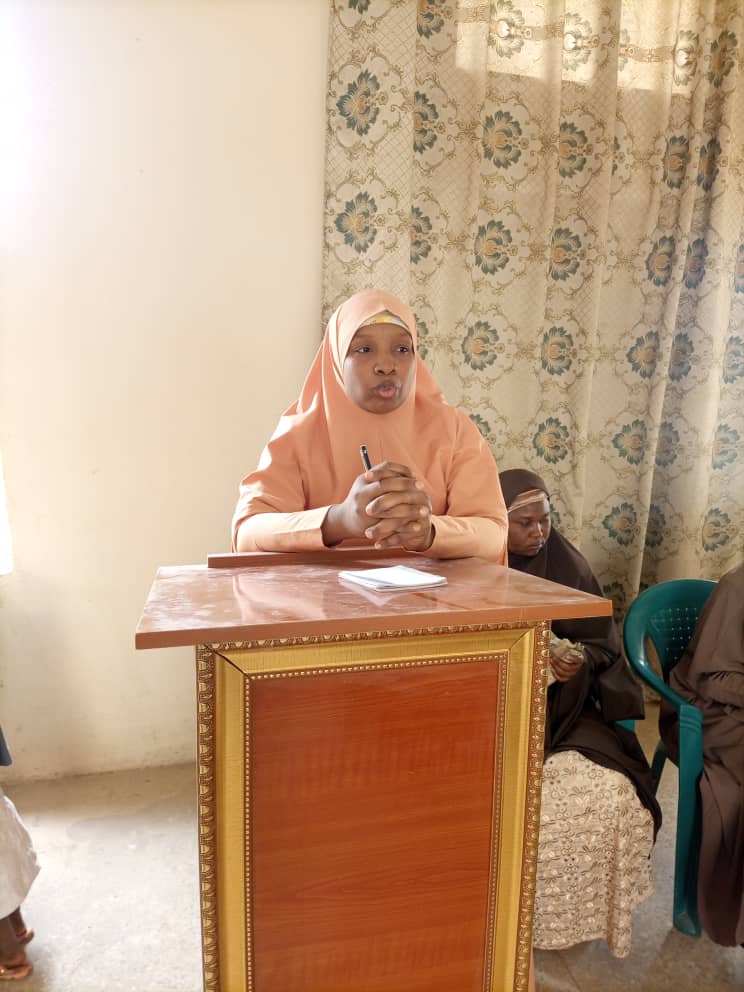
Malama Maryam Yaya, the Head of Women Empowerment, gave the welcome speech. She thanked the beneficiaries for their doggedness in completing a full year of biweekly meetings, savings and enlightenment, as they saved close to N1,200,000 since February 28, 2021.

The Chairman of the occasion, Vice-Chairperson of the Foundation, QS Ahmad M. Kabir, prayed for the Foundation and thanked its head for her tireless efforts to keep the program alive and functioning.

The VC’s speech was followed by the keynote address by the Chairman of the Foundation, Ameer Abdullahi Abubakar Lamido. He gave a detailed speech about the next level of their empowerment, including joining the WADATA Women Cooperative Society.

The Chairperson of WAMCOS, Malama Hanne Abdullahi, was the next on the podium where she welcomed the successful beneficiaries into WAMCOS. She emphasized the need to come to monthly meetings and make monthly savings regularly. She also introduced to them the idea for ‘special savings’, which is usually for long-term plans like the wedding of a daughter, registration fee of kids, hajj savings etc. 

The event’s highlights were feedback from the beneficiaries about how the Empowerment Program benefitted them in ways beyond measure. One of the beneficiaries, Kulu Muhammad, from Tudun Wada of Gombe, said that the programme was “like a person on a standstill in total darkness, and then someone comes with torchlight and shows him the way out of the darkness.

Another highlight of the event was the presentation of gifts to the most outstanding beneficiaries in performance, determination, frequent attendance to meetings, and savings. 

The beneficiaries were allowed to come and pick from items of their choice, including food flasks, clothes, kids’ wear, Hijabs, and shoes donated by some officials and volunteers of the Foundation. No one among the attendants of the graduation went home empty-handed. There were smiles everywhere and prayers to the Foundation for more success and greater heights.

From Proliferating Worship Places to Empowering Worshippers: A Reflection on Philanthropic Reprioritization in Nigeria (II)

By Abdullahi Abubakar Lamido

A person who sponsors and takes good care of a single orphan is assured of a mansion in the choicest quarters of Firdaus at the centre of the Prophet’s Estate, enjoying their eternal life as a neighbour to the Infallible Master (sallalahu alaihi wa sallam). In the Hadith of Bukhari, the Prophet says, “The caretaker of the orphan and I will enter paradise like this, raising (by way of illustration) his forefinger and middle finger jointly, leaving no space in-between.”

A community flooded with orphans and vulnerable children with no access to food, clothing, shelter, education, and medicare; orphans whose neglect aggravate their vulnerability to all sorts of socio-economic dangers; should prioritise taking care of them. If competing in building mosques even where there is less need is to get paradise, why not also invest in this sure way to Heaven?

And, why not consider endowments for fighting hunger also? When a person asked the Prophet, what is the best act in Islam, the Prophet mentioned two actions: “To feed (others) and to greet those whom you know and those whom you do not know” (Bukhari). And the Prophet also counted “feeding others” among the surest ways to paradise, alongside spreading salam, strengthening kinship ties and night prayers. Why not, then also emphasise in our society, making endowments for feeding the needy and the millions of the malnourished and unnourished children as a guaranteed path to paradise? 

My honest opinion is that rather than rebuilding or redecorating some mosques, we need to invest more in empowering our imams and their followers. We can all see how the “imamdom” is gradually being saturated with incapable scholars leading ignorant followers in prayers within well-decorated mosques. As if we have forgotten that giving quality education and “beneficial knowledge” to people is itself a sustainable afterlife investment, one that may even often have more multiplier effects and trickle-down effects in terms of fetching rewards perpetually and building the Muslim community progressively.

If one sponsors a young man to become an Islamic scholar and imam, anytime this trained scholar preaches and teaches, the sponsor has a reward commission. And when the students of the imam teach or use the knowledge, the sponsor is assured of a commission. It continues in that way till “the end of history”! So, if the search for reward is what makes us race in building worship places, then so should building qualitative worshipers. We should, in fact, see the creation of generations of qualitative Muslims as a “blue ocean”; a virgin and highly underexplored otherworldly investment opportunity.  

Some may remind us that the Prophet’s first thing after hijra was to build a mosque. True. But that was first because there was none. And secondly, this mosque, as a primary symbol of Islam, was built for companions who were well educated in Makkah before migration, plus the Medinan community that was also educated by no other scholar than the great Mus’ab bin ‘Umayr.

In any case, the Prophet built the mosque because it was a priority by all standards; there was a need. And so immediately after that, he also paid attention to other developmental matters, including socio-economic priorities like establishing the Medinan Market (Suq al-Madinah). He also immediately began calling companions to “purchase” homes in Jannah through addressing human needs. That was how Uthman got an edifice in Jannah by purchasing the well of Ruma and dedicating it as waqf. That was how Abu Talha got Paradise by committing a waqf of his garden to benefit the needy and his poor relatives.

In fact, as recorded, most rich companions got their direct entry admission to Jannah through spending on human needs; Uthman bought and did waqf of the Ruma well, Umar dedicated the Thamqh garden for the poor, wayfarers and the rest, and the list goes. Little did we remember that in addition to doing a waqf of his mosque, virtually all the other waqfs of the Prophet were for welfare and socio-economic empowerment. 

We need to discuss whether building the Muslims and making them self-sufficient should continue to receive our philanthropic priorities or building mansions in the name of mosques – even where there is less need – which would mostly be populated by undedicated, hungry, dirty and largely ill worshippers. Building worship places is undoubtedly required, guaranteed key to paradise, ceteris paribus. It is, however, one of many means to getting admission to paradise. Why, then, should we not start to amplify other keys to paradise, especially those in some contexts such as ours that may appear weightier on the scale of Muslim priorities?

It is not in the interest of Islam to have dirty looking Muslims attending multimillion naira mosques. Islam wants educated, neat, tranquil, self-sufficient, qualitative Muslims whose worship is knowledge-based. So, when some philanthropists focus on building worship places, others need to invest in other equally rewarding endeavours. Wherever we have no worship place, it is a collective duty upon the community members to initiate one. However, where we already have one, we must prioritise other joint obligations; taking care of the orphans, the poor and widows being one of them. We can do it through building revenue-generating waqfs that can perpetually help the poor and everlasting generate rewards to the donor.

Abdullahi Abubakar Lamido is the Chairman Zakah and Waqf Foundation Gombe, Nigeria. He can be reached via lamidomabudi@gmail.com.

Why Not Just Make a Waqf Now?

By Abdullahi Abubakar Lamido

I begin, after praising Allah and sending blessings to the beloved Prophet peace be upon him, with three stories from Nigeria. They are all real. The first is of a rich man who died and was survived by a wife and her two children. His estate included mansions in choice areas, high worth investments, company shares, farmlands, etc. This “beloved” wife was advised to make a waqf (perpetual charity) of just a mosque as a source of everlasting reward for the late husband from the hard-earned wealth he spent his life gathering. She was reminded that less than one per cent of his wealth could do it.  The wife answered in one word: “Impossible”! Rather, she offered to cook rice and beans every Friday and give to the begging Almajiris around as sadaqah. To be fair to her, she did so for some months until she met a new darling husband with whom she now enjoys her inherited, halal fortune! End of story!

The second story is that of a religious and highly influential personality who died and left behind several sons and daughters, all of whom had already grown wealthy and influential. The deceased’s bosom friend, who was the custodian of many of his possessions, approached the heirs. He pinpointed a plot of land in a choice area in one of the largest Nigerian cities and offered that if they would designate it as a perpetual charity, he would build an ultramodern Islamic centre there as a waqf for their late father. This, he said, was to create a ceaseless flow of rewards to their late father. Alas! To his face, they simply said no! And the rest is history.

The third is the story of a woman philanthropist who was the wife of an influential person. She was known for her dedication to building mosques, schools, among other charitable interventions. After her demise, the husband learned of several uncompleted mosques and schools that were part of her charitable initiatives. He called her children to a conference and suggested that from her inheritable wealth, they should dedicate what would be enough to complete such ongoing projects. And what a small portion of her wealth was that! They unanimously rejected his offer, departing in a “just give us our money” mood. It was the father who used his resources to finance the completion of the projects. I gather that he was lucky to have learned some lessons here and begin to emulate his late philanthropist wife. He actually increased his budget for Islamic philanthropy as he was already known for charity also. May Allah accept it for him, and for her.

I am sure by now you, my dear reader, have started to recollect several similar stories you have heard on several occasions or which might have even happened close to you. I also have many to share. But these ones suffice as examples. At least for now. What lesson, then, have you learned from this?

Now, remember the Prophetic hadith in which he explains that the moment a person dies, his reward fetching deeds terminate except three; waqf or perpetual charity being the first of them. The other two reward sources are the prayer of a pious child and beneficial knowledge. Interestingly, in the hadith is an equitable distribution of reward sources of some sort. The wealthy folks no doubt have access to the “lion share” in terms of perpetual charity. Beneficial knowledge is the share of the scholars essentially. For the non-rich, non-scholar believer, giving a good upbringing to his/her children guarantees them prayers from pious children and a continuous flow of reward.

Many owners of surplus resources miss the opportunity of making a waqf due to procrastination and other flimsy considerations. By doing so, they deny themselves the most important investment of their lifetime. How can Allah give you the opportunity of making an investment that may pass a millennium fetching you rewards only for you to refuse to do so? Daniel Crecelius explains to us that several waqfs, created for the provision of various social, religious, educational, economic and welfare services free of charge to the public, have survived for five centuries, and some for over a millennium. Now! Imagine yourself, in your grave, receiving “alerts” of rewards daily while charting with the Angels! Can you imagine the amount of reward you would earn by continuously creating benefits, solving problems, drawing happiness to thousands or millions of needy and poor lives for decades, centuries or even a millennium after your departure from this deceptive world? Consider the following stories.

You already know the third caliph of the Prophet, Uthman bin Affan (may Allah be pleased with him). After the migration to Medina, access to water became a great challenge for the believer. They had to buy from a Jew who owned a well called Ruma. The Jew was so wicked, charging exorbitant prices, and making life difficult for the believers. The solution was for the Muslim community to own it. The Prophet peace be upon him announced a guaranteed direct entry certificate to Jannah for whoever purchased it. Uthman did. He surrendered it as a waqf. People now could get water at zero cost. This charity became blessed and continued to expand. During the Umayyad period, it began to grow date palm trees in its surroundings. Many grew. The Ottoman Empire paid particular attention to developing the trees generating income from them. The returns would then be shared into two; a portion distributed as charity and the other saved. Later, the Saudi Arabian authorities opened a bank account in the name of Uthman Bin Affan. They save half of the returns and distribute half in charity. As the savings grew, a hotel was built in Medina, still in the name of Caliph Uthman. Half of the returns is reinvested while the other half, amounting to about 500 million Riyals annually (equivalent to about USD14 million) is distributed in charity. 1400 years of ceaseless reward, thanks to waqf!

Then the story of the great philanthropist, lady Zubaiyda, daughter of Ja’far al-Mansūr, granddaughter of the second Abbasid Caliph Abū Ja’far al-Mansūr; wife of the 5th Abbasid Caliph Hārūn al-Rashīd and mother to the 6th Abbasid Caliph, al-Amīn. Although she died in 216 AH (832 CE) in Baghdad, her source of reward is still yet to! In 186 AH (802 CE), she visited the Holy land as a pilgrim. She then noticed the serious difficulty people experienced in Mecca vis-à-vis accessing water. There were no reliable wells and springs from where to fetch portable water. The people rather relied on rainfall or poor wells that were irregular in providing water. She then ordered her treasurer to look for “world-class” engineers and professionals from different cities to embark on the work of constructing a befitting well. Having observed how difficult the project would be due to the nature of the soil which was rocky and hard, she declared her readiness to pay a dinar for every single digging, until they reached water level. Soon, highly professional engineers and experts flooded Mecca and started work, surveying between hard rocks until they were able to sink the well. In the end, they parted with the dinars and she parted with the never-ceasing reward! She dedicated the well as a waqf for the residents and visitors of Mecca. Water became abundantly available. Water scarcity became history.

But not only this. Zubayda also did a waqf for the waqf; waqf of rentable houses and landed properties for the maintenance of the water wells.  The ‘Ayn Zubaydah has been described as the largest waqf known in history in terms of the cost of its capital, the magnificence of its design, as well as its contributions to welfare in a sustainable manner. Importantly, the Well of Zubaydah, as it came to be known, has remained functional and productive to date. About 1200 years? It is being utilized by the people of the city as well as visiting pilgrims to the Holy land.

Dear reader! Make a waqf. Look around you. Investigate; what is the greatest problem of the poor around you? Food? Water? Lack of a clinic? Lack of a school for their children? Lack of capital for the poor widows who need money-generating ventures? Make a waqf to provide a sustainable solution for them. Build a plaza, a shopping complex, a rentable house, a garden or buy shares and dedicate as waqf for funding such charitable courses. Do not wait for your wife to make sadaqah of rice and beans for you on Fridays! If you want to enjoy your wealth perpetually, why not just make a waqf NOW?


Abdullahi Abubakar Lamido is the Chairman, Zakah & Waqf Foundation, Gombe, Nigeria. He can be contacted via lamidomabudi@gmail.com.