USA

Trump threatens 25 percent tariff on countries trading with Iran

By Sabiu Abdullahi

United States President Donald Trump has announced that any country maintaining commercial ties with Iran will face a 25 percent tariff on all business conducted with the United States.

The declaration came on Monday through a post on Trump’s social media platform, Truth Social, where he described the decision as “final and conclusive”, without providing further clarification on how the measure would be implemented.

“Effective immediately, any Country doing business with the Islamic Republic of Iran will pay a Tariff of 25% on any and all business being done with the United States of America,” Trump said in the post.

The statement did not specify the nations that would be affected. However, several major economies maintain active trade relations with Iran. These include Russia, China, Brazil and Turkiye. Iraq and the United Arab Emirates also rank among Iran’s key trading partners, according to data from Trading Economics.

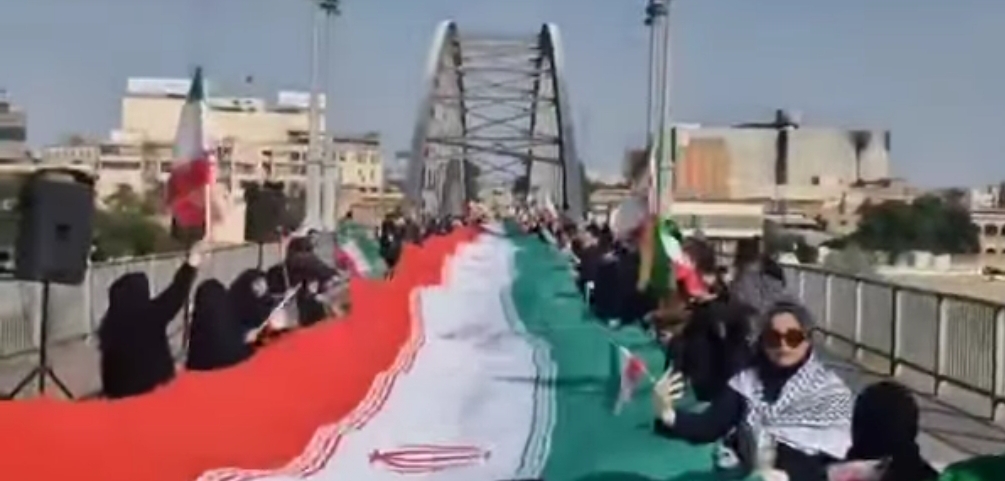
The announcement comes at a time when Iran is experiencing widespread antigovernment protests and violent unrest across the country.

Reports from rights groups suggest that hundreds of people may have been killed, although an internet shutdown has limited independent verification of events on the ground.

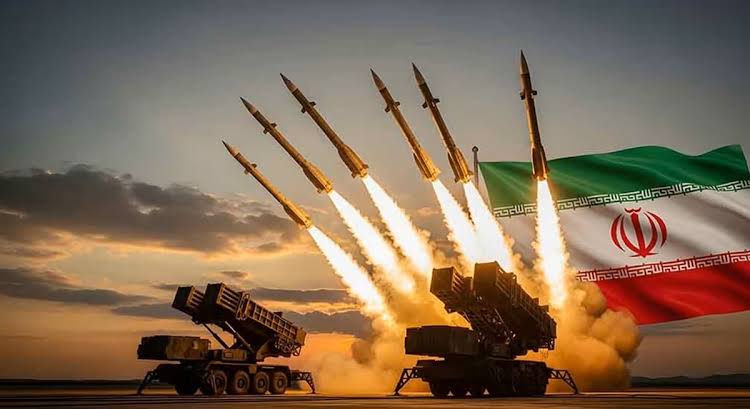
In recent weeks, Trump has increased pressure on Tehran while issuing warnings of possible military action if Iran does not reduce its nuclear and military programmes.

“Now, I hear that Iran is trying to build up again, and if they are, we’re going to have to knock them down,” Trump told reporters in December.

“We’ll knock them down. We’ll knock the hell out of them. But, hopefully, that’s not happening.”

Earlier in June, the United States carried out air attacks on three Iranian nuclear facilities during a 12-day conflict that followed military action by Israel.

Legal experts have argued that the US strikes may have breached international law.

Trump parades himself ‘Acting President Of Venezuela’

By Sabiu Abdullahi

A social media post shared by United States President Donald Trump has stirred controversy across diplomatic and political circles worldwide.

Trump uploaded an image on his Truth Social account in which he was portrayed as the “Acting President of Venezuela.”

The post surfaced only days after he signed an Executive Order that declared a national emergency concerning Venezuelan oil proceeds kept in United States Treasury accounts.

The White House said the Executive Order was introduced to advance U.S. foreign policy and national security priorities.

According to official explanations, the order prevents any attachment, judgment, lien, execution, garnishment or other legal action against Venezuelan oil revenues and diluent sales deposited in U.S. Treasury accounts.

The monies, described as “Foreign Government Deposit Funds,” are to remain frozen except where specific authorisation is granted under the new directive.

The order further bans any form of transfer or commercial dealing in the funds. It also nullifies previous instructions that had guided or limited such transactions.

Authorities maintained that the revenues remain the sovereign property of Venezuela but are held in U.S. custody for governmental and diplomatic purposes only and cannot be accessed by private individuals or companies.

The U.S. Embassy has also raised concerns about Venezuela’s security climate. It advised American citizens not to travel to the country and called on those currently there to leave immediately.

In a security advisory dated January 10, 2026, the embassy restated warnings that have been in effect since 2019, when the United States withdrew its diplomatic staff from Caracas and halted consular services.

On January 3, 2026, U.S. military forces carried out a targeted mission in Venezuela which resulted in the capture of President Nicolás Maduro and his wife, Cilia Flores.

More than 200 U.S. Special Operations troops carried out a pre-dawn raid in Caracas. The mission, named Operation Absolute Resolve, focused on several sites, including the Fort Tiuna military complex.

Reports indicated that U.S. forces “dragged” Maduro and Flores from their residence inside the complex. They were transported to the USS Iwo Jima and later flown to New York City.

No American casualties were reported. However, reports said that dozens of Venezuelan security officers and Cuban special forces members acting as bodyguards to Maduro were killed.

Following the operation, Venezuela’s Vice President, Delcy Rodríguez, took the oath of office as acting president through the National Assembly.

She described the raid as a “kidnapping” and accused the United States of breaching Venezuela’s sovereignty.

American authorities described the mission as a law enforcement action. After Maduro and Flores arrived in New York, prosecutors unsealed an indictment.

The charges included narco-terrorism conspiracy, cocaine importation conspiracy and weapons-related offences.

The U.S. Department of Justice alleged that Maduro had presided over what it called a “cocaine-fueled” administration for decades.

ICE killing in Minneapolis triggers protests across US

By Sabiu Abdullahi

Protests have erupted in several parts of the United States following the fatal shooting of a Minneapolis woman, Renee Nicole Good, by an officer of the U.S. Immigration and Customs Enforcement (ICE).

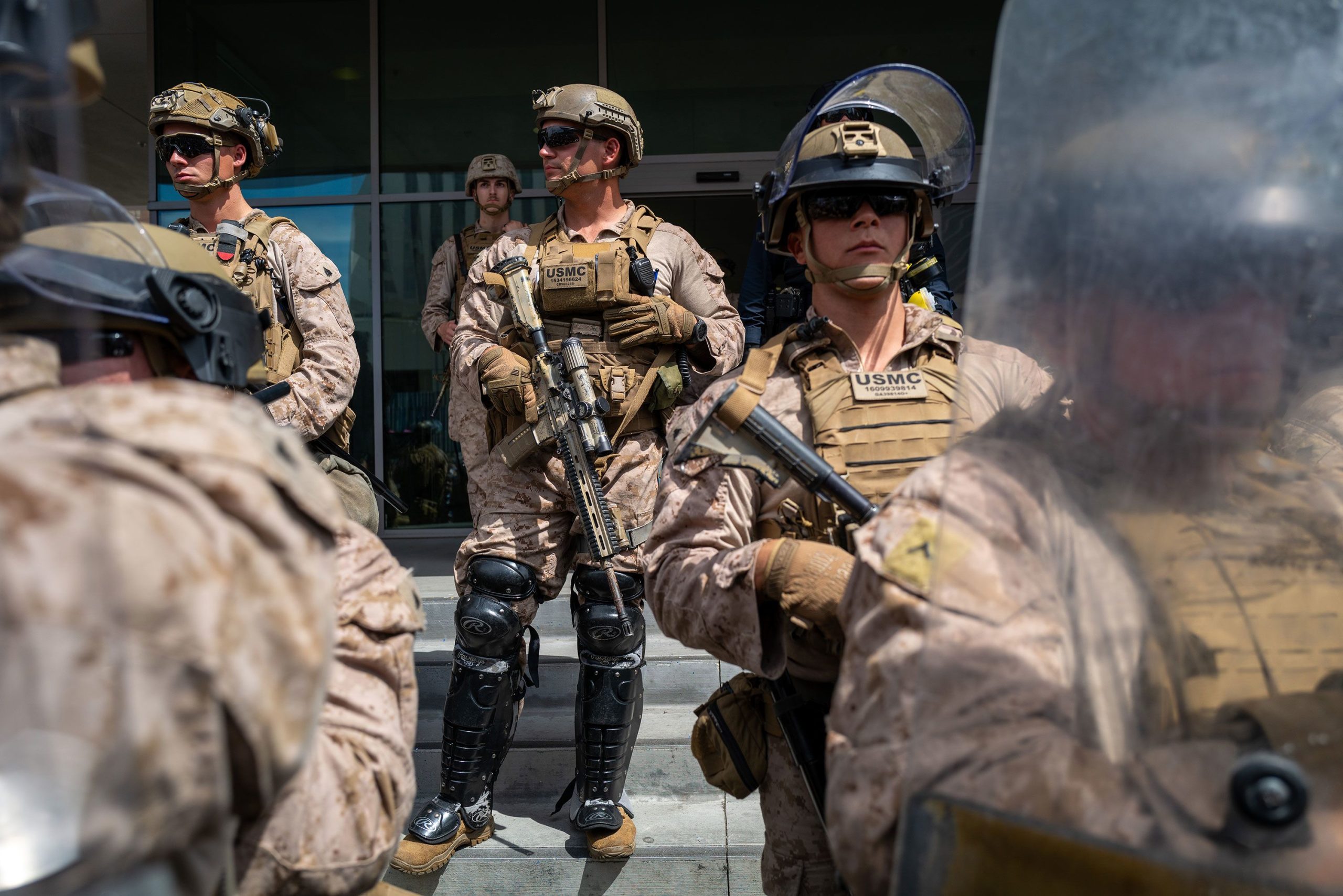
The demonstrations, which began earlier this week, were sparked by public anger over the incident. Activists and civil society groups say the killing reflects what they describe as the growing use of militarised tactics in immigration enforcement under the administration of President Donald Trump.

Indivisible, a civic movement organisation, announced that hundreds of protests were scheduled to take place on Saturday in states including Texas, Kansas, New Mexico, Ohio and Florida.

“ICE’s violence is not a statistic, it has names, families, and futures attached to it, and we refuse to look away or stay silent,” Leah Greenberg, the group’s co-executive director, said in a statement.

In North Carolina, 51-year-old Steven Eubanks attended a rally in Durham. He said he felt compelled to join the protest after learning about the killing of Good.

“We can’t allow it,” Eubanks told The Associated Press news agency. “We have to stand up.”

Federal authorities have defended the officer involved in the shooting. Senior officials in the Trump administration said Good had “weaponised” her vehicle and posed a threat to the life of the ICE agent who shot her.

However, video recordings from the scene showed Good trying to drive away before the fatal shots were fired by ICE agent Jonathan Ross.

The incident has renewed public focus on federal immigration operations across the country. It came as the Department of Homeland Security continues what it described as its largest immigration enforcement drive in the Twin Cities of Minneapolis and Saint Paul. Good, who was 37 years old, was a mother of three.

Many of Saturday’s demonstrations were organised under the banner “ICE Out for Good”. Indivisible said the protests were meant to “mourn the lives taken and shattered by ICE and to demand justice and accountability”.

In Minneapolis, migrant rights groups called for a major rally at Powderhorn Park. Organisers said the gathering would demand an “end to deadly terror on our streets”.

Iranian Army vows to protect national interests as protests intensify following US threats

By Sabiu Abdullahi

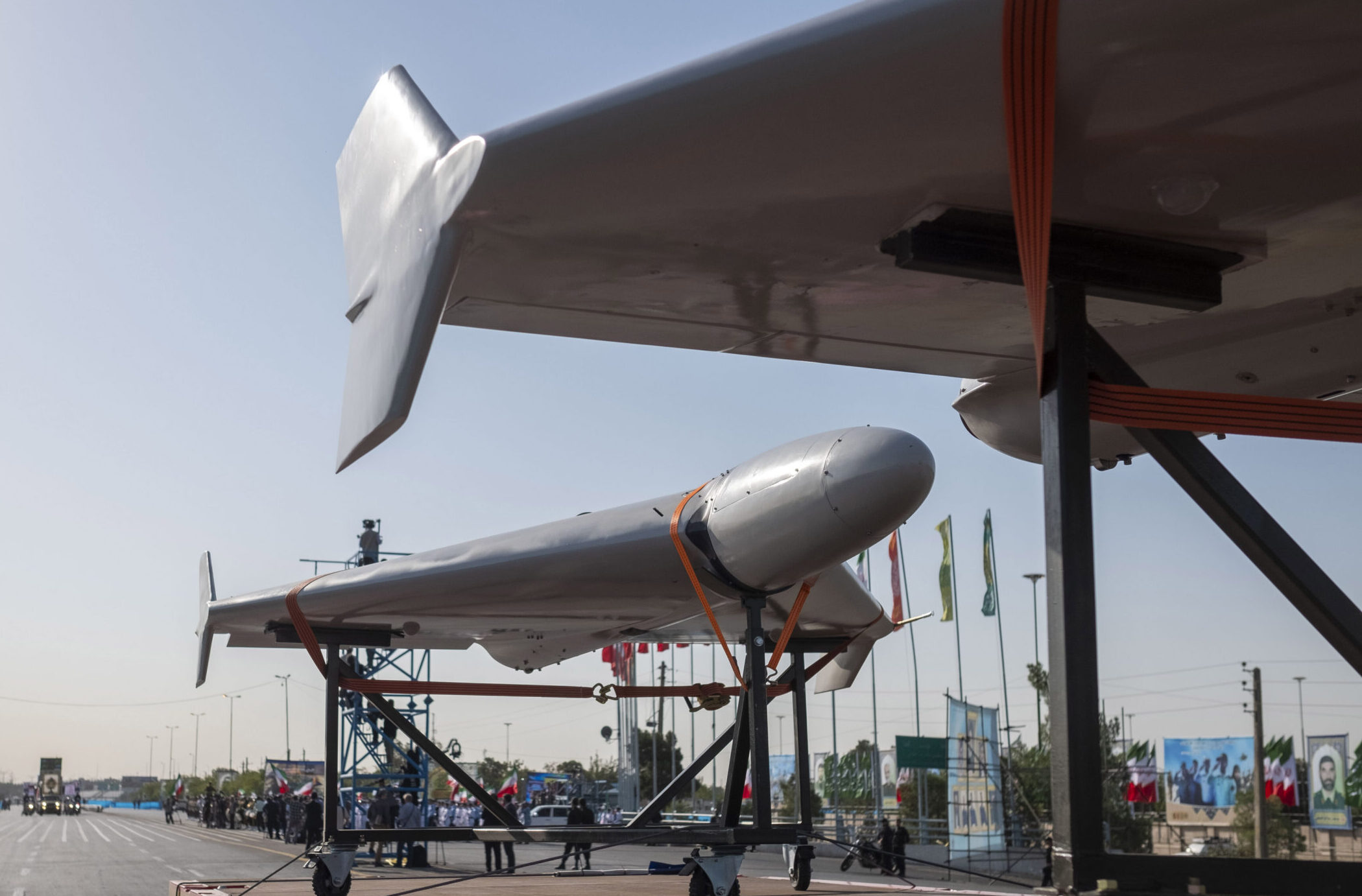
The Iranian military has pledged to defend the country’s strategic assets and public property as authorities intensify efforts to contain widespread antigovernment protests triggered by rising living costs.

In a statement released on Saturday by semi-official media outlets, the armed forces accused Israel and what they described as “hostile terrorist groups” of attempting to “undermine the country’s public security.”

The declaration came after United States President Donald Trump issued fresh warnings to Iran’s leadership over the growing demonstrations, which have resulted in dozens of deaths.

“The Army, under the command of the Supreme Commander-in-Chief, together with other armed forces, in addition to monitoring enemy movements in the region, will resolutely protect and safeguard national interests, the country’s strategic infrastructure, and public property,” the military said.

Iran’s Islamic Revolutionary Guard Corps (IRGC) delivered a similar message on Saturday. State television reported that the elite force described the protection of the 1979 revolution’s legacy and national security as a “red line.”

Earlier in the day, United States Secretary of State Marco Rubio reaffirmed Washington’s backing for Iranian protesters following an internet shutdown introduced by Iranian authorities.

“The United States supports the brave people of Iran,” Rubio wrote on X.

His message followed new remarks from Trump, who warned Iran’s leadership, saying, “You better not start shooting because we’ll start shooting too.” Trump stated that Iran’s leaders appeared to be “in big trouble” and repeated his warning that military action could follow if protesters were killed.

He added, “It looks to me that the people are taking over certain cities that nobody thought were really possible just a few weeks ago.”

Demonstrations have spread across the country since January 3, driven by frustration over economic hardship and increasing calls for the removal of the clerical establishment that has governed Iran since the 1979 Islamic Revolution.

Reports from Reuters indicated that unrest continued overnight on Saturday. State media blamed “rioters” for setting a municipal building ablaze in Karaj, west of Tehran. Press TV aired funeral footage of security personnel it said died during clashes in Shiraz, Qom and Hamedan.

Trump backtracks, acknowledges Muslims among victims of Nigeria killings

By Uzair Adam

Former United States President Donald Trump has acknowledged for the first time that Muslims are also victims of ongoing killings in Nigeria, marking a shift from his earlier narrative that focused almost exclusively on Christians.

Trump, who has repeatedly claimed that Christians are being targeted in attacks across the country, made the admission during an interview with The New York Times.

Despite this, he maintained that Christians remain the primary victims of the violence.“I think that Muslims are being killed also in Nigeria. But it’s mostly Christians,” Trump was quoted as saying.

Speaking on a Christmas Day attack on what he described as terror targets in Nigeria, Trump warned that the United States could carry out additional military strikes if the violence continues.

“I’d love to make it a one-time strike … But if they continue to kill Christians, it will be a many-time strike,” he said.

When reminded that his own Africa adviser had previously stated that groups such as Islamic State and Boko Haram have killed more Muslims than Christians, Trump repeated his position, insisting that while Muslims are affected, Christians suffer the most.

In late October, Trump began warning that Christianity was facing what he described as an “existential threat” in Nigeria, accusing the government of failing to protect Christian communities.

He subsequently redesignated Nigeria as a Country of Particular Concern and criticised authorities for what he called a weak response to insecurity.

The Nigerian government later dispatched a high-powered delegation to the United States to brief officials on the country’s security challenges.

Following the visit, senior American officials also travelled to Nigeria to assess the situation firsthand.

Venezuela confirms at least 100 killed in U.S. raid that toppled Maduro

By Sabiu Abdullahi

Venezuelan authorities have announced that no fewer than 100 people lost their lives during a United States military operation that led to the removal of President Nicolás Maduro from office.

The country’s interior minister, Diosdado Cabello, disclosed the figure late on Wednesday. This marked the first official confirmation of the death toll since the operation took place on Saturday.

According to Cabello, “100 people died in the U.S. attack which removed President Nicolas Maduro from power on Saturday.” Officials had previously refrained from releasing a comprehensive casualty count.

Earlier, the Venezuelan military had released the names of 23 personnel who were confirmed dead. Government officials later stated that a significant portion of Maduro’s security detail was killed “in cold blood.”

Cuba also announced that some of its military and intelligence officers deployed in Venezuela died during the operation.Cabello further revealed that injuries occurred during the raid. He said that Maduro’s wife, Cilia Flores, who was detained alongside him, sustained a head injury. He also stated that Maduro suffered an injury to his leg.

The operation followed prolonged diplomatic and political tensions between Washington and Caracas. Over the years, the two countries have exchanged accusations over governance, security concerns, sanctions and diplomatic pressure. United States officials have repeatedly accused Maduro’s administration of failures in leadership and public security, claims that Venezuelan authorities have consistently rejected.

On Saturday, U.S. forces carried out a controversial mission in Venezuela that resulted in the arrest of President Maduro and his wife. American authorities later justified the action by linking Maduro to allegations of drug trafficking and narco-terrorism.

Federal indictments alleged that his administration aided the shipment of large quantities of cocaine into the United States. These allegations were presented as the legal grounds for his arrest.

After the operation, President Donald Trump publicly stated that the United States intended to assert control over Venezuela’s oil sector. He argued that the industry was built with American investment and accused Maduro’s government of taking over U.S. energy assets. In a post on social media, Trump said the United States would “run Venezuela and take over its oil” after Maduro’s arrest.

In his first public remarks following his transfer to the United States, Maduro described himself as “kidnapped” and maintained his innocence.

During a weekly broadcast on state television, Cabello announced that Venezuelan authorities had declared a week of mourning for members of the armed forces who were killed in the operation. He referred to the fallen personnel as “courageous.”

Unexploded missile fragment found in Niger State

By Abdullahi Mukhtar Algasgaini

A suspected missile warhead has been discovered in a bush in the Zugurma area of Mashegu Local Government, Niger State.

The device was found by local residents on Monday afternoon, who immediately alerted security forces. Authorities have cordoned off the area.

Confirming the incident, Niger State Police Public Relations Officer, SP Wasiu Abiodun, stated that the Explosive Ordnance Disposal (EOD) unit has been deployed to the scene for investigation and safe recovery.

“The item is under investigation and further development will be made public,” Abiodun said.

While unconfirmed local sources speculated the object could be a Tomahawk missile warhead linked to U.S. military operations, official identification is pending the EOD unit’s assessment.

Security forces are currently securing the area.

Nigeria leads African crude oil exports to U.S., ships $2.57bn in 8 months

By Sabiu Abdullahi

Nigeria emerged as Africa’s largest exporter of crude oil to the United States between January and August 2025, shipping 33.23 million barrels valued at $2.57 billion, according to the U.S. Mission in Nigeria.

The disclosure was made on Tuesday through a post on the Mission’s official X handle, @USinNigeria. The Mission stated that Nigeria’s shipments during the eight-month period represented more than half of total African crude oil exports to the American market.

The U.S. Mission said the figures highlight Nigeria’s strong position among African oil-producing countries supplying crude to the United States and reflect the depth of economic ties between both nations.

“#DidYouKnow that Nigeria was the leading African exporter of crude oil to the United States between January and August 2025, shipping 33.23 million barrels worth $2.57 billion? That’s more than half of all African crude oil exports to the United States during that period,” the Mission stated.

The Mission added that the ongoing trade relationship continues to deliver economic value to both countries. “Our strong trade ties create jobs and drive prosperity on both sides of the Atlantic,” the statement said.

Nigeria remains one of Africa’s largest oil producers and a key supplier to the global energy market, despite recent output challenges linked to oil theft, pipeline vandalism and operational constraints.

The strong trade performance comes against the backdrop of shifting diplomatic relations between Nigeria and the United States in 2025. During the latter part of the year, bilateral ties experienced tension linked to immigration, security and religious freedom concerns, before easing toward the end of the year.

On December 16, 2025, U.S. President Donald Trump issued a proclamation titled “Restricting and Limiting the Entry of Foreign Nationals to Protect the Security of the United States.”

The order, which takes effect on January 1, 2026, expanded an existing travel restriction list to 39 countries. Nigeria was among 15 countries subjected to partial entry limitations, including a halt to new F, M and J visa issuances.

U.S. commits $200 million to over 900 Christian health facilities in Nigeria under $5.1 billion health pact

By Sabiu Abdullahi

The United States has unveiled a major financial commitment to Christian faith-based healthcare providers in Nigeria following the signing of a new five-year bilateral health cooperation agreement valued at $5.1 billion.

The development was announced in a statement released on Sunday by the US Mission in Nigeria through its official X handle. The agreement, formally known as a Memorandum of Understanding (MOU), was presented as part of broader efforts to advance Washington’s America First Global Health Strategy.

“The United States signed a five-year, $5.1B bilateral health cooperation Memorandum of Understanding (MOU) with the Federal Republic of Nigeria to advance the America First Global Health Strategy,” the statement said.

According to the US Mission, a central feature of the agreement is the provision of direct financial support to Christian faith-based health institutions operating across Nigeria.

“The MOU includes approximately $200M in dedicated support to more than 900 Christian faith-based healthcare facilities, expanding access to integrated HIV, TB, malaria, and maternal and child health services,” it said.

The Mission stressed that Christian healthcare providers play a significant role in Nigeria’s health system, especially in communities that remain difficult to access.

“Christian faith-based clinics represent about 10% of providers in Nigeria but serve more than 30% of Nigeria’s 230 million people, often in underserved areas,” it said.

The statement further explained that the funding intervention comes at a critical time, as Nigeria continues to struggle with serious public health concerns affecting women and children.

Trump must retract his statement, apologise to Nigeria—DSP Barau Jibrin

By Uzair Adam

Deputy Senate President Senator Barau Jibrin has condemned recent remarks by United States President Donald Trump, describing his comments labeling Nigeria as “a disgraced country” as offensive and undiplomatic.

Trump, during a White House press briefing, had threatened to “take decisive action” if the alleged killings of Christians in Nigeria continued.

In a viral video where the Deputy Senate President addressed members of the All Progressives Congress (APC) youth wing, Jibrin said the statement was unacceptable and contrary to international law.

“For Trump to come and say, ‘We are going to attack you, Nigeria is a disgraced country,’ is quite unacceptable. We feel he should understand and retract that statement. It is against international law,” Jibrin stated.

He further emphasised that no world leader has the right to threaten military action without following proper international procedures.

“It’s against international law. Whatever you feel about our country, follow the legal route. Go to the United Nations, get a resolution there, and then anything can come later. To bypass that route is quite unacceptable. It’s un-American,” he added.

Addressing a cheering audience, the Sardaunan Kano maintained that Nigeria would not be intimidated by Trump’s rhetoric.

“We are not scared to say the truth. If Trump were here, I would tell him he has gone against international law and that the route he’s taking is not the best,” Jibrin said.

He called on the United States to embrace diplomacy and mutual respect in its engagement with Nigeria, noting that such principles remain vital to maintaining global peace and cooperation.