University Education

JAMB okays 140 cut-off mark for varsity

By Muhammad Sabiu

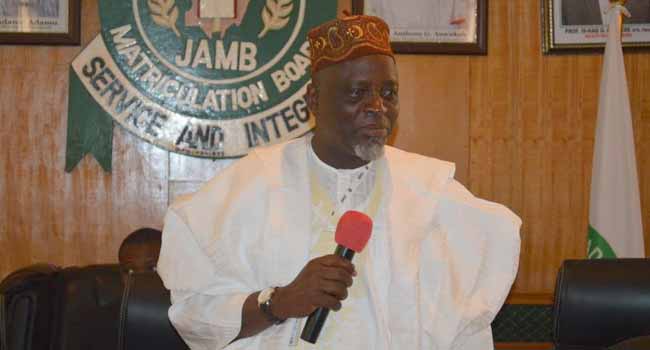
On Thursday, the Joint Admissions and Matriculation Board approved the cut-off scores for the nation’s universities and polytechnics.

This decision was reached following a contentious meeting that included representatives from the National Universities Commission, the Ministry of Education, the National Board for Technical Education, and others.

The cut-off grade for polytechnics is 120, while universities will require 140.

Recall that, according to prior reports, Professor Ishaq Oloyede, the JAMB registrar, disclosed that just 378,639 of the 1,761,338 candidates who took the 2022 Unified Tertiary Matriculation Examinations got a score of 200 or higher.

Oloyede further stated, “JAMB allowed awaiting results candidates to register and sit for the 2022 UTME. These candidates can’t be considered for admission on awaiting result status. They must present their O’level results on the board’s portal before the commencement of admissions”.

On derogatory comments and memes about ASUU members

By Kasim Isa Muhammad

Someone I will not mention by name forwarded memes written in the Hausa language to my WhatsApp number. The content reads: “Tunda naga level coordinator din mu ya sa Shadda a status, na karaya.” This means “I lost hope upon viewing the brocade on the status of our level coordinator.” At first glance, of course, one would laugh it out. But, on second and more critical thought, the memes are a deliberate attempt to ridicule members of the Academic Staff Union of Universities (ASUU), whose salaries have been stopped for the past four months or so by President Buhari-led government.

That is one of the several unhealthy memes spreading on social media about ASUU members and their predicament due to the strike. Unsurprisingly, the person who intentionally shared this meme and his likes are bent on making caricatures of ASUU members. This explains the level of irresponsibility and how mean people can be.

In the first place, a university lecturer that converted their social media page for the sole purpose of business enterprise signifies that the lecturer in question is responsible and utilizing the strike effectively. When did engaging in business become a subject of ridicule? Or a sheer violation of the code of conduct?

Let me educate the public a little. The job description of all Nigerian academics includes teaching, research, home and community service, or any other duty as assigned by the Head of the Department. The work has been made flexible to enable lecturers interested in other genuine businesses to complement the paltry salary they receive each month.

Notably, lecturers in departments that are practice-based, such as law, medicine, mass communication, theatre, fine arts, and engineering, to mention a few, have the upper hand in multiple sources of income. This is because they engage in private practice outside the university job, which serves as’ Plan B’. 

Sadly, a portion of the blame goes to the government for reducing the profession to ridicule and making it less attractive because of the absence of a decent salary and deliberate stoppage of salaries whenever members embark on strike. Nothing like this can happen in a saner society.

Kasim Isa Muhammad is a student at the Department of Mass Communication, University of Maiduguri.

Why you should take advantage of free tuition to study in Germany

By Aminu Mohammed

I nurtured my desire to study abroad during my undergraduate days at the Department of Political Science and International Studies, Ahmadu Bello University, Zaria. It was the era when ABU was the hotbed of Marxism and radical thinking in the North, led by the late Marxist historian Dr Bala Usman and others like Dr Bako, Prof. Sadiq and Prof. Ayo Dunmoye. I was fascinated by the writings of Karl Marx and Max Weber, which prompted my desire to study in Germany.

Germany is the wealthiest country in Europe and a global leader in education and research. It is the land of scientists like Albert Einstein, Max Plank and philosophers such as Immanuel Kant, Arthur Schopenhauer, Georg Wilhelm Friedrich Hegel, Friedrich Nietzsche, Karl Marx, Max Weber, and Goethe, among others. The education in Germany is top-notch, especially in medical sciences, natural science and engineering. Studying in Germany is also cheaper and more cost-effective compared to other countries such as the United States, United Kingdom, Canada and Australia.

Many of you may wonder why I choose to write on this topic, considering the high cost of studying abroad. Many of you may still think that only the elite can afford to send their children to foreign universities and others from a humble background are not capable of doing so, probably due to their circumstances.

I want to tell you today that you should perish such thoughts that have limited our people, especially in the northern part of the country, making them doubt their abilities. I want to tell you that there are no limits to where you can go and what you can achieve if you believe in your dreams and work towards them. We live in an era of information technology where you can use your smartphone to search for information that will aid you in improving your life and career. There are many Nigerian students from the Southern part of the country; most do not have wealthy parents and are thriving in this environment.

Studying in German universities is tuition-free for both local and international students. There are two options: you can either study through scholarship or self-sponsorship by taking care of your living expenses on your own through a system called blocked account. The first option is highly competitive and more tedious than the second one. Therefore, I suggest that people without solid financial capacity focus on the first option by applying for a scholarship. You can check the universities’ websites offering your courses and see the requirements for obtaining the scholarship.

The German Academic Exchange Service (DAAD) currently offers scholarships to students from developing countries for the 2023 academic session. The scholarship covers everything, including a monthly stipend of 861 euros for master’s students and 1200 euros for doctorate students. So, you should apply as soon as possible before the deadline. It would help if you had an outstanding grade in your first degree, a minimum of two years of work experience, a good motivation letter, and volunteering experience, among others, to be accepted for the scholarship programme.

The second option, through a blocked account, requires a lot of money, which means that you are on self- sponsorship, hence will cater for your living expenses which include payment for accommodation, health insurance and other costs in Germany. This option is for those who can afford the blocked account stipulated by the German authorities, which is currently 10,332 euros approximately (N6.7 million). You must deposit this money in a German bank after getting admission before securing a study visa. Most students who arrived in Germany for studies used Fintiba bank, a financial institution based in Frankfurt, Germany.

Once you get admission, you can check the website of the German embassy in Abuja or Lagos, look for the requirements for the study visa, and then apply for a visa appointment. I will advise that after getting admission, you check the official website of the German embassy in Nigeria or visit the embassy in Abuja or Lagos to get information on how to deposit the money in Fintiba bank. Don’t give your money to anybody.

You can go to any Nigerian bank to do the international transfer to Fintiba bank once you get the details on how to go about it from the German embassy. The money belongs to you and is for your living expenses here. Once you arrive in Germany and go through a system referred to as legitimization at the bank, Fintiba bank will then transfer 848 Euro monthly to your account for 12 months. The money will not be transferred in bulk to your account but bit by bit.

.Of course, you can work here and earn money to support your living expenses. Students are entitled to 20 hours per week and can work more than 20 hours during holidays, especially when the university is on break. Most international students work here and earn good money. An hourly wage depends on cities, but it is mainly between 10.45 to 16 Euro per hour (N6, 500 to N10, 000) depending on the city and company you work for. Wages in bigger cities like Munich, Frankfurt, Berlin, Hamburg, Cologne and Dusseldorf are higher than in smaller cities like Kiel, Flensburg, Cottbus, Magdeburg, etc.

Public universities do not charge tuition fees in Germany. Depending on the University, you only pay a semester fee (alias social fee) ranging from 200 euros to 380 euros per semester. For instance, students in my university pay 264 Euros per semester. This covers dues for the student union and transportation. In other words, students do not pay whenever they board a bus or train, as the semester ticket covers the fare for buses and trains within the city of Kiel and up to Hamburg. So, our semester ticket covers movement throughout the state of Schleswig Holstein and Hamburg.

Most Nigerian and international students I have met here are on self-sponsorship. Theystudy and also work to take care of their living expenses. There is always a part-time job available for students, especially in big and smaller cities, and you can take advantage of that to earn money for your upkeep. Some students focus on studies only during the semester and only work during holidays, while some attend lectures on weekdays and only work part-time during the weekend. The choice is yours.

I must emphasize that studying in Germany is tough, and you must put much effort to succeed. People fail here quickly, especially students who focus on work without paying much attention to their studies. But the main thing is to strike a balance between your studies and part-time work, if you want to achieve your goals. Of course, many students have been able to secure jobs after their studies here. A lot of Nigerians that I know here work after completing their studies.

Moreover, for those apprehensive about their religion, there is a large population of Muslims in Germany, mainly from Turkey, Syria, and Egypt, among others. There are mosques everywhere. At least we have six mosques in my city, with even a mosque mainly for Africans to perform their prayer.

I still reiterate that you can do everything independently with your computer or laptop. You do not need the help of anybody or an agent to assist you in applying for admission, scholarship or the visa process. Don’t fall for any scammer. You can do this from beginning to end on your own until you find yourself in Germany. You don’t need to know anybody to be able to secure admission, scholarship or visa to Germany. I arrived in Germany in 2018 without knowing anybody or even a friend. My communication was with the University strictly. If I can do it, you too can do it. So, believe in your abilities and go after your goals. I wish you all the best in your endeavour.

Aminu Mohammed is at the School of Sustainability, Christian-Albrechts Universität zu Kiel, Schleswig Holstein, Germany. He can be reached at gravity23n@gmail.com or 219013@mail.uni-kiel.de.
ASUU Strike: Should students blame the Government or ASUU?

By Aliyu Idris

Anyone aware of the lingering strike in Nigeria’s public universities nationwide will sympathise with us students. Now it’s clear that students understand the government’s negligence and I-don’t-care-attitude towards the education sector because none of their sons and daughters goes to public universities.

The government that is supposed to take the necessary actions regarding the strike is showing a lackadaisical attitude towards it as if the education system is normal. Thus, the ASUU strike is not the topic of discussion today.

The government is hellbent on political affairs more than returning the students to their classes. Unfortunately, the issue of the ASUU strike has become a secondary matter to the government in national affairs, sad.

The strike has shattered the dreams of public university students. As a result, The graduation period of million students has been extended to another subsequent year(s) (I do not pray for that occurrence).

It’s an arduous task for public university students to graduate within the stipulated period allocated for their studies. Hence, almost every student’s ID card expires before they graduate.

The victims (students) of the ASUU strike have lost hope in learning and scholarship. Thus, since the government has failed to save their future, they have shifted their focus from education to other life activities such as businesses and learning skills to build their lives.

The statistics of students called up for NYSC in the camps nationwide is low compared to when public universities are not on strike.

The NYSC camps are filled with HND students, students from universities abroad, students from private universities in Nigeria and students from affiliated universities (FCE/CEO/Polytechnic graduates).

There may be the hope of fulfilling the ASUU demands soon (I pray) because I know the Nigerian politicians and INEC will need serving corps members to work for them in the 2023 general elections. However, until the strike is called off, the current corps members are insufficient for the election’s tasks.

The (our) striking lectures are not the problem but the government. May Allah put an end to this strike menace, amin.

Aliyu Idris is an undergraduate at Bayero University, Kano. He can be reached via aliyuidris063@gmail.com.

ASUU Strike: Between extravagant hopes and exaggerated disappointment

By Nura Jibo

Let me start by saying that I am not holding any brief for the Academic Staff Union of Nigerian Universities(ASUU) because I was its victim of strike for three (3) years. I am not holding any brief for Nigeria’s Federal Ministry of Education and government either, as I very seriously hate their mishandling of Nigeria’s education sector. 

Today, I write as a concerned individual who believes in teaching and providing free education to Nigerian and global citizens. 

Hence, I write this as a classroom teacher that taught in a Nigerian State’s Polytechnic for three (3) years as a volunteer lecturer. I did not collect a single Kobo or Naira from that college throughout my volunteerism teaching at the College of Business Management. I only wanted to pay back what I had taken from the excellent teachers that made me who I am today. 

Therefore, it is very pleasing whenever I reflect and have a flashback over certain moments that contributed to my making, particular via the teaching and mentorship of my amazing teachers. 

Indeed, I sometimes feel very disgruntled whenever I see a certain Minister of Education who once upon a time advocated through his long essays in Daily Trust stable a 30% allocation of Nigeria’s budgetary provision to the education sector. However, that Nigerian Minister now develops a thick skin on resolving this simple yet terrible antecedent by hiding under his Ministerial gown to suffer and implicate an already ailing system! 

The issue is simple: It is either the likes of our laconic and apt Prof. Farooq Kperogi amplified that Minister’s writing prowess beyond or above what he is, or he’s exaggerated as someone with firsthand knowledge of Nigeria’s education system. I am unsure whether writing long pieces of literature in the name of Friday columns and reeling towards power qualifies one as an expert to lead a very large and delicate African educational system. 

Therefore, I believe mastery of achievement so-called via writing newspaper columns or “Definitions in Humour” does not preclude one from being considered a novice and a toddler in leading an education system that is deliberately beleaguered in the name of politics. The way the Minister portrays himself as a man of God by writing all sorts of educational polemics in Nigeria, one would not have expected less from Nigeria’s presidency that offered and entrusted such a complex Ministry in the hands of a chronic accountant who never had a clue or better put never practised and excelled in his profession – Accountancy! But that’s Nigeria, where many people get away with its sensitive positions provided they can write pep and glib talks and share with the dull and ignorant. 

To quickly put the record straight, Nigerian leaders should refrain from allowing people to assume public office because of their writing prowess or mastery of oratory language. The duo are clearly very different and distinctive in acquiring or having a practical knowledge of teaching and education. 

I shall come back to this point later if time permits!

Indeed, three things made me raise my concern about ASUU Strike and the exaggerated disappointment from the Federal Government. First, the ASUU’s demands on an improved education system in the country. Second, the students’ extravagant hopes of acquiring a Nigerian education that is today by far less and very low in quality. The third is the bastardizing of the education sector by political leaders in Nigeria. 

Indeed, there are three global measurable indicators in gauging an education, whether it is qualitative or not. One is the availability of state-of-the-art teaching facilities. Two, stability in academic programmes. Three, quality of teaching staff. 

In Nigeria, none of the three(3) is available at the moment because the teachers and all university lecturers are already frustrated by the Nigerian political leaders, that are mostly half-baked or uneducated. 

The level of frustration is deliberate, though! And the way things are going, it is better and advisable for all Nigerian students to come out and demonstrate en masse by matching to Aso Rock villa to express their displeasure on the denial of their rights to education by Mr President and his education cabinet. As they do that, they should make the Nigerian government aware that the monthly salary of a Nigerian professor is not more than a primary school teacher’s salary in the UAE and other serious countries that left Nigeria far behind.

A professor in Nigeria today earns an average salary of N400,000 to N500, 000 per month. His yearly earnings are approximately N5-6 million. This is equivalent to what is being paid to an Engineer engaged as project manager (PM) every month in the UAE. 

This is not to talk of a primary school teacher in Nigeria who lives a typical hand-to-mouth life by surviving on a N23,000-N37,000 monthly salary with many family demands at their disposal. And considering the chaotic nature of a Nigerian state with no end in sight! 

Truth is: the Nigerian State can more than afford to pay its teachers and university lecturers global standard salary(s) the way COUNTRIES and regions in the UAE, such as Dubai, Bahrain, Oman, etc., are paying their teachers competent and befitting salaries because Nigeria is ten (10) times richer than Dubai, Oman, Qatar, Bahrain etc. 

How can one expect any good to come out of Nigeria’s education system that is not ready to discharge this global standard? 

The irony is that: the Nigerian education system is one that shamelessly cannot afford to recruit, engage and pay teachers global standard salary(s). It prefers to absorb graduates under Npower and pay them a stipend of N23,000 per month. At the same time, the political leaders steal the public funds and waste away the Nigerian nation by burying it in global shame. Therefore, the corrupt tendencies of Nigerian political leaders and their timid behaviour(s) of stealing public funds in the name of democracy will continue to put the country’s education system in untold hardship by killing it ultimately. And as the country continues along this path, it should be ready for more Boko Haram and kidnappers ad infinitum. 

Nura Jibo, MRICS, PQS, MNIQS, RQS, was a volunteer visiting teacher at a Polytechnic in Nigeria for three years. He can be reached via nurajibo@yahoo.com.

Academic Travails: 17 hours for 20 minutes!

By Prof. Abdalla Uba Adamu

The academic world will never cease to amaze me. Let us look at just one example. Take an invitation to present a paper at an international event, as I was in June 2022. This particular event was the 90th commemoration of the establishment of Oriental Studies at the University of Warsaw, Poland. About 30 of us were invited, mainly from Europe and Asia, to share experiences on our various studies on orientalism from 29th to 30th June 2022. 

The trip was daunting for me, to begin with. It started with an hour flight on Qatar Airways to Abuja from Kano (my base). I spent another hour or so on the ground at Abuja before taking off for the six-hour flight to Doha, Qatar. I spent over four hours meandering around the terminal at Doha, waiting for the connecting flight to Warsaw. Eventually boarded the five-hour flight from Doha to Warsaw. All told, about 17 hours journey time. Arrived at the hotel jetlagged, weary and disoriented.

Off the following day to the University of Warsaw for the two-day conference scheduled at 9.00 p.m. each day. And it was right on the dot, with welcoming remarks by Prof. Piotr Taracha, the Dean of the Faculty of Oriental Studies UW, followed by an address to the conference by Prof. Alojzy Z. Nowak, the Rector of UW. These were followed by two keynote addresses, then appreciation of retiring members of the university community who had been there for over 50 years, including my host, Prof. dr. hab. Nina Pawlak (that’s how distinguished academic titles are labelled in most Eastern European universities). Let’s see what the letters mean; prof stands for professor, while dr is the doctor. To be a hab, however, requires extra efforts.  

To be awarded the academic degree of doktor habilitowany (habilitation), the candidate must have remarkable scientific or artistic achievements; submit a habilitation book which contributes to the development of a given scientific discipline; receive a favourable assessment of their output, pass a habilitation examination and deliver a favourably assessed habilitation lecture. It is after all this that they become professors.  

Nina Pawlak received her PhD in 1983 (Constructions expressing spatial relations in the Hausa language), habilitation in 1995 (Syntactic Markers in Chadic) and professorship in 2007. Thus entitled to prof. dr. hab. status. The habilitation is a post-doctoral experience that is highly formalized, represented by a separate thesis or a compendium of outstanding work in the area that can be evaluated as making an original contribution to knowledge. It takes between four to ten years to complete. Its public presentation is something like an inaugural lecture before a professorship. In most cases, the habilitation is the qualification needed for someone to supervise doctoral students. So far, in Africa, only Al-Azhar University in Cairo seems to offer this route to university scholarship.  

It is the habilitation qualification that will determine one’s path to professorship, but the publications required for skipping it to become a professor directly have to be more outstanding than the habilitation publication. This process shows rigorous respect for original contribution to knowledge in European scholarship. One can still be referred to as prof. dr. in recognition of their scholarship, without the hab. For instance, I was recognized as so by the European Union award of a grant to teach at the University of Warsaw in 2012. The prof. dr. title, used in mainland Europe and some Asian universities, acknowledges scholarship, even without the region-specific hab.  

Now back to the Conference. No ‘Chairman of the Occasion’, or Lead Paper presenter, nor ‘Royal Father of the Day’, etc. Just presentations. Now that brings me to my wonderment about the academic process. After over 17 hours of flight time (and same hours returning back), like everyone else, I was given 20 minutes (which included being harassed five minutes to the end by the moderator) to present my paper titled The Trans-Oriental Express: Receptivity and Cinematic Contraflows in African Popular Culture, and 10 minutes allowed for discussions – and that’s it! 

Thus, you spend weeks on fieldwork and data synthesis, spend hours being ferried from one location to another, and stay for days cooped up in a dingy hotel room (wistfully thinking about your own spacious personal living space!) eat some unusual and often very expensive food. All for 20 minutes of fame! This has been a recurring pattern in all the conferences I had attended.  

So, what is it about, at least international scholarship, that people would rather read what you wrote than listen to you? In Nigeria, paper presenters tend to ramble way beyond their allocated time. Often, the moderator of your session is worried about stopping you because you are a ‘big’ man, even if you are talking out of point. I remember one case in which the ‘Guest Speaker’ was reminded that his time was up as per the ‘program of event’ (sic). He adamantly refused to heed the time and insisted that since he was the main ‘event’, he would only stop when he finished reading the booklet of his lecture, which was 32 pages! Thank God for Smartphones – people just ignored him and shifted their attention to their WhatsApp messenger and came back to earth only after someone started clapping to signal their relief at the conclusion of the presentation! 

Perhaps it is time for us as Nigerian academics to move from this dense didactic approach to presenting papers – where you are often expected to give ‘theoretical framework’, ‘research questions’, ‘methodology’ (to appear ‘Scientific’ even if there is no Science in your conclusions) before you get to the actual data itself. And most annoying, you are also expected to give totally useless ‘recommendations.’ I had arguments with moderators and participants in Nigeria on the last point where I am asked about my ‘recommendations’ after my presentations. I often reply that I don’t have any recommendations – I present my data and my interpretation. How it goes is up to you. For instance, what can I recommend to a person who based their own narrative creativity on intertextual appropriation, thus creating a meta-narrative? That it has happened is fascinating enough. That I brought it to your attention is sufficient enough in knowledge discourses. In wider international scholarship, participants are more interested in exploring other aspects of your data.  

I think our approach to conference presentations in Nigeria has vestiges of the didactic educational experiences we were grilled through. Under such an academic ecosystem, all research is geared toward policy and governance. It is time for a paradigm shift – cut down the number of minutes on presentation, and focus on the epistemological virtues of the presentation! Oh, and cut-off the prof’s microphone when he seems about to torture his audience beyond his allocated 15 to 20 minutes!

Prof. Abdalla Uba Adamu is the former Vice-Chancellor of the National Open University of Nigeria (NOUN). He can be reached via auadamu@yahoo.com.

We’re hopeful that ASUU strike will end soon —Ngige

By Muhammadu Sabiu

The Academic Staff Union of Universities (ASUU), which has been on strike for four months, will call off the industrial action soon, the Federal Government assures through Minister of Labour Chris Ngige.

Dr Chris Ngige revealed this to reporters after the Federal Executive Council, FEC, met for its weekly meeting on Wednesday.

Ngige claimed that efforts were being made to settle the ongoing conflict, which was primarily brought on by payment platforms.

However, he confirmed that the Federal Government has no plans to set up an alternative funding model for institutions.

Dr Ngige was quoted to have said, “Federal Government was indeed engaging with ASUU, despite notions that it has been snubbing the union.”

The university teachers have been insisting on the use of a payment system called University Transparency and Accountability Solution, which the Federal Government opposes, showing no sign of shifting ground on the use of the initial payment platform it came up with, called Integrated Payroll and Personnel Information System (IPPIS).

ASUU strike and Nigerian students’ dilemma

By Aliyu Idris

The trouble with Nigeria is simply and squarely a failure of leadership. The Nigerian problem is the unwillingness or inability of its leaders to rise to the responsibility, to the challenge of personal example which are the hallmarks of true leadership. – Chinua Achebe.

It’s exactly four months since universities were shut down due to the lingering ASUU Strike. It’s disheartening for millions of university students like me in Nigeria who are at home idle; their fundamental rights to education are thwarted.

The government and politicians are busy with their political and elections shenanigans and do not bother to look into the menace of these excessive strikes.

None of the aspirants vying for the presidential throne has talked about curtailing the ASUU strike. This is utterly devastating. I always think about who to vote for regarding the issue of education in Nigeria.

To be candid, I don’t know how will this country continue to survive when its education sector is crippled. When the aviation sector wanted to embark on strike, the issue was solved a day before the strike because it’s not the education sector, which is too ironic for Nigeria.

The elections misdemeanour is their concern now. They invest heavily in politics and neglect education and other relevant sectors that will foster the country forward. The strike may be over soon or next year after the elections.

Let’s turn to the Lord (Allah) in prayers to give us the best leaders who have the country at heart, fulfil our vision and mission, and make our country great.

Aliyu Idris is a student of Bayero University Kano and can be reached via his email: aliyuidris063@gmail.com.

Kano University establishes cervical cancer screening lab

By Muhammad Aminu

Yusuf Maitama Sule University, Kano (YUMSUK), has established a laboratory for screening cervical cancer in women, the first of its kind in northern Nigeria.

The Vice-Chancellor of the institution, Prof. Mukhtar Kurawa, said the Human Papilloma Virus (HPV) DNA Modular Research Laboratory would greatly help in the research and treatment of cervical cancer in women, especially in North-Western Nigeria.

The laboratory, situated on the Main Campus of the University, was funded by a grant from Tertiary Education Trust Fund (TetFund). Prof. Kurawa further explained that there is a rise in cervical cancer among women in the region hence the university’s efforts to address the problem.

The VC challenged researchers to take advantage of the centre by conducting scientific research to achieve the set objectives. The VC assured continuous support for the centre, saying that “researches are now conducted not only for academic progression but also for economic development”.

He expressed optimism that the centre would excel and achieve its objective due to its state-of-the-art facilities. The Lead Researcher and Dean, Faculty of Clinical Sciences of the university, Dr Iman Usman-Haruna, said, “the centre is established to provide free services to women with cancer problems.”

She said about 1,500 patients are expected to benefit during the first phase of its programme. “This research is a multi-centre study to be conducted in Kano, Katsina and Jigawa and is mainly on cervical cancer screening.

“We will be performing pap smear and HPV test for 1,500 women, samples will be transported to Yusuf Maitama Sule University for processing.” This is through a grant from TETFund and with great support from the university management,” she said.

She applauded the Vice-Chancellor and TETFUND for their support for the actualisation of the project, describing it as a welcome development for the betterment of society.

Three pieces of advice to my dear ASUU members

By Muhammad Sulaiman Abdullahi, PhD

Hello, my dear comrade friends! How are you and your families? I hope we are forging and managing well. I know we are well, but not very well. This is because I know that there are so many challenges in and out there. I know most of us are currently swimming and still smiling in heavy debts, ranging from debts of Maggi, Omo, Bread, Garri, etc. Even the ‘Yan garuwa (water vendors) owe many among us a considerable amount of money due to the brutal nature of our looters. This is not to talk about heavy loans accrued due to a lack of salaries for about four months.

The Maikantis (petty traders) selling raw rice, beans and other groceries no longer want to see us by their doors. Some of us have already forgotten toothpaste and have opted for chewing sticks now to remain clean. Our children have been sent out of school due to non-payment of school fees. Landlords have knocked and banged on the doors of many; we pacified them, and some of them reason with us.

Some of us now live without water and light due to heavy bills accrued. You keep counting the ordeals. I remember how during the whole of Ramadan, with the scorching sun and harsh temperature, lecturers languished with dry pockets and no salaries. Many lecturers didn’t have a chance to sew new Sallah (Eid) dresses for their kids, not even for themselves. Yet, another Sallah is approaching without any remorse or sense from this lousy government and its handlers.

Before I talk about my three solid pieces of advice to ASUU, let me digress and talk a little about and to those who don’t understand ASUU’s struggle. I don’t in any way exonerate ASUU of all blames and problems. No way! We have our defects. Only the Almighty Allah is perfect.

However, in ASUU’s struggle, ASUU is 80 per cent right. If you talk about the decay within the ranks of the university administration and duties, ASUU also fights that. And it is the sole responsibility of the government to put eyes on the universities and punish anyone found wanting and guilty of any offence. Sex for marks, not attending lectures on time, lack of coordination, dedication and supervision, extorting students, etc., to punish and stop all these and more lie in the hands of sensible governments. I know that it is said that these bad attitudes happen in Nigerian universities, but sometimes they are overblown out of proportion.

I have been in the university community for nearly 20 years, engaging with my teachers and, later, my students. Still, I don’t know a single lecturer in my university involved in such indecent acts and is also known without getting punished. In other words, universities don’t condone such wrongdoings. Also, this is not ASUU’s direct responsibility, but rather, it lies in the hands of the university management and the government.

Our government doesn’t punish anyone, which is why bad people do as they wish everywhere, in the military, the police, lawyers, carpenters, bandits and all. So lack of commitment and corruption in whichever cadre is not ASUU’s fault, but rather, the government. Our governments rarely punish, and when it does, it looks selective and sometimes biased.

The government is so powerful that, if it is sincere, ASUU or anyone cannot shut down a single university, just like that – not even to talk of all universities – for one week without the government taking drastic action and winning over anyone! But due to the government’s insincerity, this is ASUU. So here is the whole country’s population – the lecturers, their wives, children and friends, the students, their parents, children and families, Nigerians and all their well-wishers – all in trouble, but the government doesn’t care.

With all the troubles and disputes in their recent party primary elections, North/South and whatever, they managed, brainstormed, came together, and brought a solution in 2 days. But, of course, this is for their selfish agenda,  huh? So anyway, below are my three candid and sincere pieces of advice for ASUU and all.

First, ASUU members are suffering, but ASUU should NOT call off its strike until it reaches a coherent, logical conclusion. Yes! We are suffering, and we need the strike to the end. But we don’t want a situation where a strike can be called off today, and it comes back in 7 months to come, or even less. Let’s push things to the end. I will even advise the government to agree that no strike can be implemented in the next ten years if anything goes as practically implemented. I don’t support any agreement again.

I never heard of NNPC, CBN or the House of Representatives going on strike! This is because all their entitlements, salaries, allowances and more are paid on time. And they receive more than all Nigerian universities receive, with a quarter of what universities do. A kind of monkey dey work, but baboons chop the money. So they have money more than they need. So, ASUU should not call off the strike until everything is settled.

Second, ASUU should change its style concerning research works. Many civilians out there don’t know that apart from class teachings, university lecturers engage in what is called research. Hence, some people feel we are not entitled to our salaries during strikes. And in reality, the impact of our collective research output is very minimal. Some people don’t even know that we do research, and some of us don’t even do any research at all.

To sustain our research line, let us allow the research activities to continue at full capacity. Here I mean, students writing their research (Undergrads, Masters and PhDs) should be allowed to consult their lecturers online or via any other medium possible. Someone may ask about data and other internet facilities. My answer to such a ridiculous question is; how do you read this write-up? Don’t you have a WhatsApp, Facebook or go online? This is all to maintain and sustain our research inputs and keep going. We shouldn’t allow our brains to rust completely. This chance should be conditional, situational and only if a lecturer has a chance to.

Third and finally, ASUU should continue the strike until things are resolved.

Thank you

Muhammad Sulaiman Abdullahi

Bayero University, Kano, Nigeria.