Universal Basic Education

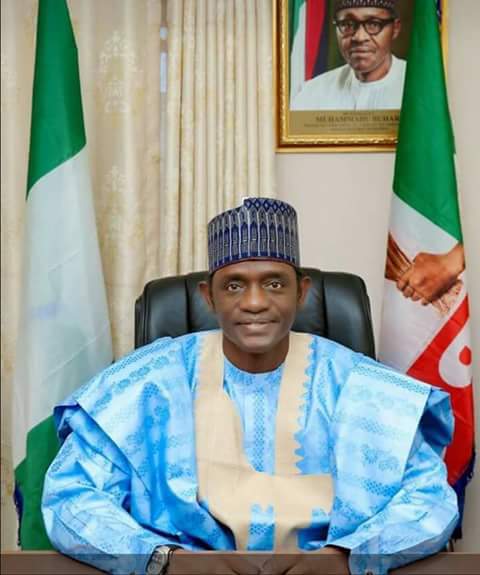
Setting the record straight: Yobe State’s education success

By Ibrahim Muhammad 

The Yobe State Government has made significant strides in revamping the education sector, demonstrating its commitment to empowering future generations.

In 2024, the government invested over N2 billion in learning materials and infrastructure development through its Universal Basic Education Board (YSUBEB).  

According to YSUBEB Executive Secretary Alhaji Isa Shettima, the substantial investment aims to enhance the quality of education in primary and secondary schools across the state. 

Learning materials were widely distributed, including essential items such as pencils, pens, exercise books, school bags, chalk, whiteboards, markers, and more.

Specifically, the YSUBEB distributed 5,600 cartons of pencils, 5,600 cartons of ballpoint pens, and 5,600 cartons of exercise books, among other materials.

Additionally, UNICEF donated 56,000 branded school bags. Infrastructure development was also a key focus area, with the YSUBEB renovating over 100 schools across the state’s three geopolitical zones.

Notable projects included the construction of new classroom blocks, administrative blocks, laboratories, libraries, and offices in various schools.

The government also built two vocational schools in each geopolitical zone. Some of the notable projects undertaken by the YSUBEB include renovating a block of two classrooms, offices, and stores in Government Secondary School, Dagona, and building a block of six classrooms with an administrative block, laboratory, library, and offices in GDJSS, Abba Ibrahim.

The YSUBEB also constructed two classroom blocks, an office, and a store in Bizi Primary School and six classroom blocks with an administrative block, a laboratory, a library, and offices in Government Day Secondary School Buraima. 

Despite these efforts, some reports have falsely claimed that the Yobe State Government has neglected the education sector, leaving schools in a ramshackle condition.

However, these claims are entirely unfounded and misleading. The facts on the ground demonstrate the government’s unprecedented commitment to providing quality education.

The N2 billion investment in learning materials and infrastructure development is a testament to this commitment. It is essential to set the record straight and dismiss these baseless reports.

The Yobe State Government has made overwhelming progress in revitalising the education sector, and this progress should not be obscured by misinformation.

The government remains dedicated to providing a conducive learning environment for its citizens and ensuring that every child has access to quality education. 

The Yobe State Government’s efforts in education are part of its broader development agenda, as outlined in the 2024 Appropriation and Finance Bills.
Bauchi: Government must promote basic education by rewarding excellence

By Umar Sani Yakubu

“In a few weeks from now, we shall be done with the junior secondary school certificate examination, and from then on, I am done with Western education.”

Above is what my ears brought to me as it was uttered in the Hausa language after I walked past some probably junior secondary school students in the Bauchi metropolis.

This statement by a young lad disturbed me. It proves to me how true it is that Bauchi State is counted as one of the states in the country with a high rate of out-of-school children.

However, proving that Bauchi State forms part of the state in Nigeria with a high rate of out-of-school children, this development has led to much criticism from concerned citizens as to why the state would join such a demeaning but objective reality. First, some critics blame the decade-long insurgency in the Northeast, where the state emerges. While some blame the root cause on parents’ lackadaisical attitude in enrolling the children in school, political opponents of the government accuse it of not providing the needed atmosphere for learning.

 Albeit, whatever it is that led our dear state into such a situation, the state government must be at its feet to make sure things are done well.

Relatively, it was against that backdrop that I was amazed at the government’s inattentiveness to the course in encouraging the students to do better in their studies. I point out the recent remarkable performance of some students who emerged from and represented the state in a national competition and were victorious above all the remaining participating states in the country.

Those students have been celebrated and recognised by many concerned individuals in Bauchi State and beyond; unfortunately, the state government has yet to say a word about the development.

 Is it this way that the government plans to make their youngsters remain on the course of changing the blackmailing narratives?

 I don’t believe all is right. But, of course, something must be wrong somewhere.

Suffice it to say; we are all witnesses to when the government in the state recognised and rewarded mere social media actors, etc. If political and social media actors can be recognised and even rewarded, why not a best-performing student who earned respect not only for themselves and the school but also for the state in the eyes of the world?

These students from Government College (Special School) Toro who participated in the recent National Inter-secondary Schools Quiz competition organised by the Raw Materials Research and Development Council and came out first must be recognised and celebrated by every serious state government where they emerged, especially as they are trained in a government-owned school as opposed to any proud private schools.

As Bauchi State is in a dangerous situation as its youth quit education for other heinous acts like Sara Suka, the state government must be reminded that giving such recognition and even awarding scholarships is vital in encouraging children to see the light in the path of their education.

Consequently, celebrating students of the state with remarkable performance in school and even rewarding them with scholarships stands to draw the attention of the wayward to education and encourage those already in the system to put in more effort.

Finally, with my confidence in the present administration of His Excellency Governor Bala Abdulkadir Muhammed, I hope the best brains from Government College Toro will be identified and rewarded for making the state proud in the competition above.

Gone were the days in Bauchi when international scholarships were given to the best brains, many of whom are now professionals in their respective careers.

 Sani is a concerned citizen from Bauchi State and can be reached at saniumaryakubu@gmail.com.

Yobe State: Education and Mai-Mala’s counterproductive handling

By Kasim Isa Muhammad

Since 1999, the people of Yobe have continued to give mandates to the ruling party, what is now known as the All Progressive Congress (APC), hoping that their lives will be better on all fronts- particularly in the education sector. Unfortunately, the Yobe education sector is known to be one of the worst in the nation. This is manifested by a legacy of dilapidated blocks of classrooms, a lack of laboratories; a lack of teachers; no teacher promotions, and the list goes on. 

With the emergence of Mai-Mala Buni as the Governor in 2019, he, on the inaugural date, in the most dramatic manner, convinced the nation that the education sector in Yobe is rotten-Yes, rotten! He declared what was known as an “emergency” in the sector. He announced his aim and gathered a committee to work out a plan for the sector. Millions of naira were spent on meetings, travel, and photography on a matter that a single administrative circular could have solved. 

Two years into the administration of Buni, not a single milestone was made in the education sector. The State Basic Education Board could not recruit trackers, teachers’ promotions stalled, teachers’ salaries were mutilated, and the hardworking principal of secondary schools was bullied by the business that leads the ministry of education. The sad news continues, and the peak was the video of Fika Government Secondary School that rattled the government. One could ask, what exactly is the problem? Is Buni the problem, or is his team at the peak of insubordination?

One of the most dramatic events that put the Yobe education sector in the spot was the case of the Buni Foreign Scholarship Scheme (BFSS), a scheme managed by a few of Buni’s trusted men. BFSS is characterised by poor stipend payment, poor academic quality, etc. Today, the BFSS is still a problem that will continue to make the Buni government unpopular and give the opposition a chance to punch the APC hard.

The local scholarship allowance is also an area where there is a hitched to pin network of students and their families to dispense protest votes against Buni and give the upper hand to opposition parties like the New Nigeria People’s Party (NNPP). It was only last week when NNPP moved to consolidate its gains by inviting Stand Up and Be Involved (SUBI) to adopt its party and contest all elections. Should this partnership work as planned, the APC will likely experience the most effective and fierce opposition in its history in Yobe State. 

The local scholarship allowance payment has been epileptic, inconsistent, and marred by a lack of competence in leadership. One can quickly note that this administration has provided the most inexperienced and inefficient leadership of the board in the history of Yobe. No one knows if the Yobe State Scholarships Board (YSSB) has adequate access to its budgetary allocations. If, in any case, it has access to funds, who can defend Buni or his proxy at the head of the YSSB for the lack of payment of local scholarship allowances? An act that even the military administration did well in Yobe! 

One might wonder if paying for local scholarships was related to the massive fund-raising effort for the 2023 elections. It is terrific, and only in APC’s Yobe State one can find people heading a government parastatal that failed to perform in contesting elections. Does this mean that Buni is impressed with the performance of the scandal-marred YSSB? 

Buni needs to know that there is significant dissatisfaction with his administration and team. Everything that the government does seems suspicious such as the maiden Education Appeal Fund, where billions of Naira were accumulated. Whether Buni knew or knew not, there is speculation on the ground that the education fund was a cover to grasp financial muscles to fight for the 2023 elections. Whether true or political, this sentiment makes up the opposition, and the chances to pin the people against the APC are high. It has always been easy to blackmail a government that cares less about its spending, budget performance, and revenue base. 

It is, however, clear that whatever sterling personal qualities a governor may have, of which Buni has many, the chances of failure can be significant. The popular opinion is that Buni is highly unlikely to succeed with his existing team. Buni must change gears and relate to reality on the ground and begin to listen to others rather than his yes-men. Those who tell him that he is always right even when he is wrong—for no one can always be right. We are calling for Buni to search for a new effective team should the 2023 election tide blow in his favour. Whereas the YSSB Chairman has a dual and conflicting constituency that rests with the constituents to decide. Ultimately, the YSSB has failed the children of the poor. 

Kasim Isa Muhammad wrote from Potiskum, Yobe State via kasimimuhd1999@gmail.com.

Reforming the Almajiri system: More action, less talking

By Khairat Suleiman Jaruma

It took too long for us to realize that one of our biggest problems in northern Nigeria is the Almajiri system, even though we still have a few slowpokes that believe there isn’t anything wrong with the archaic and inhumane system.

We have criticized and blamed the system enough. It’s high time we started doing more action and less talking. But how do we go about it? Can we stop the influx of children into the system? Completely? No, but to a very reasonable extent, yes. But, how do we deal with those in the system already? You might say they should be taken back to their parents, and you are not wrong, but some can’t even remember their parents or where they come from. We also have those who have lost their families and villages due to banditry and terrorism. So, how do you go about it?

Baffah (2022) explained, “The best way to check the Almajiri system is to empower local governments. When you create wealth at the local level, rural to urban migration becomes unattractive, economic equality is everything”. But there is more to do than just this.

It is almost impossible to abolish the Almajiri system, and previous – and even ongoing – efforts to ban it failed woefully. What the Almajiri system needs are sustainable reforms, as opposed to the white elephant reforms that have been made in the past.

NexTier SPD suggests government must adopt the Child Right Act, which is an effort by UNICEF to protect children and ease the prosecution of violators of child rights. It is equally vital that the government criminalizes the movement of Almajiris from one place to another. In addition, begging and child labour should be banned entirely.

Also, the government must work with informal structures such as religious and traditional institutions to support and promote reforms by emphasizing the gain of a reformed Almajiri system to individuals, parents, and the society at large while discouraging incessant childbirths and implementing childbirth control policies.

The importance of religious leaders and traditional stakeholders in sustainable Almajiri reforms can’t be overemphasized. But, it’s also essential that, as individuals, we stop using Almajiris as henchmen for committing heinous crimes or as a source of cheap labour.

Khairat Suleiman Jaruma wrote from Kaduna via khairatsuleh@gmail.com.

Can we tell the truth to ourselves?

By Isma’il Alkasim

Education is the passport to the future, for tomorrow belongs to those who prepare for it today— Malcolm X

Unequivocally, the educational sector requires critical and colossal funding from various stakeholders, whether civil society or a particular individual, not only the government. The intervention programs, which are basically designed to address the critical challenges bedevilling the sector, contribute a greater percentage to the educational sector’s wellbeing. 

The United Nations Educational, Scientific and Cultural Organization has recommended that 20—25% of the country’s budget be allocated to the educational sector to ensure the sector’s effectiveness. 

Notwithstanding, Benjamin Franklin, asserted that an investment in education pays the best interest. This has been a rejoinder to the elites who had no clue what would guide them through, thereby emanating a cohesive plan towards the educational reform.

A concert series of strikes, declared by the Academic Staff Union of the Universities (ASUU), leave a deep scar in the memory of the students whose interest and ambitions were solely dependent upon their studies. And this is a serious threat to the nation where insecurity and poverty threaten the lives of its citizens. The ASUU and the government should understand the gravity of the tension this strike may accelerate.

Furthermore, the last industrial action in 2020 through 2021, which ASUU has spent almost a year striking, led to a gigantic imbroglio to university education. Meanwhile, nearly every university could not fulfil its academic calendar in a duly prescribed time. This strike, all despite a whole year spent due to the outbreak of the Covid—19 pandemic, but both parties, the government and ASUU, had failed to get rid of the strike before the lift of lockdown. This indicates how lackadaisical the government is to prevent the ASUU from continuing an indefinite, elongated, and pervasive strike.

Are we really serious?

Probably, not; we are not serious at all. If the government and ASUU can’t sit and share the same cup of tea to find the lasting solution to this horrendously, repulsive and awful strike, as citizens of conscience can’t hold both parties accountable? Why can’t to come out en mass and protest against the lackadaisical of both parties? It worked in an EndSARS protest, so we need to borrow and use the same language as a last resort.

The worst part of this ASUU—FG drama is that those at the centre of the controversy do not value the Nigerias’ education system. Perhaps, their sons and daughters aren’t the victims of the elongated strikes since they spent or are spending their educational journey abroad; the great countries that have done everything possible to redefine and standardise their educational sectors.

The United Kingdom, for example, had spent at least 900 solid years revitalising and meliorating their educational sector before it came to fruition and privatised the industry. This indicated that the suggestions and recommendations made to the government of Lugards’ amalgamation in 1914 to take a bold step towards commercialising the sector would not yield any positive result. Instead, it’s a giant stride to uplift, breed and enhance corruption in the educational sector. More so, privatising the sector is unbecoming. The reason is that the educational sector is a system that is a babysitter that has weaned and breastfed every individual in the Nigerias’ domain.

How should it be?

On a lighter note, we should embrace ourselves collectively. As a whole entity, we shouldn’t lie to ourselves; there’s a limit to what government can achieve within its capacity about the economic status. This deserves no clarification to any discerning individual, but that shouldn’t be an excuse to circumvent and leave our educational sector (not only universities) in the stage of mediocre. We must value the system to make progress.

The education we are supposed to give our utmost priority is the basic education as the foundation ground and necessary stage for all citizens. But, until we resolve the odds vexing the UBE, the thirst to get rid of our universities’ problems can’t be quenched. So, at this juncture, the clamour to refine and redefine the universities system in Nigeria by ASUU is graceless and unbecoming.

May Nigeria prosper.

Isma’il Alkasim writes from Garki, Jigawa State. He can be reached via kogasgarki@gmail.com.