UNDP

Investment Drive: Gombe pioneers NIPC certification programme

By Abdullahi Mukhtar Algasgaini

Gombe State has made a significant stride in its investment drive by becoming the first state in Northern Nigeria to benefit from the Nigeria Investment Promotion Certification programme, which is being implemented by the Nigerian Investment Promotion Commission (NIPC). The programme is funded by the United Nations Development Programme (UNDP). 

This was disclosed by the UNDP representative, Adejumobi Fashola, at the opening session of a three-day workshop for officials of the various Ministries, Departments, and Agencies in Gombe state on building the state’s competence to provide information capable of attracting investment for sustained economic growth and development.

According to Fashola, the selection of Gombe as the first beneficiary in Northern Nigeria underscored the state’s strategic importance and the potential it holds for attracting both local and foreign investments, emphasising sectors such as agriculture, solid minerals, and renewable energy, which have been identified as key drivers of the state’s economic growth.

“The goal of this programme is to build the capacity of state MDAs to effectively engage with investors and create a conducive environment that will encourage sustainable investment. 

“Gombe State has demonstrated a strong commitment to this process, and we believe the outcomes of this workshop will significantly enhance the state’s investment profile,” the UNDP representative said.

“The Nigeria Investment Promotion Certification Process (NIPC) aims to standardise and enhance the capabilities of MDAs at state levels in promoting and facilitating investments by equipping them with the necessary skills, tools, and knowledge to create a more conducive and attractive environment for both local and foreign investors. 

It focuses on improving the efficiency, transparency, and effectiveness of investment promotion activities, ensuring that states become competitive and preferred destinations for investment in Nigeria”, he added. 

Speaking at the event, the Permanent Secretary/Sole Administrator of the Gombe State Investment and Property Development Company Limited, Mohammed Abubakar Bello Kumo, expressed Governor Inuwa Yahaya’s commitment to transforming Gombe into an investment hub, noting that the state government has been working tirelessly to improve the business climate by implementing reforms and infrastructure projects that will attract investors.

“We are honoured to be the first state in Northern Nigeria to benefit from this programme. This is proof of the ongoing efforts of Governor Inuwa Yahaya to make Gombe State a business-friendly environment. This workshop will equip our MDAs with the necessary skills to attract and retain investment, which is crucial for the economic development of our state”, Kumo stated.

He also acknowledged the role of UNDP and NIPC in supporting Gombe State’s development agenda, particularly in fostering partnerships that will lead to job creation, poverty reduction, and improved living standards for the people of Gombe.

Some of the participants who spoke at the event expressed their appreciation for the opportunity to learn from industry experts and engage in practical sessions that will help them apply the knowledge gained in their respective MDAs. 

They noted that the training provided them with valuable insights into how the state can leverage its unique resources to attract investment.

Poverty reduction as an economic agenda in Nigeria

By Maryam Abdullahi Jibrin

Undoubtedly, the Nigerian economy has taken a more definite path that leads to progress and prosperity for the vast majority of our people. However, our national aspirations — equity, justice, integrity etc. must leap off the pages of cold print and become realizable objectives. Foremost, poverty must be addressed and reduced to a minimal level. 

The Millennium Development Goals (MDGs) first agenda is poverty reduction. UN viewed poverty as one of the greatest enemies of humanity. 

One of the surest ways to fight poverty is to build a strong economy that emphasizes job creation, an ever-increasing private sector and a problem–solving public service.

Nigeria is blessed with potentials. Now almost a century after independence, those potentials have turned into vast opportunities for all. 

The reality of our multicultural economy is no longer a point to mourn but one to turn to maximum advantage with which to build all the other sectors. Therefore, there is a need to formulate institutional, financial policy and macroeconomic support strategies to heal the economy.

Nigeria’s policy on poverty eradication must be unassailable if we are to get out of the economic predicament that stifles our initiatives. It means that our policy and decision-making processes must touch the heart of the problem. Only then can we have an effective solution — one that focuses on the needs of the most vulnerable segment of the polity and balances them with the growth imperatives of the economy. 

Against the background of both the local and global requirements, it became necessary to review the structural, operational and regulatory frameworks of the nation’s Poverty Reduction Plan. Since 1999, a set of policy directions and reforms have been implemented under a national development policy.

According to the National Bureau of Statistics (2012) report, 112.519 million out of an estimated 163 million of Nigeria’s population live in relative poverty. Relative poverty is the comparison of the living standard of people living in a given society within a specified period. Apart from the relative poverty index, Nigeria failed all poverty tests using all poverty measurement standards.

The poverty measure puts the country’s poverty profile at 60.9 per cent, the dollar per day measure puts the poverty profile at 61.2 per cent, and the subjective measure puts the poverty profile at 93.9 per cent (NBS 2012). The Human Development Index (HDI) of 0.423 also ranks Nigeria 142 out of 169 countries in 2010 with an estimated GNI per capita of $2156, life expectancy at birth of 48.4 years, Multidimensional Poverty Index (MPI) of 0.368 (UNDP, 2010).

The average Nigerian is a poor man. Nigeria is a nation of riches and poverty, wealth in the hands of few and extreme/abject poverty at the doorsteps of many. The divergence between Nigeria’s economic indicators, macroeconomic variables and reality is a source of concern. The reality is that people die because they cannot afford three square meals a day and access primary public healthcare. These problems are traceable to the weak governance that the nation has experienced over the years due to a combination of inefficient service delivery and inconsistent policy settings.

As strange as this may sound, this goes on side-by-side with an ostentatious display of wealth by the privileged few. 

In an attempt to proffer a solution to the foregoing problems, it is therefore imperative to determine the role of economic growth, agriculture and quality of governance in explaining the vast differences in poverty in Nigeria. Thus, the government should introduce initiatives to revamp education, infrastructure, fight corruption, end insecurity and ensure political instability nationwide. 

Maryam Abdullahi Jibrin writes from Bauchi. She can be reached via jibrinabdullahimaryam5@gmail.com.

Nigeria Jubilee Fellows Programme: Buhari announces application date Tuesday

By Ishaka Mohammed

President Muhammadu Buhari is set to announce the commencement of applications for the Nigeria Jubilee Fellows Programme (NJFP) on Tuesday, August 31, 2021. 

According to UNDP in Nigeria, the federal government will make the announcement at 10 a.m.

The statement urged interested and qualified graduates and organisations to follow the page (facebook.com/UNDPNigeria) for more details on how to watch the announcement and apply.

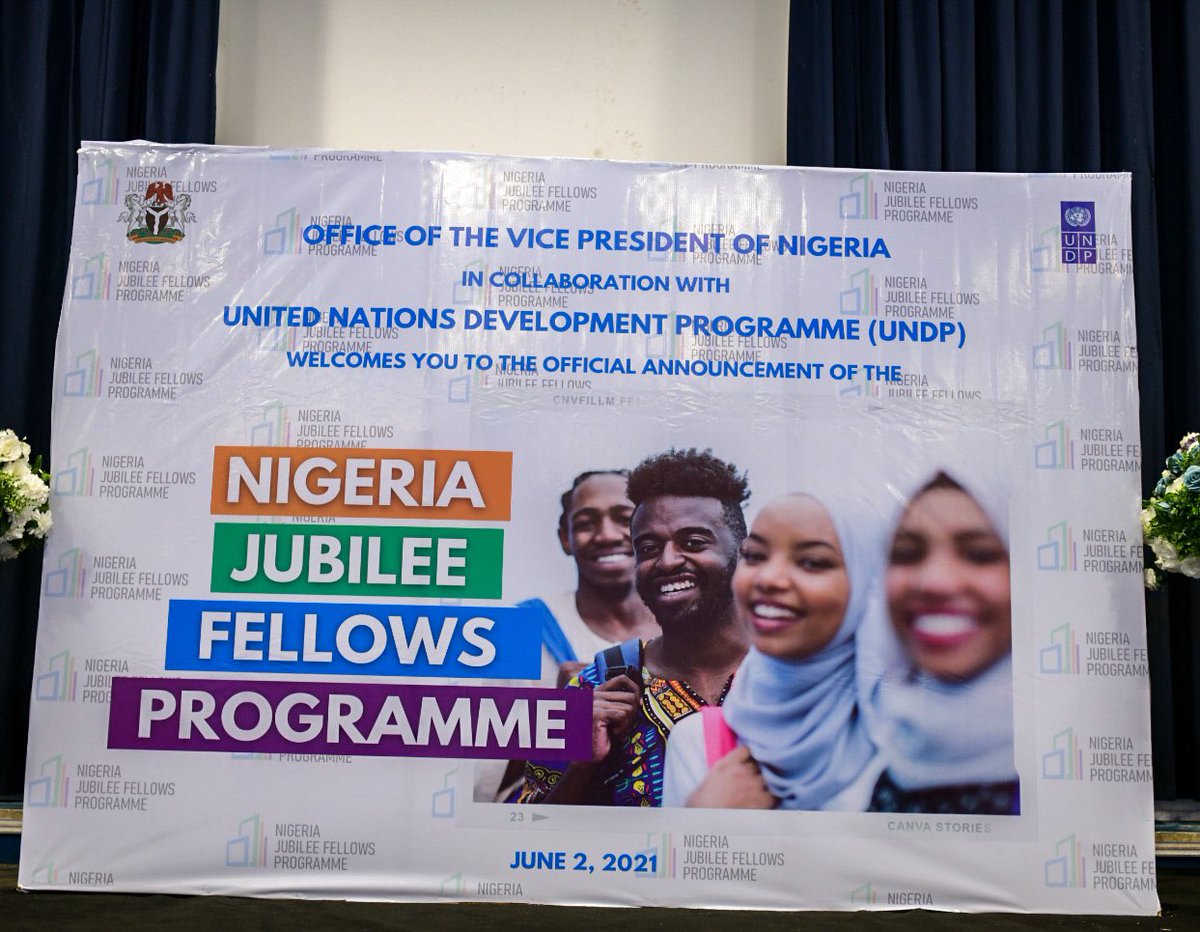
Recall that the NJFP was launched in June with the aim of placing 20,000 graduates in 12-month fully paid employment.

For eligibility criteria, read: https://dailyrealityng.com/2021/08/25/nigeria-jubilee-fellows-programme-why-you-should-apply/

Nigeria Jubilee Fellows Programme: Why you should apply

By Ishaka Mohammed

After many fruitless applications, job seekers in Nigeria get frustrated. As some delve into crime, others retire to idleness, leaving everything to fate. Neither of these options is advisable. Nevertheless, there’s no need to stop trying. The following instances might suffice.

In Nigeria, being called a SAN comes with prestige. The bearer of the title is an experienced legal practitioner, considered professionally (and to a large extent, economically) successful. It means Senior Advocate of Nigeria (SAN), yes? But, no, there’s a different angle to it.

Many young Nigerians can bear an unfortunate version of the acronym SAN. They don’t have to study law, not to talk of being called to the Bar.

To cut it short, a guy and two ladies meet (for the first time). In response to the question of what he does for a living, he replies, “I’m a SAN.” The ladies are amazed due to his age, so they try to congratulate him, but his conception of the acronym fills the scene with abundances of laughs. He gently says, “I am a Senior Applicant of Nigeria (SAN).” The guy has applied for many jobs, but he has yet to secure employment. After listening to his story, the ladies offer him a job.

That’s in a Nollywood movie, though. Now, let’s discuss reality. A friend and former colleague is currently an officer in the Nigerian military. At a point in his life, he handed copies of his credentials to a cybercafé attendant and asked him to keep applying for jobs that matched the credentials; he would pay after every application. That was after being tired of visiting the café all the time.

Road Safety, Prison Service (now Correctional), Navy, name it — my friend had sat tests or gone for physical screenings, but none had worked in his favour. He was literally tired, so exhausted that when he was called for a physical screening after his last application, he had concluded to ignore it. If not for the timely intervention of his family, he wouldn’t have gone for the screening. He made it afterwards and the rest is history.

The above instances clarify that you have no reason to give up. You don’t have to wait for the required “connection”. Keep trying. Thomas Edison once said, “Our greatest weakness lies in giving up. The most certain way to succeed is always to try just one more time.” That one more time might be the last effort required. That one more time shouldn’t be about today or tomorrow; it shouldn’t be about the number of attempts; it should simply be about whether or not you have attained your desired goal.

As a Nigerian, you can irrevocably say that many things have gone wrong in your country. The rate of unemployment is high and scary. Thanks to members of the political elite, who are busy hijacking what is meant for the citizenry.

Attempting to minimise unemployment in the country, successive governments have come up with beneficial programmes targeting the youth. However, the politicisation of selection processes and inconsistent remunerations have sabotaged the otherwise commendable initiatives. For instance, many of the past N-Power volunteers are still owed stipends after one year of exiting the programme. And even while in the scheme, a significant number of these youth often received overdue allowances. What about the Special Public Works Programme for 774,000 unskilled labourers? The three-month programme ended in March 2021, but many of the beneficiaries have yet to be paid. It’s worth stressing that each beneficiary is entitled to just N60,000 (spread across three months).

Despite the ugly situations in Nigeria, try this one. In collaboration with the United Nations Development Programme (UNDP), the Federal Government of Nigeria is enrolling 20,000 recent graduates in full-time paid employment for twelve months. In addition, the Nigeria Jubilee Fellows Programme is for young graduates.

I partook in a briefing session on Zoom with one of the programme’s team members, Erere Oghoghome, on Tuesday the 17th of August, 2021. According to her, the programme will engage 100,000 people across five years, and the first cohort will be inducted by October 2021. That means the call for applications will be out in the coming weeks. Every eligible and interested person is expected to have developed a craving for a particular skill.

Aside from being paid employees for the period of the programme, fellows stand the chance of being retained by their host organisations. Plus, they’ll join the alumni network upon completion of the programme, and the team will be the first choice for organisations seeking personnel to fill vacancies.

The basic requirements are: graduated not earlier than 2017, less than 30 years of age, unemployed, and possessing NYSC discharge or exemption certificate.
At this juncture, I implore anyone who meets the requirements to keep tabs on the UNDP in Nigeria for this rare opportunity. It might just be that one more step to their dream job.

Other than using the experience to land a job after the programme, one can deploy the skill, money, or both in self-employment. Remember, fellows will be paid as graduate employees, not given stipends.

Therefore, it’s vital that unemployed graduates apply for the programme. There’s no harm in trying.

Ishaka Mohammed writes from Kaduna. He can be contacted via ishakamohammed39@gmail.com.