Umaru Yaradua

Saving a legacy: Urgent call to protect Umaru Musa Yar’adua University

By Dikko Muhammad, PhD

Dear Governor Malam Dikko Radda, PhD., with honour and regards befitting of your office and esteemed personality, the people imploring you to address the urgent matters of Umaru Musa Yar’adua University, Katsina, are your friends, not your foes. They don’t want to see the beautiful pumpkin planted about two decades ago uprooted by your administration. If that calamity, God forbid, would happen, it mustn’t happen under the administration of the most credentialed person in the history of our state. 

Sir, UMYU isn’t just a mere state university. It was an ambition and a dream of our revered Malam Umaru Musa of blessed memory. UMYU is the culmination of the sweat and toil of many prestigious individuals from our dear state, impeccable individuals who embraced Malam Yar’adua’s dream and made it a reality.

Men and women who spent sleepless nights, travelled far and wide, to ensure that UMYU isn’t just a prestige project, but a strategic and need-based initiative that addresses the higher education deficit of our dear state and the Northern region. Many of these important individuals are alive today. Please, Sir, as they inch nearer to their graves, don’t make them feel that their labour is in vain. UMYU alone is a fulfilling mission for many of them.

Sir, forgive my repetition– UMYU isn’t just a mere state university. It’s a solution to our century-old gender gap in access to educational opportunity. It enables thousands of parents to educate their daughters to the level of degree certification at a time when interstate and intercity travel are becoming increasingly dangerous by the day. 

When UMYU collapses, may Allah prevent that, it will sink with the dream of thousands of girls who aspire to become educated mothers, productive members of society, and contributors to the future knowledge-driven economy. You just need to look left and right in your own extended family to see the impact this university has already made. 

Your Excellency, Sir, look into the posterity. It’s very long. And it remembers all. Save this system. The university workers are not asking for the impossible. They simply ask that you respect the law establishing this university. They’re only asking you to give the equivalent of whatever is obtainable in federal universities. This is enshrined in the laws that established UMYU. 

I’m deeply sorry if I sound boring. I want to remind your esteemed person that at the point of inception, no state across the Northern region has invested resources in its university as UMYU. Billions have been spent on the training of staff. I am a product of UMYU. I got my first degree here. My teachers called me to join them and serve UMYU. The university has spent millions training me for my master’s and PhD degrees. The same happened to hundreds of others.

Unfortunately, the tasteless, unmotivated and uninspiring condition of service has frustrated many out of UMYU. Many others are awaiting the bond period to japa or to move to another university. In my faculty (pictured here), I know of more than 10 people who have left this institution with their PhD financed by UMYU. UMYU has failed to retain its most precious investment. It has also fallen short of attracting other people with the highest degrees into its corridors. 

As tens of PhDs are leaving UMYU, the university can only attract people with a first degree or, at most, a master’s degree. In practical terms, UMYU is gradually positioning itself as a training ground while Katsina continues to be short-changed in the process. 

Your Excellency, I may disagree with many of your policies. But I never doubted your resilience in moving our dear state forward. Please look into UMYU. Write your history on the footprints of time. You have all that is required to save the most important legacy of Malam Umaru Musa Yar’adua, a statesman, your political mentor, a person you hold dear and a man related to you in other equally important capacities. 

Dikko Muhammad writes from the Department of English and French, UMYU. He can be reached via dikko.muhammad@umyu.edu.ng.

Still on El-Rufa’i and Yar’Adua

By Saifullahi Attahir

In his article, titled “Yar’adua: Great Expectation, Disappointing Outcome,” Mallam Nasir El-Rufa’i wrote that the late Umaru Musa Yar’adua graduated from ABU in 1975 and did his youth service (NYSC) at Holy Child College in Lagos as a chemistry teacher.

After the service year, Yar’adua took a government job at the College of Arts, Science and Technology (CAST), Zaria, as a chemistry lecturer. He later obtained his MSc in 1978, while continuing his teaching career at the same CAST until 1983, when he joined his brother’s business after the latter resigned from the National Service as second-in-command to General Olusegun Obasanjo during the handover to civilian rule in 1979.

The above narrative can attest to the clear moral right Yar’adua has over Mallam Nasir, despite the latter’s constant attacks. I’m sure that in the years between 1976 and 1983, the late Umaru could have accessed all the privileges a graduate could have as a brother to a senior military officer and son of the establishment. His service year in the grammar school and his continued lecturing job at CAST Zaria can testify to a great deal about the individual Yar’adua, his brother Shehu, and the regime.

As a young and well-connected chemistry graduate, Umaru Yar’adua could have access to serve in the newly established NNPC, top agricultural firms, top Lagos banks, or even become a legislative aide in the green or red chamber.

Securing a job through connections is a common and sometimes effective method. Networking, which involves leveraging personal and professional relationships, can significantly increase your chances of finding a job. Indeed, many talented and industrious individuals can be harnessed through this process, although it may be perceived as nepotistic. Hadiza Bala Usman got her start at BPE by El Rufa’i through a similar path.

Of course, time has changed; it’s now normal that specific places, such as CBN, FIRS, NPA, BPE, top private firms, and Federal MDAs, are not accessible to ordinary corps members. We can still recall a time when a brother of Nigeria’s second-in-command opted to attend a grammar school and later took a teaching job at a college in Zaria. But still, that doesn’t prevent him from becoming Nigeria’s president.

While the 5th May remembrance has been immortalised in the hearts of Nigerians despite Yar’adua’s short stint as president, Mallam El-Rufa’i was still battling and settling past scores and fights.

Saifullahi Attahir wrote from Federal University Dutse via saifullahiattahir93@gmail.com 

Jonathan pays heartfelt tribute to Yar’Adua, 15 years after his passing

By Hadiza Abdulkadir

It has been fifteen years since Nigeria lost one of its most respected and selfless leaders, President Umaru Musa Yar’Adua. 

Today, Nigerians across the nation reflect on the life and legacy of a man whose brief presidency profoundly impacted the nation’s democratic and developmental journey.

Former President Goodluck Ebele Jonathan, who served as Yar’Adua’s vice president and later succeeded him, paid a heartfelt tribute to his late friend and leader. 

In his message on social media, Jonathan described Yar’Adua as a patriot and a servant leader who was driven by a commitment to unity, justice, and national progress.

“President Yar’Adua’s life was defined by service and selflessness,” Jonathan stated. “Whether as a teacher, governor, or president, his stewardship was guided by hard work, patriotism, accountability, commitment to justice and adherence to the rule of law.”

Yar’Adua’s presidency was marked by his efforts to reconcile a divided nation, foster unity among its people, and mobilise collective action towards building a just and peaceful Nigeria. Though his time in office was cut short by illness, his administration is remembered for significant reforms and a leadership style rooted in humility and inclusion.

Jonathan praised Yar’Adua for his unwavering dedication to democratic ideals and for laying a foundation of peace and accountability. “Fifteen years after his passing, he continues to stand as a reference for good leadership and a legacy of impact,” Jonathan remarked.

As the nation remembers President Yar’Adua, many Nigerians continue to honour his contributions to building a better country and celebrate the enduring example he set in public service.

Mother of former Nigerian President Umaru Yar’Adua passes away in Katsina

By Uzair Adam

Hajiya Dada Yar’adua, the mother of Nigeria’s former president, the late Umaru Musa Yar’adua, has passed away.

She died on Monday evening at the Federal Teaching Hospital in Katsina after a short illness.

Hajiya Dada was also the mother of the late Shehu Musa Yar’adua and Senator Abdulaziz Musa Yar’adua, who currently serves as the Chairman of the Senate Committee on the Army.

The family is expected to announce the burial arrangements at a later date.

Umaru Musa Yar’Adua: Nigeria missed a chance to become the “Giant of Africa”

By Saifullahi Attahir

“It’s still morning in Nigeria, democracy is just eight years old, our Nation has changed for the better, but there is much left to do……for Nigeria of today,  the Sun is still rising” – Yar’adua during campaign 2007.

I deliberately chose the above phrase as a   subtitle of my essay due to the sorrow  I felt whenever I remembered the chances our dear country missed by losing the above rare political figure through the cold hand of death. Although I’m a Muslim who believes in destiny, I still can’t help but recount the countless opportunities and milestones we were about to scale during a very golden hour in the political history of Nigeria.

Before 2007, little was known about this gentleman apart from his home state, Katsina. Although many Northern Governors were busy lobbying in Abuja for President Obasanjo to anoint them as PDP presidential flag bearers, Umaru Yar’adua was far in the remote state of Katsina. Unconcerned with the political atmosphere in Abuja, he was busy building a legacy of service known in his family’s blood.

In a  dramatic twist of fate, President Obasanjo handed over the PDP ticket to Umaru Yar’adua after inviting him to Abuja. This singular act of courage and benevolence by Obasanjo, which deserved accolades, was done after scrutiny of all the Northern Governors at that time, with historians quoting Obasanjo as saying, ‘Yar’adua was one of the few spotless politicians with a good track record of efficient administration’.  This can be a powerful message to powermongers, especially in today’s politics,  that God can give it (power)  to whom He likes without lobbying or cutting corners.

Umaru Yar’adua was born in 1951 to Late Musa Yar’adua, a former Lagos Minister during the Tafawa Balewa administration. His father was also a Chieftain (Matawalle)  in Katsina Royal court. Their household was a signatory of service, honesty and discipline that produced many notable figures, including his senior brother, Late General Shehu Musa Yar’adua.

Yar’adua attended the prestigious  Ahmadu Bello University (ABU)  Zaria,  where he obtained a degree and master’s in chemistry education between 1972 and 1978. He had a stint as a lecturer at CAST in Zaria and Katsina Polytechnic. Umaru Yar’adua was a teacher by heart who took teaching as his favourite hobby and job despite his affluent family background. This can testify to this man’s ultimate humility and love of service for his Nation.

It was not only teaching that Yar’adua knew, as part of their family tradition, but he was also later a Director of several companies that were founded by either his brother or Late father, including;  Habib Bank Limited, Lodigiani Nig Limited, Hamada Limited, Sambo farms. This is to show that Yar’adua has a taste in the private sector as a prudent manager of resources with vast practical knowledge of the economy.

During his tenure as Governor of Katsina state, he was the first in Nigeria to declare his assets to the public. He also saw to the massive construction of public schools, equipping and rehabilitating hospitals, good road networks, and prudent management of Katsina treasury. These are not just created lies but historical facts. One example that can testify to this is how Yar’adua picked and groomed one of the finest intellectual and hardworking administrators Nigeria has ever had, Tanimu Yakubu Kurfi. This economic guru has worked closely with Yar’adua as an aide and later as commissioner of finance. The hard work of this fellow led to Obasanjo appointing him as Chairman of the Federal Mortgage Commission. Indeed, Tanimu Yakubu would be an article I would separately write one day by God’s grace.

The choice of Yar’adua as the presidential candidate was not without foes; even among the Cabinet Ministers of Obasanjo, some people looked at themselves as the most competent for that job, so this automatically created harsh criticism between them and Yar’adua even before the government took off.  The example of what transpired between Mallam Nasir El-Rufa’i and Yar’adua was an unfortunate event. Although I see El-Rufa’i as an exemplary leader and my political mentor, his bitterness and open hatred toward Yar’adua were less expected of him. At least, it should have ended after his death, but to the surprise of many, his untimely death has become a source of pride and rejoicing for others.

Among the first surprises Yar’adua to the world after his election was his confession that the election that brought him to power was faulty, but he asserted his commitment to bring change in electoral reforms. He quickly again declared his assets. The choice of Cabinet members in the Yar’adua government was a testimony to his commitment to Nigeria. Most of his political appointees are people of unquestionable character,  integrity and experienced technocrats.

Dr Shamsudeen Usman, a Kano-born Economic guru, was the Minister of National Planning. Dr Mansur Mukthar, another Kano technocrat, was the Minister of Finance.  Sanusi Lamido Sanusi, a radical Economist, was the head of CBN. Colonel Abdurrahman Dambazau, another Kano-strong man, was the chief of Army staff. Ojo Maduekwe, an intelligent diplomat, was the Foreign Minister. Dora Akunyili, an iron Lady, was the head of NAFDAC. Tanimu Yakubu, a rare gem, was the Chief Economic Adviser. Segun Adeniyi, a veteran writer and mentor, was the Presidential spokesperson. Abba Sayyadi Ruma, a confidant of Yar’adua, was the Minister of Agriculture. Dr. Aliyu Modibbo is in charge of FCT. Mrs.  Fareeda Waziri as EFCC boss. Attahiru Jega, as the unforgettable INEC chairman. Even Mallam Nasir Elrufa’i was initially part of the government as head of Energy sector reform. These are some of the few members of Umaru’s administration to give an idea about what he intended for this country.

Immediately after its inauguration,  Yar’adua set the agenda for this country as ‘VISION 2020’ to set Nigeria as one of the world’s top 20 countries with a strong economy by 2020.

These were not empty promises or the usual character of some politicians, but a tangible and committed road map he has charted for Nigeria with the strong political will to deliver. Yar’adua developed the famous ‘7 POINT AGENDA’, a simplistic approach to good governance and a roadmap for a brighter Nigeria. This is unlike the multiple, complex, ambiguous, and confused slogans we have witnessed since his demise by the subsequent regimes.

7 POINT AGENDA is a set of policies Yar’adua envisioned concentrating on during his tenure as President. They are as follows: 1)Power and Energy.  2)Food security. 3) Wealth creation 4) Transportation. 5) Land reforms. 6) Security. 7) Human capital development/Education.

Despite the short period of his government, which was also interspersed by crises and frequent health concerns, within three years between May 2007 and May 2010,  Yar’adua was able to leave an indelible positive mark as one of the best leaders this country ever produced. Most Nigerians believe that had Umaru left in 2015, our story would have been a different one, full of hope.

1)Yar’adua was able to solve the crisis of the Niger Delta; this automatically brought security to the region and also boosted the crude oil production of Nigeria.

2)Yar’adua maintained the rule of law, especially in electoral matters, by bringing many reforms in INEC. Hence, many elections were won and given to the opposition parties, exemplified in Ekiti and others.

3) Inflation was dramatically brought down during his regime when many commodities became cheaper and subsidised, including petrol, fertiliser, food, etc.

4) Yar’adua gave Sanusi Lamido Sanusi the green light to carry out the radical reforms in the banking sector that led to rescuing our economy from recession and corrupt elites.

5) Yar’adua initiated and completed the draining of the river Niger to boost the hydroelectric power supply to Nigeria, especially in the blackout  Northern part.

Despite the above achievements, the Yar’adua government faced many challenges during his time. The Boko Haram crisis escalated after the killing of Muhd Yusuf (its leader). Also, Nigeria entered a diplomatic crisis with the US after arresting Farouq Mutallab in an airport, allegedly trying to detonate a Bomb. His government also faces many corruption cases perpetrated by some Cabinet and political associates.

Yar’adua was a doer, a silent achiever, a respected diplomat, and a prudent manager. He was married to his brave and confidant wife, Turai Yar’adua, in 1975. Three of his nine children were married to 3 Governors then ( Isah Yuguda, Sa’idu Dakin-gari, and Ibrahim Shema). His wife said Yar’adua’s favourite foods were ‘Kosai da biredi’ ( bread and bean cake, a popular simple Hausa food). He sometimes wore a wristwatch until it started rusting due to his simplistic life.

His life was cut short on 5- 2010 due to  Pericarditis, a complication from an underlying Chronic Kidney disease he has had for a long time.

Humility, honesty, discipline, listening ear, prudence, simplistic life, and hard work attracted Yar’adua to Obasanjo by anointing him as the  Presidential aspirant. They are the same characteristics that help him to deliver some of the promises he has made; they are also the same qualities that endear him to millions of Nigerians  13 years after his death.

Saifullahi Attahir wrote via saifullahiattahir93@gmail.com.

Senator Abdulaziz Yaradua: A legacy within the Yaradua dynasty – A comparison with the Kennedys

By Ayatullah Muhammad and Aminu Ismail Elyakub

In my History of the US Founding and Constitution class, I had the rare privilege of reliving the experience of the constitutionalist and founding patrons of the country. It elicited a feeling of foundational belonging despite each representative being entitled to their colonies or settlement. This led to a brief conversation during the semester where a colleague of mine in a friendly conversation uttered, “I love Aristocracy”. My radical response had to be heard, “I hate aristocrats because of their elitism and…” a list of things identifiable with modern oligarchs today.

I may have defeated my colleague but not for too long. He responded, “I see what you are saying, but my reasons are tied to the values….” That made no sense, even though I ended up writing an article on aristocratic values shaped and eschewed by leaders that ended up being transcendental. I was too hasty for a moment. The case of the Musa Yar’adua family presents a typical example of what virtuous aristocracy can bring to the building of the nation-state.

The 10th National Assembly commences with a renewed commitment and a rejuvenated pursuit toward Nigeria’s unhindered democratic succession. This comes with a mixture of veterans, the newly elected, and experienced former governors coming into the Senate. From the pool of “freshmen”’ comes Senator Abdulaziz Yar’adua, representing Katsina Central in Northwestern Nigeria.

The entry of Senator Yar’adua marks another moment for his constituents and enthusiasts of democracy globally as we spotlight family dynasties and their potential for impacting nation-building and making their distinct mark in public service. In this article, we highlight Senator Abdulaziz Yaradua, a distinguished member of the Yaradua family and arguably the first bi-cameral legislator of the dynasty’s siblings. This opens up possibilities for making parallels to the Kennedy family as examples of counterparts across the Atlantic with a serendipitous trajectory in destinies of similar dynasties.

The authors of “The Democratic Imperative: Exporting the American Model” have noted that dynasties are not an inherent aberration to democracy but an opportunity to enhance it with their experience and public service. Thus, the oldest democracy in the world has had five political dynasties across two centuries since its inception. This includes notables such as Adams, the Roosevelts, and, most recently, the Bush family.

The dynasty began with the late Patriarch of the Family and Mutawallen Katsina Musa Yar’adua, a parliamentarian who held two ministerial portfolios in the Tafawa Balewa Cabinet. However, the family name was shot into the limelight when an illustrious son, Gen. Shehu Musa Yar’adua, became the defacto “Second in Command” to General to the Head of State following the 1976 Coup. Since the late General SM Yar’adua’s passing, Shehu’s beacon of political light and values have arguably been responsible for shaping political decisions, contests, and prodigies since 1999, including the late Umaru Musa Yar’adua’s ascension to Presidency in 2007. Beneficiaries of such illustrious mentorship in the early 90s were two of the prominent aspirants of APC and PDP at the 2023 presidential elections.

As a significant member of the Yaradua dynasty today, Senator Abdulaziz Yaradua is continuing his family’s history and advancing Nigeria’s unity and prosperity. The senator’s career began as a disciplined and commissioned military officer of the Army’s Signal Corps, mirroring his elder brother’s path and earning him the moniker “Audu Soja”.

Despite being the penultimate child among his mother’s children, he heeded his father’s call for higher education. He joined the famous brothers in becoming the third university graduate from the men of a large family and a distinguished engineer in his own right. Senator Abdulaziz Yaradua has had a stint at being dependable on security issues, to Tinubu’s delight, while in the recent past also had a brief stint as an administrator of the country’s Rural Electrification agency under Buhari’s stewardship.

Like the Kennedy family in the United States, the Yar’aduas are not without their trials. Shehu Yar’adua could be paralleled to Robert F Kennedy, who died as a prominent political figure outside of an official capacity, compared to Umaru Yar’adua and John F Kennedy, who died in similar official capacities. Beyond the trials, however, were similar shared convictions, progressive ideals and activist mindsets championed by Shehu-RFK and Umaru-JFK positions and situations, respectively. They never missed their marks in setting stones and policies that etched them in the hearts, projects and legacies of admiration today.

Senator Abdulaziz Yaradua could learn from his late Senator Kennedy counterpart in history with hopefully a longer lifespan and influence etched in the Red Chamber of the NASS. While in a similar vein, expected to continue on their family’s tradition, he has his priorities and goals, including helping the Tinubu administration with bills to improve infrastructure and ensure long-term economic growth. His dedication to educational reforms and constituency empowerment projects sensitive to the needs of his community is further evidence of his intention to improve his people’s lot in life.

The tall and elegant leader with a built statute also best fits the “bridge builder” role. Tinubu could find a dependable “Senator Biden” in him capable of working across party lines to accomplish shared goals, a quality that is consistent with his family’s tradition.

Judging from the bios of the dynasty’s youngest politicians, it is clear that both men forged their unique paths while inheriting a powerful history. Senator Yar’adua did not have an easy way to political victory today as the family name was not enough to earn him a win in at least four contests he was involved in between 2011 and 2019. A devotion to democratic values, social equality, and inclusive governance has characterised the Yaradua dynasty. Senator Yaradua shares these values.

Expectations are high as Senator Abdulaziz Yaradua pursues his political career. He holds a good place in the Yaradua dynasty due to his unshakable commitment to the values supported by his family and his vision for a prosperous Nigeria. By taking a cue from his predecessor’s accomplishments, traditions, and values in pursuing a better future through their dedication to public service, social advancement, and economic prosperity. Like the late Senator Kennedy, Senator Yaradua represents the promise and hope of his people and constituents toward a better political system for his Katsina state and Nigeria’s evolving democracy.

Ayatullah Muhammad and Aminu Ismail Elyakub can be reached via ayatmatters@gmail.com.

I still grapple with my husband’s memories – Turai Yar’Adua

By Uzair Adam Imam

Hajiya Turai Yar`adua, the wife of a former Nigerian President, the late Umaru Musa Yar`adua, went on a mental trip lane as to when her husband was alive and how his good memories crossed her mind daily.

Turai, who spoke on the 13th memorial of the death of her husband, described how life has become difficult for her years after her husband’s demise to the world of our silent fathers.

She said that she still regrets her last moment with Yar`adua to the extent that she often quarrels with herself about why she left the place he was lying to break her fasting.

She stated, “I was fasting on that day. In fact, I had been fasting non-stop from when he took ill and even after he died, I did not stop. So when it was time for me to break my fast, he was lying down looking at me.

“I felt he did not want me to leave, so I told him I was going to break my fast. He then shook his head, and I left. I was later called, and I met him struggling with his breath. That moment still lingers in my mind. I even quarrelled with myself on why I left to break my fast, I should’ve stayed.”

She went on to say, “I think about him every day. Every day seems like any other day. The only difference is that today, people gathered to pray for and eulogise him, and I’m happy. I thank them.

“He was simple. Worldly things did not carry him away. For example, he could continuously use a wristwatch until the strap gets broken into two. Then, unless I see it, he would continue to use it like that,” she stated.

“My husband was not taking alcohol, would not go after women, and was not corrupt. He was a straightforward person who did not attach importance to worldly things. Even leadership, Allah destined he would be, but he wasn’t that ambitious about it”.

“Our marriage was full of happiness. People were saying they had never seen our kind of relationship. I was like a new bride every day. That was why he always returned home straight from the office.

“So, even if I travelled, he would be the first person I would call once I reached my destination. That was what I really missed. The first time I travelled, no one called me to say, ‘Turai, how was your trip?’ That was the first time I cried over his death,” she stated.

2023 elections, Katsina and the curse of anointment

By Salisu Yusuf

When President Ibrahim Badamasi Babangida created Katsina State in 1987, we were full of hopes and euphoria that this fledgeling state would fastly grow and prosper from the grips of a complex Kaduna State. The late singer Mamman Shata aptly captured this mood in his popular song “Allah raya Jihar Katsina.” Fortunately, successive military administrations of Governors Abdullahi Sarki Mukhtar (1987/88), Lawrence Onoja (1988/89), and John Madaki (1989/92) gave us the belief as Katsina became the envy of its neighbouring states. But then the curse of anointment sets in.

During the 1991 general elections, Alhaji Sa’idu Barda of NRC (who controversially became the governor) contested against Alhaji Umaru Musa Yar’adua of SDP. The latter was so popular that no candidate could beat him in a free and fair poll, thanks to the social leverage his older brother, Alhaji Shehu Musa Yar’adua, wielded. 

Alhaji Umaru Musa Yar’adua was about to win the contest when President Babangida intervened and asked the electoral commission to declare Sa’idu Barda the winner. 

President Babangida had a grudge against Shehu Musa ‘Ya’adua. Hence the annulment of the first presidential election in which the late ‘Yar’dua of SDP was leading. The rest, they say, is history. Even though Governor Sa’idu Barda was anointed, he was a gentleman though he lacked ideas and focus. 

From November 1993 to May 1999, during the rules of General Sani Abacha and General Abdulsalam Abubakar, there were three military governors: Emmanuel Acholono (1993/1996), Sama’ila Chama (1996/1998) and Joseph Akaagerger (1998/1999). They ruled but performed less than the first three crops of the military.

Governor Umaru Musa Yar’adua (1999/2007) was the only unanointed governor Katsina has had yet. Although he had his weak links, he was the people’s darling. Public service was politicised as PDP membership guaranteed the executives, political appointees and thugs to go beyond the ethical and the conventional.

Governor ‘Yar’adua (un)knowingly nurtured those politicians who introduced political brigandage in Katsina political space; late Abba Sayyadi Rumah, the immediate past secretary to the Katsina State Government, Alhaji Mustapha Inuwa, etc., were his political disciples. 

However, Governor Yar’adua spearheaded the transformation of the modern Katsina State. He built the famous Umaru Musa Yar’adua University, the new Katsina master plan, College of Legal, Daura, State Secretariat, Katsina Eye Center, Turai Hospital, etc. His legacies are numerous to mention.

Around 2014 when President Obasanjo singlehandedly anointed Late Governor ‘Yar’dua to contest the presidential seat during the 2015 General Election, he further asked ‘Yar’adua to field an unknown figure in the person of Alhaji Ibrahim Shema to contest the governorship seat. ‘Yar’adua had rooted for Alhaji Aminu Masari, the then speaker of the House of Representatives. Umaru had no choice but to oblige because he was also a product of anointment. Obasanjo was also settling a political score because, in 1999, Speaker Masari had vehemently opposed Obasanjo’s tenure elongation. 

Though Governor Shema too performed miracles, it was during his term that corruption was institutionalised. His subsequent trials under the EFCC concerning the Local Government Joint Account fund are a testimony. Shema was so arrogant and daring that he called those outside the PDP cockroaches who deserved to be killed if they interfered with election matters. 

Governor Masari was also a product of anointment though he was also a victim of anointment. During the 2014 APC primaries, the late Senator Kanti Bello was about to win the governorship ticket when the exercise was hijacked in favour of Masari by the so-called Abuja politicians. These people pressurised then General (retd.) Muhammadu Buhari to intervene. Subsequently, the election was skewed in favour of Masari. Late Senator Kanti could not forgive Masari until his sudden death in 2017. 

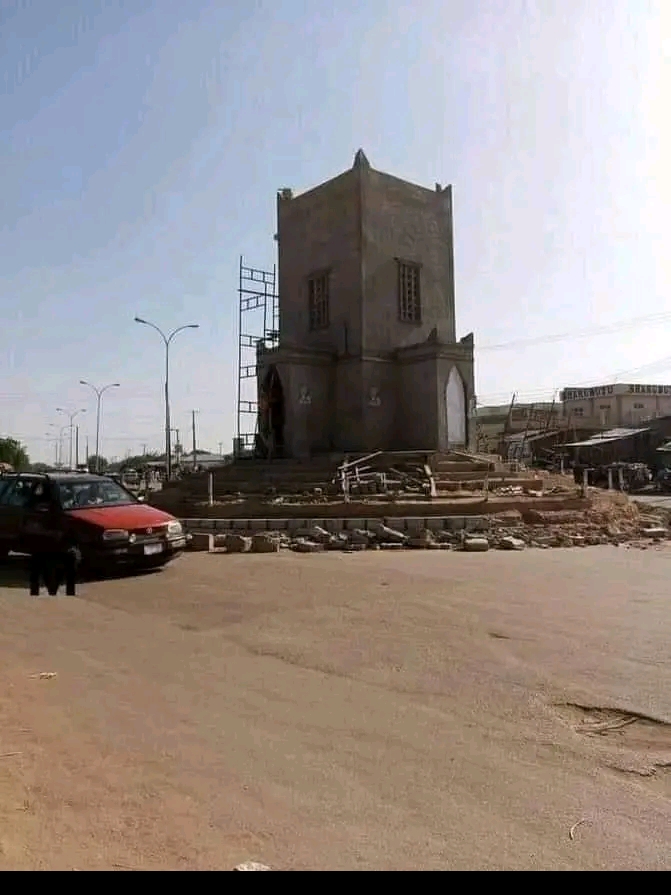
Legacies are hard to point out in the seven years of the current APC government. So many people taunt the government that its only legacies are the refurbished traffic circles (roundabouts) in Katsina and the painting of schools in APC colours. Katsina State is today indebted to the World Bank and the IMF.

However, one salient advantage of Masari’s government is political tolerance. The government has given the people the right to political affiliation, which was lacking during the PDP.

For Katsina, the anointment curse continues as Governor Masari points to Alhaji Abba Masanawa, the immediate past Managing Director of the Nigerian Security Printing and Minting Company, Abuja as his anointed successor. 

Only time will tell when Katsina will be free from the grips of anointment.

Salisu Yusuf wrote from Katsina via salisuyusuf111@gmail.com.

Jonathan remembers Yar’adua twelve years after

By Ahmad Deedat Zakari.

Nigeria’s Former President, Goodluck Jonathan, has taken to his official Facebook page to remember his former principal, Late President Umaru Musa Yar’adua.

Thursday, May 5, 2022, marks exactly twelve years since Yar’adua died, and Jonathan, who succeeded him as Nigeria’s President after his death, remembers him fondly on the anniversary.

He said although Yar’adua has left this world, the memories of his great works live with us.

“Twelve years ago, our nation lost a patriot, a selfless leader and a peacemaker who governed with sincerity and passion for the people. President Umaru Musa Yar’ Adua is no longer with us today, but his strides in public life continue to testify for him and keep his memory alive,” He wrote.

Jonathan also added in the third paragraph of his eulogy that Yar’adua is the kind of leader that is rare and hard to find

“He was a soldier of truth, committed to justice, equity and other democratic virtues. He was a servant leader and a good man, the type that is hard to find.” He stated