Ukraine

Putin calls European leaders “little pigs” as he vows Ukraine war goals will be met

By Maryam Ahmad

Russian President Vladimir Putin struck a defiant tone in a speech to his defence ministry, insisting that Russia’s goals in the war in Ukraine “will undoubtedly be achieved,” either through diplomacy or by “military means.”

While signalling openness to what he described as “substantive talks” with the United States, Putin dismissed European leaders in crude terms, referring to them as “little pigs” as they discuss proposals to increase funding for Ukraine.

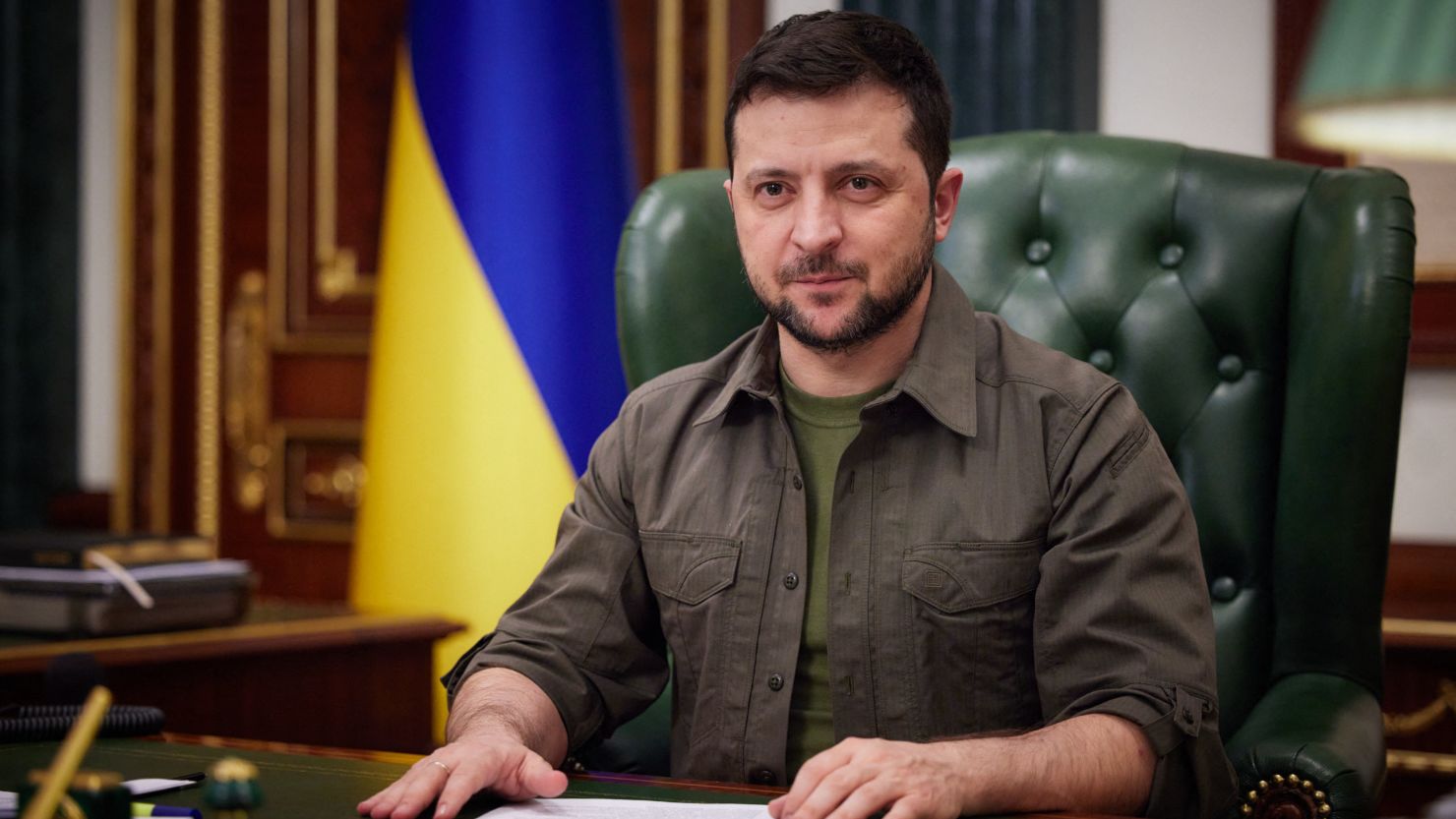
The comments come as diplomatic activity intensifies in Europe. Ukrainian President Volodymyr Zelensky is expected to join European Union leaders in Brussels on Thursday, where discussions will focus on continued political, military and financial support for Kyiv amid the protracted conflict.

Russian court sentences Colombian national to 28 years for fighting alongside Ukrainian forces

By Sabiu Abdullahi

A court in Russia’s Kursk region has sentenced a Colombian citizen to 28 years behind bars after finding him guilty of fighting as a “mercenary” with the Ukrainian Armed Forces against Moscow.

The sentencing was announced on Tuesday, with Russian authorities stating that the man took part in combat operations within Ukraine’s military, including in the border region of Kursk.

In its ruling, the court declared that the individual had participated “in the armed conflict as a mercenary in the Armed Forces of Ukraine,” and added that he was “sentenced to imprisonment for 28 years.”

Russian officials have consistently maintained that foreign nationals who support Ukraine on the battlefield are violating Russian law.

The Colombian’s involvement on the side of Kyiv further reflects the international dimension of the ongoing war.

The conviction comes amid continued hostilities between Russia and Ukraine, which have seen rising casualties on both sides.

It also aligns with Moscow’s broader efforts to clamp down on foreign fighters it accuses of aggravating the conflict.

The Russian government has not released the name of the convicted individual, nor has it provided further details regarding the specific charges or dates of the alleged combat activities.

The situation remains a stark reminder of the far-reaching consequences of the war, now drawing individuals from different continents into its orbit.

Pope Leo XIV calls for peace in Ukraine and Gaza in his first Sunday message

By Hadiza Abdulkadir

In his first Sunday message as Pope, Leo XIV made a powerful plea for peace, urging an immediate end to the conflicts in Ukraine and Gaza. 

Addressing the faithful gathered in St. Peter’s Square, the pontiff called for “an authentic and lasting peace” in Ukraine, emphasising the devastating human cost of the ongoing war. 

He further implored for a ceasefire in Gaza, demanding the release of all Israeli hostages held captive.

“The world yearns for peace,” Pope Leo XIV stated, his voice resonating across the square. “We must strive for dialogue and understanding, putting an end to the violence that inflicts immeasurable suffering. In Ukraine, let the weapons fall silent, and in Gaza, let the hostages be released.”

His message underscored the Vatican’s continued commitment to promoting peace and reconciliation in conflict-plagued regions. 

The Pope’s appeal resonated with many, who hope his words may inspire concrete action toward achieving a lasting resolution.

Zelenskyy calls for peace talks, expresses readiness to work with Trump

By Hadiza Abdulkadir

Ukrainian President Volodymyr Zelenskyy has reiterated his country’s commitment to achieving peace and stated that his country is prepared to negotiate as soon as possible. 

In a statement posted on social media, Zelenskyy emphasised that “nobody desires peace more than Ukrainians” and expressed his readiness to collaborate with U.S. President Donald Trump’s leadership to secure a lasting resolution. 

He proposed initial measures, including a prisoner exchange and an immediate ceasefire on aerial and naval assaults, contingent on Russia’s reciprocity.

Zelenskyy also acknowledged the critical role the U.S. has played in supporting Ukraine’s sovereignty, particularly highlighting Trump’s past decision to provide Javelin missiles. He stressed the importance of continued cooperation with Washington and expressed disappointment over a recent White House meeting that did not go as expected. 

Calling for constructive dialogue, Zelenskyy urged U.S. officials to work together to make things right and advance peace efforts.

The Ukrainian leader reiterated his country’s readiness to sign a security and mineral resources agreement at any moment. He described the deal as a step toward stronger security guarantees and expressed hope for effective implementation.

Hamas did not start this war, Israel did

By Ismail Obansa Nimah

Theodor Herzl must be restless in his tomb for what is happening in Palestine. He must have forgotten to remember that even though he succeeded in creating Zionism to champion his vision for a Jewish state in the heart of Palestine, the territory he uprooted people from and where he currently rests was never really his. In it were millions of good-hearted people, living a beautiful life in their homes, farms, families, freedom, peace and prosperity. Until all they had was brutally taken away by the entity Herzl created, the state of Israel.

The Jewish homeland chanted by Herzl since the first worldwide Jewish conference in 1897 and seen by thousands of Jews as their God-given right and as “a land with no people for a people without land”, is for the first time since its creation up in an unprecedented amount of flames.

The West championed the Balfour Declaration after the First World War. It gave the territory of Palestine to a foreign occupation to establish the apartheid state of Israel in total injustice and disregard for the basic human rights of the indigenous people of Palestine.

After the Balfour Declaration,  the Zionist movement gained momentum and confidence. Jews worldwide, particularly in Europe, began to migrate and seek refuge in Palestine. The Palestinians welcomed and gave refuge to the Jews escaping persecution, particularly during the second world war and the Holocaust by Nazi Germany. But to the Palestinian’s dismay, their kind gestures were met with a very painful backstabbing.

 Following the Second World War, the Israeli Declaration of Independence, formally the Declaration of the Establishment of the State of Israel, was proclaimed on 14 May 1948. That declaration triggered resistance from the Palestinian and neighbouring Arab states. It questioned how people’s lands and homes could be stolen from them that easily.

The resistance led to the first armed confrontation between Palestinians and the newly founded state of Israel, together with their allies, resulting in the 1948 Nakbah, which not only saw  78% of Mandatory Palestine become illegally occupied by Israel but also saw the expulsion and flight of 700,000 Palestinians, the subsequent depopulation and destruction of over 500 Palestinian village and geographic erasure, the denial of the Palestinian right of return, the creation of permanent Palestinian refugees in their lands, and the “tyrannical destruction of the Palestinian society, all of which has continued till date.

The events of 1948 uncovered fierce resistance across occupied Palestinian territories and other Muslim nations—one that gave birth to the likes of Hamas, Hezbollah, and the Palestinian resistance fighters.

Since 1948, Israel has continued expanding its occupation and settlements in the Palestinian Territories. It thrashed the two-state solution and violated almost every international law in its systemic oppression, tyranny and ethnic cleansing of the Palestinians. It has carried out numerous indiscriminate attacks and killings of innocent Palestinians. The apartheid regime in Israel has illegally demolished thousands of Palestinian homes, destroyed heritages, desecrated religious sanctuaries, particularly Al-Aqsa Mosque, murdered countless unarmed civilians, including numerous children, women and the elderly and denied Palestinians basic human rights, including their freedom.

At the heart of the Palestinian resistance is the Gaza Strip (the headquarters of Hamas), which has endured decades of Israeli terror, bombardments and siege. The Gaza Strip is a densely populated area with a land, sea and air blockade by Israel since 2007. It is basically a prison.  Israel has carried out countless inhumane, unprovoked attacks across the strip, with the most deadly being in 2014 and the most recent occurring just five months ago. On average this year, 2 Palestinians have been killed daily by Israel across its occupied territories.

The hypocrisy of the Western powers fuelling the Israeli regime for decades has allowed successive generations of Palestinians to take bold and brave initiatives, like what is currently unfolding, to defend and resist the Israeli apartheid occupation. And it appears that the more fight they put to resist, the better they get at it. One may ask, what makes the Palestinians so different from the Ukrainians?

 With the seeming cowardice stance of the Arab Nations in their pursuit of a normalisation agenda at the expense of the Palestinians, it became increasingly clear that if the Palestinians would achieve anything at all, then they would either have to fight bravely and indeed as they currently are or die trying but retaining their honour and dignity with them.

This recent attack has sent a clear message to the world that if peace and stability must be achieved, then attention must be paid to the oppressed and not the oppressor. A man who has already lost so much would not mind throwing all that is left to defend his honour and dignity. The Palestinians have been stretched too thin, and they, more than anyone, have all the right to defend themselves in this war that the creation of Israel started.

Ismail Obansa Nimah wrote via nimah013@gmail.com.

Vladimir Putin blames West over death of Russian journalist in Ukraine

By Uzair Adam Imam

The Russian President, Vladimir Putin, has blamed the Western powers over the death of Russian journalist in Ukraine.

Putin described the death of the journalist as “a heinous, premeditated crime” committed by Western powers and Kyiv.The Russia’s foreign ministry on Saturday vowed a decisive “response” against the perpetrators.

The Daily Reality reports that Russian military announced that Rostislav Zhuravlev, a war correspondent working for the state RIA Novosti news agency, had been killed. He died as a result of a Ukrainian strike in the southern Zaporizhzhia region on Saturday.

“As a result of a strike by the Ukrainian army using cluster munitions, four journalists were wounded in various levels of severity,” the Russian army said in a statement.

“During an evacuation, the RIA Novosti journalist Rostislav Zhuravlev died from his wounds that resulted from the cluster munitions exploding.

“Everything indicates that the attack on the group of journalists was not carried out by chance,” the Russian foreign ministry said.

“The competent international organisations prefer, as before in such cases, to turn a blind eye to this heinous crime”, it added.

According to the ministry, “the journalists were gathering material for a report on the bombing by the Kyiv regime militants of settlements in the Zaporizhzhia region using cluster munitions banned in many countries around the world.”

Nigeria’s economy in chain since the start of Ukraine war – Minister

By Uzair Adam Imam

The Federal Government has said that the adverse effects of the war in Ukraine and the ongoing security challenge in Nigeria have contributed to the aggravation of the fragile economic situation in the country.

At the start of the war, the Organisation for Economic Cooperation and Development (OECD) warned that the world economy would pay a “hefty price” for the war in Ukraine, encompassing weaker growth, stronger inflation and potentially long-lasting damage to supply chains.

In Nigeria, inflation is already hitting living standards and reducing consumer spending as business owners become less optimistic about production.

The Minister of State, Budget and National Planning, Prince Clem Ikande Agba, disclosed this Tuesday at the 63rd National Conference of Nigerian Economic Society. 

The 3-day conference, which started Tuesday at the Maryam Abacha American University of Nigeria, Kano, was themed “Fiscal Sustainability and Policy Response for Economic Recovery in Nigeria”.

The Minister, represented by the Director Macro Economic, Mr Felix Okonkwo, said fiscal discipline is what Nigeria needs to build a stable and inclusive economy.

Agba stated that the Federal Government is focused on addressing the revenue issues, which it considers essential to the economic and financial health of the country.

He added that insufficient revenue was why Nigeria could not contain its fiscal deficit after the recession, meaning that the country’s capacity to continue to support and raise capital expenditure has not been improved.

He said, “The adverse effect of the War in Ukraine, insecurity, global food crisis, oil theft in the Niger Delta, rising energy prices, massive depreciation of the naira exchange rate, high fuel subsidy and increasing inflation as well as insufficient fiscal buffer aggravated the fragile economic situation in the country.”

The chairman of the occasion, Shamsuddeen Usman, said the conference aimed at providing possible ways to restore the country’s economic stability through enhancing fiscal policies.

The President of the Nigerian Economic Society, Prof. Umma Jalingo, who organized the event, said the association was founded three years before Nigeria’s independence and was aimed at enhancing the country’s economy.

Ambassador Joanna Tarnawska: A change of narrative  

By Ahmadu Shehu, PhD

For the first time in history, the President and Commander-in-Chief of the Republic of Poland, H.E. Andrzej Duda, visited Nigeria on 6th September 2022. Apart from being a landmark in history, this visit has renewed the longstanding alliance and friendship between these great nations and has substantially reduced miscommunications and misperceptions among the citizens and officials of both countries.

The visit has yielded bilateral agreements of enormous importance to both nations, especially on agriculture and technology transfer. Moreover, judging by its history and relationship with Nigeria, nay Africa, Nigeria and its sister nations stand to gain more level playing ground in bilateral negotiations with Poland than many other more advanced western countries. This, however, is a topic for another day.

The resilience of the Polish – Nigeria relationship was tested in the early days of the Russian invasion of Ukraine. As the Russian army steadily and mercilessly advanced toward major Ukrainian cities, foreign residents scampered for safety across all Ukrainian borders in search of safety. Thousands of Nigerians, mostly students, found themselves at the Polish border, which was already overwhelmed by destitute refugees struggling to cross into Poland. The scenes and images of the border control points shall never be missed!   

While a lot of misinformation and deliberate spinning of Poland as a racist, intolerant country was being cooked and distributed, the Polish diplomatic mission in Nigeria busied itself with solutions and helping Nigerians trapped in this conflict. A few days later, news surfaced that Polish officials were actually particularly kind to all citizens, especially Nigerians who were given special treatment by various missions based in Poland.  

Back at home, Polish companies and financiers have landed significant business deals to ramp up Nigeria’s solid minerals sector to ameliorate the foreseen global energy crises occasioned by the war. In addition, the Polish agro sector looked at Nigeria as the next solution to the food crises, raising the hope that the Nigerian agricultural value chain would become a global competitor.

Tracing the roots of Poland’s contribution to the growth of Nigeria’s tertiary education in the ‘60s, ‘70s and even ‘80s, several Nigerian universities have found valuable opportunities to collaborate with major Polish universities in various academic fields.

The Nasarawa State University, for instance, had a significant project that translated the works of a Polish scientist whose contributions to the Nigerian academic community cannot be quantified. Several first-class Nigerian universities, such as Bayero University, Kano, have maintained a functional MoU with the University of Warsaw for many years.

In line with its cultural heritage and educational development support, the Polish mission in Nigeria built a specialized school to support Almajiri and out-of-school children in Kaduna State. Although many foreign non-governmental organizations do these kinds of projects, Poland is the only country to start this foresighted initiative as part of its foreign mission activities.

The Polish mission established and sustains a vibrant Polish Alumni forum, which is meant to foster and strengthen the understanding between the citizens of the two countries. Nigerians who studied, trained or visited Poland in a working capacity discuss relevant issues of interest to Nigerians in Poland and the bilateral relations and areas of cooperation between the two countries. This initiative has led to mutually beneficial opportunities for Nigerians and Polish people willing to study, live or do business in either country.    

Polish – Nigeria relations is a sixty-year-old business that stood the test of time. However, to whom do we owe this enthusiastic revival of the friendship between these crucial countries? The bulk stops at the table of Her Excellency Joannah Tarnawska, the Poland ambassador to Nigeria.

Tarnawska is an African-born and bred Polish lady with a degree in African studies from the Faculty of Oriental Studies of the University of Warsaw. Mrs Tarnawska is currently doing a PhD in economics, with a research interest in economic issues in Africa.

Her cultural ties, deep understanding and love for Africa are unmatched. Thus, the amount of success she will record as a diplomat in Africa is promising. Her resilience and understanding of the murky waters of the Nigerian political landscape give her an edge to thrive. The balanced, respectful and dignified way in which the Polish mission now treats Africans will undoubtedly bring back the glory of the Republic of Poland as a true, non-colonial ally of this continent.         

Africa is the future! Therefore, this shall be a win-win for Poland and Nigeria!

Ahmadu Shehu is an Associate Professor at Kaduna State University. You can reach him at ahmadsheehu@gmail.com.

Ukraine President involved in car crash

By Ahmad Deedat Zakari

Ukraine President Volodymyr Zelensky was involved in a car mishap early Thursday morning in Kyiv. 

In a brief statement by his spokesperson, Sergii Nykyforof, it was disclosed that the president did not suffer serious injuries

“The president was examined by a doctor, no serious injuries were found,” Nikiforov said.

Explaining how the accident happened, Nikiforov said another car collided with the president’s vehicle in Ukraine’s capital city, Kyiv

He also disclosed that the driver in the car was treated by the president’s medics and driven to an ambulance.

Russia-Ukraine War: British PM honours Ukraine’s President

By Ahmad Deedat Zakari

British Prime Minister, Boris Johnson, has honoured Ukraine’s President, Volodymr Zelnesky, with the Winston Churchill Leadership Award.

This was disclosed in the UK Prime Minister’s verified Facebook page on Tuesday, July 26, 2022.

“Today Prime Minister Boris Johnson presented President Zelenskyy with the Winston Churchill Leadership Award for incredible courage, defiance and dignity in the face of Putin’s barbaric invasion. ” The post reads.

The Prime Minister also said the UK would always stand with Ukraine.

On February 24, the world woke up to Russia’s invasion of Ukraine, which has thrown the two countries into war.