UAE

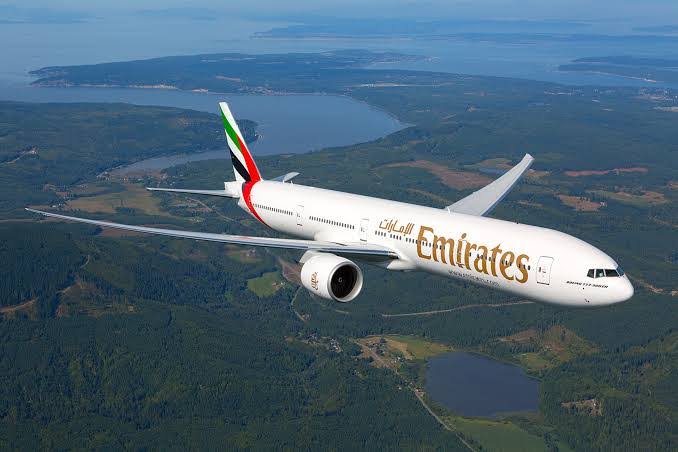
JUST IN: Emirates suspends all flights to and from Dubai amid rising Middle East tensions

By Sabiu Abdullahi

Emirates Airline has halted all flights to and from Dubai indefinitely due to security concerns linked to the escalating crisis in the Middle East.

The Dubai-based carrier announced the decision on Saturday. It said the measure aims to protect passengers and crew as the regional security situation continues to change.

The airline urged travellers not to go to the airport while the suspension remains in place. It also said additional information will be released when more details become available.

The disruption comes as rising conflict and missile activity in parts of the Middle East have led several countries to shut or limit access to their airspace. The development has disrupted both regional and international air travel.

Airlines across the Gulf region have altered flight paths and cancelled services because of safety concerns.

Dubai serves as one of the busiest aviation hubs in the world. Emirates operates thousands of weekly flights from the city to destinations across six continents. The suspension has affected passengers travelling to Dubai as well as those who planned to transit through the emirate to other parts of the world.

Passengers with existing bookings have been advised to follow updates from the airline and contact Emirates for options related to rescheduling or refunds.

Officials said flight operations will resume once authorities determine that the situation is safe.

The suspension also comes amid reports of a major explosion at Mehrabad International Airport in Tehran, the Iranian capital.

Eyewitnesses said several loud blasts were heard in western Tehran early on Saturday. They reported seeing flames and thick smoke rising from areas near the airport.

Videos shared on social media showed fires burning in parts of the airport. Reports also suggested that air defence systems were activated across the city.

The explosions are believed to be connected to a series of air strikes that targeted sites in Tehran. Some reports said aircraft parked on the tarmac caught fire after the blasts. However, the extent of the damage and possible casualties remained unclear.

Israeli authorities said their forces had launched extensive strikes on what they described as high-priority targets in Tehran.

Iranian media also confirmed that a large explosion occurred in the western part of the capital. Residents described hearing multiple powerful blasts across the city.

Mehrabad Airport is among Tehran’s busiest aviation centres and handles both civilian and military flights. The facility has been targeted in earlier incidents during the ongoing conflict.

UAE billionaire questions Trump over dragging Middle East into Iran war

By Sabiu Abdullahi

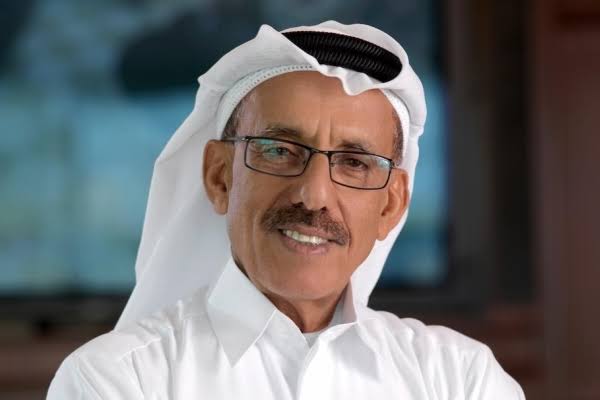
A prominent businessman from the United Arab Emirates, Khalaf Ahmad Al Habtoor, has asked United States President Donald Trump to explain the reasons behind Washington’s decision to engage in war with Iran alongside Israel.

Habtoor raised the concerns in an open letter posted on X, where he criticised the move and questioned whether the US leader had considered the possible consequences for countries in the Gulf region.

In the message, he asked Trump: “Who gave you the authority to drag our region into a war with #Iran? And on what basis did you make this dangerous decision?

Did you calculate the collateral damage before pulling the trigger? And did you consider that the first to suffer from this escalation will be the countries of the region itself!

The peoples of this region have the right to ask as well: Was this your decision alone? Or did it come as a result of pressures from #Netanyahu and his government?”

Habtoor, who founded and chairs the Al Habtoor Group, also accused the US president of exposing Gulf Cooperation Council (GCC) countries to dangers they did not choose.

He wrote: “You (Trump) have placed the countries of the #GulfCooperationCouncil and the Arab countries at the heart of a danger they did not choose. Thank God, we are strong and capable of defending ourselves, and we have armies and defences that protect our homelands, but the question remains: Who gave you permission to turn our region into a battlefield?”

Neither President Trump nor the White House has issued a response to the letter. The government of the UAE has also not publicly endorsed the message.

The letter is seen as a rare public criticism from a prominent figure in the UAE. It reflects rising concern in the Gulf as the conflict between the US, Israel and Iran continues into its sixth day.

Last week, US and Israeli forces launched coordinated attacks on Iran. The strikes reportedly targeted military positions as well as civilian facilities. Iran responded with its own attacks against Israel, US positions and locations in Gulf countries that host American military assets.

Reports indicate that the first five days of the conflict, described by the US as Operation Epic Fury, have caused heavy casualties. Estimates suggest that more than 2,400 people have died in Iran, including at least 181 children.

Iranian authorities claim that US-Israel strikes during the early hours of the war hit the all-girls Minab Primary School. According to Tehran, the attack killed more than 165 female students and school staff. Israel has denied responsibility, while the United States says it is investigating the incident.

Washington says six American soldiers have died so far in the conflict. Iran, however, claims it has killed more than 500 US troops.

A US-based conflict monitoring organisation reports that Iran has launched more drones and missiles at Gulf states than at Israel since the war began.

Data from the Critical Threats Project (CTP), part of the American Enterprise Institute, states that Iran fired 255 drones and missiles at Israel after the conflict started on February 28. During the same period, the report says 2,171 drones and missiles were directed toward Gulf countries, especially the United Arab Emirates, Bahrain and Kuwait.

According to the report, 1,138 of those attacks targeted the UAE, making it the most heavily struck country in the conflict.

In his letter, Habtoor also criticised the escalation in relation to Trump’s Board of Peace initiative announced in January 2026. The programme aimed to rebuild Gaza and was backed by about seven billion dollars pledged by Gulf states.

He wrote: “For before the ink has dried on the #BoardOfPeace initiative that you announced in the name of peace and stability, we find ourselves facing a military escalation that endangers the entire region. So where did those initiatives go? And what is the fate of the commitments made in the name of peace?”

Habtoor further questioned whether the financial contributions from Gulf countries were meant to support peace or to fund a war.

He stated: “Most of the funding proposed in those initiatives came from the countries of the region themselves, and from Arab Gulf countries that contributed billions of dollars on the basis of supporting stability and development. And these countries have the right to ask today: Where did this money go? And are we funding peace initiatives or funding a war that exposes us to danger?”

The businessman also argued that the conflict could impose significant financial costs on Americans.

He wrote: “And here they are today, finding themselves in a war funded from their money and taxes, with costs ranging, according to the Institute for Policy Studies (IPS), between 40-65 billion dollars for direct military operations, and could reach 210 billion dollars including economic impacts and indirect losses if it lasts four to five weeks, not to mention the sacrifice of Americans themselves in a war in which they have neither camel nor she-camel.”

Habtoor also criticised Trump for engaging in foreign military operations despite previous promises to focus on domestic priorities.

In the letter he wrote: “You have even broken your promises not to get involved in wars and to focus only on America and put it at the top of your priorities, as you ordered foreign military interventions during your second term that included seven countries: Somalia, Iraq, Yemen, Nigeria, Syria, Iran, and Venezuela, in addition to naval operations in the Caribbean and the eastern Pacific Ocean.”

He added: “You directed more than 658 foreign air strikes in your first year in office, which equals the total strikes in Biden’s entire term, for which you directed your arrows of criticism for involving the United States in foreign wars.”

Habtoor concluded his message by urging greater transparency from the US leadership.

He wrote: “True leadership is not measured by war decisions, but by wisdom, respect for others, and pushing toward achieving peace. And if these initiatives were launched in the name of peace, then we have the right today to demand full transparency and clear accountability.”

Cloud services across Middle East disrupted after drone strikes hit Amazon data centres in UAE

By Sabiu Abdullahi

Smoke rose over parts of Beirut on Tuesday after Israeli airstrikes targeted the southern suburbs, highlighting the spillover of the Middle East conflict into key civilian infrastructure across the Gulf.

Tech giant Amazon confirmed late Monday that drones had “directly struck” two of its data centres in the United Arab Emirates, causing disruptions to cloud services in parts of the region.

The company also reported that a facility in Bahrain suffered damage from “a drone strike in close proximity,” adding to interruptions for customers who rely on its cloud infrastructure.

In an update on its service dashboard, Amazon explained that the affected regions “experienced physical impacts to infrastructure as a result of drone strikes” amid ongoing hostilities.

“These strikes have caused structural damage, disrupted power delivery to our infrastructure, and in some cases required fire suppression activities that resulted in additional water damage,” the company said.

Amazon’s disclosure represents a rare acknowledgment of direct attacks on major commercial cloud infrastructure in the Gulf. It underscores the vulnerabilities of global technology networks amid the escalating war involving the United States, Israel, and Iran.

Reports indicate that several Gulf cities have faced collateral damage from strikes and stray weaponry since US and Israeli forces launched operations on Iran, which allegedly led to the deaths of Iran’s supreme leader and other top officials.

The company did not provide information on whether any employees were injured. It added that it is coordinating closely with local authorities while “prioritising the safety of our personnel throughout our recovery efforts.”

Amazon Web Services, the world’s largest cloud computing provider, supports thousands of applications, websites, and generative AI platforms globally. It competes with Microsoft Azure and Google Cloud in providing large-scale digital infrastructure.

Amazon advised customers in the affected regions to back up critical data and consider relocating workloads to servers elsewhere as engineers work to restore full functionality.

On Sunday, the company had reported that one of its UAE facilities had been hit by unspecified “objects,” warning customers of potential service interruptions.

Indian teacher wins $1 million Global Teacher Prize for transforming education in slums

By Sabiu Abdullahi

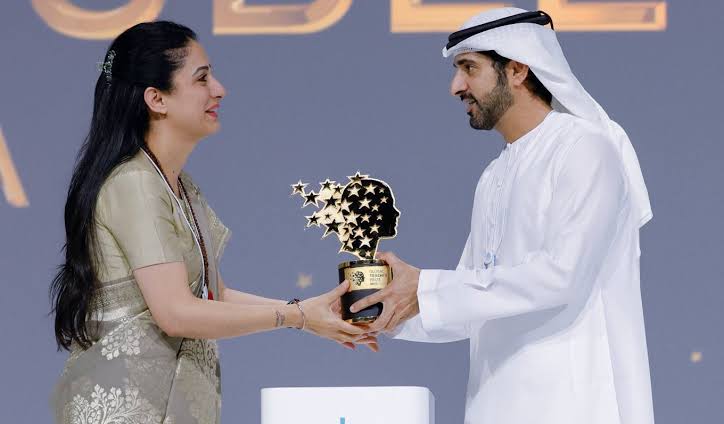
An Indian teacher and activist, Rouble Nagi, has won the $1 million Global Teacher Prize for her groundbreaking work in bringing education to marginalized communities across India. The award was presented on Thursday at the World Governments Summit in Dubai, an event that attracts leaders from around the world.

Nagi, founder of the Rouble Nagi Art Foundation, has established over 800 learning centers in India. These centers provide structured education for children who have never attended school and supplement learning for those already enrolled. She also paints educational murals across slum walls, teaching literacy, science, mathematics, and history.

Accepting the award, Nagi said the recognition was not just for her but for India. She recalled starting 24 years ago with 30 children in a small workshop, and now reaching over a million children.

> “I think every step has just motivated me, inspired me to take every child in India to school,” Nagi said. “You know when I was a child it was my dream to see every child at school and as you grow up fulfilling that for as many as we can reach, I think it’s a very humbling experience.”


Sunny Varkey, founder of the Varkey Foundation, which awards the prize, praised Nagi’s dedication.

> “Rouble Nagi represents the very best of what teaching can be – courage, creativity, compassion, and an unwavering belief in every child’s potential,” Varkey said. “By bringing education to the most marginalized communities, she has not only changed individual lives, but strengthened families and communities.”


Nagi plans to use the $1 million prize to establish an institute that will offer free vocational training. UNESCO Assistant Director-General for Education, Stefania Giannini, added that Nagi’s recognition highlights the crucial role teachers play in shaping lives.

> “Teachers matter,” Giannini said. “We are honoured to join the Global Teacher Prize in celebrating teachers like you, who, through patience, determination, and belief in every learner, help children into school — an act that can change the course of a life.”


Nagi is the tenth recipient of the Global Teacher Prize since it was established in 2015. Past winners include educators from Kenya, Palestine, Canada, and Saudi Arabia, all recognized for their efforts to improve access to education in challenging environments.

Her work continues to inspire and redefine what is possible in education for underserved communities worldwide.

Nigeria–UAE Relations: Between economic partnership and global controversies

By Zayyad I. Muhammad 

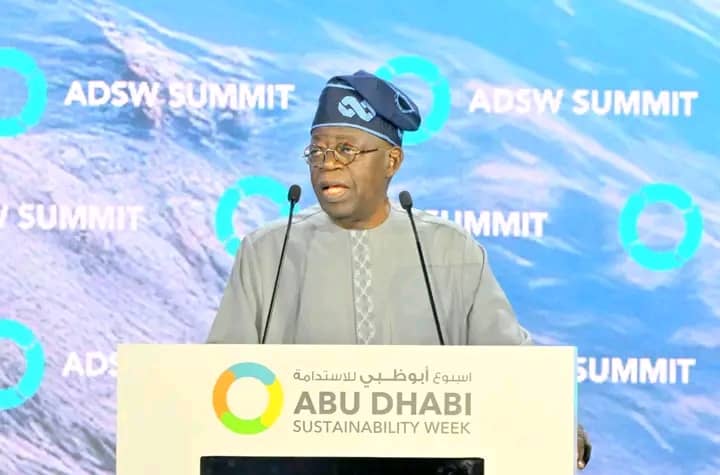
During President Bola Ahmed Tinubu’s official visit to the United Arab Emirates to participate in the 2026 edition of Abu Dhabi Sustainability Week (ADSW), Nigeria announced that it will co-host Investopia with the UAE in Lagos, Nigeria, in February. The initiative aims to attract global investors and accelerate sustainable investment inflows into Nigeria.

Nigeria has also concluded a Comprehensive Economic Partnership Agreement (CEPA) with the UAE to deepen cooperation across key sectors, including renewable energy, infrastructure, logistics, and digital trade. The agreement is expected to significantly strengthen trade relations and deliver tangible benefits for Nigerian businesses, professionals, and workers.

Overall, this expanding trade and economic relationship between Nigeria and the UAE represents a welcome development for both countries, with the potential to drive growth, job creation, and long-term economic collaboration.

However, on the international security front, the UAE is increasingly viewed through a more complex lens. Over the past decade, the country has pursued a more assertive foreign policy, particularly in parts of the Middle East and Africa.

The UAE has faced allegations and scrutiny from some governments, international organisations, media outlets, human rights groups, and analysts regarding its involvement in conflict-affected and politically fragile environments. These debates often centre on whether UAE actions have influenced or intensified existing crises, especially in several Muslim-majority countries.

In Sudan, various reports have alleged that the UAE was involved in the supply of weapons, including drones, to actors in the ongoing conflict. Some accounts claim that arms transfers were routed through neighbouring countries such as Chad, Libya, and Uganda, and that humanitarian operations served as logistical cover. Emirati authorities have denied these allegations, maintaining that the UAE supports humanitarian relief efforts and political solutions to the crisis.

In Yemen, the UAE was a key member of the Saudi-led coalition opposing the Iran-aligned Houthis. At the same time, analysts have pointed to UAE support for the Southern Transitional Council (STC), which seeks greater autonomy or independence for southern Yemen. Critics argue that this support contributed to political fragmentation, while others describe it as a pragmatic response to local security challenges and counter-terrorism objectives.

In Libya, the UAE has frequently been cited in international reports as a major external supporter of forces led by Khalifa Haftar and the Libyan National Army. Allegations include the provision of military assistance during operations against Tripoli-based authorities. UAE officials have consistently rejected claims of direct military involvement, emphasising their support for stability and counter-extremism.

In Somalia and the wider Horn of Africa, some observers have raised concerns about the UAE’s engagement with regional authorities and security actors, particularly in Puntland and Somaliland, suggesting that this involvement may have influenced internal political and security dynamics.

More recently, the Federal Government of Somalia announced the cancellation of all agreements with the UAE, including deals covering port operations, security cooperation, and defence. Somali authorities cited alleged violations of national sovereignty as the reason for the decision. The UAE, however, maintains that its activities in Somalia and the region are conducted within frameworks of cooperation, development assistance, and mutual security interests.

In 2022, the United States Treasury sanctioned six Nigerian individuals for allegedly raising funds in the UAE to support Boko Haram. This followed earlier actions by UAE authorities in 2021, when individuals were arrested and prosecuted for operating a fundraising network linked to the group. Despite these incidents, Nigeria–UAE relations remain largely focused on investment, trade, and broader economic cooperation.

Zayyad I. Muhammad writes from Abuja via zaymohd@yahoo.com.

Nigeria, UAE ink major trade deal at Abu Dhabi summit

By Abdullahi Mukhtar Algasgaini

President Bola Ahmed Tinubu has returned to Nigeria following his participation in the 2026 Abu Dhabi Sustainability Week, where a significant economic agreement with the United Arab Emirates was finalized.

On the sidelines of the summit, Nigeria signed a Comprehensive Economic Partnership Agreement (CEPA) with the UAE.

The pact is designed to strengthen economic ties, increase trade and investment, and foster collaboration in sectors such as energy, infrastructure, agriculture, mining, and renewable energy, including technology transfer.

Addressing the summit, President Tinubu unveiled plans for a joint Nigeria-UAE “INVESTOPIA” event scheduled for Lagos in February.

The initiative is targeted at drawing global investors to the country.

The President also outlined Nigeria’s ambitious climate finance goal, stating the nation aims to secure up to $30 billion each year to support its energy transition and drive efforts to expand electricity access across the country.

In defence of Alhaji Auwalu Tijjani Rabiu

By Mohammed Mohammed

Like many others, I was shocked when I recently saw an advisory by the Economic and Financial Crimes Commission (EFCC) declaring Alhaji Auwalu Tijjani Rabi’u wanted for alleged money laundering involving over $1.9 million.  

My shock, and that of many others, stemmed from the general belief in Alhaji Auwalu’s reputation as a businessman of integrity over the years and across his business constituencies in Nigeria, the UAE, and beyond. 

Having gone through the details of the transactions in question, including the reports of a reputable audit firm, which audited the transactions between Alhaji Auwalu and the purported petitioner, one Ifeanyi Ezeokoli, it’s quite clear that the former took advantage of Alhaji Auwalu’s tendency to trust people even without due diligence sometimes, which stems from his sheer clean-mindedness.   

According to the available records, Alhaji Auwalu made an overpayment of more than $3 million to  Ifeanyi Ezeokoli in 2022 as part of a business transaction that spanned a year. And though Ifeanyi was aware of the mix-up behind the regular overpayment, he turned a blind eye and continued receiving payments not due to him. 

And knowing that the bubble would burst one day, he continued to use different companies’ bank accounts, most of which were for third parties, apparently to complicate the auditing of the transactions. Yet, when it appeared to him that his game was over, he came up with an allegation that Alhaji Auwalu owes him over $1.9m, and even went ahead to file a case at the EFCC, which, in turn, declared him wanted. 

However, now that the Federal High Court in Kaduna has issued an interim order restraining the EFCC from taking any measures against Alhaji Auwalu pending the determination of his complaint before it, things have begun to take the right direction, which will undoubtedly culminate in not only absolving Alhaji Auwalu but also enabling him to recover his money from Ifeanyi. 

After all, if for nothing, Alhaji Auwalu is a man whose life seamlessly blends the acumen of business with the compassion of philanthropy. Known across communities not just for his remarkable business success, but more so for his boundless generosity, Auwalu stands tall as a symbol of service and humility. 

Alhaji Auwal’s journey in the business world is one of resilience and integrity. He has built an impressive legacy, earning respect not only for his achievements but for how he achieved them, with fairness, foresight, and a deep sense of responsibility. Yet, what truly sets him apart is that he never allowed success to cloud his sense of duty to others.

Through quiet acts and major initiatives alike, Auwalu has touched countless lives. From supporting the vulnerable and other acts of charity, his contributions have brought light and hope to individuals and entire communities. For many, he is not just a benefactor; he is a lifeline, a silent force who sees a need and responds with action, not applause.

His philanthropy is not showy or self-serving. It is driven by sincere empathy and a belief that every life uplifted enriches us all. Whether in times of ease or crisis, Auwalu has remained steadfast, ever ready to give without hesitation and serve without seeking recognition.

To speak of Auwalu is to talk about impact. His name inspires admiration, but more importantly, it inspires others to give, to build, and to believe in a better world.

Auwalu is more than a businessman. He is a builder of dreams, a guardian of dignity, and a blessing to many.

Mohammed Mohammed wrote from Dubai, United Arab Emirates.

UAE lifts visa restrictions on Nigeria, diplomatic ties improved

By Sabiu Abdullahi

The United Arab Emirates (UAE) has lifted its visa restrictions on Nigerian citizens, effective immediately.

This move marks a significant improvement in diplomatic relations between the two countries. 

According to Nigeria’s Minister of Information and National Orientation, Mohammed Idris, the Federal Government and UAE authorities have reached an agreement to vacate travel restrictions imposed on Nigerians.

Nigerian passport holders can now travel to the UAE without any hindrance. 

The lifting of the visa ban comes after several diplomatic disputes, including a dispute over $850 million in revenue owed to the UAE.

However, with 98 percent of the debt now paid, the UAE has agreed to lift the ban. 

This development is a significant win for Nigeria, and it is expected to improve trade and tourism ties between the two countries.

Nigerians seeking information on the updated UAE visa conditions can visit the official government website for further details.

Flooding: Nigeria receives humanitarian aid from UAE

By Muhammadu Sabiu and Auwal Umar

Nigeria has received 31 tonnes of humanitarian help from the United Arab Emirates (UAE), including food and other necessities of life.

According to the UAE’s news agency, the assistance has been delivered to help Nigerians, primarily women and children, who were harmed by the recent floods that ravaged 34 of the country’s 36 states.

Dr Fahad Obaid Al Taffaq, UAE’s ambassador to Nigeria, said, “This is part of the UAE’s solidarity with Nigeria and its people in facing the impact of the floods and the casualties and material damages they caused.

“It reflects the close relations between the two countries and the leading role of the UAE in extending a helping hand to countries affected by natural disasters and the effects of climate change worldwide, including throughout Africa.”

This year, Nigeria saw the worst floods in ten years, which have been attributed to excessive rain and the discharge of the Lagdo dam in neighbouring Cameroon.

Over 600 people were killed, and 1,546 were injured by floods that occurred last month.

ASUU Strike: Between extravagant hopes and exaggerated disappointment

By Nura Jibo

Let me start by saying that I am not holding any brief for the Academic Staff Union of Nigerian Universities(ASUU) because I was its victim of strike for three (3) years. I am not holding any brief for Nigeria’s Federal Ministry of Education and government either, as I very seriously hate their mishandling of Nigeria’s education sector. 

Today, I write as a concerned individual who believes in teaching and providing free education to Nigerian and global citizens. 

Hence, I write this as a classroom teacher that taught in a Nigerian State’s Polytechnic for three (3) years as a volunteer lecturer. I did not collect a single Kobo or Naira from that college throughout my volunteerism teaching at the College of Business Management. I only wanted to pay back what I had taken from the excellent teachers that made me who I am today. 

Therefore, it is very pleasing whenever I reflect and have a flashback over certain moments that contributed to my making, particular via the teaching and mentorship of my amazing teachers. 

Indeed, I sometimes feel very disgruntled whenever I see a certain Minister of Education who once upon a time advocated through his long essays in Daily Trust stable a 30% allocation of Nigeria’s budgetary provision to the education sector. However, that Nigerian Minister now develops a thick skin on resolving this simple yet terrible antecedent by hiding under his Ministerial gown to suffer and implicate an already ailing system! 

The issue is simple: It is either the likes of our laconic and apt Prof. Farooq Kperogi amplified that Minister’s writing prowess beyond or above what he is, or he’s exaggerated as someone with firsthand knowledge of Nigeria’s education system. I am unsure whether writing long pieces of literature in the name of Friday columns and reeling towards power qualifies one as an expert to lead a very large and delicate African educational system. 

Therefore, I believe mastery of achievement so-called via writing newspaper columns or “Definitions in Humour” does not preclude one from being considered a novice and a toddler in leading an education system that is deliberately beleaguered in the name of politics. The way the Minister portrays himself as a man of God by writing all sorts of educational polemics in Nigeria, one would not have expected less from Nigeria’s presidency that offered and entrusted such a complex Ministry in the hands of a chronic accountant who never had a clue or better put never practised and excelled in his profession – Accountancy! But that’s Nigeria, where many people get away with its sensitive positions provided they can write pep and glib talks and share with the dull and ignorant. 

To quickly put the record straight, Nigerian leaders should refrain from allowing people to assume public office because of their writing prowess or mastery of oratory language. The duo are clearly very different and distinctive in acquiring or having a practical knowledge of teaching and education. 

I shall come back to this point later if time permits!

Indeed, three things made me raise my concern about ASUU Strike and the exaggerated disappointment from the Federal Government. First, the ASUU’s demands on an improved education system in the country. Second, the students’ extravagant hopes of acquiring a Nigerian education that is today by far less and very low in quality. The third is the bastardizing of the education sector by political leaders in Nigeria. 

Indeed, there are three global measurable indicators in gauging an education, whether it is qualitative or not. One is the availability of state-of-the-art teaching facilities. Two, stability in academic programmes. Three, quality of teaching staff. 

In Nigeria, none of the three(3) is available at the moment because the teachers and all university lecturers are already frustrated by the Nigerian political leaders, that are mostly half-baked or uneducated. 

The level of frustration is deliberate, though! And the way things are going, it is better and advisable for all Nigerian students to come out and demonstrate en masse by matching to Aso Rock villa to express their displeasure on the denial of their rights to education by Mr President and his education cabinet. As they do that, they should make the Nigerian government aware that the monthly salary of a Nigerian professor is not more than a primary school teacher’s salary in the UAE and other serious countries that left Nigeria far behind.

A professor in Nigeria today earns an average salary of N400,000 to N500, 000 per month. His yearly earnings are approximately N5-6 million. This is equivalent to what is being paid to an Engineer engaged as project manager (PM) every month in the UAE. 

This is not to talk of a primary school teacher in Nigeria who lives a typical hand-to-mouth life by surviving on a N23,000-N37,000 monthly salary with many family demands at their disposal. And considering the chaotic nature of a Nigerian state with no end in sight! 

Truth is: the Nigerian State can more than afford to pay its teachers and university lecturers global standard salary(s) the way COUNTRIES and regions in the UAE, such as Dubai, Bahrain, Oman, etc., are paying their teachers competent and befitting salaries because Nigeria is ten (10) times richer than Dubai, Oman, Qatar, Bahrain etc. 

How can one expect any good to come out of Nigeria’s education system that is not ready to discharge this global standard? 

The irony is that: the Nigerian education system is one that shamelessly cannot afford to recruit, engage and pay teachers global standard salary(s). It prefers to absorb graduates under Npower and pay them a stipend of N23,000 per month. At the same time, the political leaders steal the public funds and waste away the Nigerian nation by burying it in global shame. Therefore, the corrupt tendencies of Nigerian political leaders and their timid behaviour(s) of stealing public funds in the name of democracy will continue to put the country’s education system in untold hardship by killing it ultimately. And as the country continues along this path, it should be ready for more Boko Haram and kidnappers ad infinitum. 

Nura Jibo, MRICS, PQS, MNIQS, RQS, was a volunteer visiting teacher at a Polytechnic in Nigeria for three years. He can be reached via nurajibo@yahoo.com.