Terrorism

On the infringement of Nigeria’s sovereignty

By Zayyad I. Muhammad 

Bandits, Lakurawa, Ansaru (Jama’atu Ansarul Muslimina Fi Biladis Sudan) and other terrorist groups have been terrorising Nigerians through killings, kidnappings, and rape. They have displaced thousands of people, carved out territories for themselves, collected taxes, and effectively governed parts of the North-West and North-Central regions.

For 13 years, the violent separatist group IPOB/ESN, designated a terrorist organisation by the Federal Government, has been operating in southeast Nigeria, terrorising the region through armed attacks on security forces, the enforcement of sit-at-home orders, and the killing and coercion of citizens to obey its directives.

For over 15 years, Boko Haram and ISWAP have established their authority on soft targets in some parts of the North-East, as well as attacking military formations, killing and kidnapping civilians, and carrying out suicide bombings against innocent people.

From the North-East to the North-West and North-Central regions, both local and foreign terrorist groups have carved out territories within Nigeria, killing and kidnapping innocent citizens, collecting taxes, imposing their own laws, displacing hundreds of people and brazenly displaying their weapons in public and on social media platforms.

On December 25, 2025, the United States, with the coordination and approval of the Nigerian government, launched 16 GPS-guided missiles at terrorist targets in parts of Sokoto State. As a result, some debris fell in Jabo and Offa. In Jabo, the debris fell on open fields, while in Offa, two hotels were hit.

Nigeria’s failure to eliminate these terrorists has brought the country to this point. No nation welcomes foreign military intervention on its soil. 

However, which constitutes a greater infringement on Nigeria’s sovereignty: the existence of local and foreign terrorist groups operating freely, killing, kidnapping, conducting suicide bombings, collecting taxes, and displacing innocent citizens from their lands, homes and places of business for nearly two decades, or a few hours of a U.S. missile strike authorised by the Nigerian government?

 Zayyad I. Muhammad writes from Abuja via zaymohd@yahoo.com.

The dilemma of negotiating with bandits: A path built on ashes?

By Aliyu Ya’u

His Excellency, Dikko Umar Radda’s position on rural banditry has provoked considerable reactions, with some questioning his resolve to confront bandits rather than seek a peace agreement.

Given that he lacks control over the paramilitary and armed forces present in the state, it is fair to say that he has taken commendable steps by establishing the state’s community policing group and encouraging the civilian population to engage in self-defence. 

I fully empathise with his frustration, especially in light of the constant criticisms and pleas from victims suffering due to the terror of rural banditry. Understandably, his excellency may feel disheartened and powerless to prevent these criminals from continuing their activities. 

Further, everyone, especially the civilian population, would welcome a peace accord in a real conflict situation. In such situations, all parties’ demands are tabled and deliberated, and sustainable solutions are found and implemented. 

However, in the case of an unorganised and unregulated group like rural bandits of the North-western and North-central Nigeria, who wreak havoc daily without reasonable justification. 

The question lies not in the society respecting the peace accord, but in the modalities employed to guide the peace settlement. Another question is whether the peace accord is sustainable, using historical parameters to assess the credibility and reliability of the commitment of the violent party involved. 

Any peace accord between a government, society, and an armed group should be based on disarmament, demobilisation, and reintegration (DDR). 

According to the United Nations Peacekeeping operation unit, DDR is “a process of removing weapons from the hands of members of armed groups, taking these combatants out of their groups and helping them to reintegrate as civilians into society.”

The question is whether the militias or bandits are ready to surrender all their weapons, demobilise from their dens, and reintegrate into the larger society. Unless the government can confirm these terms with the bandits’ leaders, mediators, and sureties, it will not be obligated to build a wall of ash blocks. 

Other questions include, How strong and convincing are the commitments laid down or presented by the militias? How committed is the leadership to the pact? What are the demands? How cogent and soluble are they? Do they have a unified command structure? Is the command structure capable of issuing an effective directive that will be respected by various dens and groups committing heinous bandit crimes? 

These armed groups are often small; in most cases, a group comprises 10 or fewer bandits who act autonomously, unless they need to cooperate against a sedentary enemy community. The absence of a centralised governing body makes it difficult to build an effective peace agreement with the groups. How could a peace accord with hundreds of bandit groups roaming the regions’ thick and interconnected forests that span hundreds of kilometres and access many states be possible? 

Another aspect deserving the government’s focus is the scope of Katsina state’s peace accord. What areas will it encompass? Will the armed bandits responsible for heinous crimes in Katsina state prevent others from neighbouring states from crossing into the area to commit banditry? It’s crucial to recognise that we are not dealing with an insurgent group, a separatist movement, or an ideological terror organisation; rather, the state is confronting multiple disorganised criminal entities. 

The focus should be on the following: The state’s primary concern is achieving lasting peace, not a temporary ceasefire. The bandits should establish a reliable leadership structure that is known and accessible, and willing to take full responsibility if they breach the agreement. They should clearly specify what sets their current commitments apart from those made with previous governments. Additionally, they should submit their complaints for the state’s review and assessment. The sureties must first confiscate or disarm the bandits before any peace accord is signed.

Aliyu Yau holds an M.Sc. in Defence and Strategic Studies and is a public policy and conflict analyst based in Kaduna.

Trump’s threat and the wave of abductions in Nigeria

By Zayyad I. Muhammad

On Saturday, November 1, 2025, U.S. President Donald J. Trump made his famous “guns-a-blazing” remark and described Nigeria as “the now disgraced country.”

On Sunday, November 2, he repeated that the United States could deploy troops to Nigeria or launch airstrikes to stop alleged killings.

In what appears to be a reaction to Trump’s comments, terrorists and bandits in Nigeria have intensified attacks, especially the mass abduction of pupils, students, and worshippers.

On November 17, bandits abducted 25 female students from Government Girls’ Comprehensive Secondary School, Maga, Kebbi State.

On November 18, daredevil gunmen attacked Christ Apostolic Church, Oke-Isegba, Eruku, kidnapping 38 worshippers during an evening service.

On Friday, November 21, gunmen raided St. Mary’s School in the Papiri community of Niger State’s Agwara District, abducting 215 pupils and 12 teachers.

That same day, after Trump appeared on Fox News and declared, “I think Nigeria is a disgrace,” reports emerged that ISWAP fighters had abducted 13 teenage girls working on farmlands in Askira-Uba, Borno State.

Armed groups across Nigeria have long understood the symbolic power of their targets. But the timing and composition of these attacks suggest deeper motives:

Three separate days. Four mass kidnappings. Hundreds of victims. Mostly female victims. This is not a coincidence. This is a strategy.

Observers cite four major reasons:

1.  To escalate the situation and attract international attention. Nothing provokes global outrage like the mass abduction of schoolgirls or worshippers. Terrorists crave visibility, especially when a powerful international figure has threatened intervention.

2.  To instil fear and embarrass the government , psychological warfare, so to speak. Targeting female students and worshippers strikes directly at the heart of communities. Schools and places of worship are supposed to be sanctuaries; when they are violated, society trembles.

3.  To use abducted victims, especially girls, as human shields. If the U.S. were ever to conduct air strikes, the bandits and terrorists understand the protective value of having dozens of young female hostages in their custody.

4.  Ransom opportunities: To exploit heightened international interest as leverage for ransom or negotiation. Heightened American interest increases the “value” of hostages. Criminal groups see an opportunity to negotiate for large payouts.

President Trump’s threats have become a local weapon for the terrorists. To be fair to President Trump, he may not intend it, but his sensational remarks have become ammunition in the arsenal of Nigeria’s armed groups. They interpret his words as an opportunity or a provocation and recalibrate their tactics accordingly.

Also, to be fair to President Asiwaju Bola Ahmed Tinubu, he or his government cannot control the statements made by foreign leaders. Still, they can control how prepared the country is for the consequences. This moment demands urgency. The Nigerian delegation to the US, led by Mallam Nuhu Ribadu, is engaged in sterling diplomatic work. Thus, apart from local efforts, this visit indicates to the Nigerian leadership that a well-planned diplomatic strategy can prevent reckless foreign commentary from escalating domestic crises.

Local and international efforts must work together!

Zayyad I. Muhammad writes from Abuja via zaymohd@yahoo.com.

Army nabs suspected arms dealer, rescues kidnapped victim as troops hit terror networks

By Uzair Adam 

The Nigerian Army has apprehended a suspected arms dealer, rescued a kidnapped victim, and disrupted terrorist logistics networks within the last 24 hours.

A credible source at the Army Headquarters reportedly disclosed that the troops of Operation FANSAN YAMMA, on Thursday, apprehended a suspected terrorist informant during an ambush at Ungwan Gombawa in Kontagora Local Government Area (LGA) of Niger State.

The source said troops of 1 Brigade also arrested an alleged major terrorist logistics supplier and arms dealer at Danjigba in Bukkuyum LGA.

According to him, preliminary investigations reportedly linked the suspect to two coordinators in Anka LGA, believed to be responsible for storing weapons sourced from the Niger Republic.

He said the troops recovered military uniforms, a helmet, boots, financial receipts amounting to about N4 million, and audio evidence linked to arms transactions.

The source added that troops responding to intelligence on the recent abduction of students of GGSS Maga in Kebbi State stormed a terrorist camp in the Gando–Sunke Forest, which belongs to a kingpin known as Bello Kaura.

He said the attackers fled the location, allowing troops to destroy the camp and its support facilities.

The source explained that another suspected informant travelling from Sokoto was arrested at Augie, where troops recovered five ATM cards, clothing, and N78,900.

In another development, he said troops survived an ambush along the Kaiga–Mara road in Katsina State, forcing the attackers to flee.

He added that an operation carried out in Shinkafi and Zurmi LGAs also resulted in a firefight during which troops captured two AK-47 rifles, ammunition and two motorcycles.

Under Operation Enduring Peace in Plateau State, troops foiled a kidnap attempt in Jos South, rescuing a victim who sustained gunshot wounds.

The source also confirmed that eight suspected criminal herders were arrested in a separate raid in the same LGA.

Similarly, troops of Operation Whirl Stroke responded to a road incident in Nasarawa State, where three passengers were reportedly kidnapped and a driver was injured. Efforts to rescue the victims are ongoing.

He added that troops arrested two herders accused of destroying crops in Guma LGA of Benue State.

According to him, the Chief of Army Staff, Lt.-Gen. Waidi Shaibu recently undertook operational visits to Borno, Kaduna, and Zamfara, during which he assessed ongoing operations and urged troops to remain disciplined, alert, and committed to the fight against terrorism.

Nnamdi Kanu sentenced to life imprisonment

By Muhammad Abubakar

A federal court in Abuja has sentenced Nnamdi Kanu, leader of the banned Indigenous People of Biafra (IPOB), to life imprisonment for terrorism-related charges. The judge stated that Kanu’s calls for “sit-at-home” orders incited violence and constituted acts of terrorism.

The court ruled that for several of the charges, the law prescribes either life imprisonment or the death penalty. In delivering the verdict, the judge described Kanu as a “tyrant” capable of violence and said he should no longer remain a part of society.

The prosecution immediately called for the death penalty following the conviction. Kanu has previously been imprisoned, first in 2015 and again in 2021 after a controversial extradition from Kenya.

Supporters of Kanu have staged protests, and opposition politicians have criticised the government, alleging that the trial was politically motivated.

How careless news and posts shaped the fate of Brig. Gen. Uba

By Lawan Bukar Maigana 

The growing hunger among media organisations and young people to publish exclusive news has created a climate where speed is valued more than truth and its consequences. Many rush to break stories without verifying details, flooding the digital space with noise and carelessness.

This reckless chase is more dangerous than it appears. Insurgents and criminal groups quietly monitor social media ecosystems. They sit behind screens, study posts, and gather intelligence that was never meant for them. A single careless update becomes an open door for those who wish to harm the nation.

The tragedy of Brigadier General Mohammed Uba stands as a painful reminder of how information can be weaponised. His initial capture, his escape, and the later recapture that ended with his execution reveal how ruthless these criminal networks have become. While many sympathised with his ordeal, few understood how online chatter influenced the events.

These groups constantly scan conversations, comments, and reactions. They interpret patterns and extract clues from citizens who treat every issue as content. The story of General Uba should teach the country a life-saving lesson. Silence is sometimes safer than speed. Enemies are listening and active online, and every careless post strengthens their hand.

They learned from social media chatter that he was still in the bush after escaping. Thoughtless updates provided them with clues. They mobilised fighters, tracked him again, recaptured him, and executed him. This is the heavy cost of posting without restraint.

Security matters require silence more than spectacle. Media organisations must recognise that operational secrecy protects lives. Sensational updates during crises do not inform, but they endanger. The right to know cannot outweigh the need to safeguard ongoing operations. 

This protection is not just for soldiers but also for citizens. Insurgents study community movements, market patterns, celebrations, and tragedies. Careless information helps them identify the weakest points. 

If anyone must share information during sensitive times, the only safe place to do so is with the authorities. Security spokespeople exist to process information responsibly. They verify claims, filter sensitive information, and ensure that outsiders cannot track anything that could compromise national security.

Despite these realities, many still chase virality with reckless boldness. A recent incident exposed this trend when a fabricated story circulated about a young lady in  Gubio Local Government Area of Borno State, who allegedly took her life because she was forced into marriage. Influencers shared it widely without verifying a single detail from her family or the authorities.

The emotional weight of the story carried it across timelines. People blamed parents, culture, and religion. The story was false, yet the damage was already done. The truth moved more slowly than the lie. Later, those who invented the news were arrested, and they confessed that they had shared the information without any verification after a whole LGA had been demonised.

This incident reflects a troubling social habit. People now prefer drama to accuracy. They prefer emotional reactions to factual clarity. They prefer virality to responsibility, at the expense of people’s lives, especially among northern netizens. 

This culture feeds insecurity and weakens the nation’s sense of truth. When false alarms dominate the digital space, real warnings become harder to identify. When emotion overshadows fact, society becomes vulnerable.

Young people must understand that social media is no longer a playground; it is a battlefield for attention and a monitoring ground for criminals, organisations, and individuals with exclusive access who read everything posted online.

Editors and influencers must rise above the chaos and set a standard. They must insist on verification before publication and accuracy before speed. Their platforms should become places where truth is valued and rumours are filtered out. If they uphold responsible reporting, their followers will learn to do the same.

They must also use their influence to educate the public. People should understand that clicks are not worth the life of a soldier or a citizen, and shares are not worth the shame of an innocent family. Only through responsible reporting can society rebuild trust, strengthen security, and protect the dignity of those whose stories are too important to be mistreated or used to strengthen news agencies’ visibility.

Lawan Bukar Maigana wrote via lawanbukarmaigana@gmail.com.

Son of Boko Haram founder arrested in Chad

By Hadiza Abdulkadir

Chadian authorities have arrested Muslim Muhammad Yusuf, identified as the son of Boko Haram’s late founder, Muhammad Yusuf. Muslim, believed to be 18 or 19 years old, was captured along with five others while leading an Islamic State West Africa Province (ISWAP) cell.

Analyst Bulama Bukarti confirmed Muslim’s identity after speaking with family friends and relatives, who said he is the son of Bintu, Muhammad Yusuf’s first wife. His arrest reportedly followed a tip-off from Nigerian intelligence.

The development comes in the same week Nigeria announced the capture of two top leaders of Ansaru, a Boko Haram offshoot, and the head of the Mahmuda Group, active in parts of North Central Nigeria.

Security experts describe the arrest as a turning point, marking the first time a major faction leader has been taken alive. They warn, however, that Nigerian authorities must now focus on dismantling bandit groups wreaking havoc in the North West and North Central regions.

Security: The Nuhu Ribadu Formula

By Zayyad I. Muhammad 

Before the emergence of President Bola Ahmed Tinubu’s administration, Nigeria’s security architecture was grappling with deeply entrenched challenges, particularly in the Northwest and Southeast regions. The situation had deteriorated to alarming levels, with criminal elements and secessionist movements establishing a disturbing level of control in certain areas.

In the Northwest, banditry had evolved from sporadic attacks to the full-scale occupation of territories. Vast stretches of land, especially in states like Kaduna, Zamfara, and Niger, fell under the influence of heavily armed groups. The Abuja-Kaduna highway, which was once a vital economic and commuter route, became a perilous stretch, notorious for frequent kidnappings and ambushes. 

The Northwestern security threats extended further, with the Kaduna–Birnin Gwari–Lagos road effectively shut down due to sustained bandit activity. Even commercial life suffered significantly; the Birnin Gwari cattle market, a major hub for livestock trade, was forced to cease operations under the pressure of violence and extortion.

Meanwhile, in the Southeast, the situation was compounded by the secessionist agitation led by the Indigenous People of Biafra (IPOB). Through fear and coercion, IPOB succeeded in enforcing a weekly sit-at-home directive across several states in the region, paralysing economic activities every Monday. Businesses were shuttered, schools closed, and the freedom of movement was severely curtailed, undermining both governance and development efforts.

This was the grim reality that the Tinubu administration inherited. However, at the heart of the renewed fight against insecurity stands a strategic recalibration: what many now refer to as the “Nuhu Ribadu Formula.” As National Security Adviser, Ribadu brought a fresh, intelligence-driven approach to tackling Nigeria’s security woes. With an emphasis on coordination among security agencies, restoration of public confidence, and targeted offensives against criminal enclaves, his methods have begun yielding tangible results.

While challenges persist, especially in remote and hard-to-reach areas, the difference in tone and trajectory is becoming increasingly evident. The Ribadu-led security strategy has not only focused on reclaiming territory but also on addressing the root causes of unrest, be it poverty, weak governance, or community grievances. It is this multidimensional and proactive approach that may well define Nigeria’s path to lasting peace and stability.

Mallam Nuhu Ribadu, the National Security Adviser, has been pivotal in reshaping Nigeria’s national security framework through a clear and strategic vision built on three foundational pillars.

The first is the carrot-and-stick approach, which balances kinetic (military force) and non-kinetic (dialogue, reconciliation, and development) strategies. This dual-pronged approach acknowledges that not all security threats can be addressed solely through force. By combining targeted military operations with community engagement and deradicalisation efforts, the approach aims to neutralise threats while addressing the root causes of violence.

The second strategy is a shift from rhetoric to action, a deliberate move away from endless briefings and political grandstanding towards concrete, measurable outcomes. Under Ribadu’s watch, security interventions are now judged not by promises, but by performance. The focus is on restoring peace, reclaiming lost territories, and enabling displaced persons to return to their communities.

Third is the promotion of synergy and intelligence sharing among security agencies. Previously plagued by inter-agency rivalry and fragmented operations, Nigeria’s security forces are now operating with improved coordination. Through unified command structures and shared intelligence platforms, responses have become faster, more precise, and increasingly proactive.

These strategies have already begun to yield visible results. The recent resurgence of attacks in Plateau and Benue States, as well as isolated Boko Haram assaults on soft targets in Borno and Adamawa, were swiftly countered using the same framework. Rapid deployment of forces, community-based intelligence, and coordinated operations prevented escalation and restored calm.

Still, the road to full recovery is a gradual one. While the machinery of state security has been retooled, the average citizen may not immediately perceive these gains. Part of the challenge lies in the persistence of outdated or unverified reports in some sections of the media, which can paint a distorted picture of the current realities. Nevertheless, those on the ground, especially in previously hard-hit areas, are beginning to sense a shift.

The “Nuhu Ribadu Formula” is proving to be more than just a tactical adjustment; it is an evolving doctrine that prioritises effectiveness, accountability, and collaboration. With sustained implementation and public support, it could well become the blueprint for enduring peace in Nigeria.

Zayyad I. Muhammad writes from Abuja, zaymohd@yahoo.com.

India launches missile strikes on Pakistan, tensions escalate

By Muhammad Abubakar

India has launched missile strikes on nine locations across Pakistan and Pakistan-administered Kashmir, targeting what it described as “terrorist infrastructure.” The strikes come amid heightened tensions between the two nuclear-armed neighbours following a deadly militant attack in Indian-administered Kashmir last month that claimed 26 lives.

Pakistan reported that at least eight people were killed and 35 injured in the strikes. Authorities in Islamabad condemned the assault as an “unprovoked, blatant act of war,” accusing India of deliberately targeting civilian areas.

In response, Pakistan claimed to have shot down five Indian fighter jets, though Indian officials have yet to confirm any such losses.

The incident marks a dangerous escalation in a region with a long and volatile history, raising fresh concerns about stability and the risk of broader conflict.

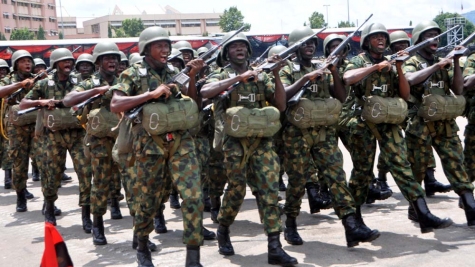
President Tinubu vows to crush terrorism, boosts military welfare 

By Abdullahi Mukhtar Algasgaini

President Bola Ahmed Tinubu has issued a strong charge to the Nigerian military, urging them to intensify efforts in ending terrorism and banditry while promising improved welfare for troops.  

Speaking to soldiers of the 17 Brigade in Katsina on Friday, Tinubu described the security crisis as a pivotal moment in Nigeria’s history. He called for unwavering resolve in defending the nation’s sovereignty and restoring peace.  

“This is a defining moment,” Tinubu declared. “Nigerians are counting on you to reclaim every inch of our territory. Let the enemies of Nigeria know—their time is up.”  

The President assured troops of better housing, healthcare, timely allowances, and family support. He praised their bravery in combating banditry in Katsina and beyond, stating, “You are the shields of Nigeria, standing between our people and terror.”  

Tinubu’s visit included inaugurating a 24km dual-carriage road and an agricultural mechanisation centre. His message was clear: Nigeria will not surrender to terrorists, and the military will receive full backing to end insecurity.  

“To those who seek to destabilise us,” he warned, “Nigeria will not bow.”