Sunnah

Should we be silent on discussing Maulud?

By Abubakar Suleiman

Many topics that have been generating rancour or heated arguments on Facebook or any other platform today have been discussed or debated exhaustively in the past. Lately, even if I have an opinion about a topic today, I do tarry a while before I write because I have this strong feeling that someone must have written virtually all the things I have in mind. This gives me the pleasure of saving myself the stress of writing; hence I mainly read opinions and sometimes laugh.

One such controversial topic raising dust today is the celebration of Mauludun Nabiyy (S.A.W). Some respected writers, ‘elders’ and creative minds took exceptions in discussing maulud and all it entails, particularly on social media. Maybe they find it counter-productive or think it won’t change anything because people will keep celebrating maulud and embracing anything that comes with it while others won’t celebrate it. Some would say regurgitating this topic or argument year in and year out is needless. I beg to disagree.

This logic or take, in my opinion, is flawed. The fact that some people will keep celebrating Maulud while others won’t should not make us shy away from discussing its legality, Islamically or otherwise, whenever the need arises. A replica of this kind of skewed opinion is Christians should not call Muslims to Christianity and vice-versa hence let’s just concentrate on politics and economy. Impliedly, da’wah is needless.

For sure, people will keep being Christians, Muslims, Atheists etc., and divisions in the understanding of religious diktats will continue till the end of time, but that shouldn’t hinder a sincere call or an honest critique of a creed, ideology or religion. It should also not stop us from enjoining people to do what we believe is good or the truth and forbid what we believe is bad or falsehood based on our understanding. I think discussions on religious matters, and even other matters, should be done with the utmost wisdom, refined words, and sincerity of purpose, and they should also be devoid of ad hominem.

Prophet Muhammad (SAW) was reported to have said: “Whosoever of you sees an evil, let him change it with his hands; and if he is not able to do so then [let him change it] with his tongue; and if he is not able to do so, then with his heart – and that is the weakest of faith.” Yes, one should choose his audience wisely so as to avoid unnecessary ruckus, and one should know when, where and how to say the truth and even who to tell the truth. Thus, one must not force his/her ideology or creed down someone’s throat.

In his book, “Think Again,” Adam Grant espoused that “our opinions can become so sacred that we grow hostile to the mere thought of being wrong, and the totalitarian ego leaps in to silence counterarguments, squash contrary evidence, and close the door on learning.” In another place in the book, he informed us that, “wisdom is also recognizing that we are wrong more often than we’d like to admit, and the more we deny it, the deeper the hole we dig for ourselves.”

Therefore, we should be open to discussions around some ideologies we hold so dear and be willing to stomach an honest critique of these ideologies, especially when these discussions are premised on mutual respect, wisdom and verifiable evidence or facts. Overall, we learn more from these kinds of discussions and/or dispositions. But insulting or talking down on people with a contrary understanding of our ‘cherished ideology’ will only yield a fertile ground for extreme tendencies, and this will further push us away from objective truth.

Unlike political or economic views, you don’t just seek religious knowledge; you practise it and call people to it while you embrace patience in doing so. Consequently, it is not an effort in futility to engage people in such discussions. And what does one gain after discussing all the political or economic issues on earth and ending up in hell for going against a religious teaching rooted in Islamic primary sources of knowledge.

We seem to underestimate the power of information put out on social media platforms and the influence it carries. We have gullible people who join these platforms, and they could be lured into any kind of creed or sect. In fact, these days, more people get radicalised or lured into a sect through social media than the masjids. On these platforms, many people have had discussions with some people, and such has led those people to denounce or accept their religion, maulud etc. However, we can peacefully stay away from toxic discussions after putting out our understanding.

Therefore, it is not about proving to be more intelligent than anyone who holds a contrary religious view or trying to be the gatekeepers of heaven or hell. It goes beyond that. It is about discussing our differences for a good understanding of our religion. Let us simply embrace sincerity and decorum in our discussions while we stay away from toxic people who aren’t ready for honest and open discussions.

Interestingly, opinions or ideas could change due to contexts or circumstances. Over time, people learn from exposure, old age or new knowledge. We may find ourselves opposing some views or ideas we hold so dear today. Conversely, we may be less hostile to contrary views when we continue to seek knowledge or begin to rethink our stands on many issues in the future.

May Allah show us the truth and give us the conviction to embrace it, and may He also show falsehood and give us the courage to turn away from it.

Abubakar Suleiman writes from Kaduna and be reached via abusuleiman06@yahoo.com.

The voice of moderation and reason is lost: Tribute to Dr Ahmad Muhammad Ibrahim, 1940-2022


By Kabiru Haruna Isa


“The death of a scholar is the departure of knowledge”.~Yahya b. Ja’far


In the afternoon of Friday, January 7, 2022, Dr Ahmad Muhammad Ibrahim, who was popularly and variedly known as Dr Ahmad Bamba; Dr Ahmad BUK; and Кala Haddasana, succumbed to the cold hands of death. Whoever attended the Muslim traditional funeral prayer did not need to specialize in Thanatology or the assistance of any thanatologist to decipher that his passing on has shocked not only the northern Nigerian Muslims but perhaps the entire Muslim world.

Hundreds and thousands of mourners from different nooks and crannies of northern Nigeria trooped to his mosque, Darul Hadith Masjid, at Tudun Yola quarters in Kano Metropolis to observe his Salat al-Janazah (funeral prayer). Based on my personal observation, the congregants comprised adherents of different doctrinal and ideological groups who were deeply touched by his death.

Dr Ahmad was one of the elder statesmen of the Muslim North who chose to be independent-minded, honest, forthright, focused and overtly apolitical. Those who grew up in Kano can vividly remember his educational sessions in the 1990s when he read a series of hadiths (narrative records of the sayings and customs of the Prophet Muhammad), which were aired on CTV (now Abubakar Rimi Television, ARTV), Radio Kano and other broadcast media.

What distinguished his educational sessions from those of other Islamic scholars were his sonorous voice, interactive dialogue, active learning process, and the constant prodding of his audience to debate jurisprudential issues. He created a convivial and liberal atmosphere for his students to either agree or disagree with his interpretations of holy texts without necessarily derailing from the subject matter, which demonstrated his deep knowledge of theological hermeneutics. 

Even though a Salafi, Dr Ahmad was a bridge-builder between Sufis and Salafis in northern Nigeria ostensibly due to his old age, maturity, accommodation and toleration. He always tried as much as possible to avoid deployment of insulting and libellous language to either demonize or hereticize those whose doctrines differed from his.

To err is human. As a human being, he might have wronged others, especially during his formative years, but he personified moderation and toleration as a fully accomplished and elder-scholar. Muslims will surely miss his fatherly voice of moderation, reason, truth and honesty. 

Despite his erratic temperament, Dr Ahmad was a forgiving person who never intended to hold animosity beyond the grave. I remember my personal interaction with him when Malam Babangida Namadi introduced me to him sometime in 2020. I pleaded with him to document his life narrative as some scholars did, such as Shaykh Abubakar Mahmoud Gumi in his autobiography, Where I Stand.

Dr Ahmad responded that he had a lot of stories to pass on to the younger generations based on varied phases of his life, bitter and positive experiences, social networks, scholarly itineraries and odysseys, family life, marriage counselling, pedagogy, university and national politics, truce and reconciliations and intra-faith relations. He further said that he would never write an autobiography because many people offended him and had already forgiven them; therefore did not want anything that would trigger his emotions.

The death of Dr Ahmad has created a vacuum that will take time to be filled because of his dedication and contributions to scholarship and the study of hadith in the Muslim world. To produce a scholar of his calibre is not an easy task, especially in the 21st century when young people exhibit hedonistic tendencies and many societies experience a systemic educational decline.

I will conclude with a famous quote of Umar “the death of a thousand worshipers is easier to bear than the death of a scholar who has knowledge of what Allah has permitted and forbidden”.

It will take us a long time to come to terms with the departure of Dr Ahmad. May Allah admit him into Jannatul Firdaus, amin.

Gmail: khisa.his@buk.edu.ng Department of History Bayero University, Kano.

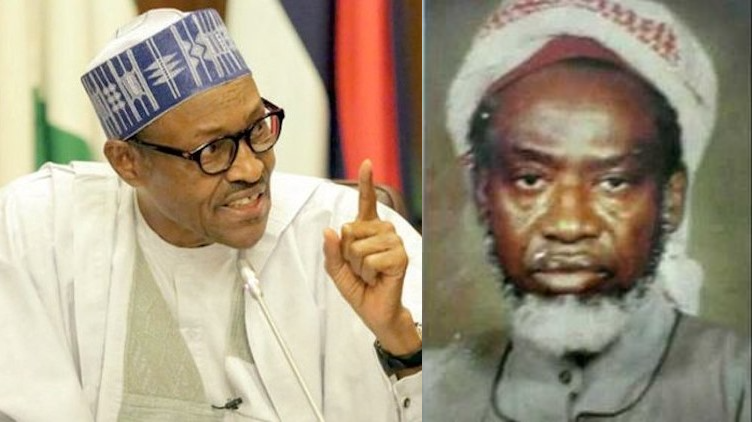
General Muhammadu Buhari as Sheikh Gumi’s Waterloo

By Abdulrahman Yunusa

Like anyone in this sinful world, one must get in touch with one unforgettable phenomenon in his life, and such experience will hunt them throughout their lives. So, Sheikh Abubakar Gumi might not be an exception because even prophets, who are the best people, get tested with many tragedies. As one Hadith entails, “Ashaddul Balaa al Anbia, thummal Amsal fal amsal”.

Gumi was a man with an impeccable personality and exceptional habits. He is the only Sunni cleric with almost all Awliya qualities: his kindness to his family and students was phenomenal. His worldly abstinence “Zuhud” is second to none, and his vision as a scholar was solid.

Perhaps of all the men of class and honour and men of power and money that late Sheikh Gumi lived and mingled with during his life, he had no open enemy. As I’m speaking to you, Gumi was the most respected cleric in the history of Nigeria, for he was blessed with many natural gifts.

He lived a well amusing as well as exciting life. His reputation cut across boundaries. None among politicians and merchants ever pointed him with an accusing finger, yet almost every responsible man befriended him. Not only politicians but even scholars did that full of humility.

Based on the intriguing accounts I have read so far in Ismaila A. Tsiga’s work, Where I Stand, even the father of the notable Islamic scholar, Isyaka Rabi’u, once eulogised Gumi and showered him with excellent remarks. Moreover, as a learned person, Sheikh Rabi’u didn’t hesitate to honour the scholarly correction issued to him by Gumi.

The same happened in his student-teacher relationship with Sheikh Malam Nasir Kabara, who taught him some books in his house. Later on, Gumi entertained his case while serving as Northern Nigerian Grand Khadi. Also, Malam Nasir kept Gumi in high regard till the day death took them apart.

However, throughout Gumi’s life journey, since the early 1920s, nobody had ever deemed it fit to belittle his personality or maltreat him as a person until when he met dictator General Muhammadu Buhari, who became his waterloo and a sign of divine test. You know, none among sincere men of God has ever lived a trial-free, tragedy-free life. So, his collision with Buhari at that moment was a blessing to him.

Although, one shouldn’t forget that Gumi had enjoyed the companionship of many past Nigerian presidents. He embarked on his advisory journey on national and religious matters before Nigerian independence.

As such, he had good contact with Sardauna. Most of his enthralling life voyage begins with Sardauna, then followed by General Yakubu Gowon. Gen. Gowon’ Christianity did not hinder him from seeing Gumi with the respectful lens as his predecessors. The same way he went with Gen. Murtala, Gen. Obasanjo and Alhaji Shehu Shagari. Nonetheless, Buhari deliberately disgraced him for not kowtowing to accept all his hogwash and twaddle policies to deal with some men.

Therefore, as Buhari failed to honour his intellectual sagacity at that moment, he went further by ditching his head by incarcerating him, holding his salary as a source of living. He even went out of focus helter-skelter to cease his visa. What a sad moment for a kind soul like Gumi’s. When did advising and cautioning leaders become an offence?

No, only those with knowledge and honour easily identify men of their calibre and confer them the burden of respect and altruism they deserve. Unfortunately, the man Gumi met around that particular junta was quite ignorant of knowledge and honour.

Lastly, Gumi endured all the persecutions and enjoyed them good fate until he bid a farewell to this wicked world. However, that never stopped him from achieving his life goals, of which receiving the King Faisal Award topped most of his achievements.

Surely history will forever remember this Buhari as rude and unfair to the most celebrated Sunni scholar in Nigeria. May Allah keep the soul of Malam Gumi in Jannah, amin.

Abdulrahman Yunusa is a political and public affairs analyst. He writes from Bauchi and can be reached through abdulrahmanyunusa10@gmail.com.