SSCE

WAEC CBT Exams: A laudable initiative, but wait…

By Lawal Dahiru Mamman,

While the nation, parents, and income earners are still debating the legitimacy of the Tax Laws rolled out by the Federal Government due to “alterations” in some sections and their broader implications, final-year senior secondary school students have other things to worry about. A case of different strokes for different folks.

A student called and, after exchanging pleasantries, he said, “Is it true we’re going to write WAEC exams with computers? We have a computer lab at our school, but it can accommodate only about 30 students at a time, and not everyone offers computer studies. Some people I know don’t even have any in their schools.” He is familiar with how computers work, but was looking out for others, and his concerns are legitimate.

The Senior Secondary School Certificate exam, conducted by the West African Examinations Council (WAEC), is held in Ghana, Sierra Leone, Liberia, The Gambia, and Nigeria. WAEC announced plans to shift from traditional paper-and-pencil tests to Computer-Based Testing (CBT) for Nigeria’s 2026 West African Senior School Certificate Examination (WASSCE), affecting about 2 million students across 23,554 schools.

The rollout begins with this year’s edition, tentatively scheduled from 24 April to 20 June 2026, with the aim of improving integrity, reducing malpractice and ensuring results are released 45 days after the exam, with digital certificates available within 90 days. 

WAEC’s Head in Nigeria, Amos Dangut, revealed that 1,973,253 students (979,228 males and 994,025 females) will participate, covering 74 subjects and 196 papers. According to him, the digital exams will feature unique question papers for each of the 1,973,253 students as part of efforts to uphold academic integrity.

To support students, the examination body says it has introduced digital learning tools, such as the WAEC E-Study Portal, the E-Learning Portal, and WAEC Konnect. These platforms offer past questions, marking schemes, and performance analysis. 

Despite these promising statements, the young student’s apprehension is not an isolated case. It is the silent and loud cry of thousands of students across Nigeria. While the shift toward digitalisation is a progressive move intended to curb examination malpractice and speed up the release of results, the infrastructure on the ground tells a different story. 

In many suburban and rural schools, the “digital revolution” feels like an ancient myth. It was only last year that Nigeria crossed the 50% broadband penetration mark, according to data from the Nigerian Communications Commission (NCC) under the National Broadband Plan (NBP) 2020–2025.

We can also recall that, in May 2025, some students in Asaba, Delta State, took some of their exams using torchlights. The Minister of Education promised to “investigate” the situation, and Nigerians are still waiting for the outcome. But the substance of the matter is, can schools that lack the ability to purchase electric bulbs to light classrooms build rooms and stock them with computers before this year’s test commences?

Students in urban centres may not be affected; both at home and in school, they’re exposed to computers and the Internet. But introducing a computer-based exam to a student who has never used a mouse or sat in front of a steady power source creates an unfair playing field.

The House of Representatives learned of this development in early November and asked WAEC to halt it, citing concerns that it could lead to widespread failure and disadvantage students in rural areas with limited access to computers and the internet. Lawmakers suggest deferring it for at least three years to allow sufficient time for proper infrastructure and capacity building.

Interestingly, WAEC, through the Nigeria National Office Head, confirmed in the last week of the same month that “its plan to introduce a fully Computer-Based Test (CBT) system for the 2026 WASSCE for school candidates is firmly on track”, assuring the public that a key concern regarding travel has been addressed: “No candidate will have to travel more than 2km from their location to take the exam. This assurance is based on a new school mapping strategy.”

The transition to digital examinations cannot succeed through pronouncements alone. If the examination body insists, there must be clear communication to students through their schools and other stakeholders on a step-by-step strategy for this rollout, because students have registered and the examinations are underway.

Issues such as the delivery model must be addressed. Will the exam be fully digital across all subjects, or will it follow a hybrid model, with practical and essay-based subjects remaining on paper for now? Is it going to be JAMB-style? If essays are not retained, this well-intentioned effort could end up being a disaster for all parties involved.

What is the plan to equip public schools at 2km intervals with functional computer laboratories and consistent power solutions, such as solar energy? This must be considered carefully, as our reality shows that students across Nigeria study on bare floors and in other dilapidated conditions.

There must be a nationwide programme for “Mock CBT” exams to familiarise students in underserved areas with the software interface before the actual harvest of grades begins. In this case, even teachers in such areas must be trained to ensure adequate supervision.

In today’s world of artificial intelligence, big data, and other emerging technologies, digitalisation is inevitable, but it must be inclusive. If the goal is to improve the integrity of education, no student should be penalised for their geographical location or economic status.

Without adequate information, one may not be able to speak for The Gambia, Liberia, Sierra Leone, and Ghana, but here in Nigeria, WAEC and the Federal Government must speak clearly on how they want this to happen, because if the questions raised above cannot be answered with clarity, we should as well heed the advice of the lawmakers in the green chamber.

Lawal Dahiru Mamman writes from Abuja and can be reached at dahirulawal90@gmail.com.
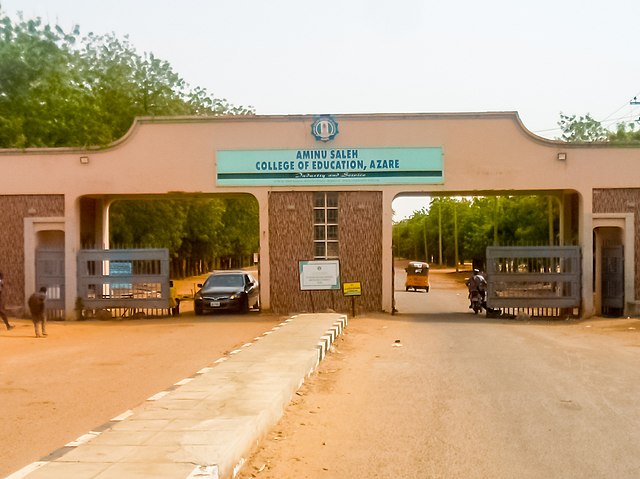
Provide qualitative education to wards – College don charges parents

By Abdulbasid Aliyu Adam

Parents have been reminded of the need to play their parental role in providing qualitative education to their wards to curtail social vices.

Dr Abdullahi Jaji of Aminu Saleh College of Education Azare remarked while presenting a paper themed, the challenges of post-primary Education in Northern Nigeria: the Role of Stakeholders at the closing ceremony of the three-day annual quiz, debate and essay competition organised by MSSN Bauchi State Area Unit.

Dr Jaji, who spoke at length on the challenges of post-primary Education in Northern Nigeria, attributed the menace to the misplacement of priority by the parents. Hence the need for parents to shoulder all the responsibilities of their children’s education described knowledge as the bedrock of every development.

Earlier in his welcome address, the quiz coordinator of MSSN Bauchi state, Dr Muhammad Adamu Hamid, said the program was designed to improve the readiness of Muslim students in Bauchi State to face the Senior Secondary school Certificate Examination to meet world tertiary institution entry requirements in an examination malpractice free environment.

Dr Hamid, a lecturer with the Department of Mass Communication, Pen Resource University Gombe, charged the participants to double their efforts in seeking religious and Western education.

Speaking at the occasion, Amir of the MSSN Bauchi State Area Unit, Dr Rabi’u Barau Mball, applauded the efforts of the host communities for their job well done and urged the relevant authorities to continuously support the activities of MSSN at all levels for the speedy development of education and the state at large.

Dr Barau Mball, a lecturer with the Department of Sociology, Bauchi State University Gadau, used the medium and informed the public that the leadership of the society would host the 2023 National Islamic Vocation Course (IVC) hence the need for government support and all the sister agencies.

In their separate remarks at the occasion, Hon. Ahmed Mai Kudi Yaya, a member representing the Misau constituency in the State Assembly and Hajiya Bahijja Auwal Babaji, deputy chairman of Giade Local Government as well as the District Head of Giade represented by the Galadiman Giade, commended the state leadership of MSSN for organising the August, events and prayed for its sustenance.

The program, which draws participants from SS one and two of all secondary schools across the twenty local governments of the state, held at the Government Science Secondary school Giade, declared Katagum local government as the overall best, followed by Bauchi and Toro as Second and third, respectively.

We’ve not postponed date of commencing exams—NECO

By Muhammad Sabiu

Contrary to rumours claiming that the exam had been postponed to a later date, the National Examination Council has declared that the 2022 Senior School Certificate Examination would begin on Monday, June 27, 2022, for school-based applicants.

Azeez Sani, the council’s head of information and public relations, revealed this information in a statement to journalists in Minna on Saturday.

Sani urged interested parties to reject rumours that the examination would be delayed.

“State Ministries of Education, Principals, Commandants and all stakeholders are enjoined to disregard any speculation on the alleged postponement of the examination,” Sani said, adding that “the Council has put all necessary measures in place to ensure a seamless conduct of the 2022 Senior School Certificate Examination.”

NECO releases 2021 SSCE results

By Muhammad Sabiu

The results of the 2021 Senior Secondary Certificate Examination conducted in May by the National Examination Council (NECO) has been released on Friday.

Professor Ibrahim Wushishi, NECO Registrar, made the disclosure to journalists in Minna, where the examination body’s headquarters is based.

The Registrar first apologised for the delay in releasing the results, adding that 878,925 candidates got five credits and above, including Mathematics and English language, representing 71.61 per cent of the candidates.

According to a report by Channels TV, Mr Wushishi further stated that 23,003 candidates were enmeshed in “examination malpractices indicating a decrease of more than 13,000 compared to last year.”

Also, exam malpractice has negatively affected two centres in Katsina and three others, each in Kastina, Bayelsa and Bauchi, which led to the “de-recognition” of the centres.

Dear NECO registrar, removing English as admission criterion can be costly

By Ishaka Mohammed

Dear Professor Ibrahim Dantani Wushishi, we are aware that you have reached the pinnacle of your career as a Nigerian academic. That means you must have directly interacted with an overwhelming number of Nigerian students. We also know that you specialise in education. Therefore, you should know better than many of us the pros and cons of educational policies.

As the current registrar of the National Examinations Council (NECO), you think that the Federal Government of Nigeria should consider removing credit passes in English language and mathematics as criteria for admission to Nigeria’s higher institutions. This is further proof that you know Nigerian students and how difficult it is to pass these subjects in their Senior School Certificate Examinations (SSCE).

Similar to your suggestion, the current registrar of the Joint Admission and Matriculation Board (JAMB), Professor Is-haq Oloyede, once advocated that a credit grade be removed as an admission criterion for the arts and humanities in polytechnics and colleges of education. I subscribe to his submission.

However, considering the status of the English language in the 21st century and the fact that it’s our official language, I think it’s costly to abolish a credit grade in the subject (English language) as a criterion for admission into our tertiary institutions.

It’s glaring that despite the presence of this criterion which forces many of us to learn the language, we’re far from attaining true proficiency.

Prof., if you seek a paragon of “nobody is perfect”, just pay attention to how we (Nigerians) use the English language, starting from this write-up. Even the highly educated are prone to uttering or writing wrong English expressions. Concerning this claim, many people argue that no one is above mistakes, but I say that mistakes aren’t the same as errors. When one’s use of a wrong expression results from one’s unawareness of the correct pattern, that’s an error.

Sir, I think a few examples will suffice. Many Nigerian graduates wish to further their studies abroad, specifically in the United States and the United Kingdom, but their proficiency level hinders them in the English language. Each of the two main internationally recognised English language proficiency tests is difficult for most Nigerians to pass. Those who have sat for the tests or accessed their past questions can attest to my claim. Even an excellent Nigerian graduate needs intensive coaching to pass the Test Of English as a Foreign Language (TOEFL) or the International English Language Testing Systems (IELTS).

Prof., if making English errors were a criminal offence, we would be in jail. But, of course, that’s if judges aren’t guilty as well.

Sir, it’s a known fact that exposure to news media content boosts one’s language proficiency. Although the reverse isn’t totally the case in our country, consumers of Nigerian media content had better be wary of heavily relying on their (the media’s) expressions. Other authorities, including dictionaries, should be consulted as frequently as possible.

Let me buttress the above point. Since 1961, the Nigerian Guild of Editors has been a network of experienced journalists who have attained editors’ positions in their respective organisations. Ordinarily, one would assume that every member of the network possesses an unquestionable mastery of the English language. But, no, this isn’t the case. Some of the past presidents of the guild have repeatedly published wrong English expressions not as mistakes but as errors. One of such expressions is “Buhari felicitates with”. I’m sure the president has media aides, two of whom have presided over the affairs of the Nigerian Guild of Editors in the past.

In a similar vein, many of the federal ministry of education documents aren’t free of English errors, neither are those from our schools.

The above instances speak volumes about our deficiency in our lingua franca. Being aware of this situation, isn’t it advisable that we adopt measures to encourage us to learn the English language? Will it then be wise to abolish existing measures? 

I believe in the saying that where there’s a will, there’s a way. Our determination to secure admission to tertiary institutions makes us learn English more than we would ordinarily do. The more we practise, the better we’re highly likely to become. Frequency and expertise have a significant relationship.

Therefore, Prof., let’s maintain a credit grade in English as a criterion for admission to our higher institutions.

Ishaka Mohammed writes from Kaduna. He can be reached via ishakamohammed39@gmail.com.