Spain

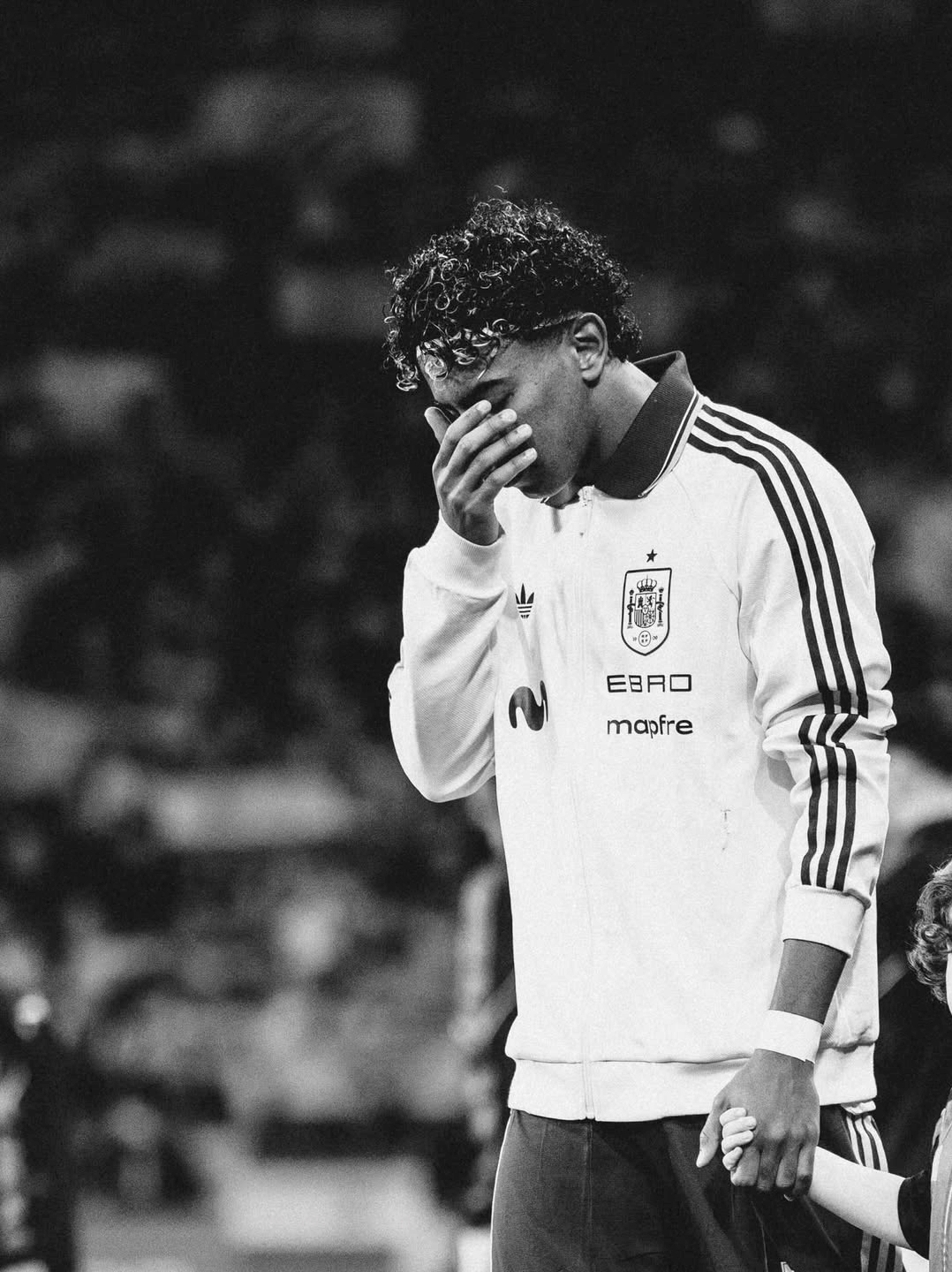
Xabi Alonso leaves Real Madrid after Super Cup defeat

By Muhammad Abubakar

Xabi Alonso has left his role as head coach of Real Madrid by mutual agreement, the club confirmed on Tuesday, following a defeat to Barcelona in the Spanish Super Cup final.

The decision came shortly after Madrid’s loss in the high-profile clash, a result that intensified pressure on the former midfielder, who had taken charge amid high expectations.

Sources close to the club said both parties agreed that a change was necessary as Madrid look to reset their season.

Real Madrid thanked Alonso for his commitment and professionalism during his tenure, while Alonso expressed gratitude to the club and supporters, wishing the team success in the future.

The club is expected to announce an interim coach in the coming days as it considers long-term options for the role.

Eric Cantona calls for UEFA and FIFA to ban Israel as Spain proposes a World Cup boycott

By Muhammad Abubakar

Former Manchester United legend Eric Cantona has called on football’s governing bodies, UEFA and FIFA, to impose an immediate ban on Israel over its ongoing military actions in Gaza. Cantona, known for his outspoken views, said football cannot remain silent while civilians continue to suffer.

His statement comes amid growing international pressure on Israel, with Spain reportedly considering a boycott of the upcoming World Cup should the situation persist. 

Spanish officials have hinted that participation in global tournaments could be reconsidered if FIFA does not take more decisive action.

The calls echo previous instances where sporting sanctions were used as leverage against states accused of human rights violations, most notably the bans imposed on apartheid-era South Africa and, more recently, Russia following its invasion of Ukraine.

Neither UEFA nor FIFA has officially responded to Cantona’s demand or Spain’s potential boycott threat, but the developments add further weight to the debate over the role of football in addressing global conflicts.

Spain urges sanctions against Israel amid Gaza humanitarian crisis

By Muhammad Abubakar

Spain has called for international sanctions against Israel following its ongoing military campaign in Gaza, which has led to heavy civilian casualties and a worsening humanitarian situation.

At a high-level summit in Madrid, Spanish Foreign Minister José Manuel Albares proposed suspending the EU’s cooperation agreement with Israel, imposing an arms embargo, and targeting top Israeli officials with sanctions. 

Mr Albares also called on world powers to recognise the State of Palestine as a step toward peace.

Spain has joined South Africa’s case at the International Court of Justice, accusing Israel of genocide, further escalating diplomatic pressure. 

Meanwhile, public protests across major Spanish cities have amplified demands for an end to arms sales and more decisive action against Israel.

Mbappé demands €55m from PSG over unpaid wages

By Muhammad Abubakar

French football star Kylian Mbappé has taken legal steps to recover €55 million ($62 million) he claims is owed to him by his former club, Paris Saint-Germain (PSG).

According to sources close to the striker, the sum represents unpaid wages between April and June 2024, following his agreement to join Spanish giants Real Madrid on a free transfer.

Mbappé’s lawyers have reportedly been instructed to pursue the matter, insisting that PSG withheld the payments in response to his decision to leave the club after seven years.

Paris Saint-Germain, however, has denied the allegations, maintaining that all financial obligations were met in accordance with the player’s contract.

The dispute adds a new chapter to the already dramatic departure of one of football’s most marketable talents from the Parc des Princes.

Lamine Yamal becomes first Spain player to fast during Ramadan

By Muhammad Sulaiman

Spanish football prodigy Lamine Yamal is set to make history as the first player in the Spain national team to observe fasting during Ramadan while on international duty.

According to reports, the 16-year-old winger has chosen to fast as a mark of respect for his family’s Muslim traditions.

Despite his young age, Yamal has already made headlines as one of the most promising talents in European football, and his commitment to both his faith and his career has drawn admiration from fans.

The Barcelona star’s decision highlights the growing diversity within Spanish football, as well as the increasing visibility of Muslim athletes who balance professional sports with religious observances.

Spain’s coaching staff is expected to accommodate Yamal’s needs during the fasting period, as has been the case with Muslim players in other top European teams.

Ramadan, the holiest month in Islam, involves fasting from dawn to sunset, posing a unique challenge for athletes. However, many Muslim footballers have successfully managed their performance during the holy month.

Yamal’s choice to fast reflects not only his personal devotion but also the broader cultural representation within Spain’s national squad.

Spanish authorities order probe of FA president for kissing female footballer

By Muhammadu Sabiu 

The Spanish government called on the nation’s football organisation to take immediate and transparent action against president Luis Rubiales after he kissed a Women’s World Cup player on the lips. 

After Spain defeated England in the championship match in Sydney on Sunday, the head of the Spanish football federation kissed Jenni Hermoso, drawing harsh criticism. 

In response to growing calls for action against Rubiales, the RFEF convened an emergency meeting for Friday and launched an internal inquiry on Tuesday. 

Speaking to radio station Cadena Ser, Francos said, “I imagine that what the responsible people will do is talk to the two parties involved and issue a report. 

“I have personally told the federation this report has to be transparent and urgent, because, if it is not, obviously we are obliged to take the corresponding additional measures.” 

Despite tendering an apology, Prime Minister Pedro Sanchez of Spain said Tuesday that Rubiales’ apology for the kiss was insufficient.

Of football, racism and hypocrisy

By Aliyu Yakubu Yusuf 

Racism in football has been a problem that refuses to go away. Football is often rightly described as the beautiful game. However, the persistent problem of racism has been a blight on this enduring beauty. Despite the fact that numerous campaigns (such as “Say No To Racism” and “Black Lives Matter” etc.) sponsored by FIFA and other regional football associations, racism has seemingly been kryptonite for the footballing establishments. 

I firmly believe that FIFA, UEFA, the media and most fans in Europe and America are not sincere about fighting racism. All these campaigns against racism are merely lip service that will never bring an end to this menace. Vinicius Junior is just the latest case that opens a fresh can of worms in a long list of racism storms that rocked the football world. 

When the trio of Saka, Sancho and Rashford missed crucial penalties in England’s Euro 2020 final defeat to Italy, they were racially abused online by their own fans. Even Real Madrid fans are also guilty of racism towards black players from other clubs and their players. When FIFA released the votes for the last Ballon d’Or, and it appeared that Real Madrid’s Austria captain, David Alaba, had voted for Lionel Messi as his first pick ahead of his teammate Karim Benzema, Real Madrid fans racially abused him online. And he was forced to apologise. And these are the same people that are up in arms “protecting” Vinicius. If this is not hypocrisy, I don’t know what is. 

Heck! Even fans at various French clubs were reported to have racially abused black players. And this is a country whose national team is simply an amalgam of players from their former African colonies. Imagine! 

Racism is here to stay as long as the powers that be are not serious about tackling it. FIFA has a three-step process for dealing with racism during matches. First, the referee should stop the game and announces that racist chants are going on and should stop. Then, if the chants continue, the referee should apply the second stage, which is to instruct the players to go back to the dressing room and wait. After a while, the referee should ask the players to resume on the pitch and restart the game. Finally, if the chants continue, the referee should apply the third process, which is to stop the game entirely and award the three points to the opponents. 

However, instead of making it mandatory for all regional football unions to adopt this process, FIFA only “recommend” it. Everyone knows that the only way to stop racism once and for all is to enforce this law. When clubs realise that some unscrupulous elements within their fanbase are making them lose points unnecessarily, they will fish out these “fans” and give them lifetime bans from stadiums. 

The question is, ‘Do black lives really matter’?

Aliyu Yakubu Yusuf wrote from Bayero University, Kano. He can be reached via aliyuyy@gmail.com.

We’ll not condone racial attack against our player—Real Madrid

By Muhammadu Sabiu

Real Madrid have condemned the “racist and xenophobic” attack on their Brazilian player Vinicius Jr. 

Real Madrid said, in a statement released via its website on Friday, that the club has instructed its legal staff to pursue legal action against anyone using racist remarks toward its players before this weekend’s LaLiga clash against Atletico Madrid.

“Real Madrid CF rejects all kinds of racist and xenophobic expressions and behaviours in the field of football, sport, and life in general, such as the regrettable and unfortunate comments made in recent hours against our player Vinicius Junior.

“Real Madrid wants to show all its love and support for Vinicius Junior, a player who understands football as an attitude towards life-based on joy, respect and sportsmanship.

“Football, which is the most global sport that exists, must be an example of values and coexistence.

“The club has instructed its legal services to take legal action against anyone who uses racist expressions towards our players,” Real Madrid said in the statement

Remember that for his dancing celebration, Vinicius was the target of a racial comment made by Pedro Bravo.

The Brazilian international is well-known for dancing at the corner flag in front of fans, whether they are in the home or away end of the stadium, to celebrate the majority of his goals.

Pedro Bravo, the head of Spanish football agents, did make a statement on Vinicius’ celebration while appearing on El Chiringuito.

Bravo said, “You have to respect your opponents. When you score a goal, if you want to dance Samba, you should go to sambodromo in Brazil. You have to respect your mates and stop playing the monkey.”

Lionel Andrés Messi: the end of an era

By Abdulrazak Iliyasu Sansani

As the most followed game in the world, football has moments that its fans don’t envision. Sometimes they do but keenly wish it never comes to pass. For Football Club Barcelona fanatics, that day came three days ago. 

For quite some years, Messi has been embroiled in a crisis with the Bartomeu led board. So naturally, this has affected the Argentine, who has come to identify and be identified with everything Barcelona. For someone who came as a child with growth deficiency, signed on a napkin, only to defy all odds, and cement his status as one of the greatest players of all time, arguably, the greatest player of all time. 

I first got to watch Messi play in FIFA under 20 World Cup, Netherland 2005, where he went on to score two penalties in the final and win the Cup against my dear country, Nigeria. From there, I knew a generational talent had emerged. Still, little did I know that that young man from Rosario would go on to win all competitions he has contested, except the FIFA World Cup, which he could still win in a trophy-laden career that has made only the great Brazilian utility player, Dani Alves to have won more titles in the history of the round leather game. 

There is every reason not to doubt this phenomenal player. If I ever had any doubts about the magical Messi, all were quelled when on March 10th 2007, aged just 19-years-old, the youngster was the star of the show in El Clasico, outshining his illustrious teammates Samuel Eto’o and Ronaldinho, to win a vital point for his team by scoring a hat-trick in club football most prominent feature, against the greatest football club in history, Real Madrid. On that day, for me, Messi proved beyond any iota of doubt that he would be one of the greats. 

With everything going on well from that point: with all his abundant talent, the right atmosphere, and everything in place. Still, Lionel Messi’s transformation from football prodigy to become one of the few players that deserve a place in the debate of the greatest players of all time, with so many claiming he is the outright GOAT, is impressive. Irrespective of your opinion in this debate: there are so many facts that concur with such views. 

Rarely has the world seen a better all-round football player who could function as a midfielder as well as a striker flawlessly. A player who often competes with the most clinical strikers for golden boots while struggling it out with the best midfield maestros for the most assists in so many seasons. Lionel Messi is out of this world. 

While you might not support him, you cannot deny the fact that what Messi does on the pitch, season in season out, for more than a decade, at the highest level, is the dream of every young footballer from my remote village of Sansani, to Jalingo, Bali, Arochukwu,  Ogbomosho, Freetown, Lome, London, Paris, New Jersey, and to all the nooks and crannies of the world. 

The home training I got abhor hatred. It absolutely doesn’t permit it. This has influenced all my activities. This is why some would be astonished to know that I am a Real Madrid football fan and writing all this for the greatest player of our biggest rivals, FC Barcelona. But I cannot hate greatness. If any player has made the difference for Barcelona in El Clasico, it is Leo. This had often been the difference between success and failure for Barcelona and Real Madrid too. 

To some, it should be a significant factor in making me antagonistic towards anything Messi. But I don’t think so. Of course, I cannot hate the defence-splitting passes, the vision, the offensive nous of bringing something out of nothing, the breathtaking dribbling, which once produced a physics-defying goal. No, I don’t do my things this way. 

I cherish greatness; I bow before the best in awe; I celebrate the mercurial Messi knowing this genius has entertained the football world to stupor. Wherever he goes, I wish him the very best. All things being equal, whichever club he goes will naturally have the edge to achieve their lofty ambitions. 

For those who will always view Messi’s greatness through warped lenses, I say to them don’t waste your precious time, the six-time Ballon d’Or winner has nothing to prove in this beautiful game that he has already broken almost every record breakable and set new ones, which for want of space I won’t list them here. However, they are well known by football supporters worldwide. 

Yes, he can’t break all the records; none can. But, of course, you are allowed to continue to raise the bar for him, and this football living legend will have a little problem proving you wrong while effortlessly doing what he loves best, playing football and winning trophies. 

Abdulrazak Iliyasu Sansani, a Real Madrid fan, wrote from Jalingo, Taraba State. He can be reached via abdulrazaksansani93@gmail.com.

Tokyo 2020 Olympics: 5 lessons from the Men’s Football Tournament

By Aliyu Yakubu Yusuf


The curtains have fallen following yet another gripping edition of Olympic football games. Brazil has successfully defended the crown they won at home four years previously. The vanquished Spanish team fought back valiantly in the second half after going behind in the first. But with the game teetering towards a dreaded penalty shootout, Brazil’s substitute, Malcolm, delivered the decisive knockout blow that put paid to Spain’s quest for the gold medal. Here are the five things I learned from the tournament:

  • Brazil are worthy winners

Ever since the first ball was kicked about two weeks or so ago, it was apparent that barring any surprises that are characteristics of football games, the team that’s going all the way is either Brazil or anyone that overcomes them. Unlike most of the other big guns, Brazil takes this tournament seriously. After a disappointing ending at the Copa America, Brazil was keen to win this tournament to restore some sort of pride as the undisputed biggest footballing superpower. Brazil was, at times, irresistible in the group stages. Their triumphs over Germany and Saudi Arabia, which were sandwiched by a scoreless draw with plucky Ivory Coast, saw them play some scintillating football, with Everton striker Richarlison scoring five goals. Although the goals somewhat dried up in the knockout stages, the Selecao were never really troubled by any of their opponents en route to clinching the trophy.

  • The evergreen Daniel Alves still has it

It would be a crying shame to talk about Brazil without talking about the mercurial Dani Alves. Alves is the best right-back I have ever seen. And that’s a massive compliment because even Brazil alone had had the likes of Cafu and Maicon. The sight of Alves terrorising hapless opponents alongside Lionel Messi at Barcelona was a joy to behold for most football aficionados. So I wasn’t surprised at all when Brazil named him as one of their three overaged players. After all, this is a man who can do whatever it takes—fair or not—to win. Little wonder he’s the most decorated footballer in the whole history of football. This trophy is just another feather to his impressive cap. Even at the ripe age of 38, Alves is still one of the best players in his position. Brazil’s captain fantastic still has it.

  • Traditional heavyweights failed at the first hurdle

While Brazil sailed through the tournament, other traditional big countries badly underperformed. Argentina, Germany and France all failed to get past the group stages. For Argentina, it was just business as usual. For a country that won this very tournament consecutively at both 2004 and 2008 editions, it was a colossal failure not to have qualified for the knockouts for the second Olympics tournament running. The fact that they couldn’t qualify from a pool that contains Spain, Egypt and Australia tells you all you need to know about how bad this team had been. Like Argentina, France and Germany also failed to give a good account of themselves. Ever since a diabolical first half that saw them went 3-0 down in the first game against Brazil—and eventually lost the game 4-0—Germany never recovered. Although they defeated Saudi Arabia 3-2 in the next match, they huffed and puffed in their final group game but failed to see off the sturdy Ivory Coast. And that was their tournament done. As for France, the little said about them, the better.

  • The host country has so much to cheer about

Japan performed quite admirably in this tournament. Despite being drawn in a scary-looking group including France, Mexico, and South Africa, Japan qualified with maximum points. They scraped past New Zealand via penalty shootout in the quarter-finals before succumbing to Spain and Marco Asensio in the second half of the extra time in the semis. Although they went out in a cruel fashion, Japan can take courage from their outstanding performance. Despite being the host country, no one expected them to be the fourth-best team before the kick-off. However, in Takefuso Kubo, who is already at Real Madrid, Japan has a gem for whom they can dare to dream.

  • African countries flatter to deceive… again

For African countries, it was a case of one step forward, two steps backwards. Apart from South Africa that conspired to lose all their group games, Africa’s other two representatives began the tournament on positive notes. Egypt’s defeat is somewhat understandable as they went out to the eventual winners Brazil by the narrowest of margins. That’s after qualifying from a pool featuring both Spain and Argentina. The ouster of Ivory Coast, however, is pretty much frustrating for any fan of African football. After qualifying from the group that contains both Brazil and Germany, they were within a hair’s breadth of knocking out Spain before they inexplicably bottled it. They scored what looked like a winning goal in the 91st minute of the quarter-finals only to manage somehow to give up an equaliser in the 93rd minute before shipping three further goals in the extra time. That was some way of going out of a tournament. For Africa, Nigeria’s 1996 and Cameroon’s 2000 victories are but fading memories.

Aliyu Yakubu Yusuf is a lecturer at the Department of English and Literary Studies, Bayero University, Kano. He can be reached via aliyuyy@gmail.com.