Southern Nigeria

Naira notes live double lives in different parts of Nigeria

By Jibril Mutalib

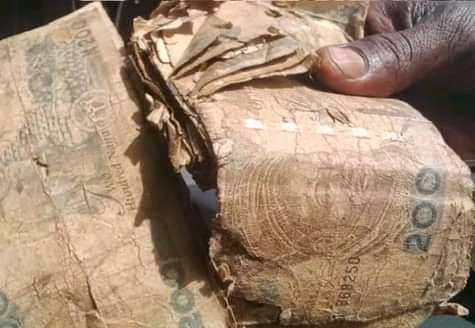
The naira notes live a life as colourful as the country itself. This isn’t just any currency—it wears its experiences on its sleeve, or rather, on its creases, tears, and patches. The naira isn’t just a medium of exchange; it’s a survivor with a story that shifts depending on where it finds itself in this country.

In the northern part of the country, the naira is a seasoned warrior. It has seen the depths of pockets unwashed for years and battled with rain and sun, leaving it bruised and wrinkled. Yet, the good people of the North, perhaps because of their warm hospitality, never turn their backs on the naira, no matter how worn out it appears in most cases. 

A naira note in Sokoto could look like it just took a swim in the gutter, got into a wrestling match with a goat, and lost a few limbs. But fear not! The traders in the North would still embrace it with open arms. Ah, my friend,” a northern trader might say, “kudi kudi ne”, whether it looks like a prince or a pauper. 

As long as it can buy me a cup of fura or a plate of Denkeli, it’s good enough!” If your money is rejected, then it must be very bad. Perhaps it might have undergone an abnormal surgery where you have Obafemi Awolowo appear on a #50 naira note. Lol.

But when travelling to other regions, the naira’s fortunes change quicker than you can imagine. In places like Kwara, the naira is subjected to intense scrutiny—borderline interrogation. The traders will examine it like a detective at a crime scene, looking for any sign of distress. A small tear? Rejected. A hint of dirt? Not in my shop! And don’t even think about presenting a naira note with a sellotape surgery—it might as well be a counterfeit. Lol.

So, the naira itself is living a double life in different regions of the country. In the North, it is a rugged hero, loved despite its flaws. In the South, it is an outcast, shunned for the slightest imperfection. I wonder why naira notes are treated so differently based on location. 

And so, if you ever find yourself possessing a naira note that has seen better days, do not despair. Simply tuck it away safely and wait until you return to the northern lands. There, you’ll find a warm welcome for your weary traveller. And remember, it’s not just about having money; it’s about having the right money in the right place.

In any region you find yourself, blend with how they treat the currency. When you’re in Sokoto, bring whatever naira you’ve got—no questions asked. I’m not saying they accept money in Sokoto; they do but on rare occasions. If your money is denied, it’s already very bad beyond repairs.

DSS foils child trafficking syndicate, arrests two suspects in Kano

By Uzair Adam Imam 

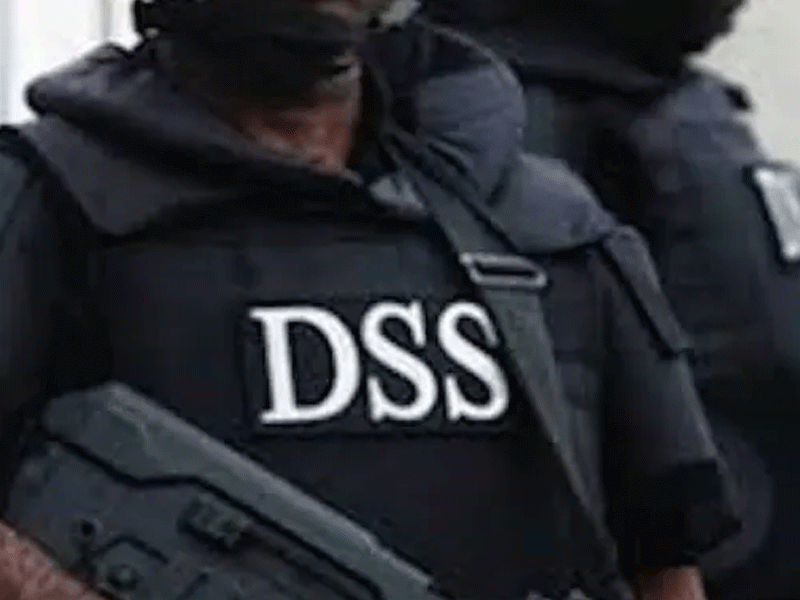
The Department of State Services (DSS) has disrupted a child trafficking syndicate, apprehended a 17-year-old young woman and her sponsor, and rescued a 4-year-old girl named Aisha, who was abducted from Nguru in Yobe State. 

The Kano office of the DSS said the Kano State Hisbah officials handed over the abducted 4-year-old girl, Aisha, to them after they suspected that there was no connection between the abducted baby and her.

The DSS noted that after receiving the abducted 4-year-old Aisha and her abductor, they traced the man behind the child trafficking from neighbouring states and subsequently sold in the Southern part of the country.

The DSS said after interrogation of the 17-year-old lady, she confirmed to them that the man whom she knows, selling groundnuts close to her home, introduced her to the abduction of the 4-year-old Aisha and promised her that nothing would happen to her.

The ringleader of the children’s abductors confirmed that the kidnapping of the 4-year-old Aisha was the third nefarious act he had perpetrated from Nguru.

“Luck ran out of me after I used this lady to get Aisha for me and brought her to Kano, where I normally collect the abducted children and pay off the abductors while I move on with my partners”, he confessed.

Northern Nollywood, Southern distorted mirrors: Nollywood and the rest of us

By Prof. Abdalla Uba Adamu

Recently, an extremely prestigious academic journal requested that I review a film made by a Nigerian. I was surprised, as that is Muhsin Ibrahim’s forte. Further, I really don’t watch Nigerian films, aka Nollywood, personally preferring African Francophone directors. Nevertheless, I agreed to do the review. 

However, the link they sent for the film was password-protected. I informed them, and they requested the filmmaker to send the password. Being a request from a highly prestigious journal, he sent the code, and I was able to get on the site and watch the film online. I was surprised at what I saw and decided to delve further into these issues. Before doing that, I wrote my review and sent it off. The film, however, set me thinking. 

Like a creeping malaise, Nollywood directors are rearing their cameras into the northern Nigerian cultural spaces. Again. The film I reviewed for the journal was “A Delivery Boy” (dir. Adekunle Adejuyigbe, 2018). It was in the Hausa language. None of the actors, however, was Hausa, although the lead actor seems to be a northerner (at least from his name since an online search failed to reveal any personal details about him). 

Nothing wrong with that. Some of the best films about a particular culture were made by those outside the culture. Being ‘outliers’, it often gave them an opportunity to provide a more or less balanced and objective ‘outsider’s perspective’ of the culture. Alfonso Cuarón, a Mexican, successfully directed “Harry Potter and the Prisoner of Azkaban” (2004), while Taiwanese director Ang Lee did the same with “ Brokeback Mountain” (2005), even earning him an Oscar. 

In 2006 Clint Eastwood, an American, directed “Letters From Iwo Jima.” The cast was almost entirely Japanese, and almost all of the dialogue was in Japanese. It was very well-received in Japan, and in fact, some critics in Japan wondered why a non-Japanese director was able to make one of the best war movies about World War II from the Japanese perspective. Abbas Kiarostami, an Iranian filmmaker, directed his film, “Certified Copy” (2020) in Italy, which contained French, Italian, and English dialogue starring French and British actors. 

British director Richard Attenborough successfully directed Ben Kingsley in the Indian biopic Gandhi (1982). The film was praised for providing a historically accurate portrayal of the life of Gandhi, the Indian independence movement and the deleterious results of British colonization of India. It took away eight Oscars. American director Steven Spielberg’s “Schindler’s List” (1993) on a German, Oskar Schindler, was equally a powerful portrayal of an auteur genius by a “non-native”. The film won seven Oscars. 

In each of these examples, the directors approached their subject matter with a clean, fresh and open mind that acknowledges the cultural sensitivities of the subject matter. My point is that a person, outside of a particular cultural context, can make sensitive films that portray the culture to his own culture as well as other cultures. That is not, however, how Nollywood plays when it focuses its cameras on northern Nigerian social culture. Specifically Muslims. 

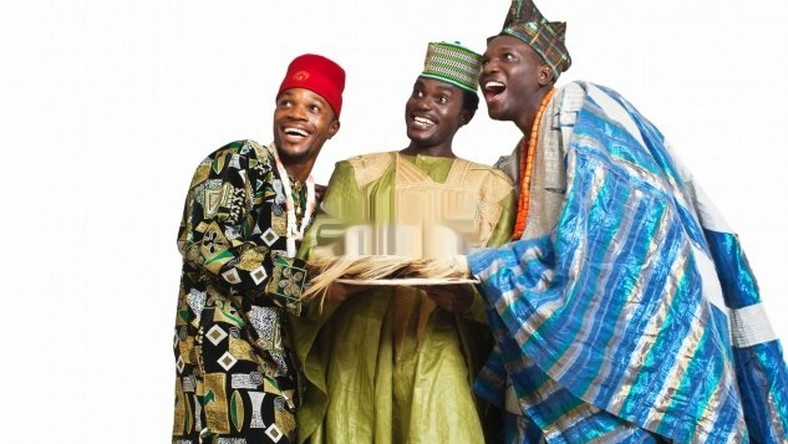
I just can’t understand why they are so fixated on Muslims and the North. If the purpose of the ‘crossover’ films (as they are labelled) they make is to create an understanding of the North for their predominantly Southern audiences, they need not bother. Social media alone is awash with all the information one needs about Nigeria—the good, the bad and the ugly. You don’t need a big-budget film for that. Or actors trying and failing to convey ‘Aboki’ accents in stilted dialogues that lack grammatical context. 

Yet, they insist on producing films about Muslim northern Nigeria from a jaundiced, bigoted perspective, often couched with pseudo-intellectual veneer. To sweeten the bad taste of such distasteful films, they pick up one or two northern actors (who genuinely speak the Hausa language, even if not mainstream ethnic Hausa) and add them to the mix, believing that this will buy them salvation. For southern Nigerians, anyone above the River Niger is ‘Hausa’. 

They started in the early 2000s, and people just ignored them. The directors then included Oskar Baker (Ɗan Adamu Butulu, Abdulmalik), Yemi Laniyan (Makiyi, Uwar Gida), Tunji Agesin (Halin Kishiya), Matt Dadzie (Zuwaira), I. Nwankwo (Macijiya) and many others. These came on the heels of the massive success of “Sangaya” (dir. Aminu Muhammad Sabo, 1999) when this particular film opened up the northern Nigerian film market. 

Those Nollywood producers jumped into cash on the popularity of Hausa films and made their own for northern markets. For the most part, these early ‘crossover’ films that I refer to as ‘Northern Nollywood’ were fairly mild and evoked no reaction. They were still rejected, as the Hausa can be the most discriminatory people you can come across. If you are outside their cultural universe, you remain there. Forever. 

The few Kannywood actors eager to be seen on the ‘national stage’ allowed themselves to be used to deconstruct Islam and Muslims on the altar of filmmaking in subsequent Northern Nollywood films. Let’s not even talk about character misrepresentation, which Muhsin Ibrahim has written extensively about. In these scenarios, the usual tropes for northerners in Nollywood films is that of ‘Aboki’ (a term southern Nigerians believe is an insult to northerners, without knowing what it means), ‘maigad’ (security), generally a beggar. If they value an actor, they assign them an instantly forgettable role rather than a lead. Granted, this might be more astute and realistic marketing than ethnicity because it would be risky to give an unknown Hausa actor a significant role in a film aimed at southern Nigerians. 

A few of these types of portrayals in Nollywood included Hausa-speaking actors in films such as The Senator, The Stubborn Grasshopper, The World is Mine, Osama Bin La, Across the Border and The Police Officer. 

When Shari’a was relaunched from 1999 in many northern Nigerian States, it became an instant filmic focus for Nollywood. A film, “Holy Law: Shari’a” (dir. Ejike Asiegbu, 2001) drew such a barrage of criticism among Hausa Muslims due to its portrayal of Shari’a laws then being implemented in northern Nigeria that it caused credibility problems for the few Hausa actors that appeared in it. With neither understanding of Islam nor its context, the director ploughed on in his own distorted interpretation of the Shari’a as only a punitive justice system of chopping hands, floggings, and killings through foul-mouthed dialogue. As Nasiru Wada Khalil noted in his brilliant essay on the film (“Perception and Reaction: The Representation of the Shari’a in Nollywood and Kanywood Films”, SSRN, 2016) “the whole story of Holy Law is in itself flogged, amputated and killed right from the storyline.”

“Osama bin La” (dir. MacCollins Chidebe, 2001) was supposed to be a comedy. No one found it funny in Kano. Despite not featuring any northern actor, it was banned in Kano due to its portrayal of Osama bn Ladan, then considered a folk hero. The film was banned to avoid a reaction against Igbo merchants marketing the film. I was actually present in the congregation at a Friday sermon at Kundila Friday mosque in Kano when a ‘fatwa’ was issued on the film. Even a similar comedy, “Ibro Usama” (dir. Auwalu Dare, 2002), a chamama genre Hausa film, was banned in Kano, showing sensitivity to the subject matter. 

The reactions against crossover films seemed to have discouraged Nollywood producers from forging ahead. They returned in the 2010s. By then, northern Nigeria had entered a new phase of social disruption, and Nollywood took every opportunity to film its understanding of the issues—sometimes couched in simpering distorted narrative masquerading as social commentary—on society and culture it has absolutely no understanding of. 

In “Dry” (dir. Stephanie Linus, 2014), the director developed a sudden concern about ‘child marriage’ and its consequences. Naturally, the culprits of such marriage, as depicted in the film, are sixty-year-old men who marry girls young enough to be their granddaughters. The director’s qualification to talk about the issue (which was already being framed by child marriage controversy in the north) was that she has ‘visited the north’ a couple of times. With the film, if she could get at least “one girl free and open the minds of the people, and also instruct different bodies and individuals to take action, then the movie would have served its purpose.” The ‘north’ was living in darkness, and it required Stephanie Linus to shed light on ‘civilization’. 

 “A Delivery Boy” (dir. Adekunle Adejuyigbe, 2018) that I reviewed was about an ‘almajiri’ in an Islamic school who was kidnapped from the school, to begin with and repeatedly raped by his ‘Alamaramma’ (teacher). The almajiri somehow acquired sticks of dynamite to create a suicide vest and vowed to blow himself up—together with the teacher. The Alaramma in the film lives in an opulent mansion, far away from the ‘almajirai’. In this narrative universe, the ‘almajiri’ do not learn anything and are unwilling rape victims of their teaches who actually kidnapped them and forced them into the schools. 

“The Milkmaid” (dir. Desmond Ovbiagele, 2020) evokes the idealistic picture of a Fulani milkmaid and became a basis for a Nollywood film. Instead of focusing on the political economy of the Fulani milk trade, the film focused on the trope of terrorism. “The Black Book” (dir. Editi Effiong, 2023), touted as ‘Nigeria’s John Wick’ shoots a significant portion in ‘the north’ – with ‘Islamist’ hijab-wearing females touting assault rifles hidden underneath their hijab. “Jalil” (dir. Leslie Dapwatda, 2020) visits the recurrent theme of kidnapping for ransom. In the north, of course. 

Then came the latest, “Almajiri” (dir. Toka McBaror, 2022). Claimed to be a true-life story (although it is not clear whether it happened to specific people or based on what the director believed to be a common event), it featured muscle-bound badass types of thugs with guns and dreadlocks as Almajirai. The film reinforces the southern Nigerian trope of any beggar in the north being an Almajiri. Such ‘almajiris’ are kidnapped and sold into virtual slavery and horribly abused. The idea is to blame the parental irresponsibility of northerners. 

For southern Nigerians, especially the Nollywood crowd, an ‘Almajiri’ is a beggar, a product of a failed education system, a terrorist, a bandit, and an ‘aboki’. They use concocted figures bandied about by alphabet soup agencies to proclaim ‘over 10 million almajiri are out of school’ and, therefore, twigs of the terrorism inferno. How can someone who has been part of a system of education for over half a century be considered out of school? But for Nollywood, if it is not ABCD, then it is not education. 

“Northern Nollywood” films are the precise reasons why there will ALWAYS be different film cultures in Nigeria. Kannywood talks to its publics, happily churning out now TV shows that address issues it deems relevant—in its own way. Both the northern and southern parts of the country (covering the three major languages) were actively engaged. However, they were mutually non-legible to each other. This was essential because they operate on virtually opposing cultural mindsets – making the emergence of a truly “Nigerian cultural film” impossible. 

Quite a few writers seem to suggest that Kannywood is a ‘subset of Nollywood’, and indeed, many would prefer for the term Kannywood (created in 1999 by a Hausa writer) to be dispensed with and replaced with Nollywood (created in 2002 by a Japanese Canadian writer). It is to protect our cultural representation in films that I stand as a lone voice in advocating for a ‘Hausa Cinema’ to reflect the cultural universe of the Hausa.

Professor Abdalla Uba Adamu can be reached via auadamu@yahoo.com.

Fairness to business owners

By Ishaka Mohammed

Apart from a business trip to Enugu within 24 hours, I’ve spent all my life in northern Nigeria, but it was in 2014 that I learnt that “Arewa” means “North”. In fact, I had once referred to the word as the name of a bloodsucking occult society, thanks to rumour-mongers.

As children, my peers and I heard about “Ogbenu” (occultists who sucked children’s blood). Although the “bloodsuckers” were believed to be far away from our land, we were constantly warned to avoid them.

We received one of such warnings around 2003 or 2004, when a new brand of notebook was generating massive sales in our village.

The cover of the book had an inscription, “The great people of the great land…the people of Arewa land,” and featured pictures of some men wearing Hausa traditional attire on horses. It was rumoured that the men were Ogbenu, so writing in the book would drain one’s blood, while exhausting all pages would cause death.

Consequently, as some children and I avoided the book, various others destroyed the copies they already had. The brand disappeared from our community.

For the sake of context, I’m from Inye, a village in Ankpa Local Government Area of Kogi State, and I was a pupil at Engineer Bob Alfa Primary School (EBAPS), Ojuwo-Inye, at the time of the incident.

If a single rumour could be that effective by mere word of mouth, imagine how damaging it could be in this age of digital revolution. 

You have the right to review products or services but be fair to brands and companies. Business owners struggle for the survival of their establishments, so it’s wicked to ruin their efforts. A single sentence could make or break an establishment. Business owners are also human beings, so they deserve fairness. 

Nonetheless, whoever wants to be obstinate should either be ready to provide sufficient evidence or ask one Chioma Egodi Jnr. A single Facebook post and some comments about Nagiko Tomato Mix forced Erisco Foods Limited to deal with her. Deleting the post didn’t help matters, as the company involved the law and insisted that she prove her claims about the product.

Some people have argued that the company overreacted, but I think otherwise: she deserved what she got.

Ishaka Mohammed can be reached via ishakamohammed39@gmail.com.

Bridging our differences as Nigerians: A path to unity

By Usman Muhammad Salihu 

In Nigeria, amalgamating diverse cultures, religions, ethnicities, and political ideologies presents opportunities and challenges. To navigate this intricate tapestry effectively, embracing diversity is paramount. Rather than viewing differences as divisive, Nigerians should celebrate the richness they bring to the nation’s identity.

Ultimately, the path to unity in Nigeria lies in embracing diversity while recognizing the common bonds that unite its people. Nigerians can forge a stronger, more resilient nation by celebrating their shared heritage and respecting their differences. Through dialogue, education, inclusivity, and a rejection of extremism, they can build a future where diversity is celebrated as a source of strength.

Open and respectful dialogue is the cornerstone of understanding and reconciliation. By engaging in conversations that promote empathy and mutual respect, Nigerians can bridge divides across religious, ethnic, regional, and political lines. Platforms for formal and informal dialogue offer opportunities for meaningful exchanges that foster unity amidst diversity.

Education is a powerful tool for dispelling stereotypes and fostering appreciation for diversity. By promoting educational initiatives highlighting Nigeria’s multifaceted heritage, individuals can better understand their fellow citizens’ perspectives and experiences. 

Nigerians should advocate for policies and practices that promote equal opportunities and representation across all sectors. By championing inclusivity, they can dismantle barriers and create pathways for collaboration and unity.

Nigerians must collectively reject extremism in all its forms and embrace moderation, tolerance, and compromise. They can build a more cohesive and harmonious society by fostering a culture of inclusivity and understanding.

 Navigating Nigeria’s diverse landscape requires a commitment to dialogue, understanding, and inclusivity. By embracing diversity, fostering dialogue, promoting education, advocating for inclusivity, rejecting extremism, engaging in active citizenship, and cultivating unity in diversity, Nigerians can overcome their differences and build a more cohesive and resilient society.

Usman Muhammad Salihu writes and can be reached via muhammadu5363@gmail.com.

AFCON 2023: Who divides Nigeria?

By Sani Bello Hamza

When Ola Aina, the Super Eagles fullback, missed the penalty during the semi-final of AFCON 2023 against South Africa, someone close to me uttered an abusive word in the Hausa language. He said, “shege Bayarabe.” From the way he voiced it, you could tell it was not intentional. He was unconscious, as we all were, and it came out of his subconscious mind. That is a typical example of what Nigerians are and how we hate one another.

A South-easterner feels isolated and does not want to be associated with the North. A Northerner also feels the South-easterners are “arna” and sees no need to relate or intermingle with them. I once came across someone who is happy and thanking God for the blessing of not visiting a particular region. You will sometimes think hatred is naturally instilled in us.

Malam Nasir El-Rufai was once seen on air lamenting how Nigerians from various parts of the country react to his social media posts. Whenever he posts an update, no matter how small, the Northerners would be there to hail and applaud him. While his counterparts from the South would abuse and curse the former governor. Why is this the case? Is it because he is from the North?

Anyway, what made me happier after the penalty shootout was not only the fact that Nigeria advanced and made it to the final, but how I saw my fellow students, regardless of their gender, age, religion, social class, and political affiliation, celebrate the significant win for our dear country. It was one of the joyous moments of my life.

Not only at ABU, I came across videos of students from other universities and communities celebrating the great win. Others went ahead to celebrate with the family of our unbeatable keeper, Nwabali. They refused to let anyone stop them.

The same thing happened during the final when we all turned up at various locations to support and cheer the Super Eagles. Even though we did not clinch the title, the outcome of the final will be a topic for another day.

Okay, back to the subject matter.

After the jubilations were over, a question popped into my mind. I said to myself, “Who is dividing Nigeria and Nigerians? Who is spreading hatred among Nigerians? Who is fueling and igniting the fire of hatred among us?”

An Igbo man is always looking for an opportunity to curse a Hausa man, and a Hausa man is always scouting for an opportunity to unleash his abusive prowess on Igbos or Yorubas for the slightest reason.

How come do we sit under the same umbrella, supporting and praying for the Super Eagles to win? Who then is creating these divisions in our country?

To answer the question above, I believe that the root of our division in Nigeria lies in rumors and mere speculations. Most of the people fueling the fire of hatred are those who have either not traveled outside their jurisdiction or refuse to open their minds to accommodate people from other regions. They limit their thinking to their regions and consume whatever they find in the media.

The above answer may not be sufficient, but as people living in the same region, if we do not speak the same language or wear the same attire, we share the same history and are meant to be together—this is undeniable. The richness and strength in our diversity are stronger than the weaknesses. So why should we opt for the weaknesses? Come on, fellow compatriots, think!

We must learn from the lessons of the 2023 AFCON: to shun our peculiarities and differences if we must progress as a nation. Our diversity should be a source of pride, not the opposite.

Sani Bello Hamza is a Law student at Ahmadu Bello University Zaria. He writes from Zaria and can be reached via sanibellohamza@gmail.com.

Negligence of technology careers in northern Nigeria

By Salim Sani Haladu

The medical industry held the most lucrative career prospects in the past, and parents encouraged their children to study medical-related courses. During those days, parents were willing to invest any amount to see their children as doctors, nurses, and pharmacists. Some even compelled their children to study these courses. Consequently, these children achieved remarkable success in these fields.

However, the landscape of lucrative careers has shifted in contemporary times. Technology-related careers have emerged as the new leaders in terms of profitability and job opportunities. According to the US Bureau of Labor Statistics, “the projected employment growth for computer and information technology occupations from 2021 to 2031 is 15 per cent, significantly above the average for all occupations”. This shift is becoming evident even to a layperson.

This change has led many parents to guide their children toward technology careers. Nevertheless, there exists an uneven distribution of this awareness within Nigeria. While parents in southern regions have readily embraced this change, their counterparts in the northern areas lag in grasping its significance. As a result, the northern part finds itself taking a backseat in technology careers.

In 2000, the former governor of Jigawa State, Saminu Turaki, established one of the first ICT institutes in Northern Nigeria—the Jigawa State Institute of Information and Technology, located in Kazaure. Strikingly, several students who enrolled in the institute did so solely to acquire a free laptop. They then sold the computer to fund their journey to Lagos, where they eventually engaged in dead-end handwork.

Furthermore, a project manager’s experience at the NITDA Blockchain meeting in Kano State last year highlighted the technological apathy, stating, “It is evident how far behind Northerners are in the world of technology.” Even in technology projects directly related to the Hausa Language, the predominant ethnic group in the northern region, participation was surprisingly minimal. I was astonished that only two of us from the North joined a Hausa transcription project I recently participated in.

Moreover, looking at the UTME cut-off marks for most northern universities reveals that tech-related courses like Information Technology and Cybersecurity have low cut-off marks, reflecting the limited number of applicants. Numerous examples abound, illustrating how Northerners are trailing behind in technology careers. The prevailing aspiration revolves around courses that promise a meagre N150,000 salary job.

A primary reason behind this negligence is that Northerners view technology careers as unconventional, failing to perceive them as real jobs. Mainly, if someone is working from home, it is often seen as a sign of aimlessness or lack of purpose. Unfortunately, some Northerners still hold the negative stereotype that individuals working in the technology industry are merely scammers.

Another reason is many people’s preference for security. Consequently, many opt to stay within their comfort zones rather than take risks to pursue greater opportunities. Most technology careers offer wages instead of salaries, which aligns with the Northern preference for security. It’s disheartening to learn that some people are even selling their farms to secure low-paying jobs, a profoundly unfortunate decision.

I recommended an IT course to a young man inquiring about a lucrative career. He expressed concerns about finding a job immediately after graduation. I suggested he consider creating jobs instead of continuously seeking employment.

With the rapid development of Artificial Intelligence (AI), there’s a legitimate concern that the careers Northerners heavily invest in might eventually become automated. For instance, professions involving routine tasks and predictable outcomes, such as data entry, assembly line work, and customer service, are particularly susceptible to automation. As AI technologies advance, they can handle these repetitive tasks more efficiently and accurately, potentially displacing human workers. It would be disheartening for someone to invest significantly in a career only to discover that their desired job has already been automated.

Prominent figures like the late Sheik Muhammad Auwal Adam Albani and Dr. Isa Aliyu Pantami are examples from the North who have embraced technology and achieved remarkable success. They’ve made indelible marks on the country’s technological landscape through innovative technology use.

Enhancing the curriculum of high schools is essential to address this challenge. While Data Processing and Computer Studies are part of the curriculum, introducing practical skills like coding and web development is crucial. Equipping students with these skills will better prepare them for the digital age and empower them to thrive in today’s tech-driven world.

In conclusion, the negligence of technology careers in Northern Nigeria presents a concerning trend that warrants immediate attention. The shift in lucrative career prospects from traditional fields to technology careers is undeniable, with evidence supporting the exponential growth and opportunities in technology-related jobs. While the southern regions have recognised and embraced this change, the northern regions lag due to a lack of awareness about technology careers, negative stereotypes, and a preference for security over risk-taking. Educational institutions and policymakers must take proactive measures to address this issue. By integrating practical technology skills into the curriculum and promoting a positive perception of technology careers, Northern Nigeria can bridge the gap and empower its youth to thrive in the dynamic world of technology.

Salim Sani Haladu is a Pharmacy student at Bayero University, kano. He can be reached via pharmsaleemskhaleed@gmail.com.

A serious humour: Bello Galadanchi’s comedy skit for social commentary

By Sa’id Sa’ad

Earlier this year – when Bello Galadanci’s videos were becoming popular on digital platforms – a colleague posted a video of his skit on his WhatsApp status. From what might be a simple curiosity, I asked him if he knew who the person was – of course, expecting him to at least know a bit – but he replied that he did not know him beyond his not-so-much-funny recent “comedy skits.”

That was weeks after the publication of my recent essay, A Crack on Hadiza Gabon’s Wall: Humanizing Northern Nigeria Storytelling, where I described what the show meant to storytelling in Northern Nigeria and the impact of what I called “hypocritical denial and intentional lack of acknowledgement” from the northern community. As it has always been, I bumped into a tweet where a young person from “northern” Nigeria condemned the entire comedy skits made by Bello Galadanci. If I weren’t from the North, I would have wondered why Northern consumers always find a way to devalue Northern content creators in whatever discipline. But I didn’t, because I understood the game. So. Well. It is nothing to raise a brow at, mainly because, as creatives, criticism as such is often expected, “Thanks for the PR” was the short response Galadanchi gave him.

Even with the recent trooping of young creators into the skit-making industry in Nigeria, majorly due to its financial and digital-popularity lakes tunnelled by TikTok, Instagram and YouTube, one could guess accurately – as most other useful or even useless “developmental” growth – that adoption of content creation as a business by young people in Northern Nigeria, came very late, as well. It is difficult to mention by name – the northern skit creators who began early – and still maintain the same consistency as one would mention Taoma or Aproko Doctor or Mr. Macaroni from the South. Only Galadanchi and a few others still retain their craft consistently.

Many young people in northern Nigeria continue to comment, criticise, or label Bello Galadanchi and his skits in multiple ways.

Aside from the unpopular northern Nigeria population that perceives his skit as the “working-for-the-white” theory (or the painting north black belief), and the many who – due to educational standards and exposure – fail to comprehend the satirical nature of his contents, most of those who do not find him funny do so due to Broda-Shaggying or Sabinufying Galadanchi’s skit.

Unlike most skit makers in Nigeria, whose focus is majorly only on sowing laughter and entertainment into the market and reaping their golds, built on creative juice – Galadanchi’s contents are meant for social and political commentary using humour and satire. Backed by journalism, creative, and educationalist careers, it might seem almost impossible for Galadanchi – even by himself – to create non-questionable or fluid content only meant for laughter because creatives are muscled with the hunger to correct and change using their art. His could be simplified as addressing serious problems without being too serious.

Therefore, this makes it difficult for those Broda-Shaggying and Sabinufying him to comprehend the content as, thus, they expect a consciously endowed full-length comedy. I don’t mean to belittle content created by skit makers whose conscious aim is to create a hundred-percent comedy piece. However, expecting an all-comedy-induced piece from a skit maker whose purpose is challenging social and political ills using humour could be as good as expecting something from nothing.

While writing this essay, I shared on WhatsApp status a short clip from an interview Bello Galadanchi granted CGTN where he sat on stairs with three other Chinese, in a swagger-spirited looks with polished accent and blonde hair. Most GenZ’s (respectfully) responded to have known him only through his comedy and never “expected” him to be this “polished”, so far away from what they expected Dan Bello (his character) to be.

That means most of those who denigrate his content would have been from their “expected lens” through which they measure him to be. As argued in my previous essay above – could this also be what I called “hypocritical denial and intentional lack of acknowledgement” of the northern population for contents and creators coming from the north? Because, of course, what Bello Galandanchi is doing for northern Nigeria-specific social and political issues is what Aproko Doctor is exactly doing for Nigeria’s health sector and health-related issues.

Though satire could emerge in professional, amateur, elitist, and popular forms, those who do not comprehend his satire might also be due to their level of comprehension rather than the perceived educational standard or exposure. However, I believe both play a role here. Of course, satire is meant to use humour and irony to criticise, as in the case of the Nigerian writer Elnathan John with his famous book, Be(com)ing Nigerian. However, because Galadanci focuses on the “North”, he is quickly labelled with the “working-for-the-white theory”.

Perhaps if Elnathan’s book was a digital piece as Galadanci’s – and produced in the same form and language – the same label could have been blanketed for him, too. Sometimes, the theory sounds a lot like a comedy skit as well because even a deported northerner fighting the cause of his people – in any way different from the (usual) northern norms – would be considered brainwashed to work for the whites.

More so, those who do not comprehend the satire in the contents are often blindfolded from seeing the patriotism in these pieces. If not for a deep love for a people, I wonder how one would continue to create these provocative contents that question deep political ills in the region. While also soaking insults from young people in the same region who barely understood the depth of what his craft was uprooting.

However, looking at his pieces of art critically (beyond Broda-Shaggying them), how they are deeply immersed in satire and sheer creativity, one could vividly tell how varying it is from the contents created by other skit makers. If other skit makers called theirs “contents”, a creative could easily describe Galadanchi’s as a “piece of art”. The beauty in the work is so immense that one could smell creative fragrances all over the place.

Imagine if the digital youths in the north focus on – if not creating – promoting creators from the region rather than policing social media in the holy name of the north. Imagine if we all question the system in the individual creative juices deposited in us. Imagine if we learn to place a market value on the creators and contents from the north rather than wasting our time watching these wayward girls crowd-chasing nonsense on TikTok in Hausa and serving them to your screen back-to-back. Imagine if we focus on the problems rather than those who help us understand the problem. Imagine if we don’t call for the heads of those who create alphabets to remind us of where we are.

Galadanchi didn’t just find questioning the ill social and political system for Nigerians in Nigeria. He has lived with the system, experienced the system and carried dozens of scars from the system to wherever the world took him.

If these pieces of art are what come out from creatives whom the ill Nigerian system has wounded, then very soon, the Bello Galadanchi in all of us will prevail.

Sa’id Sa’ad is a Nigerian writer, poet, and playwright from Maiduguri. He won the Peace Panel Short Story Prize 2018 and the NFC Essay Prize 2018. He tweets @saidsaadwrites and can be reached directly via saidsaadabubakar@gmail.com.

Calls over shoddy Hausa translations in Northern Nigeria

By Uzair Adam Imam

Translators, language experts, and advertising practitioners in Northern Nigeria are irritated by shoddy Hausa on billboards, TV and radio stations, with some calling for an end to the practice.

The role of translation is to communicate ideas and messages across the audience. However, as those concerned individuals opined, shoddy translation is doing the opposite.

Beyond the expert communities, poor translation, especially from English to Hausa, is generating outrages in many quarters, especially as native speakers of the Hausa language demand better translation of their language.

A report by The Daily Reality disclosed how the Three Crowns Milk, Taira, and Stanbic IBT, among others, came under attack over poorly translated advertisements from English to Hausa placed on their billboards.

Experts have associated the flagrant flaws of advertising agencies and personnel with unprofessionalism. They said that the practice has grown into a disease which has since been ravaging the translation business in Nigeria.

Authority to blame

There are outrages by the relevant authorities that feel very disappointed by the terrible things in the name translation that continue to unfold these days.

A lecturer at the Department of Nigerian Languages, Bayero University, Kano, Dr. Muhammad Sulaiman, described the situation as unfortunate.

He said the way some people bastardise the translation business, especially English-Hausa translation, despite making a fortune in the business is pathetic.

Dr. Muhammad said, “Some of these people mostly do not bother about such violations but rather the money they are tapping out from the business.

“Even though translation is a profitable business, its knowledge should be considered above the profit. If you don’t have the knowledge, learn it or allow people with the skill to do the business.”

Also, a Kano-based translator, Bello Sagir Imam, decried the menace of quack and unprofessional translation ravaging the translation business today in Nigeria as unfortunate.

Imam, the CEO of English Domain, a translation company, blamed the relevant stakeholders for merely lamenting the menace without taking bold action to address it.

He added that the lack of English-Hausa translation companies in the country exacerbates the menace.

He argued that the loopholes gave space to the quack companies and will continue to bring more and worse translators until the proper measures are taken.

Imam stated, “Failure of the Northern Nigerian relevant stakeholders is an easy and thriving business environment for the quack but well packaged and connected companies mainly based in Lagos and few others in Abuja, but amazingly not in Kano.

“For instance, in the North, with the entire daily complaining razzmatazz, there is no single English-Hausa-English translation company or one where such service is among their services.

“These loopholes birthed the quack companies and will continue to birth more and worse translators until the right measures are executed.”

We need support

Imam further lamented how the lack of support from relevant stakeholders discourages aspiring English-Hausa translators.

He said, “Most stakeholders do not help the aspiring English-Hausa translators despite being Hausa native speakers and linguists, Hausa or English graduates, simply because they don’t have a prior relationship with the helpers.

“For instance, if you are not their student, those in academia will not help you. The journalists will not help you if they don’t know you.

“I feel challenged as a relevant stakeholder to walk the talk, to mitigate the problems and inspire others to wake up from their deep sleep.”

What is the root cause of quack translation?

A communication scholar from the Mass Communication Department, Professor Mainasara Yakubu Kurfi, traced the root of quack translation, shedding light on the impact of a shoddy translation on advertising.

Professor Kurfi said, “If you look at what is happening in advertising industries, you can simply conclude that there is no professionalism – lack of professionalism in the sense that most of the advertising agencies and agents did not undergo practical formal education that will avail them the opportunity to understand what advertising is and what advertising is not, as well as understanding the techniques of advertising in appealing to the public without going into their religion, culture and even norms and practices.

“That is why you see several problems, particularly with billboards and adverts. I remember I did my master’s dissertation on billboards.

“Most of these translators, either from English to Hausa or Hausa to English, are not native speakers. They are generally from Lagos, probably Yoruba by tribe, and they do not really understand the nature of the language of reception – from English to Hausa or from Hausa to English.

“Some of the techniques that you consider in terms of translation they understand, they don’t have knowledge of that.

“Also, you find out that most of these translators are based in Lagos. They are not from Northern Nigeria. Therefore, they don’t understand the language itself.

“And we do not have many advertising agencies here in Kano that will now take cognisance of those traditions and norms. Therefore, it is not surprising to see this kind of problem.

Native speakers must key in the advertisement

Professor Kurfi said that to tame the menace of native speakers, in this sense, typical Hausa/Fulani must key into the advertisement business.

He said, “The only way forward is to allow our people to enter the advertising industry. I don’t know why our people, particularly typical Hausa Fulani, are running away from advertising. Let our people be into advertising.

“Let them understand the techniques and practice of advertising, the procedures, the rules and regulations governing advertising, in the print media, in the broadcast media, even on the online media platforms, as well as billboards and adverts.

“When they understand that, you discover these problems will undoubtedly be minimal. They will be contracted to translate from English to Hausa or From Hausa to English.

“Another way out is to let our people, particularly the graduates of mass communication, establish independent advertising agencies responsible for all this kind of advert placement in the media organisations. 

“But when our people are running away, the advertising agencies or the producers or manufacturers have no option but to contract the service of the people from the southern part of Nigeria – and this is why you see all these kinds of problems happening.”

It’s posing a serious challenge to us – APCON 

The President of the Advertising Practitioners of Northern Nigeria, Sammani Ishaq, lamented the rising number of cases of poor translation.

He said that Advertising Practitioners have been working to end the problem over the years.

Sammani Ishaq said shoddy Hausa translations usually affect the persuasive aspect known for advertising and that consumers patronise the product out of desperation, not because they are being persuaded.

He said, “This is a serious issue we have been trying to address over the years. In doing so, we held many meetings and organised different programs. We even formed a forum we named Advertising Practitioners of Northern Nigeria.

“The issue is beyond imagination because most advertisers are from the southern part of the country and are either Igbo or Yoruba. It was not for ten years that northerners started advertising businesses. And, up till now, the advertising agencies are not numbered to ten.

“And what they mostly do is to hire their friends from southern Kaduna, who do not fully understand the language, let alone translate it correctly, or people who have served or had been in the north for a while.

“For this reason, the translators are not even Hausa and don’t fully understand the language. So, they usually hire people from southern Kaduna or those who have served in the north for translation.

“And, sometimes, even in the north, people mostly hire Kannywood or Nollywood actors and actresses for advertising. These people are unprofessional and lack the basis of advertisement. Hence, people purchase products not because they are persuaded to but only because the product has become necessary for them to buy.

We will deal with unregistered advertising agencies

Sammani also threatened that any unregistered advertising agency caught would be dragged before the court to face the music.

He stated, “And for this reason, APCON provided a law signed by the former president of Nigeria, Muhammadu Buhari, before he left office on May 16, 2023. The law stated that any unregistered advertising practitioner caught practising advertising must be dealt with.”

Reminiscence: My 21-day experience at the NYSC orientation camp

By Muhammad Muzzammil Bashir

She is a tall, plump, fair lady from the South. For the sake of privacy, let us call her Joy. She looked at me from head to toe and hissed, saying, “You should by now be in level 100 or 200.” I smiled uncomfortably. She added, “In fact, you’re supposed to be writing JAMB by now.” I asked her why. She replied, “You are too small to be in camp.” I managed to smile again and asked her how old she was. With a sheer, larger-than-life composure fully materialising on her face, she answered, “I’m so-and-so-year-old.” I humbly replied with my age number, and it became clear to us that I was two years older than her. She was full of apologies instantly. And guess what transpired after? We became friends.

It never occurred to me to write about my life on the camp until a day before our passing out when I was lying on my bed reflecting on the experiences I had had on camp. I wanted to write this piece immediately after we were out of camp, but many things took my attention elsewhere. I pray this piece may inspire those yet to enter the camp to open up their minds and embrace the life they are about to find inside the camp, as well as the general public to keep an open mind whenever they find themselves in a strange environment.

The National Youth Service Corps (NYSC) is a one-year mandatory service that Nigerian graduates under 30 must undergo to teach unity and discipline. I had the opportunity to camp in Kano State in Batch B, Stream I. The camp opened on the 12th of July and closed on the 1st of August. It’s located in the Kusala Dam area of Karaye local government. The camp is bounded by the dam to the west and an army barracks to the north. The east border is where the local communities are settled, and the camp’s main entrance is at the south border. I read and heard a variety of suggestions from people who had camp experience on when I should set my travel to report to the camp on either the first day or on the second or third day, with some even suggesting one week after opening the camp while backing the benefits of their claims.

I weighed the options based on what I wanted to experience and achieve during camp. I chose to schedule my travel to reach camp on the first day. I got to the camp on Wednesday, July 12th, around 11 a.m. The first thing I noticed from the gate where our luggage was being checked before we moved on to the registration process was how the NYSC officials and the security personnel treated the corps members (CM). We were treated cheerfully with dignity and respect. After completing my registration, I moved to my hostel while others were going through the same process I went through. At around 3:45 p.m., the soldiers—instructors—asked us to go and wear our white shorts and T-shirts, the dress we were to spend our 21-day stay on camp wearing except on ceremonial occasions.

Among the first things you will hear from the NYSC officials at camp is that you do not own your time. The camp officials acknowledged it. They are the ones who tell you what to do at what time. You have to abide by it if you want to finish your orientation course in peace; otherwise, you will be decamped or punished depending on the severity of your misconduct. At around 4:05 p.m., they started blowing the bugle, a valveless sound instrument that serves as an alarm system in the military or paramilitary barracks. All the CMs that were able to finish their registration were marched to the parade ground, where we started receiving training on the basics of the match pass from the instructors after the usual welcome pleasantries. We were not released until 6:30 p.m., leaving most of us tired and stressed. After the Maghrib prayer at around 8 p.m., we went to the kitchen to collect our dinner. We were told there were no other activities for that day since it was our first day at camp. We, the Muslims, went to pray the Isha prayer and joined the rest at the mammy market to buy some items and other consumables for some of us who could not cope with the camp food. By 9:00 p.m., most of us had retired to the comfort of our beds to relax our bodies from the weariness of travel and parade activities so that we would have enough sleep and make tomorrow upbeat.

We sometimes hear many things about camp life before we enter camp. One such is that soldiers wake you up from sleep as early as 3:00 a.m. On our first night at the hostel, around 3:00 a.m., most guys were awake, fully kitted out in their whites, awaiting the bugle sound. The guy in my corner tried to wake me up at that time. I refused and told him we still had enough time to sleep because I had already checked it on the orientation guidebook given to us. I managed to cope with the noise and continued my sleep until 4:10 a.m., when I set my alarm before sleeping.

Alas, the sound of the mighty bugle came at around 4:45 a.m. By then, I was fully set to go out. The Muslims went to the mosque to do our Subh prayer, and the Christians went to the parade ground to observe their morning prayers. We joined them on the floor for morning meditation. The camp officials and instructors were there. Man O’War was there too. The camp PRO is in charge of moderating most of the events on base. She is a lady of average height, chubby, and black in complexion. She came to the front, took the mic, and greeted us, and we greeted her back. She then introduced the staffers, gave some instructions that would guide our peaceful stay on camp, and told us the schedule of activities for that day. She taught us the NYSC anthem and the national prayer (second stanza).

The first two to three days on camp are the most stressful for most coppers. We were subjected to only physical exercises and rehearsals for the swearing-in ceremony for those three days. The ceremony was scheduled to take place on Friday. So we started rehearsing on Wednesday afternoon of our first day of arrival. We were stressed out doing drills on the parade ground for most of the second day; even on the ceremony day, we did a final rehearsal in the morning before we were allowed to go and dressed up in our khaki trousers, crested vest, and jungle boots. The ceremony started at around 1100 hours after the arrival of the deputy governor of Kano State. After all the pleasantries and salutary parade went off, we were sworn in by the representative of the chief judge of Kano State.

From then on, the deputy governor gave his speech in English and Hausa and declared the orientation exercise open. We were then allowed to move around, socialise, and take pictures for memorabilia after the deputy governor was escorted back to his motorcade by the quarter guards and the NYSC officials. While on the parade ground during the ceremony, the sky started to go cloudy, giving all signs to start raining; we were forewarned that we were not allowed to move anywhere if it began to rain whenever we were on the parade ground, and more in particular during the ceremony in the presence of the special guest. Fortunately, in the first place, the rain started dropping lightly and stopped abruptly within a few minutes.

One of the core missions of the NYSC is to foster unity among Nigerian youths. This is achieved at camp through social activities and competitions between the different platoons; this brings harmony, gives a sense of belonging to the CM, and keeps their stay at camp from being boring. On this note, the NYSC orientation exercise, as some of us thought, is not entirely about drills during the three weeks. There are a lot of activities that are organised for the CM. Among them are sensitisation lecture series from various government and non-governmental organisations, skills acquisition and entrepreneurship development (SAED) training, sports activities, cultural carnivals, social nights (where competition from drama to cultural and afro dances is observed), and cooking competitions, among others. After our swearing, the real camp life started, and we began to enjoy our stay there, with every day becoming increasingly impressive. Most camp friendships and love relationships form during this period and some even end in marriage. I made many friends, notably from the south and most from the north. From my short stay at camp, I cannot quantify the experience I gained, mainly from the coppers and some from the camp officials and non-camp officials (many market people). I had difficulty with the instructors’ (soldiers) language of instruction during the drills. They mostly give instructions in Pidgin English, and most of us from the North don’t understand it. I supposed they would use English, not vernacular, as a language of instruction since we are all graduates and should be treated as such.

One thing in common that most of my mentors have been advising me on is to seek leadership positions wherever I find myself. This will give me ample opportunities to gain leadership experience, build networking opportunities, and know how things are going in their grand scheme. This conviction led me to seek leadership positions and volunteer activities during my stay at camp. Everything in camp, from the level of the officials to the nonofficials and copper strata, is designed to have leadership roles. CM are each assigned to 10 different platoons by a computer algorithm. I found myself in Platoon 4. Each platoon is expected to have leaders who will coordinate its activities.

Leaders are mostly chosen through election or consensus by platoon members under the supervision of a platoon officer—an NYSC official. Hence, I had the opportunity to contest for the role of platoon leader. Two of us challenged: me and my colleague, Whinny. He was elected. Since we were both males who contested, an offer was thrown to the ladies for the position of deputy. Hence, I volunteered to take on the position of platoon secretary. Again, almost all the social activities have representatives from each platoon, mainly two people from each platoon. From social reps to sports reps, lecture reps, OBS (orientation broadcasting service) reps, parade commanders and their sub-guard commanders, and man o’ war, among others. These representative positions are primarily based on volunteerism and some on proficiency.

Upon all the rep’s volunteers during the process of selection, it never occurred to me to volunteer for anyone but lecture reps. I did that based on gut feelings; I instantly felt the urge to volunteer when it was announced. We were 20 lecture reps in number, two from each platoon. NYSC officials head the committee. Our main role is to come early in the morning, arrange the hall while morning meditation is going on at the parade ground, and help coordinate lecture activities. Also, six of us volunteered to take on the role of repertoires—the role of taking down key points of the lectures while they’re going on, typing them, and sharing them in our respective platoon WhatsApp groups for the sake of CM that were not around or not able to listen to the lectures attentively. This proved to be one of the two most demanding roles I had. It requires me to give my absolute attention to the lectures going on and, at the same time, take down important points. It deprives me of the informal opportunity to take a 2-3 minute nap that CM usually enjoy by cunningly dropping their facecap a little down to cover their eyes and escape being noticed by the officials during the lecture time. But the experience I had was worth the sacrifices. I met one of the most amazing people on camp on the committee. There is one of my Facebook friends, Abdoull Toro, whom I had never met face-to-face until in that committee. Surprisingly, we did not recognise each other until several days after we met in the committee during a normal chat we used to have while carrying out our assignment.

The other role that was so demanding was when I took on the position of Governor of Financial Inclusion Ambassadors with Chinecherem as my deputy, a very calm, intelligent young lady. This was during a 6-day training of financial inclusion ambassadors under the Federal Ministry of Youth and Sports Development in collaboration with NYSC and other sister federal agencies. The training aim is to train us with adequate knowledge to raise awareness of the knowledge and skills needed to manage individual, household, and business finances effectively, to build confidence in using financial products and services, and to strengthen participation in the formal financial sector in the community we are serving. This will serve as our CDS (community development service) during our service year, one of the four cardinal programs of NYSC; others include camp orientation, serving at the place of primary assignment, and winding up or passing out.

This training was one of the most insightful moments of my stay at camp. I found myself amid ambassadors who are majority holders of degrees in accounting, banking and finance, economics, and business administration, with me, a holder of a human anatomy degree, as their leader. The training session was mainly interactive and lively, to the point that time used to escape our notice. I met great people there who taught me many things about financial literacy and inclusion, especially our training instructor from the ministry, Mrs. Ruth Hussein, who was very accommodating and compassionate to us.

Even though holding a leadership position necessitates responsibilities, it usually comes with sacrifices. Among the camp activities I dearly missed were my drills. Members of our lecture committee do not usually attend morning meditations and parades. This left me only free to participate in afternoon parades when sports and rehearsals for parade competitions started. I was in first place among the competing parade CM. Then, out of the blue, financial inclusion training came, making me weigh my options. I chose financial inclusion based on personal convictions and other reasons. This caused me to be dropped from the parade group of my platoon because of my absenteeism. The six days of the training were the most stressful of my stay at camp. I will be in the hall from 5 a.m. until 7:30 a.m. in the morning for hall arrangements and morning lectures.

Then, I will return to the hall after breakfast from 9 a.m. until 2 p.m. for another lecture series while doing the repertoire work. By 2:30 pm, after taking my launch, I will move to the training class to be there before anyone else as a leader to arrange the class and provide everything that we may require for its smooth running. We will not leave there until 5:30 p.m. when I will have a chance to go and watch football and volleyball marches. Between the periods of Magrib and Isha prayers, that is where I mostly used to have time for chats with my roommates and other friends. Immediately after Isha’s prayer, I will move to the hall and locate a place, mainly in the front row, for social nights. I slept most days from around 11 p.m. to 4:30 a.m.; this enabled me to compensate for the siesta I was supposed to have in the afternoon and relieve my stress during the day.

While navigating the hilly valley camp life, trying to carry out all the responsibilities on my shoulders, as a human being with a desire for knowledge and life ambition, I have to make sure I create time for extracurricular activities that keep me spiritually active and intellectually creative. Under normal circumstances, even when I was in school, when it was time for semester exams, what I normally did first thing in the morning after Fajr prayer was my recitation of the glorious Qur’an before embarking on any other activity.

Camp life comes with different scenarios, and I don’t have the liberty to own my time for the time being. Despite that, I found time to recite 1-2 hizb daily throughout my camp stay. This enlightened my heart and gave me a sense of connection with my Creator. Even though all these were going on, as an avid reader of books, spending 1 or 2 days without reading makes me feel like a part of my body is missing, which I must find and place back to feel complete. I managed to read one book in camp—the book that we were reading at The Literati Book Club that month. This at least gave me a sense that I’m still moving on the right path towards my life purpose.

Apart from the experience I gained from the leadership positions I held and the volunteerism in which I engaged myself, I was given favours from the officials I interacted with and some from friends and colleagues during my stay at camp. Since before my graduation from the university, I have had the ambition to serve in Kano due to its ample opportunities, particularly in the commerce sector. My ambition later changed to Lagos, which I dropped for some reasons. Our call-up letter was not uploaded to the portal until a day before the commencement of camp in the afternoon.

I was so happy when I saw I was posted to Kano State, the state I desired. I had nothing better to do than thank the almighty God. Under normal circumstances, CM seeks to relocate to their desired state for health issues, marriage, or personal reasons. Some CMs follow the lawful means to get approval for their relocation if they meet the criteria. While some follow unlawful means, resulting in many of them falling prey to scammers. My engagement with officials gave me the privilege to relocate wherever I wanted. But what I wish to do is Kano. I was privileged to choose where I should be posted for my primary assignment. I did not have anywhere in mind. My response was always anywhere that is pretty good.

My 21-day stay at the NYSC orientation camp is momentous, with bundles of experience, knowledge, and networks I will continue to cherish.

Muhammad Muzzammil Bashir wrote via mbashir199@yahoo.com.