By Ahmadu Shehu, PhD.
It is no longer debatable that Nigeria, despite its crippling challenges, may never disintegrate, at least geographically. Of course, the animosities, hatred and distrust between the ethnic and regional nationalities might worsen, but Nigeria’s elasticity is exemplary and uncommon. However, I still do not accept the convenient folktale deployed by politicians that our country’s unity is non-negotiable. By now, our experience as a nation should have liberated our minds to begin a conversation on any topic of national interest, no matter the controversy or emotional delicacy.
As we approach the 61st birthday of our beloved country, I find it imperative to discuss this controversial but important issue. From the outset, let me clarify that this article is not about the Igbo as an ethnic group or the southeast as a region. Given the rise in pro-Biafra sentiments and agitations at the moment, this article is only meant to provide an outsider view of some arguments espoused by the secessionists in their attempt to generate sympathy and popularity.
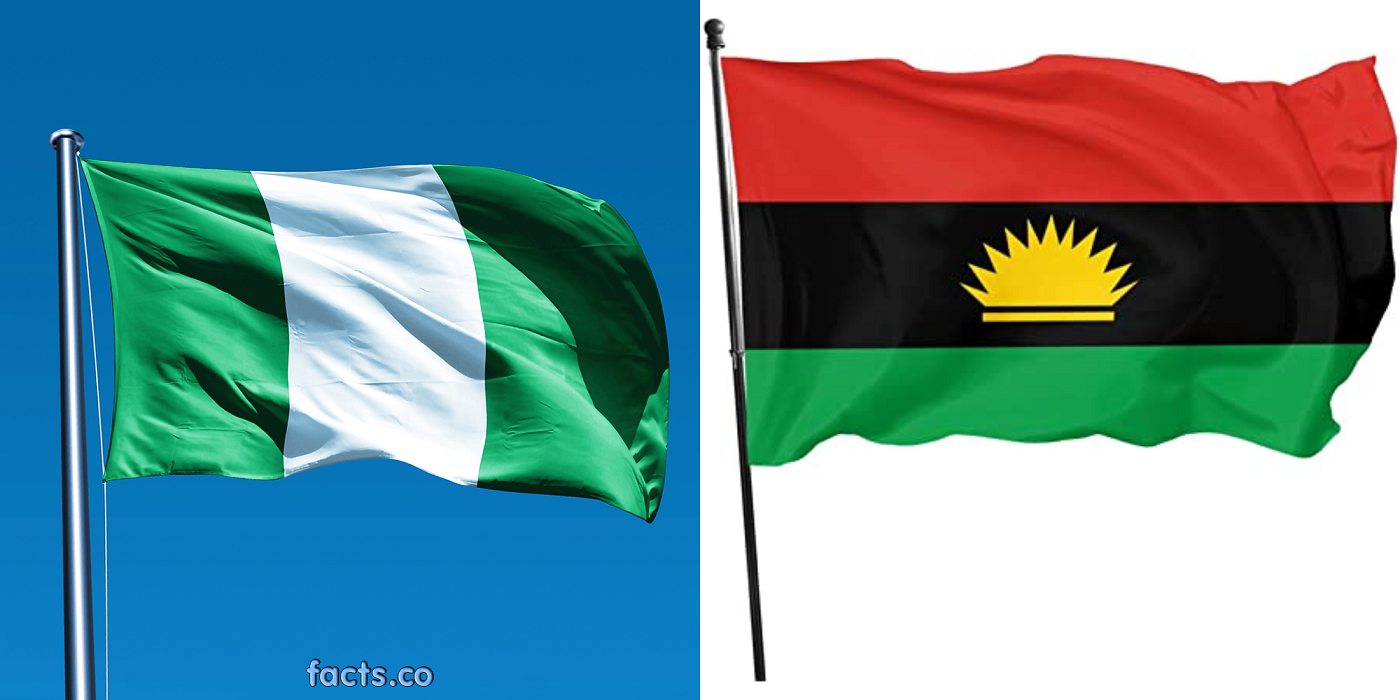
When you think of Nigeria’s disintegration, the first thing that comes to mind is Biafra – a defunct Igbo separatist nation in the country’s southeastern part. The attempt to curve this region from Nigeria in 1967 remains one of the most gruelling experiences of our country. A barely six-year-old nation was thrown into chaos by a set of greedy politicians and unscrupulous military officers who wanted power at the centre. Within those thirty months, millions of innocent citizens lost their lives, got injured or lost their possessions. In addition, Nigeria lost a large chunk of its national treasury meant to set the country on the right footing. The rest, as they say, is history.
Instead of learning from our past mistakes to avoid the recurrence of this destructive, reckless and unnecessary event, Nigerians of this generation seem to be oblivious of the necessary truth. As with most factual historical events in the Nigerian psyche, this painful experience, its true causes, and damning consequences are not well-known to the younger generations. The biased narratives in various country sections ensure that our population only hear the stories that suit their mindsets without alternative facts that would open their minds to self-criticism.
In the case of Biafra, most of the young Igbo folks have a pretty false image of their fate as a people if Biafra had happened. This skewed imagination is not unconnected with the biased, often imaginative stories these young Nigerians were told about their defunct “nation”. The Igbo popular culture and the intelligentsia depict a fictional image of Biafra as a dream-nation where the Igbos shall live in peace and prosperity devoid of challenges.
They imagine, albeit naively, that Biafra will be unlike Nigeria and that their lot would have been better than it is today. These unsuspecting chaps are led into believing a mirage of living in a nation flowing with honey and milk. They are also told that other ethnic and geopolitical sections of Nigeria are responsible for all their woes. They argue, albeit ignorantly, that if not for the North, the West, Hausa, Fulani, Yoruba, etc., theirs would have been a heaven on earth. These ignorant tales conclude that a united Nigeria does not help their course as a people.
Well, I think that these views are simplistic. I also believe that it is our responsibility to tell our brethren the truth that they need to hear. Firstly, the creation, proclamation of Biafra was not in the interest of the ordinary Igbo people. It was the last-ditch by Igbo politicians to hide their faces from problems they caused and ensure they stayed in power. Secondly, our brethren are mischievously told that the Igbo were so rich that the Igboland was the largest economic contributor to the federation. Unfortunately, the falsity of this assertion is not far-fetched, as the southeast was and is still the least contributor to the Nigerian GDP. Moreover, during the attempted secession, Nigeria’s GDP was mainly from the agricultural sector, predominantly from the North.
Thirdly, it seems that many people are misled into believing that Biafra would be an oil-rich country even though none of the Southeastern states is truly oil-producing. The Niger Delta, Nigeria’s oil pot, was not and will never be part of Biafra.
Fourthly, young Igbo people tend to believe that the southeast was Nigeria’s cash-cow at independence. The bitter truth is that even in the ’60s, the perceived strong Igbo economy depended entirely on other regions. This scenario is worse today as there are probably more Igbo people and Igbo businesses in other parts of the country than in Igboland. Worse still, the Igboland is closed and unfriendly to Nigerians, making external investments impossible.
The most supposedly intelligent argument advanced by the secessionists hinges on the current centralized federal system. They claim that the centre is too powerful and that Igbo states are marginalized. This is an argument of convenience, at best. Nigerians are not oblivious that the current unitary system was the handwork of Igbo politicians who saw a unitary arrangement as the answer to their political agenda. Today, the tides have turned, and these very people are calling for the system they abolished. Restructuring this country – whatever that means – might be a good idea, but only after a genuine debate that will ensure we do not return to the same vicious circle.
People with secessionist tendencies have used the challenges in northern Nigeria as reasons for disintegration. However, Biafra will by no means be a safer or better place. Currently, some of the most terrible crimes bedevilling this country are not unconnected with the southeast. From drugs to internet fraud, armed robbery and kidnapping to arms smuggling, if not worse, the southeast is not holier than other parts of this country.
Another commonplace argument is that the industrious nature of the Igbo people is enough evidence that Biafra will be a great country. But this argument, too, has failed to account for the fact that the wealthiest and most successful Igbo people and their businesses owe their success significantly to Nigeria and not Igboland. The Igbo people are traders, and the economic success of trading lies in the customer market, not the number of sellers. What do the Igbo people actually produce or sell that does not rely on the larger Nigerian population?
On the one hand, there is nothing that the southeast offers that cannot be produced or sold by other Nigerians. But, on the other hand, everything from food to livestock, energy, and the market for everything sold depend on the other regions. The southeast is asking to leave under this situation is the most absurd strategic blunder of the century.
Similarly, Igbo politicians and administrators have not distinguished themselves from the rotten Nigerian public servants. We do not see a difference between southeastern institutions or southeasterners in Nigerian public offices and their counterparts in other regions or ethnic groups. The same crop of people will lead Biafra. So, nobody should be enthusiastic.
Therefore, it is evident from the preceding that the viability of Biafra as an independent state is not assured. For one, it will be a landlocked, forty-one thousand kilometres square piece of land, which is just a half of Niger state and less than the size of Kaduna state. Worse still, it will be circled on all four corners by its biggest adversary, the Nigerian state. Secondly, it will depend on its biggest adversary for nearly everything except air, including waterways, food, and labour. Third, it would be one of the most overpopulated countries vis-à-vis its landmass and population.
The bitter truth is that these ecological, geographical, demographic and economic factors do not support the presupposition that the Igboland is better off as a separate entity than it is within the Nigerian federation. Therefore, it is safe to conclude that even if Biafra was to happen on a platter of gold, it is not going to be the rose garden these populists have configured our brothers to believe. Thus, we should all look before we leap!
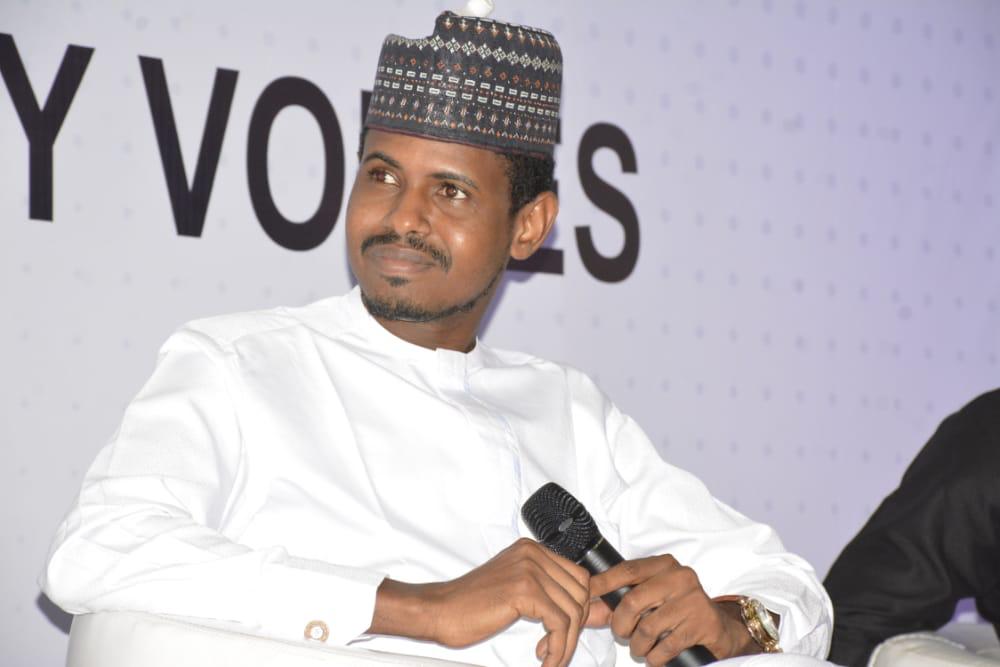
Dr Ahmadu Shehu is a nomad cum herdsman, an Assistant Professor at the American University of Nigeria, Yola, and is passionate about the Nigerian project. You can reach him at ahmadsheehu@yahoo.com.