South-East

Governors meet with NSA, defence minister over rising insecurity

By Uzair Adam 

Amid growing security concerns across the country, members of the Nigeria Governors’ Forum (NGF) on Wednesday held a closed-door meeting in Abuja with the National Security Adviser, Nuhu Ribadu, and Minister of Defence, Mohammed Abubakar.

The meeting, chaired by the NGF Chairman and Kwara State Governor AbdulRahman AbdulRazaq, took place at the NGF Secretariat. 

Among the governors in attendance were those of Anambra, Akwa Ibom, Oyo, Kwara, Osun, Plateau, Lagos, Nasarawa, Ekiti, Ebonyi, Kogi, Ondo, Imo, Cross River, Ogun, and Edo states.

Although the agenda was not officially disclosed, the gathering is believed to be connected to the escalating insecurity in parts of the country, particularly the recent deadly attack in Yelewata, Benue State.

Earlier in the day, President Bola Tinubu visited Benue and met with stakeholders at the Government House in Makurdi, where he condemned the killing of over 100 residents in Yelewata. 

He directed the Inspector General of Police, Kayode Egbetokun, and the Chief of Defence Staff, Christopher Musa, to apprehend those responsible.

Sources confirmed that the Abuja meeting involved briefings from the NSA and the Minister of Defence. 

The Secretary to the Government of the Federation, George Akume, traditional rulers, and former state governors were also present at the Makurdi meeting.

President Tinubu queried the lack of arrests and urged the heads of the Department of State Services (DSS) and the National Intelligence Agency (NIA) to ramp up intelligence efforts to bring the perpetrators to justice.

Kwankwaso/Obi ticket – A nice combination nobody should have thought about

By Muhammad Sulaiman Abdullahi, PhD

Many good things should have happened to Nigeria, but such good things were and are still averted by Nigerians who feel threatened by others. Our collective psyches teach us to be myopic and to lack reason. These make us promote selfishness, ethnic chauvinism or even other material gains at the expense of the best public interest.

Now that Kwankwaso/Obi ticket has been ethnically killed, I am happy that it didn’t come to fruition. It would have been disastrous to the nation as Peter Obi supporters are turning into something else. Now that it didn’t happen, it left some issues to ponder, especially on our reasoning that it shouldn’t have even been thought of in the first place. It left us with no hope as to the politicians we see, who are a sort of “young” blood, compared to those whose actual age, patriotism, source of wealth and health status are all not certain.

All of us in the North, without a doubt, believe that Dr Rabiu Musa Kwankwaso is far better than Obi. They are not comparable in whatever capacity, from academic credentials to practical experience, national spread, political platform and even patriotism. However, one irony about the ticket was that the way Northerners believe in Kwankwaso is similar to how South Easterners believe that Obi is better. They think that Obi is the only answer. In their bid to justify that, they reduced Kwankwaso to pieces, saying he was over-ambitious. This is where they woefully failed. This was what made the thought of bringing the ticket even more worrisome.

Obi’s supporters shouldn’t be blamed, as the country is programmed this way. People only know and promote people they are so much close to, naturally. What will happen if this natural knowledge is mixed with bitter secessionists’ sentiments and arrogance that beclouded their thought of anything if not theirs?

There are some reasons why Kwankwaso shouldn’t have even thought of Obi. Perhaps Kwankwaso did that out of nationalism and as another way of garnering support from the other end. Still, one thing Kwankwaso failed to realize was that Obi’s candidature was no longer his own. It has long been hijacked by a fake Christiandom, Obidients/OBiafrans and other disgruntled politicians from the other end. First, however, let’s consider some points here.

The way Nigeria is, a country with such a vivid religious divide, with Muslims as the majority and Christians with a significant number, the Christians must feel offended if they do not feature as number two, if not number one in the country. In this case, someone may say that democracy is, to some extent, a hoax. If not, why shouldn’t the majority carry the board all the time? But in Nigeria’s situation, Christians are many, and they would feel somehow alienated by the APC’s Muslim/Muslim ticket.

Therefore, it will be a miscalculation for anyone to ask Obi to deputize instead of being the lead. Christians may not take it lightly. They have already fought the Muslim/Muslim ticket and failed, and now the only option left for some of them shouldn’t be tempted or played with. Therefore, looking at it from this angle, it was a terrible idea right from the beginning. Reuben Abati confirmed this in an interview when he opined that, during one of their talks about Kwankwaso/Obi, he asked one question! And the answer to that question, given to him by the NNPP representatives, convinced him that the Kwankwanso/Obi arrangement was dead on arrival.

He asked them, is it fair that after a Northener – and maybe a Muslim – finishes his eight-year tenure, another Northerner will rule again immediately? He said the Kwankwanso/NNPP representatives responded that that is not an issue to worry about. This is their point of reasoning which should be understood.

Another point is regional affiliation. This doesn’t give much, but many Southerners may prefer to have someone healthier than Bola Tinubu, not minding his religion the way the Northerners do. Here, Obi as the lead may be more appealing to them.

On the other hand, there is an issue of the Igbo presidency. Igbo politicians have been too stubborn, divisive and too regional in their approaches to national discourse. They always create problems for themselves, of which Obi’s candidature is part. You can’t disown your country, engage in a series of treasonable felonies, condone crimes, support terrorism against your nation, and then think you would be trusted.

The idea of rallying behind Obi as the only source of salvation is another mistake made by the Igbos. It will make them more stubborn or more alienated. If Obi fails – which will likely happen, some of those overzealous OBiafrans who now threaten all who talk against Obi will surely be more stubborn and restless. And the mainstream politicians would put them aside as they know they are inconsequential.

Now that the ticket has been killed, most commentators agree that it wouldn’t change anything even if it had happened. The real fight is seen to be between the two giants. Now both camps should sheath their swords and forge ahead.

Kwankwaso and his supporters should continue to aim high. Merging with anyone among the two major parties cannot produce a result, and going alone is not the solution. Madugu and his team should think within and outside the box and develop a real solution.

As for Obi’s real supporters, the real Obidients, they should learn tolerance and know that Nigeria is not Imo, Abia or Enugu. Two states’ votes in the North can equal the total number of states in the South-East region. This is based on the latest voter statistics released by the Independent National Electoral Commission (INEC), which shows that the North has more voters registered in the continuous voter registration that ended last Sunday.

Therefore, these OBidients, including the OBiafrans, should be more civil, tolerant and open-minded. They should interact well with others, show decorum in their manners, and not allow the OBiafrans to lead them.

Dr Muhammad can be reached via @muhammadunfagge (Twitter) or email: muhammadunfagge@yahoo.com.

Buhari condemns murder of pregnant woman, Harira, 4 kids by IPOB

By Uzair Adam Imam 

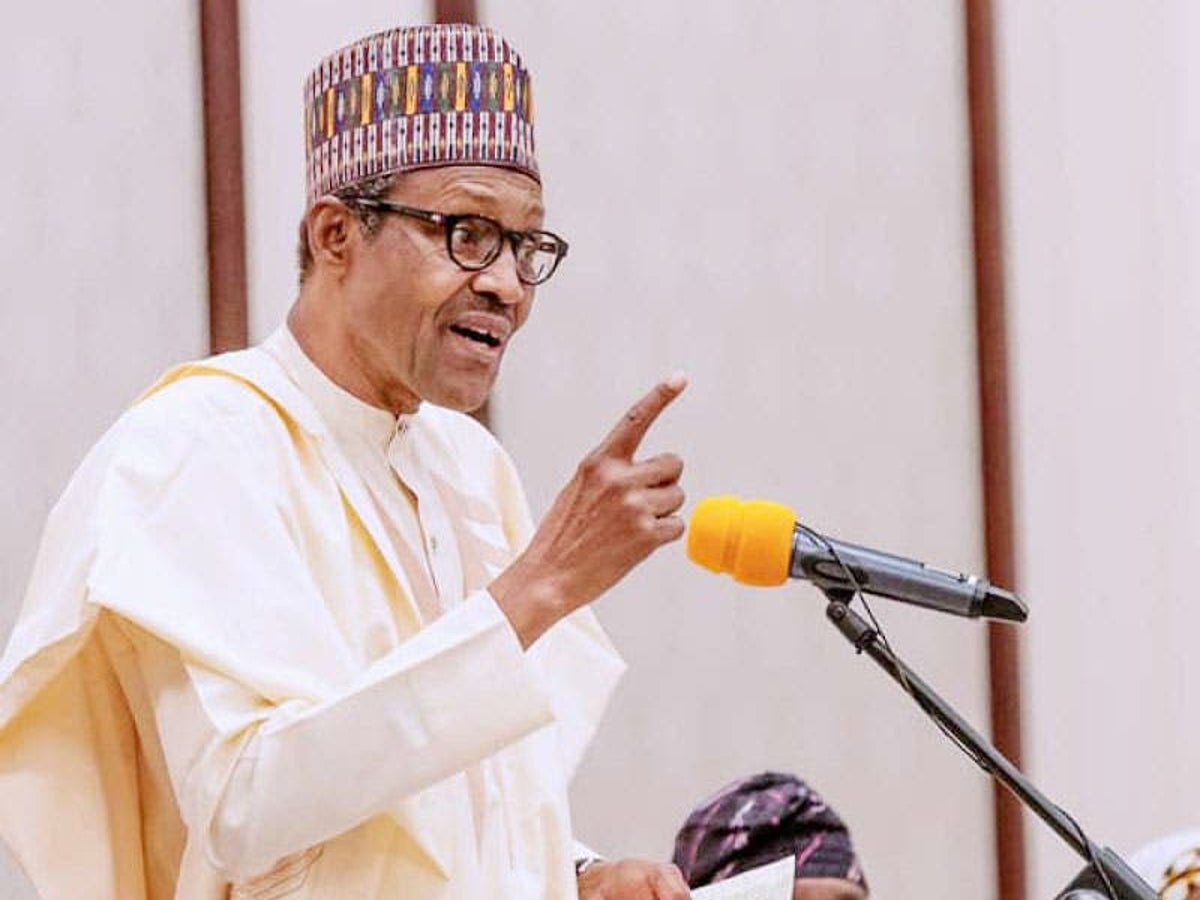
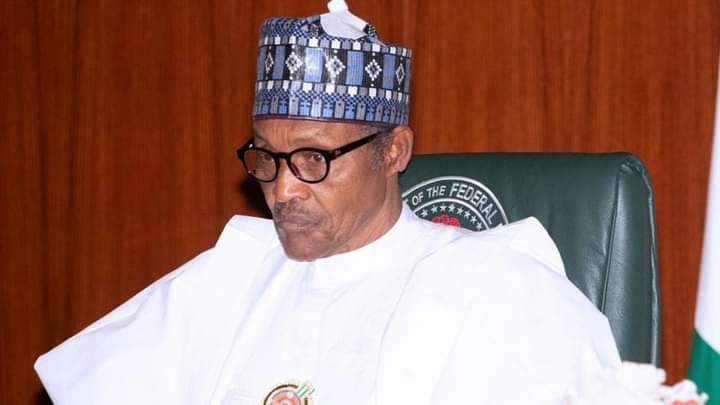
President Muhammadu Buhari has reacted to the barbaric killing of Harira Jibril and her four kids, threatening that the Indigenous People of Biafra (IPOB) should expect a tough response. 

The president criticized the killing of innocent people in the South East and other parts of the country. 

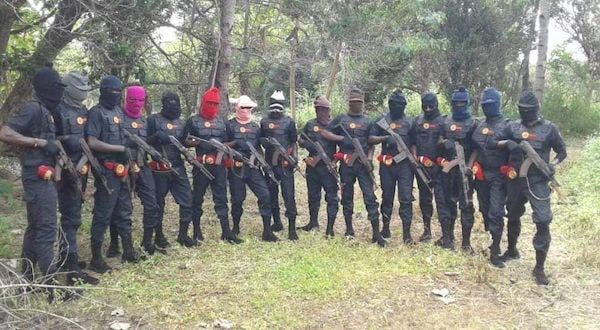
Recall that the Daily Reality reported how the outlawed terrorist group, Indigenous People of Biafra (IPOB), has mercilessly murdered a pregnant woman and her four innocent kids in Anambra.

The woman identified as Harira Jibril was killed alongside her four kids and six other persons of northern extraction on Sunday, May 23, 2022. 

The Senior Special Assistant on Media and Publicity to the president, Malam Garba Shehu,  disclosed this in a statement signed Wednesday, May 25, 2022.

However, the president described the incident as “wild, barbarous and wanton killings of innocent people.”

Buhari further urged citizens to avoid hasty steps or conclusions that could exacerbate the situation.

He cautioned that the general public should allow the law to take its proper course.

He added that “the public is against the indiscriminate sharing of posts on social media so as to deny vested interests who seek to divide us and create disturbance the chance to do so.”

The death of Sule Matthew and the fall of Biafra

By Promise Eze

My heart was broken to smithereens when I read of how a 21-year-old Sule Mathew was horrendously despatched by unknown gunmen last week in Anambra state.

Sule Matthew graduated with a first-class from the Faculty of Communication, Bayero University, Kano, recently. The young man was on his way to participate in the forthcoming orientation programme of the National Youth Service Corps (NYSC) when he and other passengers were ambushed and butchered by unknown assailants.

It was reported that he lost his father a few months ago, but now his family has lost him. I think of the grief his mother would go through. I think of the agony and despair the bereaved family he left behind will suffer.

The young man had so much potential and could have done more for his country if allowed to live. I followed his Facebook page and it became glaringly clear that Igala land and Kogi state has lost a great individual, one who was ready to contribute positively to the development of his homeland. I saw that he was a fellow of a budding political movement, Gidan Yanci and also he was the cofounder of KogiYupp— a project that offers Kogi youth a chance to be involved in progressive political participation. But the young man was forced to wilt before he even bloomed.

He travelled to eastern Nigeria in a car, and he would return in a coffin. No thanks to the so-called unknown gunmen (UGM) who are responsible for his demise. UGM, a product of IPOB’s agitation for Biafra, came into the limelight in 2020. Their own way of demanding a new country is by attacking police stations, military checkpoints, and paramilitary officers.

UNG suddenly became worse than the ‘evil’ they were fighting. These mkpuru mmiri addicts now armed with guns colonized a once peaceful movement for a referendum and transformed it into an all-out war with the Nigerian government. Now, they’ve murdered a young man who has no business with whatever is going on in Eastern Nigeria. His only crime was going to serve his country.

It pains me that Sule was killed for nothing. It hasn’t been confirmed if ‘IPOB’s Unknown gunmen’ are responsible for the attack that led to his death, but we know that IPOB’s activities created a dark hole that armed robbers, hard drug users, kidnappers and cultists are fitting into. Now, anyone could carry out any attack and use the insignia of IPOB to cover his crime. This brings the question, ‘Is Biafra still worth fighting for?’ 

Ever since the resurgence of the call of Biafra, it’s been bloodshed after bloodshed. Chaos after chaos. Gunshots after gunshots. Igbo land which was known to be relatively peaceful is now a war zone. What kind of Biafra are IPOB and UGM clamouring for that demands so much blood? The blood of the innocent. The blood of Sule Matthew. The blood of the passengers who were killed too. If this is what Biafra entails then I do not want it to exist.

And I believe that the vast majority of Ndi Igbo would swear that they rather remain with Nigeria than involve themselves with this kind of Biafra—a Biafra where we all have to sleep with only one of our eyes closed.

Biafra died inside me the day I learnt about the death of Sule. May his soul rest in perfect peace.

Promise Eze is a journalist and writes via ezep645@gmail.com.

Buhari’s popularity plummets to new low – survey finds

By Sumayyah Auwal Usman

President Muhammadu Buhari’s popularity has plummeted to the lowest level since he took over as the country’s leader in 2015, according to the latest Vanguard for Good Governance Initiative (VGGI) survey.

Results of the survey compiled by VGGI, show President Buhari’s popularity has declined sharply during the past two months with his approval rating dropping from 58 percent to 21 percent.

On specific issues, the survey found Nigerians, especially northerners, were unhappy over matters of heightened insecurity. Moreover, concerns about the economy, especially the cost of living and rising inflation are now seeing the president’s popularity hitting an all-time low among Nigerians.

The survey also reveals that the IPOB activities in the South-East is crippling the economy of the region.

VGGI says its survey consisted of phone calls, emails, interviews and text messages over the past three months to slightly more than 150,000 people.

Viral video shows how IPOB insurgents decapitate 2 Muslims

By Muhammad Sabiu

A viral video clip shows how some suspected terrorists working for the Indigenous People of Biafra (IPOB) beheaded two Northern Nigerian Muslims.

Daily Nigerian, an online newspaper, reports that the terrorists could be seen displaying the heads near an open fire, as they were jubilating “their feat and identifying the nose and forehead of one of the victims as “Hausa”.

As they were chanting different inciting words, juggling one of the two heads, one of the perpetrators said in the Igbo language, “This is a Hausa man now”, while another argued that the head was of a Fulani man.

Recall that IPOB terrorists maimed one driver of the Ɗangote trailer and some of his assistants in the past weeks.

IPOB has been notorious for killings and setting government and other detention facilities on fire.

The group leader, Nnamdi Kanu, was some months ago apprehended abroad and repatriated, and he is currently standing trial for treason, jumping bail and illegal possession of arms.

Southeast: Nigerian soldiers repel attack, kill Biafran combatant

Muhammad Sabiu

Nigerian troops stationed in the southeast have on Thursday, October, 28, successfully eliminated a Biafran National Guard combatant in an encounter in Amaekpu, Ohafia Local Government Area of Abia State.

The troops also recovered some vehicles and weapons which belonged to the combatants.

In a Facebook statement signed on Friday by the spokesperson of the Nigerian Army, Brigadier Onyema Nwachukwu, he stated that although the Biafran combatants were heavily armed, they were successfully overrun and had no option but to flee.

Read Brigadier Onyema’s full statement:

TROOPS NEUTRALISE BNG GUNMAN …Recover Arm, Vehicles

Troops conducting Exercise GOLDEN DAWN have neutralised one of the Biafran National Guard gunmen who attacked troops’ location at Amaekpu, Ohafia Local Government Area of Abia State on Thursday 28 October 2021.

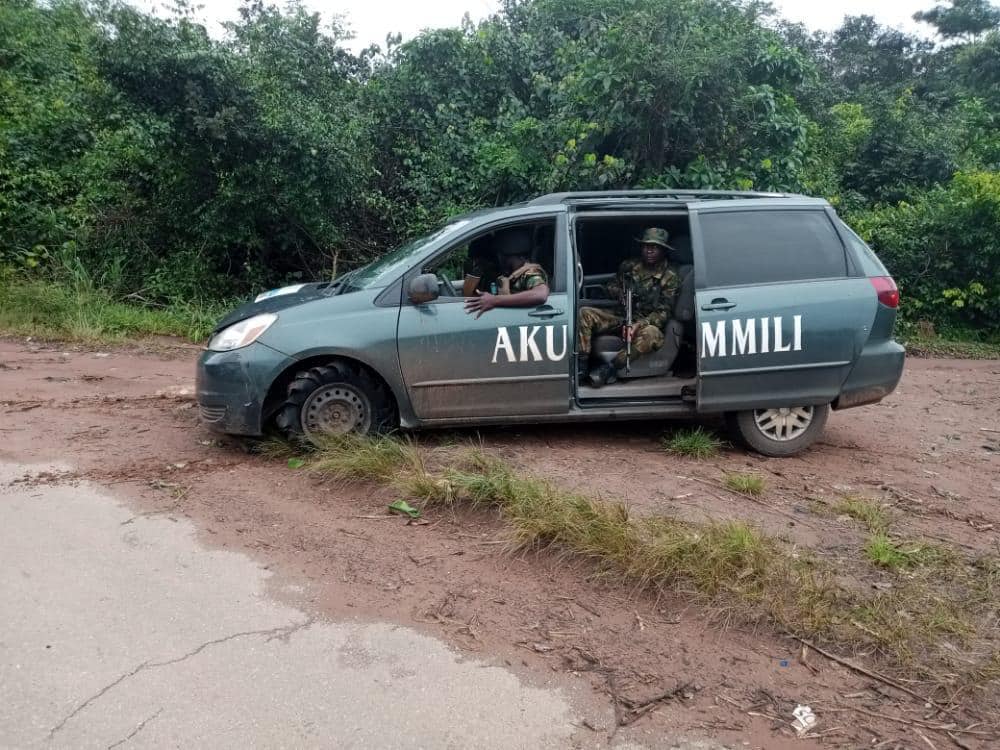
The assailants, who were heavily armed and conveyed in several vehicles opened fire on the troops’ location, but were met with stiff resistance by the troops. In the encounter, the troops neutralized one gunman, while others abandoned their vehicles and retreated in disarray with gunshot wounds. The troops also recovered a pump action gun, among others.

While the criminals withdrew, having been overwhelmed, they were promptly intercepted at Eda by troops of Forward Operating Base Ohaozara in Ebonyi State. The troops recovered additional three vehicles and apprehended one of the gunmen.

ONYEMA NWACHUKWU Brigadier General Director Army Public Relations 28 October 2021

Nigerian police apprehend own officers for extorting traveller

By Muhammad Sabiu

Police in Imo State in southeast Nigeria have apprehended some of its own personnel over alleged extortion.

The News Agency of Nigeria (NAN) reports that the arrested officers were said to have extorted about N60, 000 from a traveller identified as Victor Agunwah.

In protest of the extortion, Mr Victor forwarded a complaint to the Imo State Commissioner of Police, Rabiu Hussaini.

Mr Hussaini, in a statement, said that the officers involved had been arrested, and they would face the wrath of the law.

He was quoted as saying: “The Imo Police command has commenced investigations into a report making the rounds online where police personnel were alleged to have extorted N60,000 from one Victor Aguwah travelling from Sam Mbakwe Airport to his home town in Mbaise.

“The CP, while condemning the incident, confirmed that the police officers have been identified, arrested and detained at the State Criminal Investigations and Intelligence Department (SCIID), where they will be made to face disciplinary action.

“The command has established contact with the victim through his cell phone and he is currently cooperating with the command in seeing that he gets justice.

“The CP, while commending the good people of Imo, assured them of the command’s commitment, under his watch, to ensuring that no police officer found in corrupt practices is spared.

“He assured all and sundry of making the outcome of the investigation and trial public.”

The Southeast is no less a burden

Ahmadu Shehu, PhD.

As we continue the inconvenient conversation on Biafra and what it portends for the Southeast and our country, I find the need to clarify some insinuations raised in the troupes of comments and rejoinders that trailed my previous articles. But, before proceeding, I must commend many southeasterners for their dispassionate contributions and insightful perspectives.

However, although critical, some of the comments have missed salient truths that need further explanation. This will help our generation avoid past mistakes committed mostly by overzealous politicians, leading to avoidable wars and near-disintegration of our dear country.

There is this illusion that conflates southern Nigeria, particularly the Niger Delta, with the Southeast or “Biafra”. The truth is that the people of the Niger Delta region (let alone the southwest) do not align with the Southeast in politics and administration. For the information of our youth, the first secessionist war in Nigeria was fought between Niger Delta activists under the leadership of Isaac Adaka Boro and the Nigerian forces led by Chumeka Ojukwu, who later became a secessionist himself.

The three phases of Ojukwu’s career: from a defender of Nigeria’s unity at the battlefield to a rebel against his own country and later a senator and presidential candidate for the very country he fought to disintegrate should tell discerning minds that there are many faces to the idea of Biafra, none of which is the common interest of the Igbo people.

Please permit me to be blunter here. As far as our contemporary political and economic realities are concerned, the Southeast is only hiding behind the shadows of other regions in the south to claim prosperity. In other words, when our Igbo brothers call the northerners parasites, lazy or Abuja-dependent, they are actually borrowing the glory of the Niger Delta, and probably Lagos State, to abuse others. Because in reality, the contributions of the Southeast in the so-called feeding the nation is not as significant as they may like us to believe.

If you doubt this, let’s ask a few questions on the most critical sectors of the Nigerian economy. Since 90% of Nigeria’s foreign income depends on crude oil, what is the contribution of the Southeast in the two million barrels Nigeria makes per day? Very little is the answer. For, out of the nine oil-bearing states in Nigeria, Imo and Abia are the only southeastern states, accounting for an abysmal 1.6% and 0.68% of the total crude oil produced in the country. This is very negligible, as far as the numbers in this sector are concerned.

The Nigerian GDP, which is the bedrock of the economy and the source of non-oil revenue, primarily comes from agriculture. What is the contribution of the Southeast to agricultural production? The numbers are even more insignificant here. It is unfortunate that except for the oil-spilt Ogoni land, the Southeast is Nigeria’s least agriculturally viable region. Most states and local councils in the Southeast are not food sufficient.

By the nature of its geography, the Southeast sits on one of the country’s most infertile, erosion-prone lands. It is also the smallest and most overpopulated region leading to congestion and resource scarcity. It is no coincidence, therefore, that no one buys farm produce from there. Conversely, we see tons of raw food and livestock being transported daily to feed the region.

Some people may argue that the economic strength of the Southeast lies in its profoundly robust revenue base generated from industries and MSEs. They further postulate that the region contributes the most to the Nigerian revenue basket, albeit without evidence. Well, all the regions of the federation contribute their fair share to the federation tax revenue. However, the evidence available proves that the Southeast is neither the highest contributor nor is it self-reliant.

According to the National Bureau of Statistics, Southwest and South-South have the highest IGR per capita, and the Southeast is at par with North-Central, followed by Northwest and Northeast. None of the five southeastern states appears close to the top ten high revenue-generating states. Like any other northern state, none of the southeastern states – despite the 12% derivation funds – is wealthy enough to pay salaries without the federation account. Thus, one may ask: what kind of entrepreneurship and economic prosperity we are talking about here?

The fallacy behind the overestimated economic contribution of the Southeast is just one of the many problems. For instance, more than once, our country’s unity and cohesion are put on dangerous edges, thanks to the secessionist tendencies of the Southeast. Instead of forging ahead and pursuing alliances and friendships countrywide, the region and some of its people have continued on the path of division and segregation. The hatred propagated against anything and anyone perceived to be anti-Biafra has been phenomenal.

Furthermore, the Southeast is the main culprit in destroying Nigeria’s image and dignity in the international community. The Nigerian passport, which commanded respect a few decades ago, has become a suspect document worldwide. This unfortunate degradation of national identity and pride is the handwork of Nigerian drug pushers, physical and internet scammers, illegal migrants and human traffickers, most of whom are known to be southeasterners.

The same people are dealers and distributors of fake, contraband medications and drugs in all the nooks and crannies of this country, particularly in the North. This has always been an open secret and has been made even more vividly evident by the recent successes of the Nigerian Drug Law Enforcement Agency (NDLEA). The dangers these portend to our national development and global recognition is unquantifiable.

Therefore, if the above is true, claiming that the North is a mere burden on the Nigerian federation is absurd. For some, this might be based on ignorance, while for others, it is a deliberate attempt to malign and stereotype the region for reasons best known to the perpetrators of these dangerous narratives. But, whatever the motive is, we must recognize that all the federating units cause shared burdens to our national growth and development.

Since the North’s limitations and other regions have been overstretched in our national discourse, I believe it is equally important to remind our brothers in the Southeast that they are no less a burden than the other regions. As Nigerians, we should prepare to share both the positive and negative consequences of the actions and inactions of our fellow citizens. But, this is only possible when all parties acknowledge their limitations and are ready to embrace one another. Nigerians are siblings of a single family that are more alike than different. The earlier we accept this truth, the better.

Dr Ahmadu Shehu is a nomad cum herdsman, an Assistant Professor at the American University of Nigeria, Yola, and is passionate about the Nigerian project.

The Igbo Presidency!

By Mohammed Zayyad

The debate that the presidency moves to the South in 2023 has gained momentum. Also, presidential hopefuls from the North, like Atiku Abukar, Sule Lamido, Senator Bala Mohammed, Senator Rabiu Musa Kwankwaso, are also effectively playing their games.

The calls for power to shift to the South have further triggered permutations and realignments in the polity. Both the Peoples Democratic Party (PDP) and the All Progressive Congress (APC) have strong candidates from the South. But these candidates have their respective baggage, and the parties have internal squabbles that must be resolved.

The APC has its stronghold in the Northwest, Southwest, Northeast and Northcentral – four of the nation’s six geopolitical zones. The PDP has strong structures in the six zones with a stronghold in the Southeast and Southsouth. However, the APC has moved into the Southeast in full force. Before the 2015 elections, nobody had ever thought that the APC would someday have even a ward councillor in the Southeast. But, today, the party has two state governors, senators, House of Representatives members, state house of assembly members, local council chairmen, councillors and formidable party structures in all the five southeastern states.

Come 2023, the APC has no reasons to retain power in the North, but there is strong politicking by some governors and other bigwigs to maintain power. This will mean the APC contravening the unwritten agreement between the North and the South on power rotation. In any case, the APC does not have a strong presidential candidate from the North. This is a big plus to the presidential hopefuls from the South, or Southeast, in particular. Furthermore, the Southeast has a strong case to present based on a plank that the Southeast is the only geopolitical zone in the South that has not produced a President or vice president on any political party platform since 1999.

If APC picks its presidential candidate from the South, especially Southwest, the PDP may attempt to outwit this by looking to the North for its presidential candidate. This, as well, will put the  PDP in a catch-22 situation on how to explain this to the South, especially the Southeast and the South-South, why the North again, after eight years of the North being in power.

PDP has good candidates in their own ‘rights’ from the Southeast and South-South. Enugu State Governor Ifeanyi Ugwuanyi, Peter Obi from Southeast and Governor Nyesom Wike from the South-South. Obi does not have friends in the North and has never tried to pull an appeal from the region, directly or by proxy.  His deportation of other Nigerians to their states when he was governor of Anambra state was used against him in the North during the 2019 campaign, and it worked.

For Wike, his words, ‘Rivers is a Christian state’ will be used against him in the North like Governor El-Rufai’s Muslim-Muslim ticket in Kaduna can be used against him (El-Rufai). This is how local politics impact a candidate’s wider political opportunities. Some young people in the north are also campaigning for  Enugu State Governor Ifeanyi Ugwuanyi. Still, the IPOB issue will be a significant hindrance in the North, but it is not insurmountable. Advocates of secession appear not to understand Nigeria. There are massive inter-marriage, friendships, business links and political alliances, among other ties, between many northerners and many Igbos.

Some nationalistic politicians from the Southeast have started to convince other Nigerians to support the region to produce the Nigeria president of Southeast extraction in 2023.  The bigwigs’ forefront presidential hopefuls are Governor David Umahi,  Orji Uzor Kalu, Governor Ifeanyi Ugwuanyi, Rochas Okorocha, Chris Baywood Ibe, Ken Nnamani, Minister of State for Education, Dr Chinedu Nwajiuba, Sen Osita Izunaso and many others. Of course, these politicians have their political baggage and controversies. However, people like Chris Baywood Ibe are new faces without any political baggage and controversy-free.

A thorough understanding of how Nigerian politics works is paramount in achieving the political goals of a group, a region, or individuals. There are so many conflicting interests in Nigeria. Still, there are always windows for alliances, give-and-take, a hand of friendship, and convincing others to support a particular political cause or an individual’s.

For the 2023 presidency, the Southeast should present a candidate with a new face, no controversies, no political baggage and who has friends and is well-known across the Niger. For both the APC and the PDP, it will be an opportunity to reunite Nigeria and rekindle the historical political alliance between the north and the southeast while maintaining the partys’ current national. The Igbo presidency is possible through the spirit of one Nigeria.

Zayyad I. Muhammad writes from Abuja. He can be reached via zaymohd@yahoo.com.