Sokoto

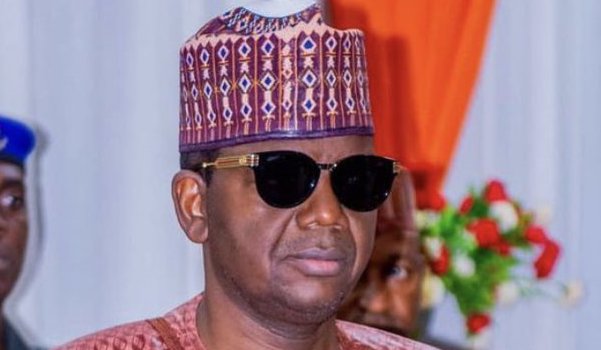
Sokoto governor sends 15 students to China for engineering studies

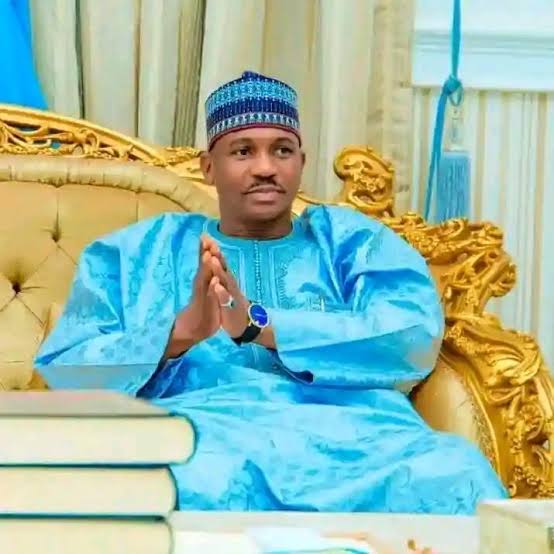
The Sokoto State Government has sponsored 15 indigenous students to study engineering courses in China. 

The chairman of the Sokoto State Scholarship Board, Abdulkadir Dan’iya, confirmed the news, stating that the students, chosen for their academic excellence, will depart in early November. 

The government has allocated funds for their tuition and living expenses, emphasising the importance of investing in the youth’s education.

This initiative reflects the state’s commitment to providing quality education and global opportunities for its students.

Bandits attack corps members, kill 11, abduct others for ransom

By Uzair Adam Imam

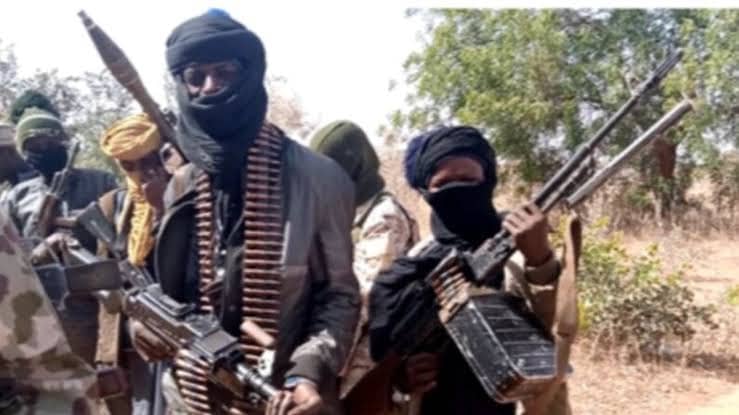
There was growing tension among the National Youth Service Corps (NYSC) members when bandits attacked them on their way to the orientation camp in Zamfara State, killing eleven persons among them.

The bandits also kidnapped no fewer than eight corps members to an unknown destination and reportedly demanded a ransom of over 4 million naira.

Our reporters learned that the corps members were travelling in Akwa Ibom Transport Company (AKTC) bus from Uyo, Akwa Ibom State, to Sokoto State, for the one-year mandatory national service, when their vehicle was intercepted by the bandits.

It was also gathered that their driver, who was among the persons abducted, almost lost his life during the atrocious killing by the bandits.

However, three of the corps members were reported to have escaped during the terrorist attack.

Emmanuel Esudue, a graduate in Agricultural and Environmental Engineering from Akwa Ibom State University and Victoria Udoka, a graduate in Mass Communication from the University of Uyo were among the young graduates that were kidnapped by the terrorists.

A source, who noted to be privy to the situation, revealed that the terrorists had contacted the family of one of the victims and demanded a ransom of N4 million.

He said, “Sad to hear that young graduates going for their National Service year in Sokoto have been kidnapped by bandits.

“Both the Federal Government and various State governments should do everything possible to rescue the eight NYSC members.

“Nothing must happen to them oh!!!Some of them included Emmanuel Esudue, a graduate of [sic] Agricultural and Environmental Engineering, Akwa Ibom State University and Victoria Udoka, a graduate of [sic] Mass Communication from University of Uyo.

“At the moment, one of the families, it was learnt have been contacted to pay N4m. Please, this is [a] Federal government matter not the family and should be taking [sic] seriously to save these children from been [sic] tormented further by the wicked kidnappers.

“This is another challenge to the federal government to review deployment of NYSC [members] to nearby states where they schooled due to insecurity rather than posting them across the country.

“May the Almighty God rescue them and let those wicked kidnappers be arrested and brought to book. Their crimes must not go unpunished.”

Professor J.B Adeyanju: An Iroko has fallen

By Zakariyya Shu’aib Adam

It was the first Monday of the first semester in 500 level in the Faculty of Veterinary Medicine, Usmanu Danfodiyo University, Sokoto [U.D.U.S]. As usual, all students who successfully passed 400 level were happy because they have now acquired “stay apparatus.” By stay apparatus, I am referring to the mechanism that enables horses to rest for a long time and have a nap while standing. In this context, it means 500 and 600 level students will no longer be withdrawn from the faculty regardless of the number of courses they failed. In other classes, once a student fails seven courses in a session, he will be asked to withdraw to another faculty.

The first lecture we had in 500 level was on Anaesthesiology. We were expecting a familiar lecturer from the Department of Surgery and Radiology when an agile old man dressed in a knee-length kaftan with a lab coat entered the class. He was averagely tall but wasn’t familiar to anyone of us. Morning lectures usually begin at 8:00 am but this old man was in the class before the time. When latecomers came, he allowed them entry to the class but spent some minutes grumbling as usual of an old person. He disallowed us to jot, yet emphasised on listening to what he was saying. We noticed his name on the chest pocket of his lab coat. Wow! He was the famous professor John Bayo Adeyanju, the great veterinary surgeon talked about by our lecturers.

When he was done with the lecture, the Head of Department of Surgery and Radiology, professor A.S Yakubu came to the class and gave us a brief highlight of Adeyanju’s academic life. He told us that Adeyanju was his supervisor at P.G level and that he taught virtually all professors and doctors in the faculty including the highly cerebral professors A.I Daneji, U.M Chafe and L.B Tekdek. He was one of the early graduates of D.V.M from Ahmadu Bello University, Zaria. He acquired his MSc and PhD in the United States and was a fellow, College of Veterinary Surgeons of Nigeria. Adeyanju was one of the founding fathers of the Faculty of Veterinary Medicine in U.D.U.S. He was one time the Head, Department of Surgery and Radiology and the Director, Veterinary Teaching Hospital. He was a professor for more than three decades.

He taught in many Veterinary Colleges and Universities in Nigeria. He had practiced surgery in Nigeria, Zimbabwe and the United States. He outclassed many professors in both academics and practice. He was arguably the best veterinary surgeon in Nigeria. We were told that whenever he was to perform a surgical procedure, he would not administer any postoperative antibiotic as it is routinely done because he was sure of the sterility of the surgical site and the surgical environment. However, he advised us to give aggressive postoperative antibiotic because in Nigeria, due to the sorry state of our universities and health care systems, it is difficult to evade postsurgical wound infection without antibiotics.

Before his return to U.D.U.S on contract, we heard many tales about him. It was said that he was forcefully retired from the academia by the late Gen. Sani Abatcha as a result of a dissension they had. Although Adeyanju was old (almost 80 years old at the time of his death), he was always punctual to the class. He never missed class. Whenever he noticed that there was no lecturer in the class, he will enter and teach. In his class, every student must dress formally. Lab coats must be fully buttoned and must carry nametags. Clinical students (500 and 600 level) must carry along their thermometers and stethoscopes at all time for emergency purposes.

Professor J.B Adeyanju was a man of wisdom. His method of teaching was unique. He gave little notes and spent much time explaining. He made sure we understand a topic before he moved to another. As an elderly person with an ocean of experience, his teaching hours were full of admonishment. He spoke in parable with an authoritative voice and will often repeat his sentences. That was why many of us memorized most of his favourite quotations. At the beginning, many of us were not at home with the way he did things because we felt that his complaints were much, although it was typical of old people. As time goes on, he became the students’ favourite lecturer.

The great Adeyanju was a conscientious old timer. He always wanted to see things right. One evening after clinical posting, I pulled off my shoes and wore slippers. I equally unbuttoned my lab coat and loosened my necktie. Unfortunately, I met Adeyanju on my way to the hostel. I greeted him but he kept mute as if he did not heard me. When a classmate who was in a formal wears greeted him, he answered, smiled at him and said: “Good boy, you look smart.” A classmate told me that he met Adeyanju with an unbuttoned lab coat. Adeyanju called him and said: “My friend, button up your lab coat. You do not have a broad chest.”

Although Adeyanju may be seen as a strict person, he was equally simple with a good sense of humour. He was used to saying that surgeons speak with their hands. During a surgery practical, he caught a student talking. He came to the student and said: “You talk more than an average woman.” We bursted out laughing. After some time, he came back and saw the student quiet. He sighed and said: “I have sedated him.” He once saw me yawning in the class and thought I was sleeping. He asked me to come out to the stage and spell my name while doing waist twisting. As I began, Adeyanju giggled and the class laughed hysterically.

When we were in Small Animal Clinic, a cat was presented with a complaint of laceration on its right hind limb after it got attacked by hoodlums. I took the history of the case from the client. When Adeyanju came, he summoned us to his office. He asked me to brief him on the history of the case. When I began, I noticed that he was staring at me. I got confused and forgot the correct word to qualify the wound. I said “the hind limb was chopped off by hoodlums”. He furiously shouted at me saying: “Can’t you speek English? Oya! Say it in your native language.”

Adeyanju was a caring teacher. When our teacher M.S Abubakar became professor, he was extremely happy because Abubakar was his former student. He hugged him and asked students to snap them together. He was very close to professors A.S Yakubu and Salisu Buhari. When they completed their fellowship, they were unable to attend the ceremony in Abuja. Adeyanju graced the occasion and brought their certificates to Sokoto. He handed over the certificates to them on a ceremonious day.

Few weeks later, he fell sick and was hospitalised at Usmanu Danfodiyo University Teaching Hospital [U.D.U.T.H]. It was said that he drove himself to the hospital. Professor A.S Yakubu took us to the hospital to see how he was doing. We were frightened when we discovered that the agile and energetic old man could not talk but waved his hands. We prayed for his quick recovery and left the hospital pitifully.

Baba Adeyanju (as we fondly call him) passed away in the evening of Thursday 23rd December 2021. His body was laid to rest but the knowledge he imparted will remain with us and shall be passed to the next generation.

Adieu to the best veterinary surgeon in Nigeria.

Zakariyya Shu’aib Adam is a final year veterinary medical student and writes from City Campus, Usmanu Danfodiyo University, Sokoto. He can be reached through zakariyyashuaib2020@gmail.com

President Buhari, others shun Sokoto tragedy, attend Akande’s book launch

By Sumayya Auwal Ishaq

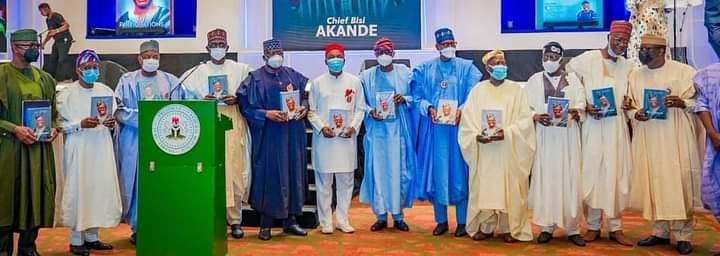
Amid the national grief over the death of 42 passengers burnt by bandits in Sokoto, President Muhammadu Buhari, Senate President, Ahmed Lawan; National Leader of All Progressive Congress (APC), Ahmed Bola Tinubu; Governors of Yobe and Kebbi States, members of the National Assembly attended the public presentation of a memoir of Chief Bisi Akande, titled “My Participations”.
 
President Buhari’s attendance is drawing condemnation from Nigerians who questioned his absence in Sokoto to commiserate with the families of the deceased and his perceived lack of empathy.

Sultan of Sokoto urges resident doctors to end strike

By Muhammad Sabiu

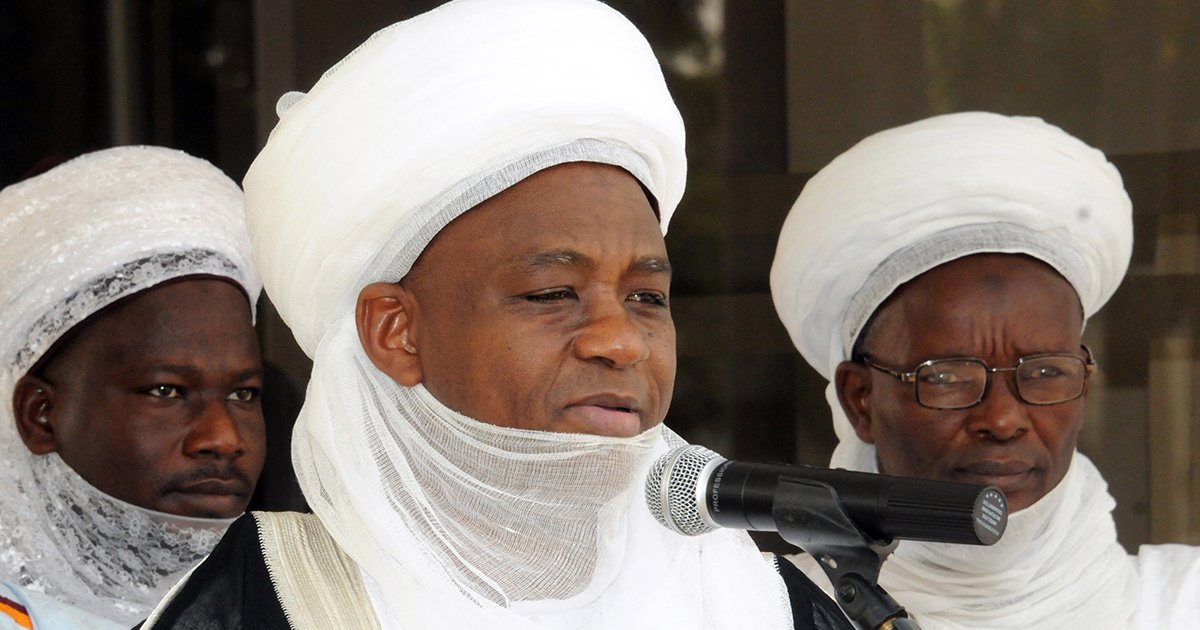
The Sultan of Sokoto, Alhaji Sa’ad Abubakar III, has appealed to the National Association of Resident Doctors (NARD) members to call off their ongoing strike, advising them to embrace dialogue.


Recall that the doctors have been on strike for months in an effort to air their grievances over poor funding.


Speaking on Friday in Sokoto at the 20th Conference of the National Pediatric Surgeons of Nigeria (APSON) opening ceremony, the Sultan made the plea, urging the“doctors also to respect the court order to resume work in the interest of the nation.”


The industrial action should be the “last option in resolving industrial conflict, especially for medical workers whose responsibility has to do with saving lives of citizens,” Alhaji Abubakar said.

Matawalle advises FG to declare state of emergency on security

By Muhammad Sabiu

The governor of Zamfara State, Muhammad Bello Matawalle, has advised the Federal Government to declare a state of emergency on security.

Mr Matawalle made the recommendation when he hosted Ali Janga, the Assistant Inspector-General of Police, in charge of Zamfara, Sokoto and Kebbi on Wednesday.

The governor also expressed his concern over the incessant attacks of bandits on communities in the northwestern part of the country, which, according to him, are what call for the declaration of a state of emergency on security.

A statement made available by Zailani Bappa, Special Adviser, Public Enlightenment, Media and Communications, indicates that the governor said: “No one feels safe anymore, and the only way to return the country on the path of sanity is to act out of the box.”

He also praised the federal government and security personnel for their diligence in the fight against killings in the region.

Nevertheless, he said, “extra effort is required to contain the growing security problems that are mounting by the day.

“The problem in Zamfara State is quite unique from those in other places and therefore require very careful and constructive solutions to control it.”

The state has, over the years, suffered killings and kidnappings, which lead to the death and displacement of countless people.

Nigerian Railways: Plea to include SOKEZA

Bilyamin Abdulmumin

Compared to the road, rail is the most preferred means of transportation, safety, security, economy, and comfort.

This particular means of transportation can be a way of improving the life of connected regions. With the railway development, goods are easily transported out, which maximize income. Therefore, goods from other areas are easily shifted in better cost of goods and services for the local masses.

The prosperity of the cities where the rail stations are located, when in full function is made from heaven. 

During its heyday, Kaura in Zamfara State was a farm produce hub bustling with social and economic activities though it has become a caricature of its former self.

Like Kaura, the Zaria railway station was once a vibrant centre. A visit to the site now could quickly bring the prosperous memory back to life. In nostalgia, a friend narrated how the Zaria Nigeria Railway Corporation (NRC) staff attracted a lot of pride and glamour, therefore becoming a dream of every unemployed person.

Since coming into power, President Muhammad Buhari made it clear that railway construction will top his priority. The president argued that it could be accessed by both the poor and wealthy compared to airlines, which only elites can access.

There are signs of commitment towards this vision of President Muhammad Buhari as various activities toward the railway construction are undertaken by his government.

There are four major lines: Lagos-Kano, Warri-Itakpe, Port Harcourt-Borno, and Katsina-Maradi.

The first segment of Lagos-Kano, Abuja -Kaduna was started by the previous administrations and completed by the present. President Buhari made this point clear at the commissioning of the Abuja-Kaduna segments, perhaps to water down the heat of the debate the project generated from the public.

The second segment of Lagos-Kano, Lagos-Ibadan, was newly constructed and commissioned by this administration which earned them considerable goodwill.  While the third segment, Kano-Kaduna, was flagged off this year, the Abuja-Kaduna and Lagos-Ibadan were commissioned in 2016 and 2021, respectively. This 1300km standard gauge rail, when completed together with other segments, will connect states of Oyo, Osun, Ekiti, Kwara, Niger, Lagos, Kaduna and Kano 

Itape-Warri, inaugurated early this year, connects to the Lagos-Kano line. This brought two other states of Delta and Edo to the federal line

Port Harcourt-Borno traverse almost all the south-eastern and north-eastern states of Nigeria: Abia, Anambra, Imo, Ebony, Enugu, Rivers, Benue, Nasarawa, Jos, Bauchi, Kaduna, Gombe, Yobe and Borno 

Katsina-Maradi was flag off earlier this year. It connects two more other states of Katsina and Jigawa to the national rail line

From the four railways mentioned, virtually all the Nigerian states were connected to the federal rail (including some states outside the country), but Kebbi, Sokoto and Zamfara, fondly called SOKEZA, are conspicuously left out

It is imperative to consider this region for at least two reasons. First, as an agriculture hub, the SOKEZA holds a vital position in the federal government drive for agriculture revolutions, so providing an effective means of transportation will go a long way to complement their work. Second, unfortunately, this region is not doing well based on the numerous human development index given by United Nations Development Programs (UNDP), such as education and per capita income. However, this wallowing at the bottom of the human development index can be reversed with infrastructure development such as railway development.

The nine senators, 25 members of the house of representatives from the region, appear not to be doing enough lobbying on the issue.

A glimpse of hope came in 2017, during the Minister of Transportation courtesy visit to the Sultan of Sokoto, where he confirmed the Federal Executive Council (FEC) approval to construct the rail lines to link the three states.

The minister also said, if the SOKEZA is connected, “then, President Buhari’s mandate of connecting all the 36 states of the Federal through railway would be achieved.”

President Buhari later promised the crowd of supporters gathered at Halliru Abdu Stadium, Birnin Kebbi, during the 2019 general election campaign that “My administration will extend the railway project to Kebbi State, which will come from Gusau to reach Sokoto and finally Kebbi State.” 

Four years after the FEC approval and three years since the presidential campaign promise, the flag off to Kebbi-Sokoto-Zamfara-Zaria remains more like a fantasy.

For the spirit of the average 1.5 million voters who have been standing still behind the president in each of his five presidential aspirations, the federal government should consider a speedy commitment to connecting the SOKEZA to the national rail network.

Bilyamin Abdulmumin is a PhD candidate in Chemical Engineering at ABU Zaria. He is also an activist for a better, informed society.