Sokoto

Police in Sokoto arrest suspected bandits’ Informants, financiers

By Sabiu Abdullahi

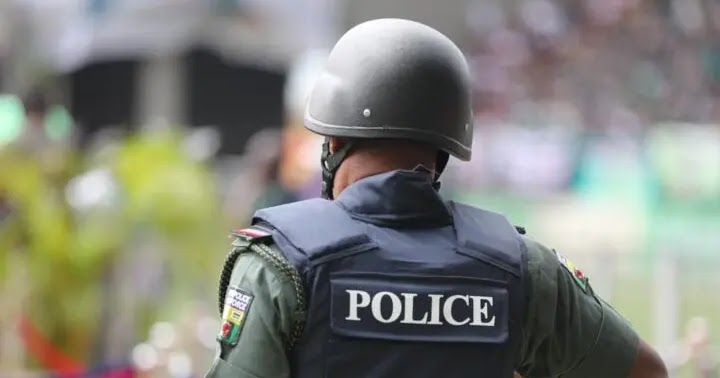
The Sokoto State Police Command has arrested suspected informants and financiers linked to bandit activities during a security operation in parts of the state, with several rustled cattle recovered.

Details of the arrests were made public in a post shared on X on Tuesday by security analyst Zagazola Makama. According to the post, the operation took place in the early hours of Monday at about 1:00 a.m. in Sarma Village, Tangaza Local Government Area.

Makama said operatives of the Sokoto State Police Command, in collaboration with members of the community guard, carried out the intelligence-led raid, which led to the arrest of two suspects identified as Nura Dan Haruna, 20, and Buhari Salah, 18.

The suspects were found with seven cows suspected to have been stolen, as well as a motorcycle without a registration number.

Makama reported that preliminary findings showed the suspects were acting on instructions from two other individuals who remain at large.

“The suspects confessed they were sent by two individuals, Abdullahi Gulum and Dan Iko, who are currently on the run, to deliver the cows to Hamza Ibrahim, 56, of the Kara area in Illela,” Makama wrote.

He added that police later arrested Hamza Ibrahim in connection with the case.

“Hamza was later arrested by the police,” Makama wrote.

Further inquiries by the police also uncovered that Hamza Ibrahim admitted to selling two of the cows last month to Abubakar Muhammad, 31, from Gwadabawa Local Government Area. Police confirmed that Abubakar Muhammad has also been arrested.

Authorities said investigations into the case are continuing, while efforts have been stepped up to track down and arrest the remaining suspects linked to the alleged bandit network.

Sokoto youth turn abandoned garage into unlikely goldmine

By Dahiru Kasimu Adamu

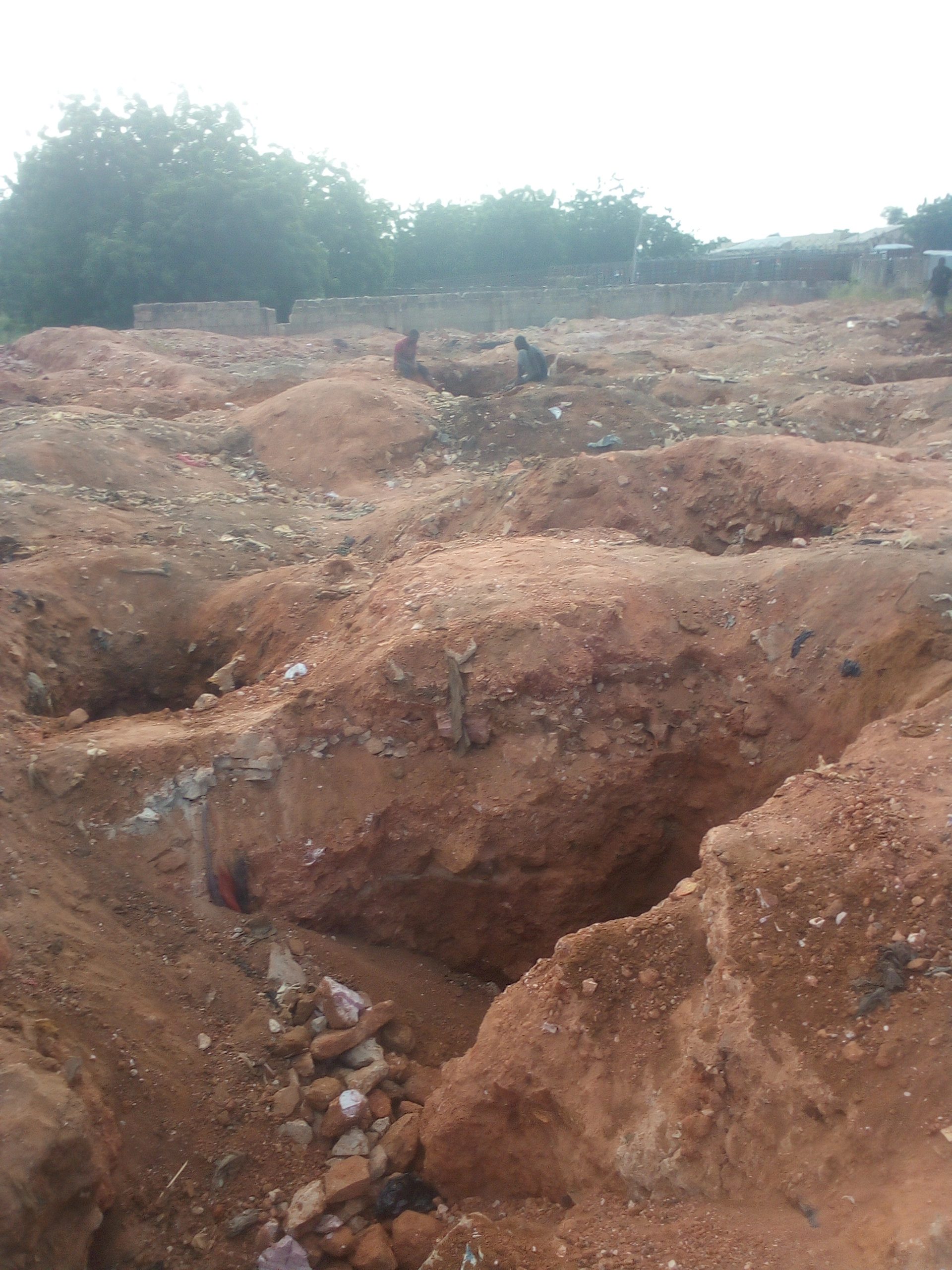
Every morning at Shantan Old Garage along Western Bypass, hundreds of young men armed with shovels and hoes descend into metre-deep pits, searching for buried treasure. But they are not hunting for gold or ancient artefacts, they are digging for scrap iron.

The abandoned garage, once a bustling hub for roadside mechanics, has become an unlikely source of livelihood for youth aged 15 to 40. As traditional labour opportunities have dwindled, these young scavengers have discovered that the ground beneath the old garage contains valuable iron scraps left behind when the site was operational.

“We thank Allah for this opportunity,” said Modi Sanusi, a scavenger in his late twenties. “Just this morning, scavenging materials worth over N125,000 were sold, all from this ground.”

The work is gruelling and dangerous, but profitable. Scavengers can earn between N20,000 and N40,000 daily, depending on their finds—a significant sum in an economy where formal employment remains scarce. Among those who have embraced this unconventional livelihood are former Tsangaya pupils who once begged for food.

Seventeen-year-old Kabiru explained how the earnings have transformed his life: “We earn income, buy food, give some to our parents, and save.”

The phenomenon is not confined to Shantan. Reports indicate that scrap metal collection has become one of Nigeria’s “millennium jobs,” with thousands of youth now reportedly earning substantial incomes from the trade.

But the work comes at a cost. Sharp objects buried in the soil cause frequent injuries, and landslides have resulted in fractures. Muhammad, another scavenger, recalled sustaining a leg fracture when earth collapsed on him. “After I recovered, I came back in the field as I can’t leave this work,” he said.

Health experts have raised alarm about additional risks. Buried iron from old vehicles could be contaminated with lead or other toxic chemicals. Open wounds from injuries risk infection, particularly given the lack of basic first aid facilities at the site.

Despite these hazards, the scavengers remain undeterred. Observers say the phenomenon highlights both the resilience of Nigerian youth and the urgent need for job creation and safety regulations. Advocates call for government intervention through new strategies and laws to regulate the business, as well as leadership within scavenging communities to organise safety campaigns.

For now, the digging continues at Shantan Old Garage. As unemployment persists and metal prices remain attractive, more youth are likely to join the ranks of those turning Sokoto’s buried past into their economic future—one shovelful at a time.

Sokoto communities plead for arms to defend themselves against rampant banditry

By Abdullahi Mukhtar Algasgaini

Frustrated by persistent and deadly bandit attacks, residents of the Kebbe Local Government Area in Sokoto State have issued a desperate appeal to the Federal Government, urging President Bola Tinubu to grant them permission to bear arms for self-defence.

The appeal was made during a press conference held at the press centre in Sokoto, where community leaders voiced their profound frustration with the government’s perceived failure to protect them.

Led by their community head, Alhaji Adamu Kebbe, the residents accused both state and local government authorities of abandonment, leaving them in a state of perpetual fear and vulnerability.

“We cannot sleep with both eyes closed. Our towns have been nearly wiped out, yet the government is not doing enough to protect us,” Alhaji Kebbe stated.

He emphasized that the people can no longer endure the relentless killings, kidnappings, and destruction of property.

The community’s request highlights a growing trend of citizen militancy in the face of escalating insecurity. Security analysts have warned that such calls for self-armament are a clear indicator of eroding public confidence in the state’s ability to provide security, necessitating urgent federal intervention.

“If the government cannot protect us, it should allow us to protect ourselves,” one villager was quoted as saying, capturing the sentiment of many.

In their appeal, the Kebbe community also requested direct financial support from the Federal Government to the local councils to enable them to take immediate emergency measures to protect civilians.

Sokoto State, particularly regions like Isa, Sabon Birni, and Kebbe, has been one of the epicentres of bandit violence in recent years. While the state government has acknowledged the severe threat, residents insist that the measures taken so far are insufficient to guarantee their safety.

Community leaders at the conference reported that at least 17 villages have been completely deserted due to the frequent attacks, displacing thousands and crippling agriculture and daily life.

This is not the first such plea from the state. Earlier, youths in the Shagari local government area had also threatened to take up arms, citing exhaustion from the relentless attacks and kidnappings that have plagued their region.

In response to the latest appeal, the Sokoto State government has assured the public that it is doing everything within its power to end the security crisis in Kebbe and surrounding areas.

Bello Turji releases 32 hostages, vows to end attacks on farmers following clerics’ intervention

By Sabiu Abdullahi

A well-known cleric, Musa Yusuf, popularly called Asadus-Sunnah, has revealed that terrorist leader Bello Turji has freed 32 people who were held hostage and promised to halt his group’s assaults on local farmers.

This followed a series of meetings between Turji and Islamic scholars in Zamfara State.Speaking during a religious event in Kaduna on Monday, Yusuf said the peace discussions were initiated in July and took place in the Fakai forest in Shinkafi Local Government Area.

He explained that the clerics met with Turji and other key fighters including Dan Bakkolo, Black, Kanawa, and Malam Ila.

All the parties reportedly agreed to the peace terms.

According to him, “We met Mr Turji, Dan Bakkolo, Black, Kanawa, and Malam Ila. The speculation that Dan Bakkolo was killed is not true. These people are the ones terrorising the axis, and they all agreed to the peace proposals, one of which is for them to surrender some of their arms to show commitment to the peace process.”

Yusuf said the bandits released the arms in three separate batches and gave residents of Shinkafi access to farmland across the river leading to Turji’s camp.

He added, “We agreed that the Fulanis must be allowed to go to town without being stereotyped or killed by the vigilante.”

As part of the agreement, Turji released 32 hostages.

Yusuf presented a video that showed the harsh conditions the victims endured before reaching the terrorist leader’s hideout.

He said the captives, which included women and children, spent nearly four months in captivity.

One woman reportedly gave birth during her time in the camp, while another was bitten by a snake.

Yusuf stated that the Shinkafi axis has since experienced relative calm.

Farmers are now working on their lands without fear of abduction.

He mentioned that while the talks had brought some relief to the area, negotiations were ongoing to convince Turji to commit fully to the peace plan.

However, the clerics chose not to demand a complete surrender of arms so as not to expose Turji to attacks from rival armed groups who are not part of the current discussions.

The cleric also cautioned religious figures who have been attacking Turji on social media. He warned that such actions could worsen the situation.

Yusuf acknowledged that the peace initiative would not completely end the insecurity in Zamfara, but pointed out that communities within Turji’s area of control are now enjoying some stability.

He praised President Bola Tinubu, National Security Adviser Nuhu Ribadu, Zamfara State Governor Dauda Lawal, and Senator Shehu Buba for supporting non-military approaches to resolving the region’s security crisis.

In a video released last October, Turji had insisted that true peace would remain out of reach in Zamfara until government forces and vigilantes stopped targeting Fulani communities.

“This is why we are calling on all of you to come and collaborate with us for peace to reign and stop the bloodbath in Zamfara. Guns and airstrikes will not stop us because we are not afraid of death,” he said.

He also dismissed the political back-and-forth between Governor Lawal and the Minister of State for Defence, Bello Matawalle, saying neither was truly concerned about the people’s welfare.

Troops kill 3 terrorist bandits in Sokoto

By Anwar Usman

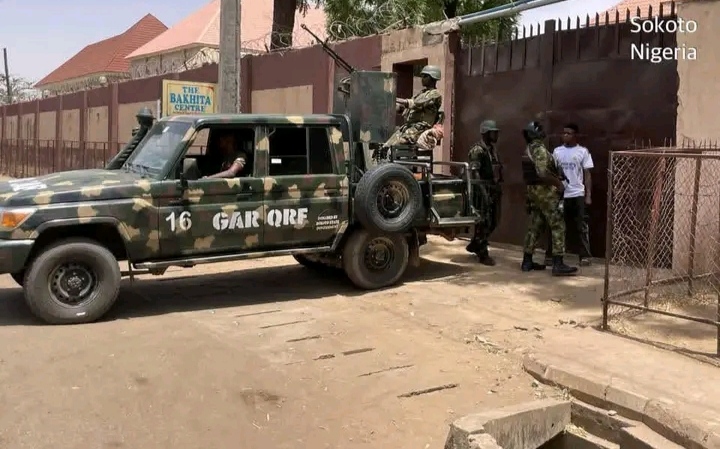
Troops of the Joint Task Force under Operation Fansan Yamma have eliminated three notorious kingpins in Sabon Birni Local Government Area of Sokoto State.

The operation, which took place on Friday, was a carefully executed ambush between Mallamawa and Mazau villages in the Tsamaye/Mai Lalle District.

According to military authorities, the terrorists, identified as Kachalla Nagomma, Gurmu, and Ali Yar Daribiyar, were intercepted while attempting to extort ransom and levies from locals in the area.

Three AK-47 rifles with magazines and a motorcycle were recovered from the scene during the operation.

The success of the mission has been met with widespread jubilation in the affected communities of Mai Lalle, Tsamaye, Rimaye, and nearby areas in Sabon Birni and Goronyo LGAs.

Residents of the communities, terrorised by the activities of the neutralised criminals and their foot soldiers, expressed happiness and renewed confidence in the security efforts.

Operation FANSAN YAMMA, a security task force aimed at restoring peace and stability across Nigeria’s North West and parts of the North Central region, reiterated its commitment to intensifying counter-terrorism efforts in collaboration with local communities.

The Media Information Officer of OPFY, Captain David Adewusi, in a statement issued on Saturday called on the public to continue sharing genuine information that’ll help the ongoing military operations.

He further stated that “the Joint Task Force remains resolute in its mission to eradicate terrorism and restore lasting peace to all affected areas”.

Insecurity: Sokoto village attack leaves 20 dead

By Abdullahi Mukhtar Algasgaini

Over 20 people were killed in a terrorist attack on Kwalajiya Village, Tangaza Local Government Area, Sokoto State, in the early hours of Tuesday, leaving the community devastated.

Eyewitnesses described heavily armed assailants storming the village, firing indiscriminately and setting homes ablaze. Many victims, including women and children, are feared dead, with several residents still unaccounted for following the violence.

The village head reportedly fled to Sokoto city for safety, narrowly escaping the attack. His current condition is unknown.

Sokoto State Police Command spokesman, Ahmed Rufae, confirmed the incident but cited ongoing investigations as the reason for withholding further details.

While the motive remains officially unconfirmed, unverified local sources suggest the attack may be linked to the village head’s refusal to permit intermarriage with individuals associated with the Lakurawa terrorist group.

The assault has heightened existing concerns about persistent insecurity in Sokoto State and the expanding influence of armed groups in rural areas.

Residents are urgently appealing to state and federal authorities to enhance protection for vulnerable communities and ensure the perpetrators face justice.

Kwalajiya now mourns its dead amidst profound grief and uncertainty.

We’re ready to negotiate with bandits –Sokoto Gov’t

By Anwar Usman

Sokoto State government has revealed its commitment to peace and security and expressed readiness to engage in dialogue with armed groups who are ready to surrender their weapons and embrace reconciliation.

This was revealed in a statement signed by the Special Adviser to Governor Ahmed Aliyu on Security, Col Ahmed Usman (rtd).

The government, in a statement, noted that “many historical conflicts have not ended solely through the use of force, but through meaningful dialogue, reaffirming that the state is open to negotiating with bandits who demonstrate a genuine commitment to surrender and reintegrate peacefully into society.”

It also appreciated President Bola Ahmed Tinubu, the service chiefs, security personnel, for their unwavering efforts in protecting the region.

“Their sacrifices are deeply appreciated. May Allah bless the souls of our fallen heroes and grant comfort to their families,” the statement read.

While commending the federal government over the proposed deployment of forest guards across the region, the Sokoto State Government stressed the importance of integrity and community trust in the recruitment process.

The government, however, reaffirmed its unwavering support for all initiatives aimed at achieving lasting peace in the state.

JUST IN: Sultan announces start of Ramadan Saturday

By Uzair Adam

The Sultan of Sokoto and President-General of the Supreme Council for Islamic Affairs, Alhaji Muhammad Sa’ad Abubakar III, has declared Saturday, March 1, as the first day of Ramadan.

He made the declaration in a nationwide broadcast, stating that the Sultanate Council’s moon sighting committee had received credible reports from traditional rulers and religious leaders across the country confirming the sighting of the new crescent.

The Sultan urged Muslims to dedicate themselves to worship during the holy month and use the period to pray for Nigeria and its leaders.

He also called for peaceful coexistence among citizens and encouraged wealthy individuals to support the less privileged in observing the fast with ease.

While praying for God’s guidance and wisdom for the nation’s leaders, he emphasized the importance of unity and compassion during Ramadan.

Nigerian authorities urged to protect Hamdiyya Sidi, lawyer amidst threats

By Abdullahi Mukhtar Algasgaini

Sokoto state authorities are under increasing pressure to ensure the safety of Hamdiyya Sidi Shariff and her lawyer, Abba Hikima, who have both been subjected to disturbing threats during the ongoing trial.

The duo is facing charges brought by the Sokoto state government, accusing Hamdiyya of “insulting or abusive language” and “inciting disturbance” for criticizing Governor Ahmed Aliyu.

According to Amnesty International Nigeria, the threats to their safety include harassing phone calls and physical confrontations with individuals claiming to be ‘intelligence agents.’

These actions have raised concerns over the abuse of power and an apparent attempt to silence critics and intimidate those defending them.In the wake of the threats, Barrister Hikima was forced to request armed police protection during a recent court hearing, which the court granted.

However, both Hikima and Hamdiyya have been followed and confronted while staying in Sokoto for the trial, intensifying the already hostile atmosphere.

In November 2024, Hamdiyya Sidi Shariff was abducted by armed assailants while she was retrieving her mobile phone from a charging point.

She was brutally beaten and thrown out of a moving tricycle, suffering severe injuries.Amnesty International Director Isa Sanusi condemned the actions, stressing that such intimidation tactics aimed at suppressing freedom of expression should have no place in a democratic society.

Sanusi also called on Nigerian authorities to focus on tackling the rampant insecurity in Sokoto, particularly in the eastern part of the state, where gunmen have been terrorizing local communities.

Amnesty International slams military over Sokoto airstrike, demands justice

By Uzair Adam

International human rights organization Amnesty International has accused the Nigerian military of attempting to conceal the deaths of civilians in two Sokoto State communities during a December 25 operation targeting Lakurawa terrorists.

The Daily Reality reports that the airstrike, conducted in Gidan Sama and Rumtuwa communities in the Silame Local Government Area, resulted in the deaths of at least 10 citizens.

The Defence Headquarters attributed the fatalities to a secondary explosion at a terrorist logistic base, but Vice President Kashim Shettima apologized to the victims’ families.

The incident adds to a troubling history of military airstrikes unintentionally killing civilians, with Amnesty International estimating a total of 436 civilian deaths over the past eight years.

Amnesty International’s Country Director, Isa Sanusi, condemned the Sokoto bombing and accused the military of disregarding human lives. He called on the Nigerian government to conduct an independent investigation.

“The Nigerian military must hand over all records related to the airstrike to the Attorney General’s office for an impartial investigation,” Sanusi stated. “Failure to hold the military accountable only perpetuates impunity and endangers more lives.”

Sanusi urged President Bola Tinubu to establish an independent inquiry into the incident, ensuring justice for the victims and their families.

He reiterated the need for fair trials and compensation for those affected. Amnesty International also highlighted previous airstrikes in various states, including Borno, Zamfara, and Kaduna, which have collectively claimed hundreds of civilian lives.

Despite repeated assurances to minimize civilian casualties, these incidents continue to occur, raising concerns about the military’s operational protocols and accountability.