Social Media

When daughters sell sex and uncles buy it: Nigeria’s unspoken scandal

By Abba Murtala

In Northern Nigeria today—from Kano to Katsina, Kaduna to Abuja, Gombe to Adamawa and beyond—prostitution is being redefined, repackaged, and repurposed in ways our society is yet to grasp or confront fully. Once seen as an explicit, stigmatised trade practised by women living in brothels or in the fringes of urban society, prostitution has now assumed a form that is more discreet, deceptive, and dangerously normalised.

The new face of prostitution no longer resides in dingy motels or poorly lit street corners. She may very well be your neighbour’s daughter or your daughter, your cousin, your niece, or even your girlfriend (wives, too, have been reported). She lives at home, speaks decently, dresses modestly in public, attends school or has a small job, and blends perfectly into her conservative community. Yet, she is actively engaged in transactional sex.

This new wave of commercial sex work is cloaked in deception. Unlike the “traditional” prostitutes who often migrated far from their family homes to avoid shame and suspicion, these girls remain within the comfort of their homes. The family remains unsuspecting; society remains blind. They are not seen as sex workers, and they don’t identify as such. But the reality is, they sell their bodies to men—usually for money, phones, rent, trips, and more.

Who Are the Clients?

They are not their peers. Young men, even those with questionable morals, typically frown at paying for sex, especially with women their own age, especially since there is the looming risk of exposure. The real clients, therefore, are middle-aged and elderly men—the “uncles.” These men, often above 50, use their financial power to exploit vulnerable young girls. Many are married, influential, and sometimes respected members of the community. They book hotels, arrange flights, and fund the lavish lifestyles of these girls, all in exchange for sexual gratification.

They are the shameless engines driving this trade, creating demand and sustaining the illusion. They are the reason a girl from a struggling family can suddenly afford the latest iPhone, expensive clothes, designer handbags, and weekend trips to Lagos, Abuja or Dubai.

How Does It Happen?

It starts with a desire—often triggered by poverty, peer pressure, or social media fantasies. The girl feels a pressing need for money, attention, and a lifestyle far beyond her family’s means. She may resist menial jobs or honest work, not because she is lazy, but because those options won’t fetch her the quick cash she believes she deserves.

Then comes the network. A friend introduces her to someone. A “pimp”—male or female—slides into her DM. The network is simple but effective—a few conversations, a meeting, a test run. Then the money starts flowing. Once she gains footing, she establishes a base of loyal clients—uncles who can be called upon for any service, at any time, for the right price.

Her life becomes a web of deception. School hours, “friend visits,” or supposed job responsibilities become covers for interstate flights, secret hotel bookings, and clandestine transactions. The richest among them reportedly offer services like anal sex, which are in high demand by some of these predators.

Who Are These Girls?

They are typically from low-income or struggling homes. They reject being categorised as “poor” in public, and they will go to great lengths to appear middle-class or affluent. Many of their families are unaware. In some extreme cases, parents even give silent consent, as long as the money keeps flowing home.

Their greatest assets? Physical beauty, curvy figures, and the naivety that predators exploit. These girls have no business with brothels or street corners. They have gone digital. They operate through WhatsApp groups, TikTok algorithms, and private Facebook pages. With just a few clicks, they are matched with high-paying clients—sometimes in entirely different states.

Why Poverty Is Not an Excuse

Many will point fingers at poverty. But we must be careful not to romanticise or rationalise prostitution as a legitimate response to hardship. Poverty is real, yes—but so is integrity. There are girls in the same communities who, despite hunger and hardship, have chosen honest paths. They work as waitresses, hairdressers, salesgirls, and tutors. They manage small businesses, survive on tight budgets, and still hold their heads high.

Prostitution, especially in this form, is not a product of poverty alone—it is often a product of greed, laziness, entitlement, and a corrupt value system. The growing belief that one must “look rich” or “live big” regardless of how the money is made is at the core of this moral collapse.

Religious warnings are being ignored. Even when confronted, some girls say, “Allah will forgive.” But repentance requires remorse and a firm commitment to change—not a continuous indulgence in sin while hiding behind religious phrases.

The Role of Social Media

Social media is a major culprit. The platforms intended to connect and educate have become virtual marketplaces for the flesh trade. TikTok glorifies vanity, consumerism, and “soft life” narratives. WhatsApp becomes the digital brothel where clients and sex workers finalise deals. Facebook hosts secret groups where sex work is promoted in coded language.

The constant bombardment of luxury lifestyles, body flaunting, and materialism fosters insecurity and desperation among impressionable girls. The result? An endless race to fake perfection—even if it means trading dignity for money.

The Damaging Effects

 • On Families: Many families remain oblivious, and by the time they discover the truth, the damage is irreversible. Reputations are destroyed. Trust is lost.

 • On Society: The normalisation of secret prostitution threatens the very foundation of our cultural and moral values. When immorality becomes invisible, it becomes unstoppable.

 • On Marriages: This trend contributes to rising distrust in relationships and marriages. Husbands are becoming suspicious, wives are growing insecure, and divorce rates are climbing.

 • On Public Health: Increased sexual activity with multiple partners, often without protection, raises the risk of STDs, including HIV/AIDS. Yet, this danger is seldom discussed.

 • On Religion: The erosion of fear of Allah and the disregard for Islamic teachings show how deep this problem runs.

Critical Questions We Must Ask

 • How did we get here?

 • Who failed our girls—parents, clerics, or the government?

 • Why is society silent?

 • What kind of men are sleeping with girls young enough to be their granddaughters?

 • Will we allow another generation to grow up in a society that calls evil “smartness” and shamelessness “hustle”?

Final Warning

This is not a rant. It is a wake-up call. What we are witnessing is not just immorality—it is moral suicide. If we continue to ignore this, we risk raising a generation that believes fornication is business, pimps are mentors, and prostitution is hustle.

Let the uncles be warned: your lust is destroying the daughters of the land. Let the girls know: no amount of iPhones or Dubai trips will cleanse the burden of shame you’re carrying. And let the parents rise: your silence is no longer innocent—it is complicity.

May Allah guide us all, amin.

Abba Murtala, FCH DK, wrote from Gombe via abbamurtala8@gmail.com.

Fame, fortune, and fallout: The Peller paradox that’s stirring Nigeria

By Haroon Aremu Abiodun

It all began like any other viral moment on Nigerian social media, but then it took a turn. Popular TikTok sensation Hamzat Habeeb Adelaja, popularly known as Peller, shocked followers recently with a post that seemed almost too generous to be true. He was hiring a cameraman for a monthly salary of ₦500,000. The news spread like wildfire, and in no time, graduates, yes, university graduates, trooped in for interviews, hoping to clinch the role under the young entertainer’s banner.

But beneath the glitz of that social media post lies a stark irony, a brutal reflection of Nigeria’s current socioeconomic reality: a secondary school certificate holder interviewing degree holders for a position in the gig economy. Is this a triumph of hustle over education or a symptom of a failing system?

This scenario has ignited widespread controversy. Should someone with Peller’s academic background employ graduates? Is he flaunting success in a way that undermines the value of formal education? Or is he, in his own unorthodox way, contributing to job creation in a country where unemployment is a ticking time bomb?

Regardless of where you stand, one truth remains: Nigeria’s youths are not only unemployed, they are disillusioned.

But, beneath the glamour, is Peller’s youth the key to his controversial rise? At age 20, can Peller truly shoulder the weight of fame, fortune, and the emotional toll that comes with being in the public eye? Fame is a double-edged sword, and wealth earned in the public space, especially in a country like Nigeria, where social values matter, can either elevate or destroy a brand.

Some have attributed his behaviour to immaturity, a lack of exposure, or poor guidance. Others question the roles played by his management and inner circle. Are they enabling his excesses or helping him stay grounded?

Peller’s youth and maturity seem to be dancing to different tunes at times in sync, at other moments, sharply distinct. While his age brings the energy, creativity, and audacity that fuel his rise, it may also limit the depth of judgment that comes with lived experience. Despite his fame and financial success, one thing remains true: maturity isn’t measured by wealth or followers. 

He may be richer or more popular than his advisers, but that doesn’t make guidance obsolete. In fact, the higher one climbs, the more essential wise counsel becomes. No matter our age or status, we all need mentors, correction, and continued learning because growth, like fame, should never outpace wisdom.

This is not Peller’s first brush with public criticism. During the heated JAMB controversy months ago, he was branded a poor role model. Critics say he misuses his influence. Admirers say he is just being himself. But the question is not just what Peller does, it’s what he represents.

When individuals like Peller become the aspiration of thousands of young people, what message are we sending? That fame, regardless of how it’s earned, trumps knowledge, experience, and decorum?

One might ask, is this a systemic failure or a personal flaw? But the deeper question is this: Can we really blame Peller for being a product of a broken system? Or should we point fingers at the society that created him, a society where education is devalued and unemployment drives graduates to accept roles from entertainers with no formal qualifications?

This is a national dilemma. Young people are no longer looking to engineers, doctors, or scholars as role models. They now look to influencers, many of whom may lack the maturity or training to handle such responsibility.

This isn’t just about Peller; it’s about perception, power, and public influence.

The Brand at Risk: PR Implications

From a public relations perspective, Peller’s every move is now under a magnifying glass. As a brand, his current trajectory presents both opportunity and risk. He is loved by many but also watched with scrutiny by an equal number. His brand power lies in his authenticity, but even that must be managed with intentionality because one viral moment can either grow his brand or ruin it.

In a society where cultural norms still dictate public perception, Peller must understand that his brand isn’t just about content; it’s about conduct. His platform gives him power, and with that comes responsibility.

PR experts warn that failing to manage this carefully could result in brand erosion, reduced partnerships, and a gradual loss of public trust. A sustainable career in entertainment requires more than charisma—it demands discipline.

Beyond the Buzz: What should Peller do? It’s easy to dismiss these concerns as envy or moral policing, but that would be a mistake. Peller is a Nigerian pride, a self-made entertainer who carved a niche and created employment. That in itself is commendable. But with influence comes expectation. With status comes scrutiny.

This article is not to tear Peller down. It is to offer a lens of accountability, reflection, and growth. The same media that celebrates must also question, not out of hate, but out of hope that Nigeria’s influencers will see themselves not just as entertainers, but as leaders in a generation gasping for direction.

Peller can choose to be more. He can use his platform to elevate the values of integrity, hard work, and education, even as he continues to thrive in entertainment. He can show that success does not require disrespect, and that influence is not a license for irresponsibility.

Whether he likes it or not, Peller is not just a content creator. He’s a movement. And movements, when misdirected, can lose their magic or worse, mislead millions.

Final Thought

Peller’s story is still unfolding. He is talented, young, and full of potential. This is not a final verdict, but a cautionary tale. The camera is rolling, the nation is watching.

The real question is: What will Peller do next?

Haroon Aremu Abiodun, An Author, public Affairs Analyst. He wrote in via exponentumera@gmail.com

Beauty at a price: The cost of overestimating physical attractiveness

By Khairat Suleiman

Physical attractiveness is recognised as one of the strongest societal currencies, with research suggesting it fosters confidence and can translate into personal and professional success for many women. 

A 2023 study from the Journal of Social Psychology found that attractive individuals are perceived as more competent in initial social interactions, particularly in image-driven industries, which can be especially relevant in contexts like that of the Hausa/Fulani parts of Northern Nigeria, where cultural norms often emphasise appearance in social and marital roles. However, this focus can overshadow the importance of education, skills, and intellectual growth.

Consider the 2022 case of 5-year-old Hanifa from Kano State, who was tragically murdered by her head teacher tragically murdered. Her death sparked temporary outrage on social media, with behavioural psychologists attributing much of the reaction to her good looks, as noted in various analyses. This example, while digressive, highlights how attractiveness influences societal perceptions, even in tragic contexts.

While beauty can open doors, overemphasising it often has consequences. A 2025 LinkedIn report highlighted that women with advanced skills in fields such as technology, finance, or leadership earn 20-30% more than those relying on appearance-based roles, which often have shorter career spans. Investing in intellectual and professional growth not only leads to personal fulfilment but also challenges societal expectations, with confidence from career milestones being just as enduring, if not more, than that from physical enhancements.

Social media plays a vital role in promoting beauty standards over career-focused content. A 2024 analysis of TikTok content revealed that posts about Brazilian Butt Lifts (BBLs), Botox, and skin bleaching receive millions of views, often outpacing career-focused content. Influencers promote these aesthetic procedures by sharing recovery tips and glowing results, which normalise and glamorise them. 

Meanwhile, women sharing career advice, skill-building tips, or educational opportunities are underrepresented, with a search for “career growth for women” on Instagram yielding fewer than 10% of the results compared to “beauty tips.” This imbalance creates a feedback loop, bombarding young women with messages prioritising looks over substance.

In the Hausa/Fulani parts of Northern Nigeria, career women face additional challenges due to stereotypes that suggest women’s value lies primarily in their appearance, undermining their professional and intellectual capabilities and hindering progress toward gender equality. An example is a female broadcaster from an international radio station who was ‘praised’ for her beauty while her professional qualities were ignored, with viewers even bullying and discrediting other broadcasters with equally laudable professional qualities for not meeting the ‘attractiveness’ standards. These stereotypes are rooted in cultural norms, thus often confining women to domestic roles and limiting their participation in many life-changing activities.

We need to amplify platforms and role models that celebrate diverse definitions of success. We need more women sharing skill-building resources, career tips, or educational opportunities, rather than BBLs, Botox, aphrodisiacs, and skin bleaching, which have surged in popularity. Self-care isn’t inherently harmful; the key is balance. Looking good should complement, not overshadow, a woman’s intelligence and abilities.

Khairat Suleiman can be reached via khairatsuleh@gmail.com.

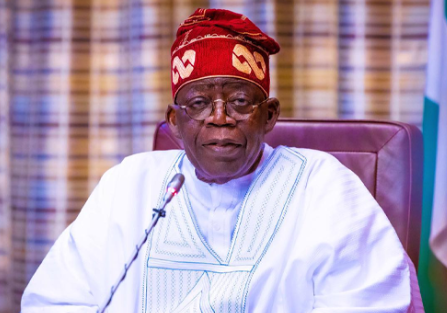
Dear President Tinubu, please ban TikTok to preserve our national values

By Malam Aminu Wase 

Your Excellency,

I write with deep concern for the moral and cultural fabric of our nation. It is my humble request that you consider banning the operation of TikTok in Nigeria to restore and preserve the dignity of our country, our religious values, cultural heritage, and the moral upbringing of our youth.

While TikTok is used in many parts of the Western world as a platform for creativity, advertising, and business promotion, the situation in Nigeria is deeply troubling. Instead of being a tool for productivity and education, TikTok has become a channel where inappropriate content thrives, particularly content that undermines our moral values and exposes young people to harmful influences.

In Nigeria today, TikTok is alarmingly associated with immoral displays, including the exposure of private parts by married women, as well as the promotion of prostitution. It has sadly become a platform that contributes to the breakdown of marriages and family structures. Many relationships have been destroyed because of disagreements over the use of this platform, with some spouses refusing to delete their TikTok accounts despite repeated appeals from their partners.

This moral decline is not just a private matter; it affects our collective national conscience and identity. If left unchecked, it may have long-term consequences for future generations.

Therefore, I respectfully urge your administration to take decisive action to regulate or, if necessary, ban TikTok in Nigeria. Such a step would not only protect our societal values but also send a strong message about the importance of discipline, modesty, and responsible use of technology.

Thank you, Mr. President, for your continued commitment to the growth and integrity of our nation.

Malam Aminu Wase writes from Kaduna. He can be reached via aminusaniusman3@gmail.com.

Does “live” matter more than lives?

By Firdausi Abubakar

On Friday, May 10th, 2025, Abuja witnessed a tragic accident involving a fire truck and a car carrying four young boys. The scene was devastating, bodies sprawled, metal crushed, and flames smouldering. But even more disturbing was the crowd that quickly gathered, not with medical kits or a sense of urgency to save the lives of the victims, but with phones raised, recording, streaming, and snapping pictures. “Live on the scene”, some captioned, while actual lives slipped away.

This isn’t just an Abuja problem. It’s a moral crisis growing across Nigeria. From Lagos to Kano, Enugu to Port Harcourt, and others, a familiar sight follows whenever an accident or violent incident occurs: dozens, sometimes hundreds of people filming rather than helping.

In March 2025, during a brutal fight between cult groups at a university in the South-West, students stood around with their phones in hand. No one intervened. No one called for help. But the footage of the fight went to TikTok, Instagram, and X within minutes.

The question is haunting: has going live become more important than saving lives?

Moreover, it’s easy to point fingers at bystanders. But Nigeria’s systemic failures have created a dangerous environment where compassion is punished and apathy is rewarded.

In most parts of the country, there’s no reliable emergency line. Calling for help is often futile, lines don’t go through, operators are untrained, or help arrives late. Even the trauma centres, where they exist, are few, underfunded, and poorly equipped. Worst of all, those who try to assist victims often find themselves entangled with law enforcement.

In Nigeria, it’s a common habit for a Good Samaritan to be detained as a suspect, harassed, or extorted by the police. This fear is compounded by a lack of trust in the justice system and has led many to do nothing. Or worse, to choose content creation over human compassion.

We now live in a time where everything is content. People rush to be the first to post, the first to trend, the first to go viral. But this obsession with clout has come at the cost of our humanity.

The Abuja fire truck accident is a painful example. Witnesses say the four young men may have survived had they been pulled from the wreckage sooner. But instead of taking action, people stood by, filming, posting and watching. Their final moments were broadcast to the world while help was delayed.

Nigeria urgently needs to fix its broken emergency response system. We need working, responsive hotlines, trained emergency responders, and functioning trauma centres. The government must also create and enforce laws that protect those who help, so citizens won’t be afraid to do the right thing.

But beyond policy, we must confront a cultural shift. We must remind ourselves and our communities that no number of likes, shares, or views is worth more than a human life. Helping someone in need shouldn’t be optional; rather, it should be instinct.

Before you press record, ask yourself: Would I rather save a life or capture a moment?

Firdausi Abubakar, is a student of Information and Media Studies, Bayero University Kano. She can be reached via fizzyabubakar@gmail.com.

MIL Policy Integration: MAIN, in collaboration with UNESCO, trains media executives, senior editors, and content creators in Kano

By Nusaiba Ibrahim

Media Awareness and Information for All Network (MAIN) in collaboration with the United Nations Educational, Scientific and Cultural Organisation (UNESCO) has conducted training for media managers, senior editors and content creators from the Northwest region on the Integration of Media and Information Literacy (MIL). The two-day event took place in Kano State from May 19 to 20, 2025.

In his welcoming address, the Chairman of MAIN, Prof. Jide Jomoh, Lagos State University, appreciated all the participants and guests for sparing time out of their busy schedules to attend the session. He also appreciated the support of the Kano State government. Some of the objectives of the training, he said, included ensuring that editorial policies are reviewed in line with the rise of technology and the emergence of AI, as well as strengthening the capacity of journalists with the skills needed to combat information disorder.

To declare the event open, Hon. Commissioner for Information and Internal Affairs in Kano State, Alhaji Ibrahim Waiya, expressed his gratitude on behalf of the Kano State government to MAIN and UNESCO for organising the event. He said the training comes at a time when journalism is facing challenges on issues brought by information disorder. He noted that the training will surely equip the participants with the practical skills they need, especially for national development.

Also speaking during the occasion, Adamu Salisu, the State Coordinator of NBC, Kano State, who represented the Zonal Coordinator, said there are indeed blurred gaps between content creators and journalists, which make activities quite uneasy for media managers today. He added that “Integrating MIL is not merely a theoretical exercise but a practical necessity.”

Notable presentations on the first day of the event were made by Dr. Ruqayyah Yusuf Aliyu of Bayero University Kano, who spoke on MIL in Journalism – Challenges and Prospects, and Dr. Helen T. Olojede, the Head of the Department of Philosophy at the National Open University, who discussed Media and Information Literacy Responses to Generative AI. The sessions presented participants with the opportunity to discuss contemporary issues surrounding information disorder, combating misinformation, using AI and technology ethically, and how MIL can be integrated into media practice for the benefit of the public.

Also, during the session, Ms. Yachat Nuhu, from the Communication and Information sector, UNESCO Abuja, gave an overview of the organisation’s work on media and information literacy. Additionally, Dr. Oluseyi Soremekun, the National Officer of the United Nations Information Centre (UNIC), discussed extensively the issues and competencies of understanding Media and Information Literacy.

The second day of the training was focused more on discussions and active participation from the attendees. Prof. Jimoh led a discussion on MIL and national development, reviewing the editorial policies of selected media organisations. Participants were later divided into groups for in-depth discussions, and thereafter, representatives from the groups presented on the key competencies needed to support the implementation of policies and strategies on MIL in their respective media organisations.

In their various remarks, the participants stated that the program has achieved its objectives to the tune of 80 per cent. Media practitioners from The Daily Reality, the Nigerian Union of Journalists, Katsina State Television, Abubakar Rimi Television, Freedom Radio Kano, Daily Trust and the Vanguard Newspaper, as well as Hausa_Fulanii, a notable northern Nigerian blogger, among many others, participated in the session.

Finally, the session concluded with the formation of the Nigeria MIL Media Executive Network, which will be chaired by Mr. Abba Zayyan, a seasoned media professional in Nigeria. The training will also be replicated in the other zones of the country, as that of the North West was the first.

Nusaiba Ibrahim Na’abba is a freelance journalist and communication specialist from Kano, Nigeria. She can be reached via nusaibaibrahim66@gmail.com.

Lights, camera… stagnation? The untold battle of Nigeria’s entertainment industry

By Haroon Aremu

Like a sly jester winking at the moon, I was scrolling through social media when I encountered celebrity interviews recounting how they rake in millions within months. This spectacle ignited a contagious fervour among the youth, convincing them that the entertainment industry is the sole avenue to instant riches. 

No one talks about the failures, the countless auditions, or the silent struggles behind the scenes; they only talk about the glamour, the wealth, and the “soft life.”  

Bollywood thrives on strategic government investment, making it a global economic force that boosts employment, tourism, and digital expansion. Unlike Nigeria’s self-funded entertainment sector, India injects billions into its film industry, ensuring sustained growth and international reach.  

Beyond captivating audiences, it turns filming locations into major tourist attractions, employs millions across various roles, and operates as a well-structured economic engine that drives cultural and financial influence.

Bollywood wields significant soft power, shaping international perceptions, fostering trade partnerships, and influencing policy discussions on a global scale. Now, the burning question is If India has done it, why can’t Nigeria?

President Bola Ahmed Tinubu and the Nigerian leadership stand on a promising foundation. Nollywood is already the second-largest film industry globally, built almost entirely on private effort. With champions like Kunle Afolayan, Femi Adebayo, Funke Akindele, Toyin Abraham and others reshaping narratives and cashing in on global platforms like Netflix, Prime Video and Box Office. 

It is clear that Nollywood is not just an entertainment industry—it is an untapped goldmine. The cinematic feats of Kemi Adetiba, Mo Abudu, Bolanle Austen-Peters, etc., prove that, with proper government investment, Nollywood could evolve from a privately managed giant into a fully empowered national asset.  

According to research, Nollywood generates over $590 million annually and produces around 2,500 films a year. It has managed to thrive despite a lack of properly structured federal support. 

Imagine if this industry received the same kind of backing Bollywood enjoys. Free from corruption, federal investment could elevate production quality, generate millions of jobs, and turn Nollywood into Nigeria’s foremost non-oil revenue, especially when youth yearn for employment due to unemployment being generic.

Content creation, beyond Nollywood, has emerged as a formidable economic engine in Nigeria, proving that digital storytelling is not just a fleeting trend but a viable sector capable of generating wealth, employment, and global recognition. 

The success of creators like Mr. Macaroni, Taooma, Kiekie, Sabinus, Lasisi Elenu, Cute Abiola, etc., illustrates how social media has democratised entertainment, allowing individuals to carve niches without relying on traditional gatekeepers like film studios or record labels. 

Through comedy skits, social commentary, and brand endorsements, these creators have transformed their craft into multi-million naira enterprises, employing scriptwriters, videographers, editors, and marketers while driving traffic to brands and tourism sites. 

Their work showcases Nigeria’s culture and humour on the global stage, attracting foreign partnerships and sponsorships that would have otherwise been reserved for mainstream Nollywood productions. 

When properly harnessed, digital content creation can become a major economic driver, like Bollywood’s integration of influencers and digital expansion into film, tourism, and commerce. With the right policies—such as tax breaks, structured funding, and intellectual property protection—Nigeria’s content industry could grow into a leading non-oil revenue stream, competing with global giants like India and the United States. 

Despite its promise, the content creation industry in Nigeria still grapples with fundamental challenges that could hinder its full potential. Unlike Bollywood, which benefits from government-backed investment and structured growth strategies, Nigerian content creators operate in a largely informal economy, where access to funding, infrastructure, and legal protections remains inadequate.

Some creators lack financial literacy, face inconsistent brand deals, and operate without a regulatory framework that protects their intellectual property. 

Additionally, the absence of dedicated digital innovation hubs limits their ability to scale, collaborate, or transition from short-form content to full-length productions capable of breaking into mainstream cinema as some have done. 

While some content creators have managed to bridge the gap between skit-making and brand influence, an untapped market for leveraging content creation into mainstream entertainment and tourism remains. 

The government and private investors need to recognise digital storytelling as more than just “youthful amusement” but as a serious industry that, when properly structured, could create thousands of jobs, foster digital entrepreneurship, and export Nigerian creativity worldwide. 

Suppose Nigeria is to harness the creative economy truly. In that case, it must institutionalise financial incentives, support digital film villages, and encourage content creators to transition into high-value productions that can contribute to global streaming platforms, film festivals, and international collaborations.

Only then can the country move beyond isolated success stories to a full-fledged, structured entertainment ecosystem that mirrors Bollywood’s impact on India’s economy.

States like Lagos, Kwara and others have already positioned themselves as film hubs, investing in production studios, enabling policies, and film villages to attract investors. If these state-led initiatives can yield results, what would happen if Nigeria had a full-scale federal-backed Nollywood revolution? 

With well-structured grants, tax breaks, and infrastructure development, Nollywood could rival Hollywood and Bollywood, expanding tech-based employment and transforming Nigeria into Africa’s entertainment capital.  

Yet, a crucial caution must be heeded. Nollywood, like every thriving industry, has its fair share of pitfalls. The rise of viral sensations over genuine talent, the exploitation of controversies for social media relevance, and the blurred line between creativity and chaos all pose risks to the industry’s long-term sustainability. 

Nigeria must ensure that Nollywood does not fall victim to the same cycle of corruption that crippled agriculture and the oil sector.  

The truth remains: talent differs from cruise, and entertainment is bigger than scandal-driven fame. Nollywood has the potential to be a global force, a national pride, and an economic goldmine. 

The question is: Will Nigeria seize this opportunity or let Negligence and corruption again destroy another billion-dollar industry?

Haroon Aremu Abiodun, an author and PRNigeria fellow, wrote via exponentumera@gmail.com.

TikTok stunt gone too far: Hisbah arrests man for lewd act with goat

By Muhammad Abubakar

The Kano State Hisbah Board has arrested 24-year-old Shamsu Yakubu after a disturbing video showed him allegedly licking a goat’s genitals. The footage, which circulated widely on TikTok, sparked outrage among viewers and residents.

Yakubu reportedly asked someone to film the act in a bid to gain social media fame. “I did it to trend on social media and become famous,” he admitted in the video. 

However, under interrogation by Hisbah officials, he denied fully committing the act, saying, “I swear to Allah, I did not lick the goat’s genitals. I only put my mouth around the area.”

Hisbah officials were alerted after concerned residents, angered by the video, threatened to take matters into their own hands. A community leader intervened and reported the incident to the authorities.

Speaking on the arrest, Deputy Commander-General of the Hisbah Board, Sheikh Aminuddeen Abubakar, expressed dismay over the act, calling it a violation of religious and moral values. “Sadly, a Muslim man will use his mouth to lick the genitalia of a goat, without regard to religious teachings,” he said.

Sheikh Aminuddeen revealed that both the suspect and the goat will undergo medical testing. “We will test both for possible diseases before prosecution,” he stated, adding that Yakubu would also face psychiatric and drug evaluations.

He warned others against seeking online popularity through indecent behaviour, saying, “Anybody caught bathing in dirt or charcoal under the guise of fame will be arrested and dealt with accordingly.”

The incident has reignited conversations around the influence of social media on youth behaviour, with some calling for stricter regulations and moral guidance to curb extreme acts done for clout.

The better future lies on the shoulders of our younger ones

By Musa Idris Panshekara 

Everyone who cares about the future of our society must be terribly worried about some social media users’ behaviours in the name of trendsetting. One of the most trending topics these days is a video clip of a young boy pouring ashes and filthy charcoal over his head.

The youngster vividly states his motive and goal without considering the negative impact of the dust on his health. Earlier this week, another woman appeared, adopting the same style as the young boy. Who copies the other’s style is unbeknownst to me; however, they share the same approach.

Moreover, another young man comes out of the blue – licking a goat’s vagina and uttering his goal of doing the animalistic behaviour. He briskly and shamelessly urged his followers to share it for him to trend. Unfortunately, many people have been sharing and reacting to the post, forgetting that they are indirectly helping to popularise the malicious and extra-moral behaviour contained in the clip.

Nevertheless, setting a goal and working to achieve it is never a sin; rather, the nature of the goal is what matters. Nowadays, youth are desperately seeking popularity blindly, regardless of the means they employ.

Whoever lived in the two or three decades back will undoubtedly know how discipline and moral training are diminishing in our society. By reflecting on the current situation of our youth and the trajectory of their future, if deep thought is given to the scenario, there will be a great challenge in the near future. Our youth lose direction, and they are the so-called leaders of tomorrow. No concrete foundation has been made, yet they are eager for overnight success and popularity.

However, almost no one is safe – as long as there is a smartphone in your house, the moral discipline of your family is at stake of demoralisation. Most children have more interest in comical videos, and many comedians are now pornographising their videos to gain more viewers and followers, which is becoming normal. Thus, everyone can be victimised unknowingly and unintentionally.

How can these bad attitudes be stopped from spreading? Who is responsible for doing so? These two questions can occupy the minds of every good individual who seeks the betterment of society. Thus, if these two important questions were asked, people might have different opinions. But, to me, it is a collective responsibility, while providing individual responsibility remains constant.

We use our phones for personal reasons and have complete control over whom we follow and unfollow on social media. We have the power to decide which posts to like or share. No one besides ourselves has total control over these actions. Therefore, I urge everyone to take immediate action on this issue to shape, clarify, and prepare the future for our born and unborn children.

May Allah guide us to the straight path.

Musa Idris, HND. (Laboratory science technology microbiology), CERT. (Animal production technology), CERT.(Cybersecurity and Digital Forensics investigation), wrote from Panshekara, Kumbotso LGA, Kano.

Trending at any cost: TikTok fame and the rise of Kabeer 2Pack

By Hadiza Abdulkadir

In a striking example of how far young people are willing to go for online fame, a TikTok content creator known as Kabeer 2Pack has taken social media by storm with bizarre, often repulsive stunts—drawing the attention not only of millions of followers but also of serious academic inquiry.

Kabeer, dubbed the “April 2025 sensation,” has garnered over 5.2 million likes and 618,300 followers on TikTok by performing antics such as bathing himself in filthy gutter water and covering himself in dust and charcoal. His goal, he insists, is not madness but “glory”: “Ba hauka ba ne, ɗaukaka na ke nema,” he says—“I’m not mad, I seek glory.”

While his popularity soars—one of his videos reached 30.3 million views—critics question why such extreme behaviour overshadows respected Islamic scholars like Sheikh Aminu Daurawa, whose most viewed video stands at 2.4 million. In comparison, controversial influencer Murja Ibrahim Kunya boasts 3.1 million followers and 59.4 million likes.

Professor Abdalla Uba Adamu of Bayero University, Kano, argues that these influencers, despite their antics, are crucial subjects for academic study. “Influencers, trenders, even sickos and weirdos are all part of the data to harvest in order to fully understand contemporary society,” he wrote in a recent commentary.

According to Adamu, the phenomenon reflects what scholars now term the “Attention Economy,” where digital content, no matter how outrageous, is exchanged for social capital, influence, and often money. He compares this with global TikTok stars like Khaby Lame, who silently mocks life hacks and has amassed over 162 million followers—earning $20 million in 2024 alone.

“Even the most ridiculous trends can be read as resistance, escapism, or social commentary,” Adamu notes, urging researchers to see past the surface and explore the deeper meanings behind online behaviour.

In a digital age where clout is currency, young people like Kabeer 2Pack are not just chasing fame—they’re reshaping the culture, one like at a time.