Sex Education

Of Arewa Facebook Community “Alpha Men”

By Faruk Ak Waziri

I have always enjoyed learning new words, a hobby I developed while reading short stories and classic novels in junior secondary school. To better understand unfamiliar words, I began enriching my vocabulary, leading to a close friendship with the Oxford Dictionary.

Years of checking the dictionary have, apart from broadening the scope of my vocabulary, expedited my conversance with the basis behind the idea of a single word having several usages—a part of English language learning that wasn’t taught to me on a deep scope at school probably because it is deemed ‘advanced’ and therefore only sparsely incorporated into the Nigerian English curriculum for secondary school level. 

But my romantic attachment to the Oxford dictionary at that stage proved vital by equipping me with the knowledge I could have ended up missing, like the majority of my colleagues, because I had discovered therein that explanations regarding why a single word may have different meanings are attributed mainly to how people who lived within a particular period used it in context. This means a word may no longer have the meaning it used to entail a century ago. I found this idea of words evolving to adopt new meanings based on the context to which people living in a certain period apply them. 

My curiosity to learn more about this fascinating word metamorphosis led me to an English term called Etymology. Etymology is the history and study that trace the origin and development of a linguistic form, such as a word, to its earliest recorded usage in the language where it first appeared. Stumbling upon this term felt like putting the final jig in a puzzle. 

I finally learned that a word or term only translates to the meaning people consistently ascribe to it. And if, over time,such a term starts to be forced into use to convey a sense different from its original definition, the prevalent acceptance of this newfound usage gradually integrates into another connotation of the term, often suppressing the predominant standard meaning. 

When this happens, the new meaning of a word is said to have been absorbed into mainstream usage. Sometimes, this shift in meaning results from deliberate distortion by a select group of people. For example, the Hausa word “Aboki”, which traditionally means “friend” in English, has been twisted to carry a derogatory implication in southern parts of this country. 

This change often results from a willingness to accept one’s uninformed intuition about a word rather than its actual meaning. However, in most cases, distortion and bastardisation stem from a lack of understanding of the original meaning. This last point, which is the main purpose of this post, highlights the ongoing misrepresentation of the terms “alpha” and “alpha man” within the Arewa Facebook community as a case study. 

But before that, let’s briefly stroll through the history of what was once the world’s predominant usage. 

Originating from animal social dynamics, ‘Alpha’ is a word associated with the leader in a group of wolves known collectively as a pack. In a pack, the alpha is the fiercest, strongest, and most dominant male wolf. Embodying attributes such as bravery and those described by the aforementioned adjectives makes the alpha the standout leader of the pack. Metaphorically, “alpha” describes a male human possessing characteristics similar to the leader of a pack of wolves. He is referred to as an alpha male when a person excels above his peers, is assertive, and is hardly sentimental.

The term “alpha man” was continuously used to reference positive qualities in a man, such as leadership, charisma, ambition, confidence, decisiveness, and composure, up until the late 20th century, when it started to witness a semantic shift. The once positive connotations of the term began to be twisted to mirror the traits of toxic masculinity. This distortion continued through media portrayals, books, and online platforms, changing the concept into the laughing stock of what it once meant. Over two years, this distorted usage of the term graced the northern Nigeria online media space, especially the Arewa Facebook community, where it has since become a common address among male users who pridefully identify with the tag. 

The average Arewa Facebook alpha man propagates and would even argue that “alphanci”,; the ideal behaviour of an alpha man is a function of how stiff and emotionally closed off he tends to be mainly in his relationship with a loving partner—a wife or girlfriend. An alpha man shouldn’t chase a girl he likes and must never be explicit about his affections. However, as they believe, that must never be the case with the partner—she has to make it obvious her obsession with him, how much she loves and cares for him, because as enshrined in the alpanchi handbook, “man is always the prize”, and so the lady must contend with the burden of making the relationship work by constantly striving to maker her alpha man happy, lest she ends up losing him—her ‘very precious prize’. 

Today, especially within the Arewa Facebook community, the term “Alpha man” is no longer a tag for the confident, ambitious man—it is now a shorthand for someone overly aggressive, controlling, and egotistical. Instead of focusing on qualities like leadership, empathy, and care, the word is now a function of how domineering a man is to his spouse or girlfriend, a measure of how he treats her with dismissive nonchalance. 

In TV shows like The Originals and The Vampire Diaries, we’ve seen how Klaus Mikaelson, a hybrid possessing both the fiery vampire side and the ruthless werewolf gene, makes sacrifices for love. Despite being an alpha, Klaus listens to Camille and follows her guidance. For Caroline, he shows mercy on multiple occasions—something he rarely does.

In Twilight, Jacob Black did everything he could to win Isabella’s heart, embracing his role as an alpha. But now, the so-called “Arewa Facebook alpha man” does everything to the contrary. He treats his partner with disdain, wrapping toxic masculinity in the guise of being an alpha. The concept that was once premised on strength, leadership, and care now twists to an exaggerated caricature of masculinity, where aggression and control are celebrated. 

What is called “alphanci” has become more like masked misogyny. Alphopi or Alphawa, while hiding under the guise of a serious, no-nonsense persona, their actions towards women and even their stance within their circles only reveal a subtler form of suppressed misogyny. 

To the average Arewa Facebook alpha, you’re either an alpha or a simp—that’s the extent of their black-and-white thinking. They push for “alphanci” in a cult-like manner, and disagreeing with them means risking ridicule and condemnation from their ingroup. This behaviour has further mainstreamed the distortion of what was once a positive term. Now, when you hear “alpha,” it’s hard not to associate it with their toxic behaviour, even though most of them don’t even grasp the word’s true meaning. This is the effect of a concept that’s been relentlessly bastardised. Of Arewa Facebook community alpha men and the culture of mainstreamed bastardisation. 

And can be reached via farukakwaziri019@gmail.com or as Faruk Ak Waziri on Facebook.
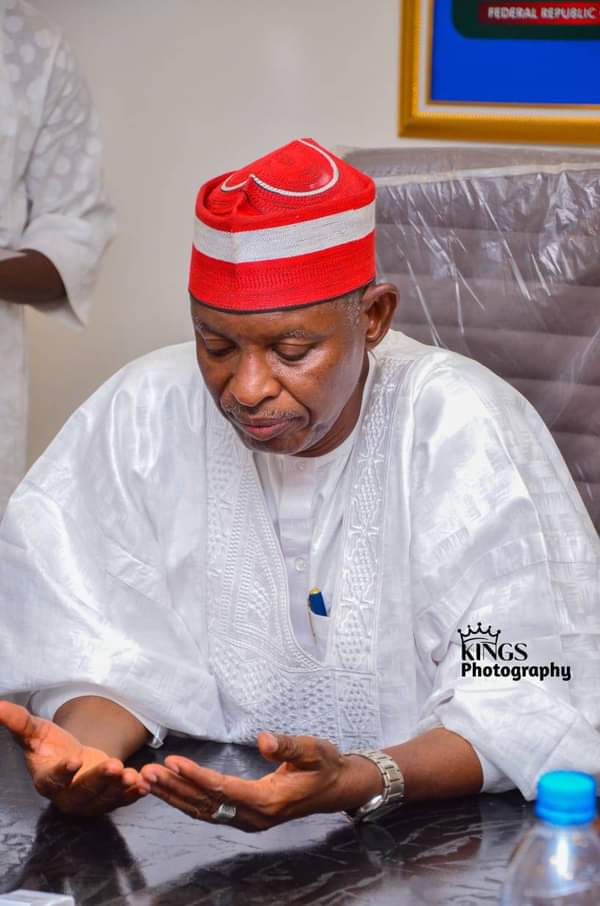
Sex Education: MURIC commends Kano State Gov’t for banning teaching materials

By Abdurrahman Muhammad

The move by the Kano State Government to remove some lewd and pernicious teaching materials from the curriculum of both public and private basic schools in the state has been commended by the Muslim rights advocacy group, the Muslim Rights Concern (MURIC).

The Kano State Government, through the office of the Special Advisor on Private and Voluntary Institutions, issued the prohibition in an announcement made on Thursday, 5th October 2023. 

In the announcement, the Kano State Government listed some six (6) textbooks prohibited for instructional use “due to observed inclusions(sic) of inappropriate and sexually explicit contents that are harmful to the morals of our young students.”

The decision of the Kano State Government, under the leadership of Governor Abba Kabir Yusuf, to prohibit the use of obscene teaching materials in the state has come at the right time. Therefore, all parents, educationists, learners and advocates must embrace and support the initiative so as to tame the alarming rise of immorality amongst the youths in the state. 

The human rights group lent its support by calling on the authorities to ensure strict compliance by both public and private schools in the state. 

The commendation was contained in a statement released by the Chairman of the Kano State Chapter of the group, Malam Hassan Sani Indabawa, on Friday, October 6, 2023. 

Mr Indabawa further said:

“As one of the front-line advocates for the removal of all obscene teaching aids from the nation’s educational system, we at MURIC rejoice and commend the Kano State Government for doing the needful by prohibiting the use of some selected teaching materials found to contain sexually explicit contents which are perverse to the moral upbringing of pupils in the state.

“The surreptitious inclusion of explicit sexual contents in some of the basic education teaching materials was part of the Comprehensive Sexuality Education (CSE) developed by the United Nations Population Fund (UNPF) for worldwide use to promote promiscuity, fornication and homosexuality. This is one of the evils of globalisation. Certainly, this strange knowledge contradicts our faith, culture and values.

“Aside from the CSE, many textbooks used in Nigerian schools have been corrupted with lewd contents. 

“Nigerians may be well aware that in the last twenty years or so, classical English literature books and novels such as Macbeth, Julius Caesar, Merchant of Venice, Weep Not Child, Things Fall Apart, The Man Died, African Child, Akin the Drummer Boy, Mine Boy, The Delinquent and so forth have been removed from our school curricula and replaced with sex-related local English literature and other science books containing lewd and pernicious matters to give the unsuspecting young school pupils the wrong impression that self-control is unnecessary and that casual sex makes them feel good; that they should engage in casual sex before marriage; that ‘safe sex’ is what to aim for in life provided that they don’t get pregnant and if they do get pregnant, they should go for abortion. 

“As we may equally be aware, one of the negative consequences of this is the sexualisation of primary and secondary school pupils.

“Therefore, the prohibition of the use of offensive textbooks by the Kano State Government must be backed by appropriate legislation to provide a legal framework for sanctioning any erring school authority for effective implementation of the government’s directive.

“The Office of the Special Advisor on Private and Voluntary Institutions and Kano Educational Resource Department (KERD) must be well-equipped to ensure strict compliance as it is our belief that some self-seeking, unscrupulous and unconscientious groups and individuals may attempt to frustrate the effort with the support of the global conspiracy designed to destroy the fabric of our family value system, decency and modesty.

“We also call on other state governments to emulate Kano State Government by reviewing and removing all lewd and pernicious teaching materials from their various basic education curriculum.

“Finally, we reiterate our earlier call, made on the 25th May 2023, to the Nigerian Educational Research and Development Council (NERDC), a federal government agency charged with the responsibility of implementing educational policies in Nigeria, to immediately review and expunge any sex-related content from the curriculum being used in Nigerian basic schools.”

Dangers of entrusting religious leaders with sex education responsibility

By Aishat M. Abisola

A few weeks ago, I read that the federal government ordered the Nigerian Education Research and Development Council (NERDC) to remove sex education from the basic school curriculum. This decision was made by the Minister of Education, Mallam Adamu Adamu.

This followed the call by experts that sex education should be placed in the hands of parents and religious institutions so that it would not be taught in schools in ways that would not further “corrupt” young children with phones and access to technology.

Adamu stated that since Nigeria is a religious country, morals and values should be taught in Mosques and Churches, adding that it would bring up children with strong morals and reduce the rate of out-of-school children.

When I read this, I was shocked for many reasons. First of all, the introduction of sex education into the basic education curriculum is still recent, and most schools are not even implementing it.

When I was in secondary school, my classmates and I were mainly taught about the biological and chemical aspects of reproduction, not the elements concerning sex and sexuality.

Secondly, how are they sure that sex education has not benefited the youths who are barely taught about it in schools?

Sex education can be defined as teaching and learning about a myriad of topics related to sex and sexuality. It dives into the values and beliefs regarding these topics. It helps people gain skills they will need to navigate their relationships with themselves, their partners, and their community and helps them manage their sexual health.

Sex education can be taught anywhere, in one’s house, school, community setting with trusted individuals, or online. As I stated earlier, I was not taught much about sex education in secondary school.

Luckily, my parents were there to answer my questions on sexual education and even imparted helpful knowledge that has helped me a lot in many ways.

When I learnt more about sex education and focused on what my parents taught me, I learned more about myself, my body, and how I could improve in terms of mental and physical health.

Despite common misconceptions that sex education corrupts children when taught about it at school, sex education can be more beneficial than you might expect. The full description of what sex education entails is as follows:

Human Development

This involves human anatomy, puberty and how it will affect them both physically and mentally, sexual orientation (the different types of sexual orientations), and gender identity (what it means to be male or female).

Relationships

Relationships consist of Interpersonal relationships such as family, friendships, romantic relationships, and relationships with healthcare practitioners.

Personal Skills

This involves areas surrounding communication, boundaries, negotiations, and decision-making.

Sexual Health

Sexual education covers the areas that deal with sexual health, like sexually transmitted diseases, Birth Control, and pregnancy.

Society and Culture

This involves Media Literacy, Shame, and stigmatisation associated with sex and sexual education, the way that power, identity, and oppression can affect sexual wellness and reproductive freedom.

But besides all this, my main concern is how sex education is so callously put in the hands of religious leaders and institutions.

Most parents can be trusted to impart their knowledge about sex education to their children so they are more aware and careful.

On the other hand, religious leaders and institutions cannot be trusted in the same way.

Historically and in recent times, both religious leaders and religious institutions have been known to use children’s lack of sexual knowledge against them in ways most foul.

Priests, pastors, and Imams have preyed on young children entrusted to them by unsuspecting parents.

The more commonly known religious institution to do so are the Catholics, but other religious institutions and their leaders have done the same.

In some Islamiyah (Islamic religious learning academies), Imams have inappropriately touched young children they were supposed to care for.

Some examples would be a French Catholic church that was reported after discovering that its clergy and lay members had sexually abused at least 330,000 children over the past 70 years.

Another example would be a young girl from Lagos whom a Friar sexually abused at her parish church. In 2020, an Imam had taped himself raping a five-year-old girl, and earlier this year, in July, another Imam was arrested for the sexual abuse of seven children.

In October this year, another Imam was arrested for sexually assaulting an 11-year-old. Men (Women as well) who are placed into positions of power are more often than not predators who seek to prey on those weaker than them.

These days, anyone can become an Imam or a pastor. Because of the relaxed nature in discerning whether someone is an actual man/woman of god or whether they can be trustworthy in a position of power, many people get hurt.

Young children should not be placed in their care, nor should they be allowed to discuss sex education with them.
For all we know, they could teach these young and highly impressionable children wrong things and could hurt them badly in the long run.

Statistics have shown that when children have been sexually abused, there is a high likelihood that they will go on to commit the same injustices that were performed on them.

Ultimately, it will perpetuate a cycle of pain and torment.

Appropriately trained sexual education professionals should be tasked with training children on what they need to know about sex education from a young age. This way, they will learn more about their bodies and the best way to know if what is being done to them is right or wrong.

Along with this, their community should also take care of children.

If more than one eye is trained on a child, then any odd behaviour will be noted and told to their parents so that they can take the proper actions necessary.

With these two in hand, parents won’t need to rely on religious leaders or religious institutions to teach children about sex education when children are more likely to be abused by them.

Perhaps then, the government will have more trust in the education system instead of leaving such a delicate and complicated matter in the hands of people who would instead make matters worse than fix anything.

Children are blank canvasses, and teaching them the right things will make lovely and ethereal colours glow on their canvas, but teaching them in the wrong manner will damage it.

Children are the hopes and future of their parents and forefathers; It is with them that a legacy of peace, faith, and kindness is ensured.

I hope whoever reads this takes my words to heart and acts righteously for these children who might be led astray due to improperly placed trust.

Aishat M. Abisola is a member of the Society for Health Communication, Wuye District, Abuja, via Aishatmohd02@gmail.com.