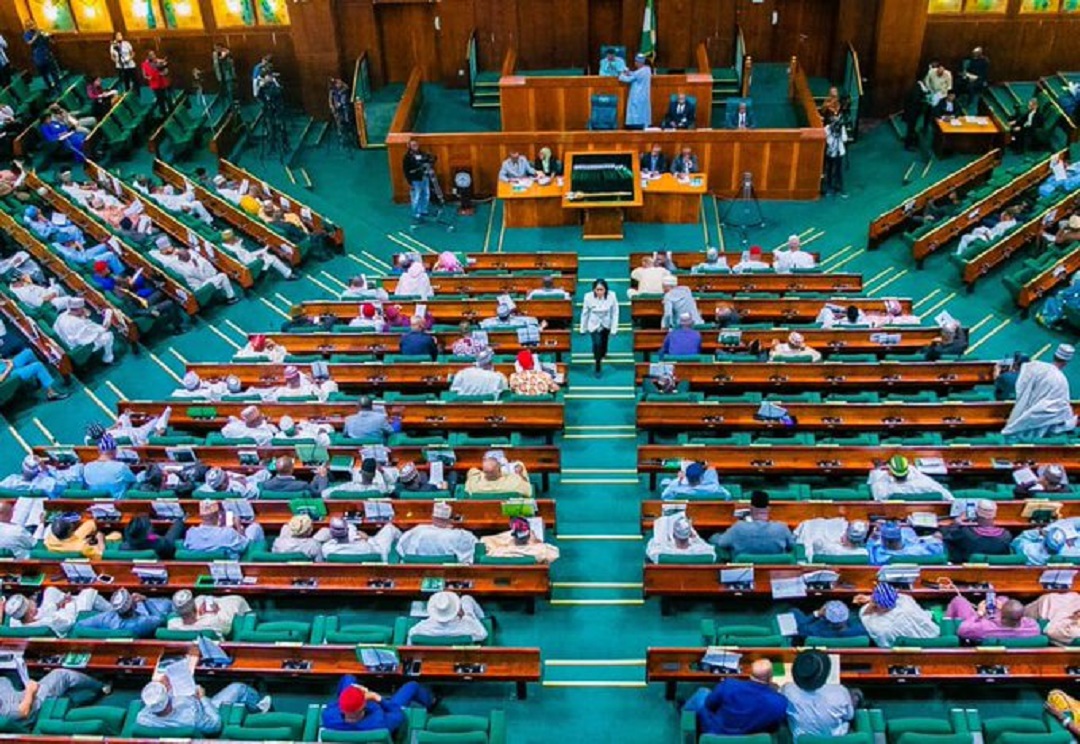
Senate

Senate plans national security summit to address worsening insecurity

By Uzair Adam

In response to the escalating security challenges across the country, the Nigerian Senate has resolved to convene a two-day National Security Summit in Abuja, bringing together key stakeholders from all levels of government and traditional institutions to chart a path toward improved national safety.

The summit, according to the Senate, will serve as a platform for generating actionable recommendations aimed at reforming Nigeria’s security architecture.

It is expected to influence policy direction, with the Senate urging the Federal Government to consider and implement proposals emerging from the discussions.

The decision to organize the summit followed a motion titled “Urgent Need for a National Security Summit,” presented during plenary by Senator Ibrahim Jimoh, who represents Ondo South and chairs the Senate Committee on Inter-Parliamentary Affairs.

The motion was co-sponsored by Senators Zam Titus (Benue North-West), Peter Onyeka Nwebonyl (Ebonyi North), and Ngwu Osita (Enugu West).

While presenting the motion, Senator Jimoh linked the country’s worsening security issues to global instability, referencing the impact of the Russia-Ukraine war, strained North-South relations, and economic tensions like the U.S. tariff war.

He noted how these global developments have intensified food insecurity and disrupted efforts to achieve Sustainable Development Goals (SDGs).

Jimoh also expressed deep concern about the persistent violence within Nigeria, highlighting the spread of banditry, terrorism, and kidnapping across both urban and rural areas.

He urged a strategic shift in Nigeria’s approach to combating insecurity, calling for enhanced intelligence gathering, increased military funding, and non-military solutions.

Citing historical political unrest in Nigeria, including the 1953 Kano riots and electoral crises of the 1980s, Jimoh stressed the importance of proactive measures as the country approaches another election cycle.

He reiterated President Bola Tinubu’s commitment to national peace and encouraged alignment with the administration’s “Renewed Hope Agenda.”

The Senate emphasized that the upcoming summit would not be the first of its kind. Former Senate President Ahmad Lawan had also convened a similar initiative during the 9th Assembly, which laid groundwork for national security dialogue.

Lawan had pointed to the Senate’s role in guiding conversations toward sustainable solutions.

The new summit is anticipated to build on previous efforts and deliver comprehensive, practical strategies to restore peace and security across Nigeria.

Natasha accuses Akpabio of inappropriate remarks about her waist

By Uzair Adam 

Suspended senator Natasha Akpoti-Uduaghan (PDP, Kogi Central) has alleged that Senate President Godswill Akpabio made inappropriate comments about her, including remarks about her waist.  

In an interview with the BBC, she claimed Akpabio would “squeeze my hands in a very suggestive way,” adding, “We women, we know what it means when a man squeezes our hands in a suggestive way.”  

Akpoti recounted an incident where she forgot to wear her ring and was confronted by Akpabio in the presence of other senators.  

“There was a time I forgot to wear my ring because I rushed to work, and there were about five senators there. 

“Akpabio said, ‘Oh Natasha, you are not wearing your ring… is this an invitation to treat?’” she said.  

She further alleged that Akpabio made another remark about her body, saying, “Natasha, your husband is really enjoying. It looks like you’d be able to make good movements with your waist.”  

According to Akpoti, other senators laughed at the comments, highlighting how such issues are often overlooked in Nigeria.  

“I just want a place where I would just work. I thought the worst was over, but I guess for a woman, it’s never really over, right?” she said.  

Akpoti was suspended by the Senate on March 6 for “gross misconduct and unruly behavior” following a confrontation with Akpabio over seating arrangements. 

The suspension came just a day after she submitted a petition accusing the Senate President of sexual harassment.  

However, the Senate has insisted that her suspension was unrelated to the petition.

House of Representatives approves tax reform bills, awaits Senate approval

By Abdullahi Mukhtar Algasgaini

The House of Representatives has approved four crucial tax reform bills during its session on Thursday in Abuja. 

The bills, which are now awaiting Senate concurrence, include the Nigerian Tax Bill, the Tax Administration Bill, the Revenue Tax Board Bill, and the Nigerian Revenue Service Establishment Bill.

James Abiodun Faleke, Chairman of the House Committee on Finance, highlighted the thorough process that led to the bills’ adoption. Over 80 key stakeholders participated in public hearings, and an eight-day retreat was held to debate the clauses. 

Faleke expressed confidence that the tax reforms would result in widely accepted laws and thanked lawmakers and House leadership for their support.

“We cannot continue using outdated tax laws that no longer meet our business, survival, and revenue needs,” Faleke emphasized, referring to the existing tax laws, some of which date back to 1959.

Deputy Committee Chairman Saidu Abdullahi praised Speaker Tajudeen Abbas for fostering consensus among stakeholders and ensuring that input from all geopolitical zones was considered. 

He added that the recommendations reflect the contributions of various groups and that the final version resulted from extensive consultation.

Ikeagwuonu Ugochinyere, an opposition member, also lauded the reform process, highlighting its transparency and the adjustments made to reflect public interests better. He assured the reforms would expand the tax base, enhance revenue collection, and protect small businesses.

Benson Babajimi, a lawmaker from Lagos, noted that all concerns from various stakeholders, including issues like inheritance tax and VAT, were carefully addressed during the legislative process.

With the House’s approval now secured, the tax reform bills await the Senate’s concurrence.

Senator Natasha suspended for 6 months by NASS

By Abdullahi Mukhtar Algasgaini

In a decisive move, the Nigerian National Assembly (NASS) has suspended Senator Natasha for six months following recommendations from the Ethics and Public Petitions Committee.

The suspension, which takes effect from March 6, comes after the senator stood up for her rights during a Senate session.

The committee has mandated that Senator Natasha must submit a written apology before she can resume her duties.

Additionally, her office will remain locked throughout the suspension period, and she is barred from entering the NASS complex. Her salaries, allowances, and security details have also been suspended for the duration of her penalty.

Furthermore, Senator Natasha is prohibited from representing herself as a senator in both local and international media during her suspension.

This development has sparked widespread debate, with critics labeling the punishment as excessive and indicative of deeper governance issues in the nation.

As Africa’s most populous black nation, Nigeria continues to grapple with political controversies, and this incident has further fueled discussions about transparency and accountability in its leadership.

Senate dismisses Natasha’s petition against Akpabio over procedural flaws

By Abdullahi Mukhtar Algasgaini

The Senate has dismissed a petition filed by Senator Natasha Akpoti-Uduaghan (PDP, Kogi Central) against Senate President Godswill Akpabio, citing procedural irregularities.

The petition, which alleged sexual harassment, was declared “dead on arrival” by Senator Neda Imasuen (LP, Edo South), Chairman of the Senate Committee on Ethics, Code of Conduct, and Public Petitions.

Imasuen stated that Akpoti-Uduaghan breached Senate rules by signing the petition herself instead of having it endorsed by another individual.

He also noted that the issues raised were already in court.

Akpoti-Uduaghan was reported to have failed to appear before the committee during its scheduled session, which began nearly an hour late.

The matter was referred to the Ethics Committee two weeks ago after she publicly challenged Akpabio over seat allocation and repeated her allegations in a media interview.

The Senate has now tasked the Ethics Committee with further reviewing the case.

EPA backs senator Natasha, calls for fair treatment in Senate

By Abdullahi Mukhtar Algasgaini

The Ebira People’s Association (EPA) has expressed its full support for Senator Natasha Hadiza Akpoti-Uduaghan, representing Kogi Central Senatorial District, while urging the Nigerian Senate to prevent any form of intimidation or harassment within the legislative chamber.

In a statement issued on Friday, the National President of EPA, Dr. Oyibo Godwin, condemned recent developments in the Senate, including Senator Natasha’s removal as Chairperson of the Senate Committee on Local Content and the sudden relocation of her seating position.

Dr. Godwin described these actions as politically motivated and deliberate, sparking widespread reactions on social media and traditional news platforms.

“We have closely followed the events in the Senate, from the ‘nightclub’ comment saga to Senator Natasha’s removal from her committee and the abrupt change of her seating position. These actions clearly indicate a targeted and unjust treatment,” the statement read.

The association emphasized that while it had previously refrained from commenting on the matter, it believed the Senate would resolve internal issues fairly and ensure the rights of all senators, regardless of gender, ethnicity, or political affiliation.

However, EPA expressed concern over the involvement of certain ethnic groups in the controversy, stating that this has compelled the people of Kogi Central to respond.

“We are closely monitoring any steps the Senate Committee on Ethics and Privileges may take. We continue to gather all relevant information and will respond appropriately at the right time,” the statement added.

The association reiterated its unwavering support for Senator Natasha, praising her for carrying out her legislative duties competently and vowing not to allow her to be victimized or punished for any ulterior motives.

“Senator Natasha has demonstrated excellence in her role, and we will not stand by while she is unfairly targeted or marginalized,” the statement concluded.

The EPA’s statement comes amid growing tensions in the Senate, with calls for transparency and fairness in the treatment of lawmakers.

“I’m not afraid of you,” Kogi lawmaker tells Senate President Akpabio

By Anwar Usman

Tensions flare-up in the Senate on Thursday after Senator Natasha Akpoti-Uduaghan exchange words with the leadership over a seating arrangement dispute.

The issue started when Akpoti-Uduaghan’s seat was reassigned following a reshuffle prompted by opposition members moving to the majority wing which she refused to abide by.

The Chief Whip of the house, Senator Tahir Monguno, explained the Senate rules to justify the change, and stated that seat adjustments were under the authority of the Senate President.

He also warned that non-compliance could lead to penalties, including exclusion from Senate debates.

The president of the Senate, Godswill Akpabio supports Monguno’s order and denied Senator Akpoti-Uduaghan the floor when she attempted to speak from her old seat.

In response to that, the Kogi lawmaker raised her voice, accusing the leadership of trying to silence her.

She stated that “I don’t care if I am silenced. I am not afraid of you. You have denied me my privilege”.

The standoff intensified when the Senate President directed the sergeant-at-arms to remove her.

However, with the help of some lawmakers calmness was restored, although Akpoti-Uduaghan stand firm in her refusal to move.

Re: Sen. Bomai’s N20,000 empowerment

While scrolling through social media, I stumbled upon a rejoinder to my article published in Daily Trust on January 2, 2025, titled “N20,000 Empowerment: Senator Bomai, You Can Do Better.” The rejoinder, written by Abubakar MB Tamana from Potiskum, appeared on January 3, 2025, and sought to counter my assertions. Tamana argued, rather boldly and shamelessly, that the N20,000 distributed to constituents was not part of Senator Bomai’s empowerment program. Such a claim is misleading and lacks credibility, especially when viewed in light of Senator Bomai’s media team’s own statements. The team explicitly described the distribution as part of the senator’s efforts to empower 1,800 youths across APC branches in Yobe South, labeling it a commendable initiative aimed at addressing youth unemployment and supporting economic growth.

This statement from Senator Bomai’s media team is unequivocal, leaving no doubt that the N20,000 was indeed presented as part of his empowerment scheme. Yet, one cannot help but question the sincerity and effectiveness of such a gesture. Is a one-time distribution of N20,000 to jobless youths, most of whom are educated and have graduated from higher institutions, a genuine attempt at empowerment? This paltry sum barely scratches the surface of the socioeconomic challenges faced by the people of Yobe South. It is not enough to claim to be empowering the youth; the efforts must be meaningful and impactful enough to make a tangible impact on their lives. Unfortunately, Senator Bomai’s tokenistic approach falls woefully short of the mark.

The people of Yobe South are not ignorant of the opportunities available to their representatives through the Zonal Intervention Projects (ZIPs). These projects allow senators to allocate significant funds—often exceeding N600 million annually—for impactful programs such as skill acquisition training, provision of motorcycles, or other community-focused initiatives. Under President Tinubu’s administration, these allocations were even increased by 50%, further expanding the scope for developmental interventions. The glaring issue here is whether Senator Bomai has chosen to ignore these opportunities or simply lacks the vision and commitment to execute programs that would genuinely uplift his constituents. Since assuming office in 2019, Senator Bomai has yet to introduce a single substantial initiative that addresses the pressing needs of the people of Yobe South.

To put it bluntly, other senators have demonstrated what meaningful empowerment looks like. For instance, on January 3, Daily Trust reported that Senator Ahmed Ibrahim Lawan, the 9th President of the Senate, distributed N250,000 each to 400 small-scale business owners in Yobe North, totaling N100 million. This initiative was designed to revitalize the local economy and provide a sustainable foundation for small businesses to thrive. Similarly, just last week, Deputy Senate President Senator Barau Jibrin sponsored 70 students from Kano for postgraduate studies in India. This program not only supports education but also ensures that the beneficiaries acquire advanced skills that can contribute to national development. These are examples of impactful and far-reaching empowerment programs that go beyond mere handouts and focus on building capacity, creating opportunities, and fostering long-term growth.

Senator Bomai’s approach, on the other hand, leaves much to be desired. The distribution of N20,000 to jobless graduates and other struggling individuals is not empowerment; it is, at best, a temporary relief and, at worst, an insult to their intelligence and dignity. The youth of Yobe South deserve better than this tokenism. They need programs that address their specific challenges—be it through skill acquisition, job creation, entrepreneurship support, or educational sponsorships. There is an urgent need for the senator to prioritize the welfare of his constituents and leverage the resources at his disposal to implement impactful initiatives.

It is high time Senator Bomai opened his ears to the cries of his people and took decisive action to address their needs. The unemployment crisis among graduates, the lack of support for small-scale businesses, and the absence of sustainable economic opportunities in Yobe South demand immediate and meaningful intervention. The era of token gestures and empty rhetoric must come to an end. If Senator Bomai truly wishes to be remembered as a leader who cared for his people, he must rise to the occasion and deliver the kind of empowerment that makes a lasting difference in the lives of his constituents. Anything less would be a disservice to the people he claims to represent.

Kasim Isa Muhammad, an investigative journalist, wrote from Potiskum, Yobe State.

Lawal Usman, senator for Kaduna Central, narrowly escapes assassination

By Abdullahi Mukhtar Algasgaini

Lawal Adamu Usman, popularly known as Mr. La, the senator representing Kaduna Central Senatorial District, has reportedly survived an alleged assassination attempt.

Usman, a member of the Peoples Democratic Party (PDP) and a prominent opposition figure, confirmed the incident via his verified Facebook account late Wednesday night.

The senator, elected to the Senate in 2023, did not provide detailed information about the circumstances surrounding the alleged attack.

In his statement, Senator Usman said, “I just escaped an assassination attempt by some thugs in Kaduna Central.”

Nigerian Senate moves to ban use of foreign currencies

By Sabiu Abdullahi

The Nigerian Senate has taken the first step towards banning the use of foreign currencies in the country.

A bill seeking to prohibit the use of foreign currency in Nigeria has scaled first reading in the House of Senate.

The proposed legislation, sponsored by Senator Ned Nwoko, aims to ensure that all payments, including salaries and transactions, are made using the local currency, the naira.

According to Senator Nwoko, the widespread use of foreign currencies in Nigeria’s financial system undermines the value of the naira.

He described the use of foreign currencies like the dollar and pound sterling as a “colonial relic” that hinders Nigeria’s economic independence.

The bill, titled “A Bill for an Act to Alter the Central Bank of Nigeria Act, 2007, No. 7, to Prohibit the Use of Foreign Currencies for Remuneration and Other Related Matters,” seeks to amend the Central Bank of Nigeria Act, 2007.

This development has sparked mixed reactions, with some Nigerians expressing support for the move, while others have raised concerns about its potential impact on the economy.