Saudi Arabia

MAKIA: Route to the Saudi sword

Mohammad Qaddam Sidq Isa (Daddy) 

The recent revelation that three Nigerians, recently detained by Saudi authorities on allegations of drug trafficking, had been framed by an international drug trafficking syndicate operating at Malam Aminu Kano International Airport (MAKIA) further confirms the persistence of such nefarious activities, bringing to mind a similar scandal in 2019 that nearly cost an innocent woman her life in the Kingdom. 

The syndicate’s modus operandi begins by targeting unsuspecting travellers at MAKIA who appear to have little or no experience in international air travel protocols. 

Exploiting the fact that such travellers rarely turn up at the airport check-in counter with enough luggage to take up their full luggage allowance, if they are even aware of it, the syndicate members covertly tag and check in drug-containing luggage under the travellers’ names.

On arrival in Jeddah or Madinah, the syndicate’s Saudi-based Nigerian accomplices monitor the luggage processing. If the bags make it through undetected, they somehow manage to claim them, sometimes with, and other times without, the traveller’s knowledge or involvement.

However, if the bags are flagged, the accomplices vanish, leaving the unsuspecting travellers to be apprehended and subjected to the Kingdom’s strict judicial system, where drug trafficking can carry the ultimate punishment: public beheading.

Despite Nigerian authorities’ assurances since the 2019 scandal that all structural and operational loopholes exploited by the syndicate had been addressed, the latest incident demonstrates that these measures were insufficient. It also underscores the growing notoriety of the otherwise reputable MAKIA as a hub for international drug trafficking syndicates specialising in framing unsuspecting travellers. 

If organised crime of this sophistication can occur at the relatively less corruption-prone MAKIA, one can only imagine what might be happening at Murtala Muhammed International Airport in Lagos or Nnamdi Azikiwe International Airport in Abuja. 

Only Allah knows how many innocent people, framed in this way and too unlucky for their ordeals to be publicised or their innocence to be proven, ended up publicly beheaded in Saudi Arabia. 

Although the Nigerian government has assured that it will leave no stone unturned to secure the exoneration of these innocent Nigerians currently facing drug trafficking charges in Saudi Arabia, it should not take the situation for granted. 

Meanwhile, it should also take decisive action to address this menace at MAKIA and other airports across the country. After all, the few individuals apprehended may represent only a fraction of the culprits, with many others likely still out there.

Mohammad Qaddam Sidq Isa (Daddy) wrote via mohammadsidq@gmail.com.

AKTH, Saudi partners offer free open-heart surgeries in Kano

By Uzair Adam 

The Aminu Kano Teaching Hospital (AKTH), in collaboration with the King Salman Humanitarian Aid and Relief Centre and the Al-Balsam Association from Saudi Arabia, has successfully conducted free open-heart surgeries for patients in Kano.

Speaking to journalists about the development, the Head of the Cardiothoracic Surgery Unit at AKTH and team lead for the local medical team, Dr. Jamil Ismail Ahmad, said the initiative has brought relief to many patients who cannot afford treatment abroad.

“Normally, open-heart surgery costs between eight to ten million naira in Nigeria. But here, patients are getting it almost free of charge. 

“Outside the country, it would cost between 25 to 30 million naira, including logistics. This partnership is therefore very important,” Dr. Ahmad explained.

He noted that patients with heart diseases who require surgery but have no high-risk complications are usually considered for the program, stressing that safety remains a top priority.

“Some patients are excluded because their cases were neglected for too long, and operating on them would be too risky. Our key watchword is safety — we want to ensure that after surgery, patients are in much better condition than before,” he said.

Dr. Ahmad commended the partnership with the King Salman Humanitarian Aid and Relief Centre, describing it as highly supportive in both service delivery and local capacity building.

“Such collaborations are important globally, not only for providing services but also for building local capacity. The visiting team shares its expertise, which enhances our training and helps us sustain these services,” he added.

On patient outcomes, he revealed that survival rates in previous missions with the same team ranged between 80 and 90 per cent, and similar results are expected this time.

Dr. Ahmad also called on the government, philanthropists, and the private sector to support such initiatives, noting that investment in infrastructure, human resource training, and collaboration would strengthen healthcare delivery.

On his part, Dr. Abdullah, the team leader of the King Salman Humanitarian Aid and Relief Centre, emphasised the challenges of delivering such care in underserved regions like Nigeria, Sudan, and Yemen.

“Patients often present late because they were neglected for years. Some should have undergone surgery 10 or 20 years ago before developing complications that now make operations riskier. 

The best approach is continuous local services and proper screening. This saves lives and is more cost-effective than patients spending millions abroad in Europe, India, or North Africa,” he said.

He disclosed that so far, five patients had undergone surgery in Kano, with plans for six more cases in the following days. 

Dr. Abdullah praised the dedication of AKTH staff, including doctors, nurses, technicians, blood bank staff, and even cleaners, saying their support was crucial to the success of the program.

One of the beneficiaries’ relatives, Fatima Muhammad, expressed gratitude, saying her family could not have afforded the surgery if they had been asked to pay.

Saudi king, crown prince extend condolences to Nigeria over Buhari’s passing

By Anas Abbas

Saudi Arabia’s leadership has extended heartfelt condolences to Nigeria in the wake of the death of former President Muhammadu Buhari.

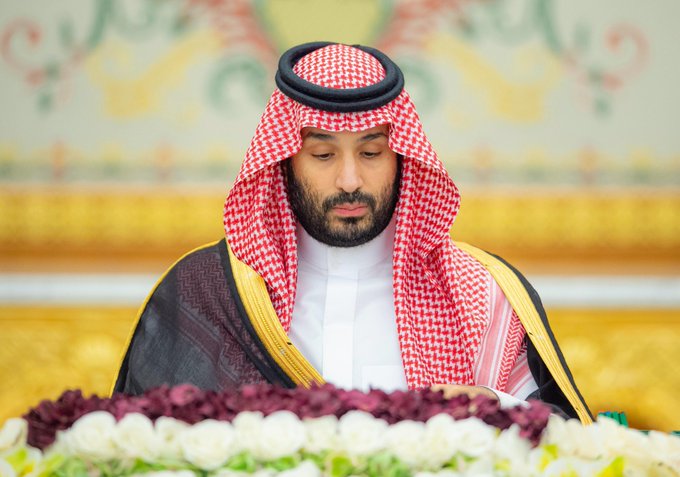
Custodian of the Two Holy Mosques, King Salman bin Abdulaziz Al Saud, along with Crown Prince and Prime Minister Mohammed bin Salman bin Abdulaziz Al Saud, both conveyed their sympathies through formal messages to Nigerian President Bola Ahmed Tinubu.

Their messages reflect deep sorrow over the loss of the former leader.

In a statement released on Monday, King Salman expressed his “deepest condolences and sincere sympathy” to President Tinubu, the Nigerian populace, and Buhari’s family.

Crown Prince Mohammed bin Salman echoed these sentiments in a separate message, emphasizing the enduring respect and historical connections between Saudi Arabia and Nigeria.

He stated, “I extend to Your Excellency, the people of the Federal Republic of Nigeria, and the family of the deceased my deepest condolences and sincere sympathy.”

The Crown Prince commended Buhari for his decades of public service, particularly noting his role in enhancing Nigeria’s political stability and national security.

Muhammadu Buhari, who served as Nigeria’s president from 2015 to 2023 and previously led as a military ruler in the 1980s, passed away on Sunday at the age of 82 following a brief illness.

Known for his staunch anti-corruption measures and efforts to combat insurgency in northeastern Nigeria, Buhari leaves behind a legacy characterized by strong governance and national pride.

President Bola Tinubu, who succeeded Buhari, referred to him as a “patriot and statesman who prioritized national interest above all else.” In honor of the former president, the Nigerian government has declared a period of national mourning.

A state funeral is set to take place on Tuesday in Buhari’s hometown of Daura, Katsina State, with dignitaries and representatives from around the globe anticipated to attend.

NAHCON begins return journey of Nigerian pilgrims

By Uzair Adam 

The National Hajj Commission of Nigeria (NAHCON) has commenced the return transportation of Nigerian pilgrims from Saudi Arabia, with 1,310 already flown back home from Jiddah.

According to data released by Malam Shafii Mohammed, Principal Information Officer of NAHCON, four Nigerian Hajj air carriers operated a total of four flights as part of the initial phase of the inbound operation.

MaxAir flight VM269 departed Jeddah for Bauchi at 08:07 hrs, carrying 551 pilgrims and seven officials. Flynas flight XY9006 left for Kebbi at 09:45 hrs with 413 pilgrims and six officials onboard. 

UMZA flight UY3534 took off for Abuja at 13:12 hrs with 41 pilgrims and 122 officials, while Air Peace flight APK7901 departed for Owerri at 23:45 hrs, transporting 305 pilgrims and seven officials.

It was gathered that about 63,000 Nigerian pilgrims participated in the just-concluded 2025 Hajj.

SLUK staff becomes first African to win King Abdullah Bin Abdulaziz International Award for Translation

By Muhammad Sulaiman

In a historic academic achievement, Dr. Zaidu Jibril Muhammad, a lecturer at Sule Lamido University (SLUK), Kafin Hausa, has become the first African recipient of the prestigious King Abdullah Bin Abdulaziz International Award for Translation.

Dr. Zaidu, who lectures in the Department of Arabic, Faculty of Humanities, clinched the 2025 award for his Hausa translation of the Arabic literary masterpiece Maqāmāt al-Ḥarīrī, published under the title Dandalin Hikimomi. The Prize’s Board of Trustees praised the translation for its scholarly depth and cultural resonance, calling it a significant contribution to African scholarship and global cross-cultural understanding.

Born on May 15, 1985, in Shungurum village, Birnin Kudu Local Government Area of Jigawa State, Dr. Zaidu holds a Ph.D. in Arabic Language among other qualifications.

Dr. Zaidu is also a prolific author, with four major Hausa translations of classical Arabic works. In addition to Dandalin Hikimomi, his works include Dandalin Dabaru (from Maqāmāt Badī‘ al-Zamān al-Hamadhānī), Bakandamai Bakwai(from Al-Mu‘allaqāt al-Sab‘a), and a Hausa version of a widely used Arabic academic guide for university students. He has also published fifteen academic articles in national and international journals.

Currently serving as a Lecturer I and a member of the International Union of Arabic Language, Dr. Zaidu’s groundbreaking achievement has been described as a landmark not just for Nigeria but for the entire African continent.

Gov Yusuf visits Kano pilgrims in Saudi Arabia, offers sallah gifts

By Uzair Adam 

Kano State Governor, Abba Kabir Yusuf, has extended his Sallah greetings to the state’s pilgrims in Saudi Arabia and presented them with monetary gifts to mark the occasion. 

During his visit to their accommodation on Saturday night, he gifted each pilgrim 250 riyals, approximately N105,000.

Governor Yusuf praised the success of this year’s Hajj exercise, describing it as an improvement over previous years, particularly last year. 

“Last year’s Hajj exercise was also good, but this one is better, and we are grateful to God for this success,” he remarked.

The governor said the visit was intended to strengthen relationships, pray for the progress of Kano State and Nigeria, and share in the joy of Sallah with the pilgrims.

He urged the pilgrims to continue praying for Kano, Nigeria, and for those who lost their lives during the Hajj exercise. 

“I also commiserate with the families of those who died in Makkah, Madina, and during Arafah. May those who are missing be found,” he said.

Governor Yusuf called on the pilgrims to remain dedicated to their acts of worship and avoid any actions that might compromise the completion of their Hajj rituals until they return home safely.

He thanked the Kano State Pilgrims Welfare Board, local government chairmen, and other stakeholders for ensuring a smooth Hajj experience. 

“I also thank the local government chairmen for their unwavering support in caring for the people from their areas. And there are also members of the State Assembly, like I said. None of them is sleeping. Everyone is doing their best,” he added.

The governor concluded by praying for the acceptance of the pilgrims’ Hajj and a safe trip back to Nigeria.

In his remarks, the Director General of the Kano State Pilgrims Welfare Board, Lamin Rabi’u Ɗan Baffa, expressed gratitude to Governor Yusuf for his unwavering support and leadership during the pilgrimage.

Saudi Arabia bans political, sectarian activities at Hajj sites

By Uzair Adam S

audi Arabia’s Ministry of Interior has declared a comprehensive ban on taking photographs, recording videos, and displaying political or sectarian expressions at all key Hajj sites.

According to a statement released by the ministry, pilgrims are forbidden from engaging in such activities within Masjid al-Haram in Makkah, Masjid an-Nabawi in Madinah, and at significant Hajj locations such as Mina, Arafat, and Muzdalifah.

Authorities noted that these actions could disrupt the spiritual sanctity of the pilgrimage and potentially sow division among pilgrims gathered from around the world.

The ministry stressed that Hajj is a time for worship, humility, and unity, and any acts that contradict these principles will not be allowed.

Pilgrims are urged to respect these directives and work closely with officials to ensure that Hajj 2025 unfolds in a peaceful, organized, and spiritually fulfilling manner.

“Security personnel will be stationed throughout the pilgrimage to monitor and enforce these regulations,” the statement added.

From us, by us, for us: How homegrown Waqf initiatives can shift our gaze from international donors

By Abdullahi Abubakar Lamido, PhD

It was a warm afternoon in my office at the Zakah and Waqf Foundation in Gombe, and I had cleared my schedule for what was described as a “very important meeting.” A group of nine young professionals—doctors, nurses, and medical administrators—filed in with purposeful expressions. These were respected Muslim health workers in our community, competent and resourceful in their own rights, leading their Muslim body. 

They sat down, exchanged pleasantries, and after a few minutes, one of them cleared his throat and spoke. “We were hoping you could help us reach Qatar Charity. We want to build a mosque in our hospital.”

I paused. My mind raced not with criticism but with confusion. These were not poor villagers. These were professionals, all salaried, some likely earning above average. I asked gently, “How much will the mosque cost?”

“About ten million naira.”

“And how many Muslim staff do you have?”

“Roughly 500,” they responded.

I picked up a pen and scribbled something. “That’s twenty thousand naira each,” I said. “Divided over four months, that’s 5,000 naira per month.”

There was a short silence. “You don’t need Qatar Charity,” I told them. “You need yourselves; you need Gombe Charity.”

From my limited understanding, I explained that most international charities, like Qatar Charity, raise funds from within their own people first. They identify a problem in a country, develop a proposal, return to their citizens and say: “Donate to build a mosque in Nigeria.” If they can do that for us, why can’t we do it for ourselves? I then told them to put my name as the first donor of the twenty thousand naira to kickstart the project. 

That brief meeting offered a glimpse into a deeper issue—our chronic psychological dependence on external aid, even when we can act. The problem isn’t always material poverty; often, it’s a lack of belief in our collective strength—a poverty of the mind and will.

The Turkey Phenomenon: A Lesson Misunderstood

Take, for example, the popular trend in some Northern Nigerian states where applications pour into Turkish and other organisations for Qurbani (Udhiya) distributions. Turkish charities, may Allah reward them, buy cows and distribute meat during Eid.

But here’s a crucial question: Is this a model to emulate or one to reconsider? If every year, our people look outward to receive—and never inward to learn how to organise, fund, and distribute—we risk cultivating a culture of constant reception without reciprocity.

Islam is not a religion of passivity. It teaches us to act before asking, to solve before seeking, and to build with what is already in our hands. Prophet Muhammad (peace be upon him) taught us that the upper hand is better than the lower one—the hand that gives is superior to the hand that receives.

The Al-Basar Example: From Vision to Visionary Impact

Now, let’s discuss a model worth following—Al-Basar International Foundation.

Al Basar International Foundation is a non-profit international NGO. Founded in 1989 by a group of concerned professionals. Al-Basar is a shining example of what happens when people come together to solve a problem themselves. Their focus? Combating preventable blindness across the Muslim world. No dependency. No grand donor campaigns. Just strategic self-mobilisation as well as waqf and collaborative mindset. 

It works in Yemen, Bangladesh, Sudan, Nigeria, Pakistan, etc. In Nigeria, for instance, a 2019 campaign funded by King Salman Humanitarian Aid and Relief Centre in collaboration with Al Basar International Foundation saw medical volunteers from Saudi Arabia meet 8,000 eye patients and perform 800 eye surgeries to remove cataract and glaucoma in Ibadan, Nigeria, as well as in Lafia in Nasarawa State. 

The foundation manages the Makkah Eye Specialist Hospital in Kano state, Nigeria, where 4,000 free eye surgeries were carried out in 2021. The hospital treats eye conditions, including diabetic retinopathy. In 2022, Al Basar International Foundation, in collaboration with the King Salman Relief Center, sponsored 400 free cataract surgeries for residents of Kano, which took place at Makkah Eye Specialist Hospital. 

Over the years, Al Basar has conducted over 2,000 outreach programs worldwide, performed over 700,000 cataract surgeries, and dispensed nearly 2 million glasses. With 28 hospitals across six countries, the foundation has recorded 26 million outpatient visits. It also invests in education by establishing colleges to train eye care professionals, impacting Africa and Asia. Their school screening program has reached over 1 million children, providing immediate interventions and ensuring a comprehensive approach to their eye health.

Now ask yourself: is Al-Basar a government-funded operation? No. Did it start with foreign aid? No. It was “from them, by them, for them.” And now it is for us, too—because they nurtured it to the point where it could grow beyond them.

We should not only admire such models. We should replicate them.

Historical Echoes: Islamic Proofs of Self-Driven Solutions

Uthman ibn Affan (RA) and the Well of Rumah

When water scarcity plagued Medina, and a private owner monopolised a well, the Prophet (SAW) called for someone to purchase it for the Muslims. Uthman (RA) stepped up, bought the well, and made it a public waqf. He didn’t write to Yemen. He didn’t petition the Romans. He simply used what Allah had given him to solve a problem for Allah’s sake.

So, What Can We Do? A Homegrown Waqf Blueprint

If we genuinely want to stop relying on donors and start building resilient communities, here are practical steps:

Think Within, Act Within: Begin every solution by asking what the community already has—not what it lacks. Do you have professionals? Land? Skills? Social networks? Then, start from there.

Group Economic Self-Waqfing: Encourage professional groups (doctors, teachers, engineers, traders, lawyers) to dedicate a portion of monthly income to a fund. Even a modest 5,000 naira monthly from 100 people can generate sustainable capital. At Zakah and Waqf Foundation, we enjoy that from some professionals, and it works. 

Community Challenge Waqf: Identify a local challenge—maternal health, education for orphans, access to clean water—and collectively endow a waqf around it. Let the yield solve that problem perpetually.

Transparent Management Structures: Set up trustworthy waqf boards to manage resources. Trust fuels contribution. Accountability sustains it.

Celebrate Independence: Create cultural pride around self-funded projects. Showcase schools, hospitals, orphanages, and mosques built without a single foreign dime.

It is Time to Change the Script

Imagine if each LGA in Nigeria had one waqf-funded primary health centre, one vocational training centre, and one scholarship fund—all funded by local contributions from professionals, retirees, and small traders.

We would not be beggars. We would be builders.

It’s time to write a new story. One not of helplessness and application letters to foreign NGOs but of resolve, unity, and strategic giving. One of From Us, By Us, For Us—in the truest, most impactful sense.

When that story is told to future generations, they will say: There was a people who stopped waiting and started building.

Amir Lamido wrote from Gombe via lamidomabudi@gmail.com.

Saudi official denies reports of alcohol ban being lifted

By Muhammad Abubakar

In response to recent media reports suggesting a potential easing of Saudi Arabia’s longstanding alcohol prohibition, a senior Saudi official has categorically denied any plans to lift the ban.

Princess Haifa bint Mohammed Al Saud, the Assistant Minister of Tourism, addressed the issue during a panel session at the World Economic Forum in Davos. She emphasized that the Kingdom remains committed to its laws prohibiting alcohol consumption.

“The short answer is that we’re going to continue with our current laws,” she stated, highlighting that Saudi Arabia has successfully attracted tourists without altering its cultural and legal frameworks.

The clarification comes amid speculation fueled by the recent opening of a liquor store in Riyadh’s Diplomatic Quarter, exclusively serving non-Muslim diplomats. While this move marks a controlled exception, it does not indicate a broader policy shift regarding alcohol availability in the country.

Furthermore, Saudi officials have reiterated that the alcohol ban will remain during major upcoming events, including the 2034 FIFA World Cup. Prince Khalid bin Bandar Al Saud, the Saudi ambassador to the UK, confirmed that alcohol will not be available to fans during the tournament, aligning with the Kingdom’s cultural and religious values.

As Saudi Arabia continues its Vision 2030 initiative to diversify the economy and promote tourism, officials stress that modernization efforts will proceed without compromising core cultural principles.

Nigerians stranded in Saudi Arabia: Reps urge government to take action

By Anas Abbas

In a significant move, the House of Representatives has urged the federal government to take action to assist Nigerians residing in Saudi Arabia who have been adversely impacted by recent labour and immigration reforms implemented by Saudi authorities.

This call for intervention came during a plenary session on Wednesday, following a motion presented by Rep. Muhammad Bello Shehu (NNPP, Kano). 

Rep. Shehu highlighted that the Saudi government introduced substantial reforms in August 2024, which have had a profound effect on labour laws, impacting numerous Nigerians who have lived in the country for years and often support large families.

The reforms include changes to the definitions of “Assignment” and “Resignation,” the discontinuation of work permit renewals for domestic workers, and various regularisation processes. As a result, many Nigerians have lost their jobs, while others are burdened with exorbitant fees for renewing their documents and work permits.

“Some domestic workers, including drivers, have been laid off and are unable to afford the renewal fees. Many find themselves unable to leave the country due to outstanding overstays,” Rep. Shehu explained.

He also noted that the Urban Renewal aspect of the reforms has further complicated matters, as affordable rental properties have been demolished to make way for urban development, exacerbating the hardships faced by these individuals and forcing their children out of school.

The lawmaker also criticised, particularly the Ministry of Foreign Affairs, for not sufficiently engaging with Saudi authorities to secure an amnesty window for affected citizens or propose viable solutions for their evacuation and return to Nigeria.

In light of these challenges, Rep. Shehu urged Saudi officials to consider granting amnesty to Nigerians who wish to return home. 

Following the motion’s adoption, the House directed its committees on Foreign Affairs, Interior, Diaspora, and Muslim Pilgrimage to collaborate with the Executive Arm. They are tasked with negotiating an amnesty option for those willing to return and ensuring their safe evacuation, with a report due back to the House within six weeks.