Rotimi Amaechi

Sanusi’s longtime fuel subsidy stance and the harsh reality of implementation

By Lawan Bukar Maigana

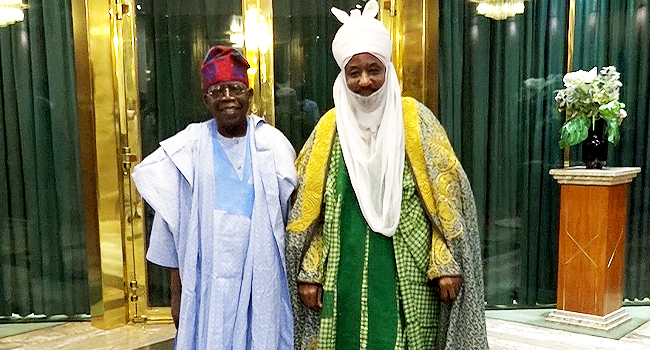
At a birthday lecture titled “Weaponisation of Poverty as a Means of Underdevelopment: A Case Study of Nigeria,” organised in honour of former Governor Rotimi Amaechi at the Continental Hotel in Abuja, the Emir of Kano, Sanusi Lamido Sanusi, bitterly complained about the unprecedented hardship Nigerians face today. 

According to him, the inflation and poverty gripping the nation are the direct consequences of loving to rule over people rather than loving them through developing favourable policies. That’s what I understand from his statement. But isn’t the fuel subsidy removal connected mainly to the realities he pointed out? 

Many might forget, or conveniently overlook, that this same Sanusi Lamido Sanusi has been one of the strongest advocates for removing fuel subsidies since 2012. Years ago, I heard him proudly state on BBC Hausa that he had repeatedly advised President Muhammadu Buhari to remove subsidies and shut down Nigeria’s borders. 

Respectfully, Buhari granted only one of his two wishes—closing the borders while leaving fuel subsidies intact. The subsidies lingered for years, postponed amid fears of political backlash.

Under President Bola Ahmed Tinubu, the fuel subsidy has finally been removed. The impact on ordinary Nigerians has been brutal—prices for fuel and essential commodities have surged, sending inflation into uncharted territory. People are being hunted by hunger and economic hardship like never before.

In this context, I believe Sanusi’s recent criticisms miss the mark. If anyone deserves celebration, it is President Tinubu,who dares to implement what Sanusi himself recommended years ago. Blaming Tinubu alone, even though Sanusi didn’t mention his name, for the hardship is unfair because he and other elite policymakers never offered concrete solutions or mitigating measures to cushion the blow on the poor when pushing for subsidy removal.

It is important to remind Nigerians that the blame for this economic situation is shared, not the fault of any one individual or administration. As the former Governor of the Apex Bank, Sanusi is part of the problem he now publicly laments. He advocated for the policy without proposing corresponding safety nets or economic reforms to soften the impact. The failure to plan has cost Nigerians dearly.

At the Abuja event, Sanusi asked a question that cut to the heart of leadership in Nigeria: “Do we as leaders truly love Nigerians, or do we just like ruling over them?” The answer is painfully obvious: too many leaders are interested in power for power’s sake. They seek to rule over the masses rather than serve them by crafting policies that uplift the poor.

This question should prompt serious reflection. If policymakers want to see genuine progress, they must remember that leadership is more than advising harsh policies; it is about standing with the people during the painful transitions these policies cause. It is about preparing the ground and providing support systems before asking citizens to bear the burden of economic reforms.

Nigeria’s elites, including Sanusi, need to own their history, yesterday. They must remember their past advocacies and be willing to share responsibility when those policies create hardship. It is easy to blame the current government for long-advocated but poorly planned decisions. It is far harder to admit one’s role in the consequences.

The harsh reality is that many elites conveniently forget their yesterday—the positions they took and the policies they championed. When those policies are finally implemented, and Nigerians bear the consequences, those same elites criticise the outcomes as if they had no hand in shaping them.

The lesson here is clear: policymaking in Nigeria must be holistic. It must consider not only economic theories but also social realities. Removing subsidies may be necessary, but without effective mitigation strategies, it becomes a weapon of poverty, inflicting untold suffering on the most vulnerable.

So, as Nigerians struggle with inflation and hardship, we should remember the true colours of our elites. They must be held accountable—not only for the policies they recommend but also for the human cost of those policies.

Lastly, I ask again: Should those who recommend harsh policies also bear part of the responsibility for their outcomes? The answer is a resounding yes. True leadership demands not just bold ideas but also the courage to accept the consequences and work tirelessly to protect the people.

Lawan Bukar Maigana is a journalist, humanitarian, Pan-Africanist, and social commentator. He’s known as Ibn Maigana on Facebook.

Amaechi fires back at Wike: ‘I don’t join issues with children’

By Sabiu Abdullahi

Former Minister of Transportation, Rotimi Amaechi, has revealed the reason behind appointing Nyesom Wike as his Chief of Staff during his tenure as Governor of Rivers State.

According to Amaechi, he deliberately chose Wike for the position instead of making him Commissioner for Finance so he could keep a close eye on him.

His comments came in response to Wike’s recent jibe at him following Amaechi’s statement, “We’re all hungry,” made during his 60th birthday celebration.

Wike had dismissed the remark, claiming the former governor was not hungry for food, but for political recognition.

Appearing on Arise Television’s Prime Time on Tuesday, Amaechi said he had no interest in exchanging words with Wike.

“God, Peter Odili, the judiciary and the Rivers state people made me governor,” he said.

Challenging Wike’s claim of playing a role in his political rise, Amaechi asked, “Ask him how he made me governor. I’m saying this because I don’t want to join issues with children.”

He stated further: “I wanted him as chief of staff so I could supervise him. I didn’t offer him commissioner for finance. You see, I’m saying this because I don’t want to join issues with children.”

In another veiled swipe, he added, “You know, he made himself chief of staff. He made himself governor. He made himself minister. He made himself local government chairman.”

Amaechi’s remarks are the latest in an ongoing war of words between the two political figures who were once allies in Rivers State but have since become bitter rivals.

Buhari, El-Rufai, Amaechi absent at APC NEC meeting

By Abdullahi Mukhtar Algasgaini

The ruling All Progressives Congress (APC) leaders gathered at the party’s headquarters in Abuja for the National Executive Committee (NEC) meeting.

Armed security officers, including soldiers, in collaboration with other security agencies, barricaded all roads leading to the venue on Blantyre Street. Vehicle and pedestrian movement around the area was restricted, and journalists were denied access to the venue. 

However, APC spokesperson Felix Morka released a list of accredited journalists for the event on Wednesday morning.

Among those who arrived early for the meeting were members of the National Working Committee (NWC), state party leaders, former Zamfara State Governor Abdulaziz Yari, Minister of Budget and National Planning Atiku Bagudu, and Deputy Speaker of the House of Representatives Benjamin Kalu.

Governors from Edo, Benue, Ondo, Ekiti, Kaduna, Jigawa, Nasarawa, Yobe, Niger, Lagos, Kogi, Ogun, Imo, Deputy Governor of Ebonyi, and former governors of Kogi, Kebbi, Niger, Zamfara, and Plateau also attended.

Notable absentees at the NEC meeting included former President Muhammadu Buhari, former Kaduna State Governor Nasir El-Rufai, and former Rivers State Governor and ex-Minister of Transport Rotimi Amaechi.

Party leader, President Bola Tinubu, Vice President Kashim Shettima, Senate President Godswill Akpabio, and Speaker of the House of Representatives Tajudeen Abbas arrived at the meeting around 12 PM. The party’s national chairman, Abdullahi Ganduje, presided over the meeting.

This was the first NEC meeting since Tinubu assumed office as president in May 2023, following a party high-level meeting held at the Presidential Villa in Abuja.

Some party stalwarts, including El-Rufai and former Deputy National Chairman of the APC Salihu Lukman, have expressed concerns about the ruling party’s lack of internal democracy.

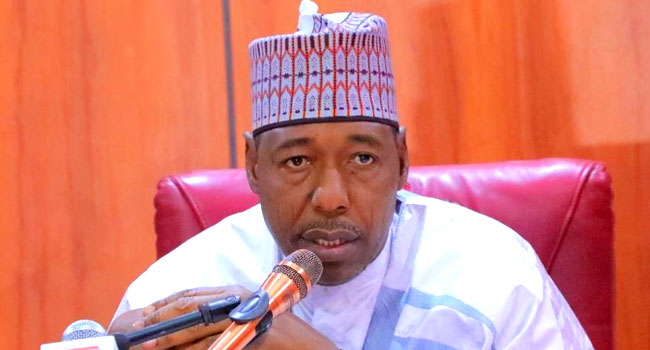
I am not desperate to be Nigeria’s Vice President -Zulum

By Ahmad Deedat Zakari

The Governor of Borno State, Babagana Umara Zulum, said he was not desperate to be the running mate of anyone who emerges as the ruling party’s presidential flag bearer. 

Zulum disclosed this on Saturday, May 21, while playing host to former Transportation Minister, Rotimi Amaechi, who was in Borno to meet party delegates and canvass for their votes ahead of the All Progressives Congress (APC) presidential primary election. 

This is sequel to permutations that Zulum will be a likely running mate if the APC’s presidential flag bearer emerges from the Southern region of  Nigeria. However, in refuting the rumour, Zulum said his primary concern at the moment was to see Borno regain her lost glory. 

“I want everyone here and the people of Borno State to know that I have only one ambition which is to see that Borno state regains its lost glory. I am not begging anybody for the position of the Vice President of the federation. God gives power to whom he wants, and when it comes, nobody can say no,” he said.

Zulum applauded the impressive credentials of Amaechi but stated it is against his principle to endorse anyone, as God is the ultimate decider of who will emerge as the president and who will not.

“Many aspirants have come to us, and many more would come, but my prayers and wish are that Nigeria should always get a new president. I can’t mention the name of any particular or preferred person.” He added. 

On the other hand, Amaechi made mouthwatering promises to delegates and the people of Borno State. He said he would secure lives and properties and improve and grow and grow agriculture, amongst other things, if they elect him.

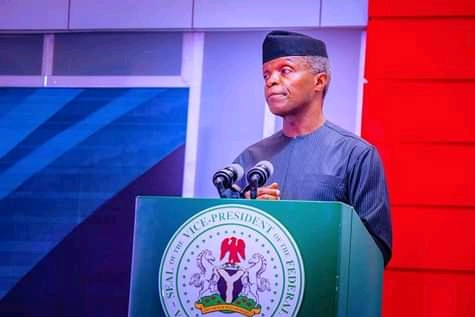
Osinbajo declares to run for Nigeria’s president

By Ahmad Deedat Zakari

Nigeria’s Vice President, Yemi Osinbajo, has declared his interest to contest for the office of the president in the 2023 presidential polls. 

The declaration that came on the morning of Monday, April 11 2022 confirmed the speculation that Osinbajo wants to succeed his principal, Muhammadu Buhari, whose tenure officially ends in May 2023.

Osinbajo, who posted his declaration on his official Twitter handle, said:

“I am today, with utmost humility, formally declaring my intention to run for the office of the President of the Federal Republic of Nigeria on the platform of APC.” 

In Osinbajo’s declaration speech, he also said he could relate to the suffering and challenges of Nigerians and hence why he wants to be president. 

“I’ve stood where you stand and sat where you sit. I know, and I understand our hopes, aspirations and fears from a place of relatable proximity; and I believe that in those hopes and aspirations are the seeds for the great Nigeria that we all desire. I believe that the very reason why the Almighty God gave me these experiences, these insights, and these opportunities, is that they must be put to the use of our country and its great peoples.” He stated.

Osinbajo will jostle for the ruling party’s ticket with other political heavyweights, like APC’s chieftain, Bola Ahmad Tinubu, and Minister of Transportation Rotimi Amaechi, who also declared their intention to run for the presidency on the platform of the party.

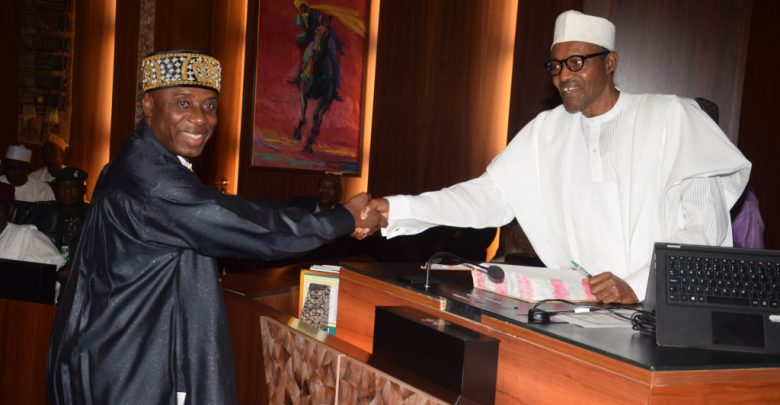
Railway Projects: Buhari praises minister of transport Amaechi

By Muhammad Sabiu

President Muhammadu Buhari has on Monday patted his Minister of Transportation, Rotimi Amaechi, on the back over what he described as a “task of transforming and modernising every aspect of Nigeria’s national transport infrastructure.”

This is coming four days after the president visited Kano and performed the ground-breaking ceremony of the segment of the Kano-Kaduna railway modernisation project.

Commending the minister via his verified Facebook handle, the president said, “I commend the Minister of Transportation, Rotimi Chibuike Amaechi, the Ministry, and all the project implementation partners contributing to this national effort of railway infrastructure development.”

Recall that on June 10, the president was also in Lagos to commission the Lagos-Ibadan Standard Guage Rail Line. He also inaugurated its “full commercial operations.”