Rivers

Tinubu’s assault on Rivers and Democracy: which state will be next?

Abdulhamid Abdullahi Aliyu

With a single stroke, President Bola Ahmed Tinubu has upended Nigeria’s constitutional order, suspending Rivers State Governor Siminalayi Fubara, his deputy, and the state legislature under the guise of a state of emergency.

This unprecedented and legally questionable move raises urgent questions: Has Nigeria’s democracy just been hijacked? If a sitting president can summarily remove elected state officials without due process, what stops Abuja from toppling any governor who falls out of favor?

The political crisis in Rivers has been simmering for months, with intense factional battles within the People’s Democratic Party (PDP) leading to threats of impeachment against the governor. But was the situation truly dire enough to warrant a presidential intervention of this magnitude?

Under Section 305 of the 1999 Constitution, a state of emergency can only be declared in cases of war, imminent danger of invasion, total breakdown of public order, or natural disasters. Even then, such a declaration requires National Assembly approval.

More importantly, the Constitution does not grant the President the power to suspend a sitting governor, deputy governor, or members of the state legislature.

By single-handedly ousting a duly elected state government and replacing it with a military figure, Tinubu has overstepped his constitutional bounds, effectively staging what many legal experts are calling a “constitutional coup.”

If this move is allowed to stand, it raises a troubling question: which state is next? Today, it is Rivers; tomorrow, it could be any other state where the President or ruling party faces political opposition. The implications are chilling—no governor, regardless of electoral mandate, would be safe from federal interference.

Would this have happened in Lagos or Kano? Would a northern state be subjected to such federal strong-arming? The answer is clear. Rivers, an oil-rich and politically volatile state, is an attractive target.

But what happens when this dangerous game of executive overreach extends beyond Rivers? If Tinubu can remove Fubara this easily, then Nigeria’s entire federal structure is under threat.

Beyond the political chaos, a more pressing question emerges: Is this really about governance, or is it about controlling Rivers’ oil wealth? History has shown the federal government’s keen interest in oil-producing states—from the militarization of the Niger Delta under past administrations to the strategic placement of federal loyalists in key oil-rich states.

The pattern is all too familiar. Could this move be less about political stability and more about tightening Abuja’s grip on Rivers’ vast economic resources?

With the Constitution clearly violated, all eyes now turn to the judiciary. Will the Supreme Court rise to the occasion and declare this move unconstitutional? Or will the courts bow to political pressure, allowing a dangerous precedent to take root?

The judiciary must recognize that this is not just about Rivers—it is about safeguarding Nigeria’s fragile democracy from the creeping shadows of authoritarianism. If this unconstitutional takeover is not reversed, no state governor in Nigeria will ever govern with full confidence in their electoral mandate again.

Since the return to civil rule in 1999, Governor Siminalayi Fubara is now the third sitting governor to be suspended by a Nigerian President under a democratic setting. In 2004, former President Olusegun Obasanjo suspended Plateau State Governor Joshua Dariye and the State Assembly over ethno-religious violence in Jos and other parts of the state, appointing Maj. Gen. Chris Alli (rtd.) to take charge.

Two years later, Obasanjo removed Ekiti State Governor Ayo Fayose and his deputy over political crises and impeachment controversies, installing Brig. Gen. Tunji Olurin (rtd.) as the new head of the state.

In 2013, President Goodluck Jonathan declared a state of emergency in Borno, Yobe, and Adamawa States in response to Boko Haram’s escalating insurgency. However, unlike his predecessors, Jonathan did not suspend the sitting governors; instead, he allowed state governments to continue operating alongside increased federal military intervention.

Now, in 2025, Tinubu has declared a state of emergency in Rivers State, citing political crisis and governance breakdown. But his move goes even further—suspending Governor Fubara, his deputy, and all members of the House of Assembly for six months.

While past interventions were carried out under Section 305 of the 1999 Constitution, the legality and necessity of removing elected officials have always been controversial. The Constitution outlines a clear procedure for declaring a state of emergency: the President must issue a proclamation, publish it in the official Gazette, and submit it to the National Assembly for approval.

Yet, in Rivers, Tinubu has acted unilaterally, preempting legislative approval and exceeding constitutional limits by removing elected officials.

As these events unfold, one thing is certain—2027 is shaping up to be a defining moment for Nigeria’s democracy. Will the courts uphold the rule of law, or will this be remembered as the moment Nigeria’s democracy took a dangerous turn?

The Nigerian people, civil society, and democratic institutions must resist this unconstitutional move by all legitimate means. If left unchecked, this will mark the moment when the line between democracy and dictatorship in Nigeria blurred beyond recognition.

Abdulhamid Abdullahi Aliyu- an NYSC serving corps member, writes from Center for Crisis Communication (CCC) in Abuja.
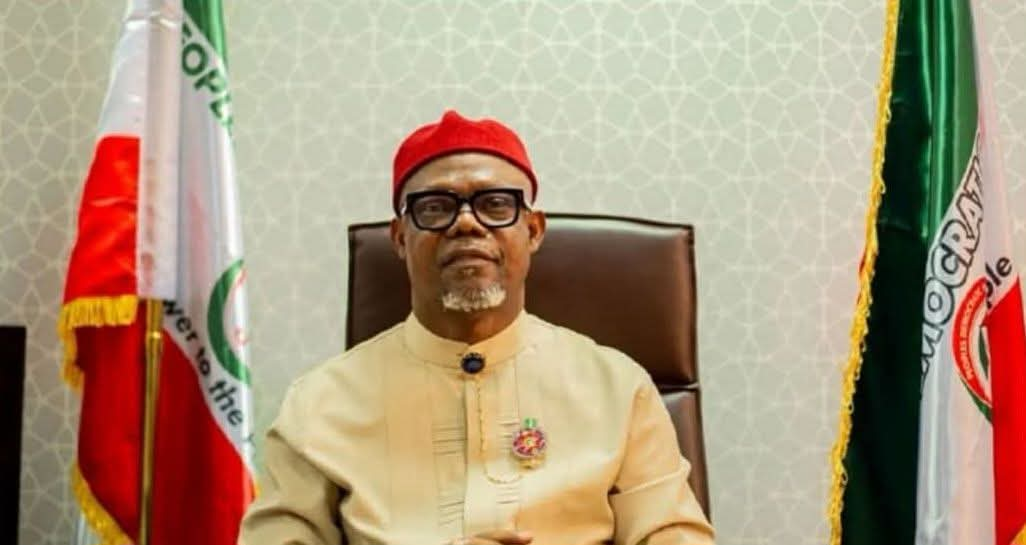

Suspension of Fubara, others may tarnish Nigeria’s reputation—GEJ

By Anwar Usman

Former President of Nigeria, Goodluck Jonathan has stated that the suspension of the elected governor, deputy and members of the house of assembly in Rivers State could tarnish the reputation of the country.

The former president made the statement at the Haske Satumari Foundation Colloquium in Abuja on Saturday.

“These actions by key actors in the executive and legislative arms of government paint the country in a negative light,” he said.

Jonathan, while revealing his stance about the political unrest in Rivers State, said although it is not the norm for former presidents to comment on issues in the polity so as not to heat up the polity, he insisted that the image of the country and how much investments a country attracts is heavily dependent on the actions of the executive, legislature and judiciary of the country.

Jonathan’s comment on the state of emergency came after the Peoples Democratic Party governors contended that the President Bola Tinubu’s actions were unconstitutional and threatened Nigeria’s democratic principles.

He criticized the situation where an individual can dictate to the judiciary, noting that it makes it difficult for anyone to have faith in the judiciary.

Northern elders forum condemns suspension of Rivers governor, calls for reversal

By Abdullahi Mukhtar Algasgaini

The Northern Elders Forum (NEF) has strongly opposed the suspension of Rivers State Governor, Siminalayi Fubara, and members of the State House of Assembly by President Bola Tinubu.

It also urged for an immediate reversal of the decision.

In a statement issued by the Forum’s spokesperson, Professor Abubakar Jika Jiddere, the group expressed deep concern over the political unrest in Rivers State, calling it an unwarranted action that does not meet the constitutional requirements for declaring a state of emergency.

The NEF argued that the situation in Rivers State does not meet any of the conditions outlined in Section 305 of the 1999 Constitution (as amended), which includes war, imminent invasion, breakdown of public order, or clear and present danger.

The group accused the federal government of using the suspension to pursue personal and political interests, rather than to uphold democracy and public order.

The Forum has called on President Tinubu to lift the suspension of the governor, deputy governor, and members of the state assembly to restore democratic governance in the state.

In addition to the developments in Rivers State, the NEF also raised concerns over escalating political tensions in Kano, particularly regarding the traditional institution of the Kano Emirate.

The group warned that unresolved political disputes in Kano could lead to greater instability if not addressed promptly and fairly.

The Northern Elders Forum has urged the federal government to take fair and lasting actions to prevent further political crises and maintain peace and order across the country.

JUST IN: Tinubu declares state of emergency in Rivers, suspends Fubara, deputy for 6 months

By Anwar Usman

President Bola Tinubu has suspended the Governor of Rivers State, Siminalayi Fubara and his deputy, Mrs Ngozi Odu for six months.

The president stated this while addressing the country on the current political crisis in the state.

The president was quoted saying “By this declaration, the Governor of Rivers State, Mr Siminalayi Fubara, his deputy, Mrs Ngozi Odu and all elected members of the House of Assembly of Rivers State are hereby suspended for an initial period of six months,” he said in a nationwide broadcast on Tuesday.

Details later…

Rivers political crisis: CP orders unsealing of LG secretariats, withdrawal of deployed personnel

By Abdullahi Mukhtar Algasgaini 

Following the recent political developments in Rivers State, the newly deployed Commissioner of Police, CP Bala Mustapha, conveyed the directives of the Inspector General of Police, IGP Kayode Egbetokun, for the immediate withdrawal of all police personnel previously deployed to seal and safeguard the local government secretariats in the state.  

This decision is in line with the commitment of the Nigeria Police Force to ensure neutrality and the smooth functioning of democratic institutions. 

Consequently, the IGP has ordered the unsealing of the local government secretariats, which were earlier secured by police personnel.

The police will only be redeployed to these locations in the event of any crisis or breakdown of law and order, in which case emergency measures will be swiftly implemented to restore normalcy. 

The Rivers State Police Command assured the public of its readiness to maintain peace and order across the state and will continue to act professionally in discharging its duties.

The police urge all residents and stakeholders to remain calm and law-abiding as the situation continues to evolve.

Election: Heavy gunfire at Wike’s ward as Rivers LG election turns violent

By Abdullahi Mukhtar Algasgaini

The ongoing local government elections in Rivers State have descended into chaos, with heavy gunfire erupting in the Rumuepirikom community, hometown of Minister of the Federal Capital Territory, Chief Nyesom Wike.

It should be noted that Wike, a former governor of the state, is at odds with the present governor, Siminalayi Fubara, who, against the odds, has gone ahead with conducting the grassroots elections.

Eyewitnesses report that unidentified individuals stormed the area, warning residents to stay indoors.

As electoral officers arrived at the ward in Obio/Akpor Local Government Area, armed men, suspected to be political thugs, launched a violent attack.

At least one person has been rushed to a hospital after sustaining a bullet injury

Rivers State: Governor Fubara approves establishment of psychiatric hospital in Wike’s LGA

By Abdullahi Mukhtar Algasgaini

Governor Siminalayi Fubara of Rivers State has approved construction of a modern psychiatric hospital in Obi Akpor Local Government Area.

Nyesom Wike, Minister of Federal Capital Territory (FCT), his estranged godfather is from Rumuepirikom in Obio-Akpor.

Both Wike and Fubara have been at crossroads over the control of Rivers State, with the minister accusing the governor of turning his back against those who helped him to the top.

Speaking at a reception organized for him by a group, the Ijaw Peoples Assembly, in Port Harcourt, on Saturday, Wike boasted that when the time comes, he would teach Fubara and his supporters a big lesson in the state.

He said: “Imagine in Rivers they are contemplating of APP. It is not about money. Money does not move. You can have all the money but if there is no capacity there is no capacity.

“All the things you see are people envious of our growth. We have defeated them severally and if opportunity comes again, we will defeat them We have not started politics, when the time comes, we will play politics. Our job is politics. Tell them to keep their party ready. We will teach them what is called politics.”

But responding at the Inter-denominational Church Thanksgiving Service organised as part of activities marking the 64th Independence Day Celebration of Nigeria at St. Paul’s Cathedral of the Anglican Communion at Garrison Junction, Port Harcourt, on Sunday, Fubara said what he did in one year outweighed the performance of his opponents in 8 years.

He said, “They even say, they don’t know what we are doing. Let me remind them, it is Fubara that signed the paper to borrow from Zenith Bank the N200billion for the construction of the Port Harcourt Ring Road. So, it is my project. It is Fubara that awarded the Trans-Kalabari Road that they couldn’t do. They did only a bridge from Krakrama, but I am the one doing it: the complete span, and it is N225billion. I didn’t borrow.

“It is this same Fubara that is building a General Hospital, which I also included a Psychiatric Hospital because they will need it very soon. So, tell them that what I did in one year is what they did in 8 years. It is only empty container that makes noise. If God has given you opportunity, eat your plantain and keep quiet. God will continue to give us the strength to do the best for our people, without fear.

“Very soon, you will see what we are doing. It is not about doing roads to your business interest. I don’t have any business interest. Whatever I am doing, I am doing it for the people of Rivers State. We will not take any decision that we cannot defend. We won’t be part of anything that will bring any form of disgrace to our dear State. This State is important to us. It is the only thing that we have.

“It is the beautiful pride. That is why they are struggling, coupled with the improvement in Internally Generated Revenue (IGR) we have done. That is why they are struggling, we know. But, do it with modesty, you don’t need to destroy the house.”

Fubara said if his opponents continue to deride the grace of God on his life, they will continue to struggle for public recognition or approval.

He said his policy in office is not to embark on “mere jamboree” of groundbreaking for projects but assured that any project started will be inaugurated and actually put to public use.

“So, please, I will beg everyone of you, God has given us this opportunity, we must safeguard it. They are the ones looking for a way to destroy it.

“They didn’t believe we will get to this point, and I can tell you I had a reason for inviting all the candidates for the local government election for this service,” he added.

Police arrest soldiers, others over robbery

By Uzair Adam Imam

The Rivers State police have arrested 13 individuals, including four soldiers and a Nigeria Security and Civil Defence Corps (NSCDC) officer, for alleged armed robbery, hijacking of food trucks, and diverting them to other locations.

According to the police spokeswoman, Grace Iringe-Koko, the arrests followed a thorough investigation triggered by an initial arrest of suspected burglary in a private warehouse in Elimgbu community, Ohio/Akpor LGA.

Two of the initial suspects were identified as a corporal in the Nigerian Army serving in Delta State and an officer of the Nigerian Security and Civil Defence Corps serving in Kabba, Kogi State.

They confessed to abandoning their posts to engage in criminal activities in Rivers State.Further investigations uncovered a larger criminal ring involved in armed robbery, hijacking, and goods diversion.

The gangs hijacked trailers loaded with various goods, including fertilizers, imported clothing, and POP cement.The police recovered stolen items and a white Toyota Hilux used in the gang’s operations.

The four soldiers involved were dismissed by the Nigerian Army and handed over to the police for prosecution.

Criminal hideout raided, cult leader killed in Rivers police operation

By Uzair Adam Imam

In Port Harcourt, the Rivers State Police Command has successfully raided a criminal hideout in Oderereke community, Ahoada-West Local Government Area, leading to the death of a notorious cultist and armed robber named Silas Oderereke.

The suspect, who had been on the police’s wanted list for four years, was taken down during a crossfire as he resisted arrest.

Superintendent of Police Grace Iringe-Koko, the Police Public Relations Officer, revealed that the police operatives encountered armed resistance from the criminals upon entering the den in Oderereke community.

The exchange of gunfire resulted in the death of Oderereke, known as ‘General,’ while two other suspects sustained injuries, and two managed to escape.

Oderereke, the leader of the Greenlanders’ cult group in the Ubie clan of Ahoada West, was notorious for various criminal activities, including armed robbery, land grabbing, unauthorized sales of buildings, and violent attacks on those opposing his gang.

The criminals were involved in terrorizing the community, seizing land, vandalizing property, and engaging in robbery and kidnapping.

The police received information about the gang’s robbery operation on January 11, 2024, prompting a swift response to chase the criminals out of town.

However, Oderereke and his gang retaliated by attacking a community-owned tank farm, aiming to loot its contents.

In the ensuing shootout, Oderereke and an accomplice were neutralized, while others sustained injuries.Among the seized items were a G3 rifle, nineteen 7.62x51mm ammunition, and various weapons and military camouflage.

Superintendent Iringe-Koko commended the officers for their exceptional work, and Commissioner of Police Olatunji Disu warned cultists in the state to renounce their criminal activities or face the full weight of the law.

Woman pours hot oil on husband after discovering he was involved in fraud

 By Sabiu Abdullahi 

A woman in Rivers State, Nigeria, has been arrested for pouring hot oil on her husband.

The woman, Favour Nweke, said she did this because she found out he had been involved in a fraudulent scheme. 

According to the woman, her husband had not told her about the scheme, and she felt betrayed when she found out.

She said she poured the hot oil on him in a fit of anger and now regrets her actions. 

The woman’s husband is currently in the hospital, receiving treatment for his burns.

The police are investigating the incident, and the woman is expected to be charged with assault.