Revenue

Nigeria hits 2025 revenue target early—Tinubu

By Abdullahi Mukhtar Algasgaini

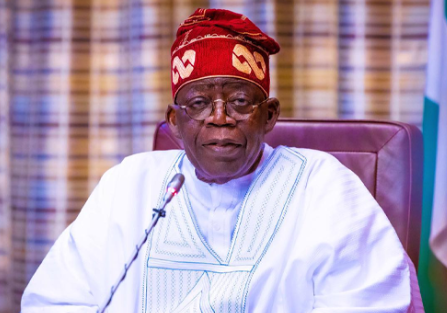
President Bola Tinubu announced on Tuesday that the Federal Government has already met its revenue target for the 2025 fiscal year, achieving the milestone in August of this year.

Speaking at a meeting with legacy members of the defunct Congress for Progressive Change (CPC) at the Presidential Villa in Abuja, the President attributed this achievement to his administration’s economic reforms, which have focused on stimulating the non-oil sector.

“The economy is now stabilised. Nobody is trading pieces of paper for foreign exchange anymore. The economy is now predictable. You do not need to know the CBN Governor to obtain foreign exchange or import goods,” President Tinubu stated.

He assured Nigerians that his Renewed Hope Agenda remains focused on building critical infrastructure, improving healthcare, ensuring food sovereignty, and providing security.

To guarantee food sovereignty, the President revealed plans to establish agricultural mechanisation centres across all regions of the country to build capacity and expand cultivation.

“We are going to have trainees. That programme is our path to food sovereignty,” he said.Reflecting on the political merger that formed the ruling All Progressives Congress (APC), Tinubu described it as “a sweet memory” and thanked the delegation for their support.

He also promised to sustain the legacies of former President Muhammadu Buhari, including immortalising him with a ‘Buhari House,’ and assured that more members of the old CPC would be brought into the government.

The leader of the delegation and former Governor of Nasarawa State, Umaru Tanko Al-Makura, assured the President of the group’s loyalty and commitment to the success of his administration and his ultimate victory in the 2027 elections.

Speaker of the House of Representatives, Rt. Hon. Tajudeen Abbas, who was also present, thanked the President for his statesmanship and magnanimity.

Nigeria customs exceeds Q1 2025 revenue target with ₦1.75 trillion collection

By Sabiu Abdullahi

The Nigeria Customs Service (NCS) has reported a revenue collection of ₦1.75 trillion for the first quarter of 2025, surpassing its target of ₦1.645 trillion by ₦106.5 billion.

This marks a performance rate of 106.47%.

Speaking in Abuja on the agency’s performance, Comptroller General of Customs, Bashir Adewale Adeniyi, reaffirmed the NCS’s commitment to achieving its annual revenue target of ₦6.58 trillion.

“Let me summarize where we stand after Q1: We’ve collected ₦1.75 trillion despite economic headwinds, intercepted ₦7.7 billion worth of smuggled goods, and rolled out practical solutions like the B’Odogwu platform. The numbers show we’re delivering,” he stated.

He noted that this revenue represents a 29.96% increase compared to the ₦1.34 trillion recorded in the same period of 2024.

A month-by-month analysis revealed steady growth, with January generating ₦647.88 billion—18.12% above its target and a 65.77% rise year-on-year.

In February, revenue totaled ₦540.1 billion, exceeding projections by 1.3% and showing a 19.97% increase from the previous year.

March continued the upward trend with ₦563.52 billion, surpassing its target by 2.7% and reflecting an 11.22% growth over March 2024.

“The 29.96% annual increase and steady monthly collections confirm our strategy is working. We’ll maintain this momentum through rigorous enforcement and strengthened partnerships,” Adeniyi added.

On anti-smuggling efforts, he revealed that NCS recorded 298 seizures in the first quarter, with a total Duty Paid Value (DPV) of ₦7.69 billion.

This represents a 78.41% increase from the ₦4.31 billion recorded in Q4 2024, though it remains 19.70% lower than Q1 2024’s ₦9.58 billion.

Adeniyi acknowledged exchange rate fluctuations as a major challenge during the quarter.

“During Q1 2025, we recorded 62 changes in the exchange rate, ranging from a minimum of ₦1,477.72 to a maximum of ₦1,569.53 per USD, with an average rate of ₦1,521.59,” he explained.

He expressed appreciation for the dedication of NCS officers, emphasizing their role in the agency’s success.

“Your commitment continues to drive our achievements and reinforces our position as a critical institution in Nigeria’s economic and security architecture.

“We also acknowledge the support of the Federal Government, particularly His Excellency, President Bola Ahmed Tinubu, GCFR, and the Honourable Minister of Finance and Coordinating Minister of the Economy, Mr. Olawale Edun, for their guidance and enabling environment that have facilitated our operations.

“To our stakeholders – the trading community, partner government agencies, and international partners – we appreciate your cooperation and constructive engagement. We remain committed to fostering these relationships as we work together to advance Nigeria’s trade interests and economic development.”

Kaduna revenue agency refutes El-Rufai’s claim, reports growth in IGR under Uba Sani

By Abdullahi Mukhtar Algasgaini

The Kaduna State Internal Revenue Service (KADIRS) has dismissed claims by former Governor Nasir El-Rufai that the state’s monthly internally generated revenue (IGR) has declined, while also refuting allegations of an illegal N100 million diversion from state funds.  

Speaking at a press conference, KADIRS Executive Chairman Jerry Adams stated that under the current administration of Governor Uba Sani, the state has recorded significant revenue growth, surpassing figures achieved during El-Rufai’s tenure.  

“It is necessary to clarify certain statements made by former Governor Nasir El-Rufai. Whether due to incomplete information or a deliberate attempt to mislead, it is important to set the record straight,” Adams said.  

El-Rufai had claimed that Kaduna’s monthly revenue dropped from N7 billion to N2 billion under Governor Uba Sani. However, Adams refuted this, stating that the highest annual IGR recorded under El-Rufai was N59 billion in 2022, translating to a monthly average of N4.9 billion.  

He further explained that a significant portion of the revenue between 2019 and 2022 came from one-off sources, including debt recoveries and government asset sales, which amounted to N45 billion.  

“If these irregular revenues are excluded, the actual monthly IGR at that time was far lower than what is being claimed,” Adams noted.  

Regarding the alleged illegal transfer of N100 million, Adams dismissed it as “completely false,” explaining that Kaduna’s revenue collection system operates entirely through PAYKADUNA, with all payments going directly into the state’s Treasury Single Account (TSA).  

He emphasized that under Governor Uba Sani, Kaduna’s IGR has seen consistent improvement.  

“In 2023 alone, Kaduna State generated N62.48 billion in IGR, which increased to N71 billion in 2024—averaging N5.2 billion and N6 billion monthly, respectively.”  

“In just January and February 2025, the state has already collected N7.46 billion and N6.68 billion, totaling N14.16 billion in two months—without any debt recoveries or one-off revenues.”  

“This demonstrates the commitment and diligence of this administration in driving economic growth and ensuring sustainable development,” Adams stated.

Nigeria should turn its abandoned assets into revenues

By Zayyad I. Muhammad

The Federal Government of Nigeria owns thousands of abandoned and incomplete buildings, roads, dams, electricity, etc, projects, vast tracts of unused land, thousands of obsolete and unserviceable vehicles, and millions of scrap machines and equipment scattered across the country. These assets, though neglected, represent significant untapped potential that could be leveraged to generate much-needed revenue.

Both the federal and state governments need additional funds to finance developmental and humanitarian programs and sustain ongoing projects and programs. The solution to this financial challenge may lie in the assets that have been left to deteriorate. By auctioning some of these assets, commercializing others through private sector participation, and completing abandoned projects, the government can unlock substantial revenue streams.

For instance, Nigeria has thousands of kilometers of abandoned or dilapidated federal highways. Rehabilitating and conventionalizing these roads through private sector involvement would improve infrastructure and generate revenue for the government. This approach would shift the financial burden from the public purse to private investors, who would fund the construction or rehabilitation of the roads and recoup their investments through tolling.

In 2022, the Federal Government introduced the Highway Development and Management Initiative (HDMI), a commendable program that identified 19 federal highways for rehabilitation and tolling. However, recent reports suggest that the current Minister of Works, Senator David Umahi, has become a bottleneck to the initiative.

As Bismarck Rewane, Managing Director of Financial Derivatives Company Limited (FDC), noted, “This idea was thwarted with the entrance of the current Federal Minister of Works, who came into the picture, first as a catalyst and next as a spoiler.”

The President Bola Ahmed Tinubu administration should prioritise reviving schemes to convert abandoned properties, highways, lands, vehicles, machinery, and other assets into sustainable revenue streams. However, the process must be meticulously planned, transparent, and supported by robust legislation and institutions. Given Nigeria’s history of failed concessions and partnerships, neither private sector players nor international investors will be willing to participate without these safeguards.

Failures include the Lekki-Epe Concession, Ajaokuta Steel Company’s 2004 concession to GSHL (revoked in 2008), Lagos-Ibadan Expressway’s 2009 concession to Bi-Courtney (revoked in 2012), and the Nigerian Ports Concession program, where operators failed to meet obligations due to weak enforcement and oversight. Another case is the ALSCON concession to UC Rusal, leading to ownership disputes and legal battles.

To succeed, the government must learn from past mistakes and create an enabling environment that fosters trust and accountability. By doing so, Nigeria can transform its abandoned assets into a goldmine of opportunities, driving economic growth and development for the benefit of all.

Zayyad I. Muhammad writes from Abuja via zaymohd@yahoo.com.

Multiple blows to a reactive North: Emilokan na your mate? 

By Shettima Dan’Azumi, ESQ

Northern Nigerian states are gradually losing a significant portion of their Federal Accounts and Allocation Committee (FAAC) allocation shares, which is undoubtedly their biggest revenue source. From the Local Government Funds and Fiscal Reform Bills to dividends from NLNG shares of NNPC and, today, the National Lottery, all these are part of the pool that makes up the monthly national cake distribution known as FAAC.

These developments are not surprising to any student of development. We all saw it coming. Early this year, the Supreme Court, in a suit filed by the Federal Government, scrapped the States and Local Government joint account, which had previously entrusted local government funds to their respective states.

In another case, the Supreme Court also agreed with the AGF’s argument. It held that the NNPC’s stake (shareholding) in the NLNG, unlike the NNPC itself, actually belongs to the Federal Government, not the entire Federation. Those billions of dollars accrued to NNPC from NLNG annually are no longer to be shared with the States as part of FAAC. 

Similarly, VAT, a chunk of the non-oil revenue currently shared based on equity, derivation, and population formula amongst FG, States, and Local Government, will, if Emilokan’s Executive Bill succeeds at the National Assembly, now be shared based on derivation or consumption or both. Either way, I don’t see how the North can benefit. I will get to the reason shortly. 

Then came today, another blow in a Suit initiated by the Lagos State Government. The Learned Justices of the Supreme Court, while granting all the reliefs sought by the AG of Lagos State, held that revenues accrued to the Federation through the National Lottery Commission from the regulation and royalties of lottery and other online games are in reality within the Residual Legislative List, exclusive to States to regulate and generate revenues from. 

I believe there may be more of these seemingly harsh interpretations of the law in the near future because that is what the Constitution actually contemplated. 

If you put these chains of events together, you would only come to one conclusion: that full federalism is taking a crude shape in the country against the wish of everyone. We would have prepared for this time if northerners had been thoughtful and proactive. We would have confronted the issue of restructuring with strategy rather than our usual rejectionist attitude to achieve it on our terms and put a timeline for gradual implementation to minimise its impact. With our sell-out NASS members, who either do not appreciate where all this is headed or have been bought to look away, it’s only a matter of time. May Allah rest the soul of Senator Suke Yaro Gandi and the rest of his contemporary visionaries and patriots. 

What should we expect now? Our FAAC-reliant states will receive a shorter allocation. If VAT is to be shared based on derivation, then most of the Corporate Headquarters of businesses where the remittance of VAT takes place are far away from the north. What if it’s to be shared based on consumption? The follow-up question is: how do you determine the end users when you don’t have the data to prove where it is consumed? Even if this data exists, most of our businesses in the north, including Kano State, are not formal businesses, so their distributors are in Lagos and other Southern States. Our traders are running away from the institutionalisation of corporate governance frameworks in their businesses, which will give them the capacity to deal with manufacturers and wholesalers directly and document their dealerships properly. We are simply traders. 

The lottery is worse because most states think the whole business is haram. But, wait, is it not the double standard that you are operating a secular state, collecting VAT revenue generated from breweries and royalties from casinos, including the lottery, for all these years while still believing it’s haram? At least, it would soon be over, and we shall stick with halal revenues.

To cut a long story short, the North must wake up on governance and development issues. The culture of electing clueless governors and the dominance of corrupt and soulless political class must end. We must pay more attention to our manpower and skills development policies and reform our education systems because that’s what all these boil down to. EDUCATION! Our youth must stop social media praise-singing and political sycophancy and embrace education and skill acquisition. Our businesses must adopt corporate governance and innovation and be more industrious and forward-thinking. 

Because Emilokan is not your mate.

Customs CG outlines strategies for achieving 2024 revenue target

By Sabiu Abdullahi 

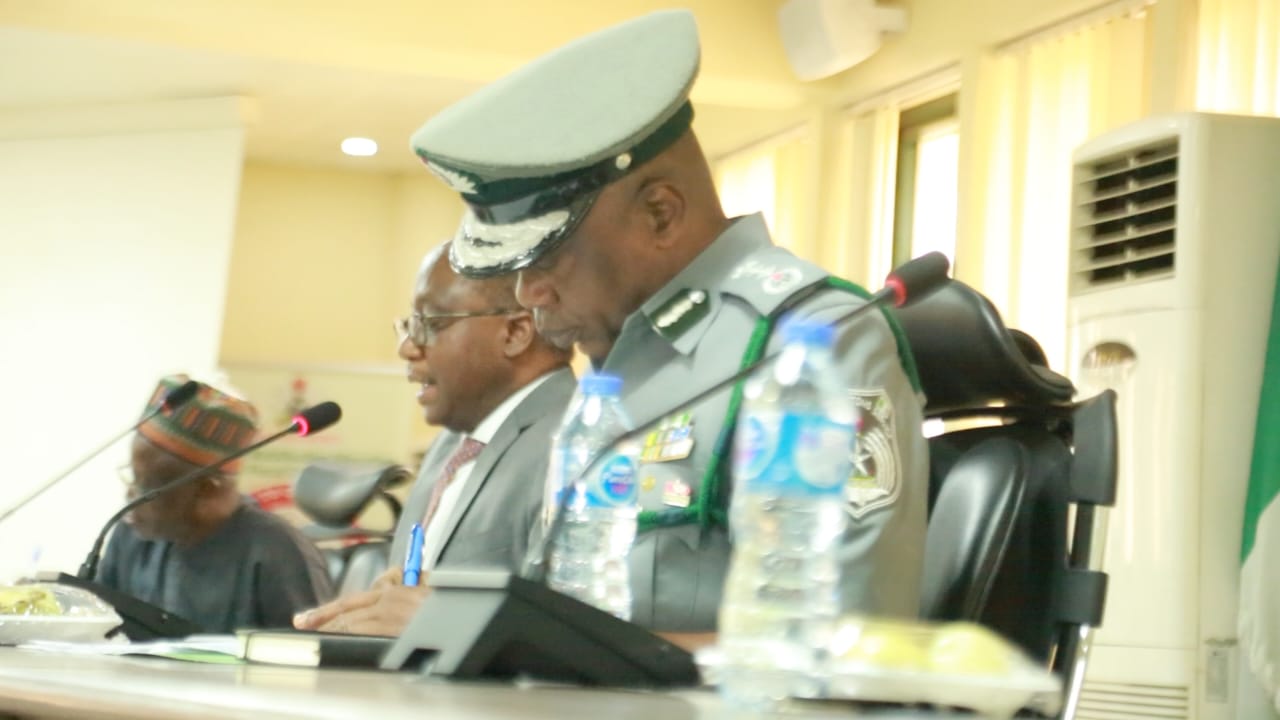
Comptroller-General of Customs (CGC) Bashir Adewale Adeniyi MFR, in a comprehensive presentation at the Revenue Mobilisation and Fiscal Commission (RMFC) office in Abuja on Wednesday, January 24, 2024, shed light on the Nigeria Customs Service’s initiatives to boost revenue generation and fiscal efficiency. 

CGC Adeniyi stressed the importance of collaboration and trust-building with government agencies to meet shared objectives.

Seeking support from the commission and other entities, he highlighted the strides made since his 2023 appointment in revenue recovery and combating potential leakages. 

Acknowledging legal provisions for certain agencies at the port, CGC Adeniyi assured that the NCS is actively collaborating to streamline processes without impeding trade facilitation. 

He affirmed the collective responsibility to achieve the ambitious 5.1 trillion naira revenue target. 

The CGC also announced a Time Release Study in collaboration with the World Customs Organization (WCO) to scientifically evaluate cargo clearing processes at the port. 

Moreover, he unveiled plans for a revenue recovery exercise initiated in 2023, which successfully retrieved over 17 billion naira within four months. He assured the implementation of lessons learned in 2024, particularly strengthening the Post Clearance Audit (PCA) Unit. 

Assistant Comptroller-General of Customs in charge of Tariff and Trade, Caroline Niagwan, addressed challenges contributing to the 2023 shortfall.

Chief Superintendent of Customs (CSC) Ekanem Asuquo detailed NCS’s core functions, legal frameworks, and the necessity for accurate import duty calculations. 

Alhaji Bello Shehu, Chairman of the Revenue Mobilization Allocation and Fiscal Commission, underlined the Commission’s monitoring role and sought NCS support to recover funds, improve revenue mobilization, and advise on measures for increased revenue generation.