Reps

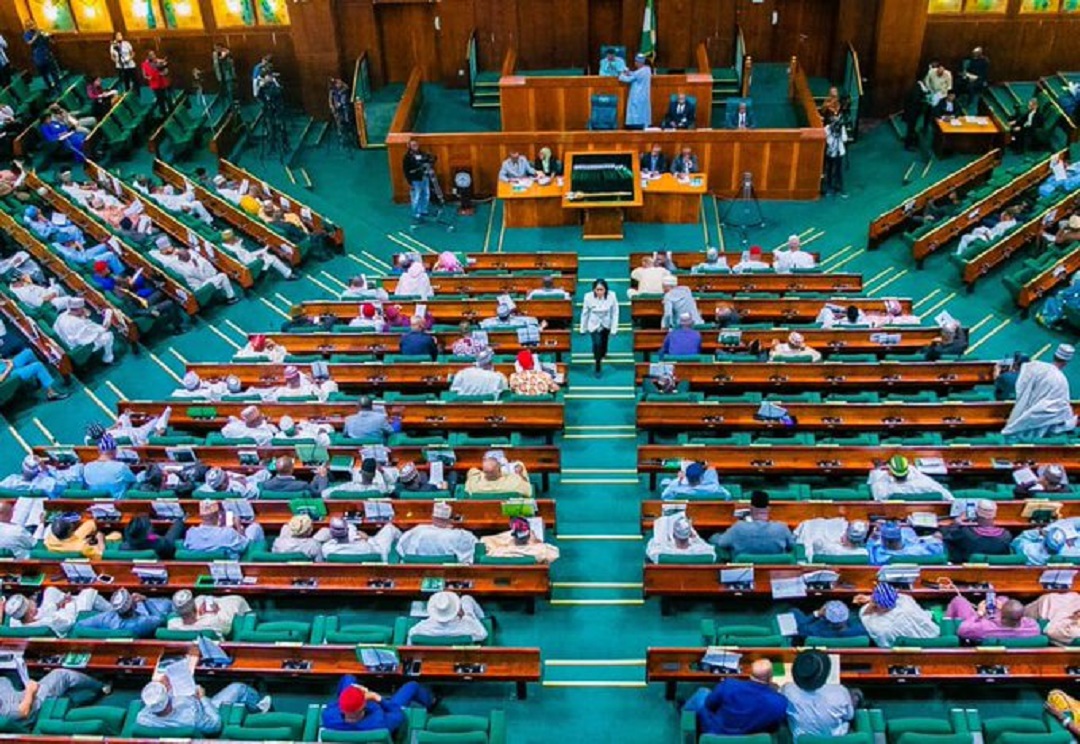
Reps withdraw compulsory voting bill amid public outcry

By Anwar Usman

The Speaker of the House of Representatives, Tajuddeen Abbas has withdrawn a bill aimed aimed at making voting compulsory for all eligible Nigerians.

The bill, which he co-sponsored with Daniel Asama Ago, was meant to change the Electoral Act 2022 to encourage more people to vote and strengthen democracy.

In a statement on Monday, signed by the media aide to the speaker, Musa Krishi, said the decision to pull the bill came after speaking with many people and groups across the country.

“From the start, the goal was to get more people involved in elections and strengthen democracy by boosting voter turnout,” the statement said.

The bill had passed second reading in the House on Thursday but it sparked debate.

Some people supported it, saying it would lead to better voter turnout while others said it would take away personal freedom and would be hard to enforce in a country as diverse as Nigeria.

The speaker, pointed out that countries like Australia, Belgium, and Brazil have high voter turnout thanks to compulsory voting, but stressed that Nigeria must find its own way that suits its people.

Abbas further stated that “Lawmaking is about serving the people, and any new law must respect personal freedom”.

Instead of forcing people to vote, he said the government would look for another alternative that’ll encourage voting, especially among young people and those voting for the first time.

“This withdrawal gives us time to talk more about how to build a culture of voluntary voting that supports our democracy and respects citizens’ rights,” he added.

Many Nigerians had criticized the bill, urging leaders to focus on solving problems like election violence, lack of trust in the system, and poor planning on election days, issues that stop people from voting.

Reps to investigate mass failure in 2025 UTME

By Uzair Adam 

The House of Representatives has resolved to investigate the technical error that resulted in the mass failure recorded during the 2025 Unified Tertiary Matriculation Examination (UTME).

This decision was made following the adoption of a motion of urgent public importance moved by a lawmaker from Osun State, Adewale Adebayo, during Thursday’s plenary session.

The Joint Admissions and Matriculation Board (JAMB) released the results of the 2025 UTME on May 9, revealing that over 78 per cent of candidates scored below 200 out of a possible 400 marks. 

An early review by the board indicated a significant technical error had occurred.

At a press briefing in Abuja, JAMB Registrar Prof. Ishaq Oloyede disclosed that server-related issues affected the results of 379,997 candidates. 

He explained that updates to servers in Lagos and South-East zones disrupted the upload of responses during the first three days of the examination. 

The issue, caused by one of JAMB’s two technical service providers, went undetected before the results were initially released.

To remedy the situation, the board announced that affected candidates would be allowed to retake the examination between May 16 and 19, 2025.

While presenting the motion, Adebayo emphasised the hardship many candidates and their families endured, travelling long distances only to face disappointing outcomes. 

He called for a thorough investigation to ensure such lapses do not recur.

In his contribution, Sada Soli from Katsina praised the JAMB Registrar for admitting the error and publicly apologising. 

He also commended Oloyede’s efforts in boosting the board’s revenue since taking office.

However, House Speaker Tajudeen Abbas said it would be up to the investigating committee to determine whether the Registrar deserves an official commendation.

The motion was unanimously adopted through a voice vote.

The House further called on the Federal Government to establish Computer-Based Test (CBT) centres in all Local Government Areas across the country to make exam centres more accessible. 

It also urged JAMB to release the withheld results of candidates below the age of 16.

Lawmakers urge FG to reverse hike in petrol, cooking gas prices

By Uzair Adam

The House of Representatives has called on the federal government to reverse the recent increase in the prices of petrol and cooking gas.

This demand was made during a plenary session on Wednesday after the lawmakers adopted a motion co-sponsored by Kingsley Chinda, the Minority Leader; Aliyu Madaki, the Deputy Minority Leader; and 109 other members.

The motion came in response to the Nigerian National Petroleum Company (NNPC) Limited’s decision to raise petrol prices across its retail outlets on October 9, 2024.

Aliyu Madaki, while presenting the motion, highlighted the financial strain that the surge in fuel prices has caused for ordinary Nigerians, noting that the prices of both petrol and cooking gas have “skyrocketed” in recent months.

Madaki explained that the removal of fuel subsidies, combined with global oil price volatility and the weakening naira, has worsened the situation, further burdening Nigerian households.

He pointed out that the rising fuel prices are significantly affecting the cost of transportation, food, essential goods, and healthcare, driving many families into deeper financial hardship.

He added that businesses, particularly small and medium-sized enterprises (SMEs), are struggling to cope with operational costs due to the increase in fuel prices, threatening economic stability and job security across the country.

Madaki expressed concerns that the federal government’s efforts to repair domestic refineries and boost local refining capacity have not yielded meaningful results.

During the debate, other lawmakers such as George Ozodinobi and Olumide Osoba echoed the concerns.

Ozodinobi noted that the petrol price hike has undermined the impact of the newly approved N70,000 minimum wage, while Osoba suggested referring the matter to a joint ad hoc committee of both the House and Senate.In the end, the motion was adopted by a voice vote led by Speaker Tajudeen Abbas.

The House urged the federal government to implement measures such as temporary price relief, tax reductions, or subsidies for cooking gas to alleviate the burden on low-income households.

It also called on the NNPCL and relevant agencies to expedite the repair of refineries and boost local refining capacity to reduce reliance on imported fuel.

Additionally, the lawmakers urged the Central Bank of Nigeria (CBN) to introduce monetary policies that would mitigate the inflationary impact of fuel price hikes on essential goods.

Nigerian lawmakers consider single 6-year term for president, governors, chairmen

By Sabiu Abdullahi

A proposed constitutional amendment aimed at introducing a single six-year term for the President, state governors, and Local Government Area chairmen has passed its first reading in the House of Representatives.

The bill, sponsored by Representative Ikenga Ugochinyere and 50 other lawmakers, seeks to reduce election costs and promote stability in government. 

If enacted, the amendment would extend the tenure of these offices from four to six years, commencing from the date of their election.

The bill also provides for the extension of the term in cases of war or election annulments. 

The proposed amendment has sparked debate among political analysts, with some arguing that it could lead to a concentration of power and undermine democratic principles.

However, proponents of the bill argue that it would reduce the financial burden of frequent elections and promote continuity in governance. 

The bill will undergo further debate and scrutiny before a final vote.

Reps urge FG to enforce executive order on local textile patronage 

By Uzair Adam Imam 

The House of Representatives has called on the Federal Government to enforce compliance with Executive Order 003 of 2017, which promotes the patronage of locally produced products, including textiles. 

This resolution came after the adoption of a motion by Rep. Esosa Iyawe (LP-Edo) during plenary in Abuja, where he highlighted the significance of the textile sector in Nigeria’s economy. 

Iyawe affirmed the importance of revitalising the Nigerian textile industry, which was once a major employer of labour and a vital component of the manufacturing sector. 

He expressed concerns about the negative impact of non-compliance with the executive order and the preference for imported fabrics over locally made textiles. 

The House urged the Federal Government to ensure the effective implementation of Executive Order 003 and to conduct awareness campaigns to educate Nigerians on the benefits of supporting indigenous textile manufacturers. 

Additionally, the House called on various government agencies, including the Armed Forces and law enforcement agencies, to prioritise the patronage of locally made textiles. 

Furthermore, the House mandated the Committees on Industry and Legislative Compliance to oversee and ensure adherence to the executive order. 

Executive Order 003, signed by former Vice President Yemi Osinbajo in 2017, aims to boost the nation’s economy and create jobs by encouraging government agencies to prioritize the use of locally made goods.

Zamfara institute of technology bill passes second reading at House of Reps

By Sabiu Abdullahi

The House of Representatives has advanced the Federal Institute of Technology and Entrepreneurship Bill to the next stage of the legislative process.

The bill, sponsored by Hon. Abdulmalik Zubairu Bungudu, representing Bungudu/Maru Federal Constituency of Zamfara State, successfully passed its second reading, garnering widespread support from lawmakers. 

The proposed legislation seeks to amend the Federal Polytechnic Act, 2004, enabling the establishment of the Federal Institute of Technology and Entrepreneurship in Bungudu, Zamfara State.

The institute’s primary focus would be on offering specialised courses and programmes tailored to address the technology and entrepreneurship challenges faced by Nigeria.

By equipping students with relevant skills and knowledge, the institution aims to empower them to create jobs and contribute significantly to the nation’s economic growth. 

During the deliberations, Hon. Abdulmalik Zubairu Bungudu passionately argued for the bill, emphasising the urgent need to reposition the education system.

He highlighted the prevailing economic realities, where traditional job opportunities are limited, especially in regions like Zamfara State, where farming, a primary source of income, is severely impacted by banditry and insecurity. 

Members of the House expressed unanimous agreement on the bill’s potential to transform the educational landscape. They underscored the importance of aligning education with the demands of the contemporary job market and commended Hon. Abdulmalik Zubairu Bungudu for his vision in sponsoring the bill. Speaker Hon.

Tajudeen Abbas, in his closing remarks, reiterated the House’s commitment to promoting initiatives that enhance economic opportunities for Nigerians.

He assured that bills like the Federal Institute of Technology and Entrepreneurship Bill, aimed at fostering self-employment and economic growth, would receive expedited attention. 

The bill has now been referred to the House Committee on Tertiary Institutions, where it will undergo further scrutiny before returning to the Committee of the Whole for final deliberations.

This development marks a significant stride towards empowering the youth, encouraging entrepreneurship, and ultimately bolstering Nigeria’s economic resilience.