Reno Omokri

Omokri questions BBC Hausa’s dominance, urges FG to establish independent Hausa radio

By Sabiu Abdullahi

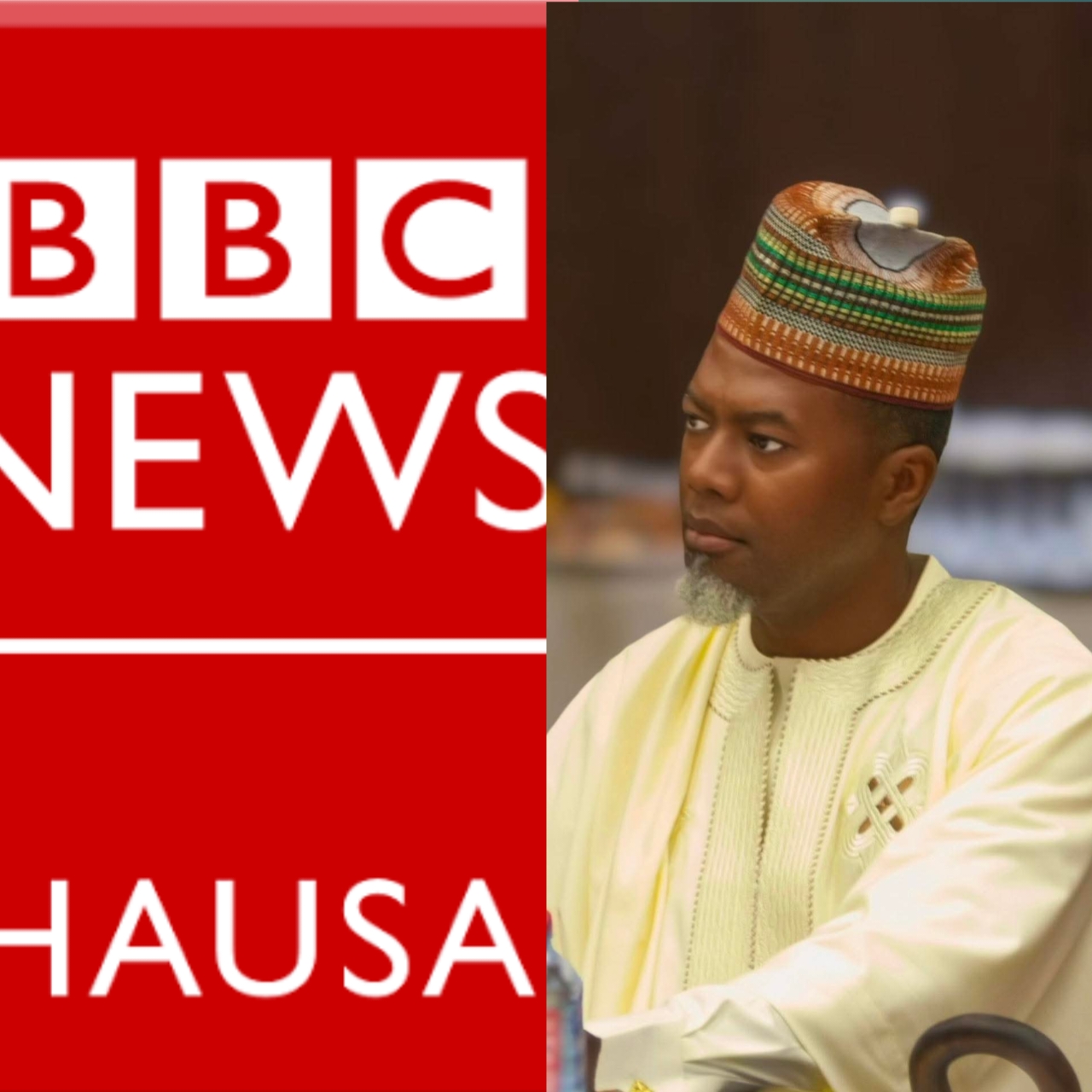
Former presidential aide and author, Reno Omokri, has raised concerns over the growing influence of BBC Hausa in Nigeria, arguing that no foreign media organisation should wield such power over a sovereign country.

In a detailed commentary, Omokri questioned whether it was healthy for Nigeria that BBC Hausa appears to have more influence than any local institution. He said one of his strongest wishes for the country was for the Federal Government to establish a Hausa-only radio station, possibly to be known as Radio Nigeria Hausa.

According to him, such a station should recruit the best Hausa-speaking journalists and broadcasters and operate with full editorial independence, even if it remains government-owned. He stressed that the journalists must be paid world-class salaries, warning that without competitive pay, foreign Hausa-language services would continue to attract Nigeria’s best talents.

Omokri explained his focus on Hausa by noting that the language is the most widely spoken in West Africa and the most developed indigenous language in Nigeria. He stated that about half of Nigeria’s population speaks Hausa, with many citizens relying on it as their only language. He also argued that, apart from Lukumi Yoruba, Hausa is the only indigenous language in the country that continues to grow, while others gradually decline as English gains ground.

He further claimed that BBC Hausa is the most influential and most listened-to media platform in Nigeria, with an estimated weekly audience of about 20 million listeners. He challenged readers to name any television station, radio outlet, or newspaper with a similar reach. Omokri added that radio remains the dominant medium in Nigeria and called on readers to verify this claim.

The commentator also asserted that BBC Hausa enjoys an 89 per cent trust rating in Nigeria, a figure he said few public or private institutions in the country could match. He linked this high level of trust to major historical moments, including the interview with late President Umaru Musa Yar’Adua from his sick bed and the announcement of General Sani Abacha’s death, both of which were first reported by BBC Hausa.

While acknowledging that some television stations, such as Channels Television, may reach millions of viewers, Omokri pointed out that television requires electricity and a TV set. He contrasted this with radio, which he described as cheap, portable, and accessible, since a simple battery-powered device allows listeners to tune in from anywhere.

Omokri expressed deeper concern over the ownership structure of the BBC. He noted that the British Broadcasting Corporation is a public service broadcaster established, owned, and controlled by the British government. He explained that the BBC chairman is appointed by the British monarch on the advice of the UK government, while the board also comes from government appointments.

He argued that, regardless of goodwill, the primary responsibility of the BBC leadership would be to protect British interests. He warned that Nigeria’s most influential media platform remains foreign-owned and operated, with the capacity to shape the worldview and political opinions of millions of Nigerians.

Raising a hypothetical scenario, Omokri asked what would happen if British and Nigerian interests were to clash, as they had in the past. He admitted that BBC Hausa might be convenient for Nigeria, but insisted that it was not in the country’s long-term interest.

He said he doubted that any European country or nation in the Western Hemisphere would accept a situation where a foreign media organisation held such sway over its population. In his view, media power should be firmly in Nigerian hands to protect national independence and sovereignty.

Omokri emphasised that the media plays a decisive role in shaping nations, citing the United States as a global power strengthened by both its media influence and military strength. He warned that BBC Hausa could, if it chose, influence Nigerian voting behaviour, consumer choices, and foreign alignment.

He concluded that allowing a foreign broadcaster to hold such influence over a sovereign nation posed a serious risk and called on Nigerians not to underestimate the power of the media.

Reno Omokri defends Hausa heritage, says their language has the widest lexicon in Nigeria

By Sabiu Abdullahi

Prominent author and social media commentator Reno Omokri has strongly defended the Hausa people and their culture after a Facebook user made what many saw as a derogatory comment about the ethnic group.

The controversy began when Omokri shared a celebratory post about his daughter, Oritsetsolayemi.

In response, a Facebook user, Arc Eze Chukwukere Atuegbu, sarcastically wrote: “Na Hausa APC ward chairman go marry this ur daughter. Congratulations sir.”

The comment, perceived by many as an ethnic jibe, drew a direct response from Omokri. In a follow-up post, Omokri expressed disappointment that being Hausa was implied to be an insult.

He described the ethnic slur as ignorant and unjustified.

“I don’t know why you think being Hausa is a derogatory thing. If my daughter marries a Hausa man, I would have no issues as long as it was a love match,” Omokri wrote.

Going further, he praised the cultural and intellectual legacy of the Hausa people, stating they had been writing in Ajami (Arabic script) for over 800 years, long before colonialism.

He contrasted this with what he described as the historical nakedness and lack of formal civilisation among many Southern Nigerian communities before Christian missionaries arrived.

Most notably, Omokri made a bold linguistic claim that has since gone viral:“There is no language in Southern Nigeria whose lexicon is wider than Hausa. None. Absolutely none!”

Language experts have weighed in on the statement, noting that Hausa is not only one of the most spoken languages in Nigeria but also across West Africa.

It is used as a lingua franca across borders, has a deep literary tradition in both Arabic and Latin scripts, and contains thousands of native and borrowed words that have influenced other Nigerian languages.

Omokri’s response has received widespread support and has reignited national discussions about ethnic tolerance, cultural pride, and the historical contributions of northern Nigeria to the broader Nigerian identity.

FG screens ex-govs, politicians for ambassadorial roles

By Abdullahi Mukhtar Algasgaini

The Federal Government has begun screening nominees for ambassadorial appointments to fill vacancies across Nigeria’s 76 embassies and 22 high commissions.

Former Southeast governors Ifeanyi Ugwuanyi (Enugu) and Okezie Ikpeazu (Abia), as well as ex-lawmaker Shehu Sani and former presidential aide Reno Omokri, are among those screened, according to sources.

Others include former Lagos Deputy Governor Femi Pedro and ex-Aviation Minister Femi Fani-Kayode, who have reportedly been cleared.

Nominees were directed to undergo security checks by the DSS and submit personal records.

The appointments come nearly two years after President Bola Tinubu recalled all ambassadors in 2023.

Foreign Affairs Minister Yusuf Tuggar had earlier cited funding delays, but with screenings ongoing, an official list of diplomats is expected soon.

Reno Omokri cautions against wearing tattoos

By Muhammadu Sabiu 

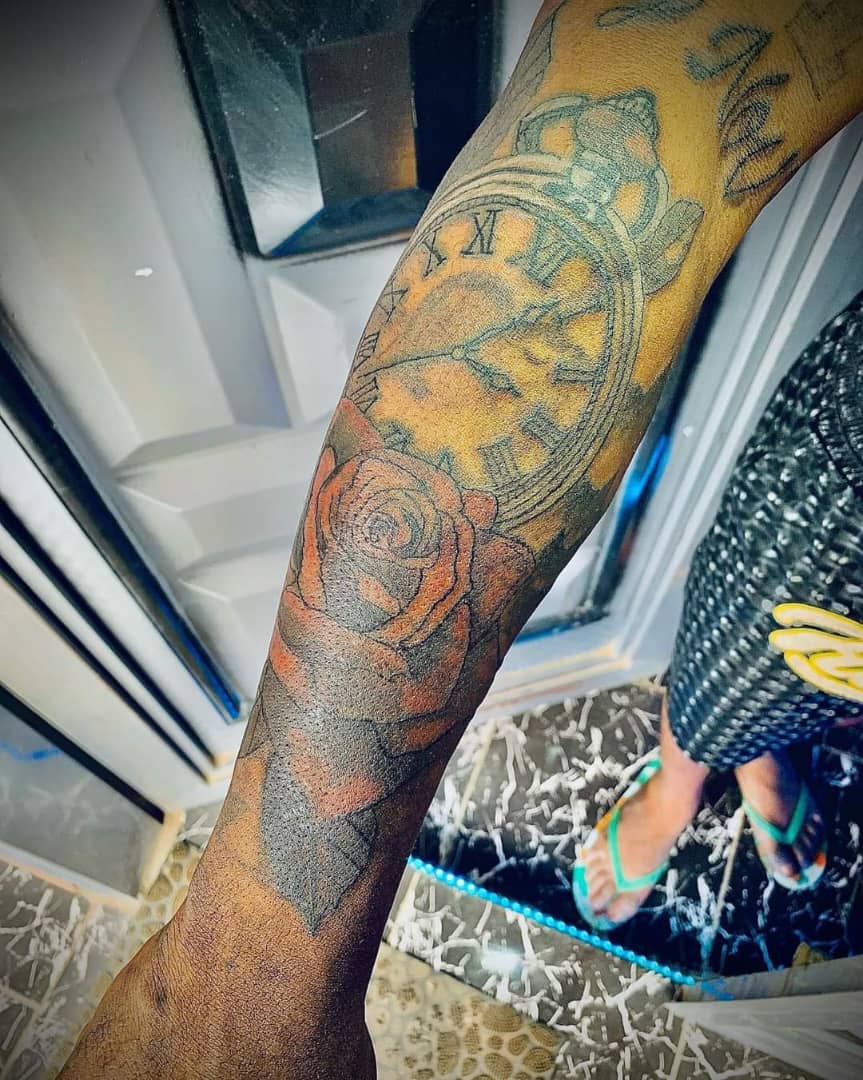
Former spokesperson to former President Goodluck Jonathan, Reno Omokri, recently shared his thoughts on tattoos, urging caution and careful consideration before getting one. 

In his #RenosNuggets, he emphasises that while tattoos might be popular and appealing in the moment, they can have significant implications for both professional and personal aspects of life. 

According to Omokri, individuals in certain fields, such as corporate jobs, may face challenges with employers due to visible tattoos. 

Research has shown that employers are more likely to reject job applicants with tattoos compared to those without, potentially limiting career opportunities. 

Moreover, Omokri suggests that the public’s perception of individuals with tattoos might be affected, particularly in the political sphere. 

Voters may view candidates with visible tattoos as less serious and, therefore, less deserving of their votes. This perception could hinder political aspirations. 

The former spokesperson also emphasises that tattoos may not age well on the body, potentially leading to regrets later in life. 

Omokri concludes by advising people to carefully consider their decision before getting a tattoo.

Nigeria Air: Omokri commends Buhari

By Muhammadu Sabiu
 
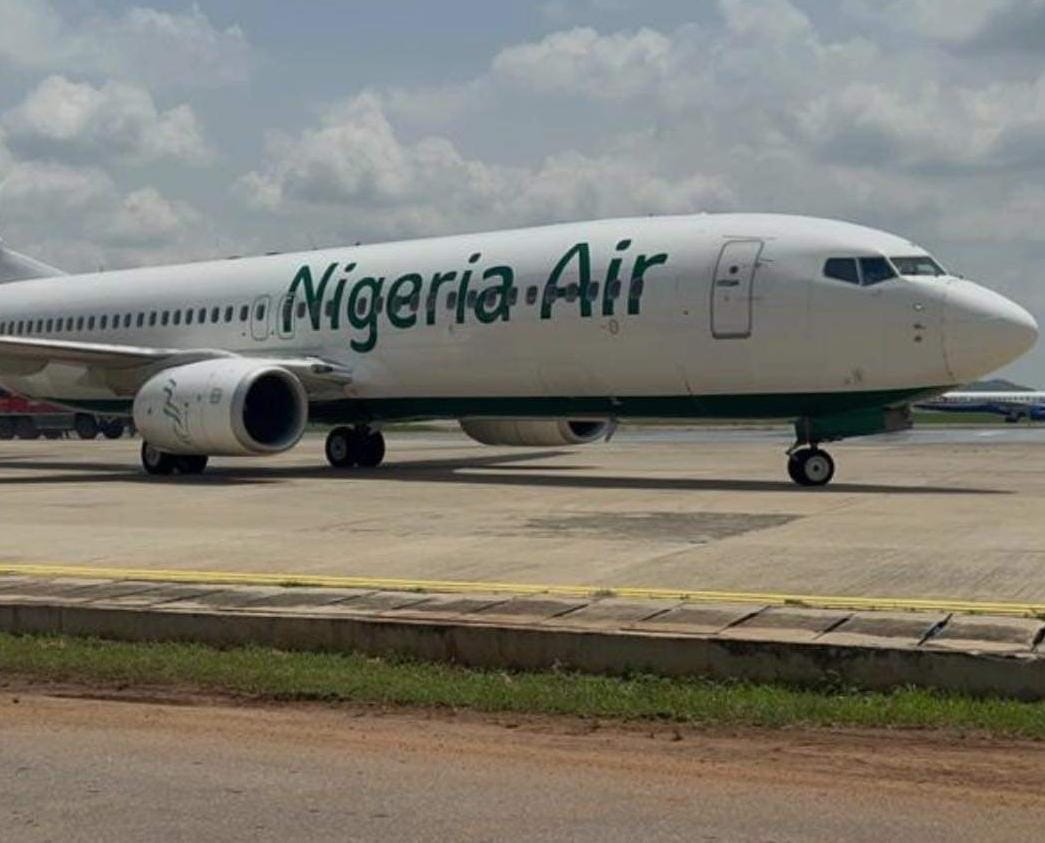
The Federal Government, led by President Muhammadu Buhari, has received praise from Reno Omokri, a former presidential spokesperson, for the starting up of Nigeria Air.
 
The sociopolitical pundit, who is also a fervent opponent of Buhari, made the statement while downplaying the accusations of the Nigerian administration over Nigeria Air.
 
Following the arrival of the Nigeria Air plane, Nigerians have been accusing the Federal Government of being involved in fraudulent activities.
 
Nigerians bemoaned it because it was said that Ethiopian Airlines was the owner of the aircraft.
 
 
“But Nigeria Air is a good idea. Even starting it with a wet-leased aircraft is an even better idea than starting it with a new one. If the government does badly, let us cane them with koboko. But if they perform well, we should be objective and praise them with the same ferocity, ” Omokri said.
 
 
However, responding to critics about the number of planes in the carrier, the former presidential spokesperson tweeted: “Emirate Airlines, that many Nigerians love to fly with, started off in 1985 with two airlines provided to them by Pakistan International Airlines.
 
“Today, they are thriving. If there is something to criticise, please sòrò sóké. But do not just criticise because your party is not in government. Ruga was a bad idea. Arresting Nnamdi Kanu was a wrong move. The Northernisation of our National Security Council was a horrible thing to do. And we criticised all of those.