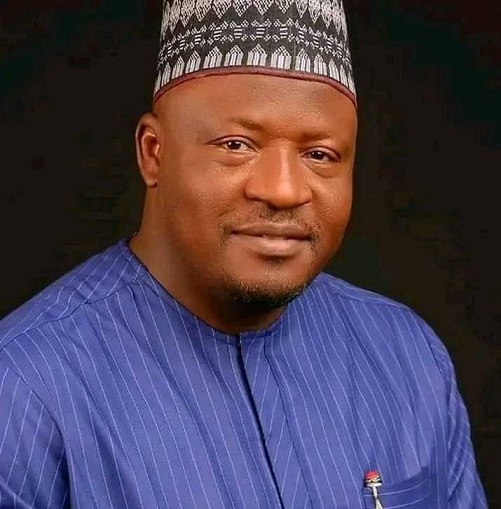
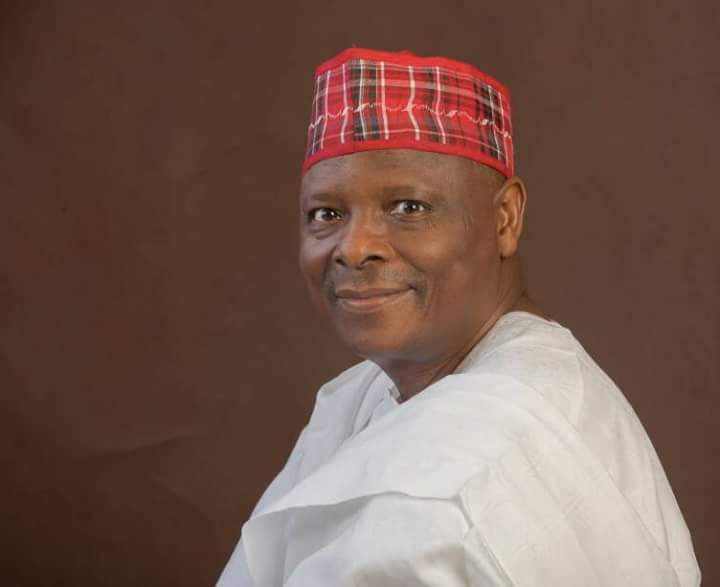
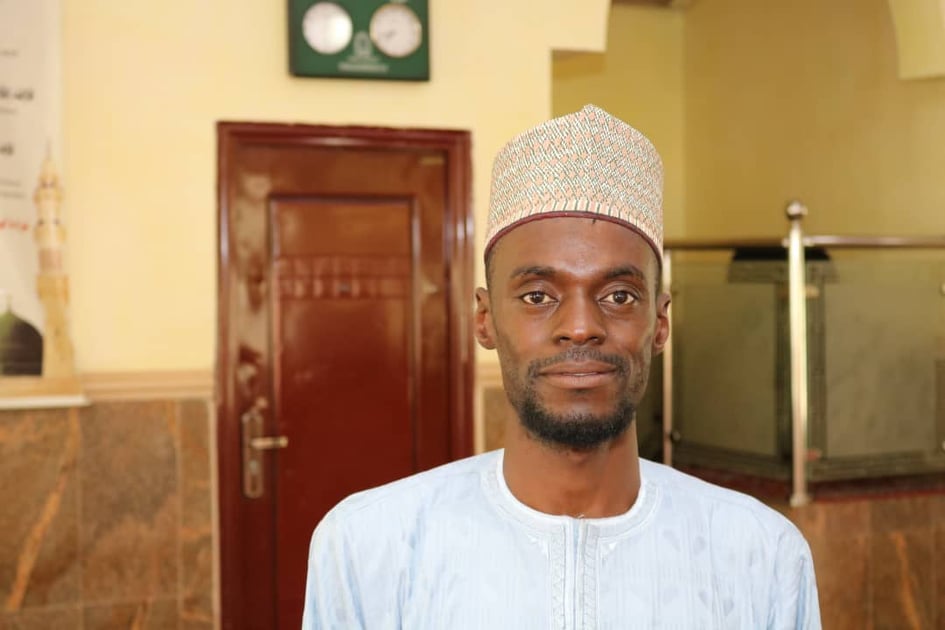
Rabiu Musa Kwankwaso

Coalition asks Atiku to step down for Kwankwaso

By Muhammadu Sabiu

A coalition of civil society organisations asked Atiku Abubakar, the candidate of the Peoples Democratic Party, to step aside in favour of Musa Kwankwaso, the candidate of the Nigeria Peoples Party, to prevent needless vote splitting in the North.

Bishop Godwin Abah, the coalition’s head, said in a press conference at the NNPP secretariat in Abuja on Wednesday that Nigeria’s future was in jeopardy and that, as a result, the Kwankwaso Presidency’s political sagacity and tenacity of purpose were needed to turn the country around.

Abah noted that the organisations had carefully examined the presidential candidates of major political parties, as well as their backgrounds and democratic credentials, adding that Kwankwaso stood out among the other candidates.

He was quoted as saying, “A servant-leader with milk of human kindness, Kwankwaso transformed Kano State as a two- term governor and will bring his wealth of experience as former Minister of Defence, Ambassador, Senator, Deputy Speaker, House of Representatives etc., to bear on national governance as President of the Federal Republic of Nigeria.

“It was also the opinion of the rural Nigerians that the coalition interfaced with that Alhaji Atiku Abubakar should set aside his presidential aspiration for a dynamic, pragmatic, energetic and resourceful Kwankwaso.

“Accordingly, the coalition calls on Alhaji Atiku Abubakar, the Peoples Democratic Party’s presidential candidate to step down for the NNPP presidential candidate, Rabiu Musa Kwankwaso to avoid unnecessary splitting of votes in the North.

“Kwankwaso will inject fresh air in governance, restore hope to a bewildered nation that has seen more carnage than dividends of democracy and build a new Nigeria we all desire.

“Atiku has done his best for the nation, we appreciate his contribution as Vice President of Nigeria. He remains a statesman.

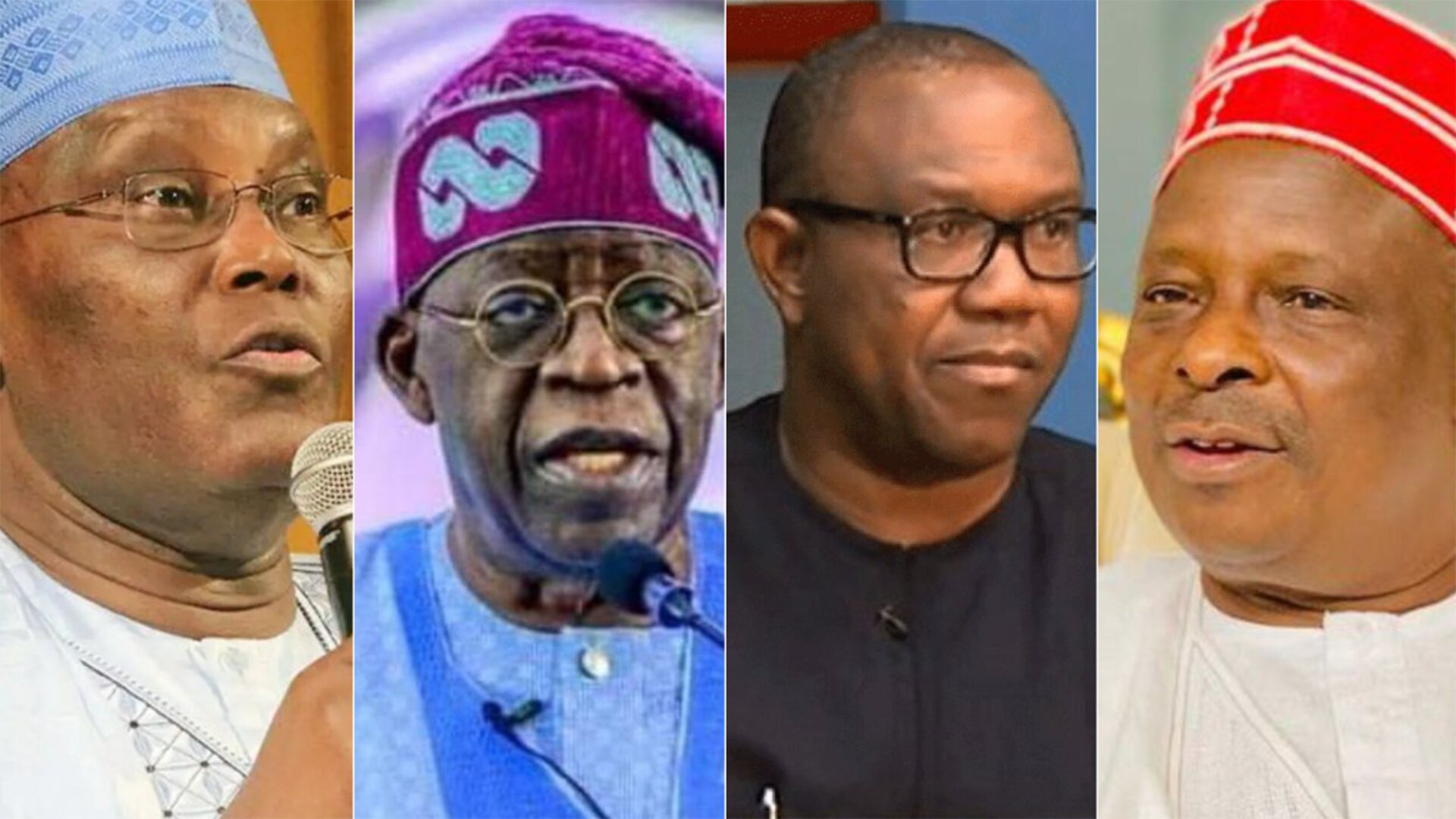
There are now about three days left until the presidential election, which involves four major contenders, including Bola Tinubu (APC), Atiku Abubakar (PDP), Rabiu Musa Kwankwaso (NNPP), and Peter Obi (LP).

Religion and the 2023 presidential election: A quick take

By Muhsin Ibrahim

Religion was central to Bola Tinubu’s emergence as the APC’s candidate for the 2023 presidential election. We discussed the issue as if it would not end. Since the 1993 annulled election of Abiola/Kingibe (both Muslims), no major candidate and his running mate have ever come from the same religion until now: Tinubu/Shettima (both Muslims). But, as the election approaches (we are, in fact, counting hours), only a few people talk about that. However, religion will play a significant role in the voting pattern.

The wild popularity of Labour Party’s Peter Obi on social media and his appeal to foreign media has something to do with his religion. I know this may sound controversial, but it is so. The three other front candidates are Muslims, while Obi is Christian. Besides this, I can’t see a glaring difference between him and NNPP’s Engr. Rabiu Musa Kwankwaso per se.

Tinubu and PDP’s Atiku Abubakar are in their 70s, while Kwankwaso and Obi are in their 60s. The four leading candidates are stinking rich and belong to 1% of the Nigerian elite. Interestingly, the candidates represent Nigeria’s so-called major ethnolinguistic groups of Yoruba, Hausa and Igbo, alias WAZOBIA.

Though, there is a parallel between Obi and Tinubu. Many people will vote for them because of their religious identities. I learned that many churches, especially in the North, had ordered their members to vote for Obi. Likewise, the faith-based civil liberties organisation Muslim Rights Concern (MURIC) recently “reminded Northern Muslims of their promise to support a Southern Muslim [i.e. Tinubu] in the 2023 presidential election”.

Given the above, I agree with some observers and analysts that Obi may surprise his critics, such as myself, in the upcoming election. The votes from his Christian brethren and others supporting him for other reasons will make a difference. However, Tinubu has many more advantages – being APC the ruling party and his decades-old political footprints, among others.

Anyway, we hope for the best and pray for peaceful elections. But, please, stay away from violence. Your safety should be your most treasured possession. No politician or political party is worth dying for.

With love from a disenfranchised Nigerian citizen.

Muhsin Ibrahim works and lives in Cologne, Germany and can be reached via muhsin2008@gmail.com.

2023: Does Obasanjo still have any electoral value?

By Mubarak Shu’aibu

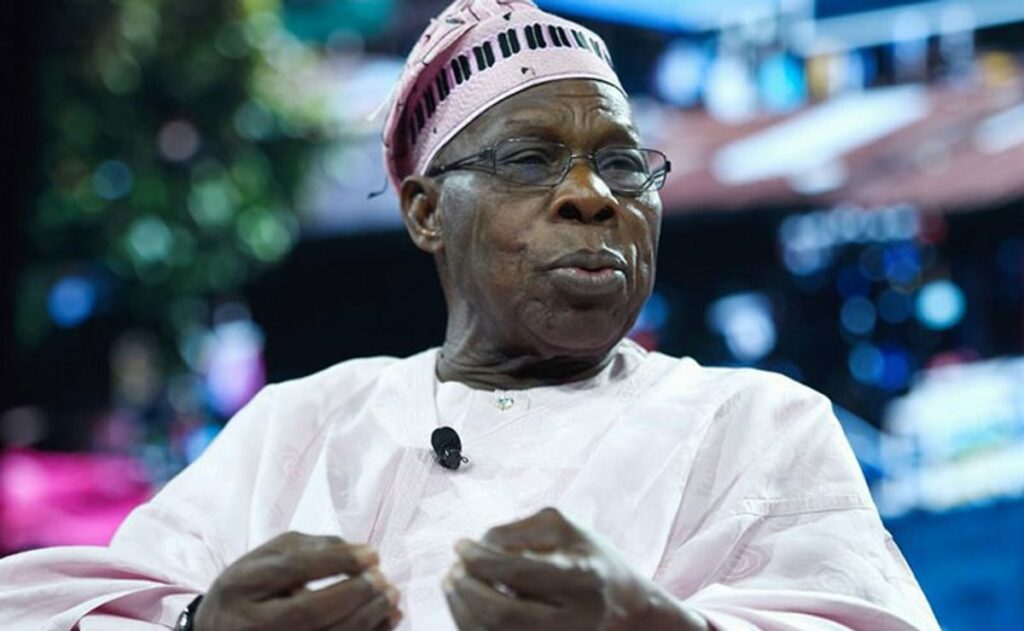
With the 2023 general election close at hand, the former President of Nigeria, Chief Olusegun Obasanjo, has released a six-page letter of appeal to Nigerians, targeting the youths in particular.

In the letter, Obasanjo eschewed the likes of Alhaji Atiku Abubakar, his former deputy, Bola Ahmed Tinubu, and his mentee, Engineer Dr Rabiu Musa Kwankwaso and settled for Mr Peter Obi of the Labour Party. The choice has lent credence to those who believed Obasanjo is on a mission to scuffle Atiku’s presidential ambition comes February 2023. It’s in the public domain that former President Obasanjo is embroiled in a conflict with his former Vice,  and that is a good reason to disagree less with those that held such views. 

But, the good news for Atiku and his fanbase is the fact that the letter of his former boss, when placed in brackets with the 2023 presidential election, is a political featherweight. And here’s why.

Regardless of his exaggerated shortcomings, his broad political war chest, vast experience, and first name recognition have put him in the best stead to blitzkrieg the ruling All Progressive Congress (“APC”), a party which is currently battling for its existence. 

Exploring the more contentious articles against Atiku, either from his former boss or any other individual, it only emanates from a phobia that revolves around Atiku’s tendency to resuscitate Nigeria and rewrite his name in the book of history from the bad opinions sold publicly about him, to what he really is.

Another bullet point, unlike Buhari in 2015, the ruling party candidate, Bola Ahmed Tinubu, does not have the overwhelming support of his people. Some of his rebellious allies, such as Professor Yemi Osibanjo, Babachir Lawal, Akinwunmi Ambode, Rotimi Amaechi, and Rauf Aregbesola, are seriously plotting to ambush his ambition. 

These, and a wealth of other reasons, have unsettled  Obasanjo and the G-5 camp, who now looked marooned. However, Atiku’s victory is eminent (by the  Grace of the Almighty). Meanwhile, he’s one Nigerian [Obasanjo] whose opinion, whether right or wrong, doesn’t mean anything to Nigerian youths. As a former military officer, he, along with others, created problems for the country. When we revolted against them, they went through the back door. They’re the chief reason why our democracy is built in such a way that only the interest of the “elites” is protected. And it’s no wonder the last Military Head of State is the political ombudsman of Nigeria. They feel that they’re the power brokers, and anyone seeking a political office must lick their shoes.

And by his assertion that Obi has people who can pull his ears if and when necessary, he’s just trying to muffle the fact that Atiku won’t listen to the cabals. But that’s the sort of President Nigeria needed at this material time.

So, how much electoral value does his letter brings? Zero, I guessed!

Mubarak Shu’aib writes from Hardawa, Misau LGA, Bauchi State, Nigeria. He can be reached via naisabur83@gmail.com.

Can Atiku Abubakar be trusted? 

By Yakubu Nasiru Khalid

If Atiku Abubakar can be trusted, why did he contest the presidential election five times and not win?

Atiku is the most frequent presidential candidate in Nigeria. He started contesting for a presidential position in 1991 under several parties, including the People’s Democratic Party (PDP). However, he has consistently failed all the time. 

Also, General Muhammad Buhari, the current president, contested for the presidential position from 2003-2015 and failed three times.

Eng. Rabi’u Musa Kwankwaso is the second presidential wannabe who contested the presidential primaries election. He has never stood for an election at the national level. Standing election at the national level is a lot.

Note: Whoever blindly and persistently needs to take a particular post in politics should not be voted because he only needs the immunity, favour, or title needs to prefix on their name, not the country’s property. Nigeria will only remain poor and unstable If Atiku wins.

Eyes measurement is enough for a wise; all those presidential contestants are on the same boat as Buhari. They are only dying to prefix the title of president to their names, not to lead Nigeria to the ever brighter state.

There are two major popular political parties in the South All Progress Congress APC and People’s Democratic Party PDP. However, the New Nigerian People’s Party NNPP is rare because it has few supporters.

This means the South’s votes are shared among two parties, PDP and APC, and Asuwaju Bola Ahmad Tinubu dominates almost all southern States. Therefore, Atiku will get fewer votes from southern Nigeria. This means Asuwaju Bola Ahmad has 63% of the votes, Atiku has 37% votes, and 10% will be shared amongst the rest parties. 

In the North, three political parties are populous, each with a large number of supporters. Atiku and Kwankwaso are northerners, and Bola Ahmad is from the South and the ruling party, APC. Kano is the largest state in the North that produces high votes, and each party will eat into the other. This means none has the majority. So they will be vulnerable to each other. Lagos’s votes are automatic belong to Asuwaju Bola Ahmad Tinubu.

Casting votes for PDP or NNPP is a waste. So, vote wisely for the solution for humanity. Nigeria needs a fresh, diligent and experienced leader. Age or educational status doesn’t matter a lot. Vote for someone who optimistically thinks Nigeria will be economically strong with a political cloud. 

Yakubu Nasiru Khalid wrote via yakubunasirukhalid@gmail.com.

NNPP drags INEC to court, demands Shekarau’s replacement

By Uzair Adam Imam

The New Nigeria People Party (NNPP) has started a legal duel with the Independent National Electoral Commission (INEC) for refusing to allow the party to replace Senator Ibrahim Shekarau for Kano Central Senatorial District in the 2023 general elections.

NNPP wanted to replace Shekarau with the former senator, Rufa’i Sani Hanga, after his defection to the Peoples Democratic Party (PDP) some months ago.

Shekarau defected and joined PDP citing irreconciliable differences with the party’s presidential candidate, Rabiu Kwankwaso, as his reasons.

On it’s part, INEC argued that Shekarau has not officially informed the electoral body about his defection to PDP reiterating that it can not replace his name with another person.

In an interview with journalists on Wednesday, the NNPP presidential candidate Rabi’u Musa Kwankwaso said: “We have conducted (fresh) primary election where we elected Rufa’i Sani Hanga, as a replacement and if INEC can do justice to us, based on the constitution, the time for the replacement of candidates is not yet over.

“We have taken the matter to court because INEC did not understand the process. The court will make them understand it.”

Kwankwaso, who wondered why INEC refused to replace Shekarau’s name with their new candidate, asked “would INEC announce Shekarau as the legally elected representative for the district if NNPP wins the senatorial seat?”

Peace Accord: Waste of a good action?

By Mohammed Aliyu

The National Peace Committee, headed by the former Head of State, General Abdulsalam Abubakar (retd.) and other elder statesmen would have been more respected and crucial had they played the committee with the grandeur it deserves. Established in 2014, the committee has not achieved anything following its record. As such, its function is nothing but a jamboree, where aspirants meet and share some private moments, thereby deceiving the gullible who trusted them by their words.

The vulnerability of the committee was so evident in 2019 when one of its members was seen dancing with another aspirant and denouncing the other candidate rather than playing neutral by preaching the peace he claimed to be advocating. Such an immodest attitude alone can create chaos, put doubt in the minds of other aspirants, and ridicule the entire process. Again, no need to mention names but a committee like this ought to have credible individuals that are all respected, who are also mindful of their utterances, actions and even public image – by extension, be less controversial.

To revisit the past, in 2015, President Goodluck Jonathan accepted defeat on his own without any influence from any quarter, as he stated in his book Transitional Hours. In 2019, electorates massively voted for President Buhari, yet no crisis was recorded. Still, the committee’s capacity has not been proven, although they claimed to have calmed Atiku Abubakar, who insistently went to court on his own but failed there.

The 2023 election that brought religion into politics is perhaps dosed with fear of violence, and this is the moment that the peace committee may save the country, but will they? The National Peace Committee is the initiation of some individuals that called themselves ‘Elder Statement’, and members were selected without merit. The peace committee is concerned with only the aftermath of election violence and not other forms of insecurity, let alone proffer solutions to lingering critical issues that the country is bedevilled with now and then. Like the present ASUU strike, agitations, persistent farmer/herder clashes, communal clashes, religious intolerance, and other vital issues that threaten national peace and security that may even not allow any election to hold.

To send a message that the peace committee is not credible, in 2019, PDP presidential aspirant Atiku Abubakar failed to attend the accord signing for reasons known to him. Instead, he went after the public ceremony. Bola Tinubu, another aspirant of APC, again failed to attend the September 2022 Peace Accord. Instead, he sent his running mate, Kashim Shettima. All this weakens the credibility and popularity of the committee. The priority given to candidates rather than parties is a clear sign that the peace agreement has lapses that must be corrected if they want to be relevant in the future. Electorates choose a party, not a candidate, even though they are by extension. Candidates are identified by their parties because, without the platform, they are idle. The peace committee must look inward and prioritise party chairpersons during such occasions. That way, they are dealing with an organisation, not an individual.

In my opinion, the National Peace Committee should be changed to the National Council of Elders, and their mandate should be transformed so that it will have a national look and have representatives from all sections of the country. The members should be credible people who are respected. They should advise the government on solutions to bring lasting peace before, during and after the election circle.

However, the interest of the National Peace Committee is not for peace to reign, nor for good governance but for the personal interest of what they may get in the new government. As such, expect nothing but flaws in their shoddy policies. While they are signing the accord in Abuja, I wish my fellow compatriots would do the same locally since we are the anticipated thugs that will cause violence.

Mohammed Aliyu wrote via aliyu.wasilu@gmail.com.

2023: Shekaru, associates dump NNPP, join PDP in Kano

By Muhammadu Sabiu

Malam Ibrahim Shekarau, a former governor of Kano State, has formally rejoined the Peoples Democratic Party (PDP).

Shekarau joined the PDP on Monday in Kano after leaving the New Nigeria Peoples Party (NNPP).

The PDP’s presidential candidate, Atiku Abubakar, Iyorchia Ayu, the party’s national chairman, and other PDP members met with the former governor.

Shekarau joined the NNPP from the All Progressives Congress (APC) and left it two months later.

Shekarau, a senator for Kano Central, previously served as Kano’s governor for two terms and as Nigeria’s minister of education.

He also contested for president of Nigeria in the 2011 general elections.

Kwankwaso/Obi ticket – A nice combination nobody should have thought about

By Muhammad Sulaiman Abdullahi, PhD

Many good things should have happened to Nigeria, but such good things were and are still averted by Nigerians who feel threatened by others. Our collective psyches teach us to be myopic and to lack reason. These make us promote selfishness, ethnic chauvinism or even other material gains at the expense of the best public interest.

Now that Kwankwaso/Obi ticket has been ethnically killed, I am happy that it didn’t come to fruition. It would have been disastrous to the nation as Peter Obi supporters are turning into something else. Now that it didn’t happen, it left some issues to ponder, especially on our reasoning that it shouldn’t have even been thought of in the first place. It left us with no hope as to the politicians we see, who are a sort of “young” blood, compared to those whose actual age, patriotism, source of wealth and health status are all not certain.

All of us in the North, without a doubt, believe that Dr Rabiu Musa Kwankwaso is far better than Obi. They are not comparable in whatever capacity, from academic credentials to practical experience, national spread, political platform and even patriotism. However, one irony about the ticket was that the way Northerners believe in Kwankwaso is similar to how South Easterners believe that Obi is better. They think that Obi is the only answer. In their bid to justify that, they reduced Kwankwaso to pieces, saying he was over-ambitious. This is where they woefully failed. This was what made the thought of bringing the ticket even more worrisome.

Obi’s supporters shouldn’t be blamed, as the country is programmed this way. People only know and promote people they are so much close to, naturally. What will happen if this natural knowledge is mixed with bitter secessionists’ sentiments and arrogance that beclouded their thought of anything if not theirs?

There are some reasons why Kwankwaso shouldn’t have even thought of Obi. Perhaps Kwankwaso did that out of nationalism and as another way of garnering support from the other end. Still, one thing Kwankwaso failed to realize was that Obi’s candidature was no longer his own. It has long been hijacked by a fake Christiandom, Obidients/OBiafrans and other disgruntled politicians from the other end. First, however, let’s consider some points here.

The way Nigeria is, a country with such a vivid religious divide, with Muslims as the majority and Christians with a significant number, the Christians must feel offended if they do not feature as number two, if not number one in the country. In this case, someone may say that democracy is, to some extent, a hoax. If not, why shouldn’t the majority carry the board all the time? But in Nigeria’s situation, Christians are many, and they would feel somehow alienated by the APC’s Muslim/Muslim ticket.

Therefore, it will be a miscalculation for anyone to ask Obi to deputize instead of being the lead. Christians may not take it lightly. They have already fought the Muslim/Muslim ticket and failed, and now the only option left for some of them shouldn’t be tempted or played with. Therefore, looking at it from this angle, it was a terrible idea right from the beginning. Reuben Abati confirmed this in an interview when he opined that, during one of their talks about Kwankwaso/Obi, he asked one question! And the answer to that question, given to him by the NNPP representatives, convinced him that the Kwankwanso/Obi arrangement was dead on arrival.

He asked them, is it fair that after a Northener – and maybe a Muslim – finishes his eight-year tenure, another Northerner will rule again immediately? He said the Kwankwanso/NNPP representatives responded that that is not an issue to worry about. This is their point of reasoning which should be understood.

Another point is regional affiliation. This doesn’t give much, but many Southerners may prefer to have someone healthier than Bola Tinubu, not minding his religion the way the Northerners do. Here, Obi as the lead may be more appealing to them.

On the other hand, there is an issue of the Igbo presidency. Igbo politicians have been too stubborn, divisive and too regional in their approaches to national discourse. They always create problems for themselves, of which Obi’s candidature is part. You can’t disown your country, engage in a series of treasonable felonies, condone crimes, support terrorism against your nation, and then think you would be trusted.

The idea of rallying behind Obi as the only source of salvation is another mistake made by the Igbos. It will make them more stubborn or more alienated. If Obi fails – which will likely happen, some of those overzealous OBiafrans who now threaten all who talk against Obi will surely be more stubborn and restless. And the mainstream politicians would put them aside as they know they are inconsequential.

Now that the ticket has been killed, most commentators agree that it wouldn’t change anything even if it had happened. The real fight is seen to be between the two giants. Now both camps should sheath their swords and forge ahead.

Kwankwaso and his supporters should continue to aim high. Merging with anyone among the two major parties cannot produce a result, and going alone is not the solution. Madugu and his team should think within and outside the box and develop a real solution.

As for Obi’s real supporters, the real Obidients, they should learn tolerance and know that Nigeria is not Imo, Abia or Enugu. Two states’ votes in the North can equal the total number of states in the South-East region. This is based on the latest voter statistics released by the Independent National Electoral Commission (INEC), which shows that the North has more voters registered in the continuous voter registration that ended last Sunday.

Therefore, these OBidients, including the OBiafrans, should be more civil, tolerant and open-minded. They should interact well with others, show decorum in their manners, and not allow the OBiafrans to lead them.

Dr Muhammad can be reached via @muhammadunfagge (Twitter) or email: muhammadunfagge@yahoo.com.
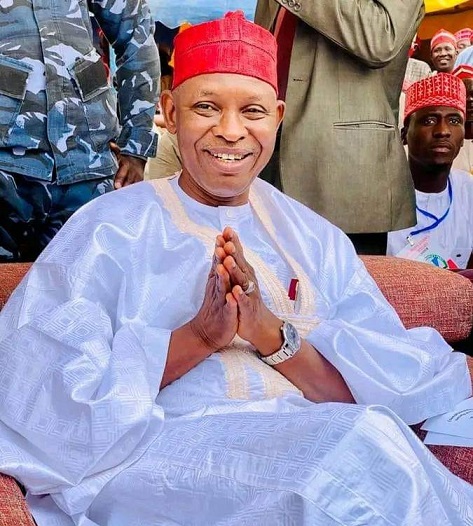
Tricycle operation in Kano: To ban or to regulate?

By Tijjani Ahmad

Before banning the use of commercial motorcycles, popularly known as “Achaba”, most of us couldn’t imagine life in Kano without them. At that time, most Kano metropolis residents relied on Achaba as a means of local transport. 

The business of commercial motorcycles was booming and popular during that time, known for its lucrative nature, employment generation and ease of use to residents. 

Suddenly, the then governor of Kano State, Dr Rabiu Musa Kwankwaso, announced the ban on 22 January 2013. The government explained that many crimes, particularly attacks on security operatives in the Northern Nigerian state, were carried out by men on motorcycles.

Even though there was no specific arrangement for the alternative means from the government’s side, the ban was effective and gave birth to the rise of the tricycle popularly known as “A-Daidaita Sahu”.

A Daidata Sahu was not new in Kano because it was first implemented by the then Kano State governor, Malam Ibrahim Shekarau, in 2005 but was not popular because of Achaba. 

However, immediately after Achaba, investors started diverting their investment to A Daidaita Sahu. And residents accepted it since there were no alternative means of transport. It was reported that most of the Achaba riders also followed their investors and started trooping the streets of Kano.

For almost a decade, A Daidata Sahu has been found wanting in many offences, from criminal to civil. On that account, the government took many decisions to regulate the operation of commercial vehicles generally in Kano.

Unfortunately, the purpose of these decisions has been defeated by concentrating on the monetary aspect of most of the policies meant to curb insecurity and regulate motorists’ activities within the state.

Now, Kano State Government placed another ban on A Dadaita Sahu – restricting its operations at night, from 10:00 pm to 6:00 am. The question is, how sure are we this will solve the problem of insecurity?

Kano, one of the largest cities in Africa – known for commerce, agriculture and industrialisation, is becoming more sophisticated as its population grows, new businesses emerge and naturally expand. Therefore, whatever policy we bring, we should consider the consequences on the populace, businesses and the environment. 

Despite these, it seems like proactive measures are not what we are interested in; we are instead scratching the surface. That’s why it is always quick banning, restrictions, curfew and many more reactive moves. 

If we are indeed serious, we don’t need to borrow money and install CCTV in the name of curving insecurity. All we have to do is regulate the activities of commercial vehicles within the state and block the leakages of revenue generated from their activities. This will go a long way in checking the crimes and improving the overall revenue of the state.

Three years ago, my friend, a key player in the industry, asked my opinion on whether the government should ban it due to insecurity.

I said this could be done through an effective and efficient database where all the players within the industry, from owners, riders, sellers and service providers, and warehouses. The data must be linked with BVN and NIN. To be part of the industry, you must comply with the requirements. 

By doing so, no motorcycle or any player within the industry should be seen on the street or within the city without registration. Furthermore, each person’s number or tracking ID should be placed on the bike and should correspond with what is in the database. So that whenever any player perpetrates a crime, all you have to do is to know the tracking number. 

This can be used to know the owner and the rider of the motorcycle used to commit that crime. My friend is trying to implement this within their company. Where all their riders can be tracked in real-time using GPD enable tracker. Thus, this is all we need: regulation, not reactive measures such as banning.

Tijjani Ahmad wrote from Kano via ahmatee123@gmail.com.

We’ll give priority to education — Kwankwaso

By Muhammad Aminu

The Presidential Candidate of the New Nigerians People’s Party (NNPP), Dr. Rabiu Musa Kwankwaso, has said that he would give priority to education if Nigerians give him the chance in the forth coming general election.

Speaking at the official presentation of his running mate, Bishop Isaac Idahosa, Kwankwaso also decried collapse of tertiary education under the current administration of President Muhammadu Buhari.

According to the former Kano State Governor, Nigeria is bleeding from severe wounds inflicted on it by the incompetence and insincerity of the APC-led government.

“The sad reality is that our country is bleeding from several and severe wounds inflicted on her either as a result of incompetence or insincerity of the operators of government or the total lack of the understanding of how to govern a multi-cultural, multi-religious and multiethnic country like our own.

“Their insincerity and intolerance has inflicted injurious wounds to the social fabric of Nigeria. Their nepotism and parochial approach to governance has inflicted severe wounds to the country. Their ineptitude and lack of empathy has dealt a damaging blow on the body psyche of all Nigerians.

“Their condescending arrogance and sense of entitlement has further widened the fault lines in our country and their nonchalant attitude towards the core functions of governance is causing dangerous escalation of insecurity,” he said.

The former minister of defence further lamented the rising inflation and unemployment in the country, saying the current economic statistics in Nigeria were unacceptable.

Bishop Idahosa, in his acceptance speech, said Nigeria is on a critical juncture where a fresh start is imminent.

“Nigeria deserves a fresh start and fresh ideas. Nigeria deserves a fresh deal that will steer the country away from division and hate. A fresh deal that will steer the country away from incompetence and cluelessness; a fresh deal that will steer the country away from insecurity and economic woes,” he said.

He therefore, urged Nigerians to register and obtain voters card to be able to bring about the desired change in the country.

Earlier, the National Chairman of the party, Prof. Ahmed Rufai Alkali, said that NNPP is the fastest growing party in Nigeria, adding that Kwankwaso’s sterling leadership is responsible for the growth.

“The NNPP entered the political space at the most critical time and is going to take the opportunity to give Nigerians hope because Kwankwaso is the man Nigerians are waiting for,” he said.

He further stressed that NNPP has a dream and a formidable team that Nigerians are waiting for because they posses the qualities to steer the affairs of Nigeria.

“With this winning team Nigerians should be hopeful that Nigeria shall rise again. The party is committed to building bridges across all socio-political divides,” he added.