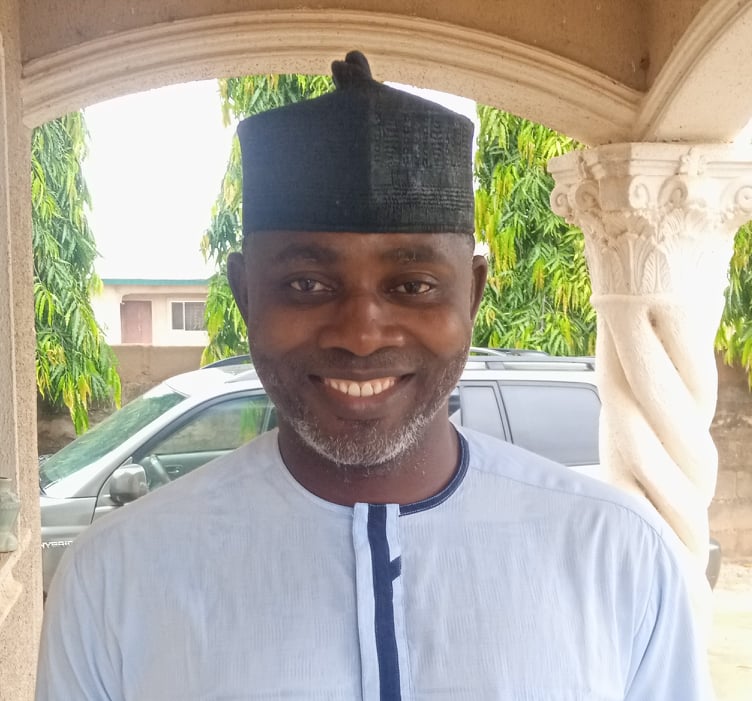
Professor Amoka

Prof. Amoka slams SAN over “Unpopular Opinion” on Nigerian professors

By Muhammad Abubakar 

Professor Abdelghaffar Amoka of the Department of Physics at Ahmadu Bello University, Zaria, has responded strongly to what he calls a “misinformed and politically biased” opinion by Sunusi Musa, SAN, regarding the state of Nigerian academia.

In a lengthy rejoinder titled “The Impoverished Nigerian Professors and the ‘Unpopular Opinion’ of a Misinformed SAN,” Prof. Amoka criticised Musa for attributing the poverty of Nigerian professors to their alleged lack of productivity and large family sizes. 

Amoka argued that the true cause lies in the systemic neglect and chronic underfunding of the Nigerian education sector, particularly university staff salaries and research funding.

He noted that academic salaries have remained stagnant since 2009, with professors now earning the equivalent of less than $400 per month, a sharp drop from over $3,000 in 2009. He described the situation as a “crime against humanity,” accusing the political class of starving intellectuals while enriching themselves.

Amoka debunked the claim that Nigerian academics are unproductive, citing the international recognition they receive and their contributions to research and student success abroad. 

He further pointed out the lack of sufficient research funding, comparing Nigeria’s meagre investments to the billions spent annually by countries like the US, UK, China, and even smaller nations such as Norway and Malaysia.

The professor further criticised the SAN for bringing personal life choices—such as marriage and family size—into a discussion about national policy failure. He emphasised that productivity in academia depends on conducive working conditions and appropriate incentives.

Amoka ended the piece by urging fellow academics to prioritise their well-being, pursue legitimate side hustles if necessary, and continue doing their best to sustain a struggling system. He warned that the continued devaluation of education poses a threat to the country’s future.

“We are starving the thinkers and feeding those who can’t think. What sort of system are we expecting to create?” he asked.

Nigerian Professor Salary: The re-ignited debate

By Prof. Abdelghaffar Amoka

A Hausa interview by a professor from ABU, lamenting academics’ poor pay, is trending and has re-ignited the debate on the salaries of Nigerian academics on social media. The discussion is championed by my brothers from the region, which is considered by the country as educationally less developed. I didn’t know what to say that I hadn’t said before. It will be like repeating myself.

Professors in Nigeria are now blamed for their financial status. They are expected to stop lamenting and get a side hustle to augment their salaries. A professor whose salary was ₦450,000 in 2009, when the exchange rate was ₦140 per dollar, is blamed for his economic state in 2025, with a salary of about ₦500,000, when the exchange rate is ₦1,600 per dollar. 

Some people are referring to professors abroad as if some of us have not had the experience. A number of us have studied and worked there, and we know how their university system works. I got two grants in the UK during my PhD. They said a professor earns more abroad from their research grants. The primary beneficiaries of research grants are postgraduate students and postdoctoral researchers. Professors are not paid from their grants.

Grants have a budget, and personnel costs are not included. They are paid to the university account and managed by the university. The university pays professors to encourage them to think critically and attract grants for the institution. A university lecturer around the world is paid enough to give him the comfort to think and do his job as it should. Any extra cash from stuff like consultancy is for additional comfort. 

The Executive Secretary of TETfund, Sunny Echono, in July 2024, said: “On salary to lecturer, I feel ashamed because I have the privilege to represent Nigeria at a global conference where former presidents and prime ministers were in attendance. I was asked if it was true that a professor, after 20 years, still earns less than $1,000 a month. I couldn’t answer that question; I only said that we are doing something about it.” I think we should be proud of the salaries of our professors and boldly tell anyone around the world their actual salaries. 

Before you, in your narrow-minded state, blame professors for their financial status, ask yourself why the Nigerian government will pay the same professors about two thousand dollars per month under the Technical Aid Corp (TAC) to go help teach in universities in some African countries? The same professors who are given approximately $ 2,000 to teach in Ugandan universities under TAC are receiving an equivalent of $ 320 per month at home.

You know what? Everyone is right—those for and against. The argument won’t change anything, and it will likely end within a day or two. The new reality is that younger academics have learned from the impact of senior colleagues’ commitment to the academic job. The commitment you considered as “our stupidity”. The younger academics are planning for themselves.

A colleague, after the 8-month strike and the withholding of our 8-month salaries, said the university does not deserve his full-time commitment. That he is going to give the university the time it deserves and use a large chunk of his time for a side hustle to pay his bills, I thought, was unreasonable. I later realised I was the unreasonable one. And he is not doing badly from the side hustle. 

Around this time last year, I was passing and met some of my students in the class without the lecturer. In my usual chat with the students, I asked whose lecture it was. I decided to call a younger colleague, as students were waiting for his class in case he forgot. He picked up the call and said he had forgotten he had a class, but that he was on his farm planting, and that he would see them next week. He was at the farm during work hours and forgot he had a class because the farming hustle is paying the bills. He is actually doing quite well with his side hustle. 

Farming during work hours becomes more important. I reflected on that for several days. There are several examples of young academics who won’t be seen on campus, except when they have a lecture or are on campus for something they consider essential. 

People sometimes question why a whole professor would accept being an adviser or assistant to a political office holder. A trip with the political officeholder boss could get him his one-year gross salary as a professor. Since it’s his fault that he is poor, why shouldn’t he accept such an offer or even lobby for it?

As a consequence of defeat, we have accepted one awkward thing as a part of us. Because we can’t do anything about our tormentors and needed someone to blame, we blamed ourselves, the victims. It’s our fault that we’ve been on the same salary for 16 years, from 2009 to date. It’s our fault that successive governments refused to renegotiate the 2009 agreed salary with ASUU. It is our fault that the government of President Tinubu has kept Yayale Ahmed’s 2009 Renegotiation Committee report since November 2024 without speaking about it. They are still studying it, possibly till May 2027 or beyond. 

Universities are designed to attract the best minds from around the world. Universities, including those in Africa, such as those in Ethiopia, Uganda, Kenya, and Chad, are attracting the best brains. At the same time, we justify the poor pay for academics and still blame them for their inability to compete with their colleagues in the UK, the US, and Iran. We’ll continue to breed our best brains for these countries. 

Meanwhile, as we take all the blame for our economic status as professors, younger academics are devising ways to survive. They don’t want to he like their senior colleagues who bury themselves in their books thinking they are serving the country. They are given more time for their side hustle to pay the bills, and leave the students hanging. They’ll attend to them when we can. The system will bear the consequences of neglect, and our survival plans will be affected.

From a reality check, you can’t think when you are hungry. So, what are your expectations when your thinkers are hungry and you are unfortunately justifying it? We may be on a journey of illusion if you expect a man to look for food to eat and think for you. The future will tell who gains and who loses.

Best wishes to all of us! 

©Amoka

Nigerian Academics: The job, the passion, the disappointment

By Abdelghaffar Amoka

I travelled home in 2012 after my PhD and one of my older cousins asked when I would become a Professor. I laughed and told him it would still take some years, and I jokingly told him I was not keen on becoming a Professor. He became angry at my response and said I should get the Professor for them even if I didn’t want it. After I left him, I began to wonder what is in that rank that some people want at all costs.

I can still remember the huge congratulatory messages I received after my friend and colleague shared on Facebook the news of my promotion to that rank. Sometimes I reflect on those messages and imagine how rich I would have been if those congratulatory messages could be transformed into cash. Here we are struggling, and some of us can’t even drive our cars any longer.

The Nigerian Professor

Becoming a Professor, the peak in academia, is something most academics look forward to. The title still comes with some prestige and perceived false benefits attached to it by outsiders. I once read a post on Facebook that said professors are stingy. Poor professors and the public want them to spend the money they don’t have. I went to buy a seat cover for my car a few years ago and the seller said lecturers have money but refused to spend it. I asked how much he thinks a professor is earning, and he said it can’t be less than N700,000. I laughed very hard.

I have written a lot on the remuneration of academics in Nigerian public universities, but many still don’t believe the figures. Yeah! Too bad to be true as compared with their perception. I had a discussion with one of our PG students, who is a lecturer in a state polytechnic, about salary disparity in the Nigerian public sector yesterday, and the salaries of university lecturers came into the discussion. I told him the figures, and the smile on his face showed that he didn’t believe it but couldn’t say I was lying. So, I logged in to the university portal and showed him my payslip. The gross, the deduction, and the net. We met again today, and he said that until yesterday, he never believed that a Professor on step 4 was earning less than N600,000.

Again this is the salary of academics in any federal government university in Nigeria. The quoted value is for step 2, the rank:

~The Assistant Lecturer’s net salary with all his allowances is N118,279 (105 USD).

~Lecturer II’s net salary with all his allowances is N129,724 (115 USD).

~Lecturer I net salary with all his allowances is: N160,809 (142 USD)

~Senior Lecturer’s net salary with all his allowances is: N222,229 (197 USD)

~Reader (Associate Professor) net salary with all his allowances is: N277,179 (245 USD)

~The professor’s net salary with all his allowances is N332,833 (294 USD).

The University workers are perhaps the only federal government workers whose salary is yet to be reviewed since 2009, that is for 14 years despite inflation. Those who were already professors in 2009 are still receiving the same salary since then. Your comfort is key to your output.

Aside from the academic work and the research and publication work that forms the bulk of your promotion criteria, you are loaded with administrative responsibilities without responsibility allowance. They call it ‘community services’. You can be denied promotion if you don’t have enough of the said “community services”.

If you happen to travel outside the University for a conference and you are lucky to be funded, the travel allowance is as follows:

~Duty Tour Allowance (DTA) for the professorial cadre is N16,000 per night.

~Duty Tour Allowance (DTA) for Senior Lecturer cadre and below is N12,000 per night.

~The transportation allowance is N20 per km.

If a Professor is to travel 200 km for an assignment that lasts for a day, he will get a DTA of N32,000 for 2 nights for his hotel accommodation for 2 nights and feeding and N8,000 for transportation. That is a total of N40,000. Despite the fact that FG has approved a new DTA for public service in September 2022, the universities can’t afford the new rate a year later. I applaud the patience of my colleagues, but the patient dogs are dying of hunger.

Meanwhile, education is said to be key to national development.

Dear prospective academics, I love academia. For me, it is not a job but a way of life. However, ask questions before you wish to join academia and become a Professor. The job as it is at the moment can’t pay your bills for a decent life.

Abdelghaffar Amoka Abdelmalik, PhD, wrote from Ahmadu Bello University, Zaria. He can be reached via aaabdelmalik@gmail.com.

The graduate skills that you ignored

By Prof. Abdelghaffar Amoka

When I was an undergraduate student, one of my lecturers during a physics class told us that physics makes you think better than others. We were wondering how. He said we don’t have to pick up a physics job after graduation but that whatever we decide, the skills acquired while studying physics will lead us through. That I later found to be true when I look at my classmates and their different endeavours.

In another class, the lecturer told us we should learn not to compartmentalise our brains. Let all that we have in our heads work together. During my undergraduate days, we were constantly reminded that as we pass through the university, we must allow the university to pass through us.

I was passing by the Department of Mathematics this morning, and my eyes captured their sign oars. On the signboard was the motto: “Critical thought for a critical mind”. The department claimed to be a place to develop critical minds. I have seen critical minds from there that are bankers, entrepreneurs, etc.

We were discussing this morning, and a friend narrated to us how he got a job as a marketing officer, a position he never applied for. He applied for the position of Admin Officer, and to end the interview after responding to all the questions from the panel members, the DG asked him why he didn’t apply for the position of Marketing Officer. He answered that he did not study marketing and he felt that from his degree, he was only qualified to be Admin Officer. The DG then responded that with his communication skill and confidence, he would do well as a Marketing Officer and was hired as a Marketing Officer.

One of the top skills required from a graduate is communication skills, and your training in the university includes that. Graduates need to be able to effectively get the message across, including in verbal and written formats. It’s also about listening and understanding other views. Good command of languages for projecting a confident, professional image and for good communication with clients and colleagues. If you don’t have it, you should blame yourself, not your university.

Aside from your hard technical skills, the other skills expected from a graduate are Time management, flexibility or adaptability to respond to unexpected changes in circumstances or workload effectively. Ability to work in a team to take on the responsibility to ensure your team achieves its goals. Critical thinking and problem-solving skill to approach problems and resolve issues from different angles is also highly valued.

Interpersonal skills to build positive working relationships, good communication, persuasion, and negotiation. Being flexible in your thinking and being open-minded and curious, and creative thinking that will help in problem-solving and innovation. The ability to understand others towards finding solutions that allow both parties to achieve their goals or come out of a situation. Leadership, the ability to bring something extra to a team, is essential. You are required to have a basic knowledge of the field. And guess what? You should have learned all these skills in school.

These are embedded in some of the activities we ignored in school. Some of them look routing, but there are important lessons in them. Time management is ensuring you hand in your assignment or report at the due date and time. That lecturer who locks you out of the lecture room, because you are 10 minutes late to his class, has nothing to benefit from you missing the class. He is training you to respect the time and be punctual. They say time is money, and punctuality is the soul of business. Flexibility to handle unexpected workloads is managing your time to take extra lectures and extracurricular activities. The ability to work in a team ensures that your practical or presentation group achieves its goal within the specified time.

Giving a class assignment or exam questions that require a little thinking is building your critical thinking to deal with challenging situations. You have classmates with diverse beliefs and ideologies to develop interpersonal relationships with and get to understand them. You are made to have seminar presentations to develop your ability to present an idea to the public and defend it. You are meant to lead a practical or study group for a reason. You are learning to be a team leader. Campus associations and societies are not there just for fun. Some of the union leaders grow to become political leaders.

So, don’t let anyone discourages you from pursuing a degree program, except it’s your choice not to go for a degree. Pursue your degree and pay attention to the requisite skills for the degree.

If you didn’t get these skills as you are graduating, stop arguing over skills vs “just” degree and blaming your university and lecturers for failing to acquire the skills during your study. You just passed through the university and did not allow the university to pass through you. Go and develop it; it is not late. Maybe you are the one that the book is referring to.

However, let me remind you that if you have these skills in Nigeria, it will be easier to use them to get a job outside than in the country. To get a job here, you may need the extra skill of knowing someone that knows somebody that knows another person to get a job. I learn some jobs are on sale. If you have the cash to buy one, I wonder if you need these skills.

An ex-aide to the Chairperson of the Federal Character Commission was reported to have confessed before a House of Representatives ad hoc committee investigating job racketeering at ministries, departments and agencies (MDAs). He said he had sold federal employment slots to job seekers at the directives of his former boss. According to him, some paid N1 million, others N1.5 million.

Finally, our problem is not skills or degrees; we have these in abundance and even export them abroad (the Japa phenomenon). Our problem is creating a system where the son of nobody can become somebody without knowing anybody. Our present system is not sustainable. It’s a disaster waiting to happen.

Abdelghaffar Amoka Abdelmalik, PhD, wrote from Ahmadu Bello University, Zaria. He can be reached via aaabdelmalik@gmail.com.

Academic dream: My research, my citations, my h-index, and the “true impact”

By Prof. Abdelghaffar Amoka

Colleagues have been sharing their experiences as academics in Nigerian universities with several reactions. The essence is not to discourage people from going into academia but to know what lies ahead of you if you want to go into academia. Like most colleagues, I had no idea of the challenges in Nigeria’s academia when I was so eager to join. For example, I never knew the job is for 24 hours, and that promotion is based on research output you will fund from your pocket.

After graduating in 1999, I looked forward to being part of the academia. During my youth service in Kano, I visited the HoD of Physics, ABU Zaria, Prof I. B. Osazuwa, to discuss my “academic dream”. He directed me to the late Prof. N. I. Hariharan. I met him, and he advised that I should enrol for MSc. So, in 2001 on my way from Kano, I stopped over in Zaria, purchased the PG form, and left for Lagos.

As we were job-hunting in Lagos, I remember my friend and Brother, Yusuf Osafore, saying it appears I was not taking the job hunting seriously but was more concerned with pursuing a Master’s degree. My looking forward to becoming an academic was so apparent to people around me. Then, I eventually got hired in March 2005. It was a dream come true. I have finally joined the group of intellectuals. The “most revered” group in the society. A group of knowledge generators. A group of reservoirs of knowledge.

After a few months in the university, they revealed the reality of Nigerian academia. The fact that I had no prior knowledge of. There are, of course, viable ideas, but they die within the university walls because the political class isn’t interested in them. The ideas are published, but it is just for promotion’s sake. I paid N7,000 or so to publish my first paper in a Nigerian university-based academic journal in preparation for the next promotion to Lecturer II. These made me begin to meditate on “my academic dream”.

In 2007, I had the opportunity to visit ICTP for a two weeks workshop, and my interaction there revived my academic dream. Then, in 2009, I got lucky and left the country for my PhD, strengthening my revived “academic dream”. My joy knew no bounds when I published my first research paper in an Elsevier-indexed Q1 journal in 2011. From then on, the papers kept coming.

There are two publication options. You either publish in close access journals where publishers are paid for access to your research work, or you pay between $1,500 to $3,500 to publish as open access for everyone to have access. I remember spending some dollars in 2014 to publish the last paper from my PhD work in Elsevier’s Sustainable Materials and Products journal as open access. That money came from my salary in Norway.

We were told that research impact is based on the number of citations one has. Something they called h-index was brought to classify our research impact. I began to monitor my citations and h-index on Scopus, ResearchGate, and Google Scholar. I usually wear a smile on my face whenever I receive citation alerts. As the promotion period approached, I counted my number of publications and was excited as my number of citations grew. We began to use Scopus h-index to rate academics. Unfortunately, we get carried away so much that if you talk too much, we ask, “What is your Scopus h-index?”

The irony is that you look for money (either grant or personal fund) to do research and get it published in a reputable journal after rigorous reviews (reviewers work for free) and are excited for an additional paper to your credit. Brag that you have so many articles in indexed journals and get promoted for a peanut added to your salary. In Nigeria, you become a Professor to earn about 440 USD (N325,000) per month. You proudly go around with the title (Prof). Meanwhile, a multi-billion dollars cooperation makes money from your sweat and the knowledge you have laboured to create. And all that we are happy with are citation alerts, a growing h-index, and promotions that come with peanuts.

The best publication time is during our young age. As we grow older, our students take over the writing. Then, the university will ask why you are the paper’s first, second, or last author. They have got no idea how it was funded. The academic dream can truly be defined as spending our entire youth creating knowledge and paying a billion-dollar corporation to take it from us in exchange for career capital that you can then use to buy meaningless promotions from other exploited individuals.

Sometime back, I logged into the university network, and the research output of a senior colleague on Google Scholar was highlighted on the university webpage with thousands of citations and a high h-index. So I decided to follow the link to check mine. Mine was very much below his, but it wasn’t that bad. So then, I sat down and began to question the true impact of my research work beyond what Google Scholar has evaluated.

Do a mere citation of our publications truly translate into research impact? Research is global, but you should see your work impact your immediate environment. We have Professors with thousands of citations that can’t present an inaugural lecture, faculty colloquium, or even a departmental seminar; so, what is the impact of our research on our immediate community?

I tried to reflect on our impact, especially as Professors and Farooq Kperogi came to mind. I remember checking on him on Scopus when he became a Professor in the US. However, when I later reflected on his writeups on Nigeria’s sociopolitical scene and the healthy discussions he had generated towards repositioning the country, I began to realise that Farooq has made much more impact on Nigeria than many of us with a better presence on Google Scholar, Researchgate, and Scopus.

Let me introduce myself properly—a Professor of Physics specialising in dielectrics and high-voltage electrical insulation. I have 33 research documents indexed in Scopus and an h-index of 11, 13, and 14 in Scopus, Reseachgate, and Google Scholar, respectively. In addition, I have about 585 citations on Google Scholar. My published research articles are on high-voltage insulation. Still, the articles and the citations, put together, have not impacted our electricity network in Nigeria, which is on a breakdown spree. So, what, then, is my impact?

Universities are identified as keys to innovation, from developing new ideas to providing state-of-the-art facilities. Industrialists and managers of the countries engage them in keeping the workflow full of new ideas. But in Nigeria, our university system has been made the most insignificant institution that has been reduced to lecture rooms. We only publish to avoid perishing.

Everywhere in the world, academics are respected and heard when they talk. But in Nigeria, especially during the Buhari government, they are tagged as enemies to crush. Our universities were once places where policies evolved. Academics generated ideas that shaped the country. Discussions in academia are used to shape the policy development of our nation. The golden time of Bala Usman can never be forgotten. What happened to those intellectual discussions? Who killed it? We now chase appointments within and outside the universities, especially after we become ‘Professors’.

Nigeria has been messy for the last eight years, and universities are in the worst state ever. But the government of Buhari used eight years to run away from education stakeholders’ engagement. The political class are educated people with no value for the education of the people. The best gift that Buhari gave to the people that so loved him was to strangulate the public universities for the people. Rather than having a public engagement on how to salvage the situation he was well aware of before his appointment, the outgoing Education Minister, Adamu Adamu, described the backwardness that they have imposed on us as “self-imposed backwardness” and their idea of the solution is by approving the establishment of more substandard private universities in the North.

The incoming government of Bola Ahmed Tinubu needs to come in with a clean and open mind to engage the academia with sincerity. They should look at ASUU as partners in progress rather than enemies to crush. The solutions to our problems are right in our hands if we are willing to engage each other. On the other hand, academia needs to start looking beyond publishing, not to perish. We need to start thinking beyond journal publication impact that has no impact on our immediate constituency, Nigeria. We need to wake up and revive the golden days of Bala Usman on our university campuses.

©Amoka
21st Century ASUU with no website, social media handles

By Prof. Abdelghaffar Abdelmalik Amoka

Is ASUU aiding misinformation and blackmail? Sometimes in 2020, I tried to get a copy of the 2009 ASUU/FG agreement to refresh my brain on the issue. After searching my ASUU file and could not find a copy, I remembered that I was not in the country in 2009 and, as such, had no copy of the document. I searched the net but could not get comprehensive information on the agreement except the summary published by newspapers. I then had two options left. It is either I get hold of a colleague who was at the congress meeting when copies of the agreement were shared or walk to the branch secretariat to request a copy.

This is the point. If the copy of the agreement is not readily accessible to me because I was away on a study fellowship, how will non-ASUU members, students, and other stakeholders have access to it? You keep getting the question: what do ASUU really want? And you keep explaining it over and over again if you have the patience since we do not have a platform to direct them to.

In a genuine concern, my favourite Human rights activist, Ahmed Isah, popularly known as the ‘Ordinary President’ of the Brekete family, wanted to intervene in the ASUU/FG crisis. Somewhere along the line, he got information that all that is required to end the ASUU strike is N18bn. He took a bold step and initiated a crowdfunding exercise to raise the “N18bn for ASUU to go back to class”. An invitation of the ASUU president to his radio program clarified the issue at stake and that it’s way behind an N18bn issue and that it’s about ” funding the public universities” and “not ASUU”. Atiku’s tweet “let’s fund ASUU” generated serious reactions from ASUU members, including myself.

The other day, Festus Keyamo was talking about N1.2trn on Channels TV that none of us seems to be aware of. I hope the educationist will still educate us on the said N1.2trn. There is also this trending news that a lawyer in Abuja is begging Alhaji Aliko Dangote, Femi Otedola, and the banks’ CEOs to raise N1.1trn to end the ASUU strike. This is how different figures will keep coming out if there is no accessible platform to educate the public.

But why the misinformation? Who is responsible for the misinformation? Is it deliberate? Are we aiding the spread of misinformation as a union?

Universities in the UK were on strike sometime last year and this year, and I wanted to find out about the strike action. I google it, and the webpage of the UK University and College Union (UCU) came up. I got comprehensive information on the strike from the website within a very short time.

Unfortunately, there is no space to get information on ASUU struggles. If you are lucky to be at home while the ASUU president is on Channels TV’s Politics Today or any other TV station, you will get some information on the strike. If you are lucky to be following a passionate ASUU member on Facebook, you may get some information on ASUU struggles from him. Personal efforts.

But if you missed all these and you want to know about ASUU struggles, there is no central information system. You may have to look for an ASUU member to talk to. If the ASUU member is not regular at ASUU meetings, he may not be able to help you as he may not be in possession of copies of the agreements and information on the strike. Our communications are in hard copies.

The last option is to go to the nearest university and visit the ASUU branch office for information. Whoever cannot do that will rely on the information he finds on the street and work with it. Such information may be half true or outright lies. But how do they verify it? New Media is the fastest route to share information, but we have no presence on the net: the union has no website and no official social media handles.

While I was able to get UCU online, in the 21st century, information on ASUU struggles, the agreements with FGN, the MoUs and MoAs signed with Buhari’s government, and the extent of their implementation are not readily available. So, how do we expect the public to follow the trend of events that led to the rollover strike when the information is not readily accessible? Several people have asked how TETFund is the brainchild of ASUU. Even some colleagues don’t know the difference between TETFund and the revitalization (NEEDS Assessment) funds.

Media is very important in any fight. It’s a tool to share the truth and lies. If the truth is not readily accessible, the available lies will be picked. Then, the misinformation will be spread, and people will buy it. Ahmed Isah’s genuine intention is an example of the power of misinformation. ASUU is a union of intellectuals. Among them are journalists, mass communication experts, media consultants, image makers, IT experts, web designers, etc., but the union has no website that anyone can visit and get educated on the history of ASUU struggles and how we got to where we are today.

Dear respected colleagues, If we must win this battle, we need to revisit our communication strategy. The appearance of the President and some chairmen on air and the efforts of some individuals have made some impact, but they are not enough. I recently realized that the union has no position for Publicity Secretary in the executive. We need to have another look at our public engagement strategy. We need to put up a media team and develop a robust and secured webpage that can tell our story without our presence.

To the general public, the strike will be six months by the end of tomorrow. In one news, we were told that President Buhari gave the Minister, Mal. Adamu Adamu, two weeks to solve the problem that has kept students at home for over five months. In another news, they said it was the minister that said he would sort the issue in 2 to 3 weeks. Whichever one is the case, it is over two weeks, and everyone is quiet, and ASUU has rolled over the strike. A government that cares about the education of the people will not be so comfortable keeping university students at home for six months. We hope that the issue is resolved soon so that the lecturers, students, and the university community can get back to their normal life.

The fight for the survival of public education is a collective one. We must save our universities from total collapse. Happy six months anniversary of the 2022 ASUU strike in advance.

©Amoka