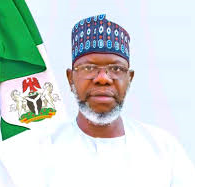
Prof Salisu Shehu

NERDC debunks claims of religious exclusion in revised school curriculum

By Uzair Adam

The Nigerian Educational Research and Development Council (NERDC) has dismissed claims circulating on social media that the newly revised Basic and Senior Secondary Education Curriculum excludes religious subjects, describing the information as false and misleading.

In a statement signed by its Executive Secretary, Professor Salisu Shehu, the Council said it was responding to allegations by “some people” who claimed that the new curriculum made provision for Christian Religious Studies (CRS) alone, with no space for Islamic Studies (IS), while others alleged the reverse.

According to NERDC, both claims amount to disinformation and do not reflect the approved curriculum.

The Council clarified that the revised curriculum, developed under the Federal Ministry of Education’s National Education Sector Initiatives (NESRI), clearly provides for both CRS and Islamic Studies at all relevant levels of basic and senior secondary education.

It explained that the subjects are offered on the basis of pupils’ religious affiliation, with CRS designated for Christian pupils and Islamic Studies for Muslim pupils.

Contrary to previous practice where religious studies were largely optional, NERDC said the revised curriculum accords greater importance to religious education by making it a consistent component of learning from Primary One through Senior Secondary School Three.

“The claim that either CRS or Islamic Studies has been removed from the curriculum is completely false,” the Council said, noting that the approved subject offerings comprehensively accommodate both religions in line with Nigeria’s plural society.

According to the Council, the curriculum review was designed to streamline content, reduce overload and improve learning outcomes, while still ensuring balance across sciences, humanities, vocational studies and religious education.

It added that the Federal Ministry of Education has officially released the list of approved subjects for all levels, and that any other versions in circulation are unauthentic.

NERDC explained that at the basic education level, pupils are required to study a broad mix of core subjects alongside either CRS or Islamic Studies, while at the senior secondary level, both subjects are clearly listed among the humanities offerings.

However, science, technology and commercial students that are interested in offering CRS and IRS can pick them as elective.

This, it said, demonstrates that the curriculum council adopted an inclusive and comprehensive approach rather than favouring one religious subject over another.

Professor Shehu urged parents, teachers and other stakeholders to ignore “fake and unauthorised” subject lists circulating online, warning that such misinformation could cause unnecessary confusion and tension.

He said the Council is already planning nationwide sensitisation and teacher capacity-building programmes to support smooth implementation of the revised curriculum.

He further explained that implementation will begin at the start of each three-year education cycle—Primary One, Primary Four, JSS One and SS One—whenever the revised curriculum is introduced.

NERDC assured the public that the revised curriculum reflects national values, respects religious diversity and remains focused on improving the quality and relevance of education across the country.

Policy, pedagogy and practice: Reforming the curriculum for moral and digital competence

By Professor Salisu Shehu, Executive Secretary, Nigerian Educational Research and Development Council (NERDC)

Paper Presented at the maiden international conference of the Department of Art and Social Science Education, Federal University, Dutse. Jigawa State held on the 13th January 2016

Introduction

It is with great enthusiasm that I wish to thank the organisers for inviting me to the maiden International Conference of the Department of Arts and Social Science Education, Federal University, Dutse. I am delighted to be delivering a paper on “Policy, Pedagogy and Practice: Reforming the Curriculum for Moral and Digital Competence”. This maiden conference is of particular significance because of its focus on upholding moral responsibilities in the face of rapid penetration of information technology in the world of  today. It is no news to anyone that although information technology has positively impacted on our world, making life a lot easier than it was some decades ago, it comes with a myriad of challenges that sometimes undermine our moral values, age long principles of good living and our most cherished societal norms.

Without a doubt, education is the sector of the economy that holds the key to transformational national development. It remains the gateway to human capital development, social reengineering and total rebirth of a society confronted with many ills arising, largely from the wrong use of information technology. The unprecedented integration of digital technologies into daily life in recent times has raised important issues regarding responsibility, ethics, and the effects on society. Digital competence, encompassing abilities in information literacy, data security, and the responsible use of AI, must now intersect with moral competence, which encompasses values such as civic engagement, respect, and accountability. To fulfil these two imperatives and ensure that education not only transmits knowledge but also develops responsible digital citizens, curriculum reform remains indispensable.

Globally, contemporary curriculum reform is increasingly informed by internationally recognised frameworks such as Global Citizenship Education (GCED), Education for Sustainable Development (ESD), and the European Union’s Digital Competence Framework (DigComp). These foreground ethical responsibility, social justice, sustainability, global interconnectedness, and ethical engagement in digital environments (EU, 2018). These global frameworks have also influenced our national curriculum reforms with the aim of refocusing our education system and preparing learners for responsible participation in a rapidly changing world. However, the influence of these frameworks on curriculum reform process has been gauged with our uniqueness as a people.

The accelerating integration of technologies into education has also heightened concerns around misinformation, cyberbullying, data privacy breaches, online radicalisation, and digital addiction. Consequently, moral education, digital citizenship, and ethical use of technology are no longer optional but have become central pillars of contemporary curriculum design. In parallel, persistent global challenges of equity, access, and inclusion continue to shape reform agendas. Curriculum transformation must therefore address disparities in digital access and learning opportunities, particularly within developing contexts. In this regard, Nigeria’s curriculum reform efforts are geared towards striking a careful balance between global best practices and our local socio-cultural realities.

More broadly, curriculum reform has become a global imperative as nations strive to respond to the rapid technological change, moral uncertainty, economic restructuring, and the pressures of globalisation. Today’s education no longer focuses solely on knowledge transmission, but on fostering competencies that enable learners to function effectively, ethically, and responsibly in complex, digitalised, and pluralistic societies (UNESCO, 2015; OECD, 2019). As a result, moral competence and digital competence have emerged as critical learning outcomes in our revised national school curricula.

The revised national school curricula also represent a deliberate shift away from content-heavy instructional models toward the development of functional skills, values, attitudes, and competencies that align with our national development priorities and global competitiveness. In the new school curricula, moral competence and responsible technology use are highly emphasised. As digital technologies are integrated into learning, it is our responsibility as educators to ensure that learners are not only digitally proficient but also morally grounded in the ethical use of technology.

Arising from the foregoing, this paper argues, and correctly, that meaningful and sustainable curriculum reforms must deliberately integrate moral and digital competence across policy formulation, curriculum design, pedagogy, and classroom practice. Drawing on global curriculum trends and using the NERDC curriculum review process as a reference point, the paper advances the position that moral and digital competence should be conceptualised and implemented as core curriculum outcomes not as extracurricular activity.

Statement of Position and Central Argument

For curriculum reform to produce functional and adaptable learners for the 21st century, it must deliberately prioritise moral and digital competence within an outcome-based competency framework. Disciplinary and subject knowledge are increasingly insufficient in addressing contemporary social, economic, and technological challenges. There must be a deliberate integration of values and digital skills into curriculum design.

The central argument of this paper is threefold. First, moral and digital competence constitute foundational capacities for lifelong learning, employability, social participation, and responsible citizenship in today’s world. Learners who possess technical skills without ethical grounding are ill-equipped to navigate complex moral dilemmas, misinformation, and digital risks. In fact, such learners constitute a danger to the society, in all ramifications. Second, curriculum reform that concentrates primarily on policy redesign and content restructuring, without corresponding alignment in pedagogy, assessment, and classroom practice, risks remaining rhetorical rather than transformative (Fullan, 2016). Meaningful reform requires coherence between curriculum intentions and everyday teaching and learning processes. Third, the long-term effectiveness of the NERDC curriculum reform initiative depends on the extent to which moral and digital competence are systematically embedded across subject areas, instructional strategies, assessment approaches, teacher professional development, and school culture. Without such integration, curriculum reform may not meet the intended impact on learning outcomes and national development.

Policy landscape for moral and digital competence in the Nigerian education sector

Educational policy provides the normative, regulatory, and structural foundation for curriculum development and implementation. In Nigeria, the National Policy on Education places strong emphasis on the holistic development of learners who can contribute to national development (Federal Republic of Nigeria [FRN], 2014). Consistent with this policy orientation, our curriculum reviews reflect a deliberate shift toward functional, learner-centred teaching and learning.

It is on this premise that our revised school curricula explicitly integrate 21st-century skills, including critical thinking, creativity, collaboration, communication, and digital literacy. This aligns our policy direction with global curriculum reform trends that prioritise transferable skills, adaptability, and problem-solving capacities over rote memorisation and content accumulation (UNESCO, 2015; World Bank, 2020). It is also done in recognition of the need to prepare learners for the rapidly evolving labour markets, civic participation, and lifelong learning in our digitalised world.

Despite these advances, significant policy gaps persist, particularly in the linkage between education policy, national digital transformation strategies, and youth development frameworks. It is against this backdrop that this paper argues that there should be greater coherence between education policy, national digital transformation strategies, and youth development frameworks to ensure policy alignment and systemic implementation for impact at the school level. Without such integration, the transformative potential of curriculum reform risks being undermined in implementation.

Pedagogical Imperatives for Moral and Digital Competence

Curriculum reform cannot yield meaningful outcomes without a corresponding pedagogical transformation. Traditional teacher-centred instructional approaches, which are largely characterised by rote memorisation, passive learning, and examination-driven practices, are fundamentally incompatible with competency-based education. This is because the competency-based approaches prioritise the development of transferable skills, values, and applied knowledge (Darling-Hammond et al., 2020). To effectively cultivate moral reasoning and digital competence, learning environments must be learner-centred, participatory, and reflective. Learning must also enable learners to actively construct meaning and apply learning in their daily lives.

Furthermore, there must be emphasis on the use of pedagogies that foster moral competence and sustained engagement with values, ethical reasoning, and real-life moral dilemmas. These strategies (such as values clarification, character education, moral dilemma discussions, service learning, and civic engagement) would provide learners with opportunities to reflect on ethical issues, negotiate moral conflicts, and internalise socially desirable values, and are achieved through practice and social interaction (Nucci, Narvaez, & Krettenauer, 2014). These approaches shift moral education from abstract moral instruction to lived moral experience, thereby strengthening learners’ capacity for ethical judgment and responsible citizenship.

In a similar vein, the development of digital competence requires pedagogical approaches that promote creativity, collaboration, critical thinking, and problem-solving. Learner-centred strategies such as project-based learning, inquiry-based learning, collaborative learning, and blended or technology-enhanced learning environments allow learners to engage meaningfully with digital tools while simultaneously developing ethical awareness, media literacy, and responsible online behaviour. Through these pedagogical models, learners are not merely users of technology but reflective digital citizens capable of evaluating information, managing digital risks, and applying technology responsibly.

Furthermore, assessment practices must also be aligned with the principles of outcome-based competence education. Teachers should use portfolios, project work, performance-based tasks, peer assessment, and formative feedback to evaluate moral and digital competence (OECD, 2019). These assessment approaches would capture learners’ ability to apply knowledge, demonstrate ethical judgment, and assess how skills are transferred across contexts.

A major challenge to this is funding. Limited professional development opportunities, insufficient monitoring and evaluation mechanisms, teachers’ resistance to change, limited capacity for innovative instructional practices, and deeply entrenched examination-oriented school cultures are affecting curriculum implementation. Additionally, technological constraints, such as infrastructure and unequal access to digital resources, are affecting the effective integration of digital competence.

Socio-cultural factors also present challenges, including divergent value systems, parental concerns, and ethical anxieties surrounding learners’ exposure to digital environments. Without deliberate planning and sustained support, there is a risk that moral and digital competence may be treated superficially, resulting in symbolic compliance rather than genuine pedagogical transformation and meaningful learning outcomes.

Strategic Directions and Suggestions

To address these challenges, this paper proposes several strategic directions.

  1. Curriculum policy implementation and monitoring must be strengthened to ensure alignment between intended and enacted curricula.
  2. Moral and digital competence should be explicitly defined as compulsory learning outcomes across educational levels beginning from the teacher training institutions.
  3. Improved and sustained investment in teacher professional development is essential. This should include comprehensive pre-service training in teachers’ training institutions to build foundational skills in moral and digital competence from the outset, as well as ongoing in-service training programmes for practising teachers.
  4. Establishment of sustained partnerships with technology firms and the community. This would support resource provision and also provide opportunities for experiential learning.
  5. Curriculum reform should be viewed as a continuous, evidence-informed process responsive to societal change.

Conclusion

Reforming the curriculum for moral and digital competence is necessary in the context of Nigeria’s educational transformation. The Nigerian Educational Research and Development Council curriculum review is a significant step toward outcome and competency-based education. However, its success depends on the adoption of innovative pedagogies and effective classroom practice.

Preparing learners for ethical and functional participation in a digital world requires coordinated action among policymakers, educators, communities, and other stakeholders. Curriculum reform must therefore be intentional, holistic, and sustained if it is to produce morally grounded, digitally competent, and socially responsible citizens.

Other Resources

Darling-Hammond, L., Flook, L., Cook-Harvey, C., Barron, B., & Osher, D. (2020). Implications for educational practice of the science of learning and development. Applied Developmental Science, 24(2), 97–140. https://doi.org/10.1080/10888691.2018.1537791

European Union. (2018). DigComp 2.1: The Digital Competence Framework for Citizens with eight proficiency levels and examples of use. Publications Office of the European Union.

Federal Republic of Nigeria. (2014). National policy on education (6th ed.). NERDC Press.

NERDC. (2023). Revised national curriculum framework for basic and secondary education in Nigeria. Nigerian Educational Research and Development Council

Nucci, L. P., Narvaez, D., & Krettenauer, T. (2014). Handbook of moral and character education (2nd ed.). Routledge.

Organisation for Economic Co-operation and Development (OECD). (2019). OECD learning compass 2030: A series of concept notes. OECD Publishing.

UNESCO. (2015). Global citizenship education: Topics and learning objectives. United Nations Educational, Scientific and Cultural Organisation.

UNESCO. (2015). Rethinking education: Towards a global common good? United Nations Educational, Scientific and Cultural Organisation.

UNESCO. (2023). Guidance on generative AI in education and research. United Nations Educational, Scientific and Cultural Organisation.

World Bank. (2020). World development report 2020: Trading for development in the age of global value chains. World Bank Publications.
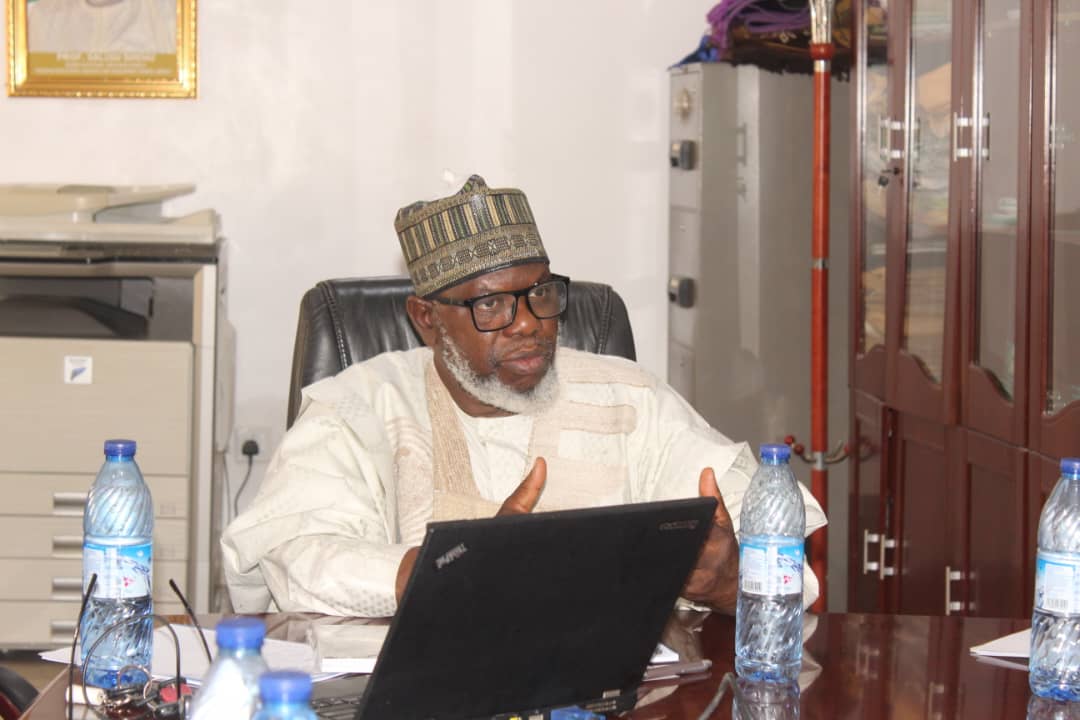
NERDC chief renews calls for wider AI adoption in Nigerian schools

By Sabiu Abdullahi

The Executive Secretary of the Nigerian Educational Research and Development Council (NERDC), Prof. Salisu Shehu, has renewed calls for a stronger embrace of Artificial Intelligence (AI) across the country’s education system.

Prof. Shehu made the appeal during the AI in-Practice Forum held in Lagos on Wednesday, 3rd December 2025.

He thanked the organizers and participants, saying the gathering showed a shared national resolve to upgrade teaching and learning through new technological tools.

He explained that NERDC has made notable progress in introducing AI-related skills and concepts into the updated Basic and Senior Secondary Education Curriculum.

He restated the Council’s commitment to expanding innovation driven by AI within the school system.

According to him, the revised curriculum now features vital digital knowledge areas such as coding, programming, artificial intelligence and robotics, among others.

He said these additions are aimed at preparing young Nigerians for opportunities in a fast-changing digital era.

Prof. Shehu also commended the Nigerian Information Technology Development Agency (NITDA) for its steady partnership with NERDC in producing the Digital Literacy Curriculum for Basic Education.

He praised NITDA for helping shape the country’s digital learning framework and stressed the need to strengthen this cooperation.

He appealed to NITDA to widen its collaboration with NERDC, especially as the Digital Literacy Curriculum and the Digital Technologies Curriculum move into the implementation phase.

He pointed out that developing a curriculum is a major step, but effective delivery calls for continuous teamwork, capacity enhancement, infrastructure and coordinated support at national level.

The Executive Secretary attended the forum with his Special Assistant (Technical), Dr. Garba Gandu, and the Head of the Policy and Programmes Unit, Dr. Oladiran Famade. Both officials were acknowledged for playing key roles in NERDC’s digital advancement efforts.

The AI in-Practice Forum brought together specialists, government representatives, educators and technology stakeholders.

The event focused on practical measures for expanding AI use in Nigerian schools and added to ongoing efforts to prepare learners for the demands of the future.

NERDC seeks to collaborate with NUC to strengthen research in education

By Aisar Fagge

The Nigerian Educational Research and Development Council (NERDC) has called for collaboration with the National Universities Commission (NUC) to enhance and streamline educational research efforts in Nigeria.

Speaking during a visit to the NUC headquarters in Abuja on Tuesday, February 25, 2025, NERDC Executive Secretary, Prof. Salisu Shehu, stated that the visit was both a solidarity gesture and an opportunity to explore potential areas of cooperation.

He stated that through collaboration, both organizations could contribute to national development, particularly in research.

Prof. Shehu noted that NERDC’s responsibilities extend beyond coordinating educational research programs in Nigeria.

He noted that the Council also aims to “identify educational problems in Nigeria in which research is needed and then, establish the order of priority therefrom.”

He further stressed the benefits of NERDC’s role as a repository of groundbreaking research in education, adding that such research should influence public policy.

According to him, “by our mandate, NERDC is supposed to serve as a repository of groundbreaking research in education. Such researches are supposed to inform public policies in the education sector through NERDC as the think tank of the Nigeria education. But this mandate has not been fully activated and critical findings from the faculties of education in our ivory towers are not reckoned with in the process of policy formulation in the education sector.

“I believe that, through an effective collaboration, we can harness the efforts of universities in educational research to improve our educational system. NERDC would want to see how we can work with your Commission to get this operational.”

Prof. Shehu also pointed out that NERDC is the only agency under the Federal Ministry of Education with a mandate that spans all levels of the education sector.

He identified curriculum development as another key area for collaboration and advocated for a platform where NERDC could regularly engage with deans of faculties of education and curriculum planners.

He explained that such engagements would better prepare future teachers by exposing them to curriculum frameworks, structures, philosophies, and implementation strategies.

Lamenting the shortage of qualified teachers for some trade areas, he stated that “in-spite of the implementation of the curriculum which began in 2011, we are still faced with the challenge of lack of qualified teachers in some of the trade areas; that we need the universities to fill this gap for the good of the nation. He added that the Council engages Professors as significant resource persons in our curriculum development, and hence, NUC can plan very strategic roles in this regard.”

Furthermore, he disclosed that the NERDC had developed the National Language Policy to preserve and promote Nigerian languages for economic growth and national development.

He also reiterated the need for collaboration between NERDC and NUC to ensure the effective implementation of the policy’s provisions.

In response, NUC Executive Secretary, Prof. Abdullahi Yusufu Ribadu, acknowledged that it would be beneficial between both organizations, particularly in research for national development.

According to Prof. Ribadu, “NUC, NERDC, TETFUND and NRF need to collaborate in the areas of research, share resources, harness ideas together for efficiency in research delivery in order to avoid duplicity of works and waste of scarce resources.”

He also praised NERDC’s contributions to language development and the preservation of indigenous Nigerian languages, noting that such efforts had helped prevent some languages from going extinct.

Prof. Ribadu assured NERDC of NUC’s readiness to collaborate, stating that he had taken note of the concerns raised and that the commission was committed to supporting the Council in the necessary areas of partnership.

The meeting was attended by senior management officials from both NERDC and NUC.

Prof Salisu Shehu: right man, right appointment, right time

By Ado Sunusi Sabongida

The recent appointment of Prof. Salisu Shehu as the Executive Secretary of the Nigerian Educational Research and Development Council (NERDC) by President Bola Ahmed Tinubu has sparked a wave of excitement across the education sector. This significant development underscores Prof. Shehu’s unwavering dedication and substantial contributions to the advancement of education in Nigeria.

A Track Record of Excellence

Prof. Shehu’s impressive credentials speak volumes about his capabilities and commitment to educational reform. His previous role as Special Adviser on Social Reorientation Programs during the Isah Yuguda administration in Bauchi State showcased his ability to navigate complex educational landscapes effectively. Furthermore, his leadership as the National Coordinator of the International Institute of Islamic Thought (IIIT) Nigeria office and Secretary of the Nigeria Islamic Council under Sultan Abubakar Sa’ad (III) highlight his influence and dedication to promoting educational initiatives.

Visionary Leadership for a Brighter Future

As the pioneer Director of the Center for Continuing Education at Bayero University, Kano, Prof. Shehu introduced a range of innovative developments that enhanced the institution’s academic environment. His leadership style is characterized by a strong commitment to mentoring and fostering educational growth.

In his capacity as Vice Chancellor of Al-Istiqama University Sumaila, he has consistently sought to develop both academic and non-academic staff through seminars and symposia aimed at boosting their intellectual capacities.

Moreover, his recent appointment as a Shura Council member by Kano State Governor Engineer Abba Kabir Yusuf further attests to his tireless efforts in community development and his dedication to improving educational outcomes.

High Expectations as Prof. Shehu Takes Charge

With Prof. Shehu at the helm of NERDC, we can anticipate a new era marked by innovation and progress within the education sector. His extensive experience, combined with his passion for educational advancement, positions him as an ideal candidate to spearhead meaningful change. “Prof. Shehu will deliver more than expectations in the commission.”

A Bright Future Ahead for Education in Nigeria

The appointment of Prof. Salisu Shehu as Executive Secretary of NERDC is indeed a welcome development for Nigeria’s education sector. With his proven track record and steadfast commitment to educational excellence, Prof. Shehu is well-equipped to leave a lasting impact on the landscape of education in the country. As Nigeria continues its pursuit of educational advancement, Prof. Shehu’s leadership will undoubtedly play a pivotal role in shaping a brighter future for education in Nigeria.

Sabongida writes from Kano State.

Leadership Reshuffle: Tinubu names Prof. Salisu Shehu NERDC executive secretary

By Uzair Adam and Abdullahi Mukhtar Algasgaini

President Bola Tinubu has announced key appointments to the leadership of several federal agencies, including the Nigerian Educational Research and Development Council (NERDC), the National Universities Commission (NUC), the Solid Minerals Development Fund/Presidential Artisanal Gold Mining Initiative (SMDF/PAGMI), and the New Partnership for Africa Development (NEPAD).

The Daily Reality reports that among the appointments, Prof. Salisu Shehu has been named the Executive Secretary of the NERDC.

Prof. Shehu, a distinguished academic in educational and human psychology, is recognized for his instrumental role in establishing the School of Continuing Education at Bayero University, Kano.

He also served as the Vice-Chancellor of Al-Istiqamah University, Kano.

His extensive experience in education reform and administration is expected to drive innovation and transformation within the NERDC.

President Tinubu also appointed Prof. Abdullahi Yusuf Ribadu as the Executive Secretary of the NUC.

Prof. Ribadu, an expert in veterinary reproduction, has previously served as Vice-Chancellor of the Federal University of Technology, Yola, and Sule Lamido University, Jigawa State.

For the National Coordinator position at NEPAD, the President selected Jabiru Salisu Abdullahi Tsauri.

Tsauri, who holds a Master’s in International Affairs and Diplomacy from Ahmadu Bello University, is a seasoned administrator with expertise in legislative and global affairs as well as democratic governance.

Yazid Shehu Umar Danfulani was appointed as the Executive Secretary of the SMDF/PAGMI.

A graduate of the University of Hertfordshire, UK, Danfulani brings a wealth of experience from his roles in banking, business administration, and public service, including his tenure at the Central Bank of Nigeria and as a Commissioner for Commerce and Industry in Zamfara State.

The President expressed confidence in the appointees, highlighting their vast expertise and track record of excellence.

He urged them to bring renewed commitment and deliver results that meet the aspirations of Nigerians in their respective organisations.

Al-Istiqama VC commends The Daily Reality for exceptional support

By Uzair Adam

The Vice-Chancellor of Al-Istiqama University, Sumaila, Professor Salisu Shehu, has commended The Daily Reality team for their outstanding support toward the university.

Prof. Shehu noted that the online newspaper has offered remarkable support to the institution since its establishment in 2022, with numerous reports about the university featured prominently on its platform.

The Vice-Chancellor spoke during a seminar titled “The Pervasiveness of Sports Betting (Online Gambling) Among Undergraduate Students in Nigerian Universities.”

The event, organized in honour of the Muslim Students Society of Nigeria Day, featured The Daily Reality’s editor, Malam Aisar Fagge, as the lead speaker.

“Malam Aisar Fagge is a renowned figure on social media, and most of you see his posts on Facebook. He’s a teacher-journalist. He teaches journalism and practices it. They are the publishers of The Daily Reality [online newspaper]. The media has carried and shared a lot of information about Al-Istiqama University and has publicized us widely. May Allah bless them,” said Prof. Shehu.

In response, Malam Aisar Fagge expressed gratitude to the Vice Chancellor for his dedication to advancing the university.

He said, “I am thrilled by the positive changes I’ve seen in this university. The progress is impressive. The university got the leadership it deserves.”