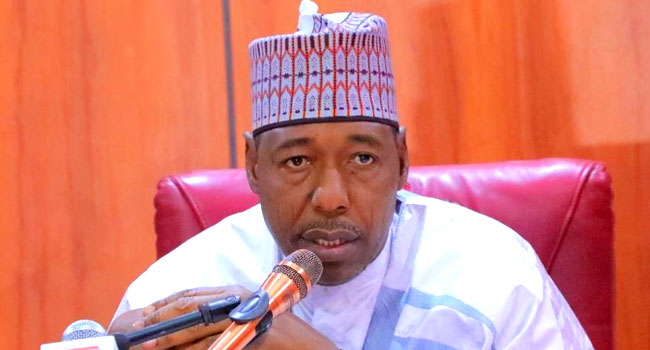
Prof. Babagana Zulum

From TikTok to police cell: Borno’s crackdown on civic dissent

By Abdulsalam Alkali

Haruna Muhammad, known on the streets of Maiduguri as ‘ABALE BORNO’, had always chased greener pastures. His journey from his hometown to the bustling Nigerian capital, Abuja, was a familiar blur of hope and hardship. For a long time, he sold apples on Abuja’s streets, dreaming of the day he could return home to his mother and family.

When the month of Ramadan arrived, Abale felt a pull stronger than any market stall could offer. “I travelled from Abuja to Maiduguri, my heart light with the thought of sharing Eid al-Fitr with my loved ones. The journey was long, but the anticipation of reunion kept my spirits high”. Abale recounted with tears.

Back in Maiduguri, Abale slipped into his usual routine, posting short videos on TikTok. ‘’I voiced out my neighbourhood’s frustrations over an unfinished road project and the dilapidated Wadiya Primary School in Gomari Kostin’’ Abale stated. Residents slogging through potholes and the school’s crumbling walls quickly garnered attention.

One morning, seeking a quieter spot to rest during the Ramadan fast, Abale spread his mat under a lone tree inside the school, where he had earlier raised concerns about its dilapidated condition, offering some respite to the neighbourhood. As he lay there, three men approached—a Civilian Joint Task Force member and two policemen in traditional kaftans. “I felt relaxed even after seeing them, as I never thought the videos I made could trigger such a response from security,” Abale recounted.

While in Police Custody

“I was sceptical and confused about my arrest. I was first taken to the G.R.A Police Station, where I was temporarily detained until the Commissioner of Police, now-retired Yusuf Muhammad Lawan, arrived and ordered my transfer to the CRACK Division’’ Abale stated. Crack Division of the Nigeria Police is a unit specialised in tackling armed robbery, theft, and other capital offences.

“While in custody, I was denied access to my phone. I begged the policeman at the counter to help inform my mother. He agreed but charged one thousand naira for a call that lasted less than a minute,” Abale recalled.

At the CRACK Division, “I was informed that my offence was criticising the state government on TikTok, and I was arrested by ‘orders from above.’ There was no proper explanation. I was subjected to a thorough interrogation by scores of policemen, all asking the same question repeatedly: ‘Who is sponsoring you to attack the government?’ They took my phone, tripod, and microphone, searched them, but found nothing. The disappointment on their faces was visible,” he stated.

Abale recalled being treated like a criminal for expressing his community’s frustrations. “A policeman threatened my mother, telling her I was a criminal who would be jailed for no less than 20 years.” He was held for six days, despite laws requiring that an accused person be charged in court within 24 hours, or 48 hours if no court is within proximity, as stipulated by section 35 of the Nigerian Constitution. 

Abale had not initially engaged legal services. “However, a human rights lawyer, Hamza Nuhu Dantani, came to me. He was God-sent.” Abale stated

The Court Case

Abale was charged at Magistrate Court Number 2, popularly known as ‘Koton Madam,’ in Maiduguri. However, the court was in recess, and the case was referred to another magistrate. “The court found no significant reason for my arbitrary detention, and I was released,” Abale said.

Legal Struggle

After his bail was granted, Abale returned to Abuja to recover from the losses and expenses caused by his detention. However, the case was continuously adjourned. “I travelled from Abuja to Maiduguri three times to seek justice and retrieve my gadgets—two phones, pods, and a microphone—but to no avail. There was no conviction, no acquittal. The case was swept under the carpet,” he lamented.

Violations Continued

Suleiman Usman, 26, known as Sultan, was arrested and detained for three days simply for disagreeing with a public office holder on Facebook. “Even after promising my lawyer, I would be released within 24 hours, I spent three days in the cell,” Sultan recounted.

He was arrested after criticising the Executive Secretary of the Borno State Geographic and Information Service on Facebook. “The complainant insisted it amounted to criminal defamation, even though there was no proof. My words were harmless,” Sultan stated. After three days in the CRACK Division, he was released unconditionally.

Similarly, Alhassan Musa, 40, a father of nine, was arrested and detained for five weeks on the orders of Governor Babagana Zulum. “I was carrying passengers near the newly built flyover bridge in Bolori Store when a white Hilux vehicle drove into our way. It was Governor Zulum. He immediately ordered the police to arrest me,” Alhassan stated.

Detained at the CRACK Division for what was clearly a civil matter, Alhassan was repeatedly refused bail. Without formal charges, and only after his lawyer’s intervention, he paid N100,000 to the Borno State Traffic Maintenance Agency (BOTMA) for a traffic violation. “Five weeks of detention went under the carpet, unexplained,” he said.

Amnesty International Nigeria

In August 2025, Amnesty International Nigeria raised concerns over allegations of human rights violations by the Borno State government. “Borno, based on our initial findings, is increasingly becoming a bastion of repression, abuse of office, and unlawful attacks on the right of the people to disagree with those in power. People have the right to agree and disagree with those in power,” the statement read.

It further attests, “People who criticise the governor are being arbitrarily arrested and detained for months or more, without trial or access to a lawyer or family. A detention centre run by the police has now become a den of unlawful detention and ill-treatment. Some are even refused bail in utter disregard for due process.”

The statement was necessitated by the sentencing of five young people to five years imprisonment for organising and participating in an #EndBadGovernance protest.  Efforts to locate them proved abortive, but a relative of one of the sentenced individuals, who chose to remain anonymous, confirmed ‘’they are still in Maiduguri Maximum Correctional Centre”.

Similarly, Ibrahim Muhammad of the National Human Rights Commission in Maiduguri acknowledged the commission’s awareness of such claims but clarified its role. “We must receive a formal complaint, either in person or through other means of communication, before we can act. We have established protocols, and no violation has been officially reported to us,” he stated.

The Borno State Police Public Relations Officer, ASP Nahun Kenneth Daso, declined to comment, insisting on a physical meeting. However, he neither picked up calls nor replied to messages at the appointed time.

What the Law Says

According to lawyer Barr. Alkali Adamu Askira, “No individual, whether a governor or anyone acting under his authority, has the power to arrest and detain any person beyond the constitutionally permitted period of 24 hours, or at most 48 hours where applicable, without either granting bail or arraigning the person before a court of competent jurisdiction.” He further clarified, “Any directive or action that results in unnecessary arrest or prolonged detention outside these legal limits constitutes a gross abuse of power and an act of lawlessness.”

Barr. Askira noted that the remedy is to file fundamental human rights enforcement suits. “Otherwise, we will have rights we cannot enforce,” he stated.

Commenting on Abale and Sultan’s detention, human rights lawyer Barr. Hamza Nuhu Dantani said, “Abale and Sultan’s cases exemplify the endemic abuse of power, suppression, and denial of access to justice by people in authority.” He advised, “Security agencies should respect the rights to freedom of expression,” and urged public office holders to “refrain from using their office to oppress citizens. 

We are ruled by commentators

By Oladoja M.O

A peculiar tragedy defines the Nigerian state—a complete surrender of responsibility by those elected to bear it, a full-blown case of irresponsibility institutionalised at the highest levels. It is as if we are not being led at all. It is as if we are simply being watched, pitied, and narrated to. Our so-called leaders behave like helpless spectators, not as those with the authority to fix the very problems they moan about.

Shamefully, Nigeria lacks leadership. Instead, it has men and women who love the microphone more than the mandate. We are not governed; we are narrated. Commentators rule us.

Just days ago, a State Governor resurfaced with yet another alarming statement: that Boko Haram has infiltrated the government. Again. This is not the first time he has said something like this. Several times, he has come out to decry the killings, to point fingers, to lament the destruction. And every single time, one question keeps hanging in the air. What exactly has he, as the Chief Security Officer of the state, done about it? What has he changed? What systems has he challenged? What heads have rolled under his watch? Where is the real action beyond the endless news appearances and emotional speeches? It is not enough to wear a bulletproof vest and take a stroll in a burned village. That is not leadership. That is performance.

I mean, this individual is not a social media activist. He is not a political analyst. Not a powerless citizen. He is not a sympathiser. He is a sitting governor, for goodness’ sake! He has the resources, influence, and intelligence at his disposal. If all he can do is complain, then he has failed. And that is the bitter truth. Or how did the weight of office shrink to the mere performance of sympathy and public outrage? Because, for all I know, leaders do not just point to problems. They solve them. They don’t weep when the house burns. They command the water. But what we see here is the opposite. 

It is as if holding public office in Nigeria has been reduced to a loud-speaking exercise. The governor speaks. The senators speak. The representatives hold press conferences. Everybody speaks. But nobody leads. They describe problems they were empowered to solve, like detached observers, rather than active change agents. It is nauseating. It is tragic. It is dangerous because this governor is just one symptom of a far deeper rot. 

Nigeria’s leadership structure is littered with voices that echo sorrow and rage without ever lifting a finger to stop the bleeding. The National Assembly, for instance, has become a festival of talkers. Lawmakers who go to the chambers not to legislate, but to lament. Some of them even act as if their job is to criticise the government when in fact, they are the government. You hear them talk on TV and wonder if they were mistakenly sworn into opposition. These are people elected to craft laws, drive policies, and oversee the executive. Instead, they pick microphones and begin to “express worry”, “condemn in strong terms”, and “call on the federal government”, as though they are not the federal government themselves. It is embarrassing. It is pathetic. It is a national disgrace that the loudest voices in power are often the most passive in a country so battered.

And the tragedy is even louder when we look at the so-called new breed. For instance, Peter Obi has earned some Nigerians’ admiration because they see in him a departure from the past. But in reality, he’s just the same recycled blaming and deflecting game-player. Recently, when asked about the internal crisis tearing through the Labour Party, a party he is seen as the head of, his response was a flat finger-pointing exercise. He explained who caused what and who did what. Zero sense of responsibility. No ownership, nor a plan to fix it. Is it hard to understand that leadership is not explaining the problem but solving it? What are we banking on if someone aspiring to govern 200 million people cannot manage internal party squabbles?

Being soft-spoken and throwing statistics around is not leadership. Nigerians need people who carry the weight of responsibility and act with urgency, not people who are always ready with talking points. 

This country is bleeding. Virtually every region, every sector, every institution is either hoping to set into recovery or picking up the pieces. From poverty to insecurity, from joblessness to healthcare collapse, from fuel inflation to decaying infrastructure, we are a nation gasping for air. And what do our leaders do? They gather at events and in press briefings to express sympathy. They talk. They hold conferences. They issue long tweets. And then they disappear. It is now a full-blown epidemic. Everyone in power wants to talk about the problem. No one wants to be responsible for the solution. They love the headlines. They love the interviews. But they vanish when it is time for hard decisions, bold reforms, and deep accountability.

This is not what leadership looks like. Leadership means bearing the burden of others. It means thinking, planning, executing, sweating, failing, trying again, and never passing the buck. But Nigerian leaders today see power as a shield from responsibility. To them, power is for glory, not for duty. It is for the title, not for toil. And we, the people, must also take some blame. Because time after time, we bring these same people back. We vote them in. We defend them. We hail them. We wash, rinse, and repackage them for another round of useless governance. It is insanity.

A time must come, and it should be now, when Nigerians wake up to the bitter reality that democracy today is mostly a circus—a time when we say it clearly and loudly: enough with all the empty noise. We do not want more commentators, glorified orators, or prophets of doom in positions of power.

We want leadership. Real, practical, accountable leadership.

If you are in the office, your job is not to narrate the problem. Your job is to change it. If you are the governor and your people are being killed, we expect action, not pity. If you are a senator and the economy is crashing, we expect reform, not press conferences. Don’t blame others if you are a party leader and your house is on fire. Fix it. Nigeria can no longer afford leaders who vanish when it matters most. We cannot survive another decade of commentators posing as commanders. The country is on the brink, and what we need now are not voices of complaint, but minds of action and hearts of steel.

Until that happens, let the records reflect it. We are not being led. We are being narrated to. And that is the greatest insult of all.

Oladoja M.O writes from Abuja and can be reached at: mayokunmark@gmail.com

Zulum pledges N100 million support for injured soldiers, families of fallen heroes

By Uzair Adam 

Borno State Governor, Babagana Umara Zulum, has donated N100 million to assist families of soldiers who lost their lives and those wounded in the ongoing fight against insurgency in the northeast.

The donation was announced on Saturday during an Eid El-Kabir Sallah luncheon held at Maimalari Barracks in Maiduguri. 

The event was hosted jointly by the Chief of Army Staff, Lieutenant General Olufemi Oluyede, and the Chief of Air Staff, Air Marshal Hassan Abubakar.

Governor Zulum presented the N100 million cheque to Major General Abdussalam Abubakar, Theatre Commander of Operation Hadin Kai. 

He stated that each wounded soldier would receive N500,000, while the remaining funds would be distributed to the families of soldiers who died in action.

The presentation was witnessed by the Chief of Army Staff, the Chief of Air Staff, and Major General Godwin Mutkut, the Force Commander of the Multinational Joint Task Force (MNJTF). 

Also in attendance were a member of the House of Representatives, Engr. Bukar Talba, Secretary to Borno State Government, Alhaji Bukar Tihani, Head of Service, Dr Muhammad Ghuluze, Acting Chief of Staff, Dr Babagana Mustapha Mallumbe, APC Chairman, Hon. Bello Ayuba, and other senior government officials.

Governor Zulum praised the resilience and patriotism of the Nigerian Armed Forces, stressing that their sacrifices will never be forgotten. 

“Your commitment on the frontlines, often under extreme conditions and far from your families, is not lost on us. We remain eternally grateful for your service and will never take your sacrifices for granted,” he said.

The governor assured the military of his unwavering support, adding, “Borno State will continue to stand shoulder-to-shoulder with the Nigerian Army and all security agencies in the fight against insurgency and in rebuilding our communities for a peaceful and prosperous future.”

Jihadist resurgence in Northeastern Nigeria raises alarms

By Muhammad Abubakar

A recent surge in jihadist attacks in northeastern Nigeria has sparked concerns over a potential comeback of extremist groups in the region. Over the weekend, at least 48 individuals lost their lives in coordinated assaults across Adamawa and Borno states, marking one of the deadliest periods in recent months.

Security analysts attribute this uptick in violence to a reduction in infighting between Boko Haram and its splinter group, the Islamic State West Africa Province (ISWAP). The groups have reportedly adopted advanced tactics, including the use of armed drones and roadside explosives, indicating increased tactical support and funding from the Islamic State.

In Borno State, Governor Babagana Zulum has warned of militant regrouping in the Lake Chad and Sambisa Forest regions, noting a lack of strong military response. The Nigerian military has yet to comment on the situation.

The resurgence of these extremist groups poses a significant threat to the stability of northeastern Nigeria, a region that has endured over 15 years of insurgency.

Analysts caution that without a robust and coordinated response, the region may witness a return to the heightened levels of violence experienced in previous years.

Borno opposition leader sues state govt over shopping mall demolition

By Uzair Adam

A former senatorial candidate of the New Nigeria Peoples Party (NNPP) in Borno Central, Hon. Attom Magira, has filed a lawsuit against the Borno State Government following the demolition of his multi-million naira shopping mall in Maiduguri.

The demolished property, a four-story commercial shopping complex with a multi-purpose hall, was situated along Sir Kashim Ibrahim Road, opposite the state low-cost housing estate.

In a press statement issued on Saturday, Magira’s lawyer, Hamza N. Dantani of Kayode Ajulo & Co., described the demolition as an unlawful act. He revealed that his client had sought legal protection against the action through a suit filed at the Borno State High Court (Suit No. BOHC/MG/CV/8/2025) against the Borno State Urban Planning and Development Board (BOSUPDB).

Dantani alleged that the demolition was politically motivated and carried out under the direct instruction of Governor Babagana Zulum’s administration.

He also criticized the state government for disregarding legal procedures, arguing that the demolition undermined the rule of law and economic development in the state.

“The demolition of my client’s plaza is not just an attack on his investment but a blatant disregard for judicial authority and the economic future of Borno State,” Dantani stated.

According to him, Magira had obtained all necessary approvals, including a statutory right of occupancy and a development permit (No. BSUPDB/DC/2194). He added that no concerns were raised by BOSUPDB during the construction phase.

Dantani further claimed that after the building’s completion, BOSUPDB revoked the development permit and issued an ultimatum, demanding the removal of a supposed “fifth floor” within seven days or face full demolition. He insisted that the property had only four stories.

Despite Magira’s appeal against the revocation, which should have automatically halted any demolition under the law, the government allegedly proceeded with the destruction of the property.

“The law is clear—where a statutory provision outlines a procedure, it must be strictly followed,” the lawyer argued, citing relevant constitutional provisions and legal precedents. The court has adjourned the matter to April 22, 2025, for a hearing.

Dantani maintained that the demolition, carried out while the case was still in court, violated due process and constituted an abuse of power.

As of press time, the Borno State Government has not officially addressed the reasons behind the demolition. However, past demolitions in the state have often been linked to urban planning regulations and public interest concerns.

Zulum approves renaming state university after ex-governor Kashim Ibrahim

By Uzair Adam

The Borno State Executive Council has approved the renaming of Borno State University (BOSU) to Kashim Ibrahim University, Maiduguri, in honour of Sir Kashim Ibrahim, the first Governor of Northern Nigeria.  

The decision was made during the council’s first meeting of 2025, presided over by Governor Babagana Zulum in Maiduguri.  

Addressing journalists, the Commissioner for Information and Internal Security, Prof. Usman Tar, stated that the renaming would take effect following legislative amendments and notifications to regulatory bodies.  

“The council has approved that Borno State University be renamed Kashim Ibrahim University. 

“This decision is subject to the legislative processes by the State Assembly to amend the law establishing the university and actions by the Ministry of Education to inform relevant bodies such as the NUC and JAMB,” Prof. Tar explained.  

The council also approved a comprehensive programme for street naming and house numbering across Maiduguri and other urban areas as part of ongoing urban renewal efforts. 

The initiative will involve collaboration with traditional rulers and federal agencies like the Nigerian Postal Service.  

“Relevant MDAs will work with stakeholders to develop a naming and numbering template. This will ensure that updated names and numbers are reflected on platforms like Google Maps and public records to enhance urban planning and governance,” Prof. Tar added.  

During the meeting, Governor Zulum expressed appreciation for the council members’ commitment and outlined plans for intensified recovery efforts and impactful projects in 2025.  

“In 2024, my administration achieved significant progress, and I am committed to accomplishing even more this year. Our focus will remain on post-conflict recovery, urban renewal, and improving citizens’ welfare,” Zulum said.  

The meeting also featured a valedictory session honouring the outgoing Head of Service, Barrister Malam Fannami, who is set to retire later this month. The council commended his dedication and contributions to the state’s development.

Tinubu’s tax reforms will cripple north, trigger nationwide crisis – Zulum warns

By Uzair Adam 

Governor Babagana Umara Zulum of Borno State has expressed strong opposition to the tax reform bills introduced by President Bola Ahmed Tinubu’s administration, cautioning that their implementation could significantly harm the northern region.

The controversial bills, which propose shifting the basis for Value Added Tax (VAT) distribution to the location of consumption, have sparked widespread resistance, particularly in the north. 

Key stakeholders, including northern governors, traditional rulers, and the Northern Elders Forum, have called for the withdrawal of the proposed legislation.

Speaking with BBC Hausa, Zulum criticized the rapid progress of the bills through the National Assembly, contrasting it with the protracted passage of other critical legislation, such as the Petroleum Industry Bill, which took nearly two decades to become law.

“We condemn these bills. They will set the north back and affect other regions, including some states in the South West like Oyo, Osun, Ekiti, and Ondo,” Zulum said. 

“This is not mere opposition; it is about safeguarding our future. We urge President Tinubu to reconsider. 

“He received substantial support from the north during the election, and our interests must be protected.”

Zulum warned that the financial strain imposed by the reforms could make it difficult for many northern states to pay salaries, adding, “Even if we manage to pay, it won’t be sustainable in the following year.”

When asked if the bills would exacerbate poverty and insecurity in the north, the governor affirmed, “Yes, it will. This isn’t just about the north; even Lagos is concerned. If so many regions are against these bills, why push forward without careful consideration?”

Zulum also addressed speculation about lawmakers being influenced by lobbying or kickbacks. 

“There are rumours, but we cannot be sure. What we need is patriotism. We have children, grandchildren, and relatives in rural areas. We must avoid endorsing policies that would hinder their progress.”

While emphasizing that his stance is not an act of defiance against the federal government, Zulum maintained that it calls for a more thoughtful approach. 

“We supported and voted for President Tinubu, but these bills are not in our best interest. We are simply asking for a reconsideration to protect the future of our people and the nation at large.”

On the catastrophic flooding in Maiduguri

By Abdurrahman uba wada

Maiduguri, the capital of Nigeria’s Borno State, experienced severe flooding following the collapse of the Alau Dam. The disaster submerged homes, displaced families, and crippled vital infrastructure, creating a crisis of historic proportions.

Aisha Mohammed, a resident of the hard-hit Gwange area, described the rapid onset of the floodwaters, which left little time for her family to escape. Neighbourhoods like Fori, Galtimari, and Bulabulin were severely affected.

State Commissioner for Information and Internal Security, Usman Tar, issued an urgent evacuation order, stressing the importance of moving to higher ground immediately. This event echoed the 1994 Alau Dam failure that submerged half the city. Prof. Ibra Baba Goni, a hydrologist at the University of Maiduguri, emphasised the dam’s critical role in flood control, water supply, and irrigation.

Local authorities and the National Emergency Management Agency (NEMA) worked tirelessly to respond, but the scale of the disaster was overwhelming. Flooding disrupted water supply, paralysed transportation, and forced school and business closures. Climate change played a significant role.

Prof. Peter Akpodiogaga-a Ovuyovwiroye Odjugo from the Nigerian Meteorological Agency (NiMet) noted a 20% increase in extreme rainfall events over the past decade. Maiduguri’s situation was particularly dire due to strained infrastructure from years of conflict.

Relief efforts continued, with experts considering long-term solutions like upgrading the dam, improving drainage, and relocating vulnerable communities. Community spirit remained strong, with local youth groups assisting evacuations and neighbouring states pledging support. The Borno State Emergency Management Agency established relief centres, accepting food, water, and medical supply donations.

The Alau Dam collapse highlighted Maiduguri’s vulnerability to natural disasters. As waters receded, the city faced rebuilding and reimagining a resilient future.

Borno enforces 24-hour curfew

By Abdullahi Mukhtar Algasgaini

The Borno State Government has announced an immediate 24-hour curfew across the state.

This is in response to the tragic detonation of an improvised explosive device in Kawori Market, Konduga area of Borno State on Wednesday night.

The explosion suspected to be carried out by a Boko Haram suicide bomber resulted in the deaths of 16 individuals and critical injuries to several others.

Police Public Relations Officer, ASP Nahum Kenneth Daso, disclosed this in a Thursday press release obtained by The Daily Reality titled, “Imposition of Curfew,”, the statement noted that the bomb explosion prompted Governor Babagana Zulum, to consult with top security officials before implementing this measure.

According to the statement, the curfew aims to restore law and order and ensure public safety.

It read, “In view of the constitutional mandate of the Nigeria Police Force and other relevant security and law enforcement agencies toward the preservation of law and order in the state. You are all aware of the incident that took place at Kawori which was the detonation of an improvised explosive devices ordinance device which led to the death of (16) persons while several others were critically injured and on admission across various Government hospitals in the state.“

In line with our constitutional mandate towards the restoration of law and order his Excellency the Executive Governor of Borno State, Prof. Babagana Umar Zulum in consultation with heads of security in the state, finds it’s expedient to declare 24hrs curfew in the state with immediate effect.

The PPRO urged residents to stay calm and adhere to the curfew. Further updates will be provided as the situation develops.

“I, therefore, wish to call upon the good people of Borno State to remain calm and law-abiding. Further developments will be communicated to you accordingly, please,” it concluded.

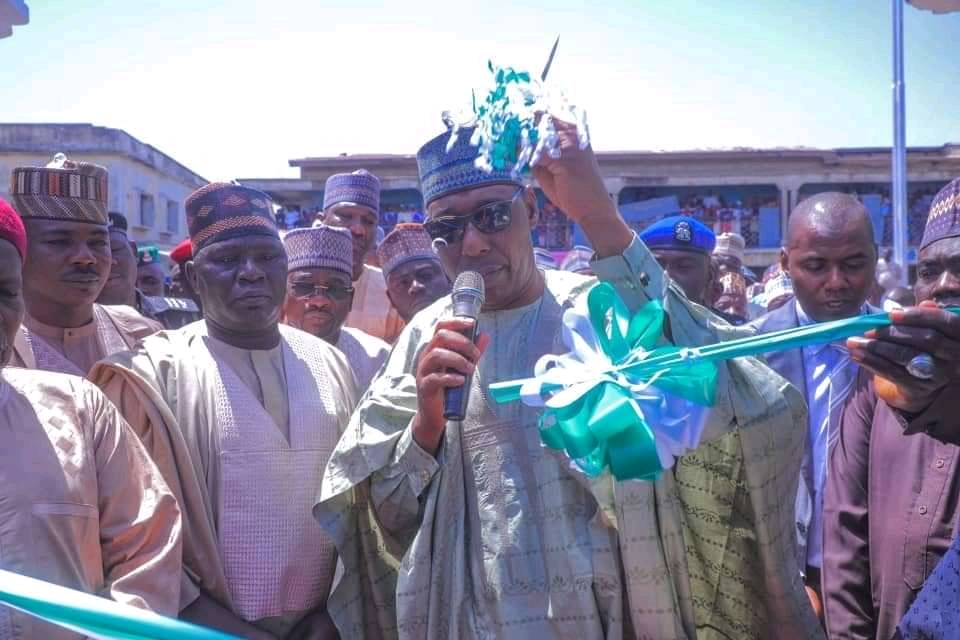
Zulum reopens Monday Market

By Rukayya Abubakar Othman

Governor Babagana Umara Zulum yesterday commissioned the famous Maiduguri Monday market and relieved two years’ rent for about 8,000 traders:

Borno state governor commissioned Maiduguri Monday Market on Monday, which was rebuilt after a fire inferno that gutted the market in February this year. 

Governor Babagana Umara Zulum announced that over 8000 traders who hitherto rented shops and paid rent would no longer pay for the next two years because of the losses incurred by them as a result of the mishap.

This, of course, is the untiring commitment of the state governor to the cause of serving humanity.

Upon the February incident, the governor hurriedly set up a committee to reconstruct the market, which has been completely rehabilitated and remodelled, with over 8,000 traders to benefit from the reconstruction. 

The market is well structured, which involves a comprehensive design and more vacancies for other traders to thrive in their business activities.

 The governor in February donated about N2b to the committee constituted to immediately swing into action and release N1b to the disaster victims. 

During the commission, Governor Babagana Umara Zulum announced about 2,825 traders who could not allocate their previous shop after the fire disaster. 

“As a result of remodelling, over 2,000 traders who either operated at a temporary site or built shops illegally on waterways could not own shops in the market. Moreover, the government will support over 185 of them with N1m “. Zulum said. 

He also promised that the people doing business there would get shops at a newly constructed Monday Market in Maiduguri.